



Methyl propyl disulfide

Based on 1 Customer Validation
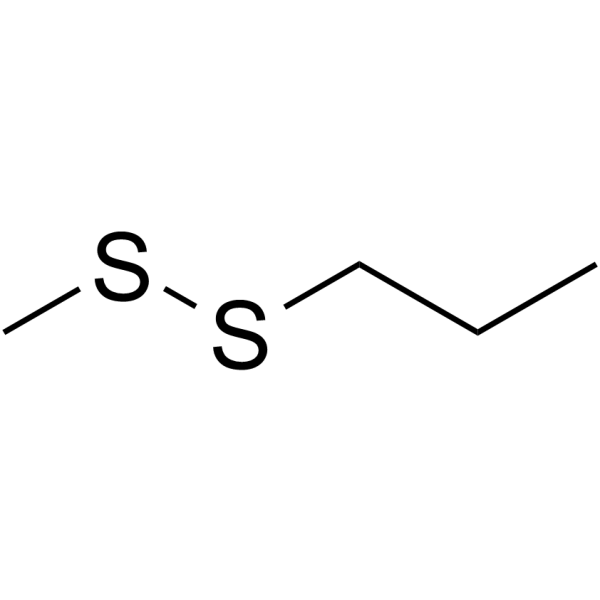
Methyl propyl disulfide is an orally administrable volatile sulfide present in onions. Methyl propyl disulfide reduces the activity of spermine N'1-acetyltransferase (SAT), inhibits cell proliferation, and decreases the induction of placental glutathione S-transferase (GST-P)-positive hepatocyte foci in rat livers. Methyl propyl disulfide can be used in studies related to the mechanism of hepatocarcinogenesis.
For research use only. We do not sell to patients.
- Purity : 98.0%
- CAS No.: 2179-60-4
- Formula: C4H10S2
- Molecular Weight:122.25
-
Storage:Pure form -20°C, 3 years , 4°C, 2 years ; In solvent -80°C, 6 months , -20°C, 1 month

To place orders, for customer services and technical support, please contact: MedChemExpress USA
Tel: 609-228-6898 E-mail: [email protected] [email protected]


-
 Biological Activity
-
Chemical Information
-
Solvent & Solubility
- Protocols
- Purity & Documentation
- References
-
 Help & FAQs


-

HY-W196803
Dipropyl disulfideEndogenous Metabolites -
HY-W015635
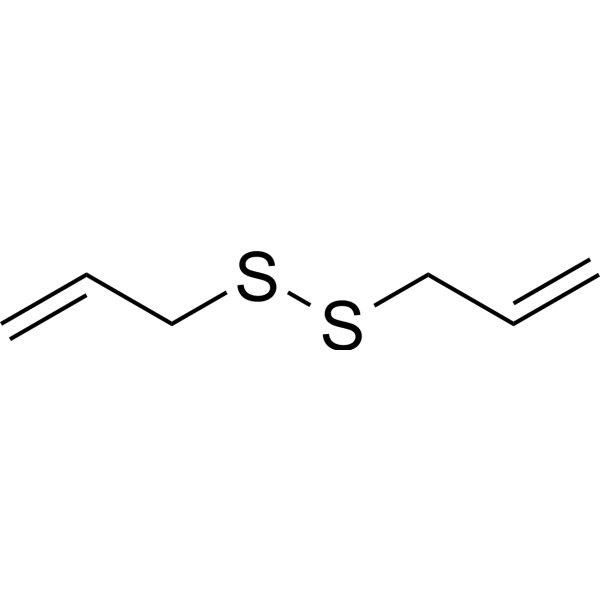
Diallyl disulfideAnti-inflammatory/Anti-cancer Agent -

HY-N7436R
Methyl propyl disulfide (Standard)Anticancer Agent -
HY-128454
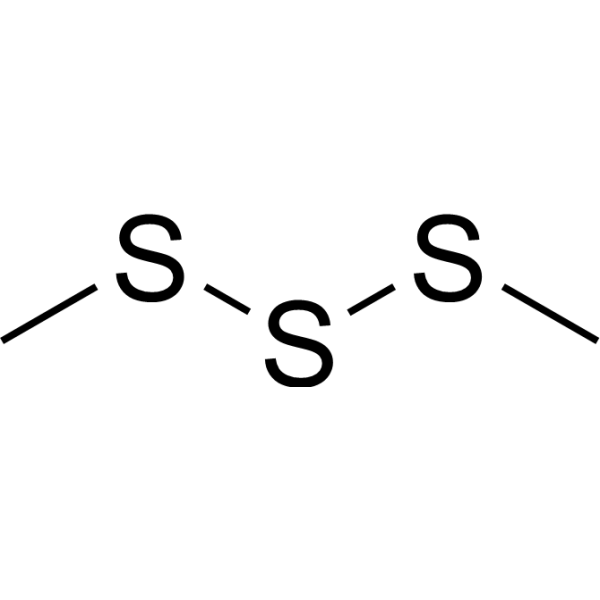
Dimethyl trisulfideCyanide Scavenger -
HY-W009516
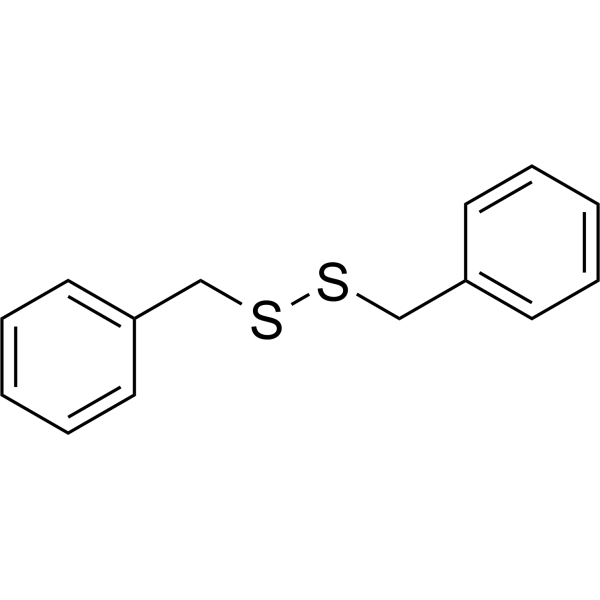
Dibenzyl disulfide -
HY-128447
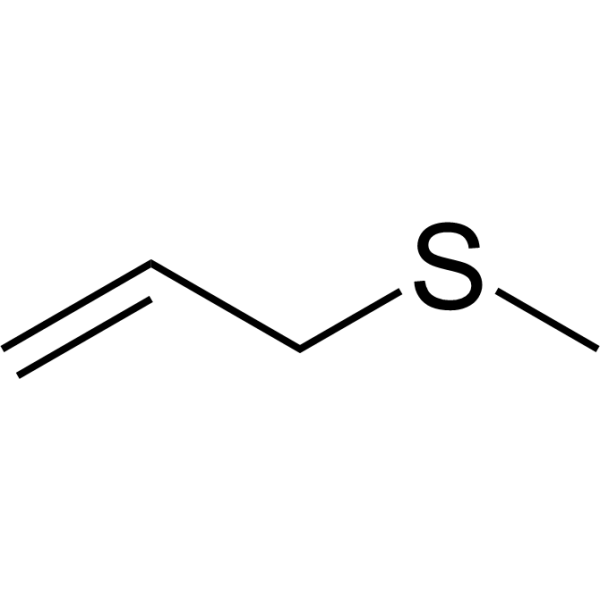
Allyl methyl sulfideOrganic Sulfide -

HY-W199190
2-CEESMustard Gas Analog -

HY-W016174
Diphenyl sulfideAdditive for Organic Photovoltaic Devices -

HY-W157144
Diethyl disulfideOrganosulfur Compound -

HY-W015635R
Diallyl disulfide (Standard)Standard of Diallyl disulfide -

HY-128454R
Dimethyl trisulfide (Standard)Endogenous Metabolite -

HY-W009516R
Dibenzyl disulfide (Standard)


Biological Activity
Description
In Vivo
MedChemExpress (MCE) has not independently confirmed the accuracy of these methods. They are for reference only.
-
Animal Model:F344 (male, 5 weeks of age at acquisition, acclimatized for 1 week; DEN-initiated, two-thirds partial hepatectomized)[1]
-
Dosage:25 mg/kg; 50 mg/kg; 100 mg/kg
-
Administration:oral gavage; 5 times per week; 6 weeks
-
Result:Reduced mean number of GST-P-positive foci to 8.94 per cm2 at 25 mg/kg.
Reduced mean area of GST-P-positive foci to 1.03 mm2 per cm2 at 25 mg/kg.
Reduced mean number of GST-P-positive foci to 8.06 per cm2 at 50 mg/kg.
Reduced mean area of GST-P-positive foci to 0.82 mm2 per cm2 at 50 mg/kg.
Reduced mean number of GST-P-positive foci to 7.76 per cm2 at 100 mg/kg.
Reduced mean area of GST-P-positive foci to 0.78 mm2 per cm2 at 100 mg/kg.
Exhibited a clear dose-dependent reduction in both number and area of GST-P-positive foci across all doses.
Showed mean hepatic ornithine decarboxylase (ODC) activity of 16.3 pmol/hour/mg protein (no significant difference vs.
control) at 100 mg/kg.
Showed mean spermidine/spermine N1-acetyltransferase (SAT) activity of 57.8 pmol/10 min/mg protein (no significant difference vs.
control) at 100 mg/kg.
Decreased final body weights significantly compared to control rats.
Increased relative liver weights significantly compared to control rats.
- BrdU Incorporation Assay
- Somatic Cell Culture
- CFSE Dye Dilution Proliferation Assay
- Dye-dilution cell tracking and proliferation staining
- CCK-8/WST-8 Cell Proliferation Assay
- Protocol for Cell Cycle
- Cell Counting-Based Growth Curve Assay
- Colony Formation (Clonogenic) Assay
- Cell Viability Determination by MTT Colorimetric Assay
- EdU Incorporation Assay (Click Chemistry-Based DNA Synthesis Measurement)
- Ki-67 Immunostaining Proliferation Assay
- PCNA Immunodetection Proliferation Assay
- Protocol for Cell Counting and Cell Density Analysis
- MTT Cell Proliferation Assay


Chemical Information
-
CAS No. 2179-60-4
-
Appearance Liquid (Density: 0.8375 g/cm3)
-
Molecular Weight 122.25
-
Formula C4H10S2
-
Color Colorless to light yellow
-
SMILES
CCCSSC
-
Structure Classification
-
Initial Source
-
Shipping
Room temperature in continental US; may vary elsewhere.
-
Storage
Pure form -20°C 3 years 4°C 2 years In solvent -80°C 6 months -20°C 1 month


Solvent & Solubility
In Vitro:
DMSO : 100 mg/mL (818.00 mM; Need ultrasonic; Hygroscopic DMSO has a significant impact on the solubility of product, please use newly opened DMSO)
Please refer to the solubility information to select the appropriate solvent. Once prepared, please aliquot and store the solution to prevent product inactivation from repeated freeze-thaw cycles.
Storage method and period of stock solution: -80°C, 6 months; -20°C, 1 month. When stored at -80°C, please use it within 6 months. When stored at -20°C, please use it within 1 month.
Please refer to the solubility information to select the appropriate solvent. Once prepared, please aliquot and store the solution to prevent product inactivation from repeated freeze-thaw cycles.
Storage method and period of stock solution: -80°C, 6 months; -20°C, 1 month. When stored at -80°C, please use it within 6 months. When stored at -20°C, please use it within 1 month.
Concentration (start) × Volume (start) = Concentration (final) × Volume (final)
In Vivo:
Select the appropriate dissolution method based on your experimental animal and administration route.
- For the following dissolution methods, please ensure to first prepare a clear stock solution using an In Vitro approach and then sequentially add co-solvents:
- To ensure reliable experimental results, the clarified stock solution can be appropriately stored based on storage conditions. As for the working solution for In Vivo experiments, it is recommended to prepare freshly and use it on the same day.
- The percentages shown for the solvents indicate their volumetric ratio in the final prepared solution. If precipitation or phase separation occurs during preparation, heat and/or sonication can be used to aid dissolution.
Add each solvent one by one: 10% DMSO 40% PEG300 5% Tween-80 45% Saline
Solubility: ≥ 2.5 mg/mL (20.45 mM); Clear solution
This protocol yields a clear solution of ≥ 2.5 mg/mL (saturation unknown).
Taking 1 mL working solution as an example, add 100 μL DMSO stock solution (25.0 mg/mL) to 400 μL PEG300, and mix evenly; then add 50 μL Tween-80 and mix evenly; then add 450 μL Saline to adjust the volume to 1 mL.
Preparation of Saline: Dissolve 0.9 g sodium chloride in ddH₂O and dilute to 100 mL to obtain a clear Saline solution.
Add each solvent one by one: 10% DMSO 90% (20% SBE-β-CD in Saline)
Solubility: ≥ 2.5 mg/mL (20.45 mM); Clear solution
This protocol yields a clear solution of ≥ 2.5 mg/mL (saturation unknown).
Taking 1 mL working solution as an example, add 100 μL DMSO stock solution (25.0 mg/mL) to 900 μL 20% SBE-β-CD in Saline, and mix evenly.
Preparation of 20% SBE-β-CD in Saline (4°C, storage for one week): 2 g SBE-β-CD powder is dissolved in 10 mL Saline, completely dissolve until clear.
In Vivo Dissolution Calculator
Please enter the basic information of animal experiments:
-
-
-
-
Recommended: Prepare an additional quantity of animals to account for potential losses during experiments.
Please enter your animal formula composition:
-
%DMSO +
Recommended: Keep the proportion of DMSO in working solution below 2% if your animal is weak.
-
%+
-
+%Tween-80 + +
-
%Saline +
The co-solvents required include: DMSO, . All of co-solvents are available by MedChemExpress (MCE). , Tween 80. All of co-solvents are available by MedChemExpress (MCE).
Working solution concentration: 0.22 mg/mL
Method for preparing stock solution: mg drug dissolved in μL DMSO. Stock solution concentration: mg/mL.
1. Take μL DMSO stock solution;
2. Add μL .
μL , mix evenly;
3. Then add μL Tween 80, mix evenly;
4. Then add μL
Please ensure that the stock solution in the first step is dissolved to a clear state, and add co-solvents in sequence. You can use ultrasonic heating (ultrasonic cleaner, recommended frequency 20-40 kHz), vortexing, etc. to assist dissolution.


Purity & Documentation
-
Data Sheet (270 KB)
-
SDS (545 KB)
- English - EN (545 KB)
- Français - FR (545 KB)
- Deutsch - DE (545 KB)
- Norwegian - NO (545 KB)
- Español - ES (545 KB)
- Swedish - SV (545 KB)
- Italian - IT (545 KB)
- Korean - KR (545 KB)
- Portuguese - PT (545 KB)
-
Handling Instructions (2659 KB)
References
[1]. Matsuda T, et al. Dose-dependent inhibition of glutathione S-transferase placental form-positive hepatocellular foci induction in the rat by methyl propyl disulfide and propylene sulfide from garlic and onions. Cancer Lett. 1994;86(2):229-234. [Content Brief]
[2]. Nandakumar R, et al. Impact of Pulsed Electric Fields on the Volatile Compounds Produced in Whole Onions (Allium cepa and Allium fistulosum). Foods. 2018 Nov 7;7(11):183. [Content Brief]


Complete Stock Solution Preparation Table
Please refer to the solubility information to select the appropriate solvent. Once prepared, please aliquot and store the solution to prevent product inactivation from repeated freeze-thaw cycles.
Storage method and period of stock solution: -80°C, 6 months; -20°C, 1 month. When stored at -80°C, please use it within 6 months. When stored at -20°C, please use it within 1 month.
| Optional Solvent | Concentration Solvent Mass | 1 mg | 5 mg | 10 mg | 25 mg |
|---|---|---|---|---|---|
| DMSO | 1 mM | 8.1800 mL | 40.8998 mL | 81.7996 mL | 204.4990 mL |
| 5 mM | 1.6360 mL | 8.1800 mL | 16.3599 mL | 40.8998 mL | |
| 10 mM | 0.8180 mL | 4.0900 mL | 8.1800 mL | 20.4499 mL | |
| 15 mM | 0.5453 mL | 2.7267 mL | 5.4533 mL | 13.6333 mL | |
| 20 mM | 0.4090 mL | 2.0450 mL | 4.0900 mL | 10.2249 mL | |
| 25 mM | 0.3272 mL | 1.6360 mL | 3.2720 mL | 8.1800 mL | |
| 30 mM | 0.2727 mL | 1.3633 mL | 2.7267 mL | 6.8166 mL | |
| 40 mM | 0.2045 mL | 1.0225 mL | 2.0450 mL | 5.1125 mL | |
| 50 mM | 0.1636 mL | 0.8180 mL | 1.6360 mL | 4.0900 mL | |
| 60 mM | 0.1363 mL | 0.6817 mL | 1.3633 mL | 3.4083 mL | |
| 80 mM | 0.1022 mL | 0.5112 mL | 1.0225 mL | 2.5562 mL | |
| 100 mM | 0.0818 mL | 0.4090 mL | 0.8180 mL | 2.0450 mL |


Methyl propyl disulfide Related Classifications
HY-N7436 Related Classifications
 Powered by Bioz