Search Result
Results for "
outflow
" in MedChemExpress (MCE) Product Catalog:
2
Isotope-Labeled Compounds
| Cat. No. |
Product Name |
Target |
Research Areas |
Chemical Structure |
-
- HY-B1640
-
|
Etacrynic acid
|
Wnt
Glutathione S-transferase
NF-κB
Calcium Channel
NO Synthase
|
Cardiovascular Disease
Inflammation/Immunology
Cancer
|
|
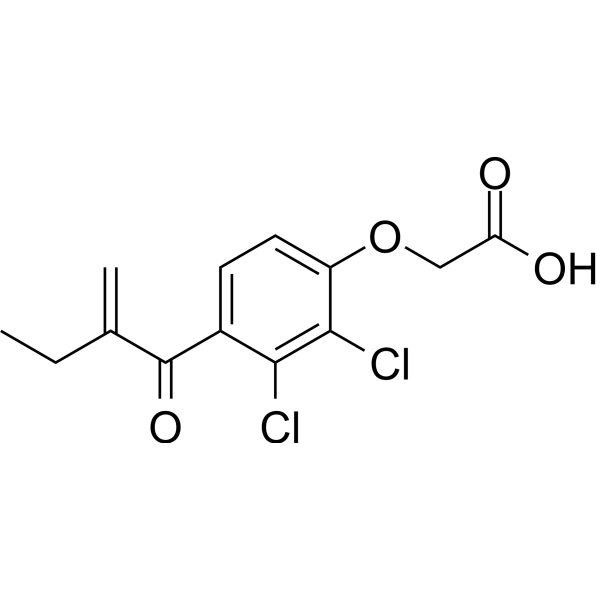
Ethacrynic acid has anti-inflammatory and anticancer activity. Ethacrynic acid is an orally active diuretic. Ethacrynic acid is an inhibitor of glutathione S-transferase (GSTs) and Wnt signaling pathways. Ethacrynic acid is a radiosensitizer. Ethacrynic acid can inhibit airway smooth muscle (ASM) contraction in mice. Ethacrynic acid can increase the outflow of aqueous humor from the eye for the study of glaucoma .
|
-
-
- HY-B0577
-
|
PHXA41
|
Prostaglandin Receptor
|
Cardiovascular Disease
Others
|
|
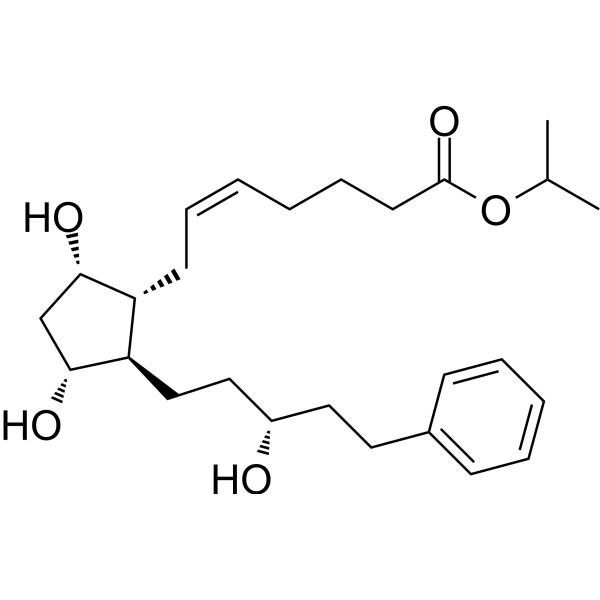
Latanoprost (PHXA41) is a prostaglandin F2α analogue and can be used for glaucoma research. Latanoprost can effectively pass through cornea and be hydrolyzed by esterase to latanoprost acid. latanoprost acid is an F-prostaglandin (FP) receptor agonist, and can effectively reduce intraocular pressure (IOP) by increasing the outflow of aqueous humor through uvea .
|
-
-
- HY-B0191
-
|
AGN 192024
|
Prostaglandin Receptor
MMP
|
Cardiovascular Disease
Endocrinology
|
|
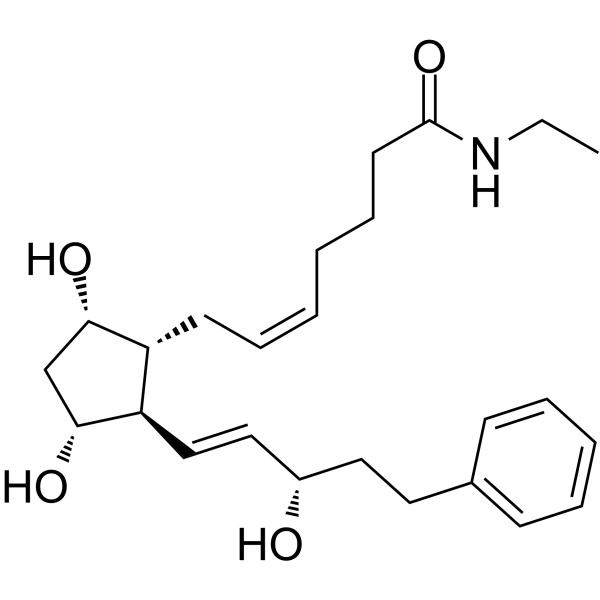
Bimatoprost is a prostaglandin analog that reduces intraocular pressure by regulating scleral and trabecular outflow. Bimatoprost is used in the study of open-angle glaucoma, ocular hypertension, and other forms of glaucoma. Topical application of bimatoprost induces fat atrophy and causes a deepening of the eyelid sulcus .
|
-
-
- HY-P2847
-
|
|
CRFR
|
Metabolic Disease
Endocrinology
|
|
Urocortin II, mouse is a potent and selective endogenous peptide agonist of type-2 corticotropin-releasing factor (CRF2) receptor with Ki values of 0.66 nM and ﹥100 nM for CRFR2 and CRFR1, respectively. Urocortin II, mouse activates CRF2 receptors in a cAMP/PKA- and Ca 2+/CaMKII-dependent manner.Urocortin II, mouse is expressed in discrete areas of the central nervous system, and activates central neurons involved in the processing of visceral sensory information, and in modulating autonomic outflow .
|
-
-
- HY-12798
-
|
AR-13324
|
Monoamine Transporter
ROCK
|
Cardiovascular Disease
Neurological Disease
|
|
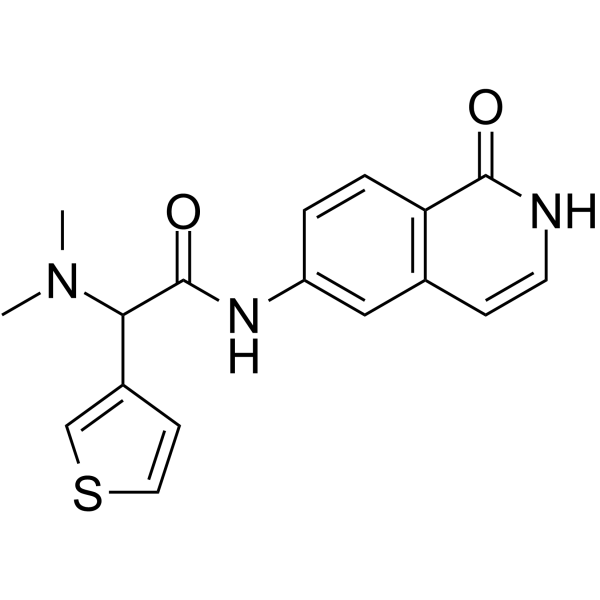
Netarsudil (AR-13324) is a competitive inhibitor of Rho-associated protein kinases (ROCK I and ROCK II) and a reversible inhibitor of the norepinephrine transporter (NET). Netarsudil reduces intraocular pressure by inhibiting ROCK, causing relaxation of trabecular meshwork cells and dilation of episcleral veins, thereby increasing the ease of aqueous humor outflow, while inhibiting NET to reduce aqueous humor production. Netarsudil is mainly used in the study of ocular hypertension and primary open-angle glaucoma .
|
-
-
- HY-159821
-
|
CK-4021586; CK-586
|
Myosin
|
Cardiovascular Disease
|
|
Ulacamten (CK-4021586; CK-586) is an orally active cardiac myosin inhibitor and an inhibitor of the double-headed cardiac heavy meromyosin (HMM)ATPase (excluding single-headed myosin subfragment-1), with an EC50 of 2.9 μM. Ulacamten regulates cardiac myosin, reduces excessive myocardial contractility, and alleviates left ventricular outflow tract obstruction. Ulacamten increases the left ventricular short-axis systolic internal diameter, inhibits dobutamine-induced exacerbation of obstruction, and exerts only a mild reducing effect on left ventricular systolic function. Ulacamten also inhibits the fractional shortening of the short axis without altering calcium transients. Ulacamten shows good safety and tolerability in purpose-bred cats with naturally occurring obstructive hypertrophic cardiomyopathy .
|
-
-
- HY-12798B
-
|
AR-13324 hydrochloride
|
ROCK
|
Cardiovascular Disease
Neurological Disease
|
|
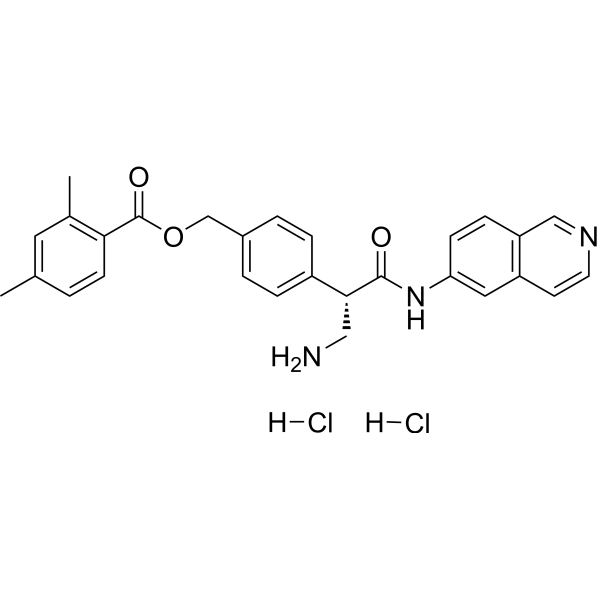
Netarsudil (AR-13324) hydrochloride is a competitive inhibitor of Rho-associated protein kinases (ROCK I and ROCK II) and a reversible inhibitor of the norepinephrine transporter (NET). Netarsudil hydrochloride reduces intraocular pressure by inhibiting ROCK, causing relaxation of trabecular meshwork cells and dilation of episcleral veins, thereby increasing the ease of aqueous humor outflow, while inhibiting NET to reduce aqueous humor production. Netarsudil hydrochloride is mainly used in the study of ocular hypertension and primary open-angle glaucoma .
|
-
-
- HY-19518
-
|
NCX116; LBN
|
Prostaglandin Receptor
|
Neurological Disease
|
|
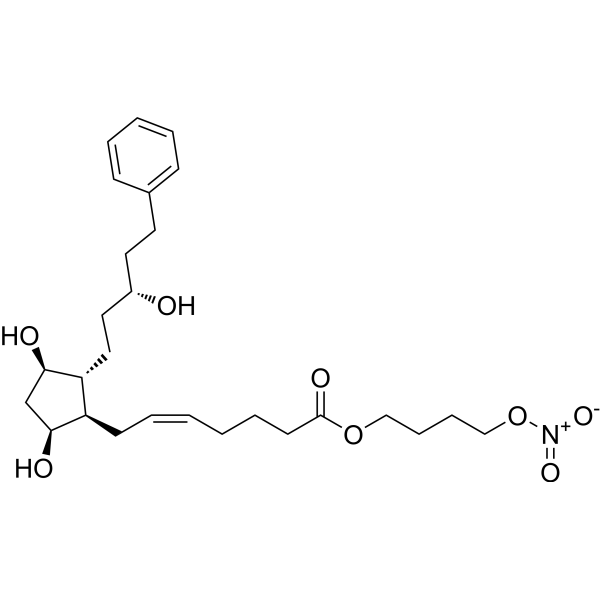
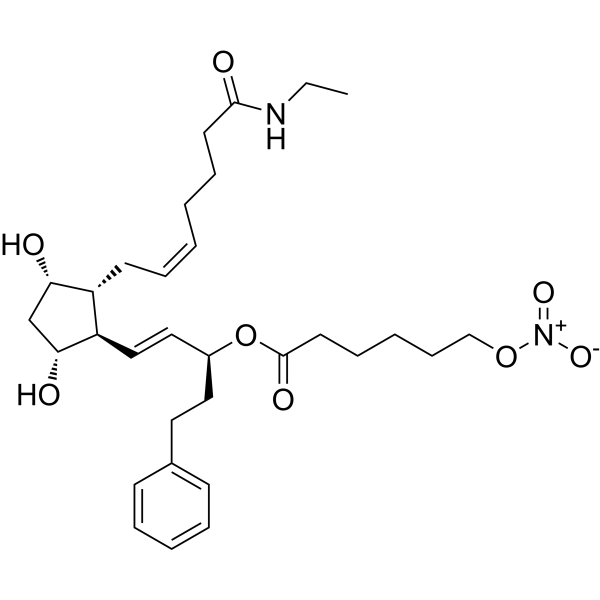
Latanoprostene bunod (NCX116; LBN) is a nitric oxide-releasing prostaglandin F2α analog. Latanoprostene bunod is a prodrug that, upon instillation into the eye, is hydrolyzed by corneal esterases into two active metabolites: Latanoprost (HY-B0577) and NO. Latanoprost activates the prostaglandin FP receptor to increase the outflow of aqueous humor through the uveoscleral pathway. NO increases aqueous humor drainage through the trabecular meshwork pathway, achieving synergistic enhancement targeting the dual pathways of aqueous humor outflow. Latanoprostene bunod can be used in research related to open-angle glaucoma and ocular hypertension .
|
-
-
- HY-12798A
-
|
AR-13324 dimesylate
|
ROCK
|
Cardiovascular Disease
Neurological Disease
|
|
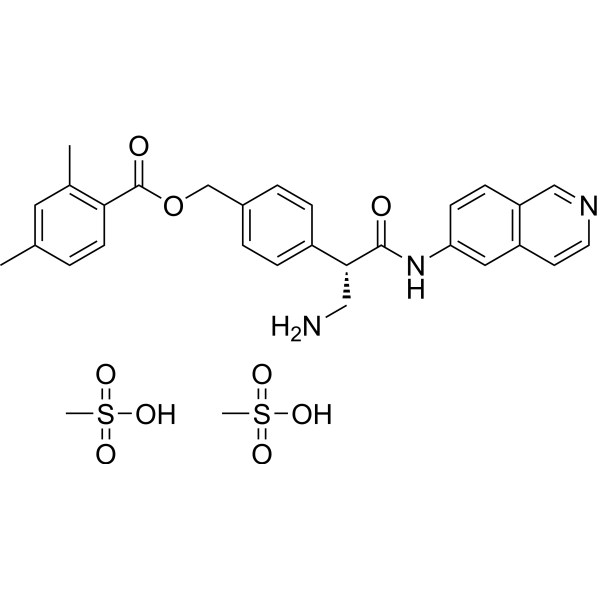
Netarsudil (AR-13324) dimesylate is a competitive inhibitor of Rho-associated protein kinases (ROCK I and ROCK II) and a reversible inhibitor of the norepinephrine transporter (NET). Netarsudil dimesylate reduces intraocular pressure by inhibiting ROCK, causing relaxation of trabecular meshwork cells and dilation of episcleral veins, thereby increasing the ease of aqueous humor outflow, while inhibiting NET to reduce aqueous humor production. Netarsudil dimesylate is mainly used in the study of ocular hypertension and primary open-angle glaucoma .
|
-
-
- HY-B1052
-
|
Baq-168; MDL-14042
|
Adrenergic Receptor
Imidazoline Receptor
|
Neurological Disease
Metabolic Disease
|
|
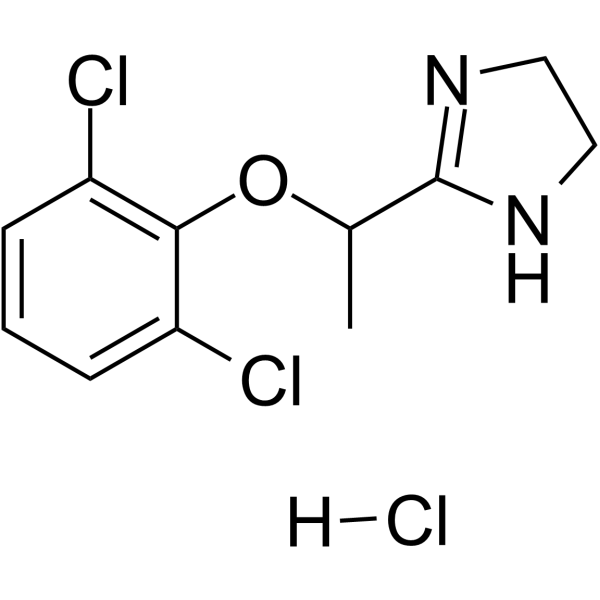
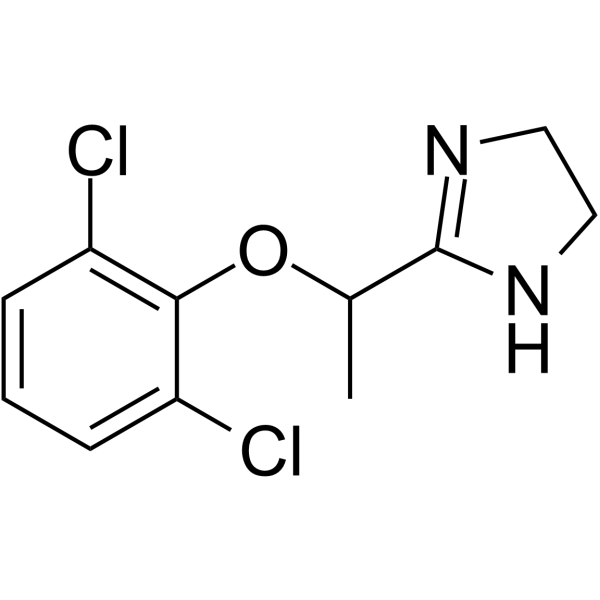
Lofexidine hydrochloride (Baq-168) is an orally active agonist of the imidazoline I1 receptor (imidazoline I1 receptor) (Ki: 1.9 nM) and α2-adrenergic receptor (α2-adrenergic receptor). Lofexidine hydrochloride binds to the α2A-adrenergic receptor, reduces sympathetic outflow, lowers blood pressure, and exhibits vasoconstrictive effects. Lofexidine hydrochloride regulates the expression of c-fos and alleviates opioid withdrawal symptoms. Lofexidine hydrochloride is applicable to research on opioid addiction and withdrawal .
|
-
-
- HY-16758
-
|
AR-12286
|
ROCK
|
Neurological Disease
|
|
Verosudil (AR-12286) is a ROCK inhibitor. Verosudil has equal inhibitory activity against ROCK1 and ROCK2 (Ki: 2 nM). Verosudil is less selective for PKA, PKCT, MRCKA, and CAM2A (Ki: 69 nM, 9322 nM, 28 nM, 5855 nM, respectively). Verosudil increases trabecular outflow capacity to reduce intraocular pressure. Verosudil is useful in the study of glaucoma and ocular hypertension .
|
-
-
- HY-139419
-
|
NCX 470
|
Prostaglandin Receptor
|
Cardiovascular Disease
Neurological Disease
|
|
Bimatoprost grenod (NCX 470) is a second-generation nitric oxide (NO)-donating prostaglandin analogue. Bimatoprost grenod effectively lowers intraocular pressure (IOP) in animal models of ocular hypertension and glaucoma by activating bimatoprost-mediated uveoscleral outflow and NO mediated conventional outflow. Bimatoprost grenod can be used for the research of cular hypertension and glaucoma .
|
-
-
- HY-118941
-
|
|
Prostaglandin Receptor
|
Cardiovascular Disease
|
|
BAY 73-1449 is a selective antagonist of prostacyclin receptor (IP), with high potency (IC50 of less than 0.1 nM) in cAMP assays in Human HEL cells and rat DRG. BAY 73-1449 can be used in the research of lowering blood pressure .
|
-
-
- HY-B1052A
-
|
|
Adrenergic Receptor
|
Neurological Disease
Metabolic Disease
|
|
Lofexidine is an orally active agonist of the imidazoline I1 receptor (imidazoline I1 receptor) (Ki: 1.9 nM) and α2-adrenergic receptor (α2-adrenergic receptor). Lofexidine binds to the α2A-adrenergic receptor, reduces sympathetic outflow, lowers blood pressure, and exhibits vasoconstrictive effects. Lofexidine regulates the expression of c-fos and alleviates opioid withdrawal symptoms. Lofexidine is applicable to research on opioid addiction and withdrawal .
|
-
-
- HY-128538
-
|
ONO-9054
|
Prostaglandin Receptor
|
Neurological Disease
|
|
Sepetaprost (ONO-9054) is a dual agonist of the prostaglandin E3 receptor and prostaglandin F receptor. Sepetaprost reduces intraocular pressure in animal models. Sepetaprost is applicable for research on ocular hypertension and open-angle glaucoma .
|
-
-
- HY-109545
-
|
Unoprostone isopropyl ester; UF-021
|
Potassium Channel
|
Others
|
|
Isopropyl unoprostone (Unoprostone isopropyl ester), an analogue of a prostaglandin metabolite, is a potent large conductance Ca 2+-activated K + (BK) channels activator. Isopropyl unoprostone has antiglaucoma effects, lowering intraocular pressure (IOP) by increasing aqueous humour outflow. Isopropyl unoprostone can improve retinal sensitivity and the protection of central retinal sensitivity .
|
-
-
- HY-116420
-
|
|
ROCK
|
Neurological Disease
|
|
ROCK2-IN-8 (Compound 1) is an orally active ROCK2 inhibitor, with an IC50 of 7.2 nM. ROCK2-IN-8 can be used for the research of aqueous humor outflow in porcine eyes and myosin light chain phosphorylation .
|
-
-
- HY-116037A
-
|
|
Others
|
Others
|
|
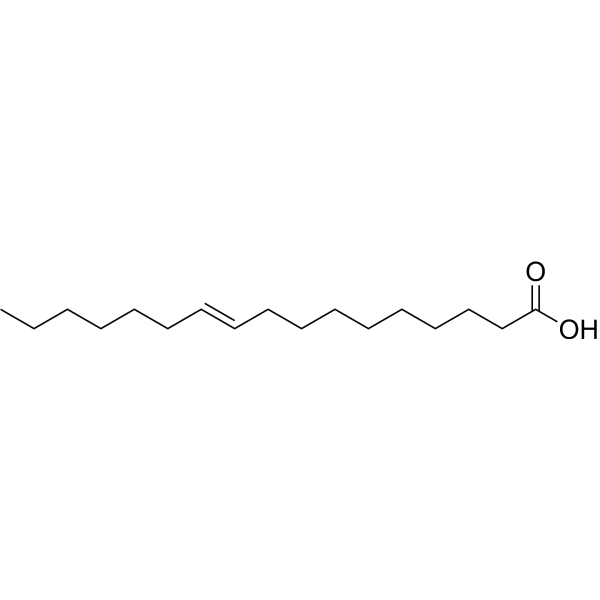
trans-10-Heptadecenoic acid is a trans-fatty acid. trans-10-Heptadecenoic acid synthesizes polyhydroxy-chain alkanoates under the action of 2, 4-dienyl-CoA reductase and Delta3, Delta2-enyl-CoA isomerase. In the absence of 2, 4-dienyl-CoA reductase, trans-10-Heptadecenoic acid is degraded by enyl-CoA hydratase II of the multifunctional enzyme (MFE). trans-10-Heptadecenoic acid leads to massive intracellular carbon outflow through reductase dependent and direct MFE dependent pathways .
|
-
-
- HY-B1052S
-
|
|
Adrenergic Receptor
|
Neurological Disease
Metabolic Disease
|
|
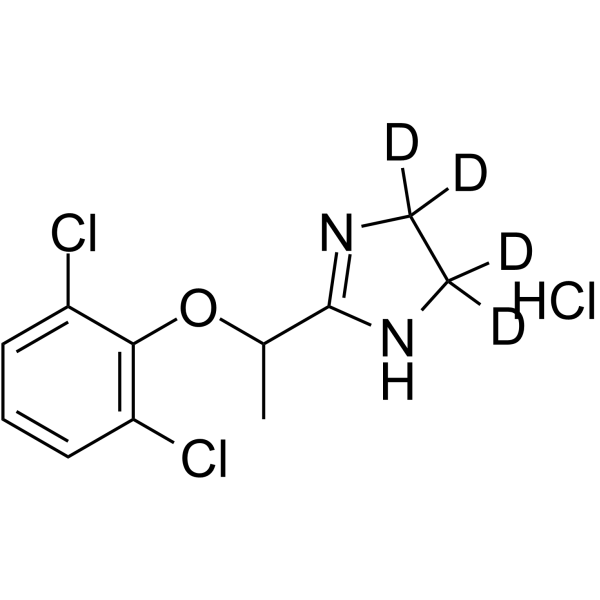
Lofexidine-d4 hydrochloride is the deuterium labeled Lofexidine hydrochloride (HY-B1052). Lofexidine hydrochloride (Baq-168) is an orally active agonist of the imidazoline I1 receptor (imidazoline I1 receptor) (Ki: 1.9 nM) and α2-adrenergic receptor (α2-adrenergic receptor). Lofexidine hydrochloride binds to the α2A-adrenergic receptor, reduces sympathetic outflow, lowers blood pressure, and exhibits vasoconstrictive effects. Lofexidine hydrochloride regulates the expression of c-fos and alleviates opioid withdrawal symptoms. Lofexidine hydrochloride is applicable to research on opioid addiction and withdrawal .
|
-
-
- HY-19518R
-
|
NCX116 (Standard); LBN (Standard)
|
Reference Standards
Prostaglandin Receptor
|
Neurological Disease
|
|
Latanoprostene bunod (NCX116; LBN) (Standard) is the analytical standard of Latanoprostene bunod. This product is intended for research and analytical applications. Latanoprostene bunod is a nitric oxide-releasing prostaglandin F2α analog. Latanoprostene bunod is a prodrug that, upon instillation into the eye, is hydrolyzed by corneal esterases into two active metabolites: Latanoprost (HY-B0577) and NO. Latanoprost activates the prostaglandin FP receptor to increase the outflow of aqueous humor through the uveoscleral pathway. NO increases aqueous humor drainage through the trabecular meshwork pathway, achieving synergistic enhancement targeting the dual pathways of aqueous humor outflow. Latanoprostene bunod can be used in research related to open-angle glaucoma and ocular hypertension.
|
-
-
- HY-P10289A
-
|
NPW30, rat acetate
|
Neuropeptide B/W Receptor
|
Neurological Disease
|
|
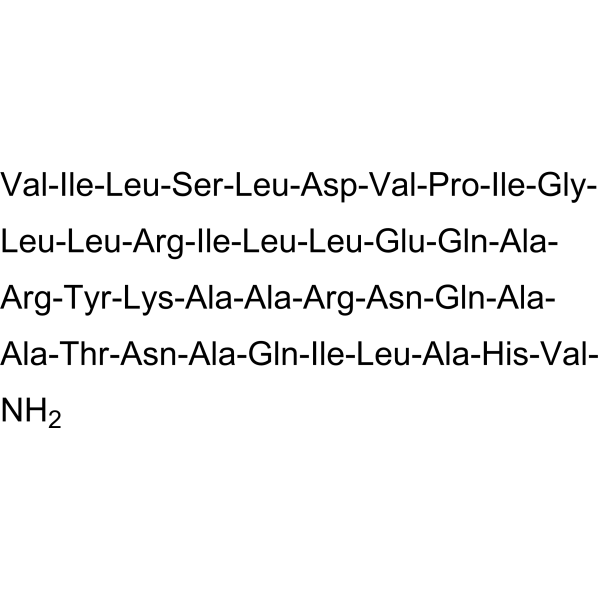
Neuropeptide W-30 (rat) is an important stress mediator in the central nervous system that modulates the hypothalamus-pituitary-adrenal (HPA) axis and sympathetic outflow. Neuropeptide W-30 (rat) is an endogenous ligand for the two structurally related orphan G-protein-coupled receptors (GPCRs) GPR7 and GPR8. NPW-30 activates and binds to both GPR7 and GPR8 at similar effective doses .
|
-
-
- HY-P10287
-
|
NPW30, human
|
Neuropeptide B/W Receptor
|
Neurological Disease
|
|
Neuropeptide W-30 (human) is an important stress mediator in the central nervous system that modulates the hypothalamus-pituitary-adrenal (HPA) axis and sympathetic outflow. Neuropeptide W-30 (human) is an endogenous ligand for the two structurally related orphan G-protein-coupled receptors (GPCRs) GPR7 and GPR8. Neuropeptide W-30 (human) activates and binds to both GPR7 and GPR8 at similar effective doses .
|
-
-
- HY-172634
-
|
8-Iso-17-phenyl PGF2β
|
Biochemical Assay Reagents
Drug Isomer
|
Others
|
|
8-Iso-17-phenyl trinor prostaglandin F2β is an isomer of Bimatoprost (HY-B0191). Bimatoprost is a prostaglandin analog. Bimatoprost lowers intraocular pressure by regulating scleral and trabecular outflow.
|
-
-
- HY-106037
-
|
|
Prostaglandin Receptor
|
Others
|
|
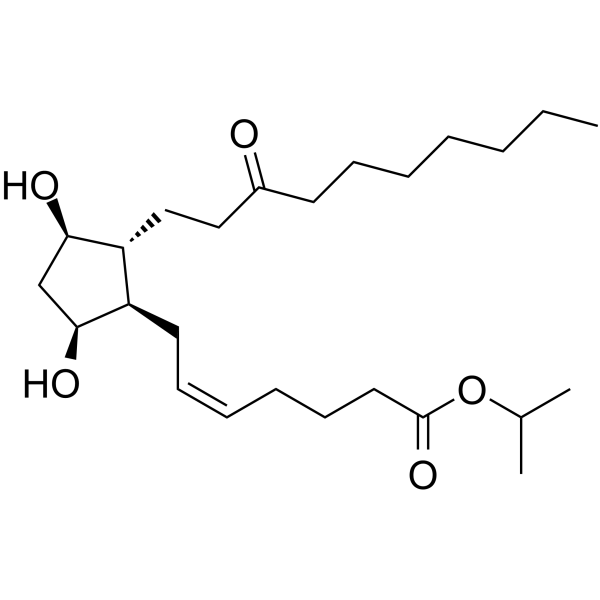
PGF2α-isopropyl ester is a Prostaglandin F2α (HY-12956) derivative, which is active in lowering the intraocular pressure (IOP) through increased uveoscleral outflow of aqueous humor. PGF2α-isopropyl ester causes side effects of conjunctival hyperemia and ocular irritation .
|
-
-
- HY-B0191R
-
|
AGN 192024 (Standard)
|
Reference Standards
Prostaglandin Receptor
MMP
|
Cardiovascular Disease
Endocrinology
|
|
Bimatoprost (Standard) is the analytical standard of Bimatoprost. This product is intended for research and analytical applications. Bimatoprost is a prostaglandin analog that reduces intraocular pressure by regulating scleral and trabecular outflow. Bimatoprost is used in the study of open-angle glaucoma, ocular hypertension, and other forms of glaucoma. Topical application of bimatoprost induces fat atrophy and causes a deepening of the eyelid sulcus [4] .
|
-
-
- HY-16758A
-
|
AR-12286 hydrochloride
|
ROCK
|
Neurological Disease
|
|
Verosudil (AR-12286) hydrochloride is the hydrochloride form of Verosudil (HY-16758). Verosudil hydrochloride is a ROCK inhibitor. Verosudil hydrochloride has equal inhibitory activity against ROCK1 and ROCK2 (Ki: 2 nM). Verosudil hydrochloride is less selective for PKA, PKCT, MRCKA, and CAM2A (Ki: 69 nM, 9322 nM, 28 nM, 5855 nM, respectively). Verosudil hydrochloride increases trabecular outflow capacity to reduce intraocular pressure. Verosudil hydrochloride is useful in the study of glaucoma and ocular hypertension .
|
-
-
- HY-P10289
-
|
NPW30, rat
|
Neuropeptide B/W Receptor
|
Neurological Disease
|
|
Neuropeptide W-30 (rat) is an important stress mediator in the central nervous system that modulates the hypothalamus-pituitary-adrenal (HPA) axis and sympathetic outflow. Neuropeptide W-30 (rat) is an endogenous ligand for the two structurally related orphan G-protein-coupled receptors (GPCRs) GPR7 and GPR8. NPW-30 activates and binds to both GPR7 and GPR8 at similar effective doses .
|
-
-
- HY-W263279
-
|
(E)-Wy-8678
|
Adrenergic Receptor
|
Cardiovascular Disease
Neurological Disease
|
|
(E)-Guanabenz ((E)-Wy-8678) is an orally active central α2-adrenoceptor agonist. (E)-Guanabenz has antihypertensive activity, acts via stimulating central α2-adrenoceptors, and reducing net sympathetic outflow into the periphery. (E)-Guanabenz also directly binds to and inhibits GADD34, and has neuroprotective activity. (E)-Guanabenz can be used for researching hypertension and Parkinson disease .
|
-
-
- HY-120688
-
|
|
5-HT Receptor
|
Neurological Disease
|
|
L-772405 is a selective 5-HT1D receptor agonist with the Ki values of 318, 29 and > 1000 nM aganist guinea pig 5-HT1B receptor, guinea pig 5-HT1D receptor and rat 5-HT rransporter, respectively. L-772405 decreases the potassium-induced outflow of 5-HT with an IC50 value of 240 nM .
|
-
-
- HY-B0098C
-
|
(S)-UK 33274
|
Adrenergic Receptor
|
Cardiovascular Disease
Neurological Disease
|
|
(S)-Doxazosin is a long-acting selective α1-adrenoceptor antagonist. (S)-Doxazosin exhibits antihypertensive activity through lowering total perioheral resistance by selective postsynaptic α1-blockade. (S)-Doxazosin reduces blood pressure in dog model with experimentally induced renal hypertension. (S)-Doxazosin can alleviate bladder outflow obstruction. (S)-Doxazosin can also be studied in mental health disorder-related research .
|
-
-
- HY-B1052S1
-
|
|
Isotope-Labeled Compounds
Adrenergic Receptor
|
Neurological Disease
Metabolic Disease
|
|
Lofexidine-d4 is deuterium labeled Lofexidine (HY-B1052A). Lofexidine is an orally active agonist of the imidazoline I1 receptor (imidazoline I1 receptor) (Ki: 1.9 nM) and α2-adrenergic receptor (α2-adrenergic receptor). Lofexidine binds to the α2A-adrenergic receptor, reduces sympathetic outflow, lowers blood pressure, and exhibits vasoconstrictive effects. Lofexidine regulates the expression of c-fos and alleviates opioid withdrawal symptoms. Lofexidine is applicable to research on opioid addiction and withdrawal .
|
-
-
- HY-B1052R
-
|
Baq-168 (Standard); MDL-14042 (Standard)
|
Adrenergic Receptor
Reference Standards
|
Neurological Disease
Metabolic Disease
|
|
Lofexidine (Baq-168) hydrochloride Standard is the analytical standard of Lofexidine hydrochloride (HY-B1052). This product is intended for research and analytical applications. Lofexidine hydrochloride (Baq-168) is an orally active agonist of the imidazoline I1 receptor (imidazoline I1 receptor) (Ki: 1.9 nM) and α2-adrenergic receptor (α2-adrenergic receptor). Lofexidine hydrochloride binds to the α2A-adrenergic receptor, reduces sympathetic outflow, lowers blood pressure, and exhibits vasoconstrictive effects. Lofexidine hydrochloride regulates the expression of c-fos and alleviates opioid withdrawal symptoms. Lofexidine hydrochloride is applicable to research on opioid addiction and withdrawal .
|
-
-
- HY-123958
-
|
|
ROCK
β-catenin
Collagen
|
Cardiovascular Disease
Neurological Disease
Inflammation/Immunology
|
|
SB772077B is a ROCK inhibitor. SB772077B has an anti-inflammatory activity and enhances aqueous outflow facility (OF) by inactivating RhoA/ROCK signal pathway. SB772077B significantly reduces the mRNA level of β-catenin and protein level of fibrotic markers, such as vinculin, fibronectin, collagen 1 A and vimentin. SB772077B also has vasodialatory activity and decreases pulmonary and systemic blood pressure. SB772077B can be used for glaucoma research and pulmonary hypertensive disorder research .
|
-
-
- HY-175085
-
|
|
Drug Derivative
|
Endocrinology
|
|
17-Phenyl trinor 8-iso prostaglandin E2 is a prostaglandin analog that reduces intraocular pressure (IOP) in both normal and glaucomatous monkey eyes. 17-Phenyl trinor 8-iso prostaglandin E2 lowers IOP primarily by increasing trabecular outflow facility .
|
-
-
- HY-182473
-
|
|
Prostaglandin Receptor
|
Neurological Disease
|
|
AL-6556 is a full agonist of the DP receptor and a partial agonist of the EP2 receptor. AL-6556 has an EC50 of 799 nM for bovine DP, a Ki of 3200 nM for human DP, and an EC50 of 1180 nM for human EP2, with selectivity over EP3, FP, IP, TP and 19 non-prostaglandin receptors. AL-6556 stimulates cAMP production via receptor activation and reduces intraocular pressure through aqueous humor inflow and outflow mechanisms. AL-6556 can be used in research related to ocular hypertension and glaucoma .
|
-
-
- HY-183853
-
|
|
mAChR
Reactive Oxygen Species (ROS)
DNA/RNA Synthesis
Apoptosis
SOD
Sirtuin
|
Cardiovascular Disease
Neurological Disease
Cancer
|
|
Arecaidine-propargyl ester is a selective M2 muscarinic receptor agonist with blood-brain barrier permeability, with a pKi of 5.91 for hm1, 7.06 for hm2, 6.07 for hm3, 6.01 for hm4, and 6.03 for hm5. Arecaidine-propargyl ester stimulates central and peripheral muscarinic receptors. Arecaidine-propargyl ester increases intracellular ROS, induces DNA damage and Apoptosis, and upregulates the expression of MnSOD and SIRT1. Arecaidine-propargyl ester reduces sympathetic nerve outflow, induces dose-dependent hypotension, and triggers negative chronotropic effects at high peripheral doses. Arecaidine-propargyl ester can be used in research related to Alzheimer's disease and glioblastoma .
|
-
| Cat. No. |
Product Name |
Target |
Research Area |
-
- HY-P2847
-
|
|
CRFR
|
Metabolic Disease
Endocrinology
|
|
Urocortin II, mouse is a potent and selective endogenous peptide agonist of type-2 corticotropin-releasing factor (CRF2) receptor with Ki values of 0.66 nM and ﹥100 nM for CRFR2 and CRFR1, respectively. Urocortin II, mouse activates CRF2 receptors in a cAMP/PKA- and Ca 2+/CaMKII-dependent manner.Urocortin II, mouse is expressed in discrete areas of the central nervous system, and activates central neurons involved in the processing of visceral sensory information, and in modulating autonomic outflow .
|
-
- HY-P10289A
-
|
NPW30, rat acetate
|
Neuropeptide B/W Receptor
|
Neurological Disease
|
|
Neuropeptide W-30 (rat) is an important stress mediator in the central nervous system that modulates the hypothalamus-pituitary-adrenal (HPA) axis and sympathetic outflow. Neuropeptide W-30 (rat) is an endogenous ligand for the two structurally related orphan G-protein-coupled receptors (GPCRs) GPR7 and GPR8. NPW-30 activates and binds to both GPR7 and GPR8 at similar effective doses .
|
-
- HY-P10287
-
|
NPW30, human
|
Neuropeptide B/W Receptor
|
Neurological Disease
|
|
Neuropeptide W-30 (human) is an important stress mediator in the central nervous system that modulates the hypothalamus-pituitary-adrenal (HPA) axis and sympathetic outflow. Neuropeptide W-30 (human) is an endogenous ligand for the two structurally related orphan G-protein-coupled receptors (GPCRs) GPR7 and GPR8. Neuropeptide W-30 (human) activates and binds to both GPR7 and GPR8 at similar effective doses .
|
-
- HY-P10289
-
|
NPW30, rat
|
Neuropeptide B/W Receptor
|
Neurological Disease
|
|
Neuropeptide W-30 (rat) is an important stress mediator in the central nervous system that modulates the hypothalamus-pituitary-adrenal (HPA) axis and sympathetic outflow. Neuropeptide W-30 (rat) is an endogenous ligand for the two structurally related orphan G-protein-coupled receptors (GPCRs) GPR7 and GPR8. NPW-30 activates and binds to both GPR7 and GPR8 at similar effective doses .
|
| Cat. No. |
Product Name |
Category |
Target |
Chemical Structure |
-
- HY-116037A
-
|
|
Ketones, Aldehydes, Acids
Endogenous metabolite
Source Classification
|
Others
|
|
trans-10-Heptadecenoic acid is a trans-fatty acid. trans-10-Heptadecenoic acid synthesizes polyhydroxy-chain alkanoates under the action of 2, 4-dienyl-CoA reductase and Delta3, Delta2-enyl-CoA isomerase. In the absence of 2, 4-dienyl-CoA reductase, trans-10-Heptadecenoic acid is degraded by enyl-CoA hydratase II of the multifunctional enzyme (MFE). trans-10-Heptadecenoic acid leads to massive intracellular carbon outflow through reductase dependent and direct MFE dependent pathways .
|
-
| Cat. No. |
Product Name |
Chemical Structure |
-
- HY-B1052S
-
|
|
|
Lofexidine-d4 hydrochloride is the deuterium labeled Lofexidine hydrochloride (HY-B1052). Lofexidine hydrochloride (Baq-168) is an orally active agonist of the imidazoline I1 receptor (imidazoline I1 receptor) (Ki: 1.9 nM) and α2-adrenergic receptor (α2-adrenergic receptor). Lofexidine hydrochloride binds to the α2A-adrenergic receptor, reduces sympathetic outflow, lowers blood pressure, and exhibits vasoconstrictive effects. Lofexidine hydrochloride regulates the expression of c-fos and alleviates opioid withdrawal symptoms. Lofexidine hydrochloride is applicable to research on opioid addiction and withdrawal .
|
-
-
- HY-B1052S1
-
|
|
|
Lofexidine-d4 is deuterium labeled Lofexidine (HY-B1052A). Lofexidine is an orally active agonist of the imidazoline I1 receptor (imidazoline I1 receptor) (Ki: 1.9 nM) and α2-adrenergic receptor (α2-adrenergic receptor). Lofexidine binds to the α2A-adrenergic receptor, reduces sympathetic outflow, lowers blood pressure, and exhibits vasoconstrictive effects. Lofexidine regulates the expression of c-fos and alleviates opioid withdrawal symptoms. Lofexidine is applicable to research on opioid addiction and withdrawal .
|
-
| Cat. No. |
Product Name |
|
Classification |
-
- HY-183853
-
|
|
|
Alkynes
|
|
Arecaidine-propargyl ester is a selective M2 muscarinic receptor agonist with blood-brain barrier permeability, with a pKi of 5.91 for hm1, 7.06 for hm2, 6.07 for hm3, 6.01 for hm4, and 6.03 for hm5. Arecaidine-propargyl ester stimulates central and peripheral muscarinic receptors. Arecaidine-propargyl ester increases intracellular ROS, induces DNA damage and Apoptosis, and upregulates the expression of MnSOD and SIRT1. Arecaidine-propargyl ester reduces sympathetic nerve outflow, induces dose-dependent hypotension, and triggers negative chronotropic effects at high peripheral doses. Arecaidine-propargyl ester can be used in research related to Alzheimer's disease and glioblastoma .
|
Your information is safe with us. * Required Fields.
Inquiry Information
- Product Name:
- Cat. No.:
- Quantity:
- MCE Japan Authorized Agent:

