1. Search Result
Search Result
Results for "

peptide coupling reactions

" in MedChemExpress (MCE) Product Catalog:

17

Inhibitors & Agonists

6

Biochemical Assay Reagents

1

Natural
Products

1

Click Chemistry

Cat. No. Product Name Target Research Areas Chemical Structure
  • HY-Y1703

    Biochemical Assay Reagents Others
    HATU is a third-generation uronium salt peptide coupling reagent. HATU increases the rate of peptide coupling reactions, activates amino acids, promotes peptide bond formation in both solution-phase and solid-phase synthesis, and also facilitates peptide assembly, fragment coupling, and linear peptide cyclization. HATU can promote the N-acylation of chitosan to generate amide-linked cationic derivatives with a controllable degree of substitution. HATU is commonly used in amine acylation reactions .
    HATU
  • HY-100138

    Radionuclide-Drug Conjugates (RDCs) ADC Linker Cancer
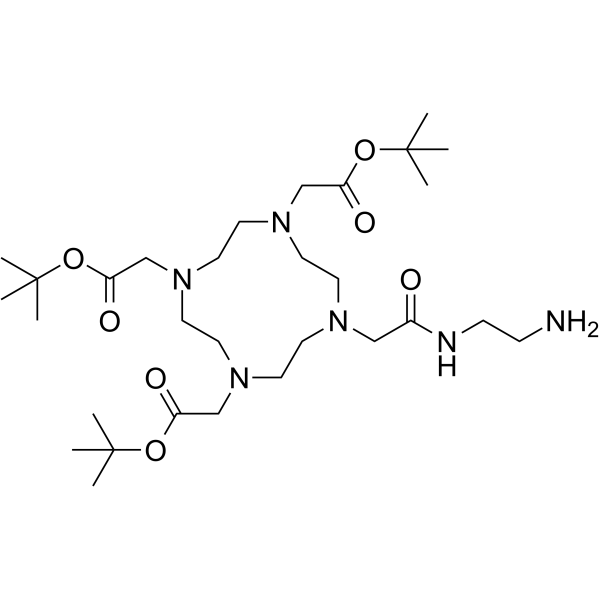
    2-Aminoethyl-mono-amide-DOTA-tris(tBu ester) is a metal chelator precursor containing a DOTA macrocyclic structure. DOTA can form highly stable complexes with metal ions (such as 68Ga, 177Lu) through four nitrogen atoms and four carboxylic acid groups to mediate targeted delivery of radionuclides. The tert-butyl ester group (tBu ester) of 2-Aminoethyl-mono-amide-DOTA-tris(tBu ester) also protects the carboxylic acid group during synthesis, and forms a free carboxyl group after deprotection reaction for coupling with targeting molecules (such as antibodies, peptides). 2-Aminoethyl-mono-amide-DOTA-tris(tBu ester) may be combined with tumor pre-targeting systems through bioorthogonal reactions (such as reverse electron demand Diels-Alder reaction) to study radioactive imaging or therapy of tumor tissues, and is mainly used in tumor pre-targeting research in the field of nuclear medicine .
    2-Aminoethyl-mono-amide-DOTA-tris(tBu ester)
  • HY-Y1666

    Biochemical Assay Reagents Others
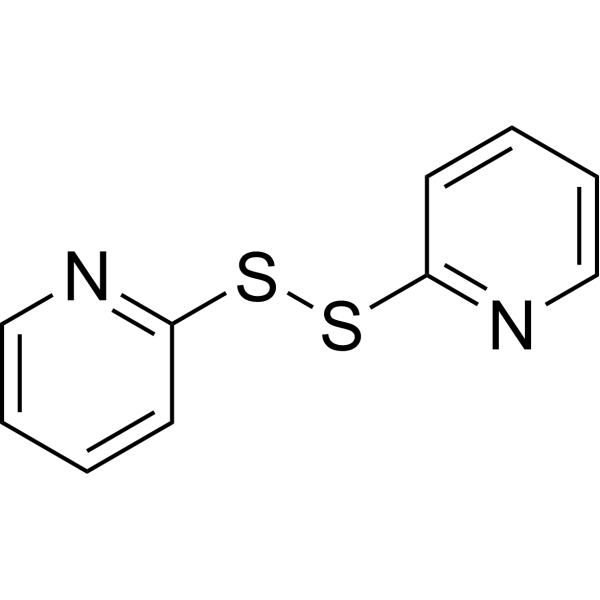
    2,2′-Dipyridyl disulfide is a useful reagent for the determination of sulfhydryl groups. 2,2′-Dipyridyl disulfide is a common reagent in peptide chemistry, often used in oxidation–reduction condensations to form peptide bonds or in coupling reactions to form disulfide-linked heterodimers .
    2,2′-Dipyridyl disulfide
  • HY-Y0912

    N-HBTU

    Biochemical Assay Reagents Inflammation/Immunology
    HBTU (N-HBTU) is a guanidinium-based peptide coupling reagent and immunological sensitizer. HBTU can be used in combination with bases such as DIPEA (HY-130142) to complete coupling reactions, with HOBt and TMU as by-products. HBTU is a standard reagent in automated solid-phase peptide synthesis, particularly for the Fmoc/tBu strategy, which effectively promotes coupling steps, but it is not suitable for sterically hindered amino acids or dipeptide derivatives. HBTU can induce rhinitis, dermatitis, bronchial asthma and severe allergic reactions. HBTU can be used to study the pathogenesis of allergic reactions, occupational rhinitis, allergic contact dermatitis and bronchial asthma .
    HBTU
  • HY-W008558

    Amino Acid Derivatives Others
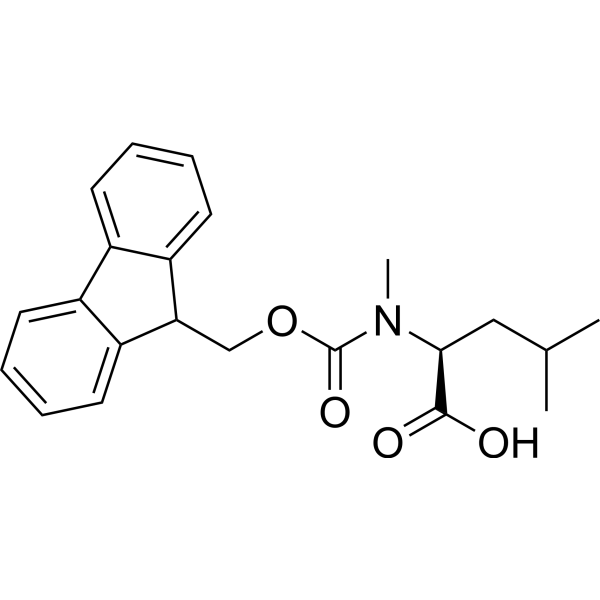
    Fmoc-N-Me-Leu-OH is an N-Fmoc-N-methyl amino acid that can be used in peptide coupling reactions. Fmoc-N-Me-Leu-OH is primarily used as a standard building block in solid-phase peptide synthesis (SPPS) to introduce N-methylleucine residues into peptide chains, thereby enhancing the enzymatic stability, altering conformational flexibility, and modifying the biological activity of the target peptide .
    Fmoc-N-Me-Leu-OH
  • HY-D0177

    Benzotriazole-1-yl-oxytripyrrolidinophosphonium hexafluorophosphate

    Biochemical Assay Reagents Others
    (Benzotriazol-1-yloxy)tripyrrolidinophosphonium hexafluorophosphate (Benzotriazole-1-yl-oxytripyrrolidinophosphonium hexafluorophosphate) is a peptide coupling reagent and BOP analog. (Benzotriazol-1-yloxy)tripyrrolidinophosphonium hexafluorophosphate promotes the reaction of amino and carboxyl groups to form peptide bonds. (Benzotriazol-1-yloxy)tripyrrolidinophosphonium hexafluorophosphate can be used in the synthesis of peptide compounds .
    (Benzotriazol-1-yloxy)tripyrrolidinophosphonium hexafluorophosphate
  • HY-168940B

    Drug Intermediate Cancer
    NH2-PEG2000-COOH is a heterofunctional polyethylene glycol with one amino terminal group and one carboxyl terminal group. NH2-PEG2000-COOH reacts with N-succinimidyl-6-maleimidohexanoate to introduce a maleimide terminal group, followed by conjugation with thiolated RGD peptide via a thiol-maleimide coupling reaction to synthesize RGD-PEG-COOH. NH2-PEG2000-COOH can be used in cancer research .
    NH2-PEG2000-COOH
  • HY-107783

    Biochemical Assay Reagents Others
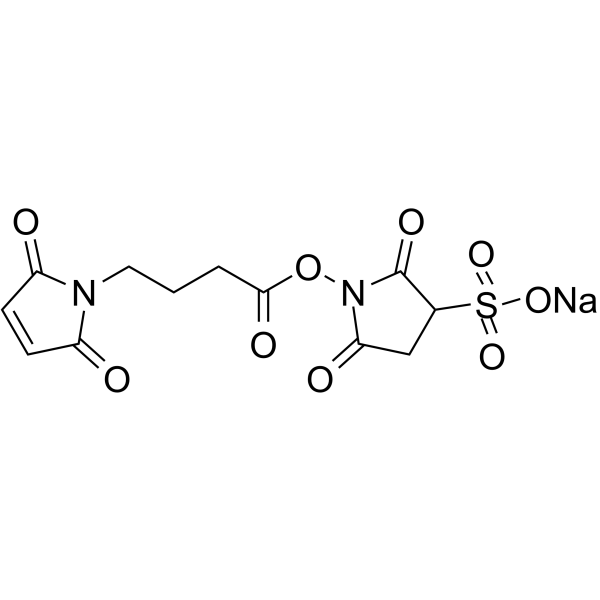
    Sulfo-GMBS is a crosslinker widely used in chemical modification and coupling reactions of proteins and peptides. Among amine-thiol crosslinkers, Sulfo-GMBS generates the largest number of crosslinks and covers most of the crosslinks identified by AMAS and GMBS .
    Sulfo-GMBS
  • HY-W010986

    Drug Intermediate Others
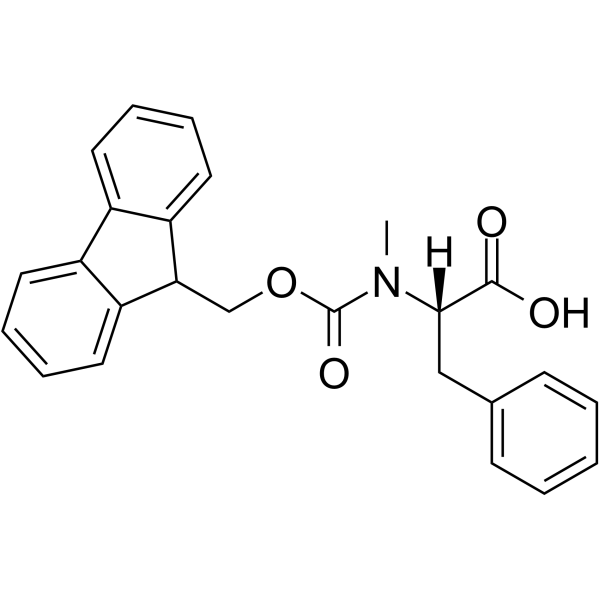
    Fmoc-N-Me-Phe-OH is an N-methylated amino acid that can be used for the synthesis of some active compounds .
    Fmoc-N-Me-Phe-OH
  • HY-151782

    ADC Linker Others
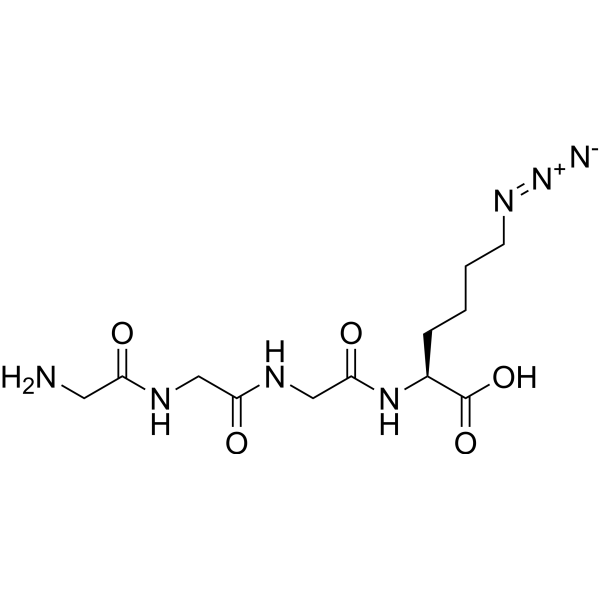
    The azide function is widely used for coupling to alkyne-containing fragments via the renowned Click reaction. Polyglycine fragments containing up to 7 glycines are reported to bind to surfaces and have potential application in nanotechnology constructs: constructs of Gly7-NHCH2-fragment containing peptides bind on mica surface in aqueous solution . It contains an azide group and can undergo copper-catalyzed azide-alkyne cycloaddition (CuAAc) with molecules containing alkyne groups. It can also undergo ring strain-promoted alkyne-azide cycloaddition (SPAAC) with molecules containing DBCO or BCN groups.
    H-(Gly)3-Lys(N3)-OH
  • HY-118112

    Biochemical Assay Reagents Others
    4-N-Maleimidobenzoicacid-NHS is a PEG linker that finds utility in bioconjugation endeavors and protein labeling ventures. Specifically designed for selective reaction with thiol groups, the maleimide group establishes covalent linkages, thereby facilitating the coupling of proteins, peptides, or diverse molecules to thiol-bearing biomolecules. The NHS ester is able to react specifically and efficiently with primary amines (e.g. the side chain of lysine residues or aminosilane-coated surfaces) at neutral or slightly basic conditions to form a covalent bond.
    4-N-Maleimidobenzoicacid-NHS
  • HY-120286

    Drug Intermediate Others
    K-13 is a cyclic peptide compound synthesized by a specific organozinc reagent. Its synthesis process involves intermolecular and intramolecular Negishi cross-coupling reactions and is one of the shortest routes reported for the synthesis of such cyclic peptides.
    K-13
  • HY-174961

    Fmoc-NH-PEG1000-Mal

    Biochemical Assay Reagents Others
    Fmoc-PEG1000-Maleimide (Fmoc-NH-PEG1000-Mal) is a PEG derivative with an Fmoc protecting group and a Maleimide (HY-W007324) reactive group. Fmoc is a commonly used amino protecting group that protects the amino group from unwanted reactions until it is removed for a specific coupling reaction. Maleimide forms a stable thioether bond with sulfhydryl (-SH) groups. PEG modification can improve solubility and stability and reduce the immunogenicity of proteins and peptides .
    Fmoc-PEG1000-Maleimide
  • HY-174961C

    Fmoc-NH-PEG5000-Mal

    Biochemical Assay Reagents Others
    Fmoc-PEG5000-Maleimide (Fmoc-NH-PEG5000-Mal) is a PEG derivative with an Fmoc protecting group and a Maleimide (HY-W007324) reactive group. Fmoc is a commonly used amino protecting group that protects the amino group from unwanted reactions until it is removed for a specific coupling reaction. Maleimide forms a stable thioether bond with sulfhydryl (-SH) groups. PEG modification can improve solubility and stability and reduce the immunogenicity of proteins and peptides .
    Fmoc-PEG5000-Maleimide
  • HY-174961B

    Fmoc-NH-PEG3400-Mal

    Biochemical Assay Reagents Others
    Fmoc-PEG3400-Maleimide (Fmoc-NH-PEG3400-Mal) is a PEG derivative with an Fmoc protecting group and a Maleimide (HY-W007324) reactive group. Fmoc is a commonly used amino protecting group that protects the amino group from unwanted reactions until it is removed for a specific coupling reaction. Maleimide forms a stable thioether bond with sulfhydryl (-SH) groups. PEG modification can improve solubility and stability and reduce the immunogenicity of proteins and peptides .
    Fmoc-PEG3400-Maleimide
  • HY-174961A

    Fmoc-NH-PEG2000-Mal

    Biochemical Assay Reagents Others
    Fmoc-PEG2000-Maleimide (Fmoc-NH-PEG2000-Mal) is a PEG derivative with an Fmoc protecting group and a Maleimide (HY-W007324) reactive group. Fmoc is a commonly used amino protecting group that protects the amino group from unwanted reactions until it is removed for a specific coupling reaction. Maleimide forms a stable thioether bond with sulfhydryl (-SH) groups. PEG modification can improve solubility and stability and reduce the immunogenicity of proteins and peptides .
    Fmoc-PEG2000-Maleimide
  • HY-100138R

    Radionuclide-Drug Conjugates (RDCs) ADC Linker Reference Standards Cancer
    2-Aminoethyl-mono-amide-DOTA-tris(tBu ester) (Standard) is the analytical standard of 2-Aminoethyl-mono-amide-DOTA-tris(tBu ester) (HY-100138). This product is intended for research and analytical applications. 2-Aminoethyl-mono-amide-DOTA-tris(tBu ester) is a metal chelator precursor containing a DOTA macrocyclic structure. DOTA can form highly stable complexes with metal ions (such as 68Ga, 177Lu) through four nitrogen atoms and four carboxylic acid groups to mediate targeted delivery of radionuclides. The tert-butyl ester group (tBu ester) of 2-Aminoethyl-mono-amide-DOTA-tris(tBu ester) also protects the carboxylic acid group during synthesis, and forms a free carboxyl group after deprotection reaction for coupling with targeting molecules (such as antibodies, peptides). 2-Aminoethyl-mono-amide-DOTA-tris(tBu ester) may be combined with tumor pre-targeting systems through bioorthogonal reactions (such as reverse electron demand Diels-Alder reaction) to study radioactive imaging or therapy of tumor tissues, and is mainly used in tumor pre-targeting research in the field of nuclear medicine .
    2-Aminoethyl-mono-amide-DOTA-tris(tBu ester) (Standard)

Inquiry Online

Your information is safe with us. * Required Fields.

Salutation


Country or Region *

Applicant Name *


Organization Name *

Department *


Email Address *


Product Name *

Cat. No.


Requested quantity *

Phone Number *


Remarks

Inquiry Online

Inquiry Information

Product Name:
Cat. No.:
Quantity:
MCE Japan Authorized Agent:

