9 Results for "

phenylpropanoid derivative

" in MedChemExpress (MCE) Product Catalog:
Products (9)

9 Results for "phenylpropanoid derivative" in MCE Product Catalog:

1
1 Cited Publications
Cat. No.: HY-W097899
CAS No.: 1196-92-5
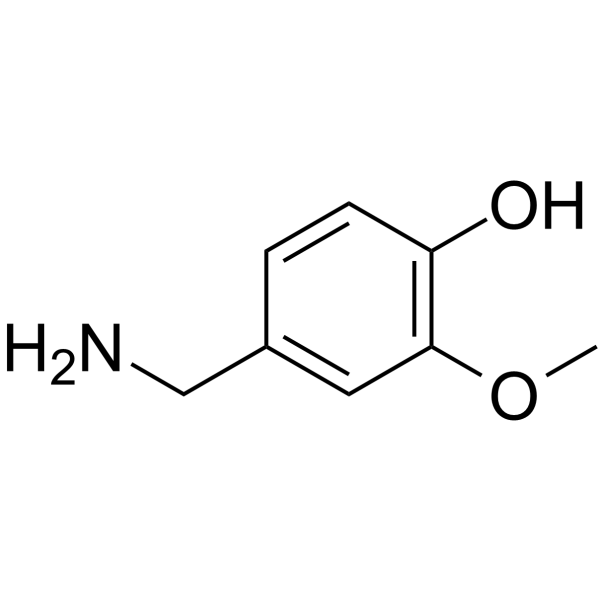
Vanillylamine is an immediate precursor for capsaicinoids. Vanillylamine is a derivative of Vanillin (HY-N0098) is synthesized through a transaminase reaction in the phenylpropanoid pathway of capsaicinoid synthesis. Vanillylamine significantly alleviates myelosuppression caused by abdominal and pelvic tumor chemotherapy .
loading...
    loading...
Cat. No.: HY-78004S
CAS No.: 94371-89-8
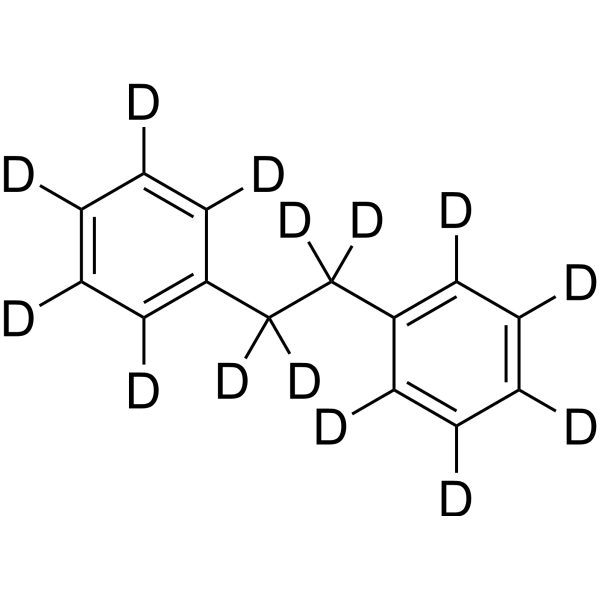
1,2-Diphenylethane-d14 is the d14-labeled Bibenzyl (HY-78004). Bibenzyl (s-Diphenylethane; Dibenzyl) is the parent core structure of bibenzyl-type natural products and an intermediate in organic synthesis. Hydroxyl-substituted derivatives of Bibenzyl are mainly isolated from plants such as Dendrobium (Orchidaceae) and Cannabaceae. These derivatives accumulate when plants are exposed to fungal infection and biotic stress, and exhibit antioxidant, anti-inflammatory, and anti-hepatic steatosis activities .
loading...
    loading...
Cat. No.: HY-Y0024
CAS No.: 100-06-1
4-Methoxyacetophenone is a versatile aromatic ketone that is widely used in the synthesis of various organic compounds. 4-Methoxyacetophenone has a pleasant aroma and can be used to create scents. 4-Methoxyacetophenone can also be used to make dyes and pigments .
loading...
    loading...
Cat. No.: HY-78004
CAS No.: 103-29-7
Synonyms: s-Diphenylethane; Dibenzyl
Bibenzyl (s-Diphenylethane; Dibenzyl) is the parent core structure of bibenzyl-type natural products and an intermediate in organic synthesis. Hydroxyl-substituted derivatives of Bibenzyl are mainly isolated from plants such as Dendrobium (Orchidaceae) and Cannabaceae. These derivatives accumulate when plants are exposed to fungal infection and biotic stress, and exhibit antioxidant, anti-inflammatory, and anti-hepatic steatosis activities .
loading...
    loading...
Cat. No.: HY-W097899R
CAS No.: 1196-92-5
Vanillylamine is an immediate precursor for capsaicinoids. Vanillylamine is a derivative of Vanillin (HY-N0098) is synthesized through a transaminase reaction in the phenylpropanoid pathway of capsaicinoid synthesis. Vanillylamine significantly alleviates myelosuppression caused by abdominal and pelvic tumor chemotherapy .
loading...
    loading...
Cat. No.: HY-78004S1
CAS No.: 20389-19-9
Synonyms: Dibenzil-d4; s-Diphenylethane-d4; Bibenzyl-d4
1,2-Diphenylethane-d4 (Dibenzil-d4; s-Diphenylethane-d4; Bibenzyl-d4) is the d4-labeled Bibenzyl (HY-78004). Bibenzyl (s-Diphenylethane; Dibenzyl) is the parent core structure of bibenzyl-type natural products and an intermediate in organic synthesis. Hydroxyl-substituted derivatives of Bibenzyl are mainly isolated from plants such as Dendrobium (Orchidaceae) and Cannabaceae. These derivatives accumulate when plants are exposed to fungal infection and biotic stress, and exhibit antioxidant, anti-inflammatory, and anti-hepatic steatosis activities .
loading...
    loading...
Cat. No.: HY-N17069
CAS No.: 2803716-48-3
Penthoroside A is a phenylpropanoid derivative that can be isolated from the aerial parts of Oenanthe javanica .
loading...
    loading...
Cat. No.: HY-N18052
CAS No.: 872037-79-1
Massonianoside E is an antioxidant that has been found to be present in the fruits of Viburnum rhytidophyllum Hemsl. Massonianoside E can exert antioxidant activity in DPPH, ABTS and PTIO assays .
loading...
    loading...
Cat. No.: HY-L021M
5,101 compounds

From the discovery of traditional Chinese medicine to modern antibiotics, natural products have played an important role in the drug development process. A review of all FDA-approved drugs shows that natural products and natural product-like compounds account for more than one-third of all approved drugs. Nearly half of that came from mammals, a quarter from microbes, and a quarter from plants. Over time, the proportion of microbial natural products and natural product derivatives in approved drugs has increased. Natural products have natural advantages in drug development and can be used as lead compounds in drug discovery for drug identification and mechanism research.

MCE provides a unique collection of 5,101 natural compounds and natural product-like compounds that contain saccharides and glycosides, phenylpropanoids, quinones, flavonoids, terpenoids and glycosides, steroids, alkaloid, phenols, acids and aldehydes. Natural product and natural product-like compounds library is a useful tool for drug discovery that can be used for high-throughput screening (HTS) and high-content screening (HCS).

