1. Search Result
Search Result
Results for "

plaque formation

" in MedChemExpress (MCE) Product Catalog:

20

Inhibitors & Agonists

1

Fluorescent Dyes

3

Inhibitory Antibodies

1

Natural
Products

Cat. No. Product Name Target Research Areas Chemical Structure
  • HY-100604

    γ-secretase Amyloid-β Neurological Disease
    JNJ-40418677 is an orally active modulator of γ-secretase, can cross the blood-brain barrier. JNJ-40418677 inhibits Aβ42 and NS2B-NS3 protease, with IC50s of 200 nM and 3.9 μM, respectively. JNJ-40418677 displays good biological tolerance, can be use for Alzheimer’s disease research .
    JNJ-40418677
  • HY-13769A
    TPT-260 Dihydrochloride
    2 Publications Verification

    NSC55712; TPU-260 Dihydrochloride

    Drug Derivative Amyloid-β Beta-secretase Cardiovascular Disease Neurological Disease Inflammation/Immunology
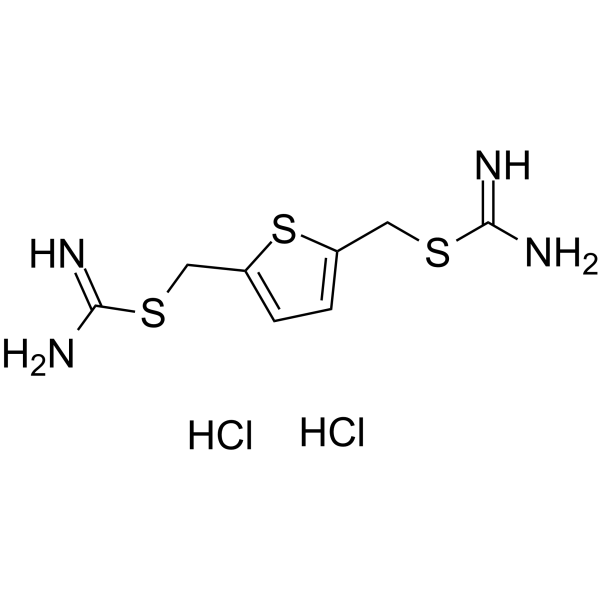
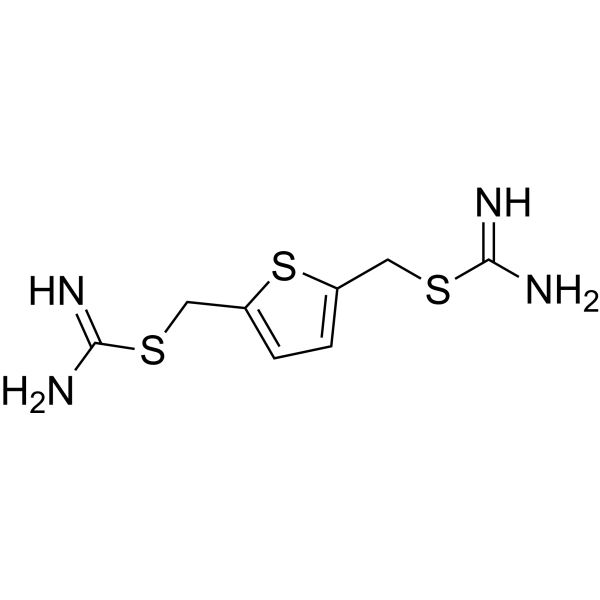
    TPT-260 Dihydrochloride (NSC55712), a thiophene thiourea derivative, is a retromer complex stabilizer against thermal denaturation (Kd = ~5 µM). TPT-260 Dihydrochloride increases the levels of retromer proteins, shifts amyloid-precursor protein (APP) away from the endosome, and decreases the pathogenic processing of APP. TPT-260 Dihydrochloride inhibits TLR4 upregulation, IKKβ phosphorylation, NF-κB p65 nuclear translocation, and NLRP3 inflammasome formation. TPT-260 Dihydrochloride improves retromer-mediated cargo trafficking, reduces brain infarct area, and decreases amyloid plaque deposition. TPT-260 Dihydrochloride exhibits minimal cytotoxicity to primary microglia at tested concentrations. TPT-260 Dihydrochloride can be used for the research of inflammatory bowel disease, ischemic stroke and Alzheimer's disease .
    TPT-260 Dihydrochloride
  • HY-120597

    Calcium Channel Neurological Disease
    SAK3 is a potent T-type voltage-gated Ca 2+ channels (T-VGCCs) enhancer. SAK3 enhances Cav3.1 and Cav3.3 T-type Ca 2+ channel currents. Acute SAK3 administration improves memory deficits in olfactory-bulbectomized mice . SAK3 inhibits amyloid β plaque formation in APP-KI mice by activating the proteasome activity .
    SAK3
  • HY-118824A

    (E/Z)-Moschamine

    Calcium Channel PDGFR ERK Cardiovascular Disease Inflammation/Immunology
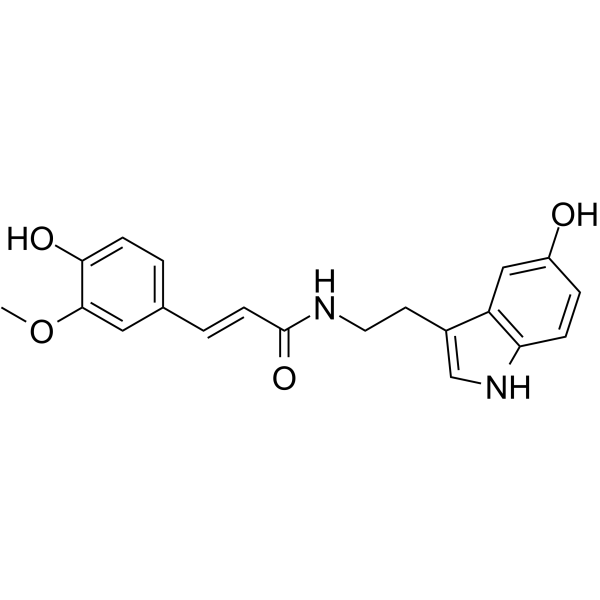
    N-Feruloylserotonin ((E/Z)-Moschamine) is a serotonin hydroxycinnamic acid amide. It can be isolated from a variety of plants, particularly the seeds of safflower (Carthamus tinctorius L.). N-Feruloylserotonin inhibits KCl- and 5-HT-induced elevation of intracellular [Ca 2+]i. It suppresses PDGF-BB-induced phosphorylation of PDGFRβ and ERK1/2. N-Feruloylserotonin exerts anti-inflammatory effects on aortic endothelial cells. It inhibits atherosclerotic plaque formation in apolipoprotein E-deficient mice .
    N-Feruloylserotonin
  • HY-W996116

    Glutathione Peroxidase Cardiovascular Disease Neurological Disease Inflammation/Immunology
    AZM198 is an orally active myeloperoxidase (MPO) inhibitor. AZM198 irreversibly inactivates MPO (IC50=0.015 μM) via covalent binding to the heme prosthetic group, preferentially targets extracellular MPO activity, and reduces neutrophil extracellular trap formation, reactive oxygen species production and degranulation. AZM198 increases the fibrous cap thickness of atherosclerotic plaques, reduces lesion area, ameliorates hepatic steatosis and fibrosis in non-alcoholic steatohepatitis, and alleviates proteinuria and inflammatory infiltration associated with glomerulonephritis. AZM198 also decreases circulating levels of high-sensitivity Cardiac Troponin I and IL-1β, and mitigates endothelial cell injury. Therefore, AZM198 is suitable for research on various MPO-related diseases, including atherosclerotic cardiovascular disease, myocardial infarction, ischemic stroke, non-alcoholic steatohepatitis and crescentic glomerulonephritis .
    AZM198
  • HY-W611371

    TRP Channel iGluR Neurological Disease
    FP802 is an orally active potent TwinF interface inhibitor that disrupts and detoxifies the NMDAR/TRPM4 death complex. FP802 exerts powerful neuroprotective effects in the 5xFAD mouse model of Alzheimer’s disease (AD) by preventing cognitive decline, preserving neuronal structural integrity, reducing amyloid-β plaque formation, and mitigating mitochondrial pathology . FP802 stops loss of motor neurons, reduces serum neurofilament light chain (NfL) levels, improves motor performance, and extends life in a mouse model of amyotrophic lateral sclerosis (ALS). FP802 can be used for AD and ALS research .
    FP802
  • HY-177906

    Fluorescent Dye Amyloid-β Neurological Disease
    h-FTAA is a luminescent conjugated oligothiophene (LCO) probe. h-FTAA can selectively bind to amyloid protein aggregates (such as plaques) and distinguish different conformations of the protein aggregates through changes in fluorescence signals. h-FTAA significantly reduces the neurotoxicity of Aβ1-42 and the Arctic mutant Aβ (AβArc), thereby protecting SH-SY5Y neuroblastoma cells. h-FTAA can be used to dynamically track the formation and maturation process of Aβ plaques .
    h-FTAA
  • HY-W611371A

    TRP Channel iGluR Neurological Disease
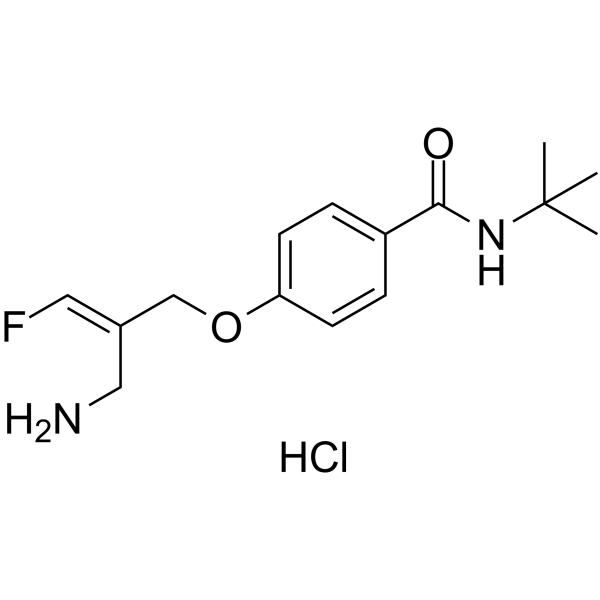
    FP802 dihydrochloride is an orally active potent TwinF interface inhibitor that disrupts and detoxifies the NMDAR/TRPM4 death complex. FP802 dihydrochloride exerts powerful neuroprotective effects in the 5xFAD mouse model of Alzheimer’s disease (AD) by preventing cognitive decline, preserving neuronal structural integrity, reducing amyloid-β plaque formation, and mitigating mitochondrial pathology . FP802 dihydrochloride stops loss of motor neurons, reduces serum neurofilament light chain (NfL) levels, improves motor performance, and extends life in a mouse model of amyotrophic lateral sclerosis (ALS) . FP802 dihydrochloride can be used for AD and ALS research .
    FP802 dihydrochloride
  • HY-13769

    TPU260

    Drug Derivative Beta-secretase Amyloid-β Cardiovascular Disease Neurological Disease Inflammation/Immunology
    TPT-260 (TPU260), a thiophene thiourea derivative, is a retromer complex stabilizer against thermal denaturation (Kd = ~5 µM). TPT-260 increases the levels of retromer proteins, shifts amyloid-precursor protein (APP) away from the endosome, and decreases the pathogenic processing of APP. TPT-260 inhibits TLR4 upregulation, IKKβ phosphorylation, NF-κB p65 nuclear translocation, and NLRP3 inflammasome formation. TPT-260 improves retromer-mediated cargo trafficking, reduces brain infarct area, and decreases amyloid plaque deposition. TPT-260 exhibits minimal cytotoxicity to primary microglia at tested concentrations. TPT-260 can be used for the research of inflammatory bowel disease, ischemic stroke and Alzheimer's disease .
    TPT-260
  • HY-178953

    NOD-like Receptor (NLR) Caspase Interleukin Related Inflammation/Immunology
    NLRP3-IN-84 (Compound 32) is a NLRP3 inflammasome inhibitor. NLRP3-IN-84 can interfere with the oligomerization process of NLRP3 by inhibiting the activity of NLRP3 ATPase (IC50 = 158.4 nM). NLRP3-IN-84 inhibits Caspase-1 (IC50 = 27.7 nM), IL-1β release (PBMC: IC50 = 19.5 nM; mPBMC: IC50 = 24.2 nM), and ASC plaque formation (IC50 = 131 nM). NLRP3-IN-84 has no inhibitory activity on NLRC4 and AIM2 inflammasomes. NLRP3-IN-84 exhibits significant in vivo anti-inflammatory effects in a mouse acute peritonitis model. NLRP3-IN-84 can be used for the study of NLRP3-related inflammatory diseases .
    NLRP3-IN-84
  • HY-123219

    Bacterial Infection Inflammation/Immunology
    Salifluor is a broad spectrum antimicrobial agent that has been investigated for its abilities to inhibit dental plaque formation. Salifluor can act as an effective anti-inflammatory agent .
    Salifluor
  • HY-P991654

    Amyloid-β Neurological Disease
    SAR228810 is a humanized IgG4 monoclonal antibody inhibitor targeting amyloid β (Aβ) with a KD? of ?0.43 ?nM for protofibrillar Aβ over monomeric Aβ. SAR228810 significantly inhibits the brain amyloid plaque formation and oligomer-induced synaptic dysfunction and neurite loss. SAR228810 has significant protection against Aβ-mediated neuritotoxicity. MINT1526A can be used for Alzheimer’s disease imaging and immunotherapy research .
    SAR228810
  • HY-158030

    HDAC Neurological Disease
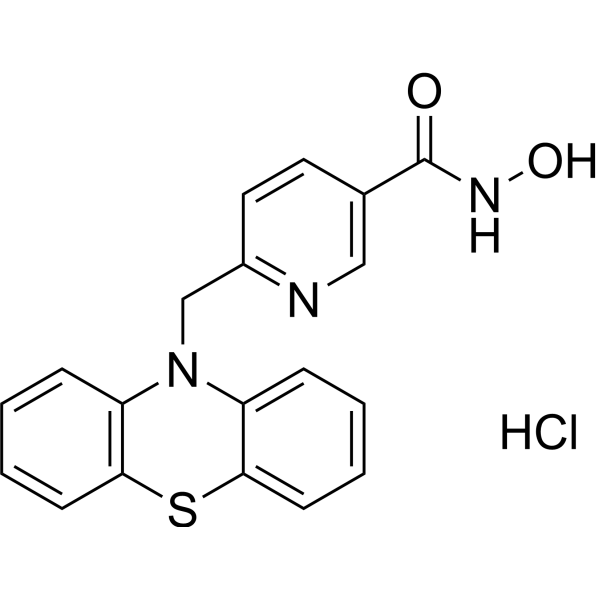
    HDAC6-IN-37 (compound W5) is an inhibitor of HDAC6 and has neuroprotective effects. HDAC6-IN-37 can restore the morphology of hippocampal neurons, reduce the expression of Aβ, Tau, and p-Tau proteins in the hippocampus of AD rats, and inhibit the formation of senile plaques and neurofibrillary tangles. Thus, HDAC6-IN-37 improves the Aβ/Cu 2+-induced AD model in rats, regulates oxidative stress status, and balances neurotransmitter disorders in brain tissue .
    HDAC6-IN-37
  • HY-170583

    Cholinesterase (ChE) Amyloid-β Neurological Disease
    hAChE-IN-10 (Compound ET11) is the inhibitor for human acetylcholinesterase (AChE) with an IC50 of 6.34 nM. hAChE-IN-10 scavenges free radicals, and exhibits antioxidant activity. hAChE-IN-10 exhibits metal chelating activity, inhibits Cu 2+-induced Aβ1-42 aggregation, reduces the formation of amyloid plaques, and exhibits neuroprotective activity. hAChE-IN-10 ameliorates the Scopolamine (HY-N0296)-induced cognitive impairment in mouse models .
    hAChE-IN-10
  • HY-159945

    α-synuclein Neurological Disease
    Tau Protein/α-synuclein-IN-2 (Compound 14T) is a blood-brain barrier penetrating tau and α-syn inhibitor. Through its thiourea linker structure, Tau Protein/α-synuclein-IN-2 dose-dependently reduces α-syn oligomerization. In biosensor cells, Tau Protein/α-synuclein-IN-2 prevents the seeding effect of tau aggregation. In the M17D neuroblastoma model, Tau Protein/α-synuclein-IN-2 exhibits anti-inclusion effects. Additionally, Tau Protein/α-synuclein-IN-2 reduces plaque formation. Tau Protein/α-synuclein-IN-2 holds promise for Alzheimer's disease and Parkinson's disease research.
    tau Protein/α-synuclein-IN-2
  • HY-159941

    α-synuclein Neurological Disease
    tau-0N4R-IN-1 (Compound 6T) is an BBB-penetrable inhibitor of tau 0N4R oligomerization. tau-0N4R-IN-1 effectively inhibits the fibrosis of tau 0N4R, 2N3R, and 2N4R, exhibits an anti-seeding effect on tau in vitro, reduces the oligomerization of α-syn dose-dependently, and prevents formation of α-syn inclusions. tau-0N4R-IN-1 is stable in mouse microsomes and reduces plaques in brain tissues from AD patients. tau-0N4R-IN-1 has good pharmacokinetic properties in mice .
    tau-0N4R-IN-1
  • HY-P991867

    Amyloid-β Neurological Disease
    SHR-1707 is a humanized anti- IgG1 monoclonal antibody. SHR-1707 binds Aβ fibrils and monomers, blocking plaque formation and promoting the microglial phagocytosis of Aβ. SHR-1707 reduces brain Aβ deposition in 5xFAD transgenic mice. SHR-1707 can be used for Alzheimer’s disease research. Recommend Isotype Controls: Human IgG1 kappa, Isotype Control (HY-P99001) .
    SHR-1707
  • HY-P991866

    Amyloid-β Neurological Disease
    BI 1034020 is a humanized nanobody, targeting two different epitopes of ( Aβ40 and Aβ42) with high affinity. BI 1034020 reduces the level of free Ab peptide in plasma and thus prevent the formation of new Aβ plaques and clear existing plaques. BI 1034020 can be used for Alzheimer’s disease research .
    BI 1034020
  • HY-D3170

    Fluorescent Dye γ-Glutamyl Transferase (GGT) Inflammation/Immunology
    C-HBrO-GGT is a sequence-activated two-photon fluorescent probe. C-HBrO-GGT exhibits sequential fluorescence activation properties: it generates fluorescence in response to hypobromous acid only after being hydrolytically activated by γ-glutamyl transpeptidase. C-HBrO-GGT enables verification of the voltage-gated chloride channel (CLC-1)-HBrO-catalase (CAT)-GGT signaling pathway at the cellular level. C-HBrO-GGT can serve as a tool to indicate the precise location of mature atherosclerotic plaques and provide early warning of plaque formation. C-HBrO-GGT is applicable to relevant research on atherosclerosis .
    C-HBrO-GGT
  • HY-117503

    Influenza Virus Infection
    M2WJ332 is an inhibitor of the M2 proton channel of the influenza A virus M2 S31N mutant M2. M2WJ332 potently inhibits the influenza A virus A/M2-S31N proton channel in Xenopus laevis oocytes, with an IC50 of 16 μM. M2WJ332 completely inhibits plaque formation by the influenza A virus carrying the M2 S31N mutant. M2WJ332 is applicable to research related to influenza A virus infection .
    M2WJ332

Inquiry Online

Your information is safe with us. * Required Fields.

Salutation


Country or Region *

Applicant Name *


Organization Name *

Department *


Email Address *


Product Name *

Cat. No.


Requested quantity *

Phone Number *


Remarks

Inquiry Online

Inquiry Information

Product Name:
Cat. No.:
Quantity:
MCE Japan Authorized Agent:

