



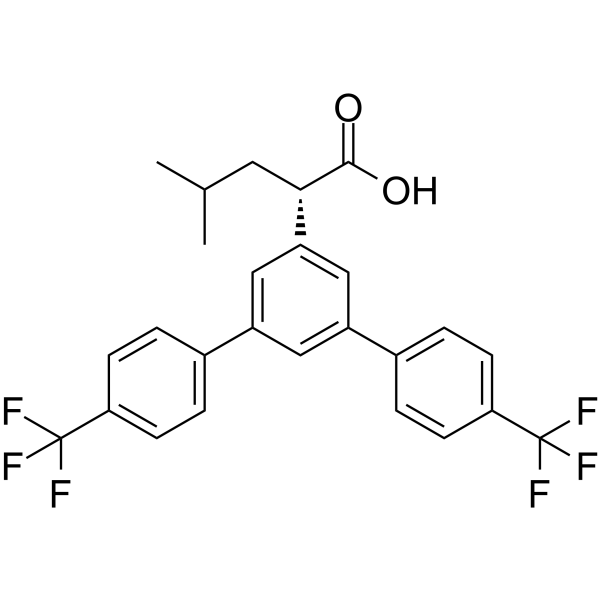
JNJ-40418677

Based on 1 Customer Validation
JNJ-40418677 is an orally active modulator of γ-secretase, can cross the blood-brain barrier. JNJ-40418677 inhibits Aβ42 and NS2B-NS3 protease, with IC50s of 200 nM and 3.9 μM, respectively. JNJ-40418677 displays good biological tolerance, can be use for Alzheimer’s disease research.
Nur für Forschungszwecke. Wir verkaufen nicht an Patienten.
- Reinheit : 99.48%
- CAS. Nr.: 1146594-87-7
- Formel: C26H22F6O2
- Molecular Weight:480.44
-
Speicherung:Powder -20°C, 3 years ; In solvent -80°C, 6 months , -20°C, 1 month

To place orders, for customer services and technical support, please contact: MedChemExpress USA
Tel: 609-228-6898 E-mail: [email protected] [email protected]


-
 Biologische Aktivität
-
Chemical Information
-
Lösungsmittel & Löslichkeit
- Protokoll
- Reinheit & Dokumentation
- Verweise
-
 Help & FAQs


-
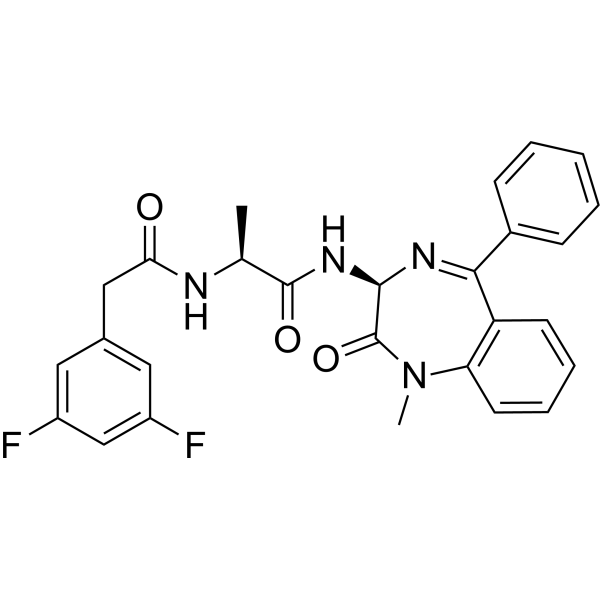
HY-14176
Compound Eγ-secretase Inhibitor -
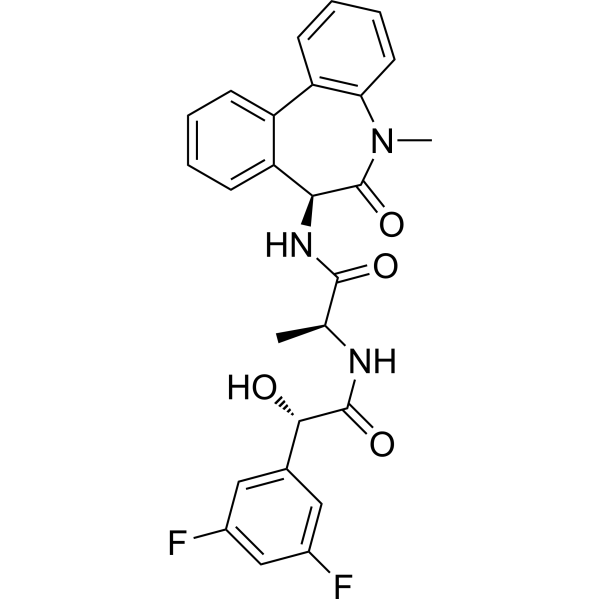
HY-50752
LY-411575γ-secretase Inhibitor -
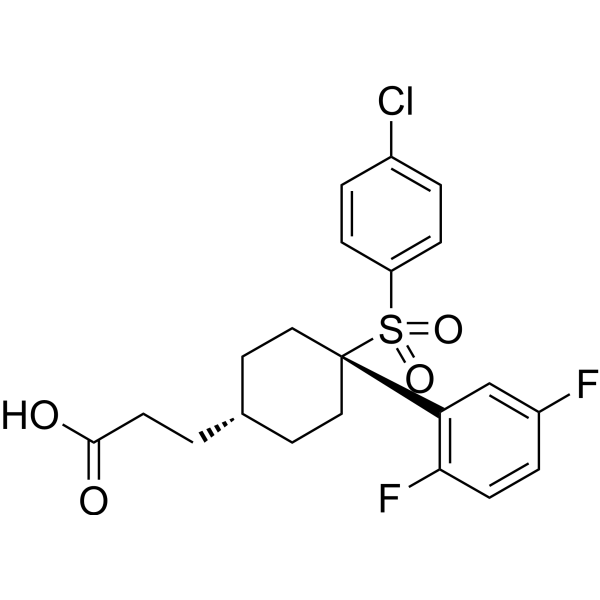
HY-10974
MK-0752 -
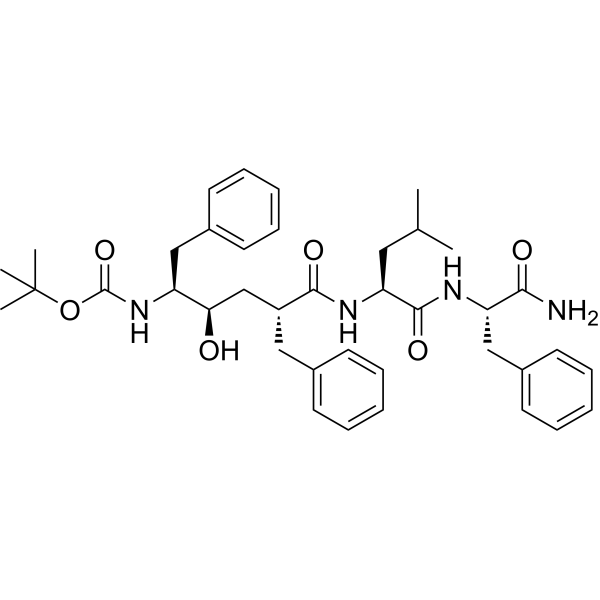
HY-19369
L-685458γ-Secretase Inhibitor -
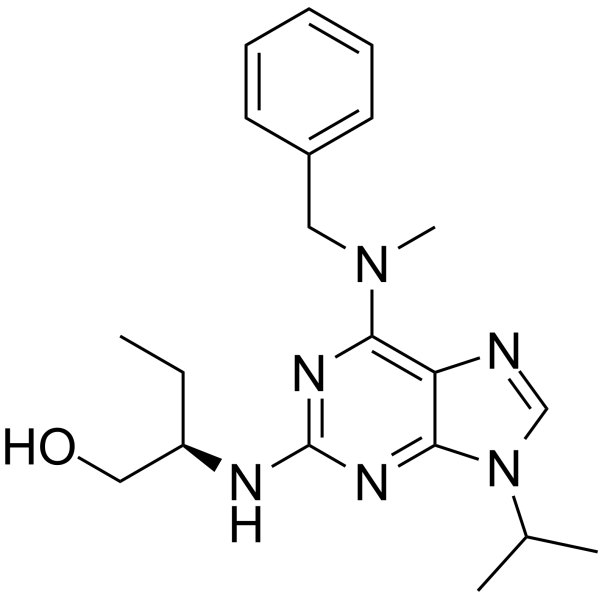
HY-111267
Aftin-4Amyloid-β Agonist -
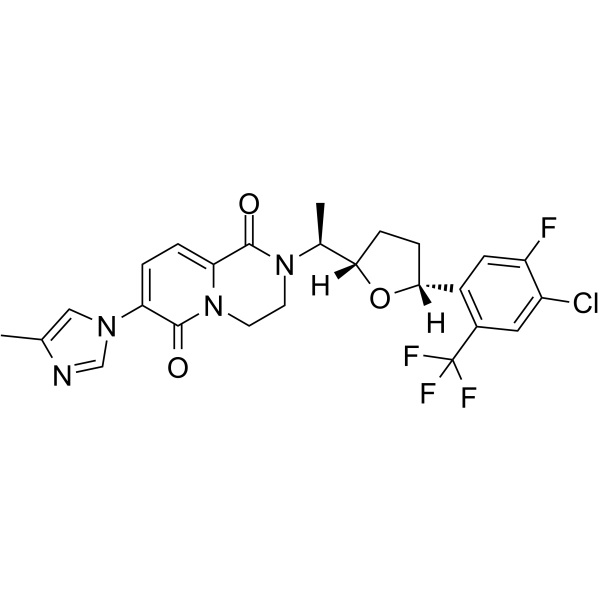
HY-120789
PF-06648671γ-Secretase Modulator -
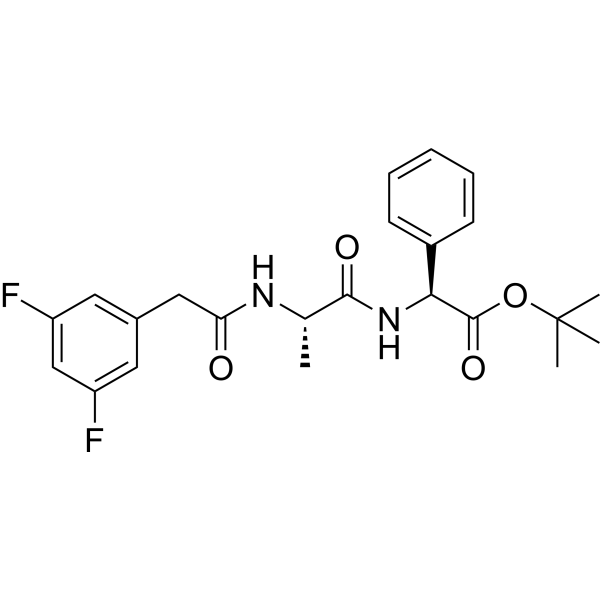
HY-13027
DAPTγ-secretase Inhibitor -
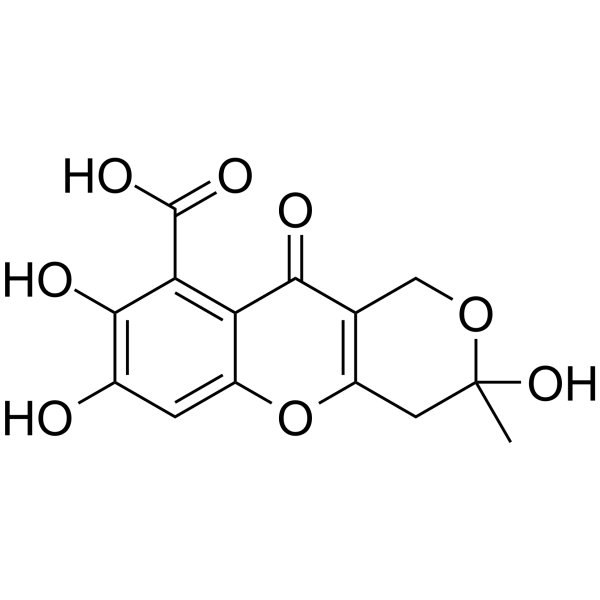
HY-122515
Fulvic AcidImmune System Modulator, Redox Regulator -
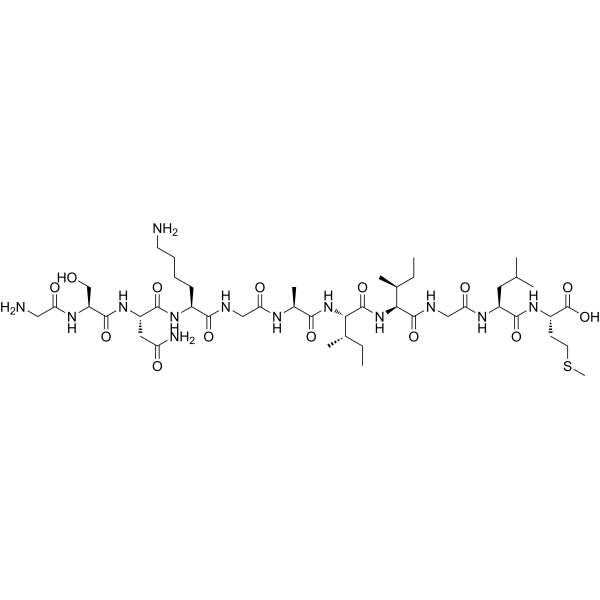
HY-P0128
β-Amyloid (25-35)Amyloid β Peptide -
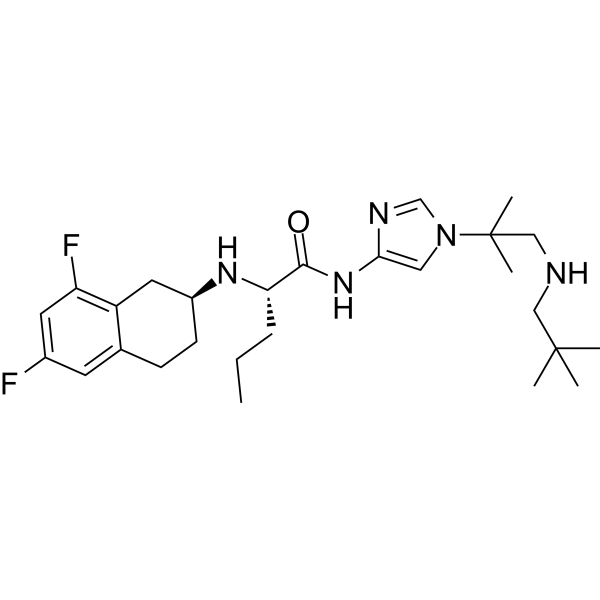
HY-15185
Nirogacestatγ-Secretase Inhibitor -
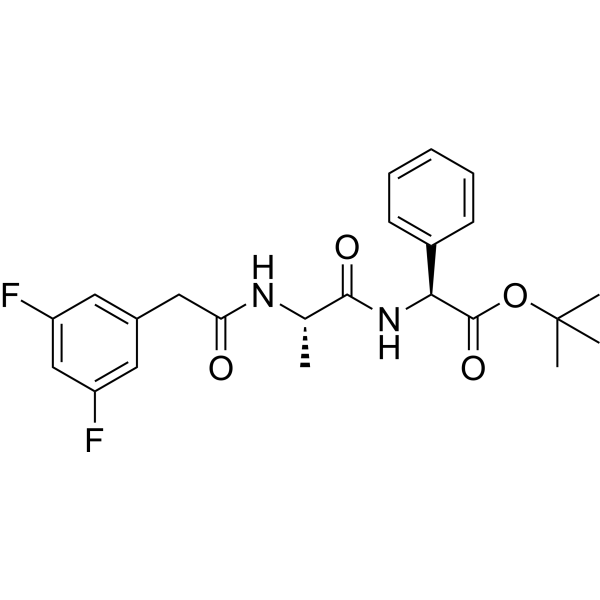
HY-13027G
DAPT (GMP)γ-Secretase Inhibitor -
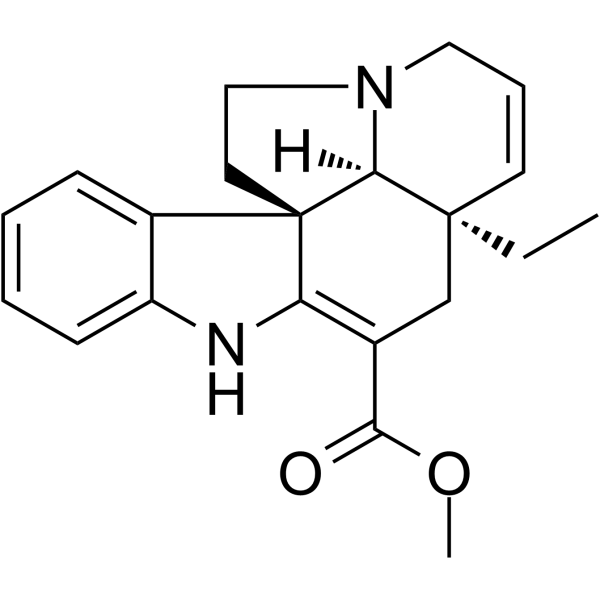
HY-N1431
TabersonineNLRP3 Inhibitor


Biologische Aktivität
Beschreibung
IC50 & Target
IC50: 185 nM (rat Aβ42)[1]; 200 nM (human Aβ42)[2]; 3.9 μM (ZIKV NS2B-NS3 protease)[3]
In Vitro
JNJ-40418677 (0.2 nM-0.3 mM; 16 h) selectively reduces Aβ42 secretion in cell culture supernatants of human neuroblastoma cells with mean IC50 of 200 nM and (0.2 nM-0.3 mM; 48 h) of rat primary neurons with mean IC50 of 185 nM[1].
JNJ-40418677 (10 μM, 100 μM; 18 h) does not inhibit Notch processing or (6 nM-20 μM; 18 h) not affect formation of other amyloid precursor protein cleavage (CTF-β, CTF-α) products, and shows no inhibitory activity against COX-1/2 at a high concentration of 60 μM[1].
JNJ-40418677 suppresses ZIKV in human neuronal stem cells with an EC50 value of 3.2 μM, and inhibits ZIKV NS2B-NS3 protease with an IC50 value of 3.9 μM[3].
MedChemExpress (MCE) has not independently confirmed the accuracy of these methods. They are for reference only. Further protocols information, click here.
-
Cell Line:HEK293 cells
-
Concentration:10 μM
-
Incubation Time:18 h
-
Result:Resulted Aβ42 decreasing, Aβ38 increasing and Aβ40 levels remained unchanged.
In Vivo
JNJ-40418677 (30 mg/kg; p.o.; once) shows the mean brain and plasma levels 4 h after single dose are both 17 μM, indicating good brain penetration in non-transgenic mouse brain[1].
JNJ-40418677 (20-120 mg/kg; p.o.; 7 months) has good biological tolerance with no adverse effects in a chronic treatment in Tg2576 mice[1].
JNJ-40418677 (20-120 mg/kg; p.o.; 7 months) decreases the plaque number and the area occupied by plaques in Tg2576 mice dose-dependently[1].
MedChemExpress (MCE) has not independently confirmed the accuracy of these methods. They are for reference only.
-
Animal Model:Non-transgenic mouse (6-month-old)[1]
-
Dosage:10, 30, 100, 300 mg/kg
-
Administration:Oral gavage; once
-
Result:Reduced the Aβ42 brain levels dose-dependently, with 82%, 64%, 39%, and 31% at the doses of 10, 30, 100, 300 mg/kg, respectively.
-
Animal Model:Tg2576 mice (6-month-old)[1]
-
Dosage:20, 60, 120 mg/kg
-
Administration:Oral gavage; 7 months
-
Result:Exhibited well tolerated activity, without adverse effects on body weight.
Showed no influence on the steady state levels of full-length APP, CTF-a, and CTF-b at a dosage of 120 mg/kg.
Significantly reduced plaque area fraction and number of plaques.


Chemical Information
-
CAS. Nr. 1146594-87-7
-
Appearance Solid
-
Molecular Weight 480.44
-
Formel C26H22F6O2
-
Color White to off-white
-
SMILES
CC(C)C[C@@H](C1=CC(C2=CC=C(C=C2)C(F)(F)F)=CC(C3=CC=C(C=C3)C(F)(F)F)=C1)C(O)=O
-
Versand
Room temperature in continental US; may vary elsewhere.
-
Speicherung
Powder -20°C 3 years In solvent -80°C 6 months -20°C 1 month


Lösungsmittel & Löslichkeit
In Vitro:
DMSO : 100 mg/mL (208.14 mM; Need ultrasonic; Hygroscopic DMSO has a significant impact on the solubility of product, please use newly opened DMSO)
Please refer to the solubility information to select the appropriate solvent. Once prepared, please aliquot and store the solution to prevent product inactivation from repeated freeze-thaw cycles.
Storage method and period of stock solution: -80°C, 6 months; -20°C, 1 month. When stored at -80°C, please use it within 6 months. When stored at -20°C, please use it within 1 month.
Please refer to the solubility information to select the appropriate solvent. Once prepared, please aliquot and store the solution to prevent product inactivation from repeated freeze-thaw cycles.
Storage method and period of stock solution: -80°C, 6 months; -20°C, 1 month. When stored at -80°C, please use it within 6 months. When stored at -20°C, please use it within 1 month.
Konzentration (Stammlösung) × Volumen (Stammlösung) = Konzentration (Ziellösung) × Volumen (Ziellösung)
In Vivo:
Select the appropriate dissolution method based on your experimental animal and administration route.
- For the following dissolution methods, please ensure to first prepare a clear stock solution using an In Vitro approach and then sequentially add co-solvents:
- To ensure reliable experimental results, the clarified stock solution can be appropriately stored based on storage conditions. As for the working solution for In Vivo experiments, it is recommended to prepare freshly and use it on the same day.
- The percentages shown for the solvents indicate their volumetric ratio in the final prepared solution. If precipitation or phase separation occurs during preparation, heat and/or sonication can be used to aid dissolution.
Add each solvent one by one: 10% DMSO 40% PEG300 5% Tween-80 45% Saline
Solubility: ≥ 5 mg/mL (10.41 mM); Clear solution
This protocol yields a clear solution of ≥ 5 mg/mL (saturation unknown).
Taking 1 mL working solution as an example, add 100 μL DMSO stock solution (50.0 mg/mL) to 400 μL PEG300, and mix evenly; then add 50 μL Tween-80 and mix evenly; then add 450 μL Saline to adjust the volume to 1 mL.
Preparation of Saline: Dissolve 0.9 g sodium chloride in ddH₂O and dilute to 100 mL to obtain a clear Saline solution.
In Vivo Dissolution Calculator
Please enter the basic information of animal experiments:
-
-
-
-
Recommended: Prepare an additional quantity of animals to account for potential losses during experiments.
Please enter your animal formula composition:
-
%DMSO +
Recommended: Keep the proportion of DMSO in working solution below 2% if your animal is weak.
-
%+
-
+%Tween-80 + +
-
%Saline +
The co-solvents required include: DMSO, . All of co-solvents are available by MedChemExpress (MCE). , Tween 80. All of co-solvents are available by MedChemExpress (MCE).
Working solution concentration: 0.22 mg/mL
Method for preparing stock solution: mg drug dissolved in μL DMSO. Stock solution concentration: mg/mL.
1. Take μL DMSO stock solution;
2. Add μL .
μL , mix evenly;
3. Then add μL Tween 80, mix evenly;
4. Then add μL
Please ensure that the stock solution in the first step is dissolved to a clear state, and add co-solvents in sequence. You can use ultrasonic heating (ultrasonic cleaner, recommended frequency 20-40 kHz), vortexing, etc. to assist dissolution.

Protokoll
-
Notch Pathway Solutions
The Notch pathway is a contact-dependent signaling pathway that controls cell-fate decisions, differentiation, proliferation, and tissue patterning through interactions between membrane-bound Notch receptors and membrane-bound ligands on neighboring cells. Canonical Notch signaling is activated when ligand engagement triggers proteolytic release of the Notch intracellular domain, which enters the nucleus and regulates transcription together with DNA-binding transcriptional complexes. In the canonical mechanism, ligand-dependent Notch activation leads to release of the intracellular Notch domain, and presenilin-dependent γ-secretase activity is required for production of the active intracellular signaling fragment. The released intracellular domain functions as a nuclear signal that converts Notch receptor activation at the membrane into transcriptional regulation of target programs such as HES/HEY-family genes and other context-dependent downstream targets. The literature links Notch p


Reinheit & Dokumentation
-
Data Sheet (279 KB)
-
SDS (479 KB)
- English - EN (479 KB)
- Français - FR (479 KB)
- Deutsch - DE (479 KB)
- Norwegian - NO (479 KB)
- Español - ES (479 KB)
- Swedish - SV (479 KB)
- Italian - IT (479 KB)
- Korean - KR (479 KB)
- Portuguese - PT (479 KB)
-
Handling Instructions (2659 KB)
Verweise
[1]. Van Broeck B, et al. Chronic treatment with a novel γ-secretase modulator, JNJ-40418677, inhibits amyloid plaque formation in a mouse model of Alzheimer's disease. Br J Pharmacol. 2011 May;163(2):375-89. [Content Brief]
[3]. Samrat SK, et al. Antiviral Agents against Flavivirus Protease: Prospect and Future Direction. Pathogens. 2022 Feb 25;11(3):293. [Content Brief]


Complete Stock Solution Preparation Table
Please refer to the solubility information to select the appropriate solvent. Once prepared, please aliquot and store the solution to prevent product inactivation from repeated freeze-thaw cycles.
Storage method and period of stock solution: -80°C, 6 months; -20°C, 1 month. When stored at -80°C, please use it within 6 months. When stored at -20°C, please use it within 1 month.
| Optional Solvent | Concentration Solvent Mass | 1 mg | 5 mg | 10 mg | 25 mg |
|---|---|---|---|---|---|
| DMSO | 1 mM | 2.0814 mL | 10.4071 mL | 20.8143 mL | 52.0356 mL |
| 5 mM | 0.4163 mL | 2.0814 mL | 4.1629 mL | 10.4071 mL | |
| 10 mM | 0.2081 mL | 1.0407 mL | 2.0814 mL | 5.2036 mL | |
| 15 mM | 0.1388 mL | 0.6938 mL | 1.3876 mL | 3.4690 mL | |
| 20 mM | 0.1041 mL | 0.5204 mL | 1.0407 mL | 2.6018 mL | |
| 25 mM | 0.0833 mL | 0.4163 mL | 0.8326 mL | 2.0814 mL | |
| 30 mM | 0.0694 mL | 0.3469 mL | 0.6938 mL | 1.7345 mL | |
| 40 mM | 0.0520 mL | 0.2602 mL | 0.5204 mL | 1.3009 mL | |
| 50 mM | 0.0416 mL | 0.2081 mL | 0.4163 mL | 1.0407 mL | |
| 60 mM | 0.0347 mL | 0.1735 mL | 0.3469 mL | 0.8673 mL | |
| 80 mM | 0.0260 mL | 0.1301 mL | 0.2602 mL | 0.6504 mL | |
| 100 mM | 0.0208 mL | 0.1041 mL | 0.2081 mL | 0.5204 mL |


JNJ-40418677 Related Classifications
HY-100604 Related Classifications
 Powered by Bioz