



Search Result
Results for "
plasmids
" in MedChemExpress (MCE) Product Catalog:
8
Biochemical Assay Reagents
2
Isotope-Labeled Compounds
| Cat. No. |
Product Name |
Target |
Research Areas |
Chemical Structure |
-
- HY-112754A
-
|
1,2-Dioleoyl-3-trimethylammonium-propane chloride
|
Liposome
|
Cancer
|
|
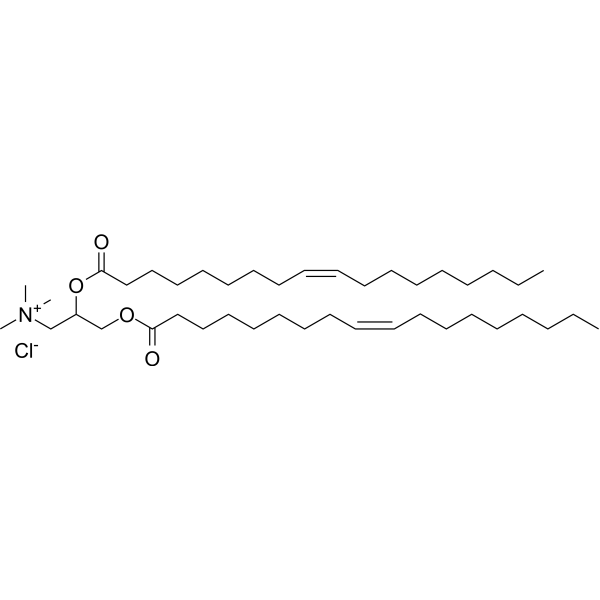
DOTAP chloride is a useful and effective cationic lipid for transient and stable transfection DNA (plasmids, bacmids) and modified nucleic acids (antisense oligonucleotides) with out the use of helper lipid .
|
-
-
- HY-112764
-
|
|
Liposome
|
Metabolic Disease
|
|
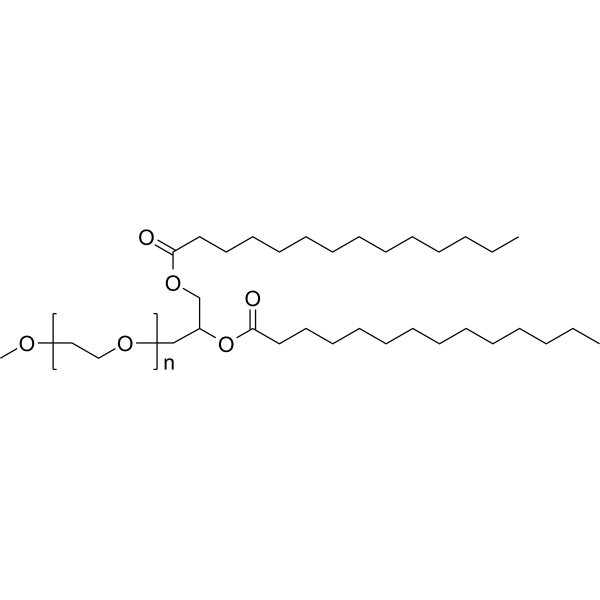
DMG-PEG 2000 is used for the preparation of liposome for siRNA delivery with improved transfection efficiency in vitro. DMG-PEG 2000 is also used for the lipid nanoparticle for an oral plasmid DNA delivery approach in vivo through a facile surface modification to improve the mucus permeability and delivery efficiency of the nanoparticles .
|
-
-
- HY-Y0873J
-
-
-
- HY-W250110E
-
-
-
- HY-151862
-
|
|
ADC Linker
|
Others
|
|
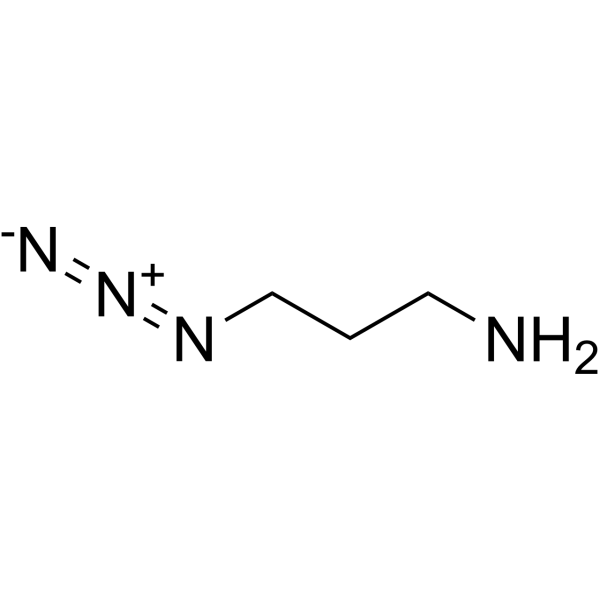
3-Azidopropylamine is a click chemistry reagent containing an azide group. 3-Azidopropylamine can react with the starch sugar of potato starch for complexation and transfection of plasmid DNA . It contains an azide group and can undergo copper-catalyzed azide-alkyne cycloaddition (CuAAc) with molecules containing alkyne groups. It can also undergo ring strain-promoted alkyne-azide cycloaddition (SPAAC) with molecules containing DBCO or BCN groups.
|
-
-
- HY-W001132
-
Indole
2 Publications Verification
|
Environmental Pollutants
Endogenous Metabolite
|
Infection
|
|
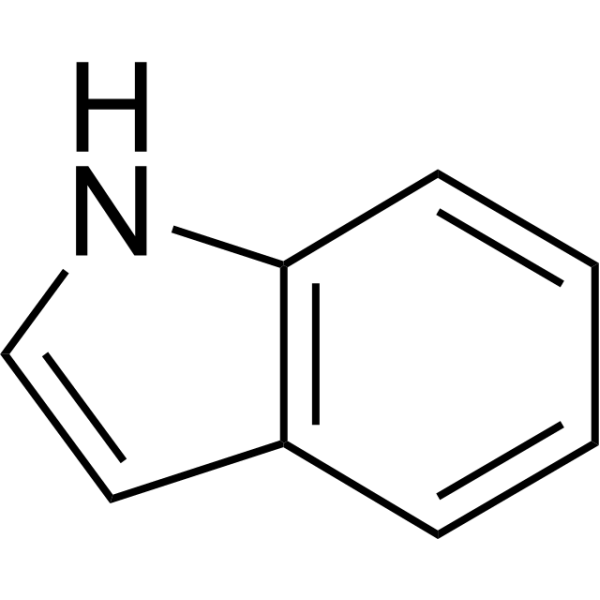
Indole is an aromatic, heterocyclic, organic compound which widely distributed in the natural environment and can be produced by a variety of bacteria. Indole regulates various aspects of bacterial physiology, including spore formation, plasmid stability, resistance to drugs, biofilm formation, and virulence as an intercellular signal molecule .
|
-
-
- HY-P5423
-
|
|
Exosomes
Liposome
|
Cancer
|
|
GALA is a pH-responsive amphipathic peptide consisting of 30 amino acids, which acts as a lung endothelium-targeting ligand. GALA undergoes a conformational transition from random coil to α-helix in an acidic environment at pH 5.0, thereby inducing endosomal membrane destabilization and fusion. GALA-modified liposomes traverse lung endothelial cells via clathrin-dependent endocytosis and transcytosis, and specifically accumulate in the lungs after intravenous injection. GALA significantly promotes the cytosolic release of cargos carried by exosomes, plasmids and liposomes, effectively enhances gene transfection efficiency, and drives gene knockdown of functional macromolecules (such as siRNA) in alveolar epithelial cells (with no significant cytotoxicity at effective concentrations). GALA serves as a critical tool for studies on lung cancer metastasis (e.g., melanoma lung metastasis) and lung-targeted drug delivery systems .
|
-
-
- HY-W018158
-
|
5,6-Dihydroxyindole-2-carboxylic acid
|
Endogenous Metabolite
GPR35
Arrestin
DNA/RNA Synthesis
Drug Intermediate
SOD
|
Cancer
|
|
DHICA (5,6-Dihydroxyindole-2-carboxylic acid) is an eumelanin building block, GPR35 agonist and melanin synthesis intermediate. DHICA activates GPR35, triggering dynamic mass redistribution and β-arrestin translocation. DHICA interacts with DNA and interferes with Fpg activity . DHICA promotes the generation of single-strand breaks in plasmid DNA. DHICA increases the activity and expression levels of SOD and Catalase. DHICA is applicable to research related to skin cancer and colon cancer .
|
-
-
- HY-P0311
-
|
|
Bacterial
|
Infection
|
|
LAH4, an alpha-helix of the designed amphipathic peptide antibiotic, exhibits potent antimicrobial, nucleic acid transfection and cell penetration activities. LAH4 possesses high plasmid DNA delivery capacities. LAH4 has a strong affinity for anionic lipids found in the outer membrane of bacterial membranes .
|
-
-
- HY-126437I
-
-
-
- HY-P4076
-
|
|
HIV
DNA Alkylator/Crosslinker
|
Infection
|
|
MPG peptides, Pβ is an amphipathic cell-penetrating peptide. MPG peptides, Pβ consists of three components: the hydrophobic fusion sequence (GALFLGFLGAAGSTMGA) of HIV glycoprotein 41, a spacer domain (WSQP), and the nuclear localization signal (KKKRKV) of the large T antigen of Simian virus 40. MPG peptides, Pβ can form stable non-covalent complexes with nucleic acids (including DNA) through electrostatic interactions and improve their intracellular delivery. MPG peptides, Pβ can be used in studies of HIV-1-related immune responses .
|
-
-
- HY-W011151
-
|
|
Phytohormone
|
Others
|
|
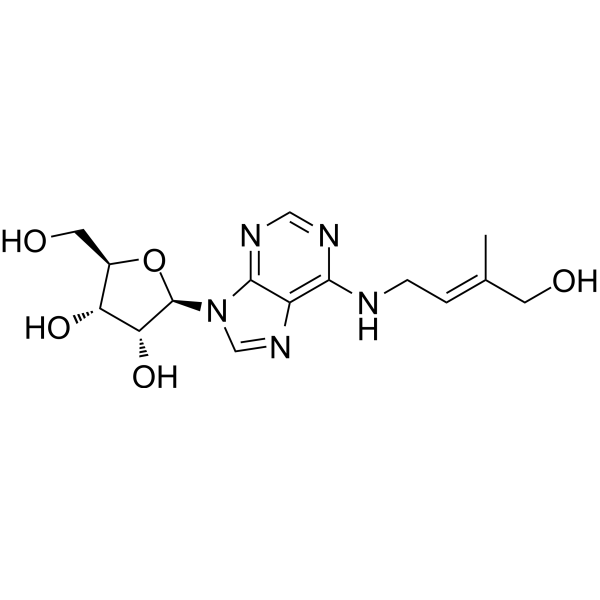
trans-Zeatinriboside is a zeatin-type cytokinin and plant growth regulator. trans-Zeatinriboside is produced by the terrestrial filamentous cyanobacterium Nostoc sp. HK-01 and Agrobacterium tumefaciens (including Ti plasmid-dependent and Ti plasmid-independent strains). trans-Zeatinriboside is detectable as a cytokinin component in growing crown galls, and accumulates in large amounts in CHRK1-silenced transgenic tobacco accompanied by pleiotropic developmental abnormalities. trans-Zeatinriboside can be used in studies related to crown galls .
|
-
-
- HY-100468
-
|
|
DNA/RNA Synthesis
|
Cancer
|
|
REV7/REV3L-IN-1 is a REV7/REV3L interaction inhibitor with an IC50 of 78 μM, which directly binds to REV7 in nuclear magnetic resonance analyses, and inhibits the reactivation of a reporter plasmid containing an interstrand crosslink (ICL) in between the promoter and reporter regions .
|
-
-
- HY-112754AGL
-
|
1,2-Dioleoyl-3-trimethylammonium-propane chloride (GMP Like)
|
Liposome
|
Others
|
|
DOTAP chloride (GMP Like) is the GMP Like class DOTAP chloride (HY-112754A). GMP small molecules works appropriately as an auxiliary reagent for cell therapy manufacture. DOTAP chloride is a cationic lipid with good membrane fusion ability and biocompatibility. DOTAP chloride (GMP Like) can be used as an excipient for transient and stable transfection DNA (plasmids, bacmids) and modified nucleic acids (antisense oligonucleotides) without the use of helper lipid .
|
-
-
- HY-123148
-
|
|
LXR
|
Inflammation/Immunology
|
|
IMB-808 is a potent LXRα/β dual agonist with EC50 values of 0.53 μM and 0.15 μM (0.15 μM, using GAL4-pGL4-luc reporter plasmid) for LXRβ and LXRα, respectively. IMB-808 promotes expression of genes related to reverse cholesterol transport (ABCA1 and ABCG1). IMB-808 can be used for the study of atherosclerosis research .
|
-
-
- HY-142997
-
|
|
Liposome
|
Cancer
|
|
DOSPA is a cationic lipid. DOSPA can form lipid nanoparticles with DOPE (HY-112005) to serve as a carrier for nucleic acid transfection. DOSPA is applicable in research related to drug delivery .
|
-
-
- HY-W010514
-
|
|
Endogenous Metabolite
|
Metabolic Disease
|
|
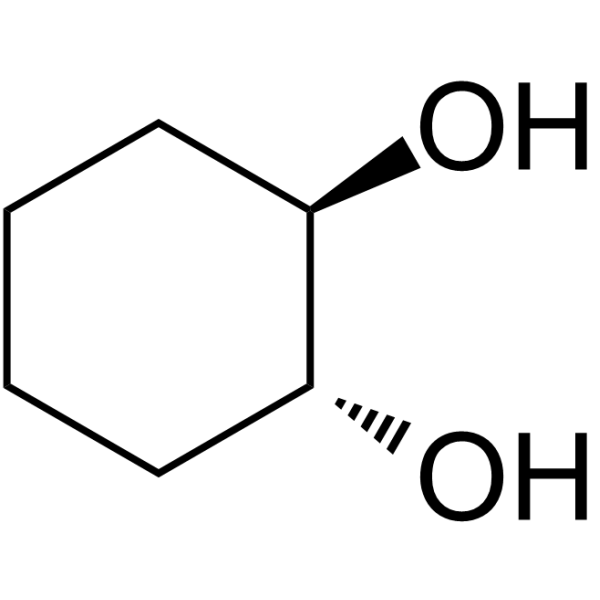
trans-Cyclohexane-1,2-diol (TCHD) is a transient dilator of the nuclear pore complex (NPC). By interacting with the hydrophobic core (FG nucleoporin) of the NPC, trans-Cyclohexane-1,2-diol can disrupt the NPC structure and reversibly increase the permeability of the nuclear pore, allowing macromolecules larger than 40 kDa (such as plasmid DNA) to enter the cell nucleus by passive diffusion, thereby enhancing the nuclear import efficiency of non-viral vectors. trans-Cyclohexane-1,2-diol can improve the efficiency of in vitro electrotransfection or lipid-mediated gene transfection, especially significantly increasing gene expression in differentiated airway epithelial cells .
|
-
-
- HY-P0311A
-
|
|
Bacterial
|
Infection
|
|
LAH4 TFA, an alpha-helix of the designed amphipathic peptide antibiotic, exhibits potent antimicrobial, nucleic acid transfection and cell penetration activities. LAH4 TFA possesses high plasmid DNA delivery capacities. LAH4 TFA has a strong affinity for anionic lipids found in the outer membrane of bacterial membranes .
|
-
-
- HY-W001132R
-
|
|
Reference Standards
Endogenous Metabolite
|
Infection
|
|
Indole (Standard) is the analytical standard of Indole. This product is intended for research and analytical applications. Indole is an aromatic, heterocyclic, organic compound which widely distributed in the natural environment and can be produced by a variety of bacteria. Indole regulates various aspects of bacterial physiology, including spore formation, plasmid stability, resistance to drugs, biofilm formation, and virulence as an intercellular signal molecule .
|
-
-
- HY-P10991A
-
|
Stearylated octaarginine TFA
|
Biochemical Assay Reagents
|
Others
|
|
Stearyl-(homoarginine)8 (Stearylated octaarginine) TFA is an effective gene delivery vector that can deliver plasmid DNA into cells. Stearyl-(homoarginine)8 TFA can make plasmid DNA more effectively internalized into cells and improve the nuclear delivery rate .
|
-
-
- HY-D1005I
-
|
|
Biochemical Assay Reagents
|
Others
|
|
Poloxamer L61 is a non-ionic triblock copolymer surfactant. Poloxamer L61 effectively achieves intracellular molecular delivery to cancer cells during photoacoustic molecular delivery, and maintains cell viability by promoting cell membrane resealing, thus avoiding irreversible damage caused by laser-induced membrane permeabilization. Poloxamer L61 is a key component of SP1017, a compound related to gene therapy, which regulates the interaction between DNA and extracellular matrix as well as cellular uptake, and significantly enhances the distribution and bioavailability of plasmid DNA in skeletal muscle. Poloxamer L61 can be used in studies on local or systemic therapeutic protein production .
|
-
-
- HY-W583869
-
|
1-Stearoyl-2-Oleoyl-sn-glycero-3-PE; 18:0-18:1 PE; PE(18:0/18:1)
|
Liposome
|
Metabolic Disease
|
|
1-Stearoyl-2-oleoyl-sn-glycerol-3-phosphoethanolamine is a phospholipids that contains stearic acid and oleic acid at the sn-1 and sn-2 positions, respectively. It has been used in the generation of lipid nanoparticles (LNPs) for in vitro delivery of mRNA or nuclear-targeted plasmid DNA.
|
-
-
- HY-W018158R
-
|
5,6-Dihydroxyindole-2-carboxylic acid (Standard)
|
Reference Standards
Endogenous Metabolite
GPR35
Arrestin
DNA/RNA Synthesis
Drug Intermediate
SOD
|
Cancer
|
|
DHICA (Standard) is an analytical standard of DHICA (HY-W018158). This product is for research and analytical applications. DHICA (5,6-Dihydroxyindole-2-carboxylic acid) is an eumelanin building block, GPR35 agonist and melanin synthesis intermediate. DHICA activates GPR35, triggering dynamic mass redistribution and β-arrestin translocation. DHICA interacts with DNA and interferes with Fpg activity . DHICA promotes the generation of single-strand breaks in plasmid DNA. DHICA increases the activity and expression levels of SOD and Catalase. DHICA is applicable to research related to skin cancer and colon cancer .
|
-
-
- HY-P10991
-
|
Stearylated octaarginine
|
Biochemical Assay Reagents
|
Others
|
|
Stearyl-(homoarginine)8 (Stearylated octaarginine) is an effective gene delivery vector that can deliver plasmid DNA into cells. Stearyl-(homoarginine)8 can make plasmid DNA more effectively internalized into cells and improve the nuclear delivery rate .
|
-
-
- HY-113736
-
|
|
Amino Acid Derivatives
|
Others
|
|
Glycyllysine is a polypeptide that can be used in the synthesis of antibodies and amino acid type gemini surfactants. Glycyllysine has potential applications in modifying plasmid/gemini/lipid (P/G/L) nanoparticles transport carriers .
|
-
-
- HY-P4101
-
|
|
HIV
|
Infection
|
|
Cys(Npys)-TAT (47-57) is a peptide fragment of TAT peptide and it is able to interact with plasmid DNA electrostatically. Cys(Npys)-TAT (47-57) is corresponding to the transduction domain of TAT with an activated cysteine residue C. TAT is a small nuclear transcriptional activator protein encoded by HIV-1 .
|
-
-
- HY-112764GL
-
|
|
Liposome
|
Metabolic Disease
|
|
DMG-PEG 2000 (GMP Like) is DMG-PEG 2000 (HY-112764) produced by using GMP like guidelines. GMP Like small molecules works appropriately as an auxiliary reagent for cell therapy manufacture. DMG-PEG 2000 is used for the preparation of liposome for siRNA delivery with improved transfection efficiency in vitro. DMG-PEG 2000 is also used for the lipid nanoparticle for an oral plasmid DNA delivery approach in vivo through a facile surface modification to improve the mucus permeability and delivery efficiency of the nanoparticles .
|
-
-
- HY-108877
-
|
BMY-28142 hydrochloride
|
Antibiotic
Bacterial
GABA Receptor
|
Infection
|
|
Cefepime (BMY-28142) hydrochloride is a broad-spectrum, blood-brain barrier-permeable cephalosporin antibiotic with hPON1 inhibitory activity, with an IC50 of 21.115 mM and a Ki of 35.092 mM. Cefepime hydrochloride inhibits hPON1 via a non-competitive mechanism and blocks GABAA receptors. Cefepime hydrochloride penetrates the outer membrane of Gram-negative bacteria, inhibits the growth of Gram-positive and Gram-negative bacteria, and does not induce the production of β-lactamase .
|
-
-
- HY-W800776
-
|
1,2-Dioleoyl-3-dimethyl-hydroxyethylammonium bromide
|
Liposome
|
Others
|
|
DORI is a cationic lipid that can deliver plasmid DNA in vitro. DORI has lower cytotoxicity and high transfection efficiency .
|
-
-
- HY-P11106
-
|
|
Bacterial
|
Infection
|
|
cCF10 is a peptide sex pheromone. cCF10 induces transfer of the conjugative plasmid pCF10 from plasmid-containing donor cells to plasmid-free recipient cells. cCF10 induces Opp system and enters bacterial cells to inhibit (p)ppGpp accumulation. cCF10 reduces persister cell generation via maintaining the metabolically active state of bacteria .
|
-
-
- HY-158705
-
|
|
Liposome
|
Others
|
|
SAINT-2 is a cationic lipid with gene transfection activity and is a pyridyl lipid analog. Molecular membranes prepared by SAINT-2 can interact with plasmids to form lipid complexes. After the complex is taken up by cells, the plasmid dissociates from the lipid complex under the action of DOPE and the plasmid translocates across the endosome and/or nuclear membrane. Thus, SAINT-2 effectively transfers small oligonucleotides into cells .
|
-
-
- HY-153125
-
|
|
Liposome
|
Others
|
|
DLRIE is a cationic lipid that can be used for the synthesis of liposome GAP-DLRIE. GAP-DLRIE can be used to enhance the delivery and expression of plasmid DNA. DLRIE can be used for delivery of nucleic acids .
|
-
-
- HY-N7047
-
|
|
Bacterial
|
Infection
|
|
8-Epidiosbulbin E acetate, a furanoid, is abundant in Dioscorea bulbifera L.. 8-Epidiosbulbin E acetate exhibits broad-spectrum plasmid-curing activity against multidrug-resistant (MDR) bacteria. 8-Epidiosbulbin E acetate induces liver injury in mice .
|
-
-
- HY-129990
-
|
|
Liposome
|
Cancer
|
|
Dios-Arg diTFA, a cationic lipid with an arginine-bearing headgroup, shows obvious double bond proton signals at around 5.2-5.3 ppm. Dios-Arg diTFA is used, coupled to DOPE, to bind siRNA and plasmid to for cationic LNPs for intracellular transport .
|
-
-
- HY-N1620
-
-
-
- HY-106768
-
|
CB 10-375; NSC 283162
|
DNA Alkylator/Crosslinker
|
Cancer
|
|
Trimelamol (CB10-375; NSC283162) is a highly efficient acid-catalyzed DNA interstrand crosslinker with low neurotoxicity due to its limited BBB penetration. Trimelamol exhibits anti-tumor activity and overcomes platinum resistance. Trimelamol is investigated for lung and ovarian cancer research [1][2][3][4][5].
|
-
-
- HY-125734
-
|
|
Liposome
|
Others
|
|
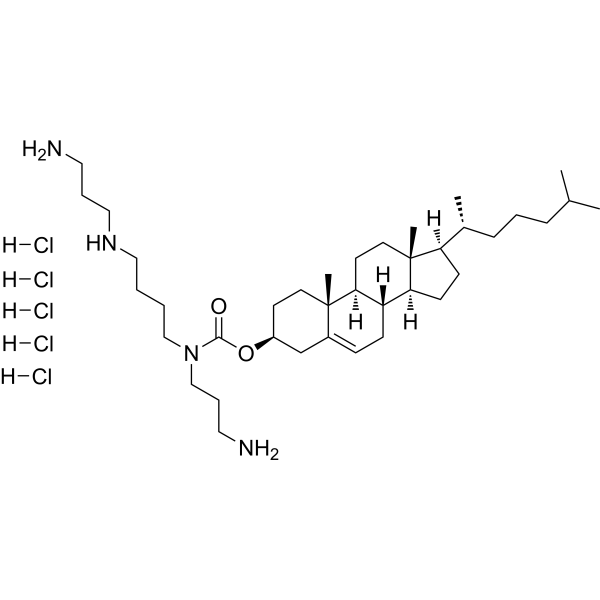
DMHAPC-Chol, a cationic lipid, contains a biodegradable carbamoyl linker and a hydroxyethyl group in the polar amino head moiety. DMHAPC-Chol can be used in both transfection experiments concerning plasmids or siRNA .
|
-
-
- HY-W800848
-
|
|
Liposome
|
Others
|
|
3,3'-[Dithiobis[2,1-ethanediyl(methylimino)]]bis[1-propanol] is a SS-cleavable proton-activated lipid-like material (SSPalm). 3,3'-[Dithiobis[2,1-ethanediyl(methylimino)]]bis[1-propanol] can be used for delivery of plasmid DNA .
|
-
-
- HY-159711
-
|
|
Liposome
|
Cancer
|
|
PPPDA-O16B is a lipid containing disulfide bonds used for DNA delivery. PPPDA-O16B can encapsulate DNA plasmid, releasing DNA selectively via lipid degradation catalyzed by GSH .
|
-
-
- HY-138912
-
|
|
Liposome
|
Others
|
|
Cho-Arg TFA is a steroid-based cationic lipid with an L-Arginine headgroup. Cho-Arg TFA shows a remarkably high optimized plasmid DNA transfection efficacy .
|
-
-
- HY-156616
-
|
|
Liposome
|
Inflammation/Immunology
|
|
VC1052 is a dialkoxypropylammonium-based material and is the core cationic lipid component of the cationic lipid adjuvant Vaxfectin (HY-142998). Vaxfectin consists of VC1052 and lipid DPyPE (HY-112766) in a 1:1 molar ratio. Vaxfectin can be used as a vaccine adjuvant for the preparation of plasmid DNA and protein vaccines .
|
-
-
- HY-160641
-
|
|
Others
|
Others
|
|
isoG Nucleoside-1 (compound 15) is an isoguanine (isoG) nucleoside. In the HNA(h)-DNA(d) mosaic scaffold, h-isoG base mismatches follow the order G>C>T, while h-isoG base mismatches follow the order G>C>T .
|
-
-
- HY-E70128
-
|
|
Others
|
Others
|
|
Leucyl aminopeptidase, Porcine is a metallopeptidase that cleave N-terminal residues from proteins and peptides. Leucyl aminopeptidase serves as transcriptional repressors to control pyrimidine, alginate and cholera toxin biosynthesis, as well as mediate site-specific recombination events in plasmids and phages .
|
-
-
- HY-E70601
-
|
|
DNA/RNA Synthesis
|
Others
|
|
DNA Recombinase is a simple and efficient multi-segment recombinase mixture that can assemble single or multiple DNA fragments into a complete plasmid by recognizing the DNA insert and the homology arms (17bp-50bp) at the ends of the linearized vector, regardless of the length of the fragment or the end compatibility.
|
-
-
- HY-168995
-
|
|
Bacterial
|
Infection
|
|
BAR-072 is a small-molecule inhibitor targeting TraE, with a KD of 2.7 µM. It significantly inhibits the transfer of the antibiotic resistance-associated plasmid pKM101. BAR-072 shows promise as a candidate compound for blocking the spread of bacterial resistance genes and holds potential for research in infectious disease and antimicrobial resistance control .
|
-
-
- HY-W713126
-
|
|
Isotope-Labeled Compounds
Endogenous Metabolite
|
Infection
|
|
Indole-d4 is the deuterium labeled Indole (HY-W001132). Indole is an aromatic, heterocyclic, organic compound which widely distributed in the natural environment and can be produced by a variety of bacteria. Indole regulates various aspects of bacterial physiology, including spore formation, plasmid stability, resistance to drugs, biofilm formation, and virulence as an intercellular signal molecule .
|
-
-
- HY-117818
-
|
Antibiotic DC 116
|
Antibiotic
|
Cancer
|
|
Sapurimycin is an antitumor antibiotic isolated from Streptomyces DO-116 and belongs to the capramycin family. Sapurimycin exhibits potent activity against Gram-positive bacteria and exhibits significant antitumor effects against leukemia P388 and sarcoma 180 in mouse models. In vitro studies have shown that Sapurimycin can induce single-strand breaks in supercoiled plasmid DNA .
|
-
-
- HY-N17600
-
|
|
NF-κB
|
Others
|
|
Pterocenoid C is an inhibitor of the NF-κB pathway and can be used for research on diseases related to the NF-κB pathway .
|
-
-
- HY-112754AS
-
|
|
Isotope-Labeled Compounds
Liposome
|
Cancer
|
|
DOTAP-d9 chloride is the deuterium labeled DOTAP chloride (HY-112754A). DOTAP chloride is a useful and effective cationic lipid for transient and stable transfection DNA (plasmids, bacmids) and modified nucleic acids (antisense oligonucleotides) with out the use of helper lipid .
|
-
-
- HY-147063R
-
|
|
Reference Standards
Endogenous Metabolite
|
Others
|
|
Indole (Standard) is the analytical standard of Indole. This product is intended for research and analytical applications. Indole is an aromatic, heterocyclic, organic compound which widely distributed in the natural environment and can be produced by a variety of bacteria. Indole regulates various aspects of bacterial physiology, including spore formation, plasmid stability, resistance to drugs, biofilm formation, and virulence as an intercellular signal molecule .
|
-
- HY-100468R
-
|
|
DNA/RNA Synthesis
Reference Standards
|
Cancer
|
|
REV7/REV3L-IN-1 (Standard) is the analytical standard of REV7/REV3L-IN-1 (HY-100468). This product is intended for research and analytical applications. REV7/REV3L-IN-1 is a REV7/REV3L interaction inhibitor with an IC50 of 78 μM, which directly binds to REV7 in nuclear magnetic resonance analyses, and inhibits the reactivation of a reporter plasmid containing an interstrand crosslink (ICL) in between the promoter and reporter regions .
|
-
- HY-N17702
-
|
|
Endogenous Metabolite
|
Others
|
|
CerPCho (d18:0/22:0) is a sphingomyelin with a d18:0-type sphingosine long-chain base and a 22:0-type N-acyl fatty acid .
|
-
- HY-W010514R
-
|
|
Endogenous Metabolite
Reference Standards
|
Metabolic Disease
|
|
trans-Cyclohexane-1,2-diol (Standard) is the analytical standard of trans-Cyclohexane-1,2-diol (HY-W010514). This product is intended for research and analytical applications. trans-Cyclohexane-1,2-diol (TCHD) is a transient dilator of the nuclear pore complex (NPC). By interacting with the hydrophobic core (FG nucleoporin) of the NPC, trans-Cyclohexane-1,2-diol can disrupt the NPC structure and reversibly increase the permeability of the nuclear pore, allowing macromolecules larger than 40 kDa (such as plasmid DNA) to enter the cell nucleus by passive diffusion, thereby enhancing the nuclear import efficiency of non-viral vectors. trans-Cyclohexane-1,2-diol can improve the efficiency of in vitro electrotransfection or lipid-mediated gene transfection, especially significantly increasing gene expression in differentiated airway epithelial cells .
|
-
| Cat. No. |
Product Name |
Type |
-
- HY-112754AGL
-
|
1,2-Dioleoyl-3-trimethylammonium-propane chloride (GMP Like)
|
Fluorescent Dye
|
|
DOTAP chloride (GMP Like) is the GMP Like class DOTAP chloride (HY-112754A). GMP small molecules works appropriately as an auxiliary reagent for cell therapy manufacture. DOTAP chloride is a cationic lipid with good membrane fusion ability and biocompatibility. DOTAP chloride (GMP Like) can be used as an excipient for transient and stable transfection DNA (plasmids, bacmids) and modified nucleic acids (antisense oligonucleotides) without the use of helper lipid .
|
-
- HY-112764GL
-
|
|
Fluorescent Dye
|
|
DMG-PEG 2000 (GMP Like) is DMG-PEG 2000 (HY-112764) produced by using GMP like guidelines. GMP Like small molecules works appropriately as an auxiliary reagent for cell therapy manufacture. DMG-PEG 2000 is used for the preparation of liposome for siRNA delivery with improved transfection efficiency in vitro. DMG-PEG 2000 is also used for the lipid nanoparticle for an oral plasmid DNA delivery approach in vivo through a facile surface modification to improve the mucus permeability and delivery efficiency of the nanoparticles .
|
| Cat. No. |
Product Name |
Type |
-
- HY-112754A
-
|
1,2-Dioleoyl-3-trimethylammonium-propane chloride
|
Biochemical Assay Reagents
|
|
DOTAP chloride is a useful and effective cationic lipid for transient and stable transfection DNA (plasmids, bacmids) and modified nucleic acids (antisense oligonucleotides) with out the use of helper lipid .
|
-
- HY-112764
-
|
|
Biochemical Assay Reagents
|
|
DMG-PEG 2000 is used for the preparation of liposome for siRNA delivery with improved transfection efficiency in vitro. DMG-PEG 2000 is also used for the lipid nanoparticle for an oral plasmid DNA delivery approach in vivo through a facile surface modification to improve the mucus permeability and delivery efficiency of the nanoparticles .
|
-
- HY-126437I
-
|
|
Biochemical Assay Reagents
|
|
Poly-L-lysine hydrobromide (MW 1000-5000) is a homopolymer of L-lysine and a polycationic non-viral gene delivery vector. Poly-L-lysine hydrobromide (MW 1000-5000) forms complexes with plasmid DNA. Poly-L-lysine hydrobromide (MW 1000-5000) is applicable to relevant research on lung cancer .
|
-
- HY-112754AGL
-
|
1,2-Dioleoyl-3-trimethylammonium-propane chloride (GMP Like)
|
Biochemical Assay Reagents
|
|
DOTAP chloride (GMP Like) is the GMP Like class DOTAP chloride (HY-112754A). GMP small molecules works appropriately as an auxiliary reagent for cell therapy manufacture. DOTAP chloride is a cationic lipid with good membrane fusion ability and biocompatibility. DOTAP chloride (GMP Like) can be used as an excipient for transient and stable transfection DNA (plasmids, bacmids) and modified nucleic acids (antisense oligonucleotides) without the use of helper lipid .
|
-
- HY-142997
-
|
|
Biochemical Assay Reagents
|
|
DOSPA is a cationic lipid. DOSPA can form lipid nanoparticles with DOPE (HY-112005) to serve as a carrier for nucleic acid transfection. DOSPA is applicable in research related to drug delivery .
|
-
- HY-D1005I
-
|
|
Biochemical Assay Reagents
|
|
Poloxamer L61 is a non-ionic triblock copolymer surfactant. Poloxamer L61 effectively achieves intracellular molecular delivery to cancer cells during photoacoustic molecular delivery, and maintains cell viability by promoting cell membrane resealing, thus avoiding irreversible damage caused by laser-induced membrane permeabilization. Poloxamer L61 is a key component of SP1017, a compound related to gene therapy, which regulates the interaction between DNA and extracellular matrix as well as cellular uptake, and significantly enhances the distribution and bioavailability of plasmid DNA in skeletal muscle. Poloxamer L61 can be used in studies on local or systemic therapeutic protein production .
|
-
- HY-112764GL
-
|
|
Biochemical Assay Reagents
|
|
DMG-PEG 2000 (GMP Like) is DMG-PEG 2000 (HY-112764) produced by using GMP like guidelines. GMP Like small molecules works appropriately as an auxiliary reagent for cell therapy manufacture. DMG-PEG 2000 is used for the preparation of liposome for siRNA delivery with improved transfection efficiency in vitro. DMG-PEG 2000 is also used for the lipid nanoparticle for an oral plasmid DNA delivery approach in vivo through a facile surface modification to improve the mucus permeability and delivery efficiency of the nanoparticles .
|
-
- HY-156616
-
|
|
Biochemical Assay Reagents
|
|
VC1052 is a dialkoxypropylammonium-based material and is the core cationic lipid component of the cationic lipid adjuvant Vaxfectin (HY-142998). Vaxfectin consists of VC1052 and lipid DPyPE (HY-112766) in a 1:1 molar ratio. Vaxfectin can be used as a vaccine adjuvant for the preparation of plasmid DNA and protein vaccines .
|
| Cat. No. |
Product Name |
Target |
Research Area |
-
- HY-P5423
-
|
|
Exosomes
Liposome
|
Cancer
|
|
GALA is a pH-responsive amphipathic peptide consisting of 30 amino acids, which acts as a lung endothelium-targeting ligand. GALA undergoes a conformational transition from random coil to α-helix in an acidic environment at pH 5.0, thereby inducing endosomal membrane destabilization and fusion. GALA-modified liposomes traverse lung endothelial cells via clathrin-dependent endocytosis and transcytosis, and specifically accumulate in the lungs after intravenous injection. GALA significantly promotes the cytosolic release of cargos carried by exosomes, plasmids and liposomes, effectively enhances gene transfection efficiency, and drives gene knockdown of functional macromolecules (such as siRNA) in alveolar epithelial cells (with no significant cytotoxicity at effective concentrations). GALA serves as a critical tool for studies on lung cancer metastasis (e.g., melanoma lung metastasis) and lung-targeted drug delivery systems .
|
-
- HY-P0311
-
|
|
Bacterial
|
Infection
|
|
LAH4, an alpha-helix of the designed amphipathic peptide antibiotic, exhibits potent antimicrobial, nucleic acid transfection and cell penetration activities. LAH4 possesses high plasmid DNA delivery capacities. LAH4 has a strong affinity for anionic lipids found in the outer membrane of bacterial membranes .
|
-
- HY-P4076
-
|
|
HIV
DNA Alkylator/Crosslinker
|
Infection
|
|
MPG peptides, Pβ is an amphipathic cell-penetrating peptide. MPG peptides, Pβ consists of three components: the hydrophobic fusion sequence (GALFLGFLGAAGSTMGA) of HIV glycoprotein 41, a spacer domain (WSQP), and the nuclear localization signal (KKKRKV) of the large T antigen of Simian virus 40. MPG peptides, Pβ can form stable non-covalent complexes with nucleic acids (including DNA) through electrostatic interactions and improve their intracellular delivery. MPG peptides, Pβ can be used in studies of HIV-1-related immune responses .
|
-
- HY-P2530
-
|
|
Peptides
|
Others
|
|
KALA is an amphiphilic peptide that forms an α-helical structure at physiological pH. KALA modifies a plasmid DNA-encapsulating liposomal membrane and is used as a fusogenic peptide in order to achieve effective liver targeting and transfection of DNA via galactose receptors .
|
-
- HY-P0311A
-
|
|
Bacterial
|
Infection
|
|
LAH4 TFA, an alpha-helix of the designed amphipathic peptide antibiotic, exhibits potent antimicrobial, nucleic acid transfection and cell penetration activities. LAH4 TFA possesses high plasmid DNA delivery capacities. LAH4 TFA has a strong affinity for anionic lipids found in the outer membrane of bacterial membranes .
|
-
- HY-P10991A
-
|
Stearylated octaarginine TFA
|
Biochemical Assay Reagents
|
Others
|
|
Stearyl-(homoarginine)8 (Stearylated octaarginine) TFA is an effective gene delivery vector that can deliver plasmid DNA into cells. Stearyl-(homoarginine)8 TFA can make plasmid DNA more effectively internalized into cells and improve the nuclear delivery rate .
|
-
- HY-P10991
-
|
Stearylated octaarginine
|
Biochemical Assay Reagents
|
Others
|
|
Stearyl-(homoarginine)8 (Stearylated octaarginine) is an effective gene delivery vector that can deliver plasmid DNA into cells. Stearyl-(homoarginine)8 can make plasmid DNA more effectively internalized into cells and improve the nuclear delivery rate .
|
-
- HY-113736
-
|
|
Amino Acid Derivatives
|
Others
|
|
Glycyllysine is a polypeptide that can be used in the synthesis of antibodies and amino acid type gemini surfactants. Glycyllysine has potential applications in modifying plasmid/gemini/lipid (P/G/L) nanoparticles transport carriers .
|
-
- HY-P4101
-
|
|
HIV
|
Infection
|
|
Cys(Npys)-TAT (47-57) is a peptide fragment of TAT peptide and it is able to interact with plasmid DNA electrostatically. Cys(Npys)-TAT (47-57) is corresponding to the transduction domain of TAT with an activated cysteine residue C. TAT is a small nuclear transcriptional activator protein encoded by HIV-1 .
|
-
- HY-P11106
-
|
|
Bacterial
|
Infection
|
|
cCF10 is a peptide sex pheromone. cCF10 induces transfer of the conjugative plasmid pCF10 from plasmid-containing donor cells to plasmid-free recipient cells. cCF10 induces Opp system and enters bacterial cells to inhibit (p)ppGpp accumulation. cCF10 reduces persister cell generation via maintaining the metabolically active state of bacteria .
|
-
- HY-KE7043
-
|
|
|
Taq I is a restriction enzyme for rapid DNA digestion, including plasmid, genomic DNA as well as PCR products.
|
-
- HY-KE7044
-
|
|
|
Xba I is a restriction enzyme for rapid DNA digestion, including plasmid, genomic DNA as well as PCR products.
|
-
- HY-KE7006
-
|
|
|
MCE Bgl II is a restriction enzyme for rapid DNA digestion, including plasmid, genomic DNA as well as PCR products.
|
-
- HY-KE7004
-
|
|
|
MCE BamH I is a restriction enzyme for rapid DNA digestion, including plasmid, genomic DNA as well as PCR products.
|
-
- HY-KE7018
-
|
|
|
MCE Hind III is a restriction enzyme for rapid DNA digestion, including plasmid, genomic DNA as well as PCR products.
|
-
- HY-KE7019
-
|
|
|
MCE Hinf I is a restriction enzyme for rapid DNA digestion, including plasmid, genomic DNA as well as PCR products.
|
-
- HY-KE7024
-
|
|
|
MCE Mnl I is a restriction enzyme for rapid DNA digestion, including plasmid, genomic DNA as well as PCR products.
|
-
- HY-KE7023
-
|
|
|
MCE Mlu I is a restriction enzyme for rapid DNA digestion, including plasmid, genomic DNA as well as PCR products.
|
-
- HY-KE7030
-
|
|
|
MCE Pac I is a restriction enzyme for rapid DNA digestion, including plasmid, genomic DNA as well as PCR products.
|
-
- HY-KE7032
-
|
|
|
MCE Pvu II is a restriction enzyme for rapid DNA digestion, including plasmid, genomic DNA as well as PCR products.
|
-
- HY-KE7035
-
|
|
|
MCE Sal I is a restriction enzyme for rapid DNA digestion, including plasmid, genomic DNA as well as PCR products.
|
-
- HY-KE7037
-
|
|
|
MCE Sfi I is a restriction enzyme for rapid DNA digestion, including plasmid, genomic DNA as well as PCR products.
|
-
- HY-KE7041
-
|
|
|
MCE Ssp I is a restriction enzyme for rapid DNA digestion, including plasmid, genomic DNA as well as PCR products.
|
-
- HY-KE7028
-
|
|
|
MCE Not I is a restriction enzyme for rapid DNA digestion, including plasmid, genomic DNA as well as PCR products. Isoschizomers: CciN I.
|
-
- HY-KE7011
-
|
|
|
MCE Dpn I is a restriction enzyme for rapid DNA digestion, including plasmid, genomic DNA as well as PCR products. Isoschizomers: Mal I.
|
-
- HY-KE7014
-
|
|
|
MCE EcoR I is a restriction enzyme for rapid DNA digestion, including plasmid, genomic DNA as well as PCR products. Isoschizomers: Fun II.
|
-
- HY-KE7020
-
|
|
|
MCE Hpa I is a restriction enzyme for rapid DNA digestion, including plasmid, genomic DNA as well as PCR products. Isoschizomers: KspA I.
|
-
- HY-KE7026
-
|
|
|
MCE Nde I is a restriction enzyme for rapid DNA digestion, including plasmid, genomic DNA as well as PCR products. Isoschizomers: FauND I.
|
-
- HY-KE7027
-
|
|
|
MCE Nhe I is a restriction enzyme for rapid DNA digestion, including plasmid, genomic DNA as well as PCR products. Isoschizomers: Bmt I.
|
-
- HY-KE7031
-
|
|
|
MCE Pst I is a restriction enzyme for rapid DNA digestion, including plasmid, genomic DNA as well as PCR products. Isoschizomers: BspMA I.
|
-
- HY-KE7040
-
|
|
|
MCE Sph I is a restriction enzyme for rapid DNA digestion, including plasmid, genomic DNA as well as PCR products. Isoschizomers: Pae I.
|
-
- HY-KE7015
-
|
|
|
MCE EcoR V is a restriction enzyme for rapid DNA digestion, including plasmid, genomic DNA as well as PCR products. Isoschizomers: Eco32 I.
|
-
- HY-KE7016
-
|
|
|
MCE Esp3 I is a restriction enzyme for rapid DNA digestion, including plasmid, genomic DNA as well as PCR products. Isoschizomers: BsmB I.
|
-
- HY-KE7025
-
|
|
|
MCE Nco I is a restriction enzyme for rapid DNA digestion, including plasmid, genomic DNA as well as PCR products. Isoschizomers: Bsp19 I.
|
-
- HY-KE7003
-
|
|
|
MCE Asc I is a restriction enzyme for rapid DNA digestion, including plasmid, genomic DNA as well as PCR products. Isoschizomers: PalA I, Sgs I.
|
-
- HY-KE7039
-
|
|
|
MCE Spe I is a restriction enzyme for rapid DNA digestion, including plasmid, genomic DNA as well as PCR products. Isoschizomers: Ahl I, Bcu I.
|
-
- HY-KE7001
-
|
|
|
MCE ApaL I is a restriction enzyme for rapid DNA digestion, including plasmid, genomic DNA as well as PCR products. Isoschizomers: Alw44 I, Vne I.
|
-
- HY-KE7005
-
|
|
|
MCE Bcl I is a restriction enzyme for rapid DNA digestion, including plasmid, genomic DNA as well as PCR products. Isoschizomers: Fba I, Ksp22 I.
|
-
- HY-KE7017
-
|
|
|
MCE Fsp I is a restriction enzyme for rapid DNA digestion, including plasmid, genomic DNA as well as PCR products. Isoschizomers: Acc16 I,Nsb I.
|
-
- HY-KE7036
-
|
|
|
MCE Sbf I is a restriction enzyme for rapid DNA digestion, including plasmid, genomic DNA as well as PCR products. Isoschizomers: Sda I, Sse8387 I.
|
-
- HY-KE7038
-
|
|
|
MCE Sma I is a restriction enzyme for rapid DNA digestion, including plasmid, genomic DNA as well as PCR products. Isoschizomers: Cfr9 I, Xma I.
|
-
- HY-KE7046
-
|
|
|
Nru I is a restriction enzyme for rapid DNA digestion, including plasmid, genomic DNA as well as PCR products. Isoschizomers: Bsp68 I, BtuM I, Rru I.
|
-
- HY-KE7022
-
|
|
|
MCE Kpn I is a restriction enzyme for rapid DNA digestion, including plasmid, genomic DNA as well as PCR products. Isoschizomers: Asp718 I, Acc65 I.
|
-
- HY-KE7002
-
|
|
|
MCE Avr II is a restriction enzyme for rapid DNA digestion, including plasmid, genomic DNA as well as PCR products. Isoschizomers: AspA2 I, Bln I, XmaJ I.
|
-
- HY-KE7045
-
|
|
|
Xho I is a restriction enzyme for rapid DNA digestion, including plasmid, genomic DNA as well as PCR products. Isoschizomers: PaeR7 I, Sfr274 I, Sla I.
|
-
- HY-KE7047
-
|
|
|
Age I is a restriction enzyme for rapid DNA digestion, including plasmid, genomic DNA as well as PCR products. Isoschizomers: AsiG I, CspA I, BshT I, PinA I.
|
-
- HY-KE7042
-
|
|
|
MCE Stu I is a restriction enzyme for rapid DNA digestion, including plasmid, genomic DNA as well as PCR products. Isoschizomers: Eco147 I, Pce I, SseB I.
|
-
- HY-KE7007
-
1 Publications Verification
|
|
MCE Bsa I is a restriction enzyme for rapid DNA digestion, including plasmid, genomic DNA as well as PCR products. Isoschizomers: Eco31 I, Bso31 I, BspTN I.
|
-
- HY-KE7029
-
|
|
|
MCE Nsi I is a restriction enzyme for rapid DNA digestion, including plasmid, genomic DNA as well as PCR products. Isoschizomers: EcoT22 I, Mph1103 I, Zsp2 I.
|
-
- HY-KE7009
-
|
|
|
MCE BstE II is a restriction enzyme for rapid DNA digestion, including plasmid, genomic DNA as well as PCR products. Isoschizomers: BstP I, Eco91 I, EcoO65 I, PspE I.
|
-
- HY-KE7013
-
|
|
|
MCE Eag I is a restriction enzyme for rapid DNA digestion, including plasmid, genomic DNA as well as PCR products. Isoschizomers: BseX3 I, BstZ I, EclX I, Eco52 I.
|
-
- HY-KE7034
-
|
|
|
MCE Sac II is a restriction enzyme for rapid DNA digestion, including plasmid, genomic DNA as well as PCR products. Isoschizomers: Cfr42 I, Ksp I, Sfr303 I, SgrB I.
|
-
- HY-KE7033
-
|
|
|
MCE Sac I is a restriction enzyme for rapid DNA digestion, including plasmid, genomic DNA as well as PCR products. Isoschizomers: Psp124B I, Sst I, Ecl136 II, EcoICR I.
|
-
- HY-KE7010
-
|
|
|
MCE Cla I is a restriction enzyme for rapid DNA digestion, including plasmid, genomic DNA as well as PCR products. Isoschizomers: BspD I, Bsa29 I, BseC I, Bsu15 I, BsuTU I.
|
-
- HY-KE7012
-
|
|
|
MCE Dpn II is a restriction enzyme for rapid DNA digestion, including plasmid, genomic DNA as well as PCR products. Isoschizomers: Mbo I, Sau3A I, Bsp143 I, BstMB I, Nde II, BstKT I.
|
-
- HY-KE7008
-
|
|
|
MCE BstB I is a restriction enzyme for rapid DNA digestion, including plasmid, genomic DNA as well as PCR products. Isoschizomers: Asu II, Bpu14 I, Bsp119 I, BspT104 I, Nsp V, Sfu I.
|
-
- HY-K2030
-
|
|
|
MCE Lentivirus Packaging Kit is based on the second-generation lentiviral packaging system and is also compatible with both second- and third-generation packaging plasmids. Lentiviruses produced using this kit exhibit high infection efficiency and a broad host range, enabling stable and sustained expression of exogenous genes in host cells.
|
| Cat. No. |
Product Name |
Category |
Target |
Chemical Structure |
-
- HY-W001132
-
-
-
- HY-W011151
-
-
-
- HY-W010514
-
|
|
Natural Products
Classification of Application Fields
Metabolic Disease
Endogenous metabolite
Disease Research Fields
Source Classification
|
Endogenous Metabolite
|
|
trans-Cyclohexane-1,2-diol (TCHD) is a transient dilator of the nuclear pore complex (NPC). By interacting with the hydrophobic core (FG nucleoporin) of the NPC, trans-Cyclohexane-1,2-diol can disrupt the NPC structure and reversibly increase the permeability of the nuclear pore, allowing macromolecules larger than 40 kDa (such as plasmid DNA) to enter the cell nucleus by passive diffusion, thereby enhancing the nuclear import efficiency of non-viral vectors. trans-Cyclohexane-1,2-diol can improve the efficiency of in vitro electrotransfection or lipid-mediated gene transfection, especially significantly increasing gene expression in differentiated airway epithelial cells .
|
-
-
- HY-W001132R
-
-
-
- HY-N7047
-
-
-
- HY-N1620
-
-
-
- HY-117818
-
|
Antibiotic DC 116
|
Microorganisms
Antibiotics
Disease Research
Anticancer
Source Classification
|
Antibiotic
|
|
Sapurimycin is an antitumor antibiotic isolated from Streptomyces DO-116 and belongs to the capramycin family. Sapurimycin exhibits potent activity against Gram-positive bacteria and exhibits significant antitumor effects against leukemia P388 and sarcoma 180 in mouse models. In vitro studies have shown that Sapurimycin can induce single-strand breaks in supercoiled plasmid DNA .
|
-
-
- HY-N17600
-
-
-
- HY-147063R
-
|
|
Natural Products
Endogenous metabolite
Source Classification
|
Reference Standards
Endogenous Metabolite
|
|
Indole (Standard) is the analytical standard of Indole. This product is intended for research and analytical applications. Indole is an aromatic, heterocyclic, organic compound which widely distributed in the natural environment and can be produced by a variety of bacteria. Indole regulates various aspects of bacterial physiology, including spore formation, plasmid stability, resistance to drugs, biofilm formation, and virulence as an intercellular signal molecule .
|
-
-
- HY-N17702
-
-
-
- HY-W010514R
-
|
|
Structural Classification
Natural Products
Endogenous metabolite
Source Classification
|
Endogenous Metabolite
Reference Standards
|
|
trans-Cyclohexane-1,2-diol (Standard) is the analytical standard of trans-Cyclohexane-1,2-diol (HY-W010514). This product is intended for research and analytical applications. trans-Cyclohexane-1,2-diol (TCHD) is a transient dilator of the nuclear pore complex (NPC). By interacting with the hydrophobic core (FG nucleoporin) of the NPC, trans-Cyclohexane-1,2-diol can disrupt the NPC structure and reversibly increase the permeability of the nuclear pore, allowing macromolecules larger than 40 kDa (such as plasmid DNA) to enter the cell nucleus by passive diffusion, thereby enhancing the nuclear import efficiency of non-viral vectors. trans-Cyclohexane-1,2-diol can improve the efficiency of in vitro electrotransfection or lipid-mediated gene transfection, especially significantly increasing gene expression in differentiated airway epithelial cells .
|
-
| Cat. No. |
Product Name |
Chemical Structure |
-
- HY-W713126
-
|
|
|
Indole-d4 is the deuterium labeled Indole (HY-W001132). Indole is an aromatic, heterocyclic, organic compound which widely distributed in the natural environment and can be produced by a variety of bacteria. Indole regulates various aspects of bacterial physiology, including spore formation, plasmid stability, resistance to drugs, biofilm formation, and virulence as an intercellular signal molecule .
|
-
-
- HY-112754AS
-
|
|
|
DOTAP-d9 chloride is the deuterium labeled DOTAP chloride (HY-112754A). DOTAP chloride is a useful and effective cationic lipid for transient and stable transfection DNA (plasmids, bacmids) and modified nucleic acids (antisense oligonucleotides) with out the use of helper lipid .
|
-
| Cat. No. |
Product Name |
|
Classification |
-
- HY-151862
-
|
|
|
Azide
|
|
3-Azidopropylamine is a click chemistry reagent containing an azide group. 3-Azidopropylamine can react with the starch sugar of potato starch for complexation and transfection of plasmid DNA . It contains an azide group and can undergo copper-catalyzed azide-alkyne cycloaddition (CuAAc) with molecules containing alkyne groups. It can also undergo ring strain-promoted alkyne-azide cycloaddition (SPAAC) with molecules containing DBCO or BCN groups.
|
| Cat. No. |
Product Name |
|
Classification |
-
- HY-112754A
-
|
1,2-Dioleoyl-3-trimethylammonium-propane chloride
|
|
Cationic Lipids
|
|
DOTAP chloride is a useful and effective cationic lipid for transient and stable transfection DNA (plasmids, bacmids) and modified nucleic acids (antisense oligonucleotides) with out the use of helper lipid .
|
-
- HY-112764
-
|
|
|
Pegylated Lipids
|
|
DMG-PEG 2000 is used for the preparation of liposome for siRNA delivery with improved transfection efficiency in vitro. DMG-PEG 2000 is also used for the lipid nanoparticle for an oral plasmid DNA delivery approach in vivo through a facile surface modification to improve the mucus permeability and delivery efficiency of the nanoparticles .
|
-
- HY-142997
-
|
|
|
Cationic Lipids
|
|
DOSPA is a cationic lipid. DOSPA can form lipid nanoparticles with DOPE (HY-112005) to serve as a carrier for nucleic acid transfection. DOSPA is applicable in research related to drug delivery .
|
-
- HY-W583869
-
|
1-Stearoyl-2-Oleoyl-sn-glycero-3-PE; 18:0-18:1 PE; PE(18:0/18:1)
|
|
Phospholipids
|
|
1-Stearoyl-2-oleoyl-sn-glycerol-3-phosphoethanolamine is a phospholipids that contains stearic acid and oleic acid at the sn-1 and sn-2 positions, respectively. It has been used in the generation of lipid nanoparticles (LNPs) for in vitro delivery of mRNA or nuclear-targeted plasmid DNA.
|
-
- HY-W800776
-
|
1,2-Dioleoyl-3-dimethyl-hydroxyethylammonium bromide
|
|
Cationic Lipids
|
|
DORI is a cationic lipid that can deliver plasmid DNA in vitro. DORI has lower cytotoxicity and high transfection efficiency .
|
-
- HY-158705
-
|
|
|
Cationic Lipids
|
|
SAINT-2 is a cationic lipid with gene transfection activity and is a pyridyl lipid analog. Molecular membranes prepared by SAINT-2 can interact with plasmids to form lipid complexes. After the complex is taken up by cells, the plasmid dissociates from the lipid complex under the action of DOPE and the plasmid translocates across the endosome and/or nuclear membrane. Thus, SAINT-2 effectively transfers small oligonucleotides into cells .
|
-
- HY-153125
-
|
|
|
Cationic Lipids
|
|
DLRIE is a cationic lipid that can be used for the synthesis of liposome GAP-DLRIE. GAP-DLRIE can be used to enhance the delivery and expression of plasmid DNA. DLRIE can be used for delivery of nucleic acids .
|
-
- HY-129990
-
|
|
|
Cationic Lipids
|
|
Dios-Arg diTFA, a cationic lipid with an arginine-bearing headgroup, shows obvious double bond proton signals at around 5.2-5.3 ppm. Dios-Arg diTFA is used, coupled to DOPE, to bind siRNA and plasmid to for cationic LNPs for intracellular transport .
|
-
- HY-125734
-
|
|
|
Cationic Lipids
Cholesterol
|
|
DMHAPC-Chol, a cationic lipid, contains a biodegradable carbamoyl linker and a hydroxyethyl group in the polar amino head moiety. DMHAPC-Chol can be used in both transfection experiments concerning plasmids or siRNA .
|
-
- HY-159711
-
|
|
|
Cationic Lipids
|
|
PPPDA-O16B is a lipid containing disulfide bonds used for DNA delivery. PPPDA-O16B can encapsulate DNA plasmid, releasing DNA selectively via lipid degradation catalyzed by GSH .
|
-
- HY-138912
-
|
|
|
Cholesterol
|
|
Cho-Arg TFA is a steroid-based cationic lipid with an L-Arginine headgroup. Cho-Arg TFA shows a remarkably high optimized plasmid DNA transfection efficacy .
|
-
- HY-156616
-
|
|
|
Cationic Lipids
|
|
VC1052 is a dialkoxypropylammonium-based material and is the core cationic lipid component of the cationic lipid adjuvant Vaxfectin (HY-142998). Vaxfectin consists of VC1052 and lipid DPyPE (HY-112766) in a 1:1 molar ratio. Vaxfectin can be used as a vaccine adjuvant for the preparation of plasmid DNA and protein vaccines .
|
| Cat. No. |
Product Name |
Target |
Research Areas |
Chemical Structure |
-
- HY-112754AGL
-
|
1,2-Dioleoyl-3-trimethylammonium-propane chloride (GMP Like)
|
Liposome
|
Others
|
|
DOTAP chloride (GMP Like) is the GMP Like class DOTAP chloride (HY-112754A). GMP small molecules works appropriately as an auxiliary reagent for cell therapy manufacture. DOTAP chloride is a cationic lipid with good membrane fusion ability and biocompatibility. DOTAP chloride (GMP Like) can be used as an excipient for transient and stable transfection DNA (plasmids, bacmids) and modified nucleic acids (antisense oligonucleotides) without the use of helper lipid .
|
-
-
- HY-112764GL
-
|
|
Liposome
|
Metabolic Disease
|
|
DMG-PEG 2000 (GMP Like) is DMG-PEG 2000 (HY-112764) produced by using GMP like guidelines. GMP Like small molecules works appropriately as an auxiliary reagent for cell therapy manufacture. DMG-PEG 2000 is used for the preparation of liposome for siRNA delivery with improved transfection efficiency in vitro. DMG-PEG 2000 is also used for the lipid nanoparticle for an oral plasmid DNA delivery approach in vivo through a facile surface modification to improve the mucus permeability and delivery efficiency of the nanoparticles .
|
-
Your information is safe with us. * Required Fields.
Inquiry Information
- Product Name:
- Cat. No.:
- Quantity:
- MCE Japan Authorized Agent:

