

1. Search Result
Search Result
Results for "

receptor complex

" in MedChemExpress (MCE) Product Catalog:

189

Inhibitors & Agonists

3

Screening Libraries

3

Fluorescent Dyes

9

Biochemical Assay Reagents

21

Peptides

19

Inhibitory Antibodies

11

Natural
Products

17

Recombinant Proteins

10

Isotope-Labeled Compounds

19

Antibodies

3

Click Chemistry

13

Oligonucleotides

1

GMP Molecules

Cat. No. Product Name Target Research Areas Chemical Structure
  • HY-138642
    Vepdegestrant
    5+ Cited Publications

    ARV-471

    PROTACs Estrogen Receptor/ERR Cancer
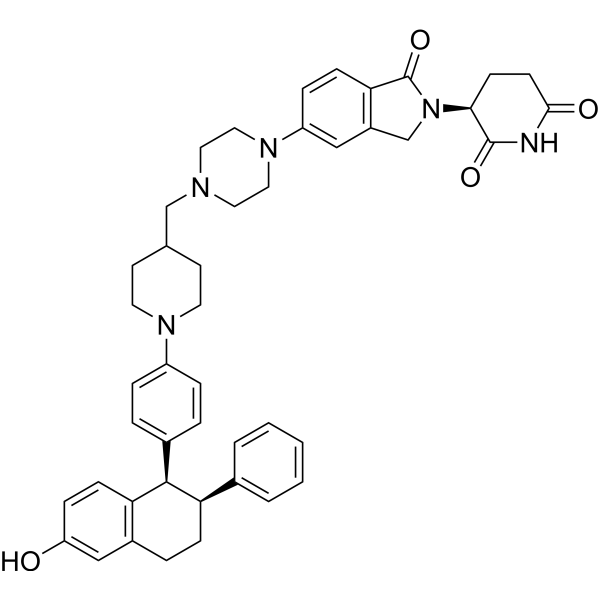
    Vepdegestrant (ARV-471) is an orally active PROTAC estrogen receptor degrader against breast cancer. Vepdegestrant is a hetero-bifunctional molecule that facilitates the interactions between estrogen receptor alpha and an intracellular E3 ligase complex. Vepdegestrant leads to the ubiquitylation and subsequent degradation of estrogen receptors via the proteasome. Vepdegestrant robustly degrades ER in ER-positive breast cancer cell lines with a half-maximal degradation concentration (DC50) of about 2 nM .
    Vepdegestrant
  • HY-P9977
    Amivantamab
    3 Publications Verification

    JNJ-61186372

    EGFR Inflammation/Immunology Cancer
    Amivantamab (JNJ-61186372) is a human EGFR-MET bispecific antibody with immune anticancer activity. Amivantamab inhibits ligand binding, promotes endocytosis and degradation of receptor-antibody complexes, and induces Fc-dependent cytokinesis in macrophages and antibody-dependent cytotoxicity in natural killer cells .
    Amivantamab
  • HY-102022
    α-Galactosylceramide
    4 Publications Verification

    α-GalCer; KRN7000

    Transmembrane Glycoprotein Interleukin Related CD1 Inflammation/Immunology Cancer
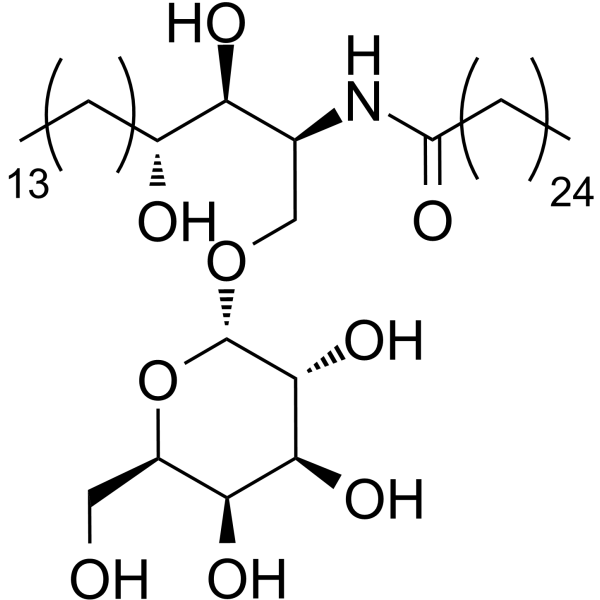
    α-Galactosylceramide (α-GalCer) is a synthetic glycolipid with antitumorial and immunostimulatory. α-Galactosylceramide is a very potent NKT cell agonist and binds effectively to CD1d. The complex of α-Galactosylceramide plus CD1d binds the NKT cell TCR (T cell antigen receptor) .
    α-Galactosylceramide
  • HY-P991015

    JNJ-78278343; KLCB-245

    CD3 Cancer
    Pasritamig (JNJ-78278343; KLCB-245) is a bispecific T-cell engager (BiTE) that targets the complex of human kallikrein KLK2 and CD3 receptor. Pasritamig redirects the cytotoxicity of T cells to KLK2-expressing tumor cells and induces T cell-mediated lysis of KLK2-expressing prostate cancer cells. Administered via subcutaneous injection, subcutaneous infusion or intravenous infusion, Pasritamig exhibits antitumor activity against metastatic castration-resistant prostate cancer. Pasritamig has a safety profile with an extremely low incidence of cytokine release syndrome and can be safely administered in an outpatient setting. Pasritamig is applicable to the research of metastatic castration-resistant prostate cancer .
    Pasritamig
  • HY-P1548
    β-CGRP, human
    1 Publications Verification

    Human β-CGRP; CGRP-II (Human)

    CGRP Receptor Cardiovascular Disease Inflammation/Immunology
    β-CGRP, human (Human β-CGRP) is one of calcitonin peptides, acts via the complex of calcitonin-receptor-like receptor (CRLR) and receptor-activity-modifying protein (RAMP), with IC50s of 1 nM and 300 nM for CRLR/RAMP1 and CRLR/RAMP2 in cells .
    β-CGRP, human
  • HY-158102
    Rinzimetostat
    1 Publications Verification

    ORIC-944

    Histone Methyltransferase Cancer
    Rinzimetostat (ORIC-944) is a selective, orally active, allosteric inhibitor targeting the EED subunit of polycomb repressive complex 2 (PRC2). Rinzimetostat is synergistic with androgen receptor pathway inhibitors (ARPIs) for the study of metastatic prostate cancer.
    Rinzimetostat
  • HY-W053583
    Tetraxetan
    1 Publications Verification

    DOTA

    Biochemical Assay Reagents Radionuclide-Drug Conjugates (RDCs) Cancer
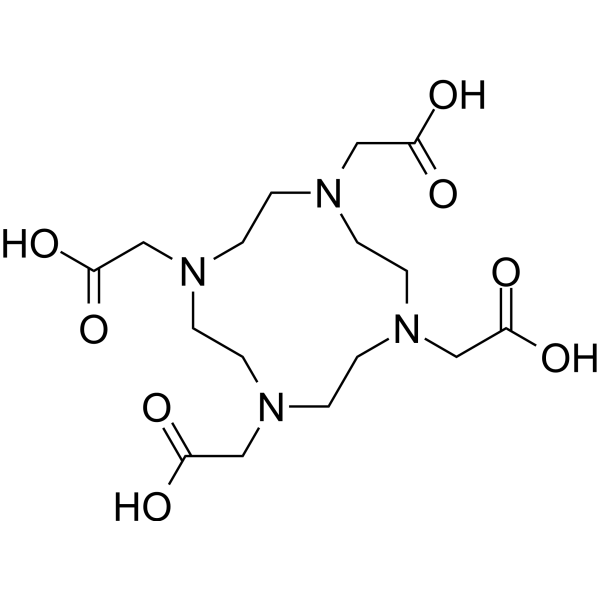
    Tetraxetan (DOTA) is a macrocyclic chelating agent. Tetraxetan can form stable coordination complexes with a variety of metal ions (e.g., 68Ga, 111In, 177Lu). Tetraxetan can be conjugated with targeting molecules (e.g., RGD peptide, folic acid) to enable the complex to target specific biomolecules or cells. Tetraxetan can be used for imaging studies of tumors, including melanoma and folate receptor-positive tumors (e.g., cervical cancer) .
    Tetraxetan
  • HY-116961
    TH1020
    10+ Cited Publications

    Toll-like Receptor (TLR) Bacterial Infection Inflammation/Immunology
    TH1020 is a potent and selective toll-like receptor 5 (TLR5)/flagellin complex antagonist with an IC50 of 0.85 μM. TH1020 inhbits flagellin-induced TLR5 signaling. TH1020 is inactive against TLR2, TLR3, TLR4, TLR7 and TLR8 .
    TH1020
  • HY-B0383

    PNU180638

    5-HT Receptor Neurological Disease
    Almotriptan malate (PNU180638) is an orally active, highly selective agonist of the 5-HT1B/1D receptor (5-HT1B/1D receptor), with EC50 values of 1.6 nM and 3.1 nM, respectively. Almotriptan malate shows moderate affinity for the 5-HT1F receptor, and weak affinity for the 5-HT1A, 5-HT6 and 5-HT7 receptors. Almotriptan malate induces intracranial vasoconstriction, inhibits nociceptive neurotransmission in the trigeminocervical complex, and suppresses the release of vasoactive peptides from trigeminal nerve endings. Almotriptan malate can be used in research related to migraine .
    Almotriptan malate
  • HY-111444
    Auxinole
    15+ Cited Publications

    E1/E2/E3 Enzyme Others
    Auxinole is a potent auxin antagonist of TIR1/AFB receptors, binding TIR1 to block the formation of the TIR1-IAA-Aux/IAA complex and so inhibits auxin-responsive gene expression.
    Auxinole
  • HY-119687

    Environmental Pollutants GABA Receptor Reactive Oxygen Species (ROS) Mitochondrial Metabolism Insecticide Na+/K+ ATPase Infection Cardiovascular Disease
    Bifenazate is a carbazate acaricide that control 100% of mites at a concentration of 25 ppm . Bifenazate is a positive allosteric modulator of GABA receptor . Bifenazate is the inhibitor for the mitochondrial electron transport chain complex III .
    Bifenazate
  • HY-115630

    RIP kinase Caspase Apoptosis Cancer
    cRIPGBM chloride, an orally active, proapoptotic derivative. cRIPGBM can be generated from glioblastoma multiforme (GBM) cancer stem cells (CSCs). cRIPGBM(chloride) targets to receptor-interacting protein kinase 2 (RIPK2) to induce caspase 1-dependent apoptosis. cRIPGBM(chloride) suppresses the formation of RIPK2/TAK1 (prosurvival complex), and increases the formation of RIPK2/caspase 1 (proapoptotic complex). cRIPGBM(chloride) exerts potent anti-tumor activity in vivo in animal models .
    cRIPGBM chloride
  • HY-P99661
    Inbakicept
    2 Publications Verification

    Interleukin Related Cancer
    Inbakicept is a dimeric human IL-15 receptor alpha (IL-15 Ra) sushi domain/human IgG1 Fc fusion protein and is an IL-15 superagonist complex. Inbakicept is able to form complex N-803 (Nogapendekin alfa inbakicept) with the IL-15 antibody Nogapendekin alfa in a 1:2 ratio. N-803 mimics the function of IL-15 and amplifies anti-CD20 mAb-mediated NK cell responses and antibody-dependent cellular cytotoxicity (ADCC). N-803 also increases degranulation and IFNγ production in cells .
    Inbakicept
  • HY-B0383A

    PNU180638 free base

    5-HT Receptor Neurological Disease
    Almotriptan (PNU180638 free base) is an orally active, highly selective agonist of the 5-HT1B/1D receptor (5-HT1B/1D receptor), with EC50 values of 1.6 nM and 3.1 nM, respectively. Almotriptan shows moderate affinity for the 5-HT1F receptor, and weak affinity for the 5-HT1A, 5-HT6 and 5-HT7 receptors. Almotriptan induces intracranial vasoconstriction, inhibits nociceptive neurotransmission in the trigeminocervical complex, and suppresses the release of vasoactive peptides from trigeminal nerve endings. Almotriptan can be used in research related to migraine .
    Almotriptan
  • HY-P10810

    Wnt β-catenin Cancer
    QPH-FR is a LGR5 inhibitor. QPH-FR competitively binds to LGR5 and prevents the formation of the LGR5/RSPO1 complex. QPH-FR promotes RNF43/ZNRF3-mediated ubiquitination of FZD receptors, inhibits the Wnt β-catenin signaling pathway, and reduces the stemness of colorectal cancer cells. QPH-FR is applicable to relevant research on colorectal cancer .
    QPH-FR
  • HY-P990552A

    PAI-1 Integrin Cancer
    huATN-658 is an inhibitor that specifically targets the DIII domain of human urokinase plasminogen activator receptor (uPAR). huATN-658 neutralizes uPAR function by blocking the interaction between uPAR and integrins, without interfering with the binding of uPA or vitronectin to uPAR. huATN-658 inhibits the proliferation and invasion of breast cancer cells, slows the growth of primary breast tumors, reduces breast cancer-induced bone lesions and decreases osteoclast activity. huATN-658 also alters the gene expression of the TGF-β receptor complex signaling pathway. huATN-658 exerts synergistic anticancer effects when combined with Zoledronic Acid (HY-13777), and does not cause physiological or behavioral abnormalities in immunodeficient mice. huATN-658 can be used in research related to breast cancer, metastatic breast cancer and breast cancer-induced bone disease .
    huATN-658
  • HY-171978

    Adrenergic Receptor Cardiovascular Disease
    LM-189 is a β2-adrenergic receptor2AR) ligand and G protein-biased modulator with a human β2AR Ki of 0.063 nM.LM-189 promotes β2AR coupling to Gαs and Gαi heterotrimers, stabilizes distinct β2AR conformations including a TM6 outward state, and increases β2AR ICL2 dynamics.LM-189 restricts β2AR ligand-binding pocket conformational heterogeneity, stabilizes polar ligand-receptor interaction networks, and exhibits bias toward Gαi signaling over Gαs signaling.LM-189 enabled cryo-EM structural characterization of the β2AR-Gi complex.LM-189 can be used for the research of congestive heart failure .
    LM-189
  • HY-P991201

    Interleukin Related Inflammation/Immunology
    REGN-7257 is a humanized monoclonal antibody targeting IL2RG. REGN-7257 blocks the signal transduction induced by common gamma chain (γc) cytokines via the IL2RG chain of the γc cytokine receptor complex. REGN-7257 is applicable for research on immune-mediated diseases and T cell-mediated diseases . Its corresponding isotype control is Human IgG4 kappa, Isotype Control (HY-P99003).
    REGN-7257
  • HY-P2259
    TAT-GluA2 3Y
    2 Publications Verification

    iGluR HIV Integrase Adenosine Receptor Cardiovascular Disease Neurological Disease
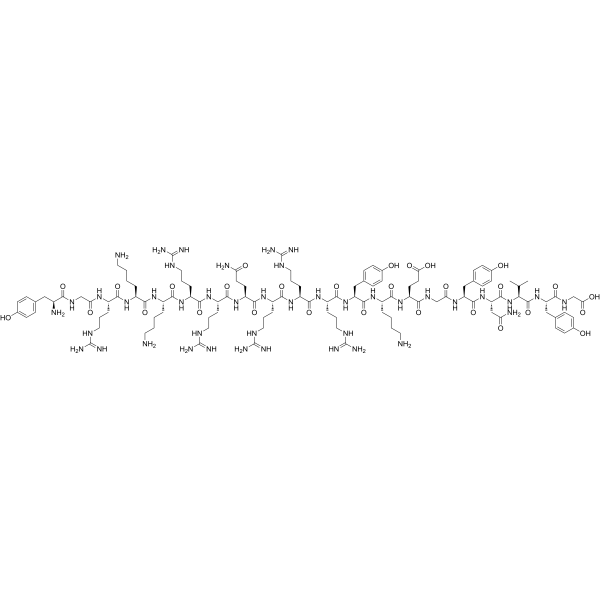
    TAT-GluA2 3Y is a blood-brain barrier-permeable AMPA receptor inhibitory peptide that crosses cell membranes via the HIV-1 TAT protein domain. TAT-GluA2 3Y blocks the endocytosis of AMPA receptors, including the internalization of GluA1/GluA2 subunits, by disrupting interactions with the AP2, Brag2 and Syt3-GluA2 complexes, while also inhibiting long-term depression. TAT-GluA2 3Y blocks hypoxia-mediated AMPAR internalization, alleviates A1R-induced persistent synaptic inhibition, and reduces cerebral ischemic volume, neurological deficits and spatial memory deficits. TAT-GluA2 3Y blocks the effect of NLRP3 deficiency on fear generalization, inhibits amphetamine-induced behavioral/neurochemical sensitization, weakens the unconditioned stimulus-conditioned stimulus association of morphine, and promotes the extinction of morphine CPP. TAT-GluA2 3Y can be used in studies related to fear generalization, ischemic stroke, hypoxia, drug addiction and opioid addiction .
    TAT-GluA2 3Y
  • HY-107867

    P2Y Receptor Cardiovascular Disease Inflammation/Immunology
    (±)-Clopidogrel bisulfate is a platelet P2Y12 receptor inhibitor and an adenosine diphosphate (ADP) receptor antagonist. (±)-Clopidogrel bisulfate inhibits the binding of ADP to its receptors on the membranes of platelet cells, and blocks ADP-mediated activation of the glycoprotein GPIIb/IIIa complex. (±)-Clopidogrel bisulfate reduces vascular inflammation and angiotensin II induced-abdominal aortic aneurysm progression. (±)-Clopidogrel bisulfate has anti-inflammatory effects .
    (±)-Clopidogrel bisulfate
  • HY-123813

    CXCR Arrestin Cancer
    CCX-777 is an orthosteric binder and partial agonist of CXCR7/ACKR3. CCX-777 induces the recruitment of β-arrestin 2 and affects the rebinding of chemokines to ACKR3. CCX-777 functions to stabilize the ACKR3 receptor and promotes the formation of a monodisperse, stable complex of the receptor in DDM/CHS micelles. CCX-777 is widely used in cancer-related research .
    CCX-777
  • HY-P1548A
    β-CGRP, human TFA
    1 Publications Verification

    Human β-CGRP TFA; CGRP-II (Human) TFA

    CGRP Receptor Cardiovascular Disease Inflammation/Immunology
    β-CGRP, human TFA (Human β-CGRP TFA) is one of calcitonin peptides, acts via the complex of calcitonin-receptor-like receptor (CRLR) and receptor-activity-modifying protein (RAMP), with IC50s of 1 nM and 300 nM for CRLR/RAMP1 and CRLR/RAMP2 in cells .
    β-CGRP, human TFA
  • HY-N2197
    Hirsuteine
    2 Publications Verification

    nAChR Neurological Disease
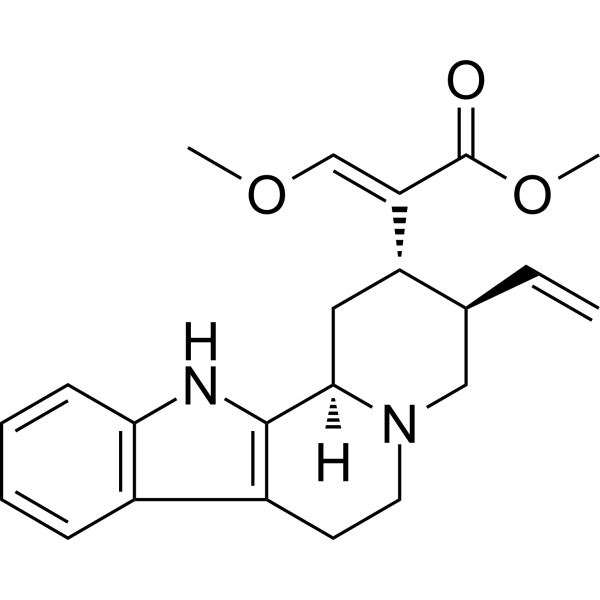
    Hirsuteine is an indole alkaloid extracted from Uncaria rhynchophylla. Hirsuteine non-competitively antagonizes nicotine-mediated dopamine release by blocking ion permeation through nicotinic receptor channel complexes .
    Hirsuteine
  • HY-W080730

    Drug Intermediate Others
    Difluoromethyl 2,2,2-trifluoroethyl ether is an intermediate of Isoflurane (HY-A0134). Isoflurane is a volatile general anaesthetic used for induction and maintenance of general anesthesia. Isoflurane binds to and enhances GABAA receptor. Isoflurane inhibits electron transfer in respiratory complex I.
    2-(Difluoromethoxy)-1,1,1-trifluoroethane
  • HY-N2339
    Cholesteryl behenate
    1 Publications Verification

    Cholesteryl docosanoate; Cholesterol behenate

    Endogenous Metabolite Metabolic Disease
    Cholesteryl behenate is a cholesterol ester associated with the neutral core of low density lipoprotein Receptor-LDL complexes are taken up by lysosomes and hydrolyzed to release cholesterol from the esters.
    Cholesteryl behenate
  • HY-W743398

    CS-386

    GABA Receptor Neurological Disease
    Mexazolam (CS-386) is an orally active benzodiazepine and anxiolytic. Benzodiazepines bind to specific BZD-type receptors on the GABA-chloride complex and potentiate the inhibitory effects of GABA .
    Mexazolam
  • HY-120875

    RAR/RXR Neurological Disease
    HX600 is a synthetic agonist for RXR (Retinoid X Receptor) heterodimer complex. HX600 prevents ischemia-induced neuronal damage. HX600 has orally bioactivity .
    HX600
  • HY-175785

    Estrogen Receptor/ERR Aryl Hydrocarbon Receptor Apoptosis MDM-2/p53 Cancer
    X15695 is selective and orally active estrogen receptor (ERα) degrader. X15695 is an aryl hydrocarbon receptor (AHR) ligand. X15695 enables AHR to form a complex with the ERα, promoting its proteasomal degradation. X15695 inhibits the breast cancer cells proliferation, promotes cell cycle block and induces apoptosis. X15695 can be used for the study of breast cancer .
    X15695
  • HY-158102A
    Rinzimetostat TFA
    1 Publications Verification

    ORIC-944 TFA

    Histone Methyltransferase Cancer
    Rinzimetostat (ORIC-944) TFA is the TFA salt form of ORIC (HY-158102). Rinzimetostat TFA is a selective, orally active, allosteric inhibitor targeting the EED subunit of polycomb repressive complex 2 (PRC2). Rinzimetostat TFA is synergistic with androgen receptor pathway inhibitors (ARPIs) for the study of metastatic prostate cancer .
    Rinzimetostat TFA
  • HY-127024A

    Thyroid Hormone Receptor Metabolic Disease
    TR antagonist 2 (Compound 10a) is a competitive thyroid hormone receptors (TRα/β) antagonist (IC50=47 nM). TR antagonist 2 competes with triiodothyronine (T3) for binding to the ligand-binding domain of TR to block receptor-coactivator complex formation and inhibit target gene transcription, reducing thyroid hormone-mediated hypermetabolic effects. TR antagonist 2 is promising for research of hyperthyroidism (e.g., Graves' disease) and thyrotoxicosis .
    TR antagonist 2
  • HY-NP144

    Biochemical Assay Reagents Neurological Disease
    Nerve Growth Factor 7S,murine submaxillary gland is a high-molecular-weight α2β2γ2 neurotrophic factor complex isolated from murine submaxillary glands. Nerve Growth Factor 7S,murine submaxillary gland prevents the binding of active β-NGF dimers to neuronal receptors by sequestering the receptor-interacting region of β-NGF within the complex. Nerve Growth Factor 7S,murine submaxillary gland lacks neurotrophic activity due to the sequestration of β-NGF dimers and the occlusion of receptor-binding sites. Nerve Growth Factor 7S,murine submaxillary gland can be used in research related to neurodegenerative diseases .
    Nerve Growth Factor 7S,murine submaxillary gland
  • HY-W053583R

    DOTA (Standard)

    Biochemical Assay Reagents Reference Standards Radionuclide-Drug Conjugates (RDCs) Cancer
    Tetraxetan (Standard) is the analytical standard of Tetraxetan (HY-W053583). This product is intended for research and analytical applications. Tetraxetan (DOTA) is a macrocyclic chelating agent. Tetraxetan can form stable coordination complexes with a variety of metal ions (e.g., 68Ga, 111In, 177Lu). Tetraxetan can be conjugated with targeting molecules (e.g., RGD peptide, folic acid) to enable the complex to target specific biomolecules or cells. Tetraxetan can be used for imaging studies of tumors, including melanoma and folate receptor-positive tumors (e.g., cervical cancer) .
    Tetraxetan (Standard)
  • HY-138642S

    ARV-471-d5

    Isotope-Labeled Compounds Cancer
    Vepdegestrant-d5 (ARV-471-d5) is the deuterium labeled Vepdegestrant (HY-138642). Vepdegestrant (ARV-471) is an orally active PROTAC estrogen receptor degrader against breast cancer. Vepdegestrant is a hetero-bifunctional molecule that facilitates the interactions between estrogen receptor alpha and an intracellular E3 ligase complex. Vepdegestrant leads to the ubiquitylation and subsequent degradation of estrogen receptors via the proteasome. Vepdegestrant robustly degrades ER in ER-positive breast cancer cell lines with a DC50 of about 2 nM .
    Vepdegestrant-d5
  • HY-P2510

    Thyroid Hormone Receptor Metabolic Disease
    Parathyroid Hormone (1-34), human, biotinylated is a probe for the parathyroid hormone receptor, can be used for analyzing the interaction between parathyroid hormone and parathyroid hormone receptors in living cells and for purifying hormone-receptor complexes with affinity columns .
    Parathyroid Hormone (1-34), human, biotinylated
  • HY-19814

    RU-40555

    Glucocorticoid Receptor Infection Inflammation/Immunology
    Toripristone (RU-40555) is a cortisol receptor inhibitor. Toripristone combined with clarithromycin can increase the antibacterial activity of Mycobacterium avium complex infection .
    Toripristone
  • HY-138642A

    (Rac)-ARV-471

    PROTACs Estrogen Receptor/ERR Cancer
    (Rac)-Vepdegestrant is the isomer of Vepdegestrant (HY-138642). Vepdegestrant is an orally active PROTAC estrogen receptor degrader against breast cancer. Vepdegestrant is a hetero-bifunctional molecule that facilitates the interactions between estrogen receptor alpha and an intracellular E3 ligase complex. Vepdegestrant leads to the ubiquitylation and subsequent degradation of estrogen receptors via the proteasome. Vepdegestrant robustly degrades ER in ER-positive breast cancer cell lines with a half-maximal degradation concentration (DC50) of about 2 nM .
    (Rac)-Vepdegestrant
  • HY-174266

    MDM-2/p53 Cancer
    WB156 is a dual MDM2 and GSPT1 degrader. WB156 can recruit CRBN (Cereblon, a substrate receptor of the E3 ubiquitin-ligase complex) to induce the ubiquitination-proteasome pathway-mediated degradation of MDM2 and GSPT1. WB156 is promising for research of cancers, such as leukemia .
    WB156
  • HY-162728

    Opioid Receptor Neurological Disease
    RO-76 is a mu opioid receptor (μOR) selective partial agonist. RO-76 binds to μOR-G-protein complex with an EC50 value of 454 nM. RO-76 reduces β-Arrestin-1/2 recruitment. RO-76 shows antinociception activity .
    RO-76
  • HY-W008341

    Toll-like Receptor (TLR) Neurological Disease
    5-Chloroisoquinoline (compound 42) is an inhibitor of SARM1 (Sterile alpha and toll/interleukin receptor (TIR) motif containing protein 1), an enzyme involved in axon degeneration that catalyzes multiple activities through a ternary complex mechanism. 5-Chloroisoquinoline can be used in the study of neurodegenerative diseases or axon degeneration .
    5-Chloroisoquinoline
  • HY-100979

    HDMPPA

    mAChR Others
    W-84 (dibromide) is a potent allosteric modulator of M2-cholinoceptors, which retards [ 3H]N-methylscopolamine dissociation. W-84 dibromide can stabilize cholinergic antagonist-receptor complexes. W-84 (dibromide) is a non-competitive muscarinic acetylcholine receptors antagonist with allosteric effects. W-84 (dibromide) protects over additively against an organophosphate-intoxication when applied in combination with atropine .
    W-84 dibromide
  • HY-120155

    Sigma Receptor iGluR Neurological Disease
    MS-377 is a selective and orally active sigma-1 receptor ligand (Ki=73 nM) with weak affinity for sigma-2 receptor (Ki=6900 nM) and no affinity for any other receptors including dopamine, serotonin, PCP site, glutamate, γ-aminobutylic acid, adenosine, adrenergic receptors, etc. (Ki: >10 μM). MS-377 indirectly modulates the NMDA receptor ion-channel complex. MS-377 is a antipsychotic agent. MS-377 inhibits PCP-induced behaviors by inhibition of the increase in dopamine and serotonin release in the rat medial prefrontal cortex. MS-377 can be used for research of schizophrenia .
    MS-377
  • HY-P99837

    SPV-T3a

    CD3 Infection
    Dafsolimab (SPV-T3a) is a Mouse IgG2b monoclonal antibody (anti-CD3). Dafsolimab can induce cell death through modulation and activation of the CD3/T cell receptor complex. Dafsolimab can be used for the research of graft-versus-host disease (GVHD) .
    Dafsolimab
  • HY-114133

    Radionuclide-Drug Conjugates (RDCs) Somatostatin Receptor Cancer
    Depreotide is a nove tumor tarcer, can be complexed with technetium-99m ( 99mTc-depreotide) for optimal imaging properties. 99mTc-depreotide somatostain receptor imaging has been playing an important role in medical diagnosis research . Depreotide can be used for the synthesis/research of Radionuclide-Drug Conjugates (RDCs).
    Depreotide
  • HY-120524

    iGluR Neurological Disease
    CGP 31358 is an anticonvulsant agent that binds to a site on the NMDA receptor complex that is coupled to both the transmitter recognition site and to the channel domain. CGP 31358 inhibits the binding of L-Glutamate to the NMDA receptor complex with an IC50 of 53 μM .
    CGP 31358
  • HY-109572

    GABA Receptor Neurological Disease
    GABAA receptor modulator-1 (9eey) is a GABAA receptor modulator that can be used in the study of central nervous system diseases .
    GABAA receptor modulator-1
  • HY-129927

    GABA Receptor Others
    Thiomuscimol is a GABAA receptor agonist (IC50=19 nM). It has been used as a photoaffinity label for the purification and identification of GABA binding sites within the GABAA receptor complex.
    Thiomuscimol
  • HY-158726

    Fluorescent Dye Apoptosis Cancer
    Complex 3 is a fluorescent dithiocarbazate-copper complex with anticancer activity, which localizes to mitochondria. Complex 3 displays excitation/emission maxima of 455-495/535 nm, respectively. Complex 3 inhibits the growth of BxPC-3, AsPC-1, PANC-1, and WI38 pancreatic cancer cells with IC50 values of 0.74, 0.41, 0.62, and 2.06 µM, respectively. Complex 3 induces lipid peroxidation and mitochondrial rupture and shrinkage in AsPC-1 cells. Complex 3 also induces mitochondrial apoptosis and cytokine-cytokine receptor interaction dysfunction in AsPC-1 cells. Complex 3 reduces tumor volume in an AsPC-1 mouse xenograft model .
    Complex 3
  • HY-124357

    S-Norfluoxetine hydrochloride; LY 215229 hydrochloride

    Dopamine Receptor Neurological Disease
    Seproxetine (S-Norfluoxetine) hydrochloride is a selective serotonin reuptake inhibitor (SSRI) that enhances serotonin levels in the brain by specifically inhibiting the serotonin uptake carrier. Seproxetine hydrochloride exhibits strong charge transfer interactions with π-electron acceptors, forming stable complexes that enhance its binding affinity to multiple receptors, including serotonin and dopamine receptors. Seproxetine hydrochloride demonstrates improved biological activity when interacting with charge transfer complexes, leading to increased stability and efficacy in therapeutic applications.
    Seproxetine hydrochloride
  • HY-P1548B

    Human β-CGRP acetate; CGRP-II (Human) acetate

    CGRP Receptor Cardiovascular Disease Inflammation/Immunology
    β-CGRP, human acetate (Human β-CGRP acetate) is one of calcitonin peptides, acts via the complex of calcitonin-receptor-like receptor (CRLR) and receptor-activity-modifying protein (RAMP), with IC50s of 1 nM and 300 nM for CRLR/RAMP1 and CRLR/RAMP2 in cells .
    β-CGRP, human acetate
  • HY-114706

    MDL-26479

    GABA Receptor Neurological Disease
    Suritozole (MGL-26479) is a cognitive enhancer that acts as a partial inverse agonist of benzodiazepine receptor sites on GABAA ion channel complexes. Suritozole can be used in the study of neurodegenerative diseases .
    Suritozole

Inquiry Online

Your information is safe with us. * Required Fields.

Salutation


Country or Region *

Applicant Name *


Organization Name *

Department *


Email Address *


Product Name *

Cat. No.


Requested quantity *

Phone Number *


Remarks

Inquiry Online

Inquiry Information

Product Name:
Cat. No.:
Quantity:
MCE Japan Authorized Agent:

