



α-Galactosylceramide
Based on 4 publication(s) in Google Scholar
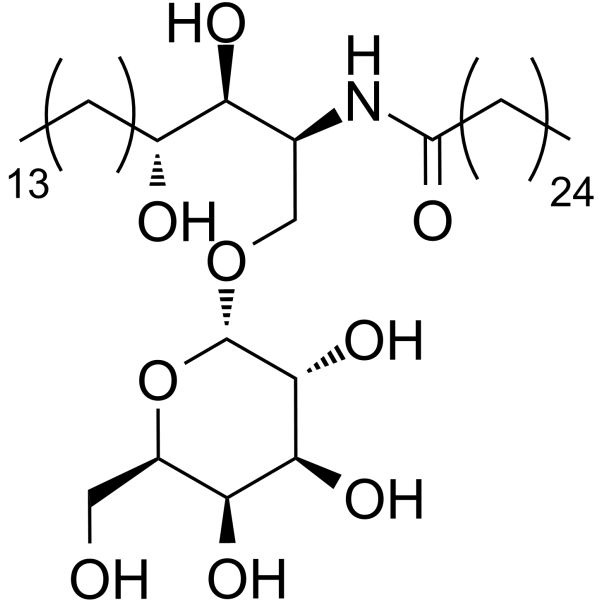
α-Galactosylceramide (α-GalCer) is a synthetic glycolipid with antitumorial and immunostimulatory. α-Galactosylceramide is a very potent NKT cell agonist and binds effectively to CD1d. The complex of α-Galactosylceramide plus CD1d binds the NKT cell TCR (T cell antigen receptor).
Nur für Forschungszwecke. Wir verkaufen nicht an Patienten.
- Reinheit : 95.85%
- CAS. Nr.: 158021-47-7
- Formel: C50H99NO9
- Molecular Weight:858.34
-
Speicherung:Powder -20°C, 3 years ; In solvent -80°C, 6 months , -20°C, 1 month

To place orders, for customer services and technical support, please contact: MedChemExpress USA
Tel: 609-228-6898 E-mail: [email protected] [email protected]


-
 Biologische Aktivität
-
Chemical Information
-
Lösungsmittel & Löslichkeit
- Protokoll
- Reinheit & Dokumentation
- Verweise
-
 Help & FAQs


-
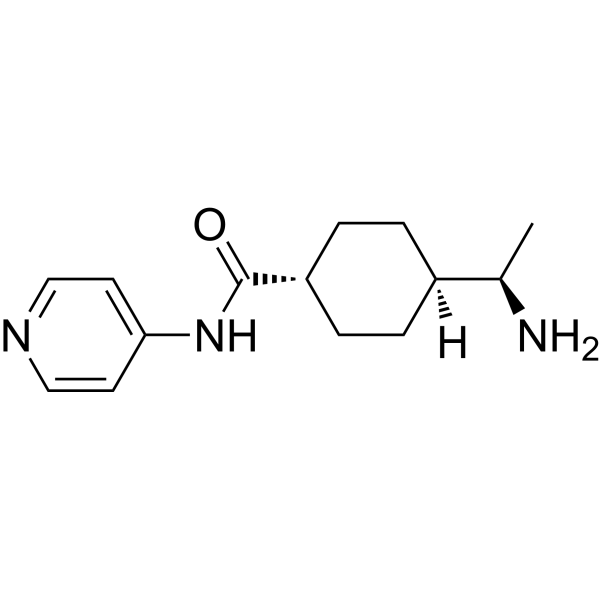
HY-10071
Y-27632ROCK Inhibitor -
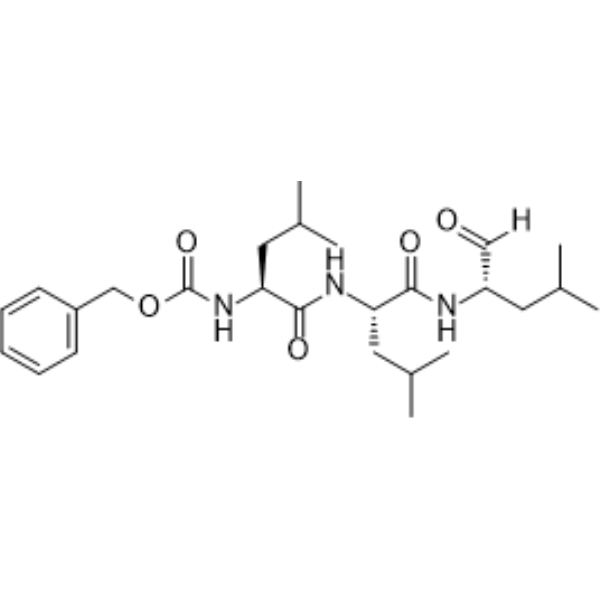
HY-13259
MG-132Proteasome Inhibitor -
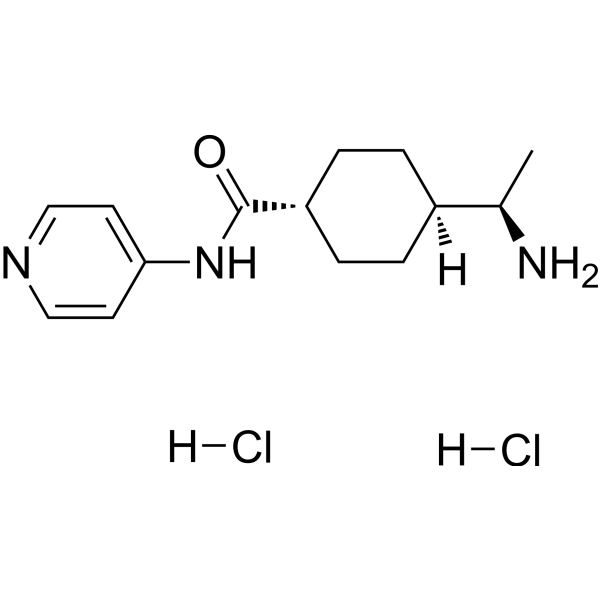
HY-10583
Y-27632 dihydrochlorideROCK Inhibitor -
HY-15141
StaurosporinePKC/PKA Inhibitor -
HY-112251
D-Lin-MC3-DMAsiRNA Delivery Vehicle -
HY-16560
CamptothecinTopo I inhibitor -
HY-134541
SM-102Ionizable Amino Lipid -
HY-15531
VenetoclaxBCL-2 Inhibitor -

HY-153808
Complete Freund's adjuvant (CFA)Immunologic Adjuvant -
HY-12591B
D-Luciferin potassiumSubstrate for Luciferase -
HY-10431
SB-431542TGF-β Receptor Kinase Inhibitor
Publications Citing Use of MedChemExpress (MCE) α-Galactosylceramide
More Customer Validation & Images

-
Cell Proliferation/Viability Assay
-
In Vivo Efficacy Study
-
WB
-
Histological Imaging/Staining


Biologische Aktivität
Beschreibung
IC50 & Target
|
CD1d |
Cellular Effect
|
Cell Line

|
Type | Value | Description | References |
|---|---|---|---|---|
| iNKT | EC50 |
2.7 μM
Compound: 1, KRN7000
|
Effect on immune response in human iNKT cells stimulated by antigen-presenting CD1d-transfected human HeLa cells assessed as induction of TNFalpha release by MTT assay
Effect on immune response in human iNKT cells stimulated by antigen-presenting CD1d-transfected human HeLa cells assessed as induction of TNFalpha release by MTT assay
|
[PMID: 19580320] |
In Vitro
Culture supernatants of activated Vα24+NKT-cell cultures stimulated with α-Galactosylceramide pulsed monocyte-derived dendritic cells (Mo-DCs) exhibits antiproliferative activities against melanoma cells. This effect is predominantly due to release of IFN-γ, and to a lesser extent IL-12. Other cytokines, including IL-4 and IL-10, are released but these cytokines have less antiproliferative effects. Vα24+NKT-cells stimulated by α-Galactosylceramide-pulsed Mo-DCs have anti-tumour activities against human melanoma through antiproliferative effects exerted by soluble mediators[3].
MedChemExpress (MCE) has not independently confirmed the accuracy of these methods. They are for reference only.
In Vivo
Since α-Galactosylceramide shows a potent antitumor activity and stimulates the lymphocyte proliferation (LP) on allogeneic mixed lymphocyte reaction (MLR) in the mouse, α-Galactosylceramide is considered to be a nonspecific immunostimulating agent which is a biological response modifier[4].
MedChemExpress (MCE) has not independently confirmed the accuracy of these methods. They are for reference only.
Clinical Trial
| NCT Number | Sponsor | Condition | Start Date |
Phase
|
|---|---|---|---|---|
| NCT01329991 | 2011-05 | PHASE1 |


Chemical Information
-
CAS. Nr. 158021-47-7
-
Appearance Solid
-
Molecular Weight 858.34
-
Formel C50H99NO9
-
Color White to off-white
-
SMILES
CCCCCCCCCCCCCCCCCCCCCCCCCC(N[C@@H](CO[C@@H]1[C@@H]([C@H]([C@H]([C@@H](CO)O1)O)O)O)[C@H](O)[C@H](O)CCCCCCCCCCCCCC)=O
-
Synonyms
α-GalCer; KRN7000
-
Versand
Room temperature in continental US; may vary elsewhere.
-
Speicherung
Powder -20°C 3 years In solvent -80°C 6 months -20°C 1 month


Publications (4)
-
Journal Impact Factor
-
Most Recent
-
Sci Adv
Early infiltrating NKT lymphocytes attenuate bone regeneration through secretion of CXCL2. [Abstract]2024 May 17;10(20):eadl6343. PMID: 38758783 -
Mater Today Bio
α-GalCer-LNP ehanced mRNA delivery and activates natural killer T cells for superior tumor immunotherapy. [Abstract]2025 May 21:32:101893. PMID: 40502368 -
Biochem Pharmacol
DNA damage agents trigger iNKT cell-mediated elimination of AML cells through activation of NF-κB/HLA-DRB6/CD1d pathway. [Abstract]2025 Nov:241:117174. PMID: 40683469
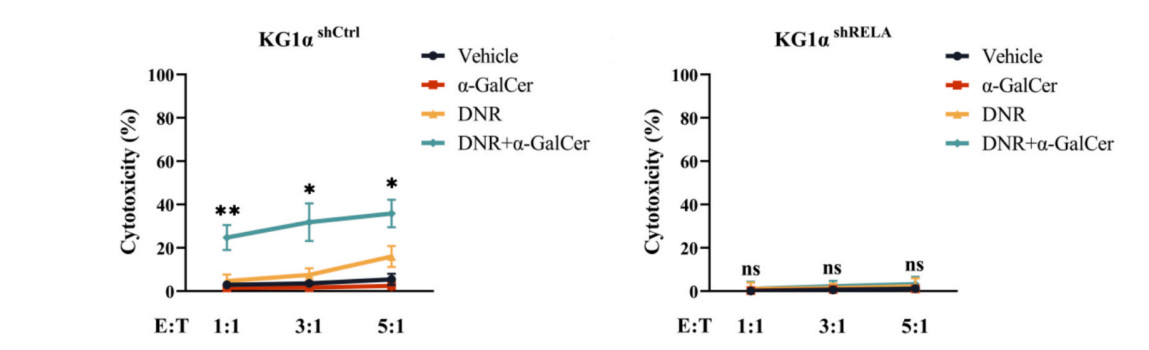
α-Galactosylceramide purchased from MedChemExpress. Usage Cited in: Biochem Pharmacol. 2025 Nov:241:117174. [Abstract]
KG1α shCtrl and KG1α shRELA cells were treated overnight with α-GalCer (200 ng/mL) 12 hours after DNA damage, and then co-cultured with iNKT cells for 24 hours at the effector cell to target cell ratio (E:T) shown.
α-Galactosylceramide purchased from MedChemExpress. Usage Cited in: Biochem Pharmacol. 2025 Nov:241:117174. [Abstract]
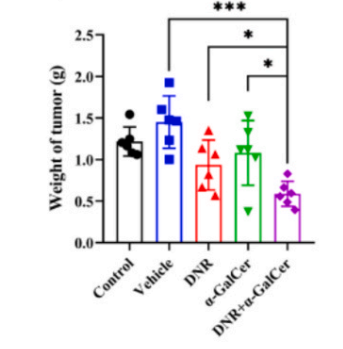
DNR combined with α-GalCer (10 μg/dose, intraperitoneal injection, once every 4 days) significantly reduced tumor weight.
α-Galactosylceramide purchased from MedChemExpress. Usage Cited in: Biochem Pharmacol. 2025 Nov:241:117174. [Abstract]
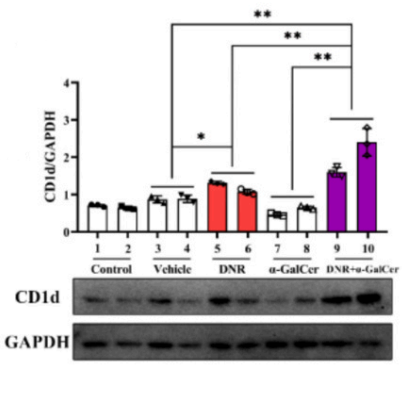
α-GalCer (10 μg/dose, intraperitoneal injection, once every 4 days). Western blotting was used to analyze the expression level of CD1d protein in tumor tissues of each treatment group.
α-Galactosylceramide purchased from MedChemExpress. Usage Cited in: Biochem Pharmacol. 2025 Nov:241:117174. [Abstract]
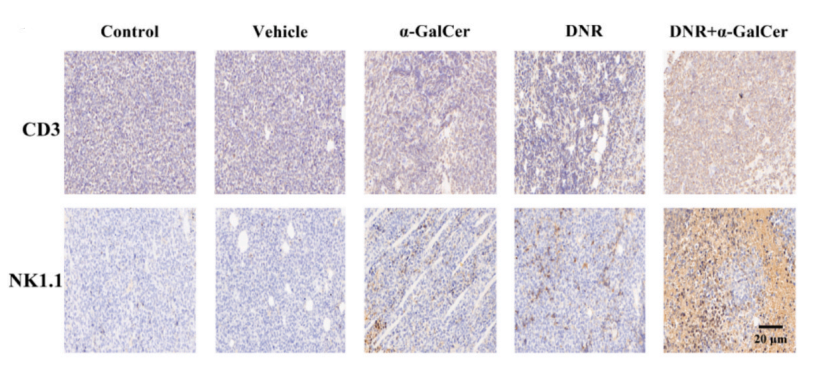
Tumor tissues treated with DNR combined with α-GalCer (10 μg) were collected, fixed, and subjected to immunohistochemical analysis to detect the expression of CD3 and NK1.1.
-
Nanoscale
A natural killer T cell nanoagonist-initiated immune cascade for hepatocellular carcinoma synergistic immunotherapy. [Abstract]2024 Jun 13;16(23):11126-11137. PMID: 38787697


Lösungsmittel & Löslichkeit
In Vitro:
DMSO : 0.5 mg/mL (0.58 mM; ultrasonic and warming and heat to 60°C; Hygroscopic DMSO has a significant impact on the solubility of product, please use newly opened DMSO)


Reinheit & Dokumentation
-
Data Sheet (302 KB)
-
SDS (393 KB)
- English - EN (393 KB)
- Français - FR (393 KB)
- Deutsch - DE (393 KB)
- Norwegian - NO (393 KB)
- Español - ES (393 KB)
- Swedish - SV (393 KB)
- Italian - IT (393 KB)
- Korean - KR (393 KB)
- Portuguese - PT (393 KB)
-
Handling Instructions (2659 KB)
Verweise
[1]. Godfrey DI, et al. Going both ways: immune regulation via CD1d-dependent NKT cells. J Clin Invest. 2004 Nov;114(10):1379-88. [Content Brief]
[2]. Morita M, et al. Practical Total Synthesis of (2S,3S,4R)-1-O-(α-D-Galactopyranosyl)-N-hexacosanoyl-2-amino-1,3,4-octadecanetriol, the Antitumorial and Immunostimulatory α-Galactosylcer-amide, KRN7000. Biosci Biotechnol Biochem. 1996 Jan;60(2):288-92. [Content Brief]
[3]. Kikuchi A, et al. In vitro anti-tumour activity of alpha-galactosylceramide-stimulated human invariant Valpha24+NKT cells against melanoma. Br J Cancer. 2001 Sep 1;85(5):741-6. [Content Brief]

Calculators
Konzentration (Stammlösung) × Volumen (Stammlösung) = Konzentration (Ziellösung) × Volumen (Ziellösung)


α-Galactosylceramide Related Classifications
HY-102022 Related Classifications
 Powered by Bioz