1. Search Result
Search Result
Results for "

redox-active

" in MedChemExpress (MCE) Product Catalog:

17

Inhibitors & Agonists

1

Fluorescent Dye

3

Natural
Products

Cat. No. Product Name Target Research Areas Chemical Structure
  • HY-W012145

    Others Metabolic Disease
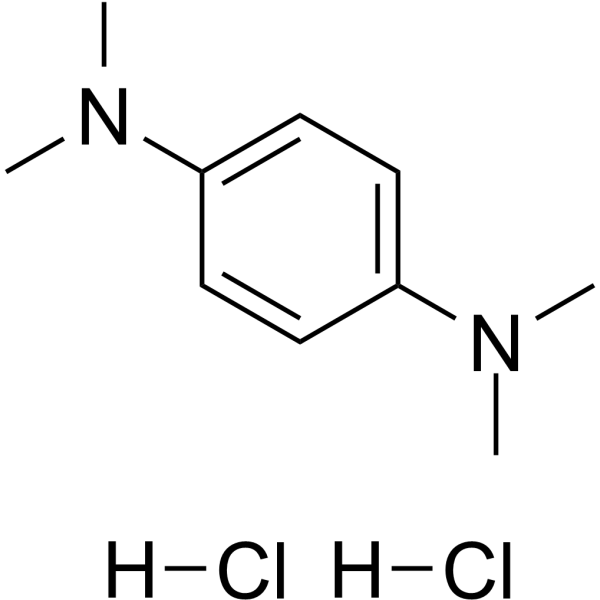
    TMPD dihydrochloride, a readily oxidizable compound, is an enzymatically convert redox active substrate molecule. TMPD dihydrochloride is also an electron donor and serves as a reducing cosubstrate for heme peroxidases . TMPD dihydrochloride is also a complex IV substrate .
    TMPD dihydrochloride
  • HY-W010323

    DHBQ

    Endogenous Metabolite Fungal Others
    2,5-Dihydroxy-1,4-benzoquinone (DHBQ) is a redox-active quinone-based organic ligand with antibacterial activity that can be obtained from fungal metabolites. After 2,5-Dihydroxy-1,4-benzoquinone is incorporated into the Fe (dhbq) metal-organic framework, a two-electron redox process occurs, which helps improve the discharge capacity of Li +-ion battery cathodes. 2,5-Dihydroxy-1,4-benzoquinone can be used to construct conductive metal-organic frameworks suitable for Li +-ion battery cathodes .
    2,5-Dihydroxy-1,4-benzoquinone
  • HY-111278
    Pyocyanin
    2 Publications Verification

    Pyocyanine; Sanazin; Sanasin

    Reactive Oxygen Species (ROS) Bacterial Drug Metabolite Endogenous Metabolite Infection Inflammation/Immunology
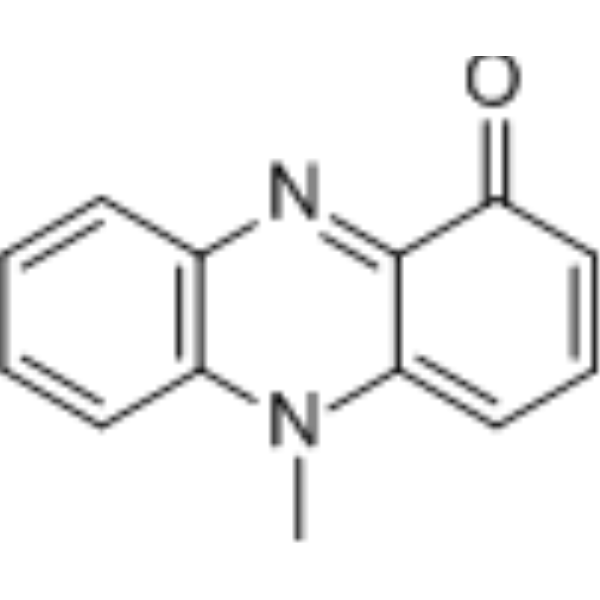
    Pyocyanin (Pyocyanine) is a toxic, quorum sensing (QS) controlled metabolite produced by Pseudomonas aeruginosa. Pyocyanin is a REDOX active compound that promotes the production of reactive oxygen species (ROS). Pyocyanin has antibacterial and anti-inflammatory activity .
    Pyocyanin
  • HY-114243

    NF-κB JNK Caspase Apoptosis Neurological Disease Cancer
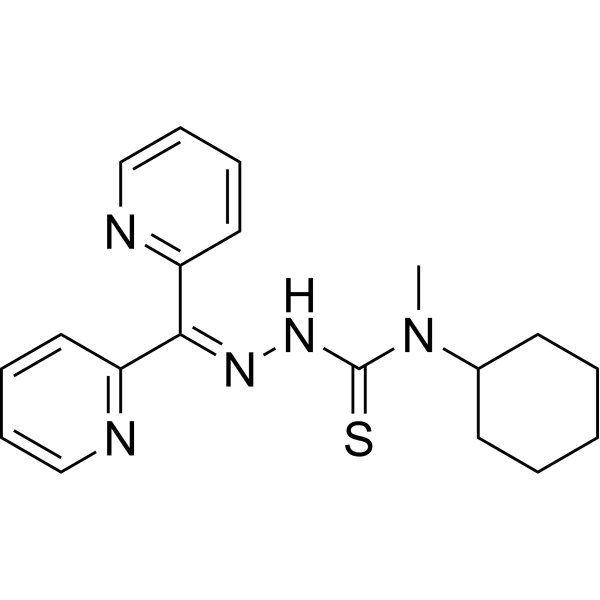
    DpC is a selective, orally active iron chelator with anticancer activity. DpC acts on signaling pathway-related targets such as JNK, NF-κB, and its activity is competitively inhibited by another iron chelator Dp44mT (HY-18973). By chelating intracellular iron and copper ions in tumor cells to form redox-active complexes, DpC induces oxidative stress, activates the JNK, NF-κB pathways and downregulates IκBα, upregulates the expressions of neuroglobin and cytoglobin, activates caspase 3/9 to induce tumor cell apoptosis. It also overcomes P-glycoprotein-mediated multidrug resistance through a lysosome-targeting mechanism, and exhibits broad-spectrum synergistic effects when combined with various chemotherapeutic agents. DpC inhibits tumor metastasis and increases TNF-α levels in the tumor microenvironment to enhance endogenous immune responses. DpC is applicable to the research of various malignancies including neuroblastoma, pancreatic cancer, prostate cancer, lung cancer, and breast cancer .
    DpC
  • HY-W020249

    Biochemical Assay Reagents Others
    Sodium ionophore X is a neutral ionophore that binds highly selectively to sodium ions (Na +) to form stable complexes. Sodium ionophore X can be used to construct ion-selective chemical sensors (including optical sensors and electrochemical sensors) .
    Sodium ionophore X
  • HY-B1106
    Tetrahydroxyquinone
    1 Publications Verification

    Tetrahydroxy-1,4-benzoquinone; Tetrahydroxybenzoquinone

    Reactive Oxygen Species (ROS) Apoptosis Cancer
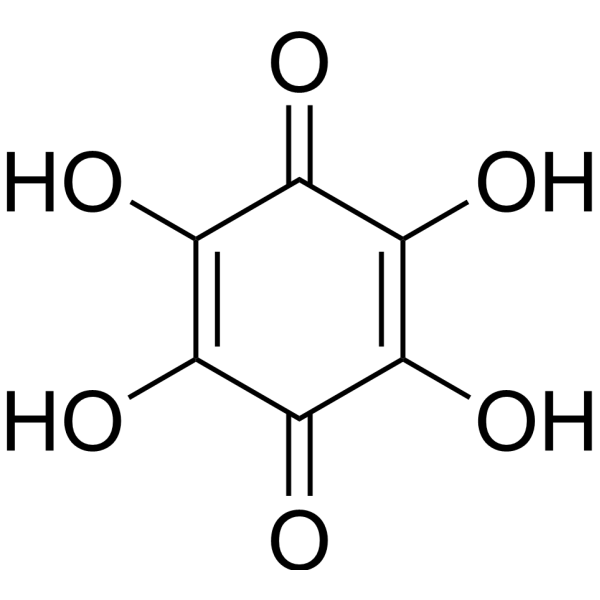
    Tetrahydroxyquinone (Tetrahydroxy-1,4-benzoquinone), a primitive anticataract agent, is a redox active benzoquinone. Tetrahydroxyquinone can take part in a redox cycle with semiquinone radicals, leading to the formation of reactive oxygen species (ROS) .
    Tetrahydroxyquinone
  • HY-N13292

    Antibiotic Bacterial Infection
    Actinorhodin is a blue-pigmented, redox-active microbial secondary metabolite. Actinorhodin is a potent, bacteriostatic, pH-responsive antibiotic. Actinorhodin exhibits antimicrobial activity against Gram-positive bacteria .
    Actinorhodin
  • HY-125999

    Reactive Oxygen Species (ROS) Neurological Disease
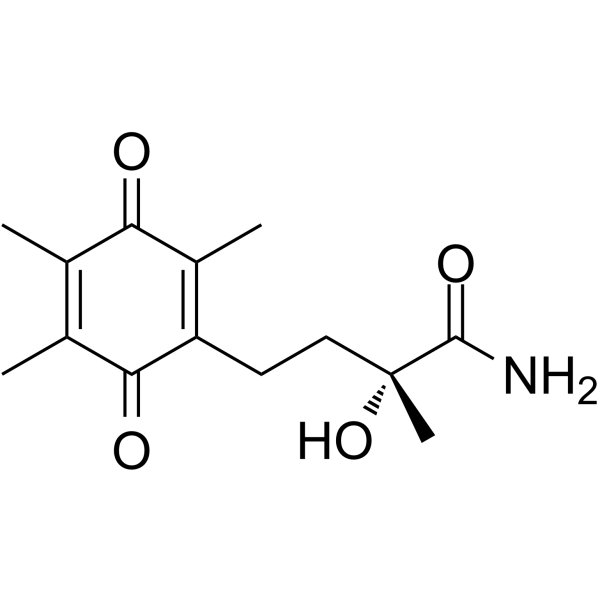
    EPI-589, a quinone derivative, is a safe and well tolerated oxidoreductase enzyme inhibitor and a free radical scavenger, with blood-brain barrier permeable and orally available. EPI-589 is a redox-active neuroprotectant that effectively delays the symptoms of motor neuron disease in wobbler mice. EPI-589 can be used in amyotrophic lateral sclerosis (ALS) research .
    EPI-589
  • HY-125662A

    Reactive Oxygen Species (ROS) Apoptosis Metabolic Disease
    BMX-001, a novel redox-active metalloporphyrin, improves islet function and engraftment in a murine transplant model. BMX-001 reduces apoptosis in human and murine islets. BMX-001 significantly improves static-glucose stimulated insulin secretion (sGSIS) responses in murine islets. BMX-001 can significantly restore euglycemia in murine islet studies in the presence of the MnSOD. BMX-001 reduces the generation of ROS in a murine islet isolation and culture model .
    BMX-001
  • HY-155539
    Cisd2 agonist 2
    1 Publications Verification

    IKZF Family Zinc Finger Protein Inflammation/Immunology
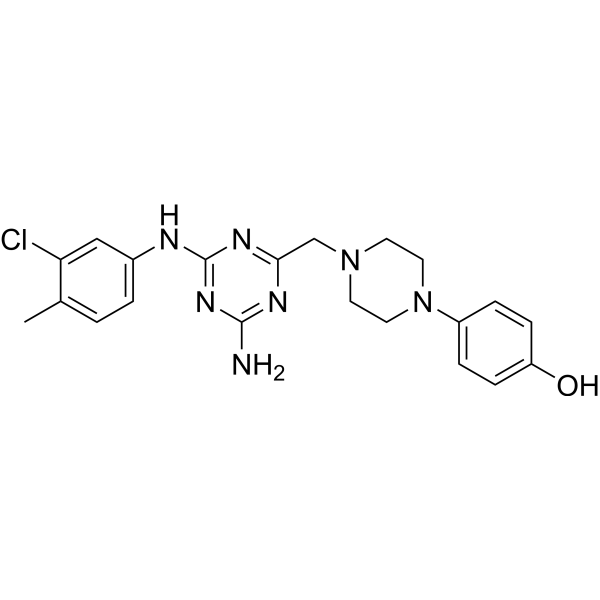
    Cisd2 agonist 2 (compound 6) is a Cisd2 activator (EC50=191 nM), and Cisd2 levels are associated with non-alcoholic fatty liver disease (NAFLD). Cisd2 agonist 2 has no significant in vivo toxicity in Cisd2hKO-het mice (heterozygous hepatocyte-specific Cisd2 knockout). Cisd2 (CDGSH iron sulfur domain 2) is a zinc finger protein that is mainly localized in the endoplasmic reticulum or mitochondrial membrane. Cisd2 participates in mitochondrial function by forming homodimers containing two redox-active 2Fe-2S clusters .
    Cisd2 agonist 2
  • HY-148766

    Drug Derivative Metabolic Disease
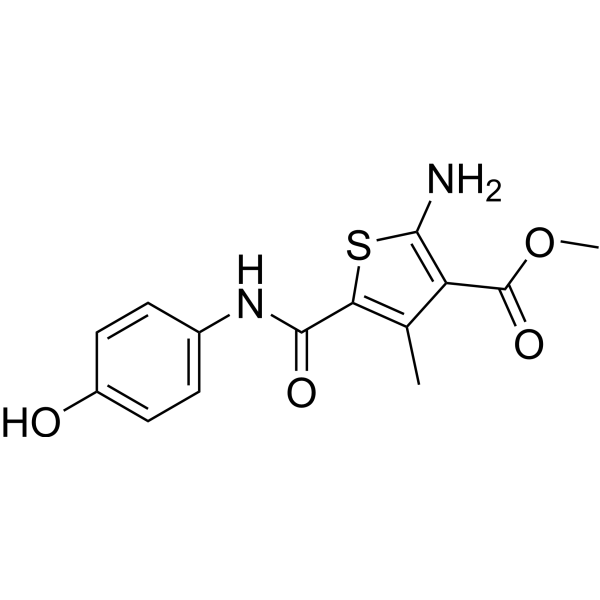
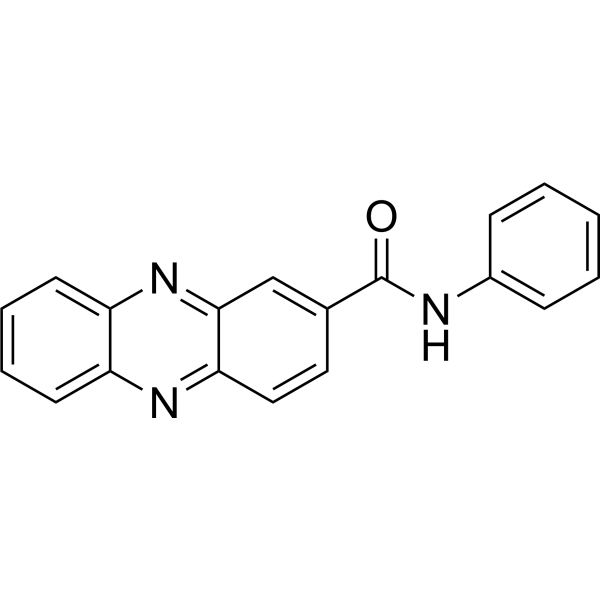
    VU661, a phenazine carboxamide, is a modulator of circadian rhythms to produce a period lengthening of the circadian rhythm. VU661 is a redox-active small molecule .
    VU661
  • HY-B1106A
    Tetrahydroxyquinone monohydrate
    1 Publications Verification

    Tetrahydroxy-1,4-benzoquinone monohydrate; Tetrahydroxybenzoquinone monohydrate

    Reactive Oxygen Species (ROS) Apoptosis Cancer
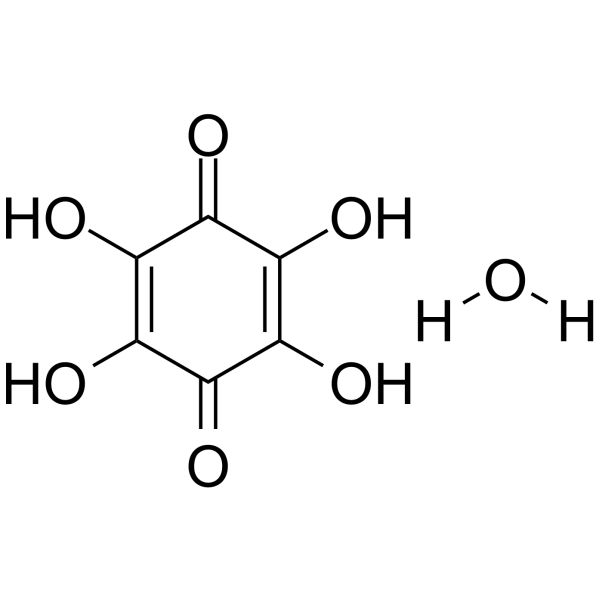
    Tetrahydroxyquinone monohydrate (Tetrahydroxy-1,4-benzoquinone monohydrate), a primitive anticataract agent, is a redox active benzoquinone. Tetrahydroxyquinone monohydrate can take part in a redox cycle with semiquinone radicals, leading to the formation of reactive oxygen species (ROS) .
    Tetrahydroxyquinone monohydrate
  • HY-111278R

    Pyocyanine (Standard); Sanazin (Standard); Sanasin (Standard)

    Reference Standards Reactive Oxygen Species (ROS) Bacterial Drug Metabolite Endogenous Metabolite Infection Inflammation/Immunology
    Pyocyanin (Standard) is the analytical standard of Pyocyanin. This product is intended for research and analytical applications. Pyocyanin (Pyocyanine) is a toxic, quorum sensing (QS) controlled metabolite produced by Pseudomonas aeruginosa. Pyocyanin is a REDOX active compound that promotes the production of reactive oxygen species (ROS). Pyocyanin has antibacterial and anti-inflammatory activity[1][2][3][4].
    Pyocyanin (Standard)
  • HY-153978

    NADPH Oxidase Others
    GLX481369 is a redox active substance. GLX481369 is a Nox4 inhibitor. GLX481369 has antioxidant effects .
    GLX481369
  • HY-115832

    Transferrin Receptor Cancer
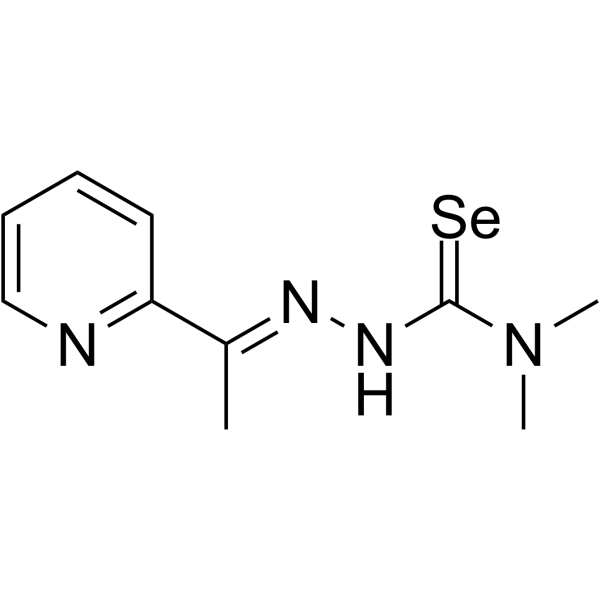
    Ap44mSe is a selenosemicarbazone that effectively depletes cellular Fe, resulting in transferrin receptor-1 up-regulation, ferritin down-regulation, and increased expression of the potent metastasis suppressor, N-myc downstream regulated gene-1. Ap44mSe forms redox active Cu complexes that target the lysosome to induce lysosomal membrane permeabilization .
    Ap44mSe
  • HY-W585926

    Reactive Oxygen Species (ROS) Others
    Disperse Polyester Dark Blue is a chemical compound extensively employed in scientific research. It serves as a redox-active agent and functions as a probe for identifying reactive oxygen species (ROS) in cells and tissues. By accepting electrons from ROS and undergoing oxidation, Disperse Polyester Dark Blue demonstrates its redox activity. Consequently, a chemiluminescent signal is generated, which can be measured using a luminometer. The intensity of the signal directly correlates with the quantity of ROS detected within the sample.
    Disperse polyester dark blue
  • HY-P2759A

    TrxR Metabolic Disease
    Thioredoxin Reductase, E. coli (EC 1.8.1.9) is an E. coli-derived thioredoxin reductase (TrxR) that, compared to mammalian TrxR, lacks the redox active site-the C-terminal -Cys-SeCys-.
    Thioredoxin Reductase, E.coli

Inquiry Online

Your information is safe with us. * Required Fields.

Salutation


Country or Region *

Applicant Name *


Organization Name *

Department *


Email Address *


Product Name *

Cat. No.


Requested quantity *

Phone Number *


Remarks

Inquiry Online

Inquiry Information

Product Name:
Cat. No.:
Quantity:
MCE Japan Authorized Agent:

