1. Search Result
Search Result
Results for "

siderophore

" in MedChemExpress (MCE) Product Catalog:

43

Inhibitors & Agonists

2

Peptides

21

Natural
Products

1

Isotope-Labeled Compounds

Cat. No. Product Name Target Research Areas Chemical Structure
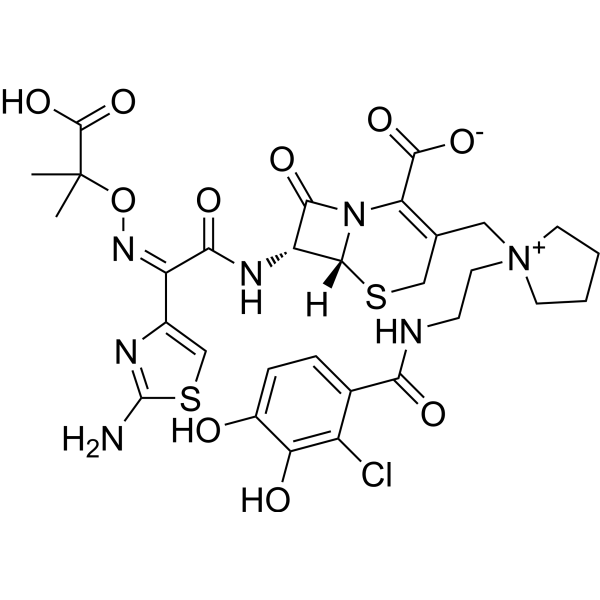
  • HY-17628
    Cefiderocol
    15+ Cited Publications

    S-649266

    Bacterial Antibiotic Infection
    Cefiderocol (S-649266) is a siderophore cephalosporin which has a potent activity against a broad range of aerobic Gram-negative bacterial species with MIC50s of 2 μg/mL or less.
    Cefiderocol
  • HY-160238

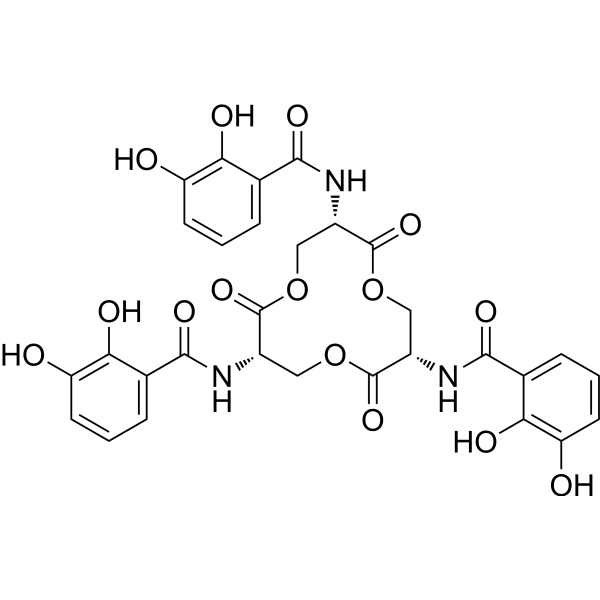
    Corynebactin

    Bacterial Fungal Infection
    Bacillibactin (Corynebactin) is a cyclic tricatecholate siderophore. Bacillibactin’s primary function is to facilitate bacterial iron acquisition by chelating iron ions (Fe 3+) from the environment, thereby aiding bacterial survival under iron-limited conditions. Bacillibactin exhibits direct antimicrobial activity, such as inhibition of the growth of the producing bacteria Pseudomonas aeruginosa and Aeromonas veronae, as well as plant pathogens such as Pseudomonas syringae.Bacillibactin can be used in antibacterial and antifungal research .
    Bacillibactin
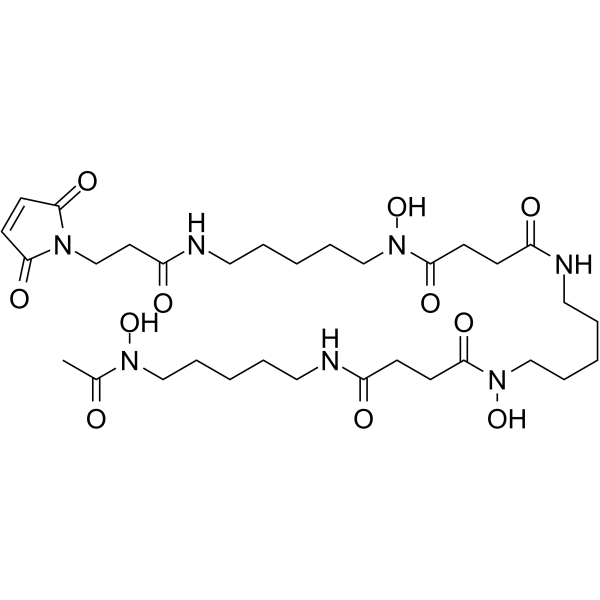
  • HY-132989

    Biochemical Assay Reagents Bacterial Cardiovascular Disease Infection Inflammation/Immunology
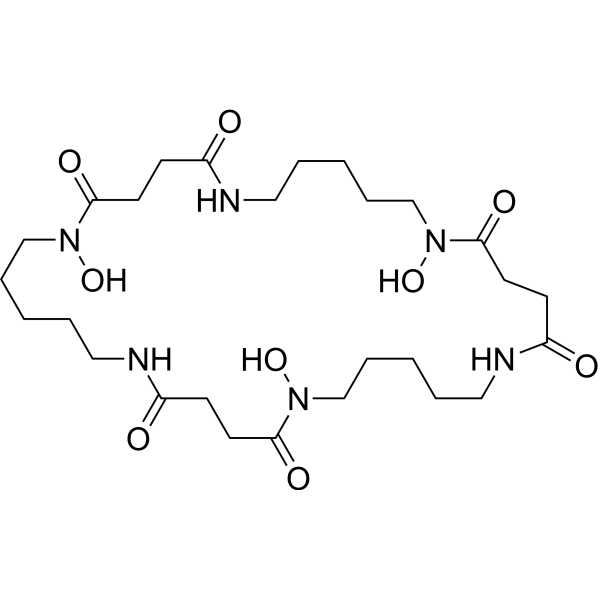
    Mal-Deferoxamine is a maleimide-functionalized trihydroxamate siderophore derivative that can be isolated from Streptomyces pilosus. Mal-Deferoxamine possesses highly specific Fe (III) chelating ability, and the stability of complexes formed between it and non-Fe (III) metal ions is significantly lower. Mal-Deferoxamine exhibits growth inhibitory effects against Gram-positive bacteria, but shows no obvious inhibitory activity against Gram-negative bacteria (MIC>50 μM). Mal-Deferoxamine is mainly suitable for scientific research in hematology and related fields .
    Mal-Deferoxamine
  • HY-128525

    Bacterial Reactive Oxygen Species (ROS) Infection Inflammation/Immunology
    Enterobactin is a siderophore produced by Gram-negative bacteria and has an extremely high affinity for iron. During the process of Salmonella typhimurium infecting macrophages, Enterobactin can not only help bacteria uptake iron but also reduce the antibacterial activity of macrophages. In addition, Enterobactin is also involved in the oxidative stress response of Escherichia coli. Enterobactin can be hydrolyzed by Fes in the cell and exert antioxidant effects by scavenging free radicals .
    Enterobactin
  • HY-135498

    Bacterial Infection
    Ferrioxamine E is a siderophore and bacterial growth regulator. Ferrioxamine E can chelate ferric iron, and promote the growth, morphological differentiation and antibiotic synthesis of Streptomyces tanashiensis .
    Ferrioxamine E
  • HY-N11874

    Bacterial Infection
    Staphyloferrin A is a carboxylate-type siderophore, as well as an iron (III) chelator and a HtsA ligand with high binding affinity for iron (III). Staphyloferrin A can be used in studies of bacterial infections .
    Staphyloferrin A
  • HY-122280

    Endogenous Metabolite Infection
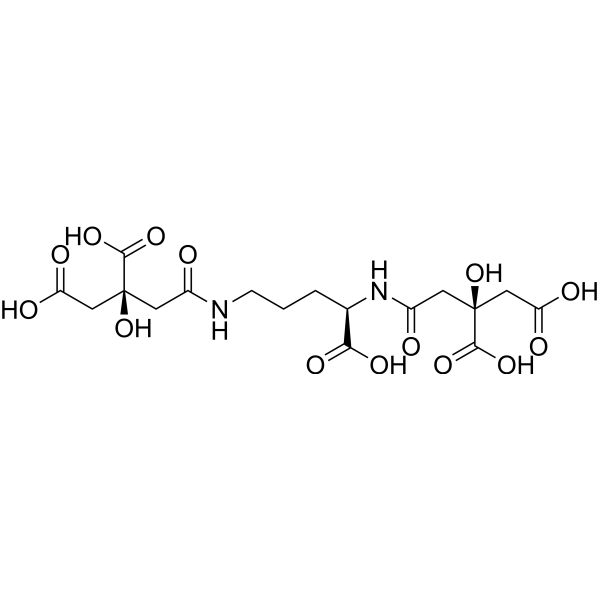
    Aerobactin is a siderophore produced by bacteria. Aerobactin is a highly potent pathogenic factor .
    Aerobactin
  • HY-W013673

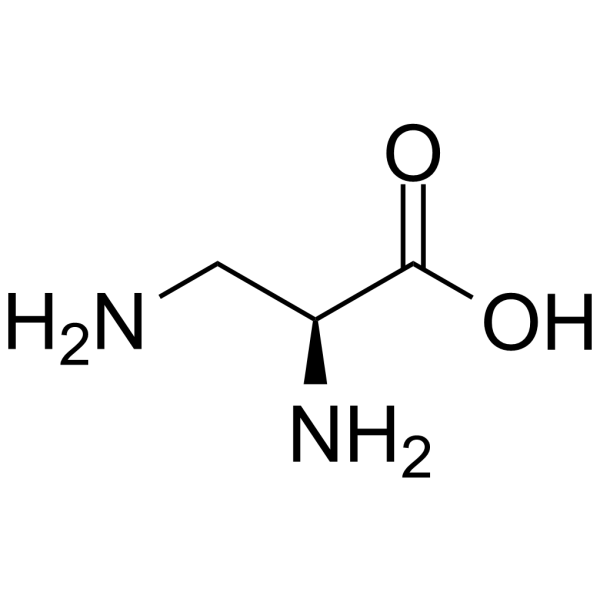
    Tyrosinase Infection
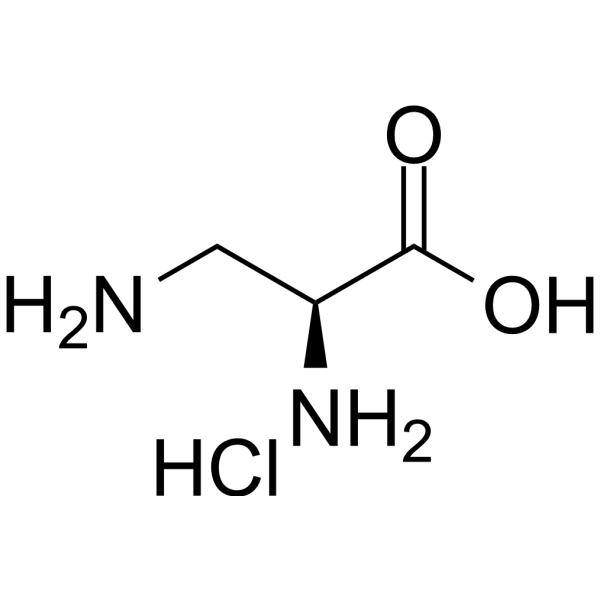
    2,3-Diaminopropionic acid hydrochloride is the precursor of antibiotics and the siderophore staphyloferrin B. 2,3-Diaminopropionic acid hydrochloride is the inhibitor for polyphenoloxidase (PPO) .
    2,3-Diaminopropionic acid hydrochloride
  • HY-123648

    Others Others
    Rhizoferrin is a siderophore, which can be isolated from Rhizopus microsporus. Rhizoferrin binds iron ions with high affinity, and can be used as an effective iron source .
    Rhizoferrin
  • HY-19882

    Bacterial Infection
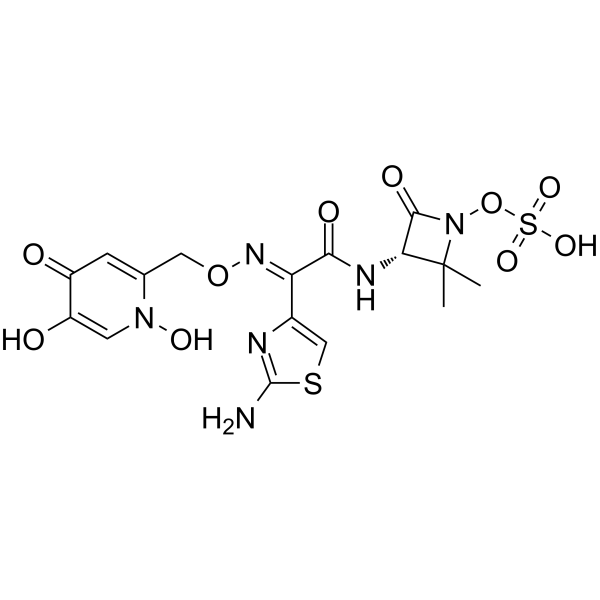
    BAL-30072, a siderophore sulfactam, is a monocyclic beta-lactam antibiotic, with activity against multiresistant gram-negative bacilli. BAL30072 shows MIC90 values of 4 μg/mL for MDR Acinetobacter spp. and 8 μg/mL for MDR P. aeruginosa, respectively .
    BAL-30072
  • HY-145301

    Bacterial Infection
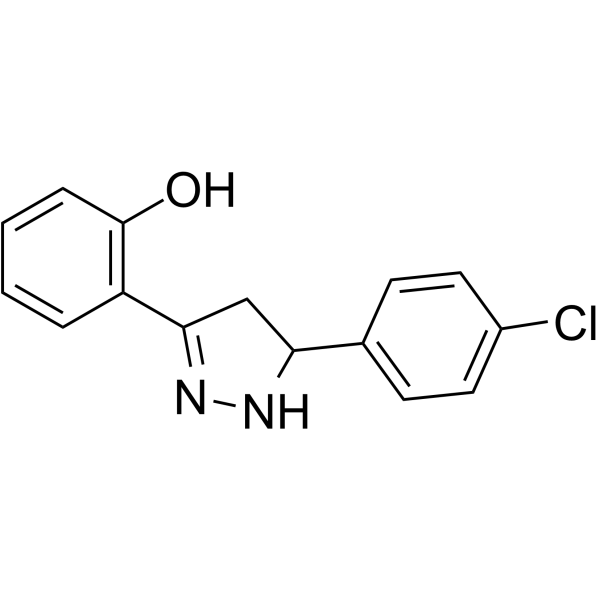
    Mycobactin-IN-1, a pyrazoline analogue, is a mycobactin biosynthesis inhibitor against mycobacteria. Mycobactin-IN-1 binds to salicyl-AMP ligase (MbtA), a key enzyme in the mycobactin biosynthetic pathway. Mycobactin-IN-1 inhibits whole-cell drug efflux pumps in M. smegmatis. Mycobactin-IN-1 eradicates intracellularly surviving mycobacteria. Mycobactin-IN-1 shows an excellent in vivo pharmacokinetic profile. Mycobactin-IN-1 can be used for the research of tuberculosis .
    Mycobactin-IN-1
  • HY-P1997

    Desferrichrome; DFC; N-Desferriferrichrome

    Biochemical Assay Reagents Others
    Ferrichrome is a hydroxamate siderophore produced by various fungi, including U. sphaerogena, that facilitates iron chelation and uptake by these organisms. It can be used as a heterosiderophore by bacteria, including Pseudomonas aeruginosa and Vibrio parahaemolyticus. Ferrichrome (0.8 μM) inhibits concanavalin A-induced proliferation of mouse spleen monocytes and reduces the number of concanavalin A-stimulated CD4+ T cells expressing IL-2 receptor. It also inhibits the heme-catalyzed oxidation of LDL by hydrogen peroxide in a concentration-dependent manner.
    Ferrichrome Iron-free
  • HY-117738

    Aminopeptidase sFRP-1 Others
    Benarthin is a catechol-type siderophore isolated from the marine actinomycete Streptomyces YM5-799 that exhibits iron-chelating properties .
    Benarthin
  • HY-N13871

    Antibiotic Bacterial Infection
    Anguibactin is an antibiotic that acts as a siderophore. Anguibactin has a strong affinity with Fe 3+ .
    Anguibactin
  • HY-113379

    Tyrosinase Infection
    2,3-Diaminopropionic acid is the precursor of antibiotics and the siderophore staphyloferrin B. 2,3-Diaminopropionic acid is the inhibitor for polyphenoloxidase (PPO) .
    2,3-Diaminopropionic acid
  • HY-122280R

    Reference Standards Endogenous Metabolite Infection
    Calcium gluconate (Standard) is the analytical standard of Calcium gluconate. This product is intended for research and analytical applications. Calcium Gluconate Monohydrate is a biochemical reagent that can be used as a biological material or organic compound for life science related research.
    Aerobactin (Standard)
  • HY-124237

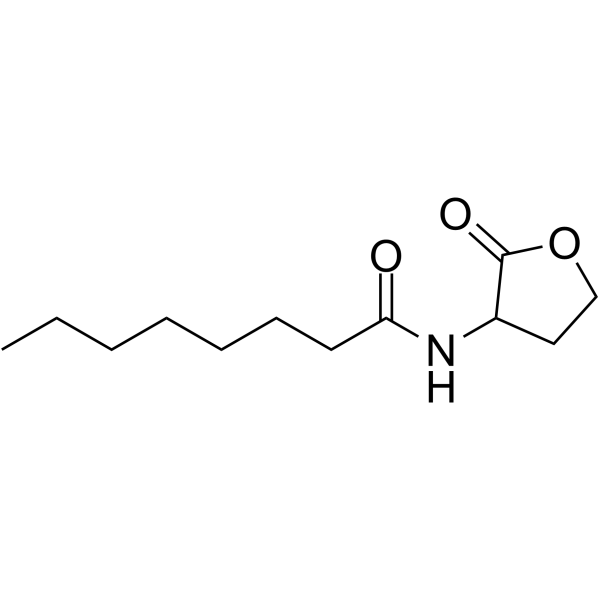
    Bacterial Others
    N-Octanoyl-DL-homoserine lactone is a member of N-acyl homoserine lactones (AHLs) family, also one of the signal molecule of quorum-sensing (QS) signals. N-Octanoyl-DL-homoserine lactone can regulate the production of siderophores and present positive correlation in Aeromonas sobria strain AS7. N-Octanoyl-DL-homoserine lactone can also regulate the secretion of proteases and stimulate the production of total volatile basic nitrogen (TVB-N) .
    N-Octanoyl-DL-homoserine lactone
  • HY-122395

    Endogenous Metabolite Cancer
    Triornicin is a siderophore. Triornicin can be used in cancer research .
    Triornicin
  • HY-N14935

    Biochemical Assay Reagents Infection
    Agrobactin is a catechol-type siderophore (microbial iron transport compound) .
    Agrobactin
  • HY-129580

    Bacterial Fungal Infection
    Nannochelin B is a novel citrate-hydroxamate siderophore with a growth-inhibitory activity against some bacteria and fungi .
    Nannochelin B
  • HY-N16461

    Bacterial Infection
    Albomycin ε is a siderophore-antibiotic conjugate targeting bacterial ribosomes (MIC values:>512 μg/mL). Albomycin ε is promising for research of Streptococcus pneumoniae and Staphylococcus aureus infections .
    Albomycin ε
  • HY-139698

    LCB10-0200

    Antibiotic Bacterial Infection
    GT-1 (LCB10-0200), a siderophore-linked cephalosporin, is effective against clinical isolates of P. aeruginosa, Klebsiella oxytoca, Proteus spp., Serratia marcescens, and Enterobacter aerogenes.
    GT-1
  • HY-N16460

    Antibiotic Bacterial Infection
    Albomycin δ2 is a siderophore-antibiotic conjugate targeting bacterial ribosomes (MIC: 0.0625 μg/mL against S. pneumoniae, 0.125 μg/mL against MRSA). Albomycin δ2 is promising for research of Streptococcus pneumoniae and Staphylococcus aureus infections .
    Albomycin δ2
  • HY-17628S1

    S-649266-d6

    Isotope-Labeled Compounds Antibiotic Bacterial Infection
    Cefiderocol-d6 (S-649266-d6) is a deuterated labeled Cefiderocol (HY-17628). Cefiderocol is a siderophore cephalosporin which has a potent activity against a broad range of aerobic Gram-negative bacterial species with MIC50s of 2 μg/mL or less .
    Cefiderocol-d6
  • HY-124236

    Bacterial Others
    Chrysobactin is a compound isolated from the plant pathogenic bacterium Erwinia chrysanthemi. Chrysobactin has siderophore activity .
    Chrysobactin
  • HY-N15176

    DNA/RNA Synthesis Cancer
    Bisucaberin is a natural siderophore, is a DNA synthesis inhibitor. Bisucaberin shows cytostasis for tumor cells. Bisucaberin sensitizes tumor cells to macrophage-mediated cytolysis .
    Bisucaberin
  • HY-128525R

    Bacterial Reference Standards Reactive Oxygen Species (ROS) Infection Inflammation/Immunology
    Enterobactin (Standard) is the analytical standard of Enterobactin. This product is intended for research and analytical applications. Enterobactin is a siderophore produced by Gram-negative bacteria and has an extremely high affinity for iron. During the process of Salmonella typhimurium infecting macrophages, Enterobactin can not only help bacteria uptake iron but also reduce the antibacterial activity of macrophages. In addition, Enterobactin is also involved in the oxidative stress response of Escherichia coli. Enterobactin can be hydrolyzed by Fes in the cell and exert antioxidant effects by scavenging free radicals .
    Enterobactin (Standard)
  • HY-118009

    ISD-I 207

    Biochemical Assay Reagents Others
    Azotochelin (ISD-I 207) is a biscatecholate siderophore found in the strain of Azotobacter vinelandii .
    Azotochelin
  • HY-139887

    Bacterial Infection
    Antibacterial agent 63, a conjugate of aztreonam to a siderophore mimetic, shows activity against gram-negative bacteria.
    Antibacterial agent 63
  • HY-132915

    Bacterial Infection
    Anti gram-positive/negative bacteria agent 1 is an antibiotic conjugate with an artificial MECAM-based siderophore.
    Anti gram-positive/negative bacteria agent 1
  • HY-172023

    Bacterial Infection
    apo-Enterobactin is a derivative of Enterobactin (HY-128525). Enterobactin is a bacterial siderophore that promotes iron absorption .
    apo-Enterobactin
  • HY-159969

    Bacterial Antibiotic Infection
    MLEB-22043 is a synthetic siderophore-monobactam conjugate that is taken up into bacteria via its synthetic siderophore component by TonB-dependent transporters. Once inside the bacteria, it exerts antibacterial activity through its β-lactam component. MLEB-22043 is a broad-spectrum antibiotic with significant inhibitory activity against Klebsiella pneumoniae, Escherichia coli, Acinetobacter baumannii, and Pseudomonas aeruginosa .
    MLEB-22043
  • HY-W013673R

    Reference Standards Tyrosinase Infection
    2,3-Diaminopropionic acid hydrochloride is the precursor of antibiotics and the siderophore staphyloferrin B. 2,3-Diaminopropionic acid hydrochloride is the inhibitor for polyphenoloxidase (PPO) .
    2,3-Diaminopropionic acid hydrochloride (Standard)
  • HY-163383

    L-EOP

    Bacterial Infection
    L-Ent-oxPt IV (L-EOP) is a Oxaliplatin (HY-17371)-based siderophore-platinum conjugate. L-Ent-oxPt IV exhibits selectivity towards Escherichia coli and antibacterial activity through DNA damage .
    L-Ent-oxPt(IV)
  • HY-151944

    Bacterial Antibiotic Infection
    Antibacterial agent 128 is a siderophore analog-Ciprofloxacin (HY-B0356) conjugate with a cleavable linker. Antibacterial agent 128 shows antibiotic activities against P. aeruginosa (MIC values of 0.25-64 μg/mL) and B. pseudomallei (MIC values of 1-32 μg/mL) .
    Antibacterial agent 128
  • HY-157433

    Bacterial Infection
    Mab-SaS-IN-1 (compoud 1H) is Mab-SaS inhibitor with the IC50 of 2 μM. Mab-SaS-IN-1 can be used for study of antibiosis by blocking iron uptake and metabolism .
    Mab-SaS-IN-1
  • HY-182396

    Penicillin-binding protein (PBP) Bacterial Infection
    YU253434 is a PBP3 inhibitor with an IC50 of 2.5 μM against Pseudomonas aeruginosa PBP3. YU253434 contains a siderophore domain that facilitates its uptake into the periplasmic space of Gram-negative bacilli. YU253434 exhibits antibacterial activity against multidrug-resistant Gram-negative bacilli. YU253434 can be used in studies of multidrug-resistant Gram-negative bacterial infections .
    YU253434
  • HY-186106

    Bacterial Infection
    3-Deoxyanguibactin is a siderophore and Fe(III) chelator/iron delivery agent. 3-Deoxyanguibactin binds Fe(III) with 2:1 stoichiometry in liquid phase, delivers iron into Acinetobacter baumannii cells, and relies on the BauA outer membrane receptor and bau transport system for cellular entry. 3-Deoxyanguibactin can be used for the research of acinetobacter baumannii infection .
    3-Deoxyanguibactin
  • HY-128526

    Bacterial Infection
    Acinetobactin is a major siderophore utilized by the human pathogen Acinetobacter baumannii. Acinetobactin can be used as an antibiotic delivery vehicle targeting A. baumannii .
    Acinetobactin
  • HY-E71062

    Biochemical Assay Reagents Others
    (2,3-Dihydroxybenzoyl)adenylate synthase (EC 2.7.7.58) belongs to the family of transferases, specifically those transferring phosphorus-containing nucleotide groups (nucleotidyltransferases) .(2,3-Dihydroxybenzoyl)adenylate synthase (EC 2.7.7.58) participates in biosynthesis of siderophore group nonribosomal.
    (2,3-Dihydroxybenzoyl)Adenylate synthase
  • HY-N18050

    Endogenous Metabolite Bacterial Infection
    Petrobactin is a photoreactive siderophore. Petrobactin can be produced by the oil-degrading marine bacterium Marinobacter hydrocarbonoclasticus. Petrobactin can be synthesized by Bacillus anthracis str. Sterne under conditions of iron starvation. Petrobactin readily undergoes a light-mediated decarboxylation reaction when bound to Fe(III) .
    Petrobactin
  • HY-185180

    Bacterial Endogenous Metabolite Others
    Ferrioxamine B is a bacterial desferrioxamine siderophore produced by actinomycetes. Ferrioxamine B acts as a ligand for FpvB and FoxA, and is transported into Pseudomonas aeruginosa via the FpvB and FoxA transporters. Ferrioxamine B competitively binds to FpvB, thereby antagonizing the uptake of thiostrepton into Pseudomonas aeruginosa. Ferrioxamine B can provide an iron source to support the growth of Pseudomonas aeruginosa under iron-limiting conditions .
    Ferrioxamine B
  • HY-W722245

    Endogenous Metabolite Bacterial Infection
    Pyochelin is a salicylate-based nonribosomal peptide siderophore produced by Pseudomonas aeruginosa. Pyochelin chelates Fe 3+ and transports it back into bacterial cells, providing the iron essential for bacterial survival. Pyochelin can also chelate other metals such as Zn 2+, Co 2+, and Ni 2+, which helps bacteria maintain intracellular metal ion homeostasis by chelating and excreting excess metals in response to toxic metal stress. Pyochelin can be used in studies related to Pseudomonas aeruginosa infection .
    Pyochelin

Inquiry Online

Your information is safe with us. * Required Fields.

Salutation


Country or Region *

Applicant Name *


Organization Name *

Department *


Email Address *


Product Name *

Cat. No.


Requested quantity *

Phone Number *


Remarks

Inquiry Online

Inquiry Information

Product Name:
Cat. No.:
Quantity:
MCE Japan Authorized Agent:

