Search Result
Results for "
space group
" in MedChemExpress (MCE) Product Catalog:
1
Biochemical Assay Reagents
| Cat. No. |
Product Name |
Target |
Research Areas |
Chemical Structure |
-
- HY-Y1101B
-
|
N-Methylmorpholine N-Oxide; MMNO; 4-Methylmorpholine 4-oxide
|
Biochemical Assay Reagents
|
Others
|
|
4-Methylmorpholine N-oxide (N-Methylmorpholine N-Oxide; MMNO; 4-Methylmorpholine 4-oxide) is an amine oxide ligand and ozonation reagent. 4-Methylmorpholine N-oxide forms coordination complexes with lanthanum (III) nitrate and yttrium (III) nitrate via its nitroso oxygen atom. The metal-ligand bonds are dominated by electrostatic interactions with a small covalent component. 4-Methylmorpholine N-oxide is applicable in ozonation reactions for the synthesis of methyl 9-oxononanoate .
|
-
-
- HY-130086
-
|
|
ADC Linker
|
Cancer
|
|
Bis-PEG4-NHS ester is a crosslinking reagent and amine-reactive modulator .Bis-PEG4-NHS ester reacts with primary amine groups on liposome surfaces via amide bond formation to covalently attach dibenzylcyclooctyne groups, with a hydrophilic PEG4 spacer reducing steric hindrance for subsequent click chemistry .Bis-PEG4-NHS ester enables site-specific antibody coupling to liposome surfaces via copper-free strain-promoted alkyne-azide cycloaddition click chemistry without disrupting liposome structure in minimal organic solvent volumes .Bis-PEG4-NHS ester undergoes hydrolysis during annealing to form -COOH groups that interact with PbI and FAI to enhance perovskite structural integrity, passivate defects, and modulate nucleation kinetics to regulate crystal growth .Bis-PEG4-NHS ester enhances device efficiency and long-term stability when used as an antisolvent additive for p-i-n perovskite solar cells .
|
-
-
- HY-151827
-
|
|
ADC Linker
|
Others
|
|
DBCO-PEG2-NHS ester is a click chemistry reagent containing an azide group. DBCO-PEG2-NHS ester is a click chemistry PEG reagent containing NHS ester that is able to react specifically and efficiently with primary amines (e.g. the side chain of lysine residues or aminosilane-coated surfaces) at neutral or slightly basic condition to form a covalent bond. The hydrophilic PEG spacer arm improves water solubility and provides a long and flexible connection that minimizes steric hindrance involved with ligation. DBCO is commonly used for copper-free Click Chemistry reactions. Reagent grade, for research use only .
|
-
-
- HY-W094712
-
|
|
Biochemical Assay Reagents
|
Others
|
|
Potassium oxalate monohydrate is a biochemical reagent that can be used as a biological material or organic compound for life science related research .
|
-
-
- HY-W800805
-
|
|
Liposome
|
Cancer
|
|
DOPE-Mal is a synthetic analog of naturally-occurring PE containing 18:1 fatty acids at the sn-1 and sn-2 positions with a terminal maliemide group. The maleimide group will react with a thiol group to form a covalent bond. The hydrophilic PEG spacer increases solubility in aqueous media.
|
-
-
- HY-W591374
-
|
|
ADC Linker
|
Cancer
|
|
DBCO-PEG4-Val-Ala-PAB-PNP is a cleavable ADC linker. The Val-Ala linkers can be cleaved by Cathepsin B. The DBCO groups is commonly used for Click Chemistry reactions. PEG spacer improves the compound's aqueous solubility. PNP is a good leaving group.
|
-
-
- HY-34611
-
|
N-Boc-L-2,4-diaminobutyric acid; Boc-Dab-OH
|
Drug Intermediate
ASCT
|
Neurological Disease
Cancer
|
|
Boc-L-2,4-Diaminobutyric acid (N-Boc-L-2,4-diaminobutyric acid; Boc-Dab-OH) is a versatile synthetic starting material with a cleavable protecting group. Boc-L-2,4-Diaminobutyric acid not only reduces the backbone cleavage rate by protecting the side-chain γ-amino group, but also triggers intramolecular cyclization of self-immolative linkers under acidic cleavage conditions, thus constructing stimuli-responsive materials. Boc-L-2,4-Diaminobutyric acid is also an important building block for bioactive molecules. It can be used in the synthesis of ASCT2 (SLC1A5) inhibitors and carboxynorspermine, and can also serve as an internal standard to support the quantitative detection of specific intracellular amino acids by UPLC-QQQ-MS .
|
-
-
- HY-179477
-
|
|
Amino Acid Derivatives
Drug Intermediate
|
Others
|
|
Fmoc-β-Ala-Asp(OMpe)-OH is a specialized amino acid derivative used in solid-phase peptide synthesis (SPPS). Fmoc-β-Ala-Asp(OMpe)-OH consists of a beta-alanine spacer linked to an aspartic acid residue, where the beta-carboxyl group is protected with a 3-methylpentyl ester (OMpe) to prevent aspartimide formation during synthesis. Fmoc-β-Ala-Asp(OMpe)-OH a useful building block for creating peptides that contain aspartic acid, as the OMpe group is designed to minimize unwanted side reactions .
|
-
-
- HY-W190881
-
|
|
Biochemical Assay Reagents
|
Others
|
|
N3-PEG11-CH2CH2Br is a PEG linker containing a bromine and an azide group. The hydrophilic PEG spacer increases solubility in aqueous media. The azide group can react with alkyne, BCN, DBCO via Click Chemistry to yield a stable triazole linkage. The bromine (Br) is a very good leaving group for nucleophilic substitution reactions.
|
-
-
- HY-151822
-
|
|
ADC Linker
|
Others
|
|
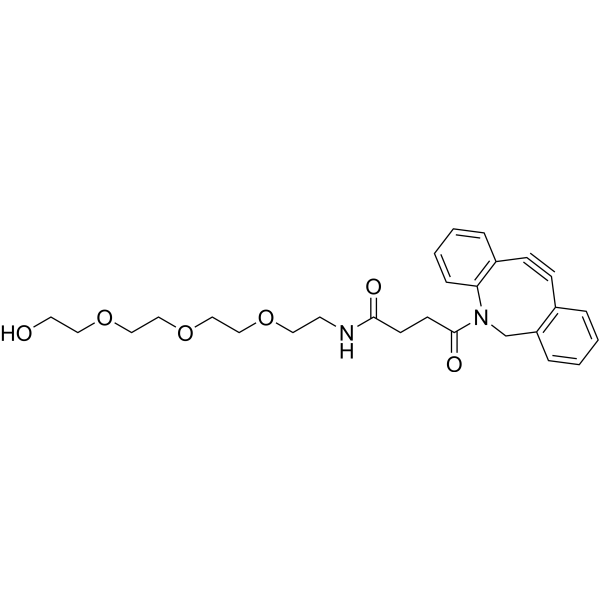
Hydroxy-PEG3-DBCO is a click chemistry reagent containing an azide group. Hydroxy-PEG3-DBCO is a PEG linker containing a DBCO moiety and a terminal primary hydroxyl group. The hydroxyl can react with a variety of functional groups and the hydrophilic PEG spacer arm can provide better solubility to labeled molecules. DBCO is commonly used for copper-free Click Chemistry reactions. Reagent grade, for research use only .
|
-
-
- HY-136436A
-
|
|
Antibiotic
Bacterial
Drug Metabolite
Fungal
|
Infection
Inflammation/Immunology
|
|
Ternidazole is a nitroimidazole Antibiotic with anti-pathogenic microbial activity. Ternidazole kills and inhibits the visible growth of Clostridium perfringens type A in vitro. Ternidazole helps improve the therapeutic efficacy against bacterial vaginosis, candidal vaginitis and mixed vaginitis. Ternidazole effectively alleviates chronic alcoholism. Ternidazole can be used in research related to vaginitis, pathogenic microbial infections and chronic alcoholism .
|
-
-
- HY-124086
-
|
|
5-HT Receptor
|
Neurological Disease
|
BHQ-O-5HT is a light-activated caged 5-HT protected by a BHQ group. When exposed to light at 365 or 740 nm, BHQ-O-5HT releases 5-HT through 1 or 2 photon excitation, respectively. BHQ-O-5HT can be manipulated in space and time to explore the role of 5-HT in regulating mood, appetite, memory, learning, and other cognitive functions .
|
-
-
- HY-W046063
-
|
4-Phthalimidobutyric acid
|
Biochemical Assay Reagents
|
Inflammation/Immunology
|
|
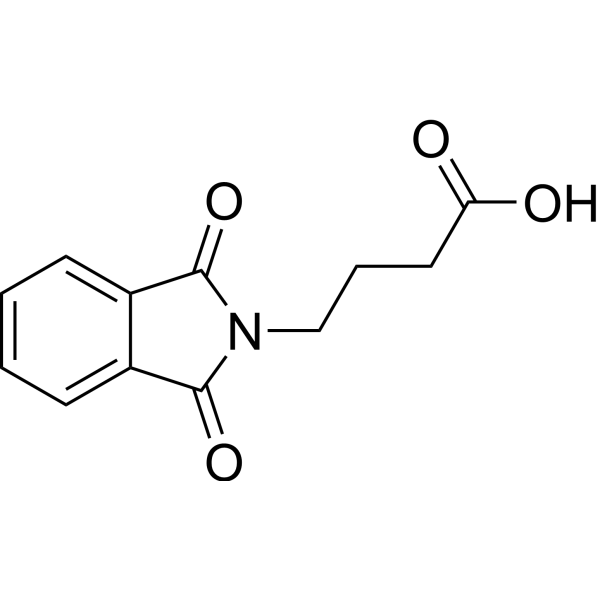
4-(N-Phthalimidoyl)butanoic acid (compound FB) is a hapten with a carboxyl group at the end of its spacer arm, suitable for reacting with free amine groups of proteins. 4-(N-Phthalimidoyl)butanoic acid can be combined with carrier proteins and used in antigen design .
|
-
-
- HY-172291
-
|
|
ADC Linker
|
Cancer
|
|
Mal-amide-PEG8-Val-Cit-PAB-PNP is a cleavable ADC linker featuring a maleimide, a PEG spacer, a Val-Cit dipeptide, a PAB. and a PNP carbonate. Maleimide is a thiol-specific covalent linker which is used to label cysteine residues in proteins while the PNP group acts as a highly activated leaving group. Val-Cit linkers are cleaved by cytoplasmic peptidases.
|
-
-
- HY-151640
-
|
|
ADC Linker
|
Others
|
|
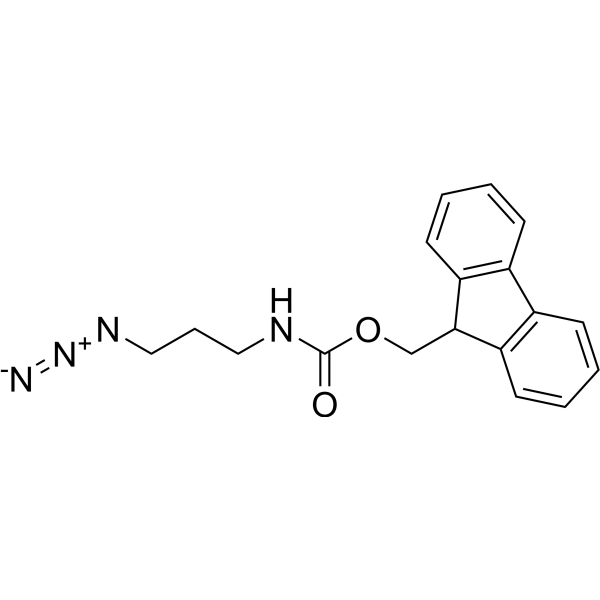
Fmoc-DAP-N3 is a click chemistry reagent containing an azide group. Fmoc-DAP-N3 is a short, linear spacer molecule with Fmoc protected amino function. Fmoc-DAP-N3 can be used in click conjugation and amid bond formation either with small molecules or for bioconjugation with proteins and antibodies . It contains an azide group and can undergo copper-catalyzed azide-alkyne cycloaddition (CuAAc) with molecules containing alkyne groups. It can also undergo ring strain-promoted alkyne-azide cycloaddition (SPAAC) with molecules containing DBCO or BCN groups.
|
-
-
- HY-164310
-
|
|
Microtubule/Tubulin
Drug-Linker Conjugates for ADC
|
Cancer
|
|
TCO-PEG3-Glu-Val-Cit-PABC-MMAF is a linker-drug conjugate, which is consisted of a click pair TCO, a spacer PEG, a cleavable linker Glu-Val-Cit, a PBAC group and a cytotoxin MMAF (HY-15579). TCO-PEG3-Glu-Val-Cit-PABC-MMAF can be used for synthesis of dual drug ADC .
|
-
-
- HY-P5057B
-
|
|
Fluorescent Dye
Bacterial
|
Infection
|
|
5-FAM-Ahx-LL-37 TFA is a 5-FAM (HY-66022) labeled LL-37, human (HY-P1222). The carboxyfluorescein group is attached via a 6-carbon spacer, 6-Aminohexanoic acid (Ahx, HY-B0236). LL-37, human is a 37-residue, amphipathic, cathelicidin-derived antimicrobial peptide, which exhibits a broad spectrum of antimicrobial activity .
|
-
-
- HY-W878813
-
|
|
Biochemical Assay Reagents
|
Others
|
|
Tos-PEG22-Tos is a PEG linker containing two tosyl groups. The hydrophilic PEG spacer increases solubility in aqueous media. The tosyl group is a very good leaving group for nucleophilic substitution reactions.
|
-
-
- HY-163008
-
|
|
Biochemical Assay Reagents
|
Inflammation/Immunology
|
|
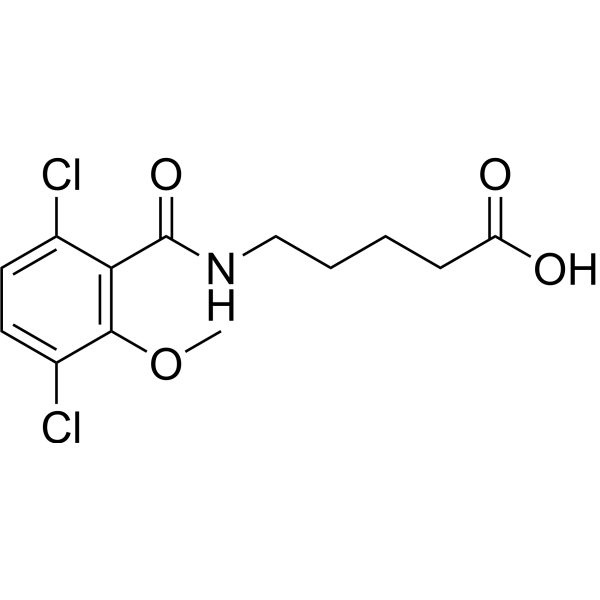
Dicamba-5-aminopentanoic acid (DCc) is an immunizing and heterologous hapten, designed using the carboxylic acid group of dicamba to introduce a spacer arm for a better exposure of the herbicide's structure .
|
-
-
- HY-W451433
-
|
|
Biochemical Assay Reagents
|
Others
|
|
OTs-PEG1-NHCbz is a PEG linker containing a tosyl group and benzyl (Cbz) protecting group. The hydrophilic PEG spacer increases the water solubility of the compound in aqueous media. The tosyl group is a very good leaving group for nucleophilic substitution reactions. The benzyl protecting group can be removed via hydrogenolysis to form a free amine.
|
-
-
- HY-149690
-
|
MFA
|
Biochemical Assay Reagents
|
Inflammation/Immunology
|
|
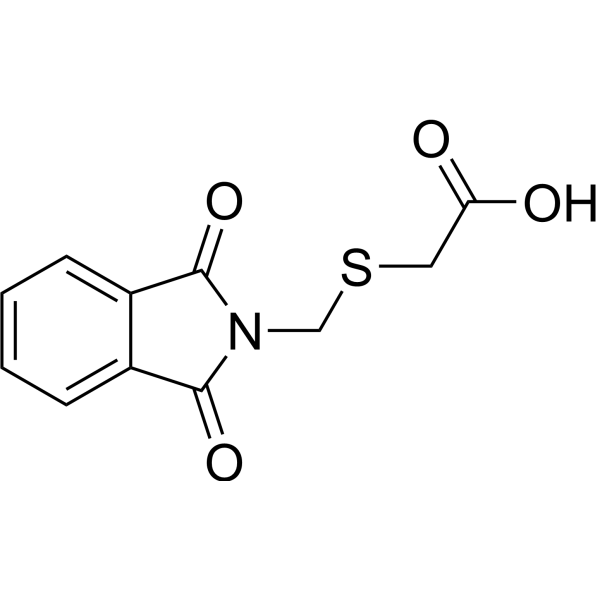
2-(N-Phthalimidoylmethylthio)acetic acid (MFA) is a hapten with a carboxyl group at the end of its spacer arm, suitable for reacting with free amine groups of proteins. 2-(N-Phthalimidoylmethylthio)acetic acid can be combined with carrier proteins and used in antigen design .
|
-
-
- HY-149691
-
|
MFH
|
Biochemical Assay Reagents
|
Inflammation/Immunology
|
|
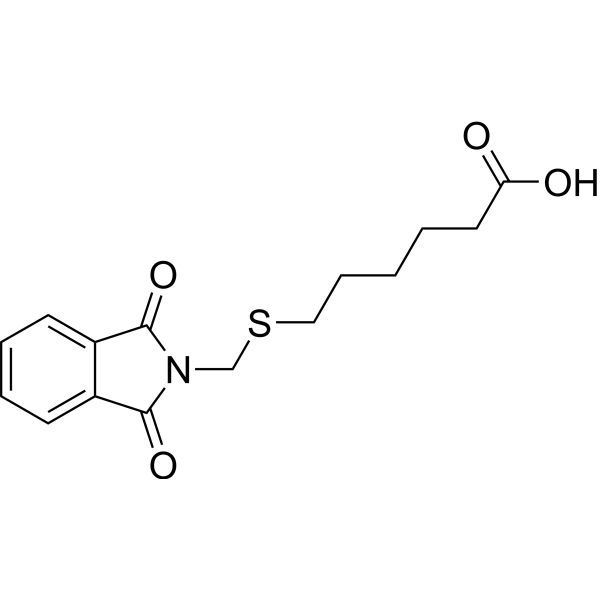
6-(N-Phthalimidoylmethylthio)hexanoic acid (MFH) is a hapten with a carboxyl group at the end of its spacer arm, suitable for reacting with free amine groups of proteins. 6-(N-Phthalimidoylmethylthio)hexanoic acid can be combined with carrier proteins and used in antigen design .
|
-
-
- HY-W028210
-
|
|
Biochemical Assay Reagents
|
Inflammation/Immunology
|
|
6-N-Phthalimidoy hexanoic acid (compound FH) is a hapten with a carboxyl group at the end of its spacer arm, suitable for reacting with free amine groups of proteins. 6-N-Phthalimidoy hexanoic acid can be combined with carrier proteins and used in antigen design .
|
-
-
- HY-W800654
-
|
|
Biochemical Assay Reagents
|
Others
|
|
Mal-PEG5-amine is a PEG linker containing a maleimide group and an amine group. The hydrophilic PEG spacer increases solubility in aqueous media. The amine group is reactive with carboxylic acids, activated NHS esters, carbonyls (ketone, aldehyde) etc. The maleimide group will react with a thiol group to form a covalent bond, enabling the connection of biomolecule with a thiol.
|
-
-
- HY-W572763
-
|
|
Biochemical Assay Reagents
|
Others
|
|
Tos-PEG6-acid is a PEG linker containing a tosyl group and a terminal carboxylic acid. The hydrophilic PEG spacer increases solubility in aqueous media. The tosyl group is a very good leaving group for nucleophilic substitution reactions. The terminal carboxylic acid can react with primary amine groups in the presence of activators (e.g. HATU) to form a stable amide bond.
|
-
-
- HY-W800670
-
|
|
Biochemical Assay Reagents
|
Others
|
|
Mal-amido-PEG5-alkyne is a PEG linker containing a maleimide group and an alkyne. The hydrophilic PEG spacer increases solubility in aqueous media. The alkyne group can react with azide-bearing compounds or biomolecules via copper catalyzed azide-alkyne Click Chemistry to yield a stable triazole linkage. The maleimide group will react with a thiol group to form a covalent bond, enabling the connection of biomolecule with a thiol.
|
-
-
- HY-W591373
-
|
|
ADC Linker
|
Cancer
|
|
DBCO-PEG4-Val-Ala-PAB is a cleavable ADC linker. The Val-Ala linkers can be cleaved by Cathepsin B. The DBCO groups is commonly used for Click Chemistry reactions. PEG spacer improves the compound's aqueous solubility.
|
-
-
- HY-W460133
-
|
|
Biochemical Assay Reagents
|
Others
|
|
tert-Butyl (2-(2-(2-iodoethoxy)ethoxy)ethyl)carbamate is a PEG linker containing a Boc protected amine and an iodine group. The protected amine can be deprotected under mild acidic conditions. Iodine (I) is a very good leaving group for nucleophilic substitution reactions. The hydrophilic PEG spacer increases solubility in aqueous media.
|
-
-
- HY-131699
-
|
|
Biochemical Assay Reagents
|
Others
|
|
t-Butyl ester-PEG4-CH2COOH is a PEG linker containing a t-butyl group with a terminal carboxylic acid. The terminal carboxylic acid can react with primary amine groups in the presence of activators (e.g. HATU) to form a stable amide bond. The hydrophilic PEG spacer increases solubility in aqueous media. The t-butyl group can be deprotected under acidic conditions.
|
-
-
- HY-W190752
-
|
|
Biochemical Assay Reagents
|
Others
|
|
m-PEG13-acid is a PEG linker containing a terminal carboxylic acid. The terminal carboxylic acid can react with primary amine groups in the presence of activators (e.g. EDC, or HATU) to form a stable amide bond. The hydrophilic PEG spacer increases solubility in aqueous media.
|
-
-
- HY-W348348
-
|
|
Biochemical Assay Reagents
|
Others
|
|
CbzNH-PEG3-CH2CH2NH2 is a PEG linker containing an amine group and a benzyl (Cbz) protecting group. The hydrophilic PEG spacer increases the water solubility of a compound in aqueous media. Amine group is reactive with carboxylic acids, activated NHS esters, carbonyls (ketone, aldehyde), etc. The benzyl protecting group can be removed via hydrogenolysis to form a free amine.
|
-
-
- HY-W403327
-
|
|
Biochemical Assay Reagents
|
Others
|
|
CbzNH-PEG4-CH2COOH is a PEG linker containing an carboxylic acid (CO2H) group and a benzyl (Cbz) protecting group. The hydrophilic PEG spacer increases the water solubility of a compound in aqueous media. The terminal carboxylic acid is reactive with primary amine groups in the presence of activators (e.g. HATU) forming a stable amide bond. The benzyl protecting group can be removed via hydrogenolysis to form a free amine.
|
-
-
- HY-W591982
-
|
|
Biochemical Assay Reagents
|
Others
|
|
t-Boc-N-amido-PEG12-acid is a PEG linker containing a terminal carboxylic acid and Boc-protected amino group. The hydrophilic PEG spacer increases solubility in aqueous media. The terminal carboxylic acid can react with primary amine groups in the presence of activators (e.g. EDC, or HATU) to form a stable amide bond. The Boc group can be deprotected under mild acidic conditions to form the free amine.
|
-
-
- HY-W474473
-
|
|
Biochemical Assay Reagents
|
Inflammation/Immunology
|
|
3-(((1,3-Dioxoisoindolin-2-yl)methyl)thio)propanoic acid (MFP) is a hapten with a carboxyl group at the end of its spacer arm, suitable for reacting with free amine groups of proteins. 3-(((1,3-Dioxoisoindolin-2-yl)methyl)thio)propanoic acid can be combined with carrier proteins and used in antigen design .
|
-
-
- HY-W800652
-
|
|
PROTAC Linkers
|
Cancer
|
|
(S, R, S)-AHPC-PEG4-tosyl is a PROTAC linker that incorporatess an E3 ligase ligand with a PEG4 linker to empower PROTAC drug research & discovery. PEG4 spacer increases the compound's hydrophility. Tosyl group is reactive with amine or other nucleophiles.
|
-
-
- HY-172513
-
|
|
Biochemical Assay Reagents
|
Others
|
|
Methyltetrazine-PEG11-DBCO is a TCO reactive reagent with a DBCO group and water-soluble PEG spacer. This reagent can be used to convert azido-containing peptides or proteins into tetrazine-modified peptides or protein without catalyst or axillary reagents. DBCO is commonly used for copper-free Click Chemistry reactions.
|
-
-
- HY-W800723
-
|
|
Biochemical Assay Reagents
|
Others
|
|
Methyltetrazine-PEG2-DBCO is a TCO reactive reagent with a DBCO group and water-soluble PEG spacer. This reagent can be used to convert azido-containing peptides or proteins into tetrazine-modified peptides or protein without catalyst or axillary reagents. DBCO is commonly used for copper-free Click Chemistry reactions.
|
-
-
- HY-149689
-
|
HBA
|
Biochemical Assay Reagents
|
Inflammation/Immunology
|
|
2-[(4-Oxo-1,2,3-benzotriazin-3-yl)oxy]acetic acid (HBA) is a hapten with a carboxyl group at the end of its spacer arm, suitable for reacting with free amine groups of proteins. 2-[(4-Oxo-1,2,3-benzotriazin-3-yl)oxy]acetic acid can be combined with carrier proteins and used in antigen design .
|
-
-
- HY-149687
-
|
MBP
|
Biochemical Assay Reagents
|
Inflammation/Immunology
Cancer
|
|
3-[(4-Oxo-1,2,3-benzotriazin-3-yl)methylthio]propanoic acid (MBP) is a hapten with a carboxyl group at the end of its spacer arm, suitable for reacting with free amine groups of proteins. 3-[(4-Oxo-1,2,3-benzotriazin-3-yl)methylthio]propanoic acid can be combined with carrier proteins and used in antigen design .
|
-
-
- HY-149688
-
|
MBH
|
Biochemical Assay Reagents
|
Inflammation/Immunology
|
|
6-[(4-Oxo-1,2,3-benzotriazin-3-yl)methylthio]hexanoic acid (MBH) is a hapten with a carboxyl group at the end of its spacer arm, suitable for reacting with free amine groups of proteins. 6-[(4-Oxo-1,2,3-benzotriazin-3-yl)methylthio]hexanoic acid can be combined with carrier proteins and used in antigen design .
|
-
-
- HY-W190955
-
|
|
Biochemical Assay Reagents
|
Others
|
|
N-(t-butyl ester-PEG3)-N-bis(PEG3-amine) is a PEG reagent that can easily react with activated NHS esters or carboxylic acid in the presence of EDC or HATU. The t-butyl group can be deprotected under acidic conditions. The hydrophilic PEG spacers increase the compounds water solubility in aqueous media.
|
-
-
- HY-W800814
-
|
|
ADC Linker
|
Cancer
|
|
Azido-PEG8-Amido-Val-Cit-PAB is a cleavable ADC linker. The Val-Cit will specifically be cleaved by Cathepsin B. As this enzyme is only present in the lysosome, the ADC payload will be released only in the cell. Azido will react with DBCO, BCN or other alkyne groups through click chemistry. PEG spacer increases aqueous solubility. Reagent grade, for research purpose.
|
-
-
- HY-W800679
-
|
|
Biochemical Assay Reagents
|
Others
|
|
Mal-Cyclohexyl-PEG3-Biotin is a PEG linker containing a maleimide moiety and a biotin group. Maleimides react specifically with sulfhydryl groups to form a stable thioether linkage when the pH is between 6.5 and 7.5. The biotinylation can react with amine molecules in the presence of activator EDC or HATU. PEG attached to the biotin gives an extended spacer arm that permits the biotin to reach into the binding pocket of the protein. The PEG moiety also increases solubility of Biotin-PEG conjugates considerably.
|
-
-
- HY-W800622
-
|
|
ADC Linker
|
Cancer
|
|
Fmoc-PEG4-Val-Cit-PAB-OH is an enzyme-cleavable ADC linker featuring a Boc-protected amine, a hydrophilic PEG spacer, and a Val-Cit-PAB dipeptide. The benzylic alcohol on the PAB can be used to attach with reactive groups such as PNP for conjugation with drug payloads. The Fmoc protecting group may be removed with piperidine to reveal a primary amine which may be used in coupling reactions to form amides. The Val-Cit-PAB is cleaved by cellular proteases for efficient release of payloads to the cell.
|
-
-
- HY-W800625
-
|
|
ADC Linker
|
Cancer
|
|
Boc-PEG4-Val-Cit-PAB-OH is an enzyme-cleavable ADC linker featuring a Boc-protected amine, a hydrophilic PEG spacer, and a Val-Cit-PAB dipeptide. The benzylic alcohol on the PAB can be used to attach with reactive groups such as PNP for conjugation with drug payloads. The Boc protecting group may be removed with acid to reveal a primary amine which may be used in coupling reactions to form amides. The Val-Cit-PAB is cleaved by cellular proteases for efficient release of payloads to the cell.
|
-
-
- HY-W800621
-
|
|
ADC Linker
|
Cancer
|
|
Fmoc-PEG2-Val-Cit-PAB-OH is an enzyme-cleavable ADC linker featuring a Boc-protected amine, a hydrophilic PEG spacer, and a Val-Cit-PAB dipeptide. The benzylic alcohol on the PAB can be used to attach with reactive groups such as PNP for conjugation with drug payloads. The Fmoc protecting group may be removed with piperidine to reveal a primary amine for use in coupling reactions to form amides. The Val-Cit-PAB is cleaved by cellular proteases for efficient release of payloads to the cell.
|
-
-
- HY-W800623
-
|
|
ADC Linker
|
Cancer
|
|
Fmoc-PEG6-Val-Cit-PAB-OH is an enzyme-cleavable ADC linker featuring a Boc-protected amine, a hydrophilic PEG spacer, and a Val-Cit-PAB dipeptide. The benzylic alcohol on the PAB can be used to attach with reactive groups such as PNP for conjugation with drug payloads. The Fmoc protecting group may be removed with piperidine to reveal a primary amine which may be used in coupling reactions to form amides. The Val-Cit-PAB is cleaved by cellular proteases for efficient release of payloads to the cell.
|
-
-
- HY-W800624
-
|
|
ADC Linker
|
Cancer
|
|
Boc-PEG2-Val-Cit-PAB-OH is an enzyme-cleavable ADC linker featuring a Boc-protected amine, a hydrophilic PEG spacer, and a Val-Cit-PAB dipeptide. The benzylic alcohol on the PAB can be used to attach with reactive groups such as PNP for conjugation with drug payloads. The Boc protecting group may be removed with acid to reveal a primary amine which may be used in coupling reactions to form amides. The Val-Cit-PAB is cleaved by cellular proteases for efficient release of payloads to the cell.
|
-
-
- HY-152919
-
|
|
ADC Linker
|
Cancer
|
|
Mal-amide-PEG8-Val-Cit-PAB-OH is a cleavable ADC linker featuring a maleimide, a hydrophilic PEG spacer, a Val-Cit dipeptide, and a PAB functional group. Maleimide is used to covalently bind free thiols on the cysteine residues of proteins. The Val-Cit dipeptide is cleaved by cellular proteases within the cell to allow for efficient payload delivery with the help of the PAB structure.
|
-
-
- HY-108578
-
|
|
Potassium Channel
|
Neurological Disease
|
|
RuBi-4AP, a derivative of 4-aminopyridine (4AP; HY-B0604), is a caged Kv channel blocker. RuBi-4AP contains a photolabile protecting group, allowing its effect to be controlled precisely in both space and time with light. RuBi-4AP can be used for the research of neuronal excitability, synaptic transmission, and signal propagation .
|
-
- HY-W800619
-
|
|
ADC Linker
|
Others
|
|
NH2-PEG4-Val-Cit-PAB-OH is a cleavable ADC linker featuring a primary amine, a hydrophilic PEG spacer, a Val-Cit dipeptide, and a PAB group. The benzylic alcohol on the PAB can be used to attach with reactive groups such as PNP for conjugation with drug payloads. The primary amine is free to perform a wide variety of reactions such as coupling with carboxylic acids, reductive aminations with ketones or aldehydes, or other more specialized uses such as in SNAr reactions or heterocyclic chemistry. The Val-Cit dipeptide is cleaved by cellular proteases within the cell to allow for efficient payload delivery via an elimination mechanism within the PAB structure.
|
-
- HY-W800618
-
|
|
ADC Linker
|
Others
|
|
NH2-PEG3-Val-Cit-PAB-OH is a cleavable ADC linker featuring a primary amine, a hydrophilic PEG spacer, a Val-Cit dipeptide, and a PAB group. The benzylic alcohol on the PAB can be used to attach with reactive groups such as PNP for conjugation with drug payloads. The primary amine is free to perform a wide variety of reactions such as coupling with carboxylic acids, reductive aminations with ketones or aldehydes, or other more specialized uses such as in SNAr reactions or heterocyclic chemistry. The Val-Cit dipeptide is cleaved by cellular proteases within the cell to allow for efficient payload delivery via an elimination mechanism within the PAB structure.
|
-
- HY-W800617
-
|
|
ADC Linker
|
Cancer
|
|
NH2-PEG1-Val-Cit-PAB-OH is a cleavable ADC linker intermediate featuring a primary amine, a hydrophilic PEG spacer, a Val-Cit dipeptide, and a PAB group. The benzylic alcohol on the PAB can be used to attach with reactive groups such as PNP for conjugation with drug payloads. The primary amine is free to perform a wide variety of reactions such as coupling with carboxylic acids, reductive aminations with ketones or aldehydes, or other more specialized uses such as in SNAr reactions or heterocyclic chemistry. The Val-Cit dipeptide is cleaved by cellular proteases within the cell to allow for efficient payload delivery via an elimination mechanism within the PAB structure.
|
-
- HY-W800620
-
|
|
ADC Linker
|
Others
|
|
NH2-PEG6-Val-Cit-PAB-OH is a cleavable ADC linker featuring a primary amine, a hydrophilic PEG spacer, a Val-Cit dipeptide, and a PAB group. The benzylic alcohol on the PAB can be used to attach with reactive groups such as PNP for conjugation with drug payloads. The primary amine is free to perform a wide variety of reactions such as coupling with carboxylic acids, reductive aminations with ketones or aldehydes, or other more specialized uses such as in SNAr reactions or heterocyclic chemistry. The Val-Cit dipeptide is cleaved by cellular proteases within the cell to allow for efficient payload delivery via an elimination mechanism within the PAB structure.
|
-
- HY-W800678
-
|
|
Biochemical Assay Reagents
|
Others
|
|
Bromoacetamido-PEG2-AZD is a PEG linker containing an AZD group and a bromide group which is a very good leaving group for nucleophilic substitution reactions. The hydrophilic PEG spacer increases solubility in aqueous media.
|
-
- HY-W190985
-
|
|
Biochemical Assay Reagents
|
Others
|
|
AZD-PEG5-methyl ester is a PEG linker containing an AZD group and a methyl ester group which can be hydrolyzed under strong basic condition. The hydrophilic PEG spacer increases solubility in aqueous media.
|
-
- HY-W190912
-
|
|
Biochemical Assay Reagents
|
Others
|
|
AZD-PEG2-PFP is a PEG linker containing an AZD group and a PFP ester group, an activated ester that reacts with primary amines to form amide bonds. The hydrophilic PEG spacer increases solubility in aqueous media.
|
-
- HY-W153502
-
|
|
Biochemical Assay Reagents
|
Others
|
|
MeNH-PEG2-OH is a PEG linker containing a hydroxyl group with a methylamine group. The hydrophilic PEG spacer increases solubility in aqueous media. The hydroxyl group enables further derivatization or replacement with other reactive functional groups. The methylamine group is reactive with carboxylic acids, carbonyls (ketone, aldehyde) etc.
|
-
- HY-W590586
-
|
|
Biochemical Assay Reagents
|
Others
|
|
Mal-PEG4-NH-Boc is a PEG linker containing a maleimide group and a Boc protected amine group. The hydrophilic PEG spacer increases solubility in aqueous media. The protected amine can be deprotected under acidic conditions. The maleimide group will react with a thiol group to form a covalent bond.
|
-
- HY-W800803
-
|
|
Biochemical Assay Reagents
|
Others
|
|
Mal-PEG5-NH-Boc is a PEG linker containing a maleimide group and a Boc protected amine group. The hydrophilic PEG spacer increases solubility in aqueous media. The protected amine can be deprotected under acidic conditions. The maleimide group will react with a thiol group to form a covalent bond.
|
-
- HY-172720
-
|
|
Biochemical Assay Reagents
|
Others
|
|
Azide-PEG5-Ms serves as a PEG linker containing an azide that reacts with BCN, DBCO, alkyne via Click Chemistry and mesyl group that is a good leaving group for nucleophilic substitution reactions. The PEG spacer imparts water solubility.
|
-
- HY-W591353
-
|
|
E3 Ligase Ligand-Linker Conjugates
|
Cancer
|
|
Thalidomide-5-(PEG2-amine) is a PROTAC building block that contains an E3 ligase ligand substituted with a terminal amine group. The amine group can react with NHS ester group or carboxylic acid in the presence of EDC or HATU. The PEG spacer improves water solubility.
|
-
- HY-W591379
-
|
|
Biochemical Assay Reagents
|
Others
|
|
Amino-PEG19-amine is a PEG linker containing two amine functional groups. The hydrophilic PEG spacer increases solubility in aqueous media. The amino groups are reactive with carboxylic acids, activated NHS esters, carbonyls (ketone, aldehyde), etc.
|
-
- HY-130159
-
|
|
Biochemical Assay Reagents
|
Others
|
|
Hydroxy-PEG12-t-butyl ester is a PEG linker containing a hydroxyl group with a t-butyl ester. The hydrophilic PEG spacer increases solubility in aqueous media. The hydroxyl group enables further derivatization or replacement with other reactive functional groups. The t-butyl protected carboxyl group can be deprotected under acidic conditions.
|
-
- HY-W190808
-
|
|
Biochemical Assay Reagents
|
Others
|
|
Tos-PEG11-t-butyl ester is a PEG linker containing a t-butyl ester and a tosyl group. The hydrophilic PEG spacer increases solubility in aqueous media. The t-butyl protected carboxyl group can be deprotected under acidic conditions. The tosyl group is a very good leaving group for nucleophilic substitution reactions.
|
-
- HY-W190922
-
|
|
Biochemical Assay Reagents
|
Others
|
|
Mal-PEG4-amine is a PEG linker containing a maleimide group and an amine group. The hydrophilic PEG spacer increases solubility in aqueous media. The amine group is reactive with carboxylic acids, activated NHS esters, carbonyls (ketone, aldehyde) etc. The maleimide group will react with a thiol group to form a covalent bond, enabling the connection of biomolecule with a thiol.
|
-
- HY-172505
-
|
|
Biochemical Assay Reagents
|
Others
|
|
Mal-PEG12-t-butyl ester is a PEG linker containing a maleimide group and a t-butyl ester group. The hydrophilic PEG spacer increases solubility in aqueous media. The t-butyl protected carboxyl group can be deprotected under acidic conditions. The maleimide group will react with a thiol group to form a covalent bond, enabling the connection of biomolecule with a thiol.
|
-
- HY-W590575
-
|
|
Biochemical Assay Reagents
|
Others
|
|
Azido-PEG3-flouride is a PEG linker containing a fluorine atom and an azide group. The hydrophilic PEG spacer increases solubility in aqueous media. The azide group can react with alkyne, BCN, DBCO via Click Chemistry to yield a stable triazole linkage.
|
-
- HY-W590564
-
|
|
Biochemical Assay Reagents
|
Others
|
|
Bis-PEG3-biotin is a biotinylation reagent with two terminal biotin groups. PEG attached to the biotin gives an extended spacer arm that permits the biotin to reach into the binding pocket of the protein or macromolecule.
|
-
- HY-W460275
-
|
|
Biochemical Assay Reagents
|
Others
|
|
t-Boc-N-Amido-PEG5-Tos is a PEG linker containing a tosyl group and Boc-protected amine group. The hydrophilic PEG spacer increases the water solubility of a compound in aqueous media. The tosyl group is a very good leaving group for nucleophilic substitution reactions. The Boc group can be deprotected under mild acidic conditions to form a free amine.
|
-
- HY-W800712
-
|
|
Biochemical Assay Reagents
|
Others
|
|
t-Boc-N-Amido-PEG11-Tos is a PEG linker containing a tosyl group and Boc-protected amine group. The hydrophilic PEG spacer increases the water solubility of a compound in aqueous media. The tosyl group is a very good leaving group for nucleophilic substitution reactions. The Boc group can be deprotected under mild acidic conditions to form a free amine.
|
-
- HY-116655A
-
|
|
Biochemical Assay Reagents
|
Others
|
|
Hydroxy-PEG1-acid sodium is a PEG linker containing a hydroxyl group with a terminal carboxylic acid (as sodium salt form). The free acid form is not stable due to the reaction of OH with PEG-COOH group to form polymer. The sodium salt form is stable for storage and shipping. The hydrophilic PEG spacer increases solubility in aqueous media. The hydroxyl group enables further derivatization or replacement with other reactive functional groups.
|
-
- HY-W190910
-
|
|
Biochemical Assay Reagents
|
Others
|
|
AZD-PEG2-acid is a PEG linker containing an AZD group and a terminal carboxylic acid. The hydrophilic PEG spacer increases solubility in aqueous media. The terminal carboxylic acid can react with primary amine groups in the presence of activators (e.g. EDC, or HATU) to form a stable amide bond.
|
-
- HY-W190950
-
|
|
Biochemical Assay Reagents
|
Others
|
|
AZD-PEG5-PFP is a PEG linker containing an AZD group and a PFP ester group, an activated ester that reacts with primary amines to form amide bonds. PFP ester has been found to be more stable than other amine reactive groups because it is less likely to undergo hydrolysis. The hydrophilic PEG spacer increases solubility in aqueous media.
|
-
- HY-W1113139
-
|
|
Biochemical Assay Reagents
|
Others
|
|
H2N-PEG4-C3-OH is a PEG linker with a terminal amino group that can react with carboxylic acids, activated NHS esters, carbonyls (ketone, aldehyde), etc. Hydroxyl group can react with a variety of functional groups. PEG spacer improves the compound's aqueous solubility.
|
-
- HY-W800610
-
|
|
Biochemical Assay Reagents
|
Others
|
|
AZD-PEG13-PFP is a PEG linker containing an AZD group and a PFP ester group, an activated ester that reacts with primary amines to form amide bonds. PFP ester has been found to be more stable than other amine reactive groups because it is less likely to undergo hydrolysis. The hydrophilic PEG spacer increases solubility in aqueous media.
|
-
- HY-W800656
-
|
|
Biochemical Assay Reagents
|
Others
|
|
Fmoc-PEG4-hydroxy is a PEG linker containing an Fmoc-protected amine and a hydroxyl group. The hydrophilic PEG spacer increases solubility in aqueous media. The Fmoc group can be deprotected under basic condition to obtain the free amine which can be used for further conjugations. The hydroxyl group enables further derivatization or replacement with other reactive functional groups.
|
-
- HY-W026082
-
|
|
Biochemical Assay Reagents
|
Inflammation/Immunology
|
|
4-Ketobenztriazine-CH2COOH (compound BA) is a hapten with a carboxyl group at the end of its spacer arm, suitable for reacting with free amine groups of proteins. 4-Ketobenztriazine-CH2COOH can be combined with carrier proteins and used in antigen design .
|
-
- HY-W800722
-
|
|
Biochemical Assay Reagents
|
Others
|
|
N-(PEG1-acid)-L-Lysine-amido-Mal is a PEG based linker with terminal malimide and carboxylic acid groups. The hydrophilic PEG spacer increases solubility in aqueous media. The maleimide group will react with a thiol group to form a covalent bond, enabling the connection of biomolecule with a thiol. The terminal carboxylic acid can react with primary amine groups in the presence of activators (e.g. EDC, or HATU) to form a stable amide bond.
|
-
- HY-W800664
-
|
|
Biochemical Assay Reagents
|
Others
|
|
5-(Azido-PEG4)-pent-2-yn-1-Ol is a PEG linker containing an azide group and a terminal hydroxyl group. The hydrophilic PEG spacer increases solubility in aqueous media. The azide group can react with alkyne, BCN, DBCO via Click Chemistry to yield a stable triazole linkage. The hydroxyl group enables further derivatization or replacement with other reactive functional groups.
|
-
- HY-W800667
-
|
|
Biochemical Assay Reagents
|
Others
|
|
Hydroxy-PEG4-acid sodium is a PEG linker containing a hydroxyl group with a terminal carboxylic acid (as sodium salt form). The free acid form is not stable due to the reaction of OH with PEG-COOH group to form polymer. The sodium salt form is stable for storage and shipping. The terminal carboxylic acid can react with primary amine groups in the presence of activators (e.g. EDC, or HATU) to form a stable amide bond. The hydrophilic PEG spacer increases solubility in aqueous media. The hydroxyl group enables further derivatization or replacement with other reactive functional groups.
|
-
- HY-W800662
-
|
|
Biochemical Assay Reagents
|
Others
|
|
Bromo-PEG2-methyl ester is a PEG linker containing a bromide moiety and a methyl ester. The bromide (Br) is a very good leaving group for nucleophilic substitution reactions. The hydrophilic PEG spacer increases solubility in aqueous media. Methyl ester can be hydrolyzed under strong basic condition.
|
-
- HY-W800813
-
|
|
Biochemical Assay Reagents
|
Others
|
|
Carboxy-Amido-PEG5-N-Boc is a PEG linker containing a terminal carboxylic acid and Boc-protected amino group. The hydrophilic PEG spacer increases solubility in aqueous media. The terminal carboxylic acid can react with primary amine groups in the presence of activators (e.g. EDC, HATU) to form a stable amide bond. The Boc group can be deprotected under mild acidic conditions to form the free amine.
|
-
- HY-400361
-
|
|
Biochemical Assay Reagents
|
Others
|
|
BocNH-PEG2-CH2COONHS ester is a PEG linker containing a terminal carboxylic acid and Boc-protected amino group. The hydrophilic PEG spacer increases solubility in aqueous media. The terminal carboxylic acid can react with primary amine groups in the presence of activators (e.g. EDC, HATU) to form a stable amide bond. The Boc group can be deprotected under mild acidic conditions to form the free amine.
|
-
- HY-W800709
-
|
|
Biochemical Assay Reagents
|
Others
|
|
N-(acid-PEG10)-N-bis(PEG10-azide) is a very popular PEG reagent containing a terminal carboxylic acid and two azide groups. The hydrophilic PEG spacer increases solubility in aqueous media. The azide groups can react with alkyne, BCN, DBCO via Click Chemistry to yield a stable triazole linkage. The terminal carboxylic acid can react with primary amine groups in the presence of activators (e.g. EDC, or HATU) to form a stable amide bond.
|
-
- HY-W190720
-
|
|
Biochemical Assay Reagents
|
Others
|
|
Fmoc-NH-PEG4-HZ-BOC is a PEG reagent containing an Fmoc-protected amine and a Boc-protected hydrazide. The Fmoc group can be deprotected under basic condition to obtain the free amine which can be used for further conjugations. The hydrophilic PEG spacer increases solubility in aqueous media. The Boc can be deprotected under mild acidic conditions to form a reactive hydrazide, which can then be coupled with various carbonyl groups.
|
-
- HY-W190753
-
|
|
Biochemical Assay Reagents
|
Others
|
|
BocNH-PEG8-CH2CH2COONHS is a PEG linker containing an NHS ester and a Boc-protected amino group. The hydrophilic PEG spacer increases the water solubility of a compound in aqueous media. The Boc group can be deprotected under mild acidic conditions to form a free amine. The NHS ester can be used to label the primary amines (-NH2) of proteins, amine-modified oligonucleotides, and other amine-containing molecules.
|
-
- HY-W800750
-
|
|
Biochemical Assay Reagents
|
Others
|
|
TCO-PEG2-acid is a click chemistry linker containing a TCO (trans-cycloctene) and a terminal carboxylic acid. The terminal carboxylic acid can react with primary amine groups in the presence of activators such as EDC. TCO reagent is highly reactive with tetrazine in an inverse electron demand Diels Alder (IEDDA) reaction followed by a retro-DA reaction. The hydrophilic PEG spacer increases solubility in aqueous media.
|
-
- HY-185404
-
|
|
Drug Intermediate
|
Others
|
|
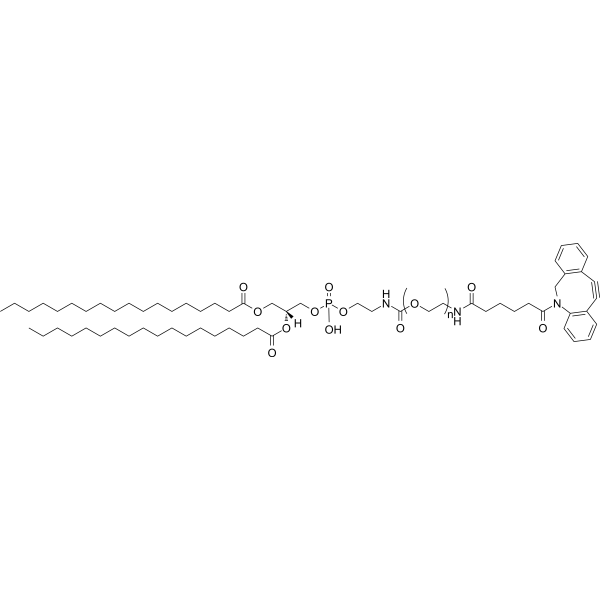
DSPE-PEG8-OH is a monodisperse lipid-polyethylene glycol conjugate featuring a hydrophobic 1,2-distearoyl-sn-glycero-3-phosphoethanolamine (DSPE) anchor, an 8-unit discrete (PEG8) spacer, and a terminal hydroxyl (-OH) group. DSPE-PEG8-OH is primarily used in liposome formulation, nanoparticle surface modification, and targeted drug delivery systems.
|
-
- HY-P991906
-
|
CD22-4AP Antibody; CAT-02-106 Antibody
|
ADC Antibody
CD22
|
Cancer
|
|
TRPH-222 Antibody (CD22-4AP Antibody) is an anti-human CD22 antibody site-specifically modified at one site per heavy chain to express formylglycine (FG), allowing site-specific conjugation of a maytansinoid payload, a protease-insensitive spacer, and a functional group for coupling to an aldehyde on antibody FG residues. TRPH-222 Antibody can generate antibody drug conjugate (ADC) (TRPH-222) with an ADC payload and a linker. TRPH-222 Antibody can be used for the study of NHL (non-Hodgkin's lymphoma) .
|
-
-
-
HY-L927
-
|
|
9,968 compounds
|
|
Designed to maximize efficiency in hit discovery and optimization, this compound library is built on a foundation of diverse Bemis-Murcko scaffolds, with each scaffold is represented by two specifically derived molecules. This strategy ensures broad chemical space through scaffold diversity while enabling preliminary functional group exploration. This approach provides early structure-activity relationship (SAR) insights for every scaffold, making it a valuable tool for accelerating drug discovery.
|
-
-
HY-L901
-
|
|
50,000 compounds
|
|
MCE 50K Diversity Library consists of 50,000 lead-like compounds with multiple characteristics such as calculated good solubility (-3.2 < logP < 5), oral bioavailability (RotB <= 10), drug transportability (PSA < 120). These compounds were selected by dissimilarity search with an average Tanimoto Coefficient of 0.52. There are 36,857 unique scaffolds and each scaffold 1 to 7 compounds. What’s more, compounds with the same scaffold have as many functional groups as possible, which make abundant chemical spaces. This exceptionally diverse library is highly recommended for random screening against new as well as popular targets based its novel, diverse scaffolds, abundant chemical spaces and the convenience for subsequent modification.
|
-
-
HY-L021L
-
|
|
45 compounds
|
|
Natural products are an attractive source with varied structures that exhibit potent biological activities, and desirable pharmacological profiles. The core scaffold of a natural product can also provide a biologically validated framework upon which to display diverse functional groups. Inspired by bioactive natural products, natural product-like compounds, occupying the same chemical space, are ideally suited to explore and to facilitate understanding of biological pathways.
MCE provides a unique collection of 45 natural product-like compounds that are structurally like Steroids, Tannins, Flavonoids, Quinones, Isoquinolines, etc. This library is an important source of lead compounds for drug discovery.
|
-
-
HY-L0121V
-
|
|
10,000 compounds
|
|
Natural products are an attractive source with varied structures that exhibit potent biological activities, and desirable pharmacological profiles. The core scaffold of a natural product can also provide a biologically validated framework upon which to display diverse functional groups. Inspired by bioactive natural products, natural product-like compounds, occupying the same chemical space, are ideally suited to explore and to facilitate understanding of biological pathways.
MCE 10K Natural Product-like Compound Library consists of 10,000 natural product-like compounds. Each compound has scaffold of natural products or Tanimoto coefficient >0.6 with natural products. The natural-likeness scoring of these compounds is >-2. What’s more, compounds in the library are drug-like and readily available for re-supply, making it a powerful tool for new drug research and development. It can be widely applied in high-throughput screening (HTS) and high-content screening (HCS).
|
-
-
HY-L905
-
|
|
4,802 compounds
|
|
Natural products are an attractive source with varied structures that exhibit potent biological activities, and desirable pharmacological profiles. The core scaffold of a natural product can also provide a biologically validated framework upon which to display diverse functional groups. Inspired by bioactive natural products, natural product-like compounds, occupying the same chemical space, are ideally suited to explore and to facilitate understanding of biological pathways.
MCE 5K Natural Product-like Compound Library consists of 5,000 natural product-like compounds. Each compound has scaffold of natural products or Tanimoto coefficient >0.6 with natural products. The natural-likeness scoring of these compounds is >-2. What’s more, compounds in the library are drug-like and readily available for re-supply, making it a powerful tool for new drug research and development. It can be widely applied in high-throughput screening (HTS) and high-content screening (HCS).
|
| Cat. No. |
Product Name |
Type |
-
- HY-W094712
-
|
|
Biochemical Assay Reagents
|
|
Potassium oxalate monohydrate is a biochemical reagent that can be used as a biological material or organic compound for life science related research .
|
| Cat. No. |
Product Name |
Target |
Research Area |
-
- HY-34611
-
|
N-Boc-L-2,4-diaminobutyric acid; Boc-Dab-OH
|
Drug Intermediate
ASCT
|
Neurological Disease
Cancer
|
|
Boc-L-2,4-Diaminobutyric acid (N-Boc-L-2,4-diaminobutyric acid; Boc-Dab-OH) is a versatile synthetic starting material with a cleavable protecting group. Boc-L-2,4-Diaminobutyric acid not only reduces the backbone cleavage rate by protecting the side-chain γ-amino group, but also triggers intramolecular cyclization of self-immolative linkers under acidic cleavage conditions, thus constructing stimuli-responsive materials. Boc-L-2,4-Diaminobutyric acid is also an important building block for bioactive molecules. It can be used in the synthesis of ASCT2 (SLC1A5) inhibitors and carboxynorspermine, and can also serve as an internal standard to support the quantitative detection of specific intracellular amino acids by UPLC-QQQ-MS .
|
-
- HY-P5057B
-
|
|
Fluorescent Dye
Bacterial
|
Infection
|
|
5-FAM-Ahx-LL-37 TFA is a 5-FAM (HY-66022) labeled LL-37, human (HY-P1222). The carboxyfluorescein group is attached via a 6-carbon spacer, 6-Aminohexanoic acid (Ahx, HY-B0236). LL-37, human is a 37-residue, amphipathic, cathelicidin-derived antimicrobial peptide, which exhibits a broad spectrum of antimicrobial activity .
|
| Cat. No. |
Product Name |
Target |
Research Area |
Image |
-
- HY-P991906
-
|
CD22-4AP Antibody; CAT-02-106 Antibody
|
ADC Antibody
CD22
|
Cancer
|
|
TRPH-222 Antibody (CD22-4AP Antibody) is an anti-human CD22 antibody site-specifically modified at one site per heavy chain to express formylglycine (FG), allowing site-specific conjugation of a maytansinoid payload, a protease-insensitive spacer, and a functional group for coupling to an aldehyde on antibody FG residues. TRPH-222 Antibody can generate antibody drug conjugate (ADC) (TRPH-222) with an ADC payload and a linker. TRPH-222 Antibody can be used for the study of NHL (non-Hodgkin's lymphoma) .
|
-
(5)
| Cat. No. |
Product Name |
Category |
Target |
Chemical Structure |
-
- HY-136436A
-
|
|
Structural Classification
Natural Products
Animals
Source Classification
|
Antibiotic
Bacterial
Drug Metabolite
Fungal
|
|
Ternidazole is a nitroimidazole Antibiotic with anti-pathogenic microbial activity. Ternidazole kills and inhibits the visible growth of Clostridium perfringens type A in vitro. Ternidazole helps improve the therapeutic efficacy against bacterial vaginosis, candidal vaginitis and mixed vaginitis. Ternidazole effectively alleviates chronic alcoholism. Ternidazole can be used in research related to vaginitis, pathogenic microbial infections and chronic alcoholism .
|
-
| Cat. No. |
Product Name |
|
Classification |
-
- HY-151827
-
|
|
|
DBCO
|
|
DBCO-PEG2-NHS ester is a click chemistry reagent containing an azide group. DBCO-PEG2-NHS ester is a click chemistry PEG reagent containing NHS ester that is able to react specifically and efficiently with primary amines (e.g. the side chain of lysine residues or aminosilane-coated surfaces) at neutral or slightly basic condition to form a covalent bond. The hydrophilic PEG spacer arm improves water solubility and provides a long and flexible connection that minimizes steric hindrance involved with ligation. DBCO is commonly used for copper-free Click Chemistry reactions. Reagent grade, for research use only .
|
-
- HY-W591374
-
|
|
|
DBCO
|
|
DBCO-PEG4-Val-Ala-PAB-PNP is a cleavable ADC linker. The Val-Ala linkers can be cleaved by Cathepsin B. The DBCO groups is commonly used for Click Chemistry reactions. PEG spacer improves the compound's aqueous solubility. PNP is a good leaving group.
|
-
- HY-W190881
-
|
|
|
Azide
|
|
N3-PEG11-CH2CH2Br is a PEG linker containing a bromine and an azide group. The hydrophilic PEG spacer increases solubility in aqueous media. The azide group can react with alkyne, BCN, DBCO via Click Chemistry to yield a stable triazole linkage. The bromine (Br) is a very good leaving group for nucleophilic substitution reactions.
|
-
- HY-151822
-
|
|
|
DBCO
|
|
Hydroxy-PEG3-DBCO is a click chemistry reagent containing an azide group. Hydroxy-PEG3-DBCO is a PEG linker containing a DBCO moiety and a terminal primary hydroxyl group. The hydroxyl can react with a variety of functional groups and the hydrophilic PEG spacer arm can provide better solubility to labeled molecules. DBCO is commonly used for copper-free Click Chemistry reactions. Reagent grade, for research use only .
|
-
- HY-151640
-
|
|
|
Azide
|
|
Fmoc-DAP-N3 is a click chemistry reagent containing an azide group. Fmoc-DAP-N3 is a short, linear spacer molecule with Fmoc protected amino function. Fmoc-DAP-N3 can be used in click conjugation and amid bond formation either with small molecules or for bioconjugation with proteins and antibodies . It contains an azide group and can undergo copper-catalyzed azide-alkyne cycloaddition (CuAAc) with molecules containing alkyne groups. It can also undergo ring strain-promoted alkyne-azide cycloaddition (SPAAC) with molecules containing DBCO or BCN groups.
|
-
- HY-W591373
-
|
|
|
DBCO
|
|
DBCO-PEG4-Val-Ala-PAB is a cleavable ADC linker. The Val-Ala linkers can be cleaved by Cathepsin B. The DBCO groups is commonly used for Click Chemistry reactions. PEG spacer improves the compound's aqueous solubility.
|
-
- HY-172513
-
|
|
|
DBCO
Tetrazine
|
|
Methyltetrazine-PEG11-DBCO is a TCO reactive reagent with a DBCO group and water-soluble PEG spacer. This reagent can be used to convert azido-containing peptides or proteins into tetrazine-modified peptides or protein without catalyst or axillary reagents. DBCO is commonly used for copper-free Click Chemistry reactions.
|
-
- HY-W800723
-
|
|
|
DBCO
|
|
Methyltetrazine-PEG2-DBCO is a TCO reactive reagent with a DBCO group and water-soluble PEG spacer. This reagent can be used to convert azido-containing peptides or proteins into tetrazine-modified peptides or protein without catalyst or axillary reagents. DBCO is commonly used for copper-free Click Chemistry reactions.
|
-
- HY-W800814
-
|
|
|
Azide
|
|
Azido-PEG8-Amido-Val-Cit-PAB is a cleavable ADC linker. The Val-Cit will specifically be cleaved by Cathepsin B. As this enzyme is only present in the lysosome, the ADC payload will be released only in the cell. Azido will react with DBCO, BCN or other alkyne groups through click chemistry. PEG spacer increases aqueous solubility. Reagent grade, for research purpose.
|
-
- HY-W590575
-
|
|
|
Azide
|
|
Azido-PEG3-flouride is a PEG linker containing a fluorine atom and an azide group. The hydrophilic PEG spacer increases solubility in aqueous media. The azide group can react with alkyne, BCN, DBCO via Click Chemistry to yield a stable triazole linkage.
|
-
- HY-W800664
-
|
|
|
Azide
|
|
5-(Azido-PEG4)-pent-2-yn-1-Ol is a PEG linker containing an azide group and a terminal hydroxyl group. The hydrophilic PEG spacer increases solubility in aqueous media. The azide group can react with alkyne, BCN, DBCO via Click Chemistry to yield a stable triazole linkage. The hydroxyl group enables further derivatization or replacement with other reactive functional groups.
|
Your information is safe with us. * Required Fields.
Inquiry Information
- Product Name:
- Cat. No.:
- Quantity:
- MCE Japan Authorized Agent:

