1. Search Result
Search Result
Results for "

spider venom

" in MedChemExpress (MCE) Product Catalog:

17

Inhibitors & Agonists

17

Peptides

Cat. No. Product Name Target Research Areas Chemical Structure
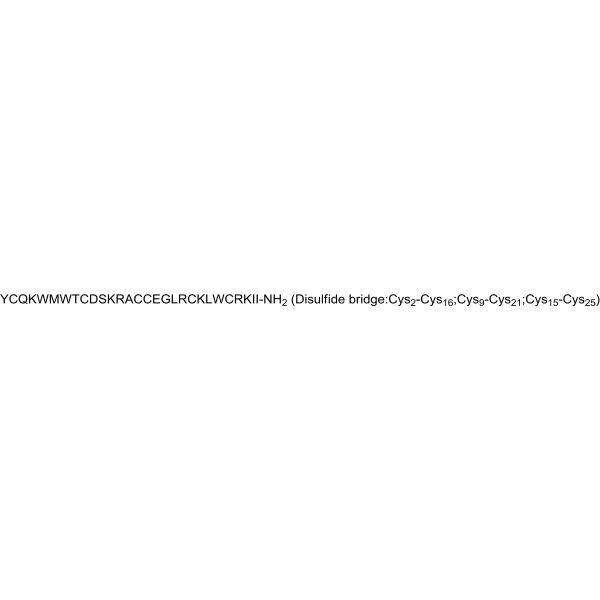
  • HY-P1410
    GsMTx4
    110+ Cited Publications

    TRP Channel Piezo Channel Cardiovascular Disease Neurological Disease Inflammation/Immunology
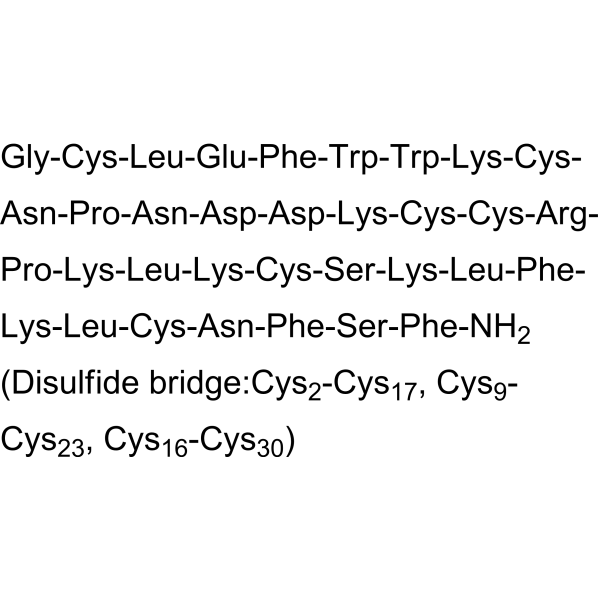
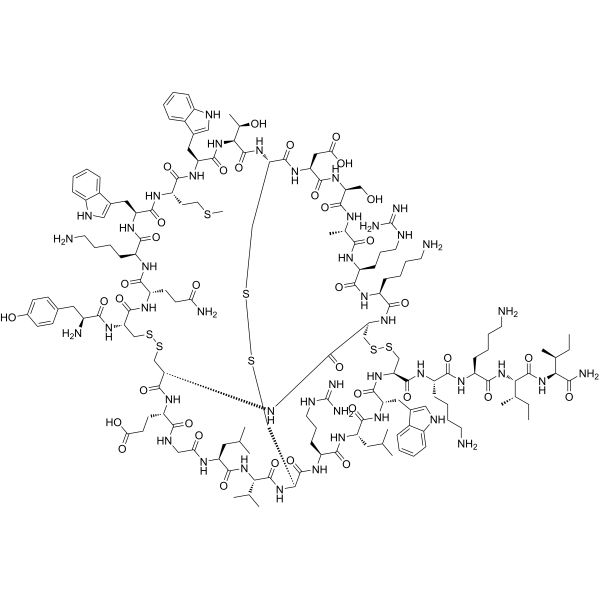
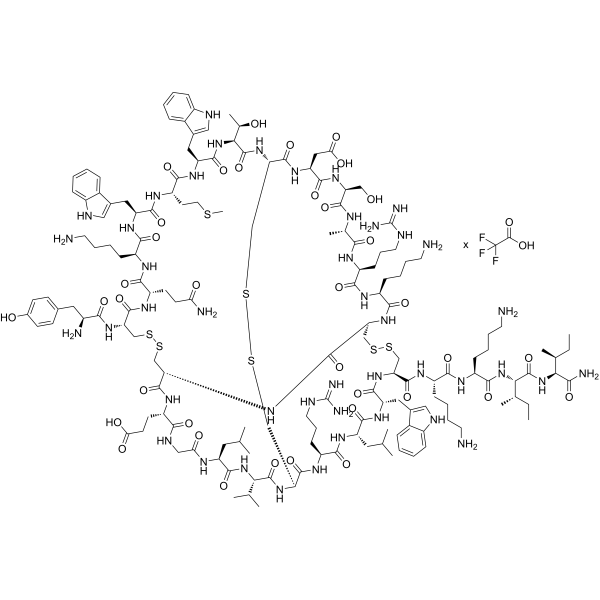
    GsMTx4 is a spider venom peptide that selectively inhibits cationic-permeable mechanosensitive channels (MSCs) belonging to the Piezo and TRP channel families. GsMTx4 also blocks cation-selective stretch-activated channels (SACs) , attenuates lysophosphatidylcholine (LPC)-induced astrocyte toxicity and microglial reactivity. GsMTx4 is an important pharmacological tool for identifying the role of these excitatory MSCs in normal physiology and pathology .
    GsMTx4
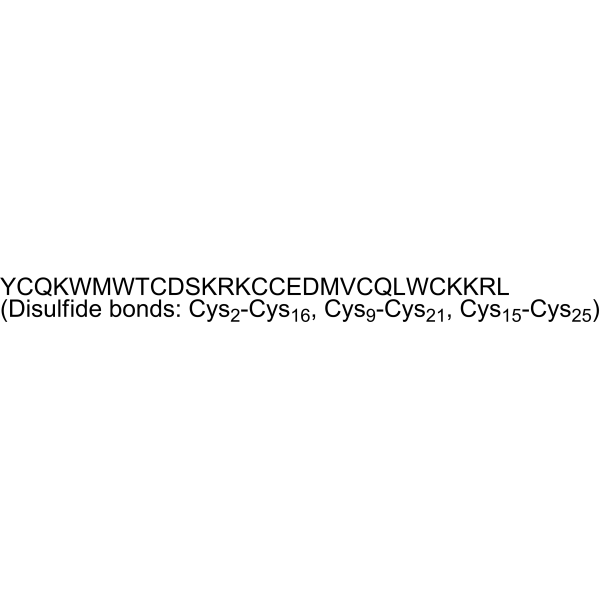
  • HY-P1410A
    GsMTx4 TFA
    110+ Cited Publications

    TRP Channel Piezo Channel Cardiovascular Disease Neurological Disease Inflammation/Immunology
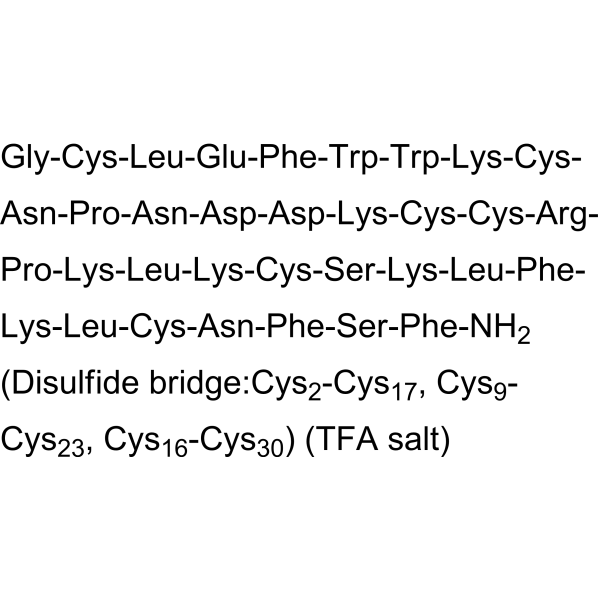
    GsMTx4 TFA is a spider venom peptide that selectively inhibits cationic-permeable mechanosensitive channels (MSCs) belonging to the Piezo and TRP channel families. GsMTx4 TFA also blocks cation-selective stretch-activated channels (SACs) , attenuates lysophosphatidylcholine (LPC)-induced astrocyte toxicity and microglial reactivity. GsMTx4 TFA is an important pharmacological tool for identifying the role of these excitatory MSCs in normal physiology and pathology .
    GsMTx4 TFA
  • HY-P3095

    Endogenous Metabolite Neurological Disease
    α-Latrotoxin, a potent neurotoxin from black widow spider venom, triggers synaptic vesicle exocytosis from presynaptic nerve terminals .
    α-Latrotoxin
  • HY-P1681A

    Sodium Channel Neurological Disease
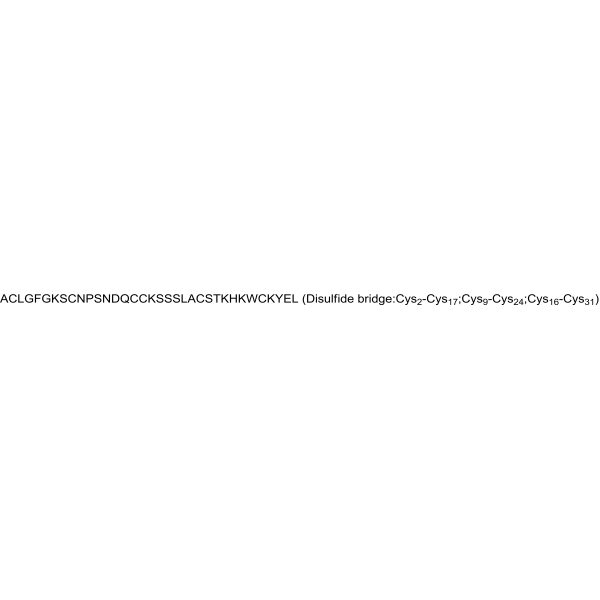
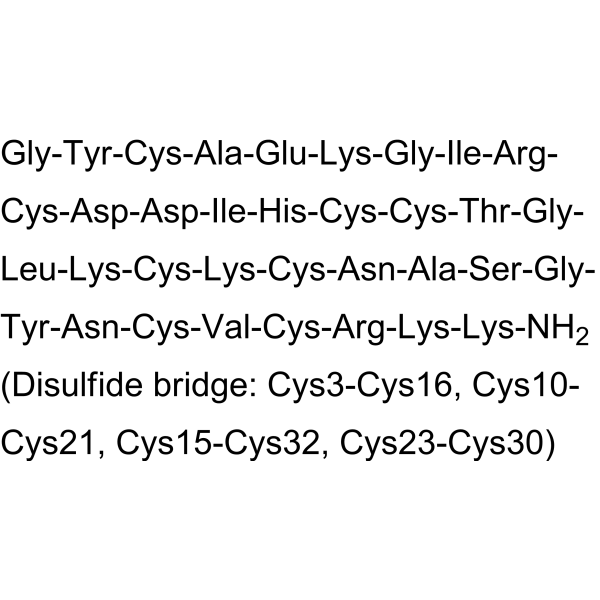
    GpTx-1 TFA is a peptide-based NaV1.7 sodium channel antagonist isolated from the venom of the Chilean spider Grammostola porter. GpTx-1 TFA demonstrates potent inhibitory activity against the NaV1.7 channel with an IC50 value of 10 nM, while exhibiting excellent selectivity for NaV1.4 (IC50 = 0.301 μM) and NaV1.5 (IC50 = 4.20 μM), showing >20-fold and >950-fold selectivity respectively .
    GpTx-1 TFA
  • HY-P1681

    Sodium Channel Neurological Disease
    GpTx-1 is a peptide-based NaV1.7 sodium channel antagonist isolated from the venom of the Chilean spider Grammostola porter. GpTx-1 demonstrates potent inhibitory activity against the NaV1.7 channel with an IC50 value of 10 nM, while exhibiting excellent selectivity for NaV1.4 (IC50 = 0.301 μM) and NaV1.5 (IC50 = 4.20 μM), showing >20-fold and >950-fold selectivity respectively .
    GpTx-1
  • HY-P2699

    GrTx; ω-GsTx SIA

    Calcium Channel Neurological Disease
    ω-Grammotoxin SIA (GrTx) is P/Q and N-type voltage-gated Calcium channels inhibitor. ω-Grammotoxin SIA is also a protein toxin that can be obtained from spider venom. ω-Grammotoxin SIA has the potential to study neurological diseases as well as cardiovascular diseases .
    ω-Grammotoxin SIA
  • HY-P5790

    Sodium Channel Neurological Disease
    μ-TRTX-Hd1a, a spider venom, is a selective NaV 1.7 inhibitor. μ-TRTX-Hd1a is a gating modifier that inhibits human NaV 1.7 by interacting with the S3b-S4 paddle motif in channel domain II .
    μ-TRTX-Hd1a
  • HY-P2785

    Potassium Channel Neurological Disease
    Phrixotoxin 1, from the venom of the theraphosid spider Phrixotrichus auratus, is a specific peptide inhibitor of Kv4 potassium channel .
    Phrixotoxin-1
  • HY-P2785A

    Potassium Channel Neurological Disease
    Phrixotoxin-1 (TFA), from the venom of the theraphosid spider Phrixotrichus auratus, is a specific peptide inhibitor of Kv4 potassium channel .
    Phrixotoxin-1 TFA
  • HY-P1330

    P2X Receptor Inflammation/Immunology
    Purotoxin 1 is a P2X3 receptor inhibitor. Purotoxin 1 shows antinociceptive properties in animal models of inflammatory pain. Purotoxin 1 can be isolated from the venom of the wolf spider Geolycosa sp .
    Purotoxin 1
  • HY-P5865

    Theraphotoxin-Tap1a; TRTX-Tap1a; µ/ω-TRTX-Tap1a

    Sodium Channel Neurological Disease
    Tap1a (Theraphotoxin-Tap1a) is a spider venom peptide that inhibits sodium channels with IC50s of 80 nM and 301 nM against Nav1.7 and Nav1.1, respectively. Tap1a shows analgesic effects .
    Tap1a
  • HY-P5153

    μ-TRTX-Tp1a

    Sodium Channel Neurological Disease
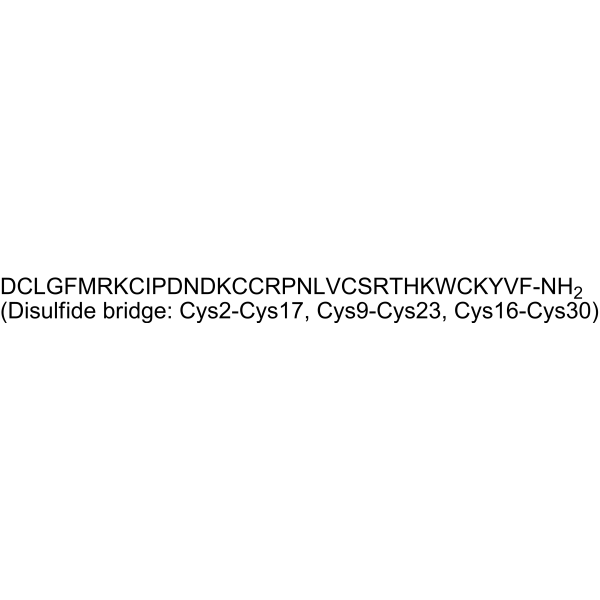
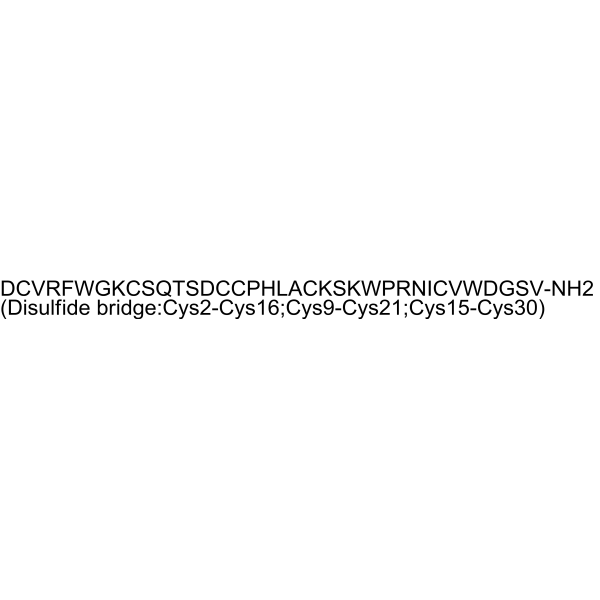
    ProTx-III is a selective and potent inhibitor of voltage-gated sodium channel Nav1.7, with an IC50 of 2.1 nM. ProTx-III is a spider venom peptide isolated from the venom of the Peruvian green velvet tarantella. ProTx-III has a typical inhibitor cystine knot motif (ICK). ProTx-III is able to reverse the pain response. ProTx-III can be used to study diseases such as chronic pain, epilepsy, and arrhythmia .
    ProTx-III
  • HY-P5770

    Sodium Channel Neurological Disease
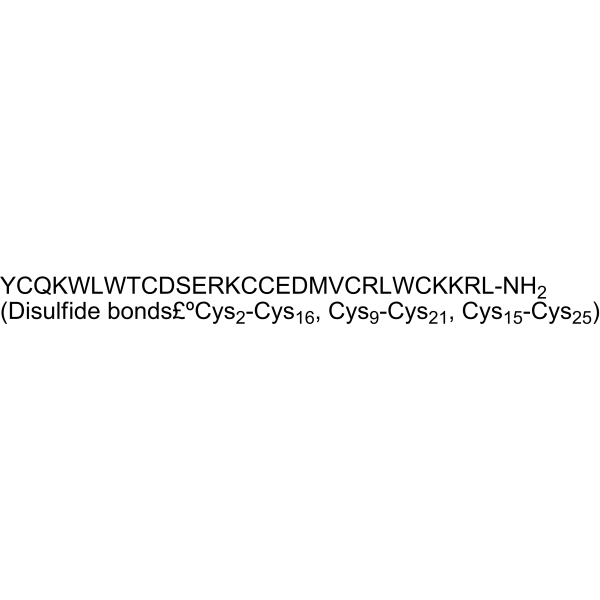
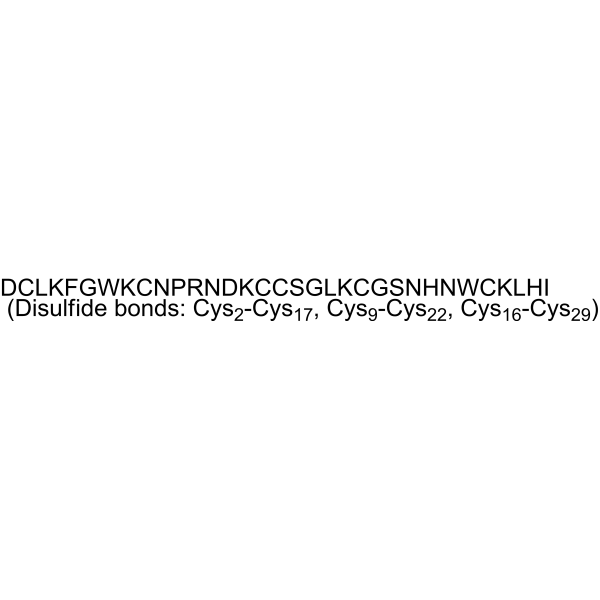
    Jingzhaotoxin-V, a 29-residue polypeptide, is derived from the venom of the spider Chilobrachys jingzhao. Jingzhaotoxin-V inhibits tetrodotoxin-resistant and tetrodotoxin-sensitive sodium currents in rat dorsal root ganglion neurons with IC50 values of 27.6 nM and 30.2 nM, respectively. Jingzhaotoxin-V also inhibits Kv4.2 potassium currents expressed in Xenpus Laevis oocytes (IC50 of 604.2 nM) .
    Jingzhaotoxin-V
  • HY-P5164

    Sodium Channel Neurological Disease
    GrTx1 is a peptide toxin originally isolated from the venom of the spider Grammostola rosea. GrTx1 blocks sodium channel, with IC50s of 0.63 μM, 0.23 μM, 0.77 μM, 1.29 μM, 0.63 μM and 0.37 μM for Nav1.1, Nav1.2, Nav1.3, Nav1.4, Nav1.6 and Nav1.7, repectively . GrTx1 can be used for neurological disease research .
    GrTx1
  • HY-P5142A

    ω-ACTX-Hv1 TFA; ω-Atracotoxin-HV1 TFA

    Insecticide Apoptosis Calcium Channel Necroptosis Cardiovascular Disease Neurological Disease Inflammation/Immunology
    ω-Hexatoxin-Hv1a (ω-ACTX-Hv1; ω-Atracotoxin-HV1) TFA is an orally active insecticidal neurotoxin containing an inhibitor cystine knot motif and a selective calcium channel inhibitor. ω-Hexatoxin-Hv1a TFA blocks L-type voltage-dependent Ca 2+ channels and reduces intracellular calcium ion concentration, thereby decreasing apoptosis, necroptosis and oxidative stress, and promoting cell recovery and energy level elevation. ω-Hexatoxin-Hv1a TFA causes larval paralysis and death by impairing neurotransmission in the central nervous system of insects. It shows high injectable toxicity against insects of multiple orders, but exhibits weak oral toxicity. ω-Hexatoxin-Hv1a TFA is widely applicable to studies related to ischemia-reperfusion injury, atopic dermatitis, and ischemic injury of cardiomyocytes and neurons .
    ω-Hexatoxin-Hv1a TFA
  • HY-182413

    Phospholipase Infection
    SMases D-IN-1 is an inhibitor of SMase D (sphingomyelinase D) from Loxosceles (brown recluse spider), with a Ki value of 0.54 μM. SMases D-IN-1 inhibits the hydrolysis of sphingomyelin substrates by recombinant and native SMases D, reduces the binding ability of SMases D to human red blood cells, and prevents the shedding of glycophorin C from the surface of human red blood cells. SMases D-IN-1 partially inhibits Loxosceles venom-induced death of human keratinocytes and also suppresses systemic reactions triggered by Loxosceles venom. SMases D-IN-1 can be used in studies related to recluse spider envenomation .
    SMases D-IN-1
  • HY-P11136

    Bacterial Infection
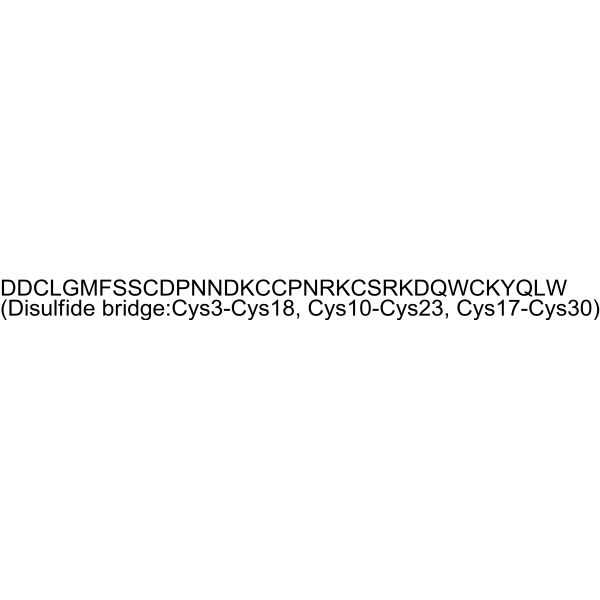
    Latarcin 2a is a linear cationic antibacterial peptide that can be isolated from the venom of the spider Lachesana tarabaevi, with broad-spectrum antibacterial activity. Latarcin 2a has a MIC of 0.5 μM for both Bacillus subtilis and Escherichia coli. Latarcin 2a is often used in the research of infectious conditions .
    Latarcin 2a

Inquiry Online

Your information is safe with us. * Required Fields.

Salutation


Country or Region *

Applicant Name *


Organization Name *

Department *


Email Address *


Product Name *

Cat. No.


Requested quantity *

Phone Number *


Remarks

Inquiry Online

Inquiry Information

Product Name:
Cat. No.:
Quantity:
MCE Japan Authorized Agent:

