53 Results for "

succinyl-

" in MedChemExpress (MCE) Product Catalog:
Products (53)

53 Results for "succinyl-" in MCE Product Catalog:

14
14 Publications Verification
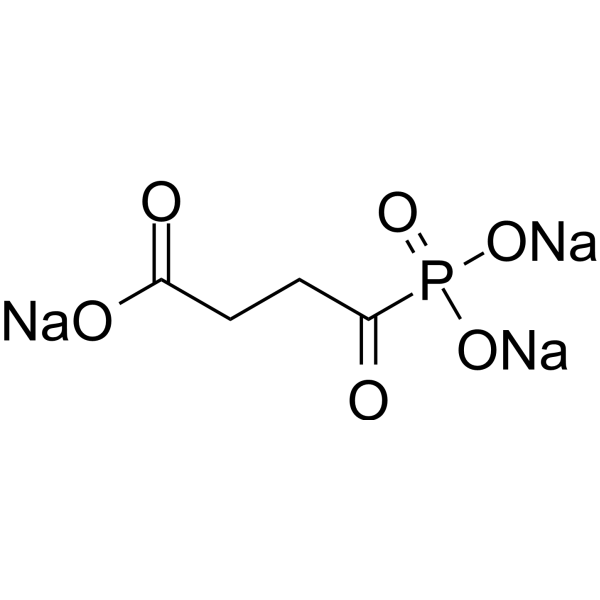
Cat. No.: HY-12688A
CAS No.: 864167-45-3
Purity:  ≥98.0%
Succinyl phosphonate trisodium salt is a α-Ketoglutarate Dehydrogenase Complex (KGDHC) modulator with neuroprotective activity. Succinyl phosphonate trisodium salt protects this complex, reduces cellular succinyl-CoA concentration, downregulates protein succinylation levels, and inhibits the activity of the α-ketoglutarate dehydrogenase complex. Succinyl phosphonate trisodium salt corrects hypoxic or ethanol-induced behavioral impairments, modulates exploratory behavior and emotional stress responses, and improves hypoxia tolerance. Succinyl phosphonate trisodium salt reduces glutamate excitotoxicity, restores the activity of the α-ketoglutarate dehydrogenase complex, reverses the changes in glutamate dehydrogenase and glutamine synthetase activities induced by β-amyloid (Amyloid-β), modulates cognitive function, and prevents β-amyloid-induced neuronal damage. Succinyl phosphonate trisodium salt improves microglial senescence, alleviates neuroinflammation, reactive oxygen species (ROS) production, lipid peroxidation, and the expression of proinflammatory cytokines. Succinyl phosphonate trisodium salt can be used in the research of Alzheimer's disease, aging-related neuroinflammation, and Parkinson's disease .
loading...
    loading...
5
5 Cited Publications
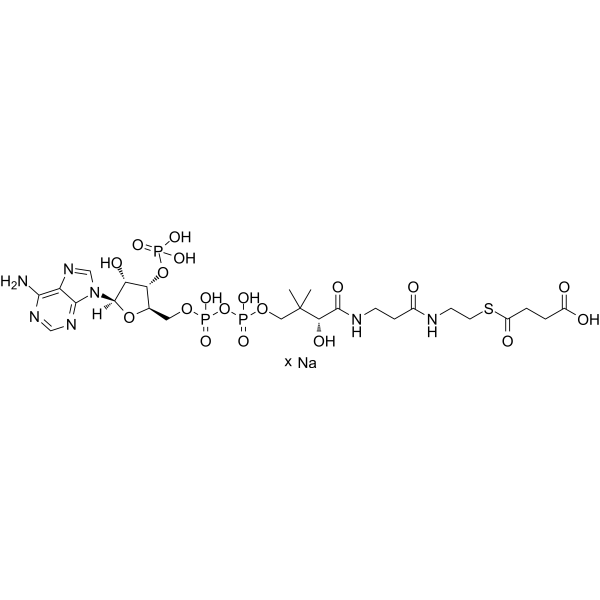
Cat. No.: HY-137808
CAS No.: 108347-97-3
Purity:  94%
Synonyms: succinyl-CoA sodium
Succinyl CoA (Succinyl-coenzyme A) sodium is a pivotal intermediate metabolite in the tricarboxylic acid cycle and a key coenzyme A metabolite. Succinyl CoA sodium is biosynthesized from α-ketoglutarate or propionyl-CoA. Succinyl CoA sodium acts as a critical precursor and substrate for heme biosynthesis and gluconeogenesis. Succinyl CoA sodium insufficiency caused by cobalamin deficiency is directly linked to growth retardation, impaired heme synthesis, tissue glycine accumulation and neurological abnormalities. Succinyl CoA sodium can be used in research on metabolic, neurological, and hematological abnormalities (such as porphyria) caused by nutritional vitamin B12 deficiency (leading to a lack of Succinyl-Coenzyme A synthesis) .
loading...
    loading...
2
2 Cited Publications
Cat. No.: HY-N15971
CAS No.: 1445723-73-8
Category:  

Lipids

Target:  

Liposome

DSPE-PEG(2000) Succinyl ammonium is functionalized PEG lipid that can be used to synthesize lipid nanoparticles for drug delivery.
loading...
    loading...
1
1 Cited Publications
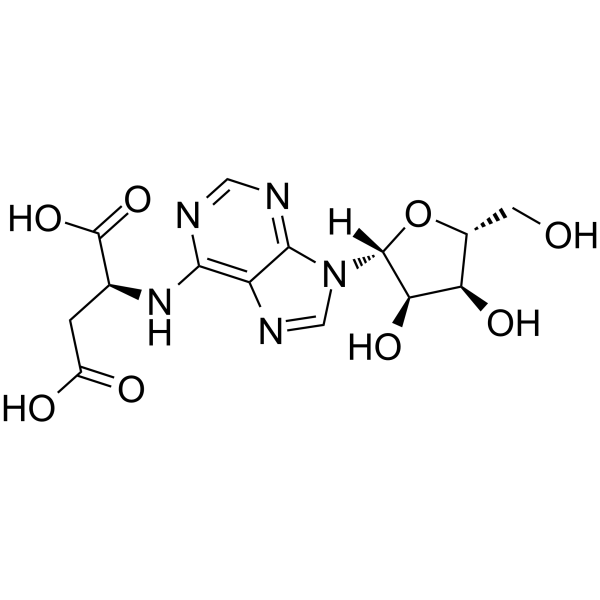
Cat. No.: HY-113284
CAS No.: 4542-23-8
Purity:  99.43%
Synonyms: N6-succinyl adenosine
Target:  

Endogenous Metabolite

Research Areas:  

Metabolic Disease

Succinyladenosine, the metabolic product of dephosphorylation of intracellular adenylosuccinic acid (S-AMP) by cytosolic 5-nucleotidase, is a biochemical marker of adenylosuccinase (ASL) deficiency .
loading...
    loading...
Cat. No.: HY-173527
Research Areas:  

Metabolic Disease

PSSI-51 is an orally active, peripherally selective inhibitor of succinyl-CoA:3-ketoacid-CoA transferase (SCOT). PSSI-51 inhibits SCOT activity in peripheral tissues (such as muscle and kidney) but does not affect SCOT activity in brain tissue. PSSI-51 reduces ketone body oxidation by inhibiting SCOT, thereby improving obesity-related hyperglycemia. PSSI-51 can be used in the study of type 2 diabetes (T2D) and has the potential to improve obesity-related metabolic disorders .
loading...
    loading...
Cat. No.: HY-148285
CAS No.: 604-98-8
Synonyms: succinyl-coenzyme A; S-(Hydrogen succinyl)coenzyme A
Succinyl CoA (Succinyl-coenzyme A) is a pivotal intermediate metabolite in the tricarboxylic acid cycle and a key coenzyme A metabolite. Succinyl CoA is biosynthesized from α-ketoglutarate or propionyl-CoA. Succinyl CoA acts as a critical precursor and substrate for heme biosynthesis and gluconeogenesis. Succinyl CoA insufficiency caused by cobalamin deficiency is directly linked to growth retardation, impaired heme synthesis, tissue glycine accumulation and neurological abnormalities. Succinyl CoA can be used in research on metabolic, neurological, and hematological abnormalities (such as porphyria) caused by nutritional vitamin B12 deficiency (leading to a lack of Succinyl-Coenzyme A synthesis) .
loading...
    loading...
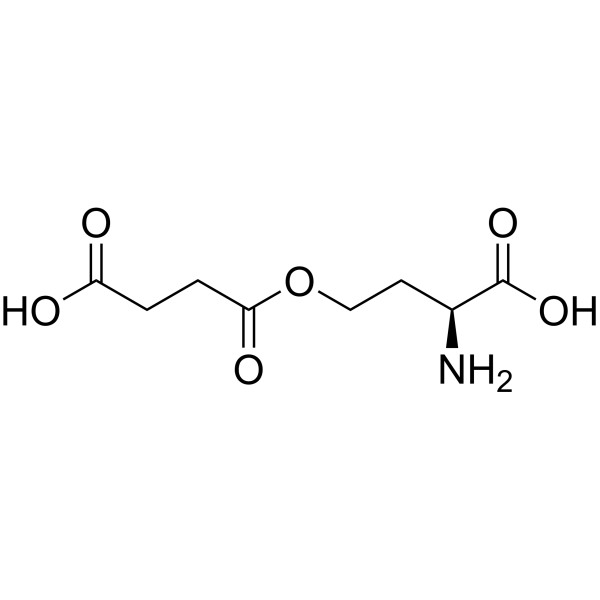
Cat. No.: HY-119543
CAS No.: 1492-23-5
Purity:  ≥98.0%
O-Succinyl-L-homoserine is a homoserine derivative. O-Succinyl-L-homoserine is an intermediate in the biosynthesis of methionine in Escherichia coli and Salmonella typhimurium .
loading...
    loading...
Cat. No.: HY-126791A
CAS No.: 104809-02-1
Purity:  96%
Synonyms: Isosuccinyl coenzyme A tetralithium; Methylmalonyl coenzyme tetralithium
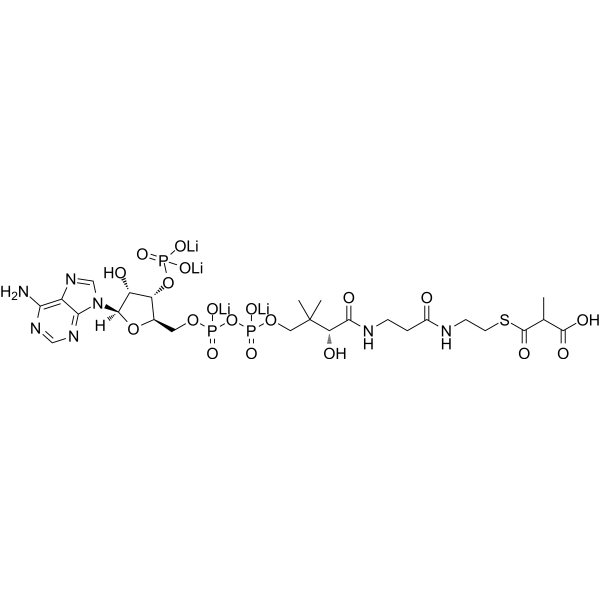
Methylmalonyl-CoA (Methylmalonyl coenzyme A) tetralithium is a catabolite of valine, isoleucine, methionine, threonine, odd-chain fatty acids, and cholesterol. Methylmalonyl-CoA tetralithium is converted to succinyl-CoA by enzymatic reaction of methylmalonyl-CoA mutase (MCM) with coenzyme vitamin B12 .
loading...
    loading...
Cat. No.: HY-E70121
CAS No.: 9080-33-5
Succinyl-CoA synthetase is a mitochondrial matrix enzyme and catalyst. Succinyl-CoA synthetase supports TCA, ketone and heme metabolism and is activated by mitochondrial phosphate. Succinyl-CoA synthetase distributes broadly across mammalian tissues with distinct substrate-related biochemical features. Succinyl-CoA synthetase gains structural stability after phosphorylation and relies on SUCLG1-encoded subunit for activity. Succinyl-CoA synthetase malfunction links to metabolic and neurological disorders. Succinyl-CoA synthetase serves as a research tool for mitochondrial hepatoencephalomyopathy .
loading...
    loading...
Cat. No.: HY-12688
CAS No.: 26647-82-5
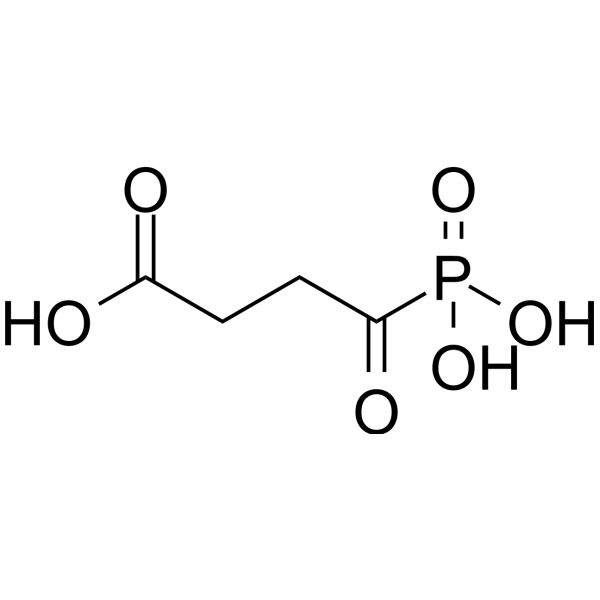
Succinyl phosphonate is a α-Ketoglutarate Dehydrogenase Complex (KGDHC) modulator with neuroprotective activity. Succinyl phosphonate protects this complex, reduces cellular succinyl-CoA concentration, downregulates protein succinylation levels, and inhibits the activity of the α-ketoglutarate dehydrogenase complex. Succinyl phosphonate corrects hypoxic or ethanol-induced behavioral impairments, modulates exploratory behavior and emotional stress responses, and improves hypoxia tolerance. Succinyl phosphonate reduces glutamate excitotoxicity, restores the activity of the α-ketoglutarate dehydrogenase complex, reverses the changes in glutamate dehydrogenase and glutamine synthetase activities induced by β-amyloid (Amyloid-β), modulates cognitive function, and prevents β-amyloid-induced neuronal damage. Succinyl phosphonate improves microglial senescence, alleviates neuroinflammation, reactive oxygen species (ROS) production, lipid peroxidation, and the expression of proinflammatory cytokines. Succinyl phosphonate can be used in the research of Alzheimer's disease, aging-related neuroinflammation, and Parkinson's disease .
loading...
    loading...
Cat. No.: HY-W800793
CAS No.: 186800-61-3
Synonyms: 1,2-dipalmitoyl-sn-glycero-3-phosphoethanolamine-N-(succinyl)
Target:  

Liposome

Research Areas:  

Cancer

16:0 Succinyl PE is a carboxylic acid-functionalized lipid with a two carbon linker to a phosphoethanolamine bound to two palmitic acid tails.
loading...
    loading...
Cat. No.: HY-131768
CAS No.: 36940-87-1
Purity:  ≥99.0%
Target:  

Cholinesterase (ChE)

Research Areas:  

Others

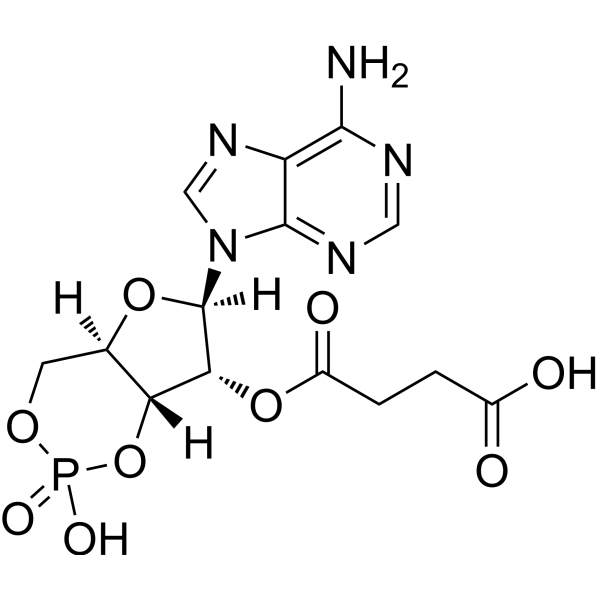
2'-O-Succinyl-cAMP is a cAMP analog that can be covalently coupled to acetylcholinesterase. 2'-O-Succinyl-cAMP conjugate has been used as tracers in a classical heterogeneous competitive enzyme immunoassay allowing the determination of cAMP .
loading...
    loading...
Cat. No.: HY-P2648
CAS No.: 70968-04-6
Synonyms: N-succinyl-AAPL-p-nitroanilide
Target:  

Aminopeptidase

Research Areas:  

Endocrinology

Suc-Ala-Ala-Pro-Leu-pNA (N-Succinyl-AAPL-p-nitroanilide) is a tripeptidyl p-nitroanilide substrate that can be catalytically hydrolyzed by acyl amidase-like leucine aminopeptidase in seminal plasma. Amastatin (HY-129298) and Actinonin (HY-113952) exert potent inhibitory effects on this hydrolytic activity. Suc-Ala-Ala-Pro-Leu-pNA can be used for the research of diseases such as azoospermia .
loading...
    loading...
Cat. No.: HY-P3791
CAS No.: 133525-12-9
Target:  

Fluorescent Dye

Research Areas:  

Others

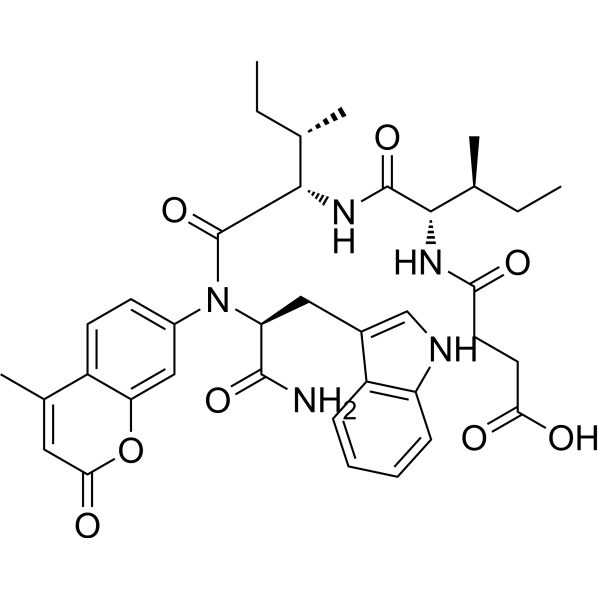
N-Succinyl-Ile-Ile-Trp-AMC is a peptide-based fluorescent substrate or probe for carboxypeptidase Y (CPY) .
loading...
    loading...
Cat. No.: HY-160578
CAS No.: 1257309-90-2
Synonyms: N-Cholesteryl succinyl glucosamine
Target:  

Liposome

Research Areas:  

Others

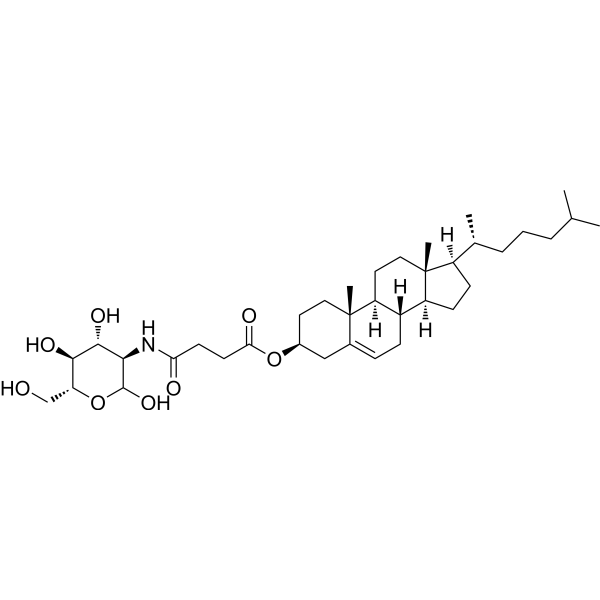
Glucosamine Cholesterol (N-Cholesteryl succinyl glucosamine) is a glucosamine-based lipid conjugate, and can be used in the formation of lipid nanoparticles (LNPs) .
loading...
    loading...
Cat. No.: HY-W973644
CAS No.: 147104-27-6
Research Areas:  

Infection

LY-266500 is a succinyl CoA synthetase (SCS) specific inhibitor. LY-266500 has inhibitory effects on various parasites, such as Trypanosoma brucei brucei (IC50 =0.6 μM) and Leishmania donovani (IC50 =2.86 μM). LY-266500 can be used for research on parasitic infections .
loading...
    loading...
Cat. No.: HY-CE00006
Synonyms: (1-Methylpentyl)succinyl-coenzyme A
Research Areas:  

Others

(1-Methylpentyl)succinyl-CoA ((1-Methylpentyl)succinyl-coenzyme A) is a a higher alkylsuccinyl-CoA .
loading...
    loading...
Cat. No.: HY-154857
CAS No.: 89947-80-8
Research Areas:  

Cancer

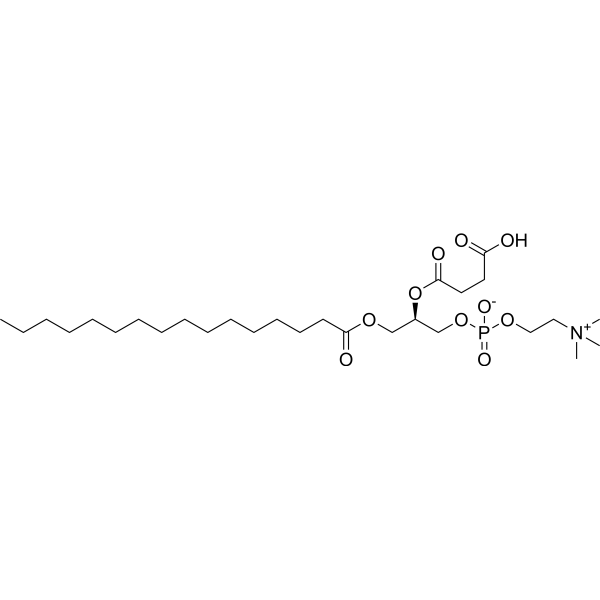
1-Palmitoyl-2-succinyl-sn-glycerophosphorylcholine is a glycerophosphorylcholine, consisting of glycerol phosphate, choline and palmitic acid. It accumulates in vivo at sites of oxidative stress. 1-Palmitoyl-2-succinyl-sn-glycerophosphorylcholine may be a ligand of scavenger receptors class B, while oxidized phospholipids oxPC(CD36) are potent ligands of scavenger receptors class B (CD36 and SR-BI). Oxidized phospholipids (oxPLs) also play an important role in tumor apoptosis, may be elevated in malignant biliary strictures .
loading...
    loading...
Cat. No.: HY-17664
CAS No.: 192047-93-1
Synonyms: 2’-Sulfo-NHS-succinyl-paclitaxel
Research Areas:  

Cancer

Paclitaxel succinate sulfo-NHS ester is a derivative of Paclitaxel (HY-B0015). Paclitaxel succinate sulfo-NHS ester can be used for the research of cancer .
loading...
    loading...
Cat. No.: HY-148285A
CAS No.: 403982-65-0
Synonyms: succinyl-coenzyme A disodium; S-(Hydrogen succinyl)coenzyme A disodium
Target:  

Endogenous Metabolite

Research Areas:  

Metabolic Disease

Succinyl CoA (Succinyl-coenzyme A) disodium is a pivotal intermediate metabolite in the tricarboxylic acid cycle and a key coenzyme A metabolite. Succinyl CoA disodium is biosynthesized from α-ketoglutarate or propionyl-CoA. Succinyl CoA disodium acts as a critical precursor and substrate for heme biosynthesis and gluconeogenesis. Succinyl CoA disodium insufficiency caused by cobalamin deficiency is directly linked to growth retardation, impaired heme synthesis, tissue glycine accumulation and neurological abnormalities. Succinyl-Coenzyme A sodium can be used in research on metabolic, neurological, and hematological abnormalities (such as porphyria) caused by nutritional vitamin B12 deficiency (leading to a lack of Succinyl-Coenzyme A synthesis) .
loading...
    loading...

