


Search Result
Results for "
tau aggregation
" in MedChemExpress (MCE) Product Catalog:
| Cat. No. |
Product Name |
Target |
Research Areas |
Chemical Structure |
-
- HY-14536
-
|
Basic Blue 9; CI-52015; Methylthioninium chloride
|
Environmental Pollutants
Monoamine Oxidase
Guanylate Cyclase
Microtubule/Tubulin
NO Synthase
|
Infection
Neurological Disease
Cancer
|
|
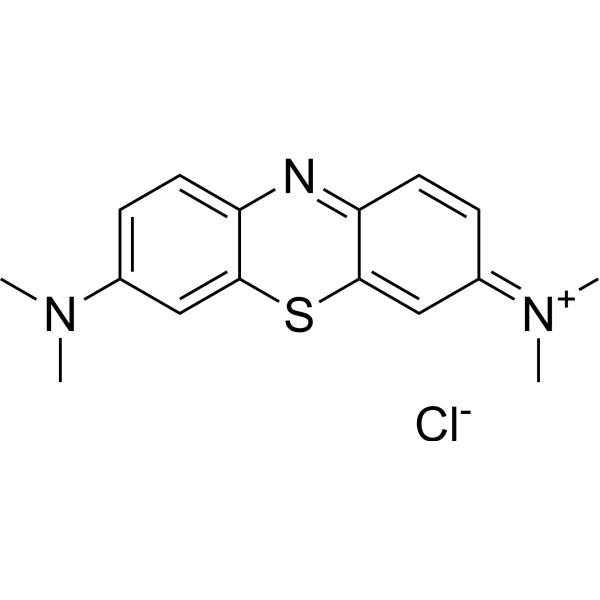
Methylene blue (Basic Blue 9) is a guanylyl cyclase (sGC), monoamine oxidase A (MAO-A) and NO synthase (NOS) inhibitor. Methylene blue is a vasopressor and is often used as a dye in several medical procedures. Methylene blue through the nitric oxide syntase/guanylate cyclase signalling pathway to reduce prepulse inhibition. Methylene blue is a REDOX cycling compound and able to cross the blood-brain barrier. Methylene blue is a Tau aggregation inhibitor. Methylene Blue is a photosensitizer and redox agent. Methylene blue reduces cerebral edema, attenuated microglial activation and reduced neuroinflammation .
|
-
-
- HY-19948
-
|
TRx0237 mesylate; Methylene blue leuco base mesylate
|
Tau Protein
|
Neurological Disease
|
|
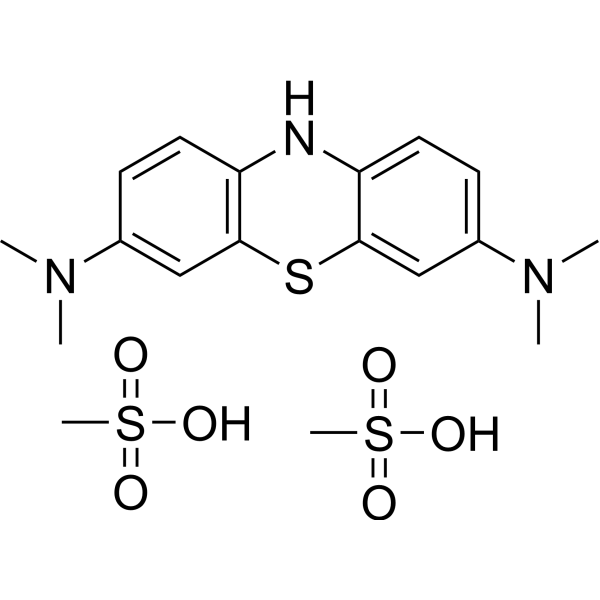
Leucomethylene blue (TRx0237) mesylate, an orally active second-generation tau protein aggregation inhibitor (Ki of 0.12 μM), could be used for the study of Alzheimer's Disease. Leucomethylene blue mesylate is a common reduced form of Methylene Blue, Methylene Blue is a member of the thiazine class of dyes .
|
-
-
- HY-P99471
-
|
UCB 0107
|
Tau Protein
|
Neurological Disease
|
|
Bepranemab is a humanized IgG4 monoclonal antibody that binds to the central region of tau protein. Bepranemab inhibits the seeding, aggregation of pathological tau protein and the spread of tau pathology to distal brain regions. Bepranemab is applicable to research related to Alzheimer's disease .
|
-
-
- HY-P4808
-
|
|
Amyloid-β
Autophagy
|
Neurological Disease
|
|
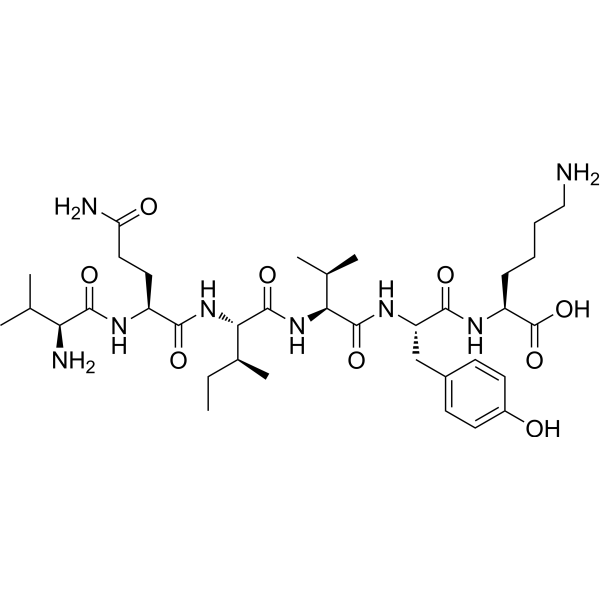
PHF6 (VQIVYK) is a self-assembly sequence capable of initiating the full-length tau protein aggregation and is mapped to the third microtubule-binding repeat region of the tau protein .
|
-
-
- HY-175552
-
|
|
Tau Protein
|
Neurological Disease
|
|
CHIPOpt, a peptide, is an orthosteric CHIP TPR domain inhibitor with a Kd of ∼16 nM. CHIPOpt has anti-aggregation activity and decreases p.tau ubiquitination with little effect on unmodified tau. CHIPOpt can be used for Alzheimer’s disease research .
|
-
-
- HY-12662
-
-
-
- HY-D0958
-
|
Basic Blue 9 hydrate; CI-52015 hydrate; Methylthioninium chloride hydrate
|
Guanylate Cyclase
Monoamine Oxidase
NO Synthase
Microtubule/Tubulin
|
Infection
Inflammation/Immunology
Cancer
|
|
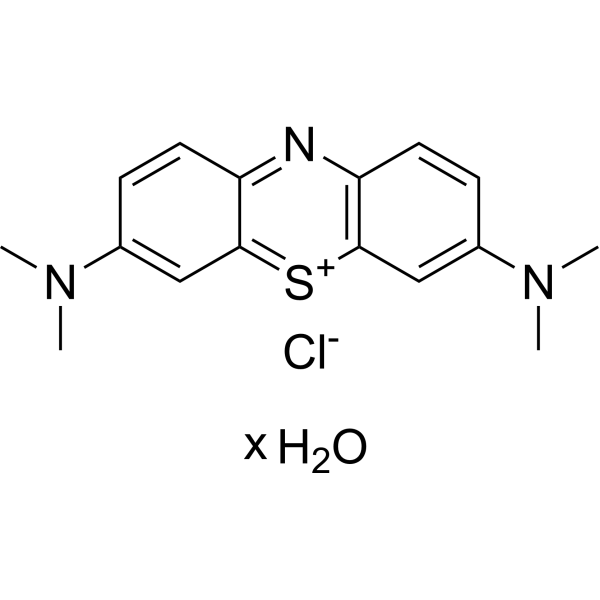
Methylene blue (Basic Blue 9) hydrate is a guanylyl cyclase (sGC), monoamine oxidase A (MAO-A) and NO synthase (NOS) inhibitor. Methylene blue is a vasopressor and is often used as a dye in several medical procedures. Methylene blue hydrate through the nitric oxide syntase/guanylate cyclase signalling pathway to reduce prepulse inhibition. Methylene blue hydrate is a REDOX cycling compound and able to cross the blood-brain barrier. Methylene blue hydrate is a Tau aggregation inhibitor. Methylene blue hydrate reduces cerebral edema, attenuated microglial activation and reduced neuroinflammation .
|
-
-
- HY-14536A
-
|
Basic Blue 9 (purity≥70%); CI-52015 (purity≥70%); Methylthioninium chloride (purity≥70%)
|
Environmental Pollutants
Monoamine Oxidase
Guanylate Cyclase
Microtubule/Tubulin
NO Synthase
|
Infection
Neurological Disease
Cancer
|
|
Methylene blue (purity≥70%) is a guanylyl cyclase (sGC), monoamine oxidase A (MAO-A) and NO synthase (NOS) inhibitor. Methylene blue (purity≥70%) is a vasopressor and is often used as a dye in several medical procedures. Methylene blue (purity≥70%) through the nitric oxide syntase/guanylate cyclase signalling pathway to reduce prepulse inhibition. Methylene blue (purity≥70%) is a REDOX cycling compound and able to cross the blood-brain barrier. Methylene blue (purity≥70%) is a Tau aggregation inhibitor. Methylene blue reduces cerebral edema, attenuated microglial activation and reduced neuroinflammation .
|
-
-
- HY-P10861A
-
|
|
Tau Protein
|
Neurological Disease
|
|
RI-AG03 acetate is a proteolytically stable tau aggregation inhibitor that crosses the blood-brain barrier and exhibits oral efficacy. RI-AG03 acetate inhibits tau aggregation and promotes the formation of alternative amorphous aggregates that are non-amyloidogenic. RI-AG03 acetate mediates cellular uptake through direct membrane penetration and macropinocytosis, and its conjugation with cell-penetrating peptide sequences (CPPs) enhances the binding of cells to liposomes. RI-AG03 acetate suppresses aggregation-dependent neurodegenerative and behavioral phenotypes, and extends the lifespan of Drosophila models of tauopathy. RI-AG03 acetate can be used for research on tau-related diseases such as Alzheimer's disease .
|
-
-
- HY-153430
-
|
|
Amyloid-β
|
Neurological Disease
|
|
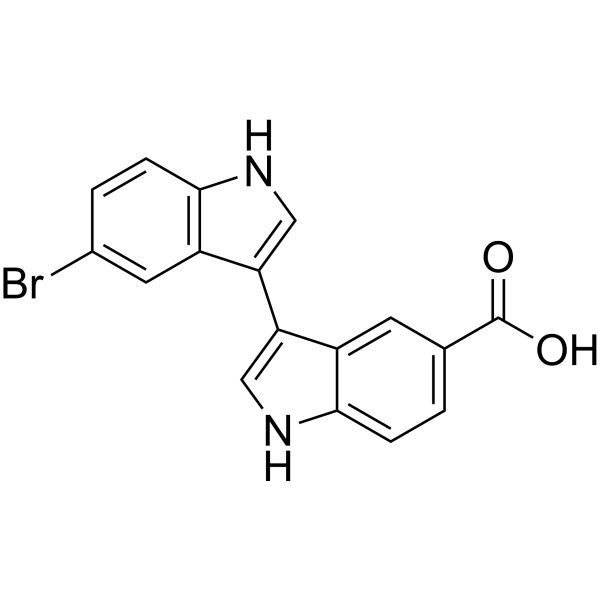
Aβ/tau aggregation-IN-3 is a potent amyloid protein aggregation inhibitor with an IC50 of 0.85 μM by Aβ-Thioflavin T (Aβ-ThT) functional aggregation assay. Aβ/tau aggregation-IN-3 has anti-amyloid activity .
|
-
-
- HY-P99648
-
|
BMS-986168; IPN007; BIIB092
|
Tau Protein
|
Neurological Disease
|
|
Gosuranemab (BMS-986168; IPN007; BIIB092) is a humanised IgG4 anti-tau monoclonal antibody. Gosuranemab neutralizes the extracellular tau protein, inhibiting the spread and aggregation of pathological tau protein. Gosuranemab can be used for the research of progressive supranuclear palsy and early Alzheimer’s disease .
|
-
-
- HY-P9995
-
|
JNJ-63733657
|
Tau Protein
|
Neurological Disease
|
|
Posdinemab (JNJ-63733657) is a humanized IgG1/κ monoclonal antibody that selectively targets phosphorylated tau (pT217). Posdinemab specifically binds to the pT217+tau epitope rich in the proline domain, blocks tau protein aggregation and seed propagation, and promotes the clearance of extracellular tau species. Posdinemab reduces the levels of free and total p217+tau in cerebrospinal fluid, thereby inhibiting the pathological propagation of tau protein and the formation of neurofibrillary tangles. Posdinemab can be used for the study of progressive supranuclear palsy syndrome and Alzheimer's disease (AD), especially for prodromal or mild AD disease .
|
-
-
- HY-139307
-
|
|
Tau Protein
|
Neurological Disease
|
|
MG-2119 is a potent monomeric tau and α-syn aggregation inhibitor. MG-2119 is a potential agent for neurological disorders research .
|
-
-
- HY-156586
-
|
ASN90
|
OGA
Tau Protein
|
Neurological Disease
|
|
Egalognastat (ASN90) is a selective, brain-penetrant and orally active O-GlcNAcase (OGA) enzyme inhibitor with an IC50 value of 10.2 nM. Egalognastat increases O-GlcNAcylation of intracellular proteins like tau and α-synuclein, preventing their aggregation and toxicity. Egalognastat does not inhibit hexosaminidase (Hex). Egalognastat can be used for the research of neurodegenerative diseases, such as tauopathies and α-synucleinopathies (e.g., Alzheimer’s disease and Parkinson’s disease) .
|
-
-
- HY-19738
-
|
|
Tau Protein
|
Neurological Disease
|
|
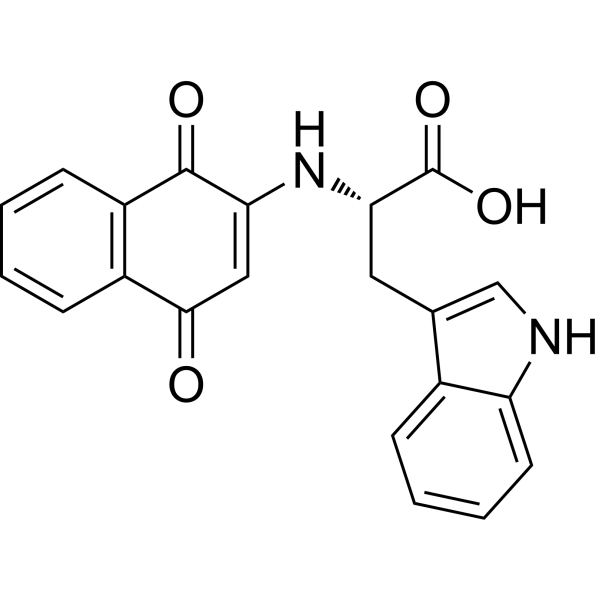
NQTrp, an aromatic naphthoquinone-tryptophan hybrid molecule, an inhibitor of the aggregation of the tau protein with generic anti-amyloidogenic effects. NQTrp inhibits the in vitro aggregation of hexapeptide ( 41GCWMLY 46 within the N-terminus of γD-crystallin) as well as full-length γD-crystallin .
|
-
-
- HY-146005
-
|
|
Microtubule/Tubulin
|
Neurological Disease
Inflammation/Immunology
|
|
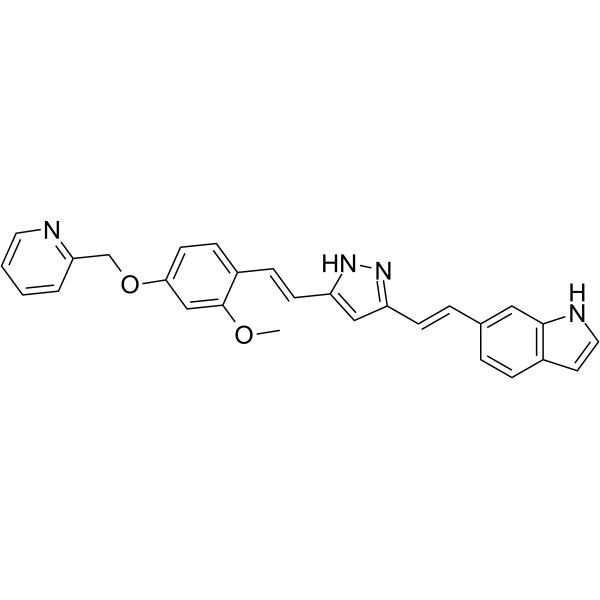
Tau-aggregation and neuroinflammation-IN-1 is a potent tau-aggregation and neuroinflammation inhibitor. Tau-aggregation and neuroinflammation-IN-1 exhibits remarkable inhibitory activities against AcPHF6 and full-length tau aggregation. Tau-aggregation and neuroinflammation-IN-1 has a low cytotoxicity and reduced NO release in LPS-stimulated BV2 cells. Tau-aggregation and neuroinflammation-IN-1 can reverse okadaic acid-induced memory impairment in rats .
|
-
-
- HY-141660
-
-
-
- HY-P10861
-
|
|
Tau Protein
|
Neurological Disease
|
|
RI-AG03 is a proteolytically stable tau aggregation inhibitor that crosses the blood-brain barrier and exhibits oral efficacy. RI-AG03 inhibits tau aggregation and promotes the formation of alternative amorphous aggregates that are non-amyloidogenic. RI-AG03 mediates cellular uptake through direct membrane penetration and macropinocytosis, and its conjugation with cell-penetrating peptide sequences (CPPs) enhances the binding of cells to liposomes. RI-AG03 suppresses aggregation-dependent neurodegenerative and behavioral phenotypes, and extends the lifespan of Drosophila models of tauopathy. RI-AG03 can be used for research on tau-related diseases such as Alzheimer's disease .
|
-
-
- HY-N3187
-
-
-
- HY-153427
-
|
|
Tau Protein
|
Neurological Disease
|
|
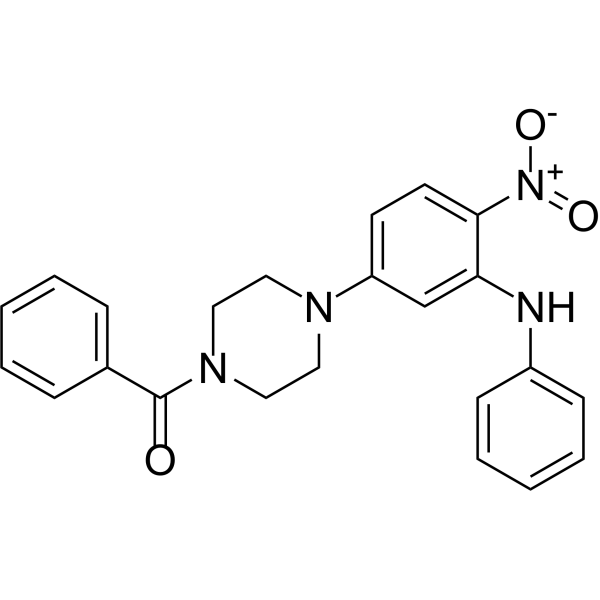
Tau protein aggregation-IN-1 (Compound 0c) is a Tau protein aggregation inhibitor. Tau protein aggregation-IN-1 can be used in the study of protein folding disorders such as Alzheimer's disease, dementia, Parkinson's disease, Huntington's disease and prion-based spongiform encephalopathies .
|
-
-
- HY-P4808A
-
|
|
Amyloid-β
Autophagy
|
Neurological Disease
|
|
PHF6 (VQIVYK) TFA is a self-assembly sequence capable of initiating the full-length tau protein aggregation. PHF6 TFA is mapped to the third microtubule-binding repeat region of the tau protein .
|
-
-
- HY-P4933
-
|
tau-F protein (255-314)
|
Tau Protein
|
Neurological Disease
|
|
Tau Peptide (255-314) (Repeat 2 Domain) (human) (Tau-F protein (255-314)) is a polypeptide. Tau Peptide (255-314) (human) is the 255-314 fragment of Tau-F (also known as Tau-4, the 2N4 isoform), a major isoform of the Tau protein. Tau Peptide (255-314) (human) contains two core driving sequences for Tau aggregation, namely PHF6* (275-280, VQIINK) and PHF6 (306-311, VQIVYK), and spans the C-terminal half of repeat domain R1, the entire repeat domain R2, and the N-terminal half of repeat domain R3 within the microtubule-binding region (MTBR).
|
-
-
- HY-138643
-
|
|
Amyloid-β
|
Neurological Disease
|
|
Cl-NQTrp signifcantly disrupts the preformed fbrillar aggregates of Tau-derived PHF6 (VQIVYK) peptide and full-length tau protein .
|
-
-
- HY-151335
-
|
|
HSP
|
Cancer
|
|
KU-177 is a potent inhibitor of Hsp90 ATPase homologue 1 (Aha1), ablates Aha1-driven enhancement of Hsp90-dependent tau aggregation. KU-177 also disrupts Aha1/Hsp90 interactions (IC50=4.08 μM) without inhibition of Hsp90’s ATPase activity. KU-177 can be used for tauopathies research .
|
-
-
- HY-159083
-
|
|
Amyloid-β
|
Neurological Disease
|
|
DN5355 is a small molecule compound that targets amyloid β protein (Aβ) and hyperphosphorylated tau protein. DN5355 can inhibit the aggregation of Aβ and tau protein and disaggregate the formed Aβ and tau protein fibers. DN5355 can be used in the study of Alzheimer's disease .
|
-
-
- HY-111935
-
|
|
Microtubule/Tubulin
|
Neurological Disease
|
|
3,3'-Diethyl-9-methylthiacarbocyanine iodide is a cyanine dye, also a tau aggregation inhibitor, with an IC50 value of 0.28 μM for tau. 3,3'-Diethyl-9-methylthiacarbocyanine iodide can cause misfunction of the microtubule cytoskeleton. 3,3'-Diethyl-9-methylthiacarbocyanine iodide can be used for researching Alzheimer’s disease .
|
-
-
- HY-141661
-
|
|
Amyloid-β
|
Neurological Disease
|
|
Aβ/tau aggregation-IN-1 is a potent Aβ1-42 β-sheets formation and tau aggregation inhibitor. The KD values of Aβ/tau aggregation-IN-1 with Aβ1-42 and tau are 160 μM and 337 μM, respectively. Aβ/tau aggregation-IN-1 can permeate the blood-brain barrier .
|
-
-
- HY-172973
-
|
|
Tau Protein
|
Neurological Disease
|
|
TAU-IN-4 (compound I1.21) is a potent Tau aggregation inhibitor with a KD of 1.58 μM. TAU-IN-4 can be used in the study of Alzheimer’s disease .
|
-
-
- HY-14536R
-
|
Basic Blue 9 (Standard); CI-52015 (Standard); Methylthioninium chloride (Standard)
|
Reference Standards
Guanylate Cyclase
Monoamine Oxidase
NO Synthase
Microtubule/Tubulin
|
Infection
Neurological Disease
Cancer
|
|
Methylene Blue (Standard) is the analytical standard of Methylene Blue. This product is intended for research and analytical applications. Methylene blue (Basic Blue 9) is a guanylyl cyclase (sGC), monoamine oxidase A (MAO-A) and NO synthase (NOS) inhibitor. Methylene blue is a vasopressor and is often used as a dye in several medical procedures. Methylene blue through the nitric oxide syntase/guanylate cyclase signalling pathway to reduce prepulse inhibition. Methylene blue is a REDOX cycling compound and able to cross the blood-brain barrier. Methylene blue is a Tau aggregation inhibitor. Methylene blue reduces cerebral edema, attenuated microglial activation and reduced neuroinflammation .
|
-
-
- HY-W835959
-
|
|
Tau Protein
|
Neurological Disease
|
|
ACI-3024 is an an orally active and highly selective Tau protein aggregation inhibitor. ACI-3024 decrease the β-sheet content and seeding properties of pathological Tau from different Tauopathies, leading to a significant rescue of the Tau-induced neurodegeneration and neuroinflammation in a cellular model. ACI-3024 is promising for research of neurodegenerative diseases .
|
-
-
- HY-146135
-
-
-
- HY-139830
-
|
|
DYRK
|
Neurological Disease
|
|
Dyrk1A-IN-1 is a triple inhibitor of Dyrk1A kinase activity (IC50 = 119 nM) and the aggregation of tau and α-syn oligomers.
|
-
-
- HY-P2516
-
|
|
Tau Protein
|
Neurological Disease
|
|
Tau Peptide (275-305) (Repeat 2 domain) is the Alzheimer's Tau fragment R2, corresponding to the second repeat unit of the microtubule-binding domain, which is believed to be pivotal to the biochemical properties of full tau protein. Tau Peptide (275-305) specifically coordinates with group IIB metal ions (Zn²⁺, Cd²⁺, Hg²⁺), which can induce their conformational changes and significantly promote their pathological accumulation. Tau Peptide (275-305) can be used to study the role of heavy metals in neurodegenerative diseases .
|
-
-
- HY-109116A
-
|
Leukomethylene blue dihydrobromide; LMTM dihydrobromide
|
Tau Protein
|
Neurological Disease
|
|
Hydromethylthionine dihydrobromide (Leukomethylene blue dihydrobromide) is a potent inhibitor of TAU protein aggregation. Hydromethylthionine dihydrobromide reduces neurodegeneration by interacting with TAU proteins and preventing them from forming neurotoxic aggregates. Hydromethylthionine dihydrobromide can be used in the study of Alzheimer's disease and other TAU related disorders .
|
-
-
- HY-161448
-
|
|
Tau Protein
|
Neurological Disease
|
|
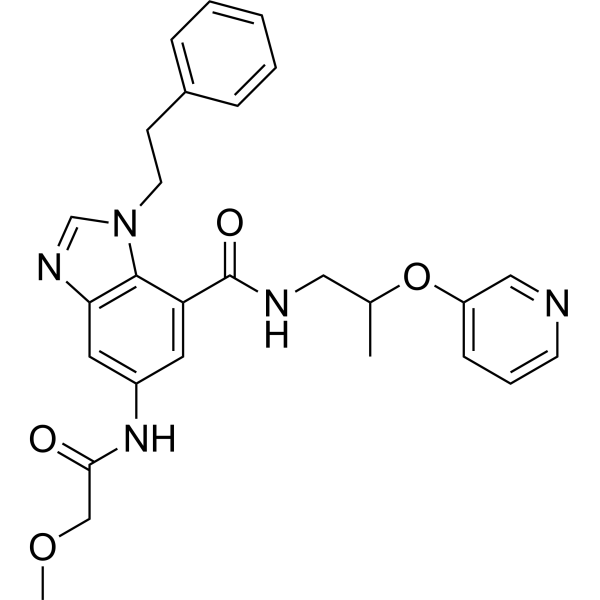
Tau-aggregation-IN-3 (compound 9) a Tau protein aggregation inhibitor (TAI). Tau-aggregation-IN-3 shows activity in cell-based aggregation inhibition experiments (EC50=4.816 μM). Tau-aggregation-IN-3 can be used in Alzheimer's disease research .
|
-
-
- HY-176936
-
|
|
Tau Protein
|
Neurological Disease
|
|
Tau-aggregation-IN-5 is a Tau-aggregation inhibitor (EC50 = 0.31 μM). Tau-aggregation-IN-5 targets P4HB covalently and activates mild ER stress. Tau-aggregation-IN-4 can be used for the study of neurodegenerative disorders such as Alzheimer’s and Pick’s diseases .
|
-
-
- HY-178927
-
|
|
Tau Protein
|
Neurological Disease
|
|
Tau-aggregation-IN-4 is a Tau-aggregation inhibitor (EC50 = 2.99 μM). Tau-aggregation-IN-4 can be used for the study of neurodegenerative disorders such as Alzheimer’s and Pick’s diseases .
|
-
-
- HY-149272
-
-
-
- HY-141541
-
|
|
HDAC
Tau Protein
|
Neurological Disease
|
|
MPT0G413 (Compound 6) is a potent, selective, orally active and brain-penetrant HDAC6 inhibitor with an IC50 of 3.92 nM. MPT0G413 decreases not only the level of phosphorylation of tau proteins but also the aggregation of tau proteins. MPT0G413 can ameliorate the impaired learning and memory. MPT0G413 can be used for the research of neurological disease, such as Alzheimer's disease .
|
-
-
- HY-179377
-
|
|
HSP
Tau Protein
|
Neurological Disease
|
|
Aha1/Hsp90-IN-2 is a selective inhibitor of the Hsp90/Aha1 interaction, with its IC50 being 1.46 μM. Aha1/Hsp90-IN-2 inhibits the activation of Hsp90 ATPase activity mediated by Aha1 by specifically blocking the binding of Hsp90 to Aha1, thereby reducing tau protein aggregation. Aha1/Hsp90-IN-2 can be used for the study of neurodegenerative diseases, such as Alzheimer's disease .
|
-
-
- HY-D0958R
-
|
Basic Blue 9 hydrate (Standard); CI-52015 hydrate (Standard); Methylthioninium chloride hydrate (Standard)
|
Reference Standards
Guanylate Cyclase
Monoamine Oxidase
NO Synthase
Microtubule/Tubulin
|
Infection
Inflammation/Immunology
Cancer
|
|
Methylene blue (hydrate) (Standard) is the analytical standard of Methylene blue (hydrate). This product is intended for research and analytical applications. Methylene blue (Basic Blue 9) hydrate is a guanylyl cyclase (sGC), monoamine oxidase A (MAO-A) and NO synthase (NOS) inhibitor. Methylene blue is a vasopressor and is often used as a dye in several medical procedures. Methylene blue hydrate through the nitric oxide syntase/guanylate cyclase signalling pathway to reduce prepulse inhibition. Methylene blue hydrate is a REDOX cycling compound and able to cross the blood-brain barrier. Methylene blue hydrate is a Tau aggregation inhibitor. Methylene blue hydrate reduces cerebral edema, attenuated microglial activation and reduced neuroinflammation .
|
-
-
- HY-151337
-
-
-
- HY-136813
-
|
|
Beta-secretase
Amyloid-β
Cholinesterase (ChE)
|
Neurological Disease
|
Multitarget AD inhibitor-1 is a selective and reversible butyrylcholinesterase (BuChE) inhibitor with IC50s of 7.22 μM and 1.55 μM for hBuChE and eqBuChE (BuChE from equine serum), respectively. Multitarget AD inhibitor-1 inhibits β-secretase (IC50hBACE-1=41.60 μM), amyloid β aggregation (IC50Aβ=3.09 μM), tau aggregation. Multitarget AD inhibitor-1, a diphenylpropylamine derivative, has the potential for multifunctional disease-modifying anti-Alzheimer’s research .
|
-
-
- HY-144775
-
|
|
Cholinesterase (ChE)
|
Neurological Disease
|
|
AChE-IN-10 (Compound 24r) is a potent inhibitor of AChE (IC50 = 2.4 nM). AChE-IN-10 potently inhibits AChE, reduces tau phosphorylation at S396 residue, provides neuroprotection by rescuing neuronal morphology and increasing cell viability. AChE-IN-10 is also found to reduce amyloid aggregation in the presence of AChE .
|
-
-
- HY-174272
-
|
|
GSK-3
Amyloid-β
|
Neurological Disease
|
|
GSK-3β inhibitor 27 (Compound 1c) is a reversible and competitive GSK-3β inhibitor with an IC50 value of 2.2 μM. GSK-3β inhibitor 27 inhibits tau hyperphosphorylation, reduces Aβ protein aggregation and possesses metal chelation and neuroprotective potential. GSK-3β inhibitor 27 is promising for research of neurodegenerative diseases (such as Alzheimer’s disease) .
|
-
-
- HY-155365
-
|
|
Cholinesterase (ChE)
GSK-3
Amyloid-β
|
Neurological Disease
|
|
hAChE-IN-5 (compound 49) is a potent hAChE and hBuChE inhibitor with IC50 values of 0.17 μM and 0.17 μM, respectively. hAChE-IN-5 shows potent GSK3β inhibition with an IC50 value of 0.21 μM. hAChE-IN-5 is used as tau protein aggregation and Aβ1-42 self-aggregation inhibitor. hAChE-IN-5 can bind virtually with the PAS affecting Aβ aggregation, thus preventing Aβ-dependent neurotoxicity. hAChE-IN-5 can penetrate BBB and has the potential for multi-targeted anti-Alzheimer's agents research .
|
-
-
- HY-180843
-
|
|
Tau Protein
Amyloid-β
Cholinesterase (ChE)
Monoamine Oxidase
Reactive Oxygen Species (ROS)
|
Neurological Disease
|
|
Aβ/tau aggregation-IN-4 (Compound D21) is an Aβ/tau aggregation inhibitor. Aβ/tau aggregation-IN-4 promotes the degradation of Aβ40/42 (Aβ40, IC50 = 2.151 μM; Aβ42, IC50 = 3.622 μM). Aβ/tau aggregation-IN-4 shows selective AChE inhibition (IC50: 5.56 μM). Aβ/tau aggregation-IN-4 inhibits MAO-A and MAO-B with IC50s of 0.59 μM and 0.09 μM, respectively. Aβ/tau aggregation-IN-4 suppresses intracellular ROS levels. Aβ/tau aggregation-IN-4 can be used in the research of Alzheimer's disease .
|
-
-
- HY-153431
-
-
-
- HY-P4832
-
|
|
Amyloid-β
|
Neurological Disease
|
|
Acetyl-Tau Peptide (273-284) amide is an acetylated Tau peptide fragment. Acetyl-Tau Peptide (273-284) amide limits the substantial aggregation of Ac-Aβ(25–35)-NH2 and can be used as an inhibitor of Ac-Aβ(25–35)-NH2. Acetyl-Tau Peptide (273-284) amide can be used as an experimental model to investigate the Aβ/Tau cross-interaction .
|
-
-
- HY-159945
-
|
|
α-synuclein
|
Neurological Disease
|
|
Tau Protein/α-synuclein-IN-2 (Compound 14T) is a blood-brain barrier penetrating tau and α-syn inhibitor. Through its thiourea linker structure, Tau Protein/α-synuclein-IN-2 dose-dependently reduces α-syn oligomerization. In biosensor cells, Tau Protein/α-synuclein-IN-2 prevents the seeding effect of tau aggregation. In the M17D neuroblastoma model, Tau Protein/α-synuclein-IN-2 exhibits anti-inclusion effects. Additionally, Tau Protein/α-synuclein-IN-2 reduces Aβ plaque formation. Tau Protein/α-synuclein-IN-2 holds promise for Alzheimer's disease and Parkinson's disease research.
|
-
- HY-161328
-
|
|
α-synuclein
|
Neurological Disease
|
|
MAO-B-IN-31 (Compound 30) is an effective and selective inhibitor of monoamine oxidase B (monoamine oxidase B). The IC50 value is 41 nM. MAO-B-IN-31 also inhibits α-syn and tau aggregation. MAO-B-IN-31 has neuroprotective activity .
|
-
- HY-168079
-
|
|
GSK-3
Tau Protein
|
Neurological Disease
Inflammation/Immunology
|
|
GSK-3β inhibitor 21 (compound 44) is an ATP-competitive GSK-3β inhibitor (IC50=6.06 μM) with anti-amyloid aggregation and tau phosphorylation inhibitory activities. GSK-3β inhibitor 21 can be used in the study of Alzheimer's disease .
|
-
- HY-175658
-
|
|
Cholinesterase (ChE)
Amyloid-β
Tau Protein
|
Neurological Disease
|
|
AChE/BChE-IN-29 is an AChE/BChE inhibitor. AChE/BChE-IN-29 exhibits balanced dual cholinesterase inhibitory activity with IC50 values of 2.1 μM for Electrophorus electricus AChE (eeAChE) and 6.3 μM for equine serum butyrylcholinesterase (eqBChE). AChE/BChE-IN-29 effectively inhibits amyloid-β (Aβ42) aggregation and tau protein aggregation in E. coli cell models. AChE/BChE-IN-29 can be used for the study of Alzheimer’s disease (AD) .
|
-
- HY-149273
-
|
|
Cholinesterase (ChE)
Amyloid-β
Tau Protein
|
Neurological Disease
|
|
hBChE-IN-1 (compound 4), a quinolizidinyl derivative, is a potent hBChE inhibitor (IC50=7 nM) and highly selective over hAChE. hBChE-IN-1 shows inhibitory activity against tau and Aβ40 protein aggregation, with IC50 values of 20 and 4.3 μM, respectively. hBChE-IN-1 can be used for Alzheimer's disease research .
|
-
- HY-150585
-
|
|
Amyloid-β
Cholinesterase (ChE)
Tau Protein
|
Neurological Disease
|
|
BuChE-IN-5 (compound 25b) is a potent BuChE inhibitor with an IC50 value of 1.94 μM. BuChE-IN-5 efficiently inhibits aggregation Aβ and tau protein in Escherichia coli. BuChE-IN-5 also has free radical scavenging capacity and antioxidant activity. BuChE-IN-5 can be used for researching Alzheimer’s disease .
|
-
- HY-155366
-
|
|
Cholinesterase (ChE)
GSK-3
|
Neurological Disease
|
|
hAChE-IN-6 (compound 51) is a brain penetrant AChE inhibitor with an IC50 of 0.16 μM. hAChE-IN-6 also inhibits hBuChE and GSK3β with IC50 values of 0.69 μM and 0.26 μM, respectively. hAChE-IN-6 inhibits tau protein and Aβ1-42 self-aggregation, and can be used for Alzheimer's disease (AD) research .
|
-
- HY-170417
-
|
|
Cholinesterase (ChE)
GSK-3
|
Neurological Disease
|
|
hAChE/hBuChE/GSK-3β-IN-1 (Compound 6c) is a BBB-penetrable and multi-target anti-Alzheimer's disease compound. hAChE/hBuChE/GSK-3β-IN-1 is the inhibitors of hAChE (IC50: 28.88 nM), hBuChE (IC50: 131.90 nM) and GSK-3β (IC50: 51.42 nM). hAChE/hBuChE/GSK-3β-IN-1 is the tau and Aβ protein aggregation inhibitors .
|
-
- HY-159898
-
-
- HY-162812
-
|
|
Apoptosis
Cholinesterase (ChE)
Tau Protein
Ferroptosis
Histamine Receptor
|
Neurological Disease
|
|
H3R antagonist 4 (compound 11L) was a dual inhibitor of cholinesterase and histamine receptor (H3R), with corresponding IC50 of 7.04 μM (eeAChE), 9.73 μM (hAChE)(reversible) and 1.09 nM (H3R) , respectively. H3R antagonist 4 inhibited the aggregation of Aβ1-42 induced by itself and Cu 2+ (95.48% and 88.63%) , and degraded the Aβ1-42 fibrils induced by itself and Cu 2+ (80.16% and 89.30%) . H3R antagonist 4 chelate biometals such as Cu 2+, Zn 2+, Al 3+, and Fe 2+. H3R antagonist 4 significantly reduced tau protein hyperphosphorylation induced by Aβ1-42 and inhibited RSL-3-induced apoptosis and ferroptosis in PC12 cells. H3R antagonist 4 had the best blood-brain barrier permeability and intestinal absorption in hCMEC/D3 and hPepT1-MDCK cells.H3R antagonist 4 ameliorates learning and memory impairment in a mouse model of Alzheimer's disease induced by scopolamine (HY-N0296) .
|
-
- HY-185357
-
|
|
Tau Protein
|
Neurological Disease
|
|
TAU-IN-6 (Compound 13) is a Tau protein misfolding and aggregation inhibitor. TAU-IN-6 inhibits stress granules composed of tau and TIA1. TAU-IN-6 is applicable for Alzheimer's disease research .
|
-
- HY-W653777
-
|
|
Tau Protein
|
Neurological Disease
|
|
Dopegal is a metabolite od Norepinephrine. Dopegal activates asparagine endopeptidase and pathological Tau aggregation in locus coeruleus.
|
-
- HY-P99648A
-
|
BMS-986168 (powder); IPN007 (powder); BIIB092 (powder)
|
Tau Protein
|
Neurological Disease
|
|
Gosuranemab (BMS-986168; IPN007; BIIB092) (powder) is a humanised IgG4 anti-tau monoclonal antibody. Gosuranemab (powder) neutralizes the extracellular tau protein, inhibiting the spread and aggregation of pathological tau protein. Gosuranemab (powder) can be used for the research of progressive supranuclear palsy and early Alzheimer’s disease .
|
-
- HY-119492
-
|
|
Calcium Channel
Cholinesterase (ChE)
Amyloid-β
Tau Protein
|
Neurological Disease
|
|
Phenchlobenpyrrone is a highly selective neuronal calcium antagonist that crosses the blood-brain barrier. Phenchlobenpyrrone mildly inhibits AChE activity. Phenchlobenpyrrone inhibits Aβ aggregation and promotes the clearance of Aβ oligomers. Phenchlobenpyrrone reduces abnormal phosphorylation of Tau protein. Phenchlobenpyrrone may be used in research on Alzheimer's disease .
|
-
- HY-182893
-
|
|
α-synuclein
Reactive Oxygen Species (ROS)
Tyrosine Hydroxylase
|
Neurological Disease
|
|
SK-129 is a blood-brain barrier-permeable inhibitor of α-synuclein (αS) oligomers with a Kd of 221 nM. SK-129 preferentially binds to neurotoxic αS oligomers over physiological αS monomers, inhibits αS aggregation, blocks the interaction and co-aggregation of αS with tau protein, and prevents the maturation of αS-tau condensates into amyloid aggregates. SK-129 reduces ROS production, rescues dopaminergic neuron degeneration, improves motor function, restores endogenous dopamine synthesis, increases the number of Tyrosine Hydroxylase-positive neurons, prevents brain histopathological changes, alleviates neuroinflammation, and improves survival rates in relevant models. SK-129 can be used in research related to Parkinson's disease (PD) and Lewy body dementia (LBD) .
|
-
- HY-182304
-
|
|
Amyloid-β
α-synuclein
Amylin Receptor
Tau Protein
SOD
|
Neurological Disease
|
|
CLR01 sodium is a blood-brain barrier-permeable anti-aggregation agent. CLR01 sodium inhibits the de novo aggregation of Amyloid-β 40/42, α-synuclein, IAPP, tau protein and SOD1. CLR01 sodium reduces amyloid plaque burden in the cortex of triple-transgenic mice and improves the memory and motor abilities of these mice. CLR01 sodium can be used in research related to Alzheimer's disease, Parkinson's disease, and amyotrophic lateral sclerosis (ALS) .
|
-
- HY-183375
-
|
|
|
Neurological Disease
|
|
AChE/BuChE/BACE-1-IN-1 is a blood-brain barrier-permeable multi-target inhibitor of AChE/BuChE/BACE, with IC50 values of 0.387 μM, 0.430 μM, and 0.531 μM against AChE, BuChE, and BACE-1, respectively. AChE/BuChE/BACE-1-IN-1 reduces the aggregation of β-amyloid protein (Aβ) and hyperphosphorylated tau protein (p-tau). AChE/BuChE/BACE-1-IN-1 can be used for the research of Alzheimer's disease .
|
-
- HY-180346
-
|
|
Huntingtin
|
Neurological Disease
|
|
Hepta-histidine is an inhibitor of Ku70-Huntingtin protein interaction. Hepta-histidine can reverse the morphological abnormalities of primary neurons differentiatied from hiPSCs. Hepta-histidine prolongs the lifespan in severe Huntington’s disease R6/2 mouse model. Hepta-histidine ameliorates DNA damage in vitro. Hepta-histidine can be used to study anti-aggregation agent against Tau-associated neurodegenerative diseases such as Alzheimer’s disease and Huntington’s disease .
|
-
- HY-180842
-
|
|
Monoamine Oxidase
Amyloid-β
Tau Protein
Cholinesterase (ChE)
|
Neurological Disease
|
|
MAO-B-IN-50 (Compound C20) is a selective MAO-B inhibitor with an IC50 value of 0.06 μM. MAO-B-IN-50 shows good inhibitory effects on the aggregation of Aβ40/42 and Tau proteins, with overall IC50 values around 1 μM. MAO-B-IN-50 exhibits potent and selective AChE inhibition (IC50 = 1.78 μM). MAO-B-IN-50 can be used in the research of Alzheimer's disease .
|
-
- HY-185652
-
|
|
PROTACs
E1/E2/E3 Enzyme
|
Neurological Disease
Inflammation/Immunology
|
|
dTAG-TRIMTAC is a PROTAC-like degrader targeting TRIM21. dTAG-TRIMTAC forms a ternary complex with TRIM21 and target proteins to drive degradation of oligomeric/assembled substrates via TRIM21 clustering-based activation, with degradation dependent on endogenous TRIM21. dTAG-TRIMTAC can be used for the research of neurodegenerative disease and inflammatory disease .
|
-
- HY-183057
-
|
|
G Protein-coupled Receptor Kinase (GRK)
HDAC
|
Neurological Disease
|
|
GRK2 modulator 1 is an orally active, brain-penetrant and selective GRK2 modulator. GRK2 modulator 1 enhances the active, non-phosphorylated GRK2 and prevents mitochondrial GRK2 and TOMM6 aggregation. GRK2 modulator 1 enhances the non-amyloidogenic processing of APP and prevent PHF-tau, neurodegeneration, and neuronal loss. GRK2 modulator 1 decreases the senescence marker, UPAR, reduces the Alzheimer disease (AD)-related mortality, and prolongs survival. GRK2 modulator 1 exerts neuroprotection by inhibiting HDAC6, and counteracts age-related cardiac dysfunction. GRK2 modulator 1 can be used for research on AD .
|
-
- HY-W657887
-
|
|
Histone Methyltransferase
GSK-3
Tau Protein
Amyloid-β
Glucocorticoid Receptor
Androgen Receptor
Adrenergic Receptor
|
Neurological Disease
|
|
GSK-3β/G9a-IN-1 (Compound T2) is an orally active, selective, blood-brain-barrier permeable, competitive G9a (substrate-competitive, IC50: 1.1 μM) and GSK-3β (ATP competitive, IC50: 0.8 μM) inhibitor. GSK-3β/G9a-IN-1 is a potent H3K9me2 inhibitor that reshapes chromatin landscape. GSK-3β/G9a-IN-1 lowers tau phosphorylation, reduces Aβ aggregation. GSK-3β/G9a-IN-1 displays inhibition toward glucocorticoid receptor, androgen receptor, and alpha-2A adrenergic receptor. GSK-3β/G9a-IN-1 also upregulates SAGA complex members such as Eny2 and Sgf29. GSK-3β/G9a-IN-1 markedly improves memory, restores social behaviors, and increases synaptic complexity in late-onset Alzheimer’s disease .
|
-
| Cat. No. |
Product Name |
Type |
-
- HY-14536
-
|
Basic Blue 9; CI-52015; Methylthioninium chloride
|
Fluorescent Dye
|
|
Methylene blue (Basic Blue 9) is a guanylyl cyclase (sGC), monoamine oxidase A (MAO-A) and NO synthase (NOS) inhibitor. Methylene blue is a vasopressor and is often used as a dye in several medical procedures. Methylene blue through the nitric oxide syntase/guanylate cyclase signalling pathway to reduce prepulse inhibition. Methylene blue is a REDOX cycling compound and able to cross the blood-brain barrier. Methylene blue is a Tau aggregation inhibitor. Methylene Blue is a photosensitizer and redox agent. Methylene blue reduces cerebral edema, attenuated microglial activation and reduced neuroinflammation .
|
-
- HY-19948
-
|
TRx0237 mesylate; Methylene blue leuco base mesylate
|
Fluorescent Dye
|
|
Leucomethylene blue (TRx0237) mesylate, an orally active second-generation tau protein aggregation inhibitor (Ki of 0.12 μM), could be used for the study of Alzheimer's Disease. Leucomethylene blue mesylate is a common reduced form of Methylene Blue, Methylene Blue is a member of the thiazine class of dyes .
|
-
- HY-14536A
-
|
Basic Blue 9 (purity≥70%); CI-52015 (purity≥70%); Methylthioninium chloride (purity≥70%)
|
Fluorescent Dye
|
|
Methylene blue (purity≥70%) is a guanylyl cyclase (sGC), monoamine oxidase A (MAO-A) and NO synthase (NOS) inhibitor. Methylene blue (purity≥70%) is a vasopressor and is often used as a dye in several medical procedures. Methylene blue (purity≥70%) through the nitric oxide syntase/guanylate cyclase signalling pathway to reduce prepulse inhibition. Methylene blue (purity≥70%) is a REDOX cycling compound and able to cross the blood-brain barrier. Methylene blue (purity≥70%) is a Tau aggregation inhibitor. Methylene blue reduces cerebral edema, attenuated microglial activation and reduced neuroinflammation .
|
-
- HY-14536R
-
|
Basic Blue 9 (Standard); CI-52015 (Standard); Methylthioninium chloride (Standard)
|
Fluorescent Dye
|
|
Methylene Blue (Standard) is the analytical standard of Methylene Blue. This product is intended for research and analytical applications. Methylene blue (Basic Blue 9) is a guanylyl cyclase (sGC), monoamine oxidase A (MAO-A) and NO synthase (NOS) inhibitor. Methylene blue is a vasopressor and is often used as a dye in several medical procedures. Methylene blue through the nitric oxide syntase/guanylate cyclase signalling pathway to reduce prepulse inhibition. Methylene blue is a REDOX cycling compound and able to cross the blood-brain barrier. Methylene blue is a Tau aggregation inhibitor. Methylene blue reduces cerebral edema, attenuated microglial activation and reduced neuroinflammation .
|
| Cat. No. |
Product Name |
Target |
Research Area |
-
- HY-P4808
-
|
|
Amyloid-β
Autophagy
|
Neurological Disease
|
|
PHF6 (VQIVYK) is a self-assembly sequence capable of initiating the full-length tau protein aggregation and is mapped to the third microtubule-binding repeat region of the tau protein .
|
-
- HY-175552
-
|
|
Tau Protein
|
Neurological Disease
|
|
CHIPOpt, a peptide, is an orthosteric CHIP TPR domain inhibitor with a Kd of ∼16 nM. CHIPOpt has anti-aggregation activity and decreases p.tau ubiquitination with little effect on unmodified tau. CHIPOpt can be used for Alzheimer’s disease research .
|
-
- HY-P10861A
-
|
|
Tau Protein
|
Neurological Disease
|
|
RI-AG03 acetate is a proteolytically stable tau aggregation inhibitor that crosses the blood-brain barrier and exhibits oral efficacy. RI-AG03 acetate inhibits tau aggregation and promotes the formation of alternative amorphous aggregates that are non-amyloidogenic. RI-AG03 acetate mediates cellular uptake through direct membrane penetration and macropinocytosis, and its conjugation with cell-penetrating peptide sequences (CPPs) enhances the binding of cells to liposomes. RI-AG03 acetate suppresses aggregation-dependent neurodegenerative and behavioral phenotypes, and extends the lifespan of Drosophila models of tauopathy. RI-AG03 acetate can be used for research on tau-related diseases such as Alzheimer's disease .
|
-
- HY-P10861
-
|
|
Tau Protein
|
Neurological Disease
|
|
RI-AG03 is a proteolytically stable tau aggregation inhibitor that crosses the blood-brain barrier and exhibits oral efficacy. RI-AG03 inhibits tau aggregation and promotes the formation of alternative amorphous aggregates that are non-amyloidogenic. RI-AG03 mediates cellular uptake through direct membrane penetration and macropinocytosis, and its conjugation with cell-penetrating peptide sequences (CPPs) enhances the binding of cells to liposomes. RI-AG03 suppresses aggregation-dependent neurodegenerative and behavioral phenotypes, and extends the lifespan of Drosophila models of tauopathy. RI-AG03 can be used for research on tau-related diseases such as Alzheimer's disease .
|
-
- HY-P4808A
-
|
|
Amyloid-β
Autophagy
|
Neurological Disease
|
|
PHF6 (VQIVYK) TFA is a self-assembly sequence capable of initiating the full-length tau protein aggregation. PHF6 TFA is mapped to the third microtubule-binding repeat region of the tau protein .
|
-
- HY-P4933
-
|
tau-F protein (255-314)
|
Tau Protein
|
Neurological Disease
|
|
Tau Peptide (255-314) (Repeat 2 Domain) (human) (Tau-F protein (255-314)) is a polypeptide. Tau Peptide (255-314) (human) is the 255-314 fragment of Tau-F (also known as Tau-4, the 2N4 isoform), a major isoform of the Tau protein. Tau Peptide (255-314) (human) contains two core driving sequences for Tau aggregation, namely PHF6* (275-280, VQIINK) and PHF6 (306-311, VQIVYK), and spans the C-terminal half of repeat domain R1, the entire repeat domain R2, and the N-terminal half of repeat domain R3 within the microtubule-binding region (MTBR).
|
-
- HY-P2516
-
|
|
Tau Protein
|
Neurological Disease
|
|
Tau Peptide (275-305) (Repeat 2 domain) is the Alzheimer's Tau fragment R2, corresponding to the second repeat unit of the microtubule-binding domain, which is believed to be pivotal to the biochemical properties of full tau protein. Tau Peptide (275-305) specifically coordinates with group IIB metal ions (Zn²⁺, Cd²⁺, Hg²⁺), which can induce their conformational changes and significantly promote their pathological accumulation. Tau Peptide (275-305) can be used to study the role of heavy metals in neurodegenerative diseases .
|
-
- HY-P4832
-
|
|
Amyloid-β
|
Neurological Disease
|
|
Acetyl-Tau Peptide (273-284) amide is an acetylated Tau peptide fragment. Acetyl-Tau Peptide (273-284) amide limits the substantial aggregation of Ac-Aβ(25–35)-NH2 and can be used as an inhibitor of Ac-Aβ(25–35)-NH2. Acetyl-Tau Peptide (273-284) amide can be used as an experimental model to investigate the Aβ/Tau cross-interaction .
|
-
- HY-180346
-
|
|
Huntingtin
|
Neurological Disease
|
|
Hepta-histidine is an inhibitor of Ku70-Huntingtin protein interaction. Hepta-histidine can reverse the morphological abnormalities of primary neurons differentiatied from hiPSCs. Hepta-histidine prolongs the lifespan in severe Huntington’s disease R6/2 mouse model. Hepta-histidine ameliorates DNA damage in vitro. Hepta-histidine can be used to study anti-aggregation agent against Tau-associated neurodegenerative diseases such as Alzheimer’s disease and Huntington’s disease .
|
| Cat. No. |
Product Name |
Target |
Research Area |
Image |
-
- HY-P99471
-
|
UCB 0107
|
Tau Protein
|
Neurological Disease
|
|
Bepranemab is a humanized IgG4 monoclonal antibody that binds to the central region of tau protein. Bepranemab inhibits the seeding, aggregation of pathological tau protein and the spread of tau pathology to distal brain regions. Bepranemab is applicable to research related to Alzheimer's disease .
|
-
(5)
-
- HY-P99648
-
|
BMS-986168; IPN007; BIIB092
|
Tau Protein
|
Neurological Disease
|
|
Gosuranemab (BMS-986168; IPN007; BIIB092) is a humanised IgG4 anti-tau monoclonal antibody. Gosuranemab neutralizes the extracellular tau protein, inhibiting the spread and aggregation of pathological tau protein. Gosuranemab can be used for the research of progressive supranuclear palsy and early Alzheimer’s disease .
|
-
(5)
-
- HY-P9995
-
|
JNJ-63733657
|
Tau Protein
|
Neurological Disease
|
|
Posdinemab (JNJ-63733657) is a humanized IgG1/κ monoclonal antibody that selectively targets phosphorylated tau (pT217). Posdinemab specifically binds to the pT217+tau epitope rich in the proline domain, blocks tau protein aggregation and seed propagation, and promotes the clearance of extracellular tau species. Posdinemab reduces the levels of free and total p217+tau in cerebrospinal fluid, thereby inhibiting the pathological propagation of tau protein and the formation of neurofibrillary tangles. Posdinemab can be used for the study of progressive supranuclear palsy syndrome and Alzheimer's disease (AD), especially for prodromal or mild AD disease .
|
-
(5)
-
- HY-P99648A
-
|
BMS-986168 (powder); IPN007 (powder); BIIB092 (powder)
|
Tau Protein
|
Neurological Disease
|
|
Gosuranemab (BMS-986168; IPN007; BIIB092) (powder) is a humanised IgG4 anti-tau monoclonal antibody. Gosuranemab (powder) neutralizes the extracellular tau protein, inhibiting the spread and aggregation of pathological tau protein. Gosuranemab (powder) can be used for the research of progressive supranuclear palsy and early Alzheimer’s disease .
|
-
(5)
| Cat. No. |
Product Name |
Category |
Target |
Chemical Structure |
Your information is safe with us. * Required Fields.
Inquiry Information
- Product Name:
- Cat. No.:
- Quantity:
- MCE Japan Authorized Agent:

