
1. Search Result
Search Result
Results for "

thiol-reactive

" in MedChemExpress (MCE) Product Catalog:

32

Inhibitors & Agonists

8

Fluorescent Dyes

6

Biochemical Assay Reagents

3

Peptides

8

Oligonucleotides

Cat. No. Product Name Target Research Areas Chemical Structure
  • HY-D0069

    Fluorescent Dye Others Cancer
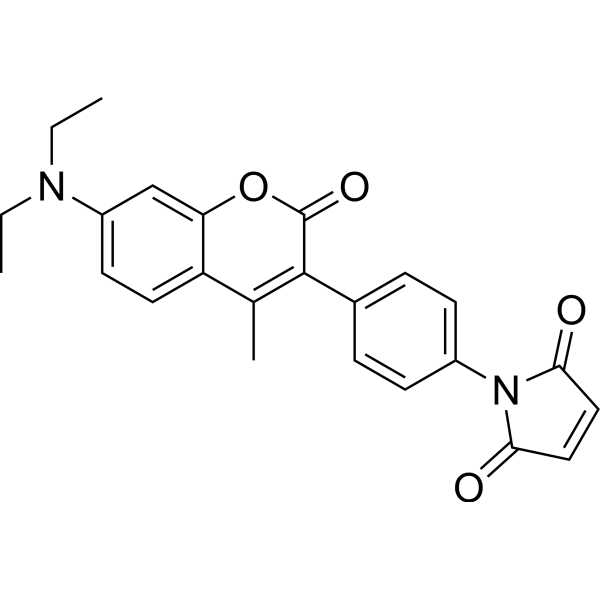
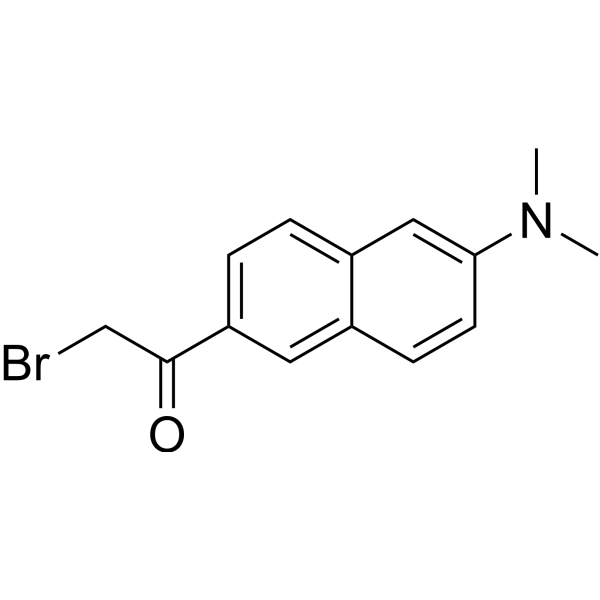
    CPM is a maleimide derivative, acting as a blue fluorescent thiol-reactive dye (excitation/emission maxima of 387/463 nm) .
    CPM
  • HY-166648

    Liposome Cancer
    DSPE-PEG2000-Maleimide sodium (purity>99%) is a functional lipid component and a thiol-reactive crosslinker. DSPE-PEG2000-Maleimide sodium (purity>99%) undergoes Michael addition with the thiol groups of thiolated or cyclic RGD peptides to form stable thioether bonds and DSPE-PEG2000-RGD. DSPE-PEG2000-Maleimide sodium (purity>99%) is applicable to research on drug delivery .
    DSPE-PEG2000-Maleimide sodium (purity>99%)
  • HY-Y1147
    Diethyl maleate
    1 Publications Verification

    Maleic acid diethyl ester

    Biochemical Assay Reagents Others
    Diethyl maleate (DEM) is an orally available, effective glutathione (GSH) depletor that crosses the blood-brain barrier. Diethyl maleate covalently binds irreversibly to GSH via glutathione S-transferase with an in vitro IC50 of 0.1-0.5 mM. Diethyl maleate selectively depletes GSH in liver, lung, and brain tissues, exacerbating oxidative stress and enhancing hyperbaric oxygen toxicity. Diethyl maleate promotes precursor amino acid uptake and in turn promotes GSH synthesis by upregulating the activity of the cystine-glutamate transporter XO -. Diethyl maleate can be used to study redox homeostasis and GSH protection mechanisms in oxidative stress-related diseases such as hyperbaric oxygen injury and metabolic diseases[1][2][3].
    Diethyl maleate
  • HY-D1605
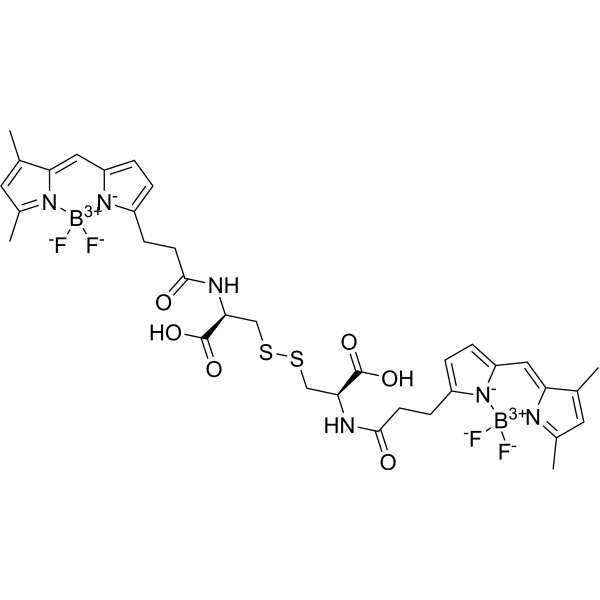
    BODIPY FL L-Cystine
    1 Publications Verification

    Fluorescent Dye Others
    BODIPY FL L-Cystine is a thiol-reactive, green-fluorescent dye. BODIPY FL L-Cystine can be the labeling of membrane proteins, proteins with hydrophobic binding sites, or hydrophobic ligands. (λex=504 nm, λem=511 nm) .
    BODIPY FL L-Cystine
  • HY-D1744
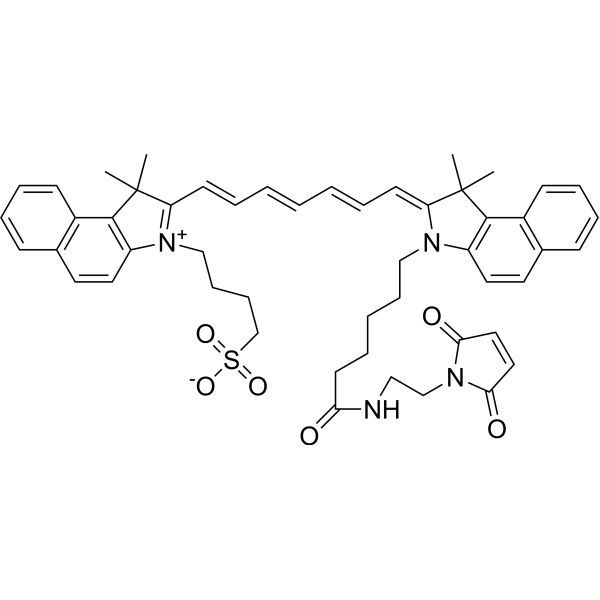
    ICG Maleimide
    1 Publications Verification

    Fluorescent Dye Others
    ICG Maleimide is thiol reactive near infrared (NIR) fluorescent dye and used to generate a stable fluorescence signal in bioimaging (Ex/Em = 789/813 nm).
    ICG Maleimide
  • HY-W998680

    5-FITC-Maleimide

    Fluorescent Dye Others
    Fluorescein-maleimide (5-FITC-Maleimide) is a thiol-reactive fluorescent derivatization reagent and non-specific protein labeling reagent. Fluorescein-maleimide covalently binds to protein thiol groups for protein labeling. Fluorescein-maleimide covalently binds to protein amino and imidazole groups under neutral pH conditions. Fluorescein-maleimide is used for fluorescent labeling of proteins, nucleic acids or other molecules containing one or more thiol groups (Ex/Em = 494/519 nm) .
    Fluorescein-maleimide
  • HY-D2381

    Fluorescent Dye Others
    AF 488 maleimide is a thiol-reactive dye used to label SH groups of proteins, which can attach the AF 488 fluorophore to cysteine residue-containing proteins and peptides as well as other thiolated molecules. AF 488 maleimide enables real-time visualization of dynamic pilus extension and retraction in live bacterial cells via epifluorescence microscopy (Ex/Em = 470/520 nm) .
    AF 488 maleimide
  • HY-D1590

    Fluorescent Dye Others
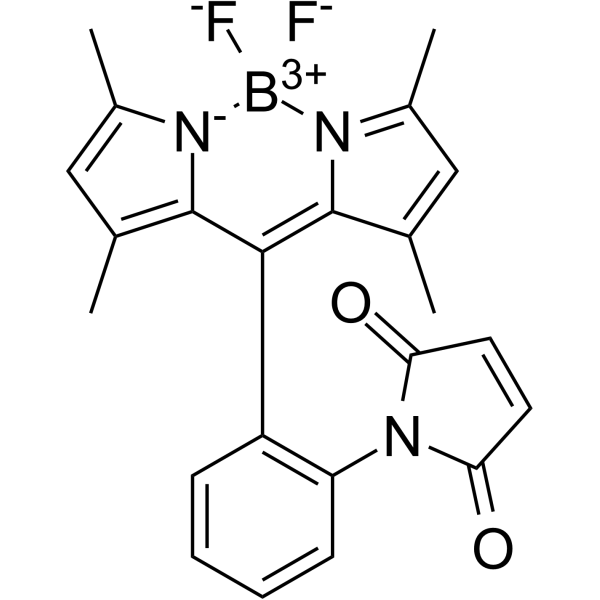
    ODIPY Green 8-P2M is a novel thiol-reactive fluorescence probe based on the BODIPY fluorophore, the fluorescence is strongly quenched by d-PeT and then can be restored after reaction with thiol, resulting in an extremely high signal-to-noise ratio. ODIPY Green 8-P2M can be useful for detecting extremely low concentrations of protein in the gel after SDS-PAGE .
    BODIPY Green 8-P2M
  • HY-166648A
    DSPE-PEG-Maleimide ammonium (MW 2000)
    1 Publications Verification

    Liposome Others
    DSPE-PEG-Maleimide ammonium (MW 2000) is a functional lipid component and a thiol-reactive crosslinker. DSPE-PEG-Maleimide ammonium (MW 2000) undergoes Michael addition with the thiol groups of thiolated or cyclic RGD peptides to form stable thioether bonds and DSPE-PEG (2000)-RGD. DSPE-PEG-Maleimide ammonium (MW 2000) is applicable to research on drug delivery .
    DSPE-PEG-Maleimide ammonium (MW 2000)
  • HY-148520

    Endoplasmic Reticulum Oxidoreductase 1 (ERO1) Metabolic Disease
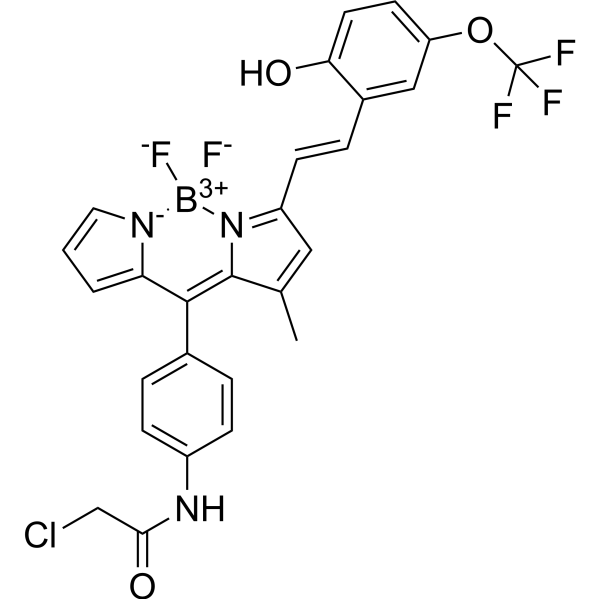
    QM295 is an endoplasmic reticulum oxidation 1 (ERO1) inhibitor with selectively reversible thiol reactivity. QM295 can be used for the research of endoplasmic reticulum stress .
    QM295
  • HY-P4087

    HIV Infection Cancer
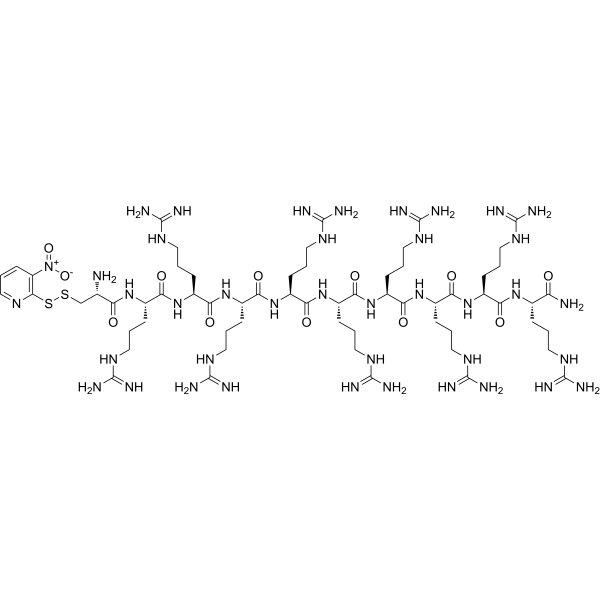
    Cys(Npys)-(Arg)9 is a synthetic cationic cell-penetrating peptide with a reversible thiol-reactive nitropyridyl (Npys) group. Cys(Npys)-(Arg)9 efficiently mediates the internalization and delivery of various "cargo" such as proteins and antibodies by forming reversible disulfide bonds with surface-exposed cysteine residues. Cys(Npys)-(Arg)9 endows TALEN proteins with cell-penetrating activity, enabling gene knockout in mammalian cells and protein transduction in wheat microspores. Cys(Npys)-(Arg)9 can be conjugated with antibodies to form cationized IgG for enhancing endosomal escape of oligonucleotides, or form siRNA delivery complexes. When the molar ratio of Cys(Npys)-(Arg)9 to loaded molecules is higher than 1:1, it exerts certain cytotoxic effects on cells. Cys(Npys)-(Arg)9 can be used in studies related to oral squamous cell carcinoma and HIV infection .
    Cys(Npys)-(Arg)9
  • HY-W020780D

    Biochemical Assay Reagents Others
    mPEG40000-Mal is a thiol-reactive PEG derivative that can be used to selectively modify proteins, peptides, or any other surface with available thiol groups .
    mPEG40000-Mal
  • HY-108534

    AW 464

    TrxR Inflammation/Immunology Cancer
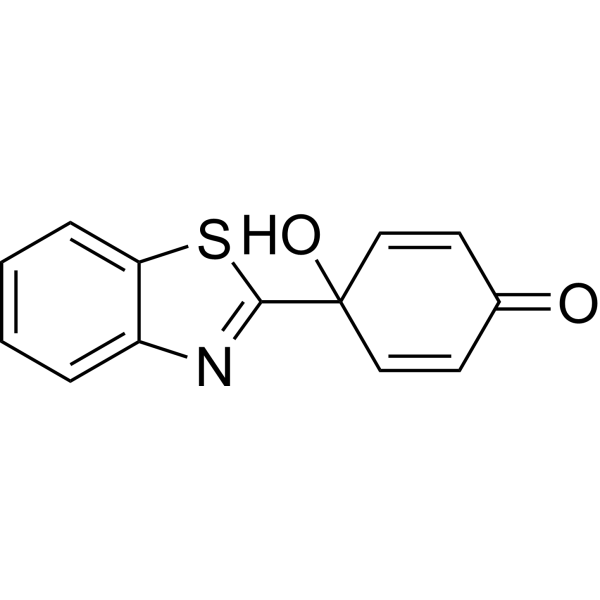
    PMX464 (AW 464), a thiol-reactive quinol, is the inhibitor of thioredoxin-thioredoxin reductase (Trx/TrxR) system. PMX464 can inhibit NF-κB-mediated proinflammatory activation of human type II alveolar epithelial cells .
    PMX464
  • HY-P4087B

    HIV Others
    Cys(Npys)-(Arg)9 acetate is a synthetic cationic cell-penetrating peptide with a reversible thiol-reactive nitropyridyl (Npys) group. Cys(Npys)-(Arg)9 acetate efficiently mediates the internalization and delivery of various "cargo" such as proteins and antibodies by forming reversible disulfide bonds with surface-exposed cysteine residues. Cys(Npys)-(Arg)9 acetate endows TALEN proteins with cell-penetrating activity, enabling gene knockout in mammalian cells and protein transduction in wheat microspores. Cys(Npys)-(Arg)9 acetate can be conjugated with antibodies to form cationized IgG for enhancing endosomal escape of oligonucleotides, or form siRNA delivery complexes. When the molar ratio of Cys(Npys)-(Arg)9 acetate to loaded molecules is higher than 1:1, it exerts certain cytotoxic effects on cells. Cys(Npys)-(Arg)9 acetate can be used in studies related to oral squamous cell carcinoma and HIV infection .
    Cys(Npys)-(Arg)9 acetate
  • HY-149182

    Fluorescent Dye Others
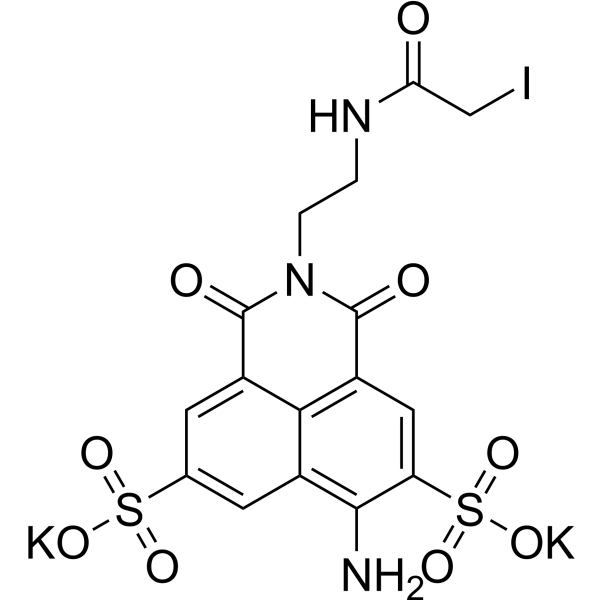
    Lucifer yellow iodoacetamide dipotassium is a thiol-reactive fluorescent tracer.
    Lucifer yellow iodoacetamide dipotassium
  • HY-W800787

    Liposome Cancer
    18:1 PE MCC is a maleimide-functionalized thiol-reactive lipid with a phosphoethanolamine linked to two oleic acid tails and a maleimide group.
    18:1 PE MCC
  • HY-W440899

    Liposome Others
    DSPE-PEG1000-SPDP is a thiol reactive PEG lipid. The polymer is amphiphilic and spontaneously forms lipid bilayer in water. It can be used to encapsulate nutrients or therapeutics for targeted drug delivery, for example mRNA or DNA vaccine, liposomal doxorubicin for anti tumor.
    DSPE-PEG1000-SPDP
  • HY-D1754

    LYCH ammonium

    Fluorescent Dye Others
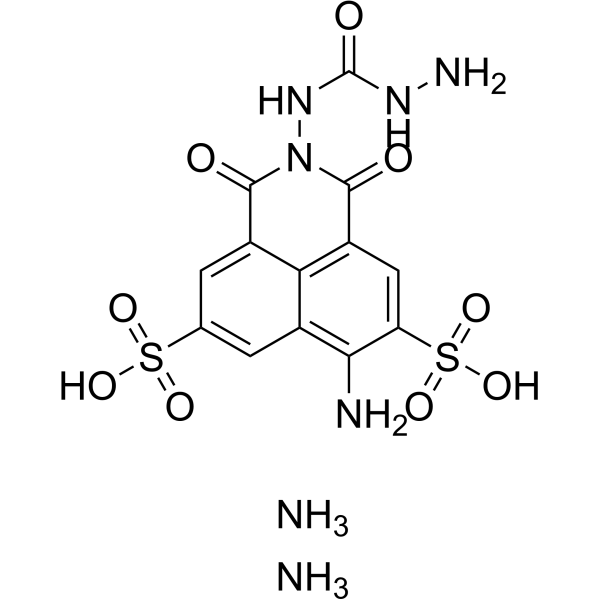
    Lucifer yellow CH (LYC) ammonium is a thiol-reactive fluorescent polar tracer.
    Lucifer yellow CH ammonium
  • HY-W800786

    N-MCC-PE

    Liposome Cancer
    16:0 PE MCC is a maleimide-functionalized thiol-reactive lipid with a phosphoethanolamine linked to two palmitic acid tails and a maleimide group.
    16:0 PE MCC
  • HY-W800789

    Liposome Cancer
    16:0 MPB PE is a maleimide-functionalized thiol-reactive lipid with a phosphoethanolamine linked to two palmitic acid tails and a phenyl maleimide group.
    16:0 MPB PE
  • HY-W800788

    Liposome Cancer
    18:1 MPB PE is a maleimide-functionalized thiol-reactive lipid with a phosphoethanolamine linked to two oleic acid tails and a phenyl maleimide group.
    18:1 MPB PE
  • HY-D2093

    Fluorescent Dye Others
    PE-VF750 Maleimide is a thiol-reactive double-dye dye that contains maleimide groups that can react with thiol groups to form covalent bonds. Ex/Em=495-566/777 nm. PE-VF750 Maleimide contains two dyes, PE and VF, with excitation wavelengths (Ex) of 495 nm and 566 nm, respectively. PE-VF594 Maleimide has an emission wavelength (Em) of 777 nm.
    PE-VF750 Maleimide
  • HY-W441003

    Biochemical Assay Reagents Others
    DSPE-PEG2000-IA is a thiol reactive phospholipid polyPEG. The iodoacetyll group is reactive with thiol to produce a thioether linkage. The polymer can self-assemble in water to form lipid bilayer and can be used to encapsulate drugs in targeted delivery application, such as liposomal doxorubicin as an anti cancer drug or mRNA vaccine.
    DSPE-PEG2000-IA
  • HY-136675

    Fluorescent Dye Others
    ASMI is a ratiometric, two-photon excited fluorescent probe, composed of a highly two-photon active and biocompatible merocyanine fluorophore and an acrylate moiety as a thiol reactive site. ASMI is able to selectively detect and monitor mitochondrial Cys with rapid responsiveness, imaging living cells and intact tissues with high contrast and brightness at a depth of 150 μm. The two-photon action cross section (Φσmax) of ASMI is 65.2 GM, corresponding to an excitation wavelength (λex) of 740 nm.
    ASMI
  • HY-W591469

    Biochemical Assay Reagents Others
    mPEG1000-Mal is a thiol-reactive PEG derivative that can be used to selectively modify proteins, peptides, or any other surface with available thiol groups .
    mPEG1000-Mal
  • HY-P11697

    Drug Intermediate Others
    Fmoc-PNA-maleimide-OH is a Fmoc-protected functionalized peptide nucleic acid monomer featuring a maleimide group for thiol-reactive conjugation. Fmoc-PNA-maleimide-OH can be used in constructing PNA conjugates for molecular assembly applications.
    Fmoc-PNA-maleimide-OH
  • HY-W800719

    Biochemical Assay Reagents Others
    N-Boc-N'-(PEG1-t-butyl ester)-L-Lysine-amido-Mal is the amino acid, lysine, with a maleimide at its C-terminus, a Boc-protecting group on its α-amine, and an amido-PEG1-t-butyl ester on its ε-amine. Maleimide is a thiol-reactive covalent group used to conjugate cysteine residues, while the Boc and the t-butyl ester can be later deprotected to perform further reactions.
    N-Boc-N'-(PEG1-t-butyl ester)-L-Lysine-amido-Mal
  • HY-W800714

    Biochemical Assay Reagents Others
    SPDP-Gly-Gly-methoxy is a linker with SPDP and methyl ester moiety. The SPDP is an amine and thiol reactive crosslinker. It is also membrane permeable, allowing it to participate in intracellular crosslinking reactions.
    SPDP-Gly-Gly-methoxy
  • HY-W440727

    Liposome Cancer
    Cholesterol-PEG2000-Vinylsulfone is a thiol reactive polyPEG via thiol-ene reaction to form a thioether bond. It can self-assemble in water and is used to prepare liposome as drug vehicle for targeted delivery into tissues.
    Cholesterol-PEG2000-Vinylsulfone
  • HY-W800711

    Biochemical Assay Reagents Others
    SPDP-Gly-Pro-NHS ester is a linker with SPDP and NHS ester moieties. The SPDP is an amine and thiol reactive crosslinker. It is also membrane permeable, allowing it to participate in intracellular crosslinking reactions. The NHS ester is amine reactive and forms stable amide bonds.
    SPDP-Gly-Pro-NHS ester
  • HY-W800713

    Biochemical Assay Reagents Others
    SPDP-Gly-Pro-acid is a linker with SPDP and carboxylic acid moieties. The SPDP is an amine and thiol reactive crosslinker. It is also membrane permeable, allowing it to participate in intracellular crosslinking reactions. The terminal carboxylic acid can react with primary amine groups in the presence of activators (e.g. EDC, or HATU) to form a stable amide bond.
    SPDP-Gly-Pro-acid
  • HY-186151

    MDM-2/p53 Apoptosis Cancer
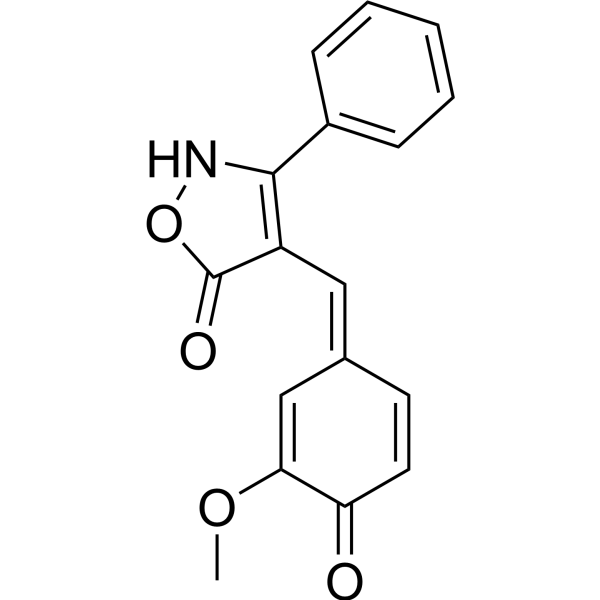
    UCI-LC0019 is a mutant p53 reactivator. UCI-LC0019 binds to mutant p53, induces wild-type-like conformational change, restores sequence-specific DNA binding activity, activates p53-dependent transcription programs, and does not act via thiol reactivity or glutathione depletion. UCI-LC0019 inhibits proliferation and induces apoptosis in cancer cells harboring mutant p53, with no significant effect on p53 null or wild-type p53 tumors cells. UCI-LC0019 exhibits anti-tumor activity in xenograft mouse models carrying p53R175H mutant tumors. UCI-LC0019 can be used for the research of cancer, such as ovarian cancer .
    UCI-LC0019

Inquiry Online

Your information is safe with us. * Required Fields.

Salutation


Country or Region *

Applicant Name *


Organization Name *

Department *


Email Address *


Product Name *

Cat. No.


Requested quantity *

Phone Number *


Remarks

Inquiry Online

Inquiry Information

Product Name:
Cat. No.:
Quantity:
MCE Japan Authorized Agent:

