
From 11:00 pm to 12:00 pm EST ( 8:00 pm to 9:00 pm PST ) on January 6th, the website will be under maintenance. We are sorry for the inconvenience. Please arrange your schedule properly.
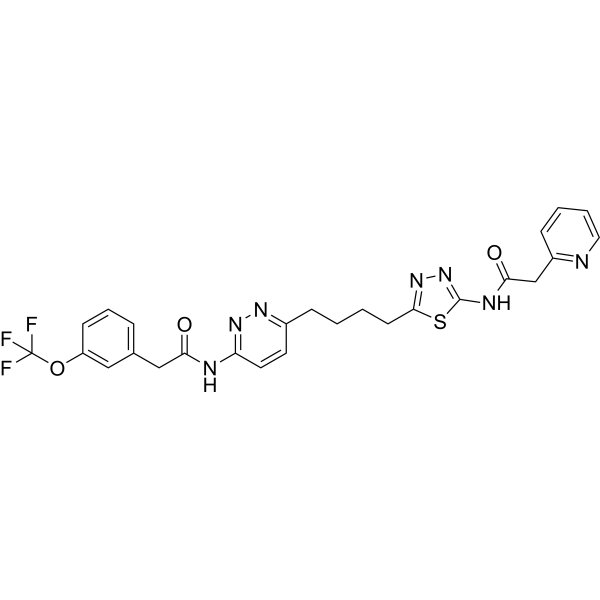
Telaglenastat (CB-839) is a first-in-class, selective, reversible and orally active glutaminase 1 (GLS1) inhibitor. Telaglenastat selectively inhibits GLS1 splice variantsKGA (kidney-type glutaminase) and GAC (glutaminase C) compared to GLS2. The IC50s are 23 nM and 28 nM for endogenous glutaminase in mouse kidney and brain, respectively. Telaglenastat inuduces autophagy and has antitumor activity .
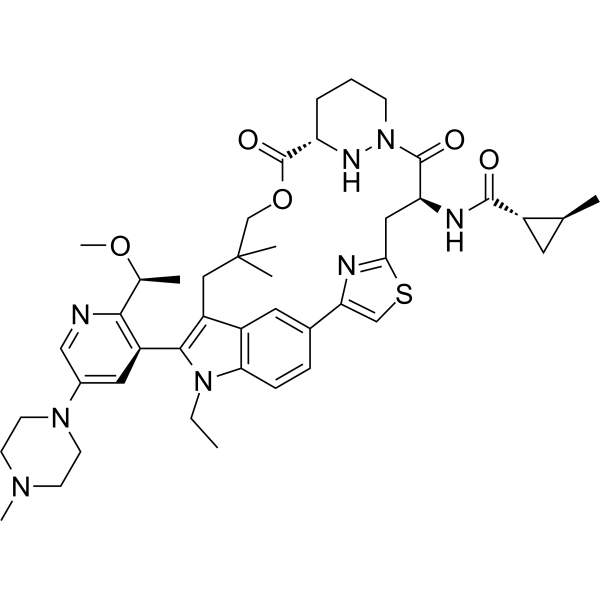
RMC-7977 is an orally active triple-complex RAS inhibitor that can simultaneously bind to cyclophilin A (CYPA) (Kd = 195 nM) and KRAS (G12V) (Kd = 292 μM). It exhibits broad-spectrum inhibitory activity against KRAS, NRAS, and HRAS proteins and their various wild-type and mutant variants. RMC-7977 induces apoptosis by inhibiting the phosphorylation of ERK, CRAF, and RSK, as well as increasing PARP cleavage. This leads to tumor regression, reduces resistance in KRAS G12C cancer models, and demonstrates good tolerability across various RAS cancer models .
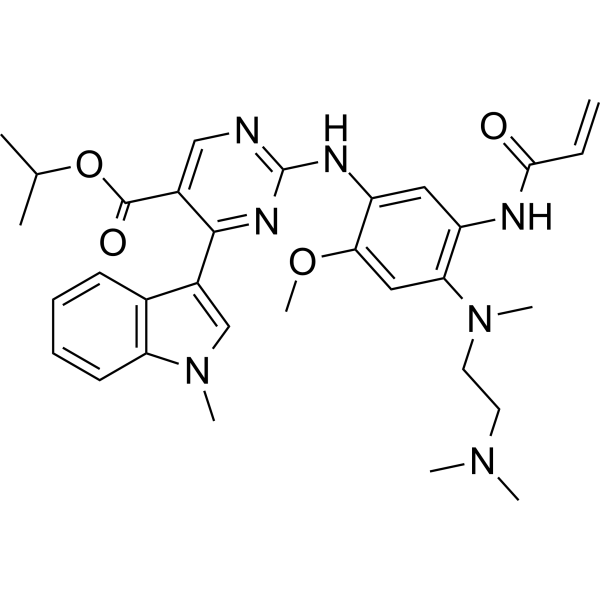
Mobocertinib (TAK-788) is an orally active and irreversible EGFR/HER2 inhibitor. Mobocertinib potently inhibits oncogenic variants containing activating EGFRex20ins mutations with selectivity over wild-type EGFR. Mobocertinib can be used in NSCLC research .
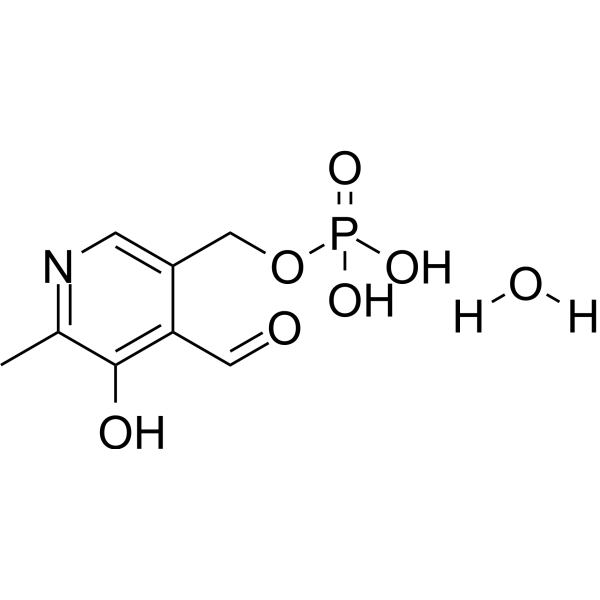
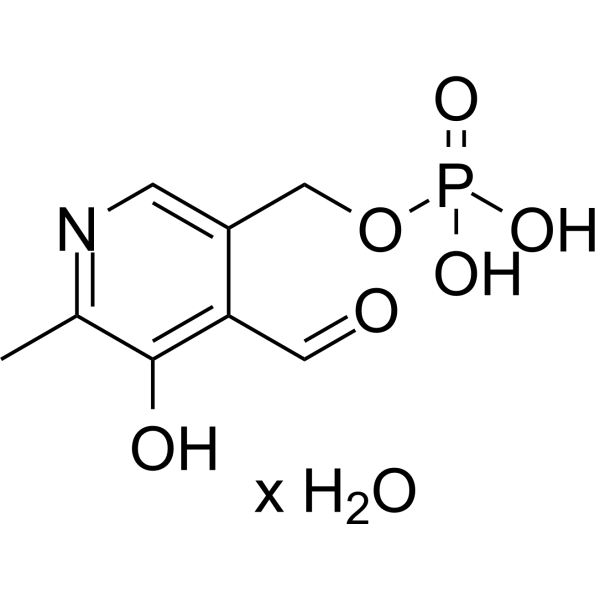
Pyridoxal 5'-phosphate monohydrate, the active form of vitamin B6, is an essential cofactor for multiple enzymes, including aromatic l-amino acid decarboxylase that catalyzes the final stage in the production of the neurotransmitters dopamine and serotonin. Pyridoxal 5'-phosphate monohydrate is the most important coenzyme variant in the process of vitamin B6 intracellular phosphorylation and is interconvertible with other variants, including pyridoxine 5′‐phosphate (PNP) and pyridoxamine 5′‐phosphate (PMP) .
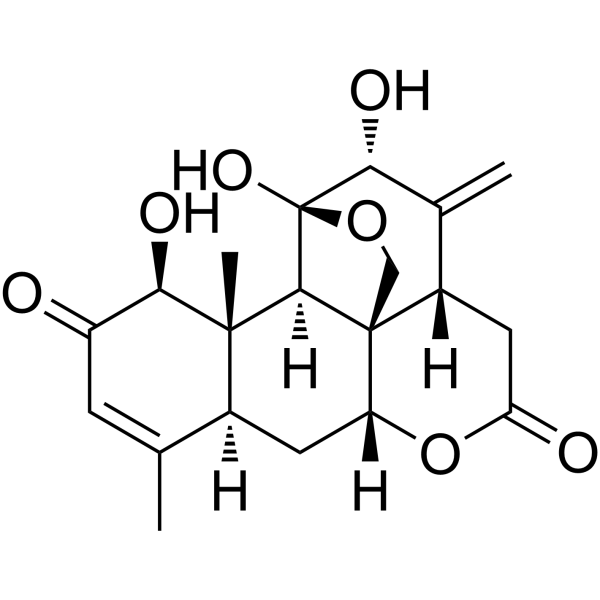
Ailanthone (Δ13-Dehydrochaparrinone) is a potent inhibitor of both full-length androgen receptor (AR) (IC50=69 nM) and constitutively active truncated AR splice variants (AR1-651IC50=309 nM).
Efimosfermin alfa is a genetically engineered FGF21variant. Efimosfermin alfa exerts its function by activating the FGFR1c/β-Klotho complex. Efimosfermin alfa is applicable to researches on metabolic dysfunction-associated steatohepatitis, obesity and mild hypertriglyceridemia .
Crovalimab (SKY59; RO7112689) is a novel humanized antibody against C5 in a pH-dependent manner with KDs of 15.2 nM and 16.8 μM at pH 7.4 and 5.8, respectively. Crovalimab binds human FcRn with great affinity (KD: 17 μM at pH 6.0). Crovalimab can block cleavage of C5 by the C5 convertase and inhibite the activity of a C5 variant (p.Arg885His). Crovalimab inhibits C5b-9 formation significantly in all three complement pathways, the classical pathway (CP), lectin pathway (LP), and alternative pathway (AP). Crovalimab has the potential for paroxysmal nocturnal hemoglobinuria (PNH) and complement-mediated diseases research .
Eplontersen is a triantennary N-acetyl galactosamine (GalNAc3-7a)-conjugated antisense oligonucleotide targeting transthyretin (TTR) mRNA to inhibit production of both variant and wild-type TTR protein. Misfolded TTR induces amyloid fibrils formation in the heart and peripheral nerves, leads to amyloid TTR (ATTR) amyloidosis diseases .
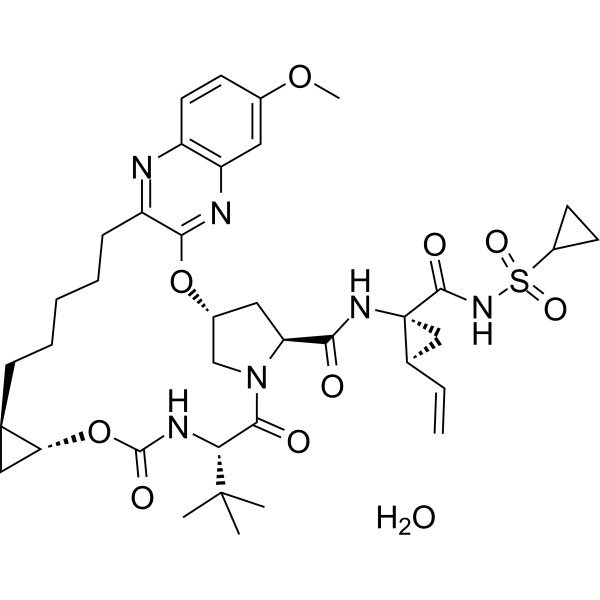
Secutrelvir is an oral SARS-CoV-2 3C-like protease (3CLpro) inhibitor and antiviral agent, with IC50 values of 0.655 nM and 0.697 nM against SARS-CoV-2 3CLpro, respectively. Secutrelvir forms a reversible covalent bond with the catalytic cysteine C145 of SARS-CoV-2 3CLpro, thereby inhibiting viral replication. Secutrelvir exhibits activity against multiple SARS-CoV-2 variants and can be used in research related to coronavirus disease 2019 (COVID-19) .
Pyridoxal Phosphate-d3 is the deuterium labeled Pyridoxal 5'-phosphate. Pyridoxal 5'-phosphate, the active form of vitamin B6, is an essential cofactor for multiple enzymes, including aromatic l-amino acid decarboxylase that catalyzes the final stage in the production of the neurotransmitters dopamine and serotonin. Pyridoxal 5'-phosphate is the most important coenzyme variant in the process of vitamin B6 intracellular phosphorylation and is interconvertible with other variants, including pyridoxine 5′‐phosphate (PNP) and pyridoxamine 5′-phosphate (PMP) .
Bofutrelvir (FB2001) is a SARS-CoV-2 main protease M pro inhibitor with an IC50 value of 53 nM and an EC50 value of 0.53 μM. Bofutrelvir exhibits potent antiviral efficacy against several current SARS-CoV-2 variants with EC50 values of 0.26-0.42 μM. Bofutrelvir has an additive antiviral effect when combined with Remdesivir (HY-104077) .
Sodium pyrophosphate decahydrate is a phosphate donor and mild chelating agent. Sodium pyrophosphate decahydrate serves as a phosphate source for Pseudomonas aeruginosa acid phosphatase and its Q6 variant, enabling phosphorylation of L‑ascorbic acid to L‑ascorbate‑2‑phosphate. Sodium pyrophosphate decahydrate facilitates 99mTc labeling of human polyclonal IgG. Sodium pyrophosphate decahydrate can be used in research on musculoskeletal infections .
Pyridoxal 5'-phosphate hydrate, the active form of vitamin B6, is an essential cofactor for multiple enzymes, including aromatic l-amino acid decarboxylase that catalyzes the final stage in the production of the neurotransmitters dopamine and serotonin. Pyridoxal 5'-phosphate hydrate is the most important coenzyme variant in the process of vitamin B6 intracellular phosphorylation and is interconvertible with other variants, including pyridoxine 5′‐phosphate (PNP) and pyridoxamine 5′-phosphate (PMP) .
Cy3B is an improved variant of the Cy3 (Cyanine3) (HY-D0822) dye. Cy3 is a fluorescent dye, and its fluorescence spectrum generally falls within the green to orange wavelength range .
MRL-SYKi is a chemical probe for gain-of-function variants of spleen tyrosine kinase (SYK). MRL-SYKi reduces the catalytic activity of SYKS550Y, SYKS550F and SYKP342T, and downregulates the phosphorylation level of SYKS550Y. MRL-SYKi serves as a template for developing NanoBRET tracers targeting SYK, enabling NanoBRET cellular target engagement assays for gain-of-function variants of SYK. MRL-SYKi is applicable to research related to inflammatory and immune diseases .
Adintrevimab (ADG 20) is a human IgG1 monoclonal SARS-CoV (SARS-CoV) antibody. Adintrevimab inhibits SARS-CoV-2 variants and other SARS-like coronaviruses with pandemic potential .
Obeldesivir (ATV006) is a potent, orally active antiviral agent and ester proagents of GS-441524. Obeldesivir inhibits the replication of SARS-CoV-2 and its variants. Obeldesivir can be used for SARS-CoV-2 research .
Simlukafusp alfa (FAP-IL2v) is an immunocytokine comprising an antibody against fibroblast activation protein α (FAPα) and an IL-2 variant that only binds IL-2Rβγ. Isotype: human IgG1 .
OVA-T4 Peptide (SIITFEKL, OVA (257-264) Variant) is a low-affinity variant of OVA (257-264) (SIINFEKL). OVA-T4 Peptide has similar binding to H-2Kb MHC class I molecules as OVA (257-264), but has a much lower affinity for the OT-I TCR25 .
Cergutuzumab amunaleukin (CEA-IL2v) is a monomeric carcinoembryonic antigen (CEA)-targeted IL-2 variant-based immunocytokine. Cergutuzumab amunaleukin has immunostimulating and antineoplastic activities .
Eplontersen sodium the sodium salt form of Eplontersen (HY-148089). Eplontersen sodium is a triantennary N-acetyl galactosamine (GalNAc3-7a)-conjugated antisense oligonucleotide targeting transthyretin (TTR) mRNA to inhibit production of both variant and wild-type TTR protein. Misfolded TTR induces amyloid fibrils formation in the heart and peripheral nerves, leads to amyloid TTR (ATTR) amyloidosis diseases .
BWA-522 is an orally active PROTAC degrader targeting full-length androgen receptor (AR-FL) and androgen receptor splice variant 7 (AR-V7). BWA-522 antagonizes the N-terminal domain (AR-NTD) of the androgen receptor, suppresses AR downstream signaling proteins and induces cancer cells apoptosis. BWA-522 inhibits tumor growth in LNCaP xenograft mouse model. BWA-522 can be used for the research of prostate cancer .
Orismilast (LEO-32731) is an orally active and selective PDE4 inhibitor used for the research of inflammatory diseases. Orismilast demonstrates potent inhibition of PDE4B and PDE4D subtype splice variants .
Pozelimab (REGN3918) is a fully human IgG4 anti-C5 monoclonal antibody. Pozelimab binds to C5 and C5 variants with high affinity and blocks complement-mediated hemolysis. Pozelimab can be used for the research of complement-mediated diseases .
GGGYK-Biotin is a substrate peptide designed to study the substrate specificity of Sortase A. GGGYK-Biotin can be used to develop Sortase A variants with different substrate specificities .
Surzebiclimab (BGB-A425) is a humanized IgG1-variant monoclonal antibody against T-cell immunoglobulin and mucin-domain containing-3 (TIM-3). Surzebiclimab binds to the extracellular domain of human Tim-3 with high affinity (KD=0.36 nM) and specificity. Surzebiclimab can be used in research of cancer .
Casirivimab (REGN10933) is a human monoclonal antibody that targets the SARS-CoV-2 virus, which causes COVID-19. Casirivimab is ineffective against COVID-19 variants. Casirivimab can be used in combination with Imdevimab (HY-P99342), which alters the lung response of K18-hACE2 mice to the SARS-CoV-2 δ variant, effectively reducing viral load and improving symptoms .
Rafivirumab (CR57) is an anti-rabies virus monoclonal antibody for the prophylaxis of rabies. Rafivirumab has neutralizing potency against a broad spectrum of RABVvariants. Rafivirumab can be used for research of cocktails .
FAM DBCO, 6-isomer represents a variant of a time-honored fluorescent dye and featuring a terminal DBCO group. The DBCO groups is commonly used for copper-free Click Chemistry reactions due to its strain promoted high energy.
Pomotrelvir is a selective, competitive, orally active covalent inhibitor of the SARS-CoV-2 main protease (M pro), with an IC50 of 24 nM for wild-type SARS-CoV-2 M pro. Pomotrelvir inhibits viral polyprotein processing, thereby preventing viral replication. Pomotrelvir has shown broad antiviral activity against multiple SARS-CoV-2 variants (including Omicron) in cell-based experiments, and has an additive effect when combined with nucleoside analogs that target viral RNA synthesis. Pomotrelvir is primarily used for the research and development of COVID-19 antiviral drugs, especially for infections caused by SARS-CoV-2 and its variants .
Iscartrelvir (WU-04) is a non-covalent inhibitor of SARS-CoV-2, targeting the 3CLpro protein. Iscartrelvir has high inhibitory effect on the 3CLpro protein of 6 SARS-CoV-2 variants (Alpha, Beta, Gamma, Delta, Lambda and Omicron) and 2 coronaviruses (SARS-CoV and MERS-CoV) .
Telaglenastat (Standard) is the analytical standard of Telaglenastat. This product is intended for research and analytical applications. Telaglenastat (CB-839) is a first-in-class, selective, reversible and orally active glutaminase 1 (GLS1) inhibitor. Telaglenastat selectively inhibits GLS1 splice variants KGA (kidney-type glutaminase) and GAC (glutaminase C) compared to GLS2. The IC50s are 23 nM and 28 nM for endogenous glutaminase in mouse kidney and brain, respectively. Telaglenastat inuduces autophagy and has antitumor activity .
Regdanvimab (CT-P59) is a human monoclonal antibody that targets the receptor-binding domain of SARS-CoV-2 spike protein, blocking interaction with ACE2 for viral entry. Regdanvimab can be used for the research of COVID-19 .
(17R,18S)-Epoxyeicosatetraenoic acid (17 (R),18 (S)-EETeTr) is a physiologically active fatty acid metabolite and also a vasodilator targeting BKα. (17R,18S)-Epoxyeicosatetraenoic acid activates the outward potassium current mediated by BK channels, and this effect is independent of the BKβ1 subunit, intracellular/extracellular calcium levels, and sarcoplasmic reticulum calcium release regulated by RyR3. (17R,18S)-Epoxyeicosatetraenoic acid is produced by the epoxidation of eicosapentaenoic acid mediated by CYP1A1 variants. (17R,18S)-Epoxyeicosatetraenoic acid is applicable to research related to arrhythmia .
Simpinicline (OC-02), a highly selective nicotinic acetylcholine receptor (nAChR) agonist, shows potent antiviral activity against the SARS-CoV-2 variants in cell culture with an IC50 of 0.04 µM .
OVA-E1 peptide TFA, is an antagonist variant of SIINFEKL [OVA (257-264). OVA-E1 peptide, activates the p38 and JNK cascades similarly in mutant and wild-type thymocytes .
OVA G4 peptide TFA is a variant of the agonist ovalbumin (OVA) peptide SIINFEKL (257-264). SIINFEKL is routinely used to stimulate ovalbumin-specific T cells and to test new vaccine adjuvants can form a stable hydrogel .
BPR3P0128 is an orally active, non-nucleoside RNA-dependent RNA polymerase (RdRp) inhibitor that has been shown to inhibit the activity of various SARS-CoV-2variants. The EC50 for SARS-CoV-2 and HCoV-229E are 0.62 μM and 0.14 μM. BPR3P0128 demonstrates effective anti-pancoronavirus activity within the submicromolar range. PR3P0128 shows synergistic antiviral activity when combined with Remdesivir (HY-104077) .
Garivulimab (BGB-A333) is a humanized IgG1-variant monoclonal antibody that specifically targets and binds to PD-L1. Garivulimab selectively blocks the interaction of PD-L1 and PD-1. Garivulimab has antitumor activity .
Aurodox (X 5108) is an antibiotic obtained from a streptomyces variant, Aurodox can against a number of gram-positive bacteria. Aurodox shows a very low toxicity in mice and promoted poultry growth .
Scrambled Tadnersen is the Negative Control of Tadnersen sodium (HY-132581A). Tadnersen sodium, an antisense oligonucleotide (ASO), selectively targets C9ORF72 transcript variants 1 and 3 that carry the expansion .
Ensituximab (NEO-102; NPC-1C) is a chimeric monoclonal IgG1 antibody targeting a variant of MUC5AC. Ensituximab shows specificity to colorectal and pancreatic cancer .
Amubarvimab (BRII-196) is a human IgG1 mAb that bind to non-competing epitopes on the receptor binding domain (RBD) of spike protein, with a KD of 5.88 nM. Amubarvimab can effectively neutralize SARS-CoV-2 variants .
HIV-1-IN-88 (compound 20a) is a potent HIV‑1 protease inhibitor (IC50 = 10 pM) with an antiviral EC50 of 10.4 nM. HIV-1-IN-88 exhibits potency against the multidrug-resistant variants HIV-1Muta and HIV-1I50V with EC50 values of 30.0 and 34.3 nM, respectively. HIV-1-IN-88 can be used for HIV research .
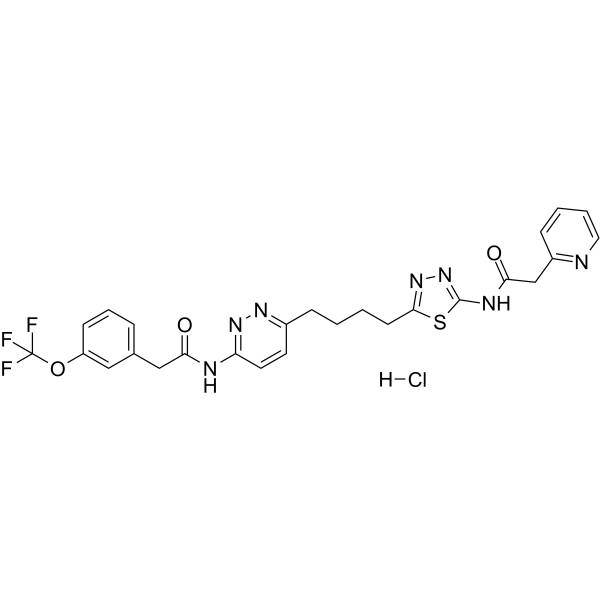
Telaglenastat (CB-839) hydrochloride is a first-in-class, selective, reversible and orally active glutaminase 1 (GLS1) inhibitor. Telaglenastat hydrochloride selectively inhibits GLS1 splice variantsKGA (kidney-type glutaminase) and GAC (glutaminase C) compared to GLS2. The IC50s are 23 nM and 28 nM for endogenous glutaminase in mouse kidney and brain, respectively. Telaglenastat hydrochloride inudces autophagy and has antitumor activity .
SJF-0661 is a variant of the von Hippel-Lindau (VHL) protein ligand with no targeted degradation ability and can be used as a control reagent for the VHL ubiquitin ligase ligand. SJF-0661 is a variant obtained by inverting the stereocenter of the key hydroxyproline group in the VHL ligand .
Efpixileukin alfa is a fusion protein that combines human IL-2 variant fused at the C-terminus to human immunoglobulin G1 (IgG1) Fc fragment. Efpixileukin alfa is an immunomodulator .
Scrambled 10Panx (FSVYWAQADR) is a random sequence variant of a specific inhibitory peptide 10Panx targeted at the half-channel of Pannexin-1 (Panx1). Scrambled 10Panx is used as a control peptide to determine whether other experimental conditions or peptides act through specific molecular mechanisms. Scrambled 10Panx can be used for research in neurobiology and cell biology .
HIV-1 protease-IN-6 (compound 17d) is a potent HIV-1 protease inhibitor, with an IC50 of 21 pM and a Ki of 4.7 pM, respectively. HIV-1 protease-IN-6 exhibits potent antiviral activity to DRV (darunavir)-resistant variant, even more than wild type virus .
Medroxyprogesterone-d3 is the deuterium labeled Medroxyprogesterone. Medroxyprogesterone is a progestin, a synthetic variant of the human hormone progesterone and a potent progesterone receptor agonist.
PROTAC AR Degrader-11 is a potent androgen receptor and androgen receptor splice variant-7 PROTAC degrader. PROTAC AR Degrader-11 shows potent cytotoxicity against both CWR22RV1 cells and VCaP cells. PROTAC AR Degrader-11 can be used in prostate cancer research . (Structure Note: Pink: Androgen Receptor ligand (HY-171809); Blue: CRBN ligand (HY-A0003); Black: linker (HY-169966))
Scrambled Tadnersen sodium is the Negative Control of Tadnersen sodium (HY-132581A). Tadnersen sodium, an antisense oligonucleotide (ASO), selectively targets C9ORF72 transcript variants 1 and 3 that carry the expansion .
OVA-E1 peptide, is an antagonist variant of SIINFEKL [OVA (257-264). OVA-E1 peptide, activates the p38 and JNK cascades similarly in mutant and wild-type thymocytes .
ML256 is a covalent lipoprotein-associated phospholipase A2 (Lp-PLA2 inhibitor. ML256 can be used for the study of neoplasms harboring a constitutively active variant of one or both of KRAS or HRAS .
OVA G4 peptide is a variant of the agonist ovalbumin (OVA) peptide SIINFEKL (257-264). SIINFEKL is routinely used to stimulate ovalbumin-specific T cells and to test new vaccine adjuvants can form a stable hydrogel .
Pyridoxal 5'-phosphate (monohydrate) (Standard) is the analytical standard of Pyridoxal 5'-phosphate (monohydrate). This product is intended for research and analytical applications. Pyridoxal 5'-phosphate monohydrate, the active form of vitamin B6, is an essential cofactor for multiple enzymes, including aromatic l-amino acid decarboxylase that catalyzes the final stage in the production of the neurotransmitters dopamine and serotonin. Pyridoxal 5'-phosphate monohydrate is the most important coenzyme variant in the process of vitamin B6 intracellular phosphorylation and is interconvertible with other variants, including pyridoxine 5′‐phosphate (PNP) and pyridoxamine 5′-phosphate (PMP) .
HIV-1 protease-IN-11 (compound 34a) is a HIV-1 protease inhibitor with an IC50 of 0.41 nM. HIV-1 protease-IN-11 also exhibits significant activity against drug-resistant variant .
MMT5-14 is a remdesivir analogue with a higher antiviral activity in four variants of SARS-CoV-2 than Remdesivir (HY-104077). MMT5-14 inhibits SARS-CoV-2, α, β, γ and δ variants with EC50s of 0.4, 2.5, 15.9, 1.7 and 5.6 μM, respectively. MMT5-14 can be used for the research of COVID-19 .
HIV-1 protease-IN-2 is a potent HIV-1 protease inhibitor with an IC50 of 2.53 nM. HIV-1 protease-IN-2 shows antiviral activity against DRV (Darunavir)-sensitive or DRV-resistant HIV-1 variants .
[D-His26]-Neuropeptide Y, human, rat is a synthetic variant of neuropeptide Y (NPY). [D-His26]-Neuropeptide Y, human, rat acts as a Y1R agonist that can prevent the development of anxiety, social impairment, and depressive symptoms, and has the potential to be used as an early intervention treatment for post-traumatic stress reactions .
HIV-1 protease-IN-8 (compound 34b) is a potent HIV-1 protease inhibitor with an IC50 value of 0.32 nM. HIV-1 protease-IN-8 displays IC50s of 0.29 μM and 1.90 μM for wild-type HIV-1 (HIV-1NL4-3) and drug-resistant variant (HIV-1MDR), respectively. HIV-1 protease-IN-8 displays robust antiviral activity against both wild-type HIV-1 and drug-resistant variant .
SLC6A8 corrector 1 is an orally active and brain-penetrant mutant SLC6A8 variant corrector. SLC6A8 corrector 1 can be used for the study of creatine transporter deficiency (CTD) .
HIV-1 protease-IN-13 (compound 18d) is a potent HIV-1 protease inhibitor with an IC50 value of 0.54 nM. HIV-1 protease-IN-13 also shows potent activity against HIV-1DRVRS (DRV-resistant mutation) and HIV-1NL4_3 variant (wild type) .
SARS-CoV-2-IN-36 is a potent SARS-CoV-2 Mpro (SARS-CoV) inhibitor with an IC50 of 2.37 μM and a Kd of 1.19 μM in enzymatic assays. SARS-CoV-2-IN-36 shows antiviral activity against UC-1074, RG2674, and NVDBB-2220 SARS-CoV-2 variants in Vero cells .
SARS-CoV-2 Mpro-IN-48 is a potent SARS-CoV-2 main protease inhibitor with an IC50 of 21.1 nM. SARS-CoV-2 Mpro-IN-48 exhibits potent antiviral activity against the SARS-CoV-2 JN.1 variant. SARS-CoV-2 Mpro-IN-48 can be used for the research of infection, such as COVID-19 .
Capeserod hydrochloride (SL65.0155) is a 5-HT4(e) receptor partial agonist (Ki=0.6 nM) with potent cognitive enhancing properties. Capeserod hydrochloride acts as a partial agonist in cells expressing 5-HT4(b) and 5-HT4(e) splice variants, stimulating cAMP production with IC50 values of 244 and 29 nM, respectively. Capeserod hydrochloride is used in the study of memory impairment and dementia .
SARS-CoV-2-IN-34 (S-20-1) is a blood brain barrier penetrable pan-coronavirus (CoV) fusion inhibitor with broad-spectrum inhibitory activity. SARS-CoV-2-IN-34 effectively inhibits infection by pseudotyped and authentic SARS-CoV-2, and pseudotyped variants of concern (VOCs). SARS-CoV-2-IN-34 shows high affinity to RBD in S1 and HR1 domain in S2 of SARS-CoV-2 S protein. SARS-CoV-2-IN-34 can be used for the research of infection .
Chitin synthase inhibitor 10 is a chitin synthase inhibitor. Chitin synthase inhibitor 10 shows excellent chitin synthase inhibitory activity with an IC50 value of 0.11 mM. Chitin synthase inhibitor 10 also is an antifungal agent and has significantly antifungal activity against drug-resistant fungal variants, such as C. albicans and C. neoformans. Chitin synthase inhibitor 10 can be used for the research of invasive fungal infections (IFIs) .
Chitin synthase inhibitor 12 is a chitin synthase inhibitor. Chitin synthase inhibitor 12 shows excellent inhibitory activity with an IC50 value of 0.16 mM. Chitin synthase inhibitor 12 also is a broad-spectrum antifungal agent and has significantly antifungal activity against drug-resistant fungal variants, such as C. albicans and C. neoformans. Chitin synthase inhibitor 12 can be used for the research of invasive fungal infections (IFIs) .
Bac2A TFA is an antimicrobial and immunomodulatory peptide. Bac2A TFA is a linear variant of bactenecin and is very effective against fungal pathogens.
Influenza A virus-IN-8 (S5) is a macrocyclic peptide with no cytotoxic. Influenza A virus-IN-8 is also a potent Influenza A Virus (IAV) inhibitor (with sufficient protease stability) with IC50s of 6.7 and 6.6 nM for H1 and H5 variants, respectively. Influenza A virus-IN-8 shows good affinitiescan to H1 variants, binds to a conserved region in the HA stem with a Kd of 1.0 nM .
L-Primapterin (7-Biopterin) is the 7-isomer of L-biopterin. L-Primapterin is a characteristic marker of hyperphenylalaninemia variant primapterinuria, which is excreted in the urine .
SARS-CoV-2-IN-114 (Compound 36) is an antiviral agent. SARS-CoV-2-IN-114 exhibits significant antiviral activity against both the SARS-CoV-2 original strain and the Deltavariant. SARS-CoV-2-IN-114 has an EC50 of 0.29 μM for inhibiting CPE of the SARS-CoV-2 original strain, and that for the Deltavariant is 5.77 μM. SARS-CoV-2-IN-114 has low cytotoxicity and can be used in coronavirus research .
LH-RH II (chicken) is one of the two forms of luteinizing hormone-releasing hormone (LHRH) the hypothalamus of the domestic hen, which are structural variants of mammalian LHRH. LH-RH II (chicken) enhances gonadotrophin release in the domestic chicken .
Moflerafusp alfa is a fusion protein targeting the human signal regulatory protein α (SIRPα) variant V2 D1 domain and human programmed death ligand 1 (PD-L1). Moflerafusp alfa is promising for research of various cancers .
Mobocertinib (TAK-788) mesylate is an orally active and irreversible EGFR/HER2 inhibitor. Mobocertinib mesylate potently inhibits oncogenic variants containing activating EGFRex20ins mutations with selectivity over wild-type EGFR. Mobocertinib mesylate can be used in NSCLC research .
CACPD2011a-0001278239 is a β2AR mixed agonist that shows a wide range of high-affinity binding to both wild-type and T164I β2AR variants, with no cytotoxicity or mutagenicity, making it suitable for asthma research .
MR1-114 is an orally active SARS-CoV-2 papain-like protease (PLpro) inhibitor with an IC50 of 0.037 μM. As a broad-spectrum inhibitor, MR1-114 maintains submicromolar activity against SARS-CoV-2 Delta, Omicron B.1.1.529 and Omicron BA.5 variants, with EC50 values of 0.18 μM, 0.39 μM and 0.20 μM, respectively. MR1-114 can be used for the research of coronavirus disease 2019 (SARS-CoV-2 infection) .
Jun13698 is a SARS-CoV-2 main protease (M pro) inhibitor with Ki values of 65.6 nM, 510.0 nM, and 117.5 nM against the wild-type, E166V, and E166A mutants, respectively. Jun13698 forms stable complexes with wild-type and mutant M pro to mediate enzyme inhibition. Jun13698 exhibits antiviral activity against SARS-CoV-2 variants carrying the E166V/A mutation. Jun13698 is applicable to COVID-19-related research .
Jun15702 is a PROTAC degrader targeting the capsid protein VP1 of enterovirus D68. Jun15702 recruits the Cereblon (CRBN) E3 ligase and activates the ubiquitin-proteasome pathway. Jun15702 inhibits viral entry and exerts inhibitory effects during the early, middle and late stages of viral replication. Jun15702 exhibits antiviral activity against multiple wild-type enterovirus D68 strains, and also shows submicromolar antiviral activity against the Pleconaril (HY-19952)-resistant enterovirus D68 variantrMO-VP1 F159V. Jun15702 can be used in studies related to enterovirus D68 (EV-D68) infection .
CDD-1274 is an ERα (Estrogen receptor α) variant inhibitor. CDD-1274 induces proteasomal degradation of ERα variants in breast cancer cell lines and causes Y537S ERα degradation. CDD-1274 potently blocks ligand-dependent and ligand-independent ER signaling in endocrine-resistant breast cancer cells. CDD-1274 can be used for the study of breast cancer .
Human ETS variant transcription factor 2 (ETV2) mRNA encodes a protein that can binds to DNA sequences containing the consensus pentanucleotide 5''-CGGA[AT]-3''.
Strawberry, fragaria vesca extract, derived from strawberries, is primarily used in the pharmaceutical field to study various diseases, including cardiovascular diseases, inflammatory diseases, and even certain cancer variants.
SARS-CoV-2-IN-122 is a SARS-CoV-2 inhibitor by targeting the S2 subunit of the spike protein. SARS-CoV-2-IN-122 interacts with residues linked to membrane fusion-associated conformational rearrangements, interfering with viral entry events. SARS-CoV-2-IN-122 inhibits SARS-CoV-2 replication, lacks direct virucidal activity, and does not impair viral-host cell attachment. SARS-CoV-2-IN-122 exhibits activity against SARS-CoV-2 variants including B.1 and Omicron (BA.2.86.1). SARS-CoV-2-IN-122 can be used for the research of coronavirus disease 2019 (COVID-19) .
Pyridoxal 5'-phosphate (hydrate) (Standard) is the analytical standard of Pyridoxal 5'-phosphate (hydrate) (HY-W011727). This product is intended for research and analytical applications. Pyridoxal 5'-phosphate hydrate, the active form of vitamin B6, is an essential cofactor for multiple enzymes, including aromatic l-amino acid decarboxylase that catalyzes the final stage in the production of the neurotransmitters dopamine and serotonin. Pyridoxal 5'-phosphate hydrate is the most important coenzyme variant in the process of vitamin B6 intracellular phosphorylation and is interconvertible with other variants, including pyridoxine 5′‐phosphate (PNP) and pyridoxamine 5′-phosphate (PMP) .
Nagrestipen, a human macrophage inflammatory protein-1 alpha (MIP-1α) variant, also known as ECI 301. Nagrestipen has antitumor activity and can be used in therapeutic trials to study cancer, tumors, metastases, radiation oncology, and tumor metastasis .
CX614 is a positive variant modulator of AMPA receptors that enhances excitatory postsynaptic potentials (amplitude and duration) by blocking and slowing the inactivation of responses to glutamate and automatically evokes excitatory postsynaptic currents in neuronal cultures. CX614 can be used in the study of psychiatric disorders such as depression .
CDD-1819 is a non-covalent and non-peptide potent SARS-CoV-2 Mpro inhibitor with a Ki of 5 nM. CDD-1819 also inhibits ΔP168, A173V, and ΔP168/A173V Mpro variants .
AL044 is an antibody targeting MS4A family proteins. AL044 can mimic the protective effects of MS4A gene variants, thereby increasing the expression of both sTREM2 and membrane-bound TREM2 in cells. AL044 is applicable for research on Alzheimer's disease.
CDD-1733 is a non-covalent and non-peptide potent SARS-CoV-2 Mpro inhibitor with a Ki of 12 nM. CDD-1733 also inhibits ΔP168, A173V, and ΔP168/A173V Mpro variants .
Histone H3 (1-34) is a peptide derived from human histone isotype 3.1. Histones are the main protein components of eukaryotic chromatin. Histone variants and histone modifications modulate chromatin structure, ensuring the precise operation of cellular processes associated with genomic DNA .
Zemlikafusp alfa (IPH6501) is a tetra-specific NK cell engager that targets CD20, CD16a, NKp46 and carries an IL-2variant. Zemlikafusp alfa (IPH6501) is used in research for the treatment of relapsed/refractory B-cell non-Hodgkin lymphoma .
CDD-1845 is a non-covalent and non-peptide potent SARS-CoV-2 Mpro inhibitor with a Ki of 3 nM. CDD-1845 also inhibits ΔP168, A173V, and ΔP168/A173V Mpro variants .
HIV-1 protease-IN-5 (Compound 13c) is a HIV-1 protease inhibitor with an IC50 of 1.64 nM. HIV-1 protease-IN-5 shows remarkable activity against wild-type and DRV-resistant HIV-1 variants .
Zilganersen (ION373) is a gapmer antisense oligonucleotide targeting glial fibrillary acidic protein (GFAP). Zilganersen reduces excess glial fibrillary acidic protein produced by disease-causing variants in the GFAP gene and inhibits synthesis of GFAP. Zilganersen can be used for the research of Alexander disease .
Zilganersen (ION373) sodium is a gapmer antisense oligonucleotide targeting glial fibrillary acidic protein (GFAP). Zilganersen sodium reduces excess glial fibrillary acidic protein produced by disease-causing variants in the GFAP gene and inhibits synthesis of GFAP. Zilganersen sodium can be used for the research of Alexander disease .
CSP1 is a potent and selective ComD1 receptor agonist, with an IC50 of 10.3 nM. CSP1 is a major variants of competence-stimulating peptide (CSP), and it can regulate genetic transformation of S. pneumonia by modulating quorum sensing (QS). CSP1 can act as an antibacterial agent .
MB076 is a novel heterocyclic triazole with improved plasma stability. MB076 inhibits seven different Class C Acinetobacter-derived cephalosporinases (ADCs) β-lactamase variants with Ki values <1 μM. MB076 acts synergistically in combination with multiple cephalosporins to restore pBCSK(-) susceptibility .
BI 7446 is a cyclic dinucleotide (CDN)-based potent and selective stimulator of interferon genes (STING) agonist. BI 7446 can activate all five STING variants in cells and induce tumor-specific immune-mediated tumor rejection. BI 7446 can be used for immuno-oncology research .
Cyclo (KLARLLT) is an EGFR ligand with a Kd value of 1.16 μM. Cyclo (KLARLLT) binds to domain I of EGFR and interacts with both the open and closed conformations of EGFR. Cyclo (KLARLLT) is a modified variant of LARLLT (HY-P11078). Cyclo (KLARLLT) can be used in the research of colorectal cancer .
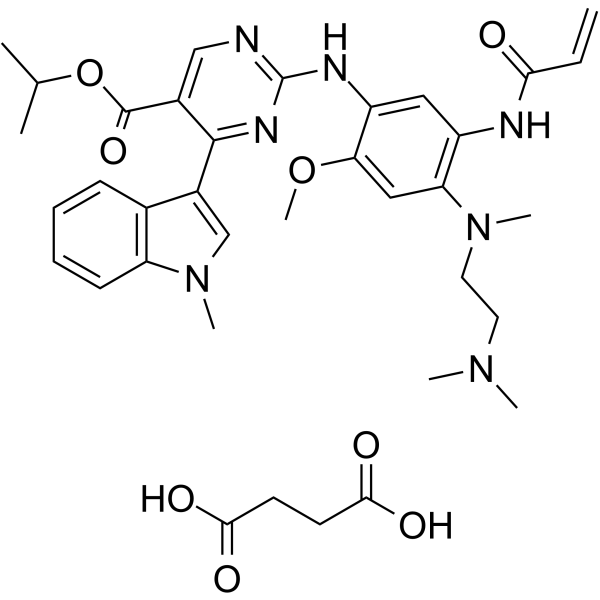
Mobocertinib (TAK-788) succinate is an orally active and irreversible EGFR/HER2 inhibitor. Mobocertinib succinate potently inhibits oncogenic variants containing activating EGFRex20ins mutations with selectivity over wild-type EGFR. Mobocertinib succinate can be used in NSCLC research .
Jobosic acid, a saturated fatty acid, is a selective SARS-CoV-2 inhibitor. Jobosic acid inhibits Mpro and spike-RBD/ACE-2 interaction with IC50 values of 7.5 μg/mL and 3 μg/mL, respectively. Jobosic acid shows viral entry inhibition for the omicron SARS-CoV-2 variant .
SARS-CoV-2 Mpro-IN-32 (Compound 1) is a selective inhibitor of SARS-CoV-2 M Pro with an IC50 value of 230 nM. SARS-CoV-2 Mpro-IN-32 can also inhibit the replication of multiple SARS-CoV-2variantsin vitro .
Rapirosiran sodium is a N-acetylgalactosamine-conjugated small-interfering RNA targeting liver-expressed hydroxysteroid 17-beta dehydrogenase 13 (HSD17B13) mRNA. Loss-of-function variants in the HSD17B13 associated with reduced risk of chronic liver disease. Rapirosiran sodium can be used for the study of Non-alcoholic steatohepatitis.
EPI-7170, a ralaniten analogue, is a potent androgen receptor N-terminal structural domain antagonist that blocks the transcriptional activity of full-length AR (FL-AR) and AR splice variants (AR-Vs). EPI-7170 has antitumor effects against enzalutamide resistant castration-resistant prostate cancer (CRPC) .
GPLGVRGC is a cysteine-tagged variant of GPLGVRG (HY-P11800). GPLGVRGC is hydrolyzable by MMP13. GPLGVRGC mediates the disassembly of micelle-exosome systems, enhances chondrocyte endocytosis, and promotes responsive system uptake. GPLGVRGC confers targeted delivery and responsive release properties to micelle-exosome systems. GPLGVRGC is applicable to the research of osteoarthritis .
Rapirosiran is a N-acetylgalactosamine-conjugated small-interfering RNA targeting liver-expressed hydroxysteroid 17-beta dehydrogenase 13 (HSD17B13) mRNA. Loss-of-function variants in the HSD17B13 associated with reduced risk of chronic liver disease. Rapirosiran can be used for the study of Non-alcoholic steatohepatitis.
Ziv-aflibercept is a soluble inhibitor of vascular endothelial growth factor (VEGF). Ziv-aflibercept is an adaptive variant of Aflibercept (HY-108801), Ziv-aflibercept has a low PH value and high osmotic pressure when compared to Aflibercept. Ziv-aflibercept has potential applications in metastatic colorectal carcinoma and retinal diseases .
SARS-CoV-2-IN-92 (compound 11) inhibits SARS-CoV-2variants (EC50 = 0.48 μM), as well as SARS-CoV and MERS-CoV. SARS-CoV-2-IN-92 (compound 11) potently and selectively blocks ERα-Glu II .
ABC transporter modulator-1 (Compound I-5) is an ABC transporter expression enhancer. ABCC6 modulator-1 upregulates the expression of wild-type ABCC6, wild-type ABCB4, and ABCA4P1380L mutant, with an EC50 of <1 μM for all .
Cendakimab (RPC4046; ABT 308; CC-93538) is a selective, humanized, recombinant monoclonal antibody against the IL-13 molecule. Cendakimab has a high affinity and potency for both human wild-type and variant IL-13 and blocks binding of IL-13 to both IL-13Rα1 and IL-13Rα2 with IC50s of 352 pM and 631 pM by ELISA, respectively. Cendakimab recognizes both wild-type human IL-13 and the common polymorphic variant R110Q, with binding affinities of 52 and 50 pM, respectively. Cendakimab has the potential for IL-13-related allergic/inflammatory diseases (e.g., asthma and eosinophilic esophagitis) .
N-0920 is a potent TMPRSS2 inhibitor with an IC50 of 0.35 nM. N-0920 effectively inhibits SARS-CoV-2 variants EG.5.1 and JN.1 entry in Calu-3 cells, with picomolar EC50s values of 300 pM and 90 pM, respectively .
SARS-CoV-2-IN-100 (Compound 172) is an inhibitor of SARS-CoV-2, demonstrating broad-spectrum antiviral activity against various SARS-CoV-2variants. SARS-CoV-2-IN-100 exhibits synergistic effects with Nirmatrelvir, which can reduce the risk of antiviral drug resistance .
Bamlanivimab (Anti-Human SARS-CoV-2) is the first COVID-19 monoclonal antibody (mAb) to be granted Emergency Use Authorization (EUA) in November 2020 by the U.S. Food and agent Administration (FDA). However, Bamlanivimab is withdrawn in April 2021 following the rise of SARS-CoV-2 virus variants resistant to Bamlanivimab .
Deldeprevir (ACH-2684) is a HCV NS3 protease inhibitor. Deldeprevir has potent antiviral activities against different genotypes and against known resistant variants (such as R155, Al56 and D168) by the formation a highly stable complex with NS3 prolease. Deldeprevir can be used for Hepatitis C virus infection research .
SARS-CoV-2-IN-40 (Compound 19) is a SARS-CoV-2 inhibitor. SARS-CoV-2-IN-40 inhibits SARS-CoV-2 BA.1 and BA.5 variant infection of Calu3 lung cells, with IC50s of 100 nM and 160 nM respectively .
Efzofitimod is a splice variant of the aminoacyl-tRNA synthetase HARS1, which is fused with the Fc segment of a human antibody. Efzofitimod targets the neuronal phospholipid NRP2 (neuropilin-2) and has anti-inflammatory and immunomodulatory activities. Efzofitimod can downregulate the innate and adaptive immune responses in inflammatory disease states, suppressing indirect lung disease (ILD) .
2-Chloro-2′-deoxyadenosine monophosphate is an anticoronavirus agent. It exhibits significant inhibitory effects against wild-type novel coronavirus, novel coronavirus variants (Beta, Delta, and Omicron strains), and other coronaviruses such as human coronavirus 229E, human coronavirus OC43, human coronavirus NL63, and mouse coronavirus MHV .
EN1441 is a covalent degrader targeting the androgen receptor (AR) with an EC50 value of 4.2 μM and its truncated variantAR-V7. EN1441 selectively and potently degrades both AR and AR-V7 in androgen-independent prostate cancer cells. EN1441 is promising for research of androgen-independent prostate cancers .
BRD5080 is a potent GPR65 positive allosteric modulator. BRD5080 induces GPR65-dependent cAMP production. BRD5080 exhibits a robust induction of cAMP activity and recruits G protein for the WT and variant hGPR65 as well as for the mouse ortholog. BRD5080 has the potential for autoimmune and inflammatory diseases research .
BTT-3034, a sulfonamide derivative, is an α2β1 integrin inhibitor. BTT-3034 inhibits cell adhesion to rat tail collagen I with an EC50 of 160 nM and a corresponding Emaxof 86%. BTT-3034 inhibits collagen binding by an α2 variant carrying the conformationally activating E318W mutation .
Mobocertinib (Standard) is the analytical standard of Mobocertinib. This product is intended for research and analytical applications. Mobocertinib (TAK-788) is an orally active and irreversible EGFR/HER2 inhibitor. Mobocertinib potently inhibits oncogenic variants containing activating EGFRex20ins mutations with selectivity over wild-type EGFR. Mobocertinib can be used in NSCLC research .
Scrambled β-amyloid (1-40) is a biological active peptide. (Aβ (1-40) together with Aβ (1-42) are two major C-terminal variants of the Aβ protein constituting the majority of Aβs. These undergo post-secretory aggregation and deposition in the Alzheimer’s disease brain. This peptide is the scrambled sequence of Abeta 1-40 HY-P0265)
CL-A3-7 is a virus-cell fusion inhibitor targeting the RSV F protein. It exerts its effect by blocking the interaction between the virus and the host IGF1R, effectively inhibiting infections of both wild-type RSV and the K394R variant. It is applicable to anti-RSV drug development and resistance-related research .
SN52 is a potent, competitive, and cell-permeable inhibitor of NF-κB2. SN52 is a variant of the SN50 peptide and inhibits the nuclear translocation of p52-RelB heterodimers. SN52 has a strong radiosensitization effect on prostate cancer cells. SN52 can be used for cancer research .
VPC-14449 is a potent and selective inhibitor of the DNA-binding domain of the androgen receptor (AR-DBD), with IC50 of 0.34 μM for full-length human AR. VPC-14449 reduces the ability of full-length AR as well as AR variants to interact with chromatin. VPC-14449 can be used for the research of prostate cancer .
SIYNFEKL TFA is a variant of major MHC class I-restricted epitope SIINFEKL. SIYNFEKL TFA is an antigenic peptide, that can stimulate specific T cells in experimental settings to study the competitive interaction between T cell. SIYNFEKL TFA exhibits low affinity for the OT-I T cell receptor (TCR), and can be used for detection of CD8+ T cells .
SPR206 acetate is a polymyxin analog with antibiotic activity against Gram-negative pathogens, including multidrug-resistant (MDR) variants. SPR206 acetate has an anti-bacterial infection effect by interacting with the bacterium’s outer membrane. The MIC values of SPR206 acetate against Pseudomonas aeruginosa Pa14 and Acinetobacter baumannii NCTC13301 are both 0.125 mg/L .
Davoceticept (ALPN-202; CD80 vIgD-Fc) is a variant CD80 vIgD-Fc fusion protein targeting CTLA-4 and PD-L1. Davoceticept consists of the (1-107) fragment of CD80 linked to IGHG1 Fc via a peptidyl linker. The expression system of Davoceticept is usually CHO (Chinese Hamster Ovary) cells .
SIIVFEKL TFA is a variant of the major MHC class I-restricted epitope SIINFEKL. SIIVFEKL TFA is an antigenic peptide, that can stimulate specific T cells in experimental settings to study the competitive interaction between T cells. SIIVFEKL TFA exhibits low affinity for the OT-I T cell receptor (TCR), and can be used for detection of CD8+ T cells .
(Glu20)-Amyloid β-Protein (1-42) is a slower fibrillizing variant of amyloid β-protein (Aβ). The Glu20 mutation reduces the aggregation propensity of Aβ42 and prevents accumulation of the slowly fibrillizing peptide. Amyloid β-protein is the primary component of both vascular and parenchymal amyloid deposits in Alzheimer's disease .
AB-343 is a selective covalent inhibitor of SARS-CoV-2 Mpro, with an IC50 of 8 nM and a Ki of 2.8 nM. AB-343 can effectively inhibit the main proteases of SARS-CoV-2 and many other coronaviruses, and is also active against some resistant variants. AB-343 can be used in the research of treating coronavirus infection-related diseases .
S1b3inL1 is a SARS-CoV-2 spike protein macrocyclic peptide inhibitor. S1b3inL1 can bind the conserved site of spike protein with high affinity and inhibit the infection of various SARS-CoV-2 variant strains. S1b3inL1 has antiviral activity .
OVA-Q4 Peptide is a biological active peptide. (Q4 Peptide (SIIQFEKL) is a variant of the agonist ovalbumin (OVA) peptide (257-264), SIINFEKL. OVA Peptide is a class I (Kb)-restricted peptide epitope of ovalbumin presented by the class I MHC (major histocompatibility complex) molecule, H-2Kb (class I genes of the mouse MHC).)
Pregnanediol (NSC 1612) is a Progesterone (HY-N0437) metabolite. Pregnanediol does not affect the transcriptional activity of UGT1A1 enhancer-promoter complex of WT and variant type. pregnanediol inhibits glucuronidation activity of G71R-UGT1A1. Pregnanediol is a cause of breast milk jaundice in carriers of G71R .
Mobocertinib (succinate) (Standard) is the analytical standard of Mobocertinib (succinate). This product is intended for research and analytical applications. Mobocertinib (TAK-788) succinate is an orally active and irreversible EGFR/HER2 inhibitor. Mobocertinib succinate potently inhibits oncogenic variants containing activating EGFRex20ins mutations with selectivity over wild-type EGFR. Mobocertinib succinate can be used in NSCLC research .
NAV006 is an anti-CD20 antibody variant of Rituximab (HY-P9913) with a Kd of 30.5 nM to CD20. NAV006 exhibits reduced interaction with CA125 and demonstrates enhanced antibody-dependent cellular cytotoxicity (ADCC) and complement-dependent cytotoxicity (CDC) activity. NAV006 displays antitumor activity against lymphoma and can be used in research on non-Hodgkin lymphoma .
Xylohexaose is a xylooligosaccharide composed of six xylose residues. Xylohexaose can be produced by hydrolysis of beechwood xylan by AfXynA. Xylohexaose serves as a substrate for the determination of xylan hydrolysis activity .
13-TP prodrug (compound 15) is a potent and orally active anti-SARS-CoV-2 agent. 13-TP prodrug shows cytotoxicity. 13-TP prodrug decreases the SARS-CoV-2 N protein expression. 13-TP prodrug shows antiviral activity .
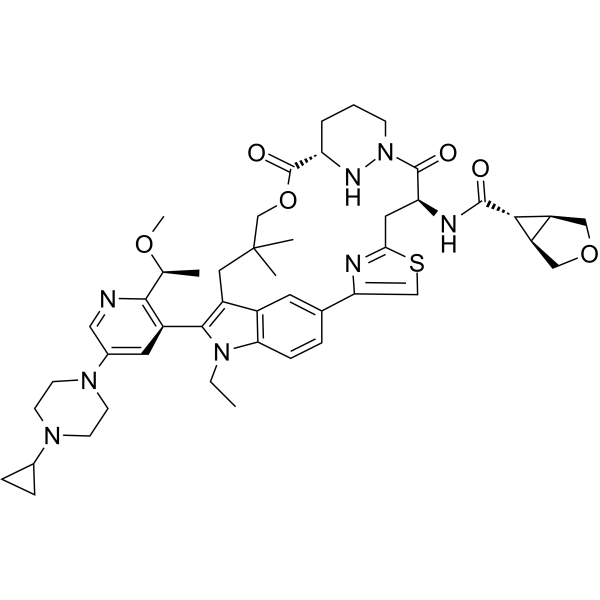
Daraxonrasib (RMC-6236) is an orally active, non-covalent RAS (ON) inhibitor. Daraxonrasib disrupts the interaction of wild-type or mutant RAS proteins with the RAS binding domain of BRAF, with EC50 values ranging from 28-220 nM for wild-type KRAS, NRAS, HRAS, and multiple oncogenic RAS variants. Daraxonrasib inhibits pERK. Daraxonrasib has anti-tumor activity against KRAS mutant tumors .
AcdK is a non-natural amino acid and a precursor of allysine. AcdK allows site-specific incorporation into target proteins in E. coli via the amber suppression strategy. AcdK enables site-specific lysine dimethylation or monomethylation modification of target proteins. AcdK can synthesize site-specific lysine-methylated variants of histone H3 and p53, which is applicable for investigating the substrate specificity and catalytic function of epigenetic enzymes .
Efdelikofusp alfa is a bispecific Fc fusion protein. Efdelikofusp alfa is formed by fusing the N-terminal extracellular domain of human CD80 (B7.1) with the Fc fragment of human immunoglobulin G4 (IgG4), and is linked to an interleukin-2 variant (IL-2v) as the C-terminal part. Efdelikofusp alfa exhibits potential immunostimulatory, immune checkpoint inhibitory, and antitumor activities.
Riamilovir is an antiviral drug whose activity is primarily directed against RNA viruses. Riamilovir acts directly on the virus's RNA-dependent RNA polymerase, thereby preventing the virus from replicating. This mechanism allows Riamilovir to effectively reduce the amount of virus, accelerate the relief of symptoms, and help reduce the severity of the disease. Riamilovir can be used in the study of acute respiratory viral infections caused by new variants of SARS-CoV-2 .
SARS-CoV-2 Mpro-IN-47 is an orally active SARS-CoV-2 Mpro reversible covalent Inhibitor. SARS-CoV-2 Mpro-IN-47 shows potent antiviral activity against several clinical variants of SARS-CoV-2. SARS-CoV-2 Mpro-IN-47 can be used for the research of infection, such as SARS-CoV-2 .
Bebtelovimab a human IgG1-λ2 antibody targeting to SARS-CoV-2, especially COVID-19 ((the IC50 value for SARS-CoV-2/MT020880.1 virus is 9-22.1 ng/mL)). Bebtelovimab potently neutralizes SARS-CoV-2 variants, and inhibits COVID-19 with mild-to-moderate efficacy .
Efzilonkofusp alfa is a bispecific Fc fusion protein. Efzilonkofusp alfa is formed by fusing the N-terminal extracellular domain of human CD80 (B7.1) with the Fc fragment of human immunoglobulin G4 (IgG4), and is linked to an interleukin-2 variant (IL-2v) as the C-terminal part. Efzilonkofusp alfa exhibits potential immunostimulatory, immune checkpoint inhibitory, and antitumor activities.
SARS-CoV-2-IN-51 (S-10) is a potent lead compound of Omicron fusion inhibitor. SARS-CoV-2-IN-51 inhibits Omicron and other variants with EC50s of 0.82-5.45 μM. SARS-CoV-2-IN-51 inhibits SARS-CoV-2 virus entry, by the direct interaction with S in the prefusion state .
DNDI-6510 (Compound (S)-x38) is a non-covalent SARS-CoV-2 MPro inhibitor with a IC50 of 0.04 μM. DNDI-6510 has a potent antiviral activity across SARS-CoV-2 and its variants as well as a weak efficacy to SARS-CoV-1. DNDI-6510 significantly improves drug exposure in metabolically humanized mice model (8HUM) .
Jun13296 is an orally active quinoline SARS-CoV-2 papain-like protease inhibitor (IC50 = 0.13 µM, Ki = 8.8 nM). Jun13296 exhibits potent inhibition against SARS-CoV-2 variants and Nirmatrelvir (HY-138687)-resistant mutants. Jun13296 improves lung viral titers, and prevents lung tissue damage in a SARS-CoV-2 infection model .
9-Aminominocycline (9-AMN) is the inhibitor for SARS-CoV-2 papain-like protease (SARS-CoV-2 PLpro), inhibits its deubiquitination (DUB) activity and protease activity with IC50 of 4.55 µM and 4.15 µM. 9-Aminominocycline inhibits the SARS-CoV variants Delta and Omicron replication in Calu-3 cell with IC50 of 1.04 µM and 2.35 µM .
OSC-GCDI(P) is a broad-spectrum orally active anti-influenza virus agent that exhibits significant inhibitory effects against both wild-type and Oseltamivir (HY-13317) resistant (H275Y) influenza virus strains in mouse infection models. OSC-GCDI(P) is capable of preventing not only wild-type influenza viruses but also OS-resistant variants with NA(H275Y) .
Encaleret (CLTX-305) sodium is an orally active antagonist of the calcium-sensing receptor (CaSR), with an IC50 of 12 nM. Encaleret sodium exerts its effect by inhibiting the excessive activity of functional gain-of-function CaSR variants, and can restore blood calcium levels, promote the secretion of parathyroid hormone, improve magnesium and phosphorus metabolism, and increase urinary calcium excretion. Encaleret sodium can be used in the research of diseases such as osteoporosis and autosomal dominant hypocalcemia type 1 .
Encaleret (CLTX-305) is an orally active antagonist of the calcium-sensing receptor (CaSR), with an IC50 of 12 nM. Encaleret exerts its effect by inhibiting the excessive activity of functional gain-of-function CaSR variants, and can restore blood calcium levels, promote the secretion of parathyroid hormone, improve magnesium and phosphorus metabolism, and increase urinary calcium excretion. Encaleret can be used in the research of diseases such as osteoporosis and autosomal dominant hypocalcemia type 1 .
Grazoprevir sodium salt (MK-5172 sodium salt) is a selective inhibitor of Hepatitis C virus NS3/4a protease with broad activity across genotypes and resistant variants, with Kis of 0.01 nM (gt1b), 0.01 nM (gt1a), 0.08 nM (gt2a), 0.15 nM (gt2b), 0.90 nM (gt3a), respectively . Grazoprevir sodium salt inhibits SARS-CoV-2 3CL pro activity .
Grazoprevir hydrate (MK-5172 hydrate) is a selective inhibitor of Hepatitis C virus NS3/4a protease with broad activity across genotypes and resistant variants, with Kis of 0.01 nM (gt1b), 0.01 nM (gt1a), 0.08 nM (gt2a), 0.15 nM (gt2b), 0.90 nM (gt3a), respectively . Grazoprevir hydrate inhibits SARS-CoV-2 3CL pro activity .
SJ46420, a SJ46421 (HY-168634) pro-drug variant, is a potent and selective BRD3 PROTAC degrader. SJ46420 degrads BRD3 in a KLHDC2-dependent manner, thereby partially reducing the levels of BRD2 or BRD4 (Pink: ligand for target protein (HY-13030); Black: linker (HY-20797); Blue: E3 ligase ligand (HY-159973)) .
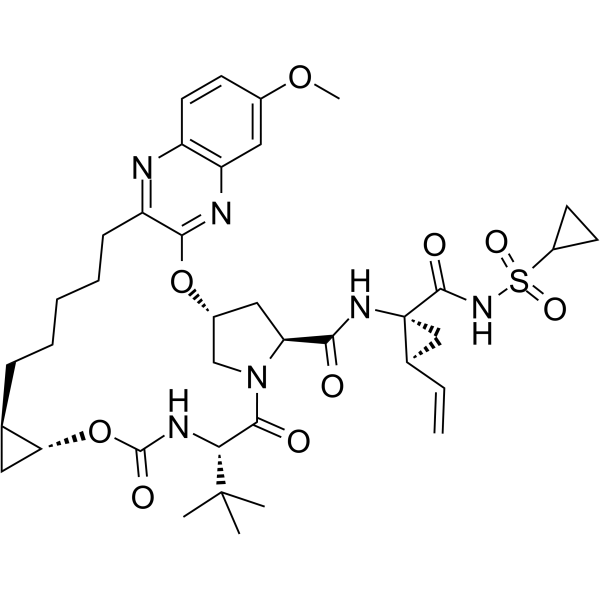
Grazoprevir (MK-5172) is a selective inhibitor of Hepatitis C virus NS3/4a protease with broad activity across genotypes and resistant variants, with Kis of 0.01 nM (gt1b), 0.01 nM (gt1a), 0.08 nM (gt2a), 0.15 nM (gt2b), 0.90 nM (gt3a), respectively . Grazoprevir inhibits SARS-CoV-2 3CL pro activity .
αGalCer-RBD is a self-adjuvanting lipoprotein conjugate. αGalCer-RBD induces potent immunity against SARS-CoV-2 and its variants of concern. αGalCer-RBD conjugate induces RBD-specific, cytokine-producing T cell development. αGalCer-RBD has great potential to be an effective COVID-19 vaccine candidate. α-Galactosylceramide (αGalCer) is a potent invariant natural killer T cell (iNKT) agonist . RBD: receptor-binding domain
MR-L2 is a reversible and noncompetitive allosteric activator of long-isoform phosphodiesterase-4 (PDE4), activates representative PDE4 long-isoform variants (PDE4A4, PDE4B1, PDE4C3, PDE4D5). MR-L2 suppresses PGE2-induced MDCK cell cyst formation with an EC50 of 1.2 μM .
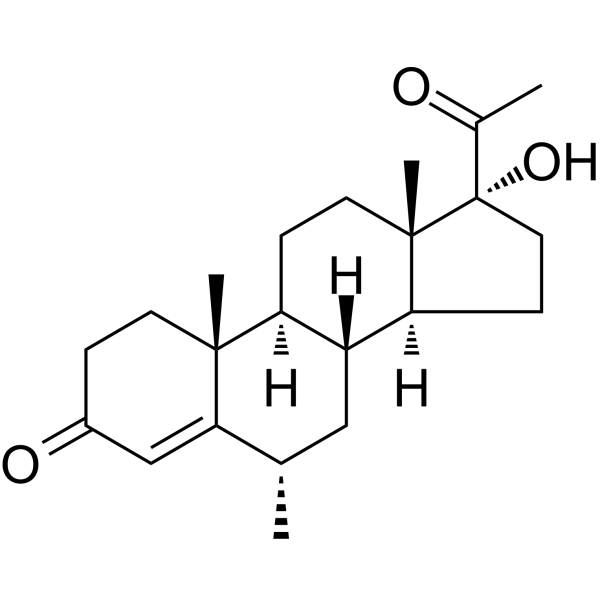
Medroxyprogesterone (17α-Hydroxy-6α-methylprogesterone) is a synthetic human variant of progesterone that is a progesterone receptor agonist with oral activity. Medroxyprogesterone can induce cell proliferation through the PI3K/Akt signaling pathway. Medroxyprogesterone has an inhibitory effect on atherosclerosis in mice. The progesterone agonist activity of Medroxyprogesterone is less effective than Medroxyprogesterone acetate (HY-B0469) .
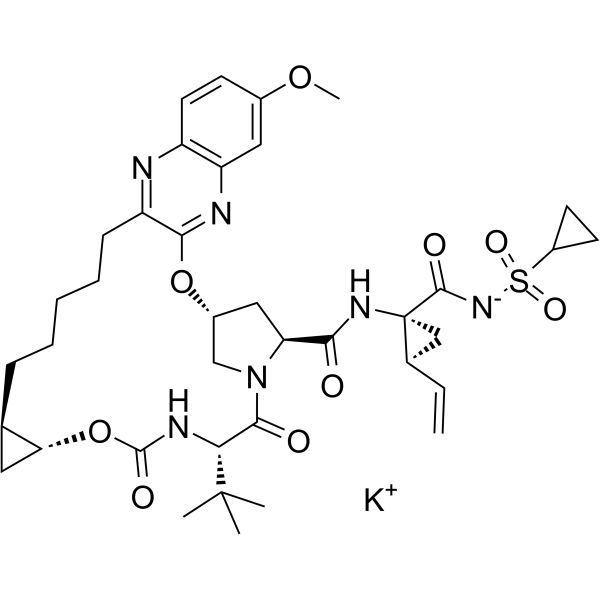
Grazoprevir potassium salt (MK-5172 potassium salt) is a selective inhibitor of Hepatitis C virus NS3/4a protease with broad activity across genotypes and resistant variants, with Kis of 0.01 nM (gt1b), 0.01 nM (gt1a), 0.08 nM (gt2a), 0.15 nM (gt2b), 0.90 nM (gt3a), respectively . Grazoprevir potassium salt inhibits SARS-CoV-2 3CL pro activity .
S 1360 is a potent and selective inhibitor of HIV-1 integrase. S 1360 inhibits the catalytic activity of purified integrase (
IC50: 20 nM). The EC50, and CC50 of S 1360
in MTT assay (MT-4 cells infected with HIV-1 IIIB) are 200 nM and 12 μM, respectively. S 1360 has antiviral activity against both X4 tropic and R5 tropic strains, as well as NRTI, NNRTI and PI drug-resistant variants .
Tagarafdeg (CFT1946) is an orally active, CRBN-based and mutant-selective bifunctional degradation activating compound (BiDAC) degrader of BRAF V600E with a DC50 of 14 nM in A375 cells. Tagarafdeg is capable of degrading BRAF V600E (Class I), G469A (Class II), G466V (Class III) mutations, and the p61-BRAF V600E splice variant. Tagarafdeg can be used in tumor research .
4'-Ethynyl-2'-deoxyadenosine (4'-E-dA), a nucleoside reverse transcriptase (RT) inhibitor, is an antiretroviral agent which is potent against drug-resistant HIV variants, with an EC50 of 98 nM in MT-4 cells for anti-HIV-1 activity . 4'-Ethynyl-2'-deoxyadenosine is a click chemistry reagent, it contains an Alkyne group and can undergo copper-catalyzed azide-alkyne cycloaddition (CuAAc) with molecules containing Azide groups.
AG-7404 is an orally active, irreversible inhibitor of the picornavirus 3C protease. AG-7404 blocks the processing of viral polyproteins, thereby inhibiting viral replication. AG-7404 has synergistic antiviral activity with capsid inhibitors such as V-073 (HY-104074) or BTA798 (HY-106254) and is effective against V-073-resistant variants. AG-7404 is used in the study of enterovirus infections such as poliovirus .
INF55 is a NoA multidrug resistance pump inhibitor with the activity of inhibiting the NoA pump. The heterocomplex formed by INF55 combined with berberine shows the potential to combat the resistance of bacterial compounds. INF55 can enhance the antibacterial activity of berberine by reducing its efflux. The structural variants of INF55 can show different NoA inhibitory activities, thereby affecting the antibacterial effect of its corresponding heterocomplexes. Different derivatives of INF55 show similar activity in terms of antibacterial dose and effectiveness .
STING agonist-22 (CF501) is a potent non-nucleotide STING agonist. STING agonist-22 is a adjuvant by activating STING to induce the type I interferon (IFN-I) response and proinflammatory cytokine production. STING agonist-22 can be used as an adjuvant to boost the original protein vaccine, producing potent, broad, and long-term immune protection. STING agonist-22 can be used for SARS-CoV-2 variants and sarbecovirus diseases research .
C22:1 1-Deoxyceramide (m18:1/22:1) (C22:1(13Z) 1-Deoxyceramide) is a deoxyceramide lipid that lacks the 1-hydroxyl group and is a ceramide variant. C22:1 1-Deoxyceramide (m18:1/22:1) has potential neurotoxicity and is involved in mitochondrial stress and cell death signaling. It can be used to study abnormal sphingolipid metabolism and neurodegenerative diseases .
LX1 is an anti-prostate cancer compound that targets androgen receptor (AR), ARvariants and steroidogenic enzyme AKR1C3. LX1 inhibits the enzymatic activity of AKR1C3, reduces the conversion of androstenedione to testosterone and reduces the expression of AR and AR-V7 and downregulates their target genes. LX1 overcomes the resistance of tumor cells to Enzalutamide (HY-70002), and the combination with Enzalutamide (HY-70002) further inhibits tumor growth .
ALK-IN-1 is an orally active, blood-brain barrier-permeable ALK and EGFR inhibitor. ALK-IN-1 binds to and inhibits ALK kinase, ALK fusion proteins, and wild-type and mutant EGFR variants, thereby disrupting their corresponding signaling pathways. ALK-IN-1 can suppress the growth and proliferation of tumor cells and exhibits potential inhibitory activity against mutant EGFR. ALK-IN-1 can be used in the research of non-small-cell lung cancer .
Inarigivir soproxil (SB9200) is an agonist of innate immunity and shows potent antiviral activity against resistant HCVvariants, with EC50s of 2.2 and 1.0 μM for HCV 1a/1b in cells of genotype 1 HCV replicon systems. Inarigivir soproxil, an orally bioavailable proagent of SB 9000, has broad-spectrum antiviral activity against RNA viruses including HCV, norovirus, respiratory syncytial virus and influenza and HBV .
LO-4-25 is a covalent degrader targeting the androgen receptor (AR) and its truncated variantAR-V7. LO-4-25 covalently binds to the E3 ubiquitin ligase CUL4 DCAF16, promoting the ubiquitination of AR and AR-V7, which subsequently are recognized and degraded by the proteasome, reducing the protein levels of AR and AR-V7 in cells. LO-4-25 is promising for research of androgen-independent prostate cancers .
Droxinavir (SC-55389A) free base is an HIV-1 protease inhibitor and antiviral agent. Droxinavir binds to the S2 and S2' subsites of HIV-1 protease, and this interaction is regulated by protease amino acid residue 88, where the N88S mutation confers viral resistance. Droxinavir can be used in studies related to human immunodeficiency virus type 1 infection .
Nogapendekin alfa (his tag), a soluble protein subunit of a human interleukin (IL)-15 variant, is a superagonist of IL-15. Nogapendekin alfa (his tag) promotes the proliferation and viability of immune cells. Nogapendekin alfa (his tag) combines with Inbakicept (HY-P99661) at a ratio of 2:1, to form N-803 (Nogapendekin alfa inbakicept), an IL-15 cytokine antibody fusion protein. N-803 reduces tumor burden by activation of NK cells and CD8 + T cells .
UM-203 is a reversible covalent STING antagonist. UM-203 is effective against both mouse and human STING, and in particular, it inhibits the most common human STING R232 variant. UM-203 can inhibit STING oligomerization and reduce phosphorylation of downstream TBK1 and IRF3, thereby blocking the IRF3 and NF-κB-mediated signaling pathways and inhibiting IFNβ and IL-6 secretion. UM-203 can be used for the research of inflammation and immunology, such as systemic lupus erythematosus .
SARS-CoV-2 Mpro-IN-23 (Compound 2) is an inhibitor for SARS-CoV-2 main protease (Mpro), which inhibits wildtype Mpro and mutant Mpro variants, with IC50 of 0.057-0.92 μM. SARS-CoV-2 Mpro-IN-23 inhibits the post-entry viral processes of wild-type SARS-CoV-2 single-round infectious particles (SRIPs), suppresses the viral replication of Mpro wildtype and Mpro mutants with EC50 of 0.02-0.52 μM .
AR antagonist 10 (Compound Y5) is potent and orally active androgen receptor (AR) antagonist with an IC50 of 0.04 μM. AR antagonist 10 demonstrates dual mechanisms of action, antagonizes AR by disrupting AR dimerization, and induces AR degradation via the ubiquitin-proteasome pathway. AR antagonist 10 exhibits excellent activity against variant drug-resistant AR mutants. AR antagonist 10 effectively suppresses the tumor growth of the LNCaP xenograft. AR antagonist 10 is potential to be used for drug-resistant prostate cancer .
Amtabafusp alfa (GS-8588) is an envelope-targeting bispecific T-cell engager for HIV treatment. Amtabafusp alfa redirects effector T cells by binding to CD3 via a humanized anti-CD3 Fab domain and to HIV envelope proteins via an engineered CD4 domain 1 variant. Amtabafusp alfa exhibits potent, broad-spectrum activity against a variety of HIV isolates and specifically kills HIV-infected cells. Amtabafusp alfa can be used for research on HIV infection .
hSTING activator-1 (Compound 68) is a STING agonist. hSTING activator-1 can effectively activate multiple human STING variants (R232, H232, HAQ) with EC50 values of 56 nM, 89 nM and 51 nM, respectively. hSTING activator-1 activates the type I interferon pathway by directly binding to STING protein and stabilizing its conformation, promoting downstream IRF3 phosphorylation and cytokine release. hSTING activator-1 inhibits fibrosarcoma tumor growth and has potential in cancer research .
Anti-SARS-CoV-2 S protein (RBD) Antibody (SARS2-38) reacts with many variants of SARS-CoV-2 that binds a conserved epitope on the RBD (amino acids K444 and G446). Anti-SARS-CoV-2 S protein (RBD) Antibody (SARS2-38) does not cross-react with the SARS-CoV-1 spike protein. Recommend Isotype Controls: Mouse IgG1 kappa, Isotype Control (HY-P99977) .
BI-1388 is a macrocyclic acylsulfonamide-based HCVNS3-4A protease inhibitor. BI-1388 inhibits clinically relevant drug-resistant mutant strains (KRAS D168V gt 1b and KRAS R155K gt 1a) and exhibits high liver distribution. BI-1388 is applicable for the research of HCV infection .
OI-3 is a monoclonal antibody targeting CD146 (MCAM). OI-3 specifically binds to CD146 on the surface of human mesothelioma cells and undergoes endocytosis; both chimeric (chOI-3) and murine (mOI-3) variants possess this activity. When conjugated with 212Pb to form 212Pb-TCMC-OI-3, OI-3 acts as a cytotoxic agent that delivers α-emitting radionuclides to induce targeted cytotoxicity. OI-3 can be used in research related to malignant peritoneal mesothelioma .
Galeterone (TOK-001) hydrochloride is a potent, orally active molecular glue degrader, which degrades androgen receptor (AR) and its splice variants (AR-Vs) and MAP kinase-interacting serine/threonine protein kinase Mnk1/2. Galeterone hydrochloride also functions as a CYP17 inhibitor (IC50 = 47 nM). Galeterone hydrochloride induces cell apoptosis. Galeterone hydrochloride inhibits tumor growth in human prostate cancer xenograft mouse models. Galeterone hydrochloride can be used for castration resistant prostate cancer (CRPC) and pancreatic ductal adenocarcinoma (PDAC) research [1][2].
SAR442085 is an Fc-engineered anti-CD38 monoclonal antibody with a Kd of 0.2 nM for human CD38. SAR442085 inhibits CD38, induces apoptosis, and triggers antibody-dependent cellular cytotoxicity and phagocytosis in CD38-expressing tumor cells. SAR442085 binds allelic variants of FcγRIIa and FcγRIIIa, enhances NK cell activation, degranulation and cytokine secretion, and exerts anti-tumor activity in human Fc receptor transgenic mice. SAR442085 can be used in the research of multiple myeloma .
ABCB1/ABCG2-IN-1 (Compound (S,Z)-4b) is an inhibitor of ABCB1 and ABCB2 transporters. ABCB1/ABCG2-IN-1 shows moderate activity in SW620M, -V, and –Mito variants (IC50 ≈ 50 μM). ABCB1/ABCG2-IN-1 affects methotrexate resistance in vitro. ABCB1/ABCG2-IN-1 can be studied in anticancer research .
Androgen receptor antagonist 12 (Compound EF2) is an orally active Androgen receptor (AR) antagonist (IC50: 0.30 μM). Androgen receptor antagonist 12 inhibits transcriptional activity of variant AR mutants and and the proliferation of AR-positive PCa cell lines. Androgen receptor antagonist 12 blocks AR nuclear translocation. Androgen receptor antagonist 12 inhibits tumor growth in a C4-2B xenograft mouse model. Androgen receptor antagonist 12 can be used for prostate cancer (PCa) research .
Sotiburafusp alfa is a bispecific fusion protein, which is a humanized VEGFR-1 extracellular domain fragment (129-228, 1-100 in the current sequence) fused via the peptide linker 101GGSGGSGGSGGSGGS 115 to the N-terminus of the heavy chain (116-564) of a humanized IgG1-kappa anti-human PD-L1 heavy chain variant L352>A, L353>A. Sotiburafusp alfa also functions as a PD-L1 inhibitor and a VEGF inhibitor .
SARS-CoV-2-IN-120 (Compound S22) is a SARS-CoV-2-specific entry inhibitor. SARS-CoV-2-IN-120 binds and trimerizes within the apex cavity of the SARS2 spike trimer. SARS-CoV-2-IN-120 blocks RBD-ACE2 interaction. SARS-CoV-2-IN-120 neutralizes BA.2 and subsequent Omicron variants. SARS-CoV-2-IN-120 inhibits SARS-CoV-2 replication in mice .
AR antagonist 17 is a selective, orally active, low brain-penetrant Androgen Receptor (AR) antagonist (IC50 = 0.010 μM), effectively blocking AR dimerization and nuclear translocation, and demonstrating potent efficacy in several castration-resistant prostate cancer (CRPC) cells. AR antagonist 17 showed superior efficacy against variant drug-resistant AR mutants. AR antagonist 17 can inhibit tumor growth in an LNCaP xenograft model without apparent toxicity. AR antagonist 17 can be used for the study of castration-resistant prostate cancer (CRPC) .
GNF-6 (Compound 14) inhibits the gatekeeper threonine residue mutation of BCR-ABL-T315I with IC50s of 0.25 μM, 0.09 μM and 0.590 μM for c-ABL-T334I, BCR-ABL and BCR-ABL-T315I variants, respectively. GNF-6, an ATP competitive inhibitor, disrupts the assembly of the hydrophobic spine (a network of hydrophobic interactions), thereby locking the kinase in an inactive ‘DFG-out’ conformation .
Galeterone (TOK-001) is a potent, orally active molecular glue degrader, which degrades androgen receptor (AR) and its splice variants (AR-Vs) and MAP kinase-interacting serine/threonine protein kinase Mnk1/2. Galeterone also functions as a CYP17 inhibitor (IC50 = 47 nM). Galeterone induces cell apoptosis. Galeterone inhibits tumor growth in human prostate cancer xenograft mouse models. Galeterone can be used for castration resistant prostate cancer (CRPC) and pancreatic ductal adenocarcinoma (PDAC) research [1][2].
Spike Glycoprotein (1147-1162) is a linear and broadly neutralizing peptide in the S2 protein of SARS-CoV-2. Spike Glycoprotein (1147-1162) is conserved across SARS-CoV, BatCoV RaTG13, SARS-CoV-2, and SARS-CoV-2 variants. Spike Glycoprotein (1147-1162)-targeting mAbs can neutralize both SARS-CoV-2 and SARS-CoV by preventing fusion between the virus and cell membrane. Spike Glycoprotein (1147-1162) can be used for universal vaccines against SARS-CoV-2 mutants research .
CIM-834 is an orally effective inhibitor of SARS-CoV-2 membrane protein. CIM-834 can prevent the assembly of infectious virus particles without inhibiting the synthesis of viral RNA. CIM-834 can reduce the viral titer in the lungs of SCID mice infected nasally with SARS-CoV-2, block the spread of SARS-CoV-2 among Syrian hamsters, and inhibit the replication of SARS-CoV-2 (including variants) and SARS-CoV. CIM-834 can be used in related research on COVID-19 .
VPC-14228 is an inhibitor that selectively targets androgen receptor DNA binding domain (AR-DBD). VPC-14228 inhibits the interaction between AR and DNA, thereby blocking AR-mediated transcriptional activation. VPC-14228 does not rely on nuclear localization inhibition, but rather inhibits the activity of full-length AR and splice variant AR-V7 by interfering with AR binding to chromatin. And VPC-14228 has high selectivity for other nuclear receptors such as ER and PR. VPC-14228 can be used in the study of prostate cancer [2].
ALK-IN-1 (Standard) is the analytical standard of ALK-IN-1 (Brigatinib analog) (HY-13464). This product is intended for research and analytical applications. ALK-IN-1 is an ALK and EGFR inhibitor. ALK-IN-1 binds to and inhibits ALK kinase, ALK fusion proteins, and wild-type and mutant EGFR variants, thereby disrupting their corresponding signaling pathways. ALK-IN-1 can suppress the growth and proliferation of tumor cells and exhibits potential inhibitory activity against mutant EGFR. ALK-IN-1 can be used in the research of non-small-cell lung cancer .
ITRI-90 is an orally active androgen receptor (AR) PROTAC degrader. ITRI-90 effectively degrades both full-length AR (AR-FL) and the splice variant AR-V7 protein via the ubiquitin-proteasome system, thereby inhibiting AR transcriptional activity and the target gene expression. ITRI-90 significantly inhibits the proliferation of prostate cancer cells and induces apoptosis, include Enzalutamide-resistant growth cell. ITRI-90 exhibits favorable pharmacokinetic properties and demonstrates potent antitumor efficacy in vivo. ITRI-90 can be used for prostate cancer research .
GK730 is a potent and selective SARS-CoV-2 main protease inhibitor with an IC50 of 5.75 nM. GK730 does not inhibit cathepsin B, while exhibits weak inhibition of cathepsin L (IC50 = 11 μM). GK730 can simultaneously block the replication of the virus and the entry pathways for variants such as Omicron into cells. GK730 demonstrates an EC50 value of 5.70 μM against a wild-type SARS-CoV-2 strain in Vero E6 cells and CC50 value greater than 100 μM. GK730 can be used for the research of COVID-19 .
3-AP-Me is a dimethyl derivative of the nucleotide reductase inhibitor 3-AP (SML0568). 3-AP-Me can activate the endoplasmic reticulum (ER) stress pathway by promoting the phosphorylation of eIF2α and increasing the gene expression of transcription factors ATF4 and ATF6, leading to cell apoptosis. Additionally, 3-AP-Me can activate the stress kinases c-Jun N-terminal kinase (JNK) and p38 mitogen-activated protein kinases. 3-AP-Me also leads to the upregulation of the spliced mRNA variant XBP1, can be used in cancer research .
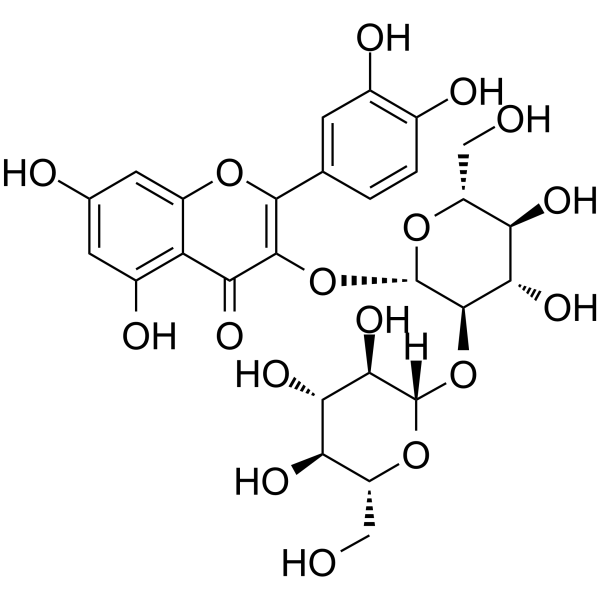
Baimaside (Quercetin 3-O-sophoroside) is a flavonoid cholinergic function modulator that binds to SARS-CoV-2-related targets. Baimaside regulates the expression of cholinergic system-related proteins and acetylcholine levels, improves scopolamine-induced learning and memory impairment, protects hippocampal neurons, inhibits pollen protein fluorescence, and protects pollen DNA. Its biosynthesis is regulated by multiple enzymes. Baimaside is completely absorbed in rats, undergoes phase Ⅱ metabolism and gut microbiota decomposition, and inhibits the invasion and proliferation of SARS-CoV-2 and its variants, making it suitable for research related to Alzheimer's disease and COVID-19 .
Chitin synthase inhibitor 11 is a chitin synthase inhibitor. Chitin synthase inhibitor 11 shows excellent chitin synthase inhibitory activity with an IC50 value of 0.10 mM. Chitin synthase inhibitor 11 has broad-spectrum antifungal activity in vitro. Chitin synthase inhibitor 11 can be used for the research of invasive fungal infections (IFIs) .
BI-4020 is a fourth-generation, orally active, and non-covalent EGFR tyrosine kinase inhibitor. BI-4020 inhibits not only the triple mutant EGFR del19 T790M C797S variant (IC50=0.2 nM in BaF3 cell lines) but also the double mutant EGFR del19 T790M and primary mutant EGFR del19 (IC50=1 nM). BI-4020 also shows activity against EGFR wt (IC50=190 nM). BI-4020 shows high kinome selectivity and good DMPK properties .
Virapinib is a macropinocytosis inhibitor with antiviral activity. Virapinib exhibits broad-spectrum antiviral activity against SARS-CoV-2, monkeypox virus, tick-borne encephalitis virus, and Ebola pseudotyped vesicular stomatitis virus, and it enhances Dengue Virus infection. Virapinib blocks viral entry by inhibiting macropinocytosis, reduces syncytium formation in SARS-CoV-2-infected cells, and impairs cellular entry of SARS-CoV-2 variants. Virapinib upregulates the expression of genes related to sterol biosynthesis. Virapinib can be used in studies related to COVID-19, monkeypox, tick-borne encephalitis, and Ebola virus infection .
BAY 2476568 is a potent and mutant-selective inhibitor targeting EGFR exon20 insertion variants. BAY 2476568 potently inhibits the kinase activity of EGFR exon20 insertion mutants (insASV, insSVD, insNPG) with IC50 values of 0.09 nM, 0.21 nM, and 0.11 nM, respectively. BAY 2476568 inhibits EGFR (Y1068) phosphorylation and reduces the phosphorylation of ERK1/2 and Akt (S473) in Ba/F3 cells expressing EGFR exon20 insertion mutants (insASV, insSVD). BAY 2476568 can be used for the study of non-small cell lung cancer (NSCLC) driven by EGFR exon20 insertion mutations .
VNPP433-3β (Galeterone 3β-imidazole) dihydrochloride is an orally active molecular glue degrader, which degrades androgen receptor (AR) and its splice variants (AR-Vs) and MAP kinase-interacting serine/threonine protein kinase Mnk1/2. VNPP433-3β dihydrochloride induces cell apoptosis. VNPP433-3β dihydrochloride inhibits tumor growth in the CWR22Rv1 xenograft mouse model. VNPP433-3β dihydrochloride can be used for the study of castration resistant prostate cancer (CRPC) and pancreatic ductal adenocarcinoma (PDAC) .
VNPP433-3β (Galeterone 3β-imidazole) is an orally active molecular glue degrader, which degrades androgen receptor (AR) and its splice variants (AR-Vs) and MAP kinase-interacting serine/threonine protein kinase Mnk1/2. VNPP433-3β induces cell apoptosis. VNPP433-3β inhibits tumor growth in the CWR22Rv1 xenograft mouse model. VNPP433-3β can be used for the study of castration resistant prostate cancer (CRPC) and pancreatic ductal adenocarcinoma (PDAC) .
GZNL-P36 is an orally active inhibitor for SARS-CoV-2 papain-like protease (PL pro), with an IC50 of 6.45 nM. GZNL-P36 inhibits SARS-CoV and its variants with EC50 range from 58.2 nM to 2.66 μM. GZNL-P36 exhibits a peak plasma concentration Cmax of 549 ng/mL, a half-life T1/2 of 1.45 h and a bioavailability of 74.7% in CD-1 mouse. GZNL-P36 exhibits antiviral activity in SARS-CoV-2 XXB.1 infection in mouse .
VNPP433-3β (Galeterone 3β-imidazole) hydrochloride is an orally active molecular glue degrader, which degrades androgen receptor (AR) and its splice variants (AR-Vs) and MAP kinase-interacting serine/threonine protein kinase Mnk1/2. VNPP433-3β hydrochloride induces cell apoptosis. VNPP433-3β hydrochloride inhibits tumor growth in the CWR22Rv1 xenograft mouse model. VNPP433-3β hydrochloride can be used for the study of castration resistant prostate cancer (CRPC) and pancreatic ductal adenocarcinoma (PDAC) .
Type II TRK inhibitor 1 is a potent TRK inhibitor, which inhibits various TRK fusion protein variants and wild type. Type II TRK inhibitor 1 exhibits antiproliferative activity against Ba/F3 cells harboring CD74-TRKA G667C and ETV6-TRKC G696C fusion proteins with IC50s of 6 nM and 1.7 nM, respectively . Type II TRK inhibitor 1 is a click chemistry reagent, it contains an Alkyne group and can undergo copper-catalyzed azide-alkyne cycloaddition (CuAAc) with molecules containing Azide groups.
(R)-SKBG-1 is a covalent inhibitor targeting the RNA binding protein NONO. (R)-SKBG-1 can reduce the expression of androgen receptor (AR) and its splice variants, inhibiting cancer cell proliferation. (R)-SKBG-1 inhibits androgen receptor expression with IC50 of 3.1 μM and 5.5 μM for AR-FL mRNA and AR-V7 mRNA, respectively. (R)-SKBG-1 interferes with the gene regulatory network of cancer cells and inhibits cancer cell growth by stabilizing the interaction between NONO and mRNA. (R)-SKBG-1 can be used in the study of cancers related to NONO dysfunction, such as prostate cancer .
SARS-CoV-2 Mpro-IN-50 (Compound 30) is a noncovalent SARS-CoV-2 Mpro inhibitor with an IC50 of 14 nM. SARS-CoV-2 Mpro-IN-50 is also a pan-CoV Mpro inhibitor with IC50 s of 20-190 nM for SARS-CoV-1 Mpro, 229E Mpro, HKU1 Mpro, MERS Mpro, NL63 Mpro and OC43 Mpro. SARS-CoV-2 Mpro-IN-50 has significant antiviral activity against the SARS-CoV-2 omicron variant (EC50 : 22 nM). SARS-CoV-2 Mpro-IN-50 can be used for coronavirus infections research .
ALG-097558 is an orally active 3CLpro inhibitor. ALG-097558 demonstrates pan-coronavirus activity against various SARS-CoV-2variants as well as other human coronaviruses (HCoVs) such as SARS-CoV-1, α-HCoV 229E, and β-HCoV OC43. ALG-097558 demonstrates potent inhibition with IC50s of 2 nM (SARS-CoV-2 3CLpro) and 6 nM (229E 3CLpro). ALG-097558 demonstrates antiviral activity in the SARS-CoV-2 hamster infection model. ALG-097558 can be used for the study of viral infections[1].
DNJ-20 is an α-glucosidase inhibitor (IC50: 55.3 μg/mL). DNJ-20 has broad-spectrum anti-SARS-CoV-2 activity. DNJ-20 inhibits the correct processing of viral glycoproteins by interfering with the endoplasmic reticulum-associated glycoprotein folding process (ERQC), thereby blocking the formation and infection of viral particles. DNJ-20 has IC50 values up to 1.49 uM against several SARS-CoV-2 variants, as well as HCoV-229E and HCoV-0C43。DNJ-20 can be used for pan-coronavirus research .
FLT3-IN-20 (compound 34f) is a potent FLT3 inhibitor with IC50 values of 1 and 4 nM for FLT3-D835Y and FLT3-ITD, respectively. FLT3-IN-20 has anti-proliferation efficacy in FLT3-ITD-positive AML cell lines MV4-11 and MOLM-13 (7 and 9 nM, respectively) and the MOLM-13 variant (4 nM) with the FLT3-ITD-D835Y mutation. FLT3-IN-20 can be used in research of cancer .
TMP1 is an orally active bispecific inhibitor of M pro (IC50 = 312.5 nM)/TMPRSS2 (IC50 = 1.28 μM, KD = 10.10 μM). TMP1 exhibits broad protection against different SARS-CoV-2variants in vitro. TMP1 cross-protects against highly pathogenic coronaviruses (SARS-CoV-1, SARS-CoV-2, and MERS-CoV) in vivo and effectively blocks the transmission of SARS-CoV-2. TMP1 can inhibit infection by SARS-CoV-2 escape mutants that are resistant to Nivolumab (HY-P9903). TMP1 can be used in coronavirus research .
(+)-JJ-450 is a non-competitive antagonist targeting the androgen receptor (AR) that inhibits AR nuclear localization and transcriptional activity in the absence of androgen. (+)-JJ-450 is less active than (-)-JJ-450 (HY-403733A) in inhibiting prostate-specific antigen (PSA) expression in LN95 cells, possibly because (+)-JJ-450 targets the ligand binding domain (LBD) of AR. (+)-JJ-450 inhibits the transcriptional activity of AR and its splice variants (e.g., ARv7) by promoting the degradation of unliganded AR in the nucleus and reducing the binding of AR to androgen response elements (AREs). (+)-JJ-450 can be used in castration-resistant prostate cancer (CRPC) studies that are resistant to enzalutamide (MDV3100) (HY-70003) .
Baimaside (Standard) is the analytical standard of Baimaside. This product is intended for research and analytical applications. Baimaside (Quercetin 3-O-sophoroside) is a flavonoid cholinergic function modulator that binds to SARS-CoV-2-related targets. Baimaside regulates the expression of cholinergic system-related proteins and acetylcholine levels, improves scopolamine-induced learning and memory impairment, protects hippocampal neurons, inhibits pollen protein fluorescence, and protects pollen DNA. Its biosynthesis is regulated by multiple enzymes. Baimaside is completely absorbed in rats, undergoes phase Ⅱ metabolism and gut microbiota decomposition, and inhibits the invasion and proliferation of SARS-CoV-2 and its variants, making it suitable for research related to Alzheimer's disease and COVID-19 .
EGFR-IN-201 is a potent EGFR inhibitor, with an IC50 of 0.091 μM against wild-type EGFR; for mutant EGFR variants, the IC50 values of EGFR T790M, EGFR L858R and EGFR C797S are 0.147 μM, 0.221 μM and 0.703 μM, respectively. EGFR-IN-201 inhibits EGFR downstream signaling proteins AKT1 (IC50 = 0.225 μg/mL) and ERK1 (IC50 = 0.705 μg/mL). EGFR-IN-201 induces G0/G1 cell cycle arrest, apoptosis and low-level necrosis in cancer cells. EGFR-IN-201 is applicable to research on cancers such as colon cancer .
TMPyP tetrachloride is a DNA-binding agent, singlet oxygen Sensitizer and photobleaching agent. TMPyP tetrachloride binds to DNA via intercalation or external groove complexation; irradiation induces its photoinduced release from DNA. TMPyP tetrachloride sensitizes the generation of singlet molecular oxygen upon irradiation, and prolonged irradiation leads to photobleaching. TMPyP tetrachloride initially localizes preferentially in neuronal nuclei and cytoplasm, and irradiation triggers its subcellular relocalization. TMPyP tetrachloride binds to K + -free single-molecule G4-DNA nanowires via intercalation, and binds to K + -type variants via non-intercalation. TMPyP tetrachloride can be used in studies related to cancer, HIV infection and bacterial infection .
YL1004 is a potent, selective and orally active noncovalent inhibitor of SARS-CoV-2 papain-like protease (PL pro). YL1004 shows an IC50 of 17.5 nM and a Ki of 2.3 nM against PL pro, with an in vitro anti-SARS-CoV-2 EC50 of 0.08 μM-1.37 μM. YL1004 suppresses the proteolytic activity of PL pro and blocks its deubiquitinating and deISGylating effects to restore host innate antiviral immune signaling. YL1004 inhibits the replication of wild-type, Delta, Omicron variants and nirmatrelvir-resistant strains of SARS-CoV-2. YL1004 can be used for the research of COVID-19 (SARS-CoV-2 infection) .
JJ-450 is a non-competitive antagonist androgen receptor (AR) that inhibits the transcriptional activity of wild-type AR and mutant AR F876L. JJ-450 has an IC50 of approximately 1-10 μM in inhibiting AR transcriptional activity in PC3 cells. It is selective for AR binding and does not compete with androgens for binding to the ligand binding domain (LBD) of AR. JJ-450 inhibits the transcriptional activity of AR and its splice variants (such as AR F876L) by inhibiting AR nuclear translocation and promoting the degradation of unliganded AR in the nucleus. JJ-450 can be used in castration-resistant prostate cancer (CRPC) studies that are resistant to Enzalutamide (MDV3100) (HY-70003) .
KRASG12C IN-18 is an orally active covalent KRAS G12C inhibitor that achieves complete covalent engagement of KRAS G12C in both GDP- and GMPPNP-bound states and displays strong antiproliferative activity against KRAS G12C and resistance-associated variants, including KRAS G12C/R68S, with low-nanomolar IC50 values.
KRASG12C IN-18 exhibits marked in vivo efficacy in KRAS G12C-driven solid tumor and KRAS G12C/R68S xenograft models and can be used for colorectal cancer research .
ABC transporter modulator-2 (Compound I-200) is a ABC transporter expression modulator. ABC transporter modulator-2 upregulates the expression of wild-type ABCC6 with an EC50 of <1 μM. ABC transporter modulator-2 upregulates the expression of wild-type ABCB4 with an EC50 of <1 μM. ABC transporter modulator-2 upregulates the expression of wild-type ABCD2 with an EC50 of <1 μM. ABC transporter modulator-2 upregulates the expression of the ABCA4P1380L mutant with an EC50 of <1 μM. ABC transporter modulator-2 can be used in the research of diseases associated with ABC transporter dysfunction .
CRBN ligand-901 (5d in Scheme 2) is a ligand for Cereblon (CRBN). CRBN ligand-901 can be linked to target protein ligands (e.g., VP1 ligand-1) via a linker to form PROTAC molecules (e.g., Jun15702 (HY-182924)) .
Lithium dodecyl sulfate is an anionic hydrocarbon surfactant with both surface tension reduction and interfacial adsorption capabilities. Lithium dodecyl sulfate induces low surface viscosity; it forms micelles in aqueous solutions through entropy-driven (low temperature) and enthalpy-driven (high temperature) mechanisms. When acting synergistically with tetrabutylammonium bromide, Lithium dodecyl sulfate exhibits cloud point behavior due to micelle aggregation and phase separation. Lithium dodecyl sulfate can form an adsorption layer at the air-water interface with quantifiable surface excess and minimum area per molecule, and it has higher equilibrium surface tension and foamability compared to other dodecyl sulfate counterion variants. The foam stability of Lithium dodecyl sulfate above its critical micelle concentration is low, and its dynamic surface tension pattern changes dynamically with bubble frequency .
MI-883 is the orally active agonist for Constitutive Androstane Receptor (CAR, EC50=73 nM) and the antagonist for Pregnane X Receptor (PXR, IC50=0.1 μM). MI-883 stimulates CAR LBD assembly (EC50=0.38 µM) and CAR3 variant activation (EC50=0.074 µM), induces CYP2B6 mRNA expression in HepaRG and primary human hepatocytes. MI-883 inhibits basal PXR activity IC50=2.03 µM) in transiently transfected HepG2 cells, blocks CYP3A4 mRNA expression in HepG2. MI-883 regulates cholesterol metabolism and bile acid excretion, improves hypercholesterolemia in mouse models .
A-800141 is an orally active, selective, sulfonamide-based MetAP2 inhibitor (IC50=12 nM) that binds reversibly to MetAP2 and interacts with its manganese ions. A-800141 induces the production of N-terminal methionine-unprocessed GAPDHvariants, which in turn triggers G1-phase cell cycle arrest, elevates p21 levels, and reduces the levels of phosphorylated Rb and total cyclin A. A-800141 exhibits anti-angiogenic and tumor growth inhibitory effects, and produces synergistic effects when combined with cytotoxic inhibitors or BCL-2 inhibitors. A-800141 has been widely used in scientific research related to B-cell lymphoma, neuroblastoma, prostate cancer, colon cancer, melanoma and other fields .
ASF-006 sodium, a tetrapodal tryptophan derivative, is a potent viral invasion inhibitor. ASF-006 sodium shows potent antiviral activity against different SARS-CoV-2 Omicron variants but not against the ancestral SARS-CoV.2 strain (Wuhan-Hu-1). ASF-006 sodium competitively inhibits receptor-binding domain (RBD)-ACE2 binding via an allosteric mechanism. ASF-006 sodium inhibits Omicron BA.1, Omicron XBB.1.5, respiratory syncytial virus (RSV) and Ebola virus infection with IC50s of 0.02 μM, 0.3 μM, 1.52 μM and 0.2 μM, respectively. ASF-006 sodium inhibits cell entry of both HIV and enterovirus A71[1].
DT-678 is an orally active antiplatelet and antithrombotic inhibitor. DT-678 is a conjugate formed by linking the active metabolite of Clopidogrel (HY-15283) with 3-nitropyridine-2-thiol via a mixed disulfide bond. DT-678 does not rely on CYP2C19 for activation, and directly releases active substances via thiol exchange reactions in vivo, exhibiting superior efficacy over Clopidogrel. DT-678 can be used in research related to acute coronary syndrome and thrombosis .
1-NBD-Stearoyl-2-arachidonoyl-sn-glycerol (NBD-SAG) is a fluorescently labeled 1-Stearoyl-2-arachidonoyl-sn-glycerol (HY-131897). 1-NBD-Stearoyl-2-arachidonoyl-sn-glycerol acts as a fluorescent probe for the measurement of DGKε enzymatic activity .
ZNU-IMB-Z15 (Compound Z15) is an antagonist of the androgen receptor (AR) and also a selective degrader of AR and ARV7. ZNU-IMB-Z15 can directly bind to the ligand-binding domain (LBD) and activation function-1 region of AR, and promote AR degradation through the proteasome pathway. ZNU-IMB-Z15 effectively inhibits the transcriptional activity of AR, AR mutants, and AR splice variants (ARVs), downregulating the mRNA and protein levels of AR downstream target genes, thereby overcoming the resistance to second-generation antiandrogen drugs induced by AR LBD mutations, AR amplification, and ARVs in castration-resistant prostate cancer (CRPC). ZNU-IMB-Z15 can inhibit the proliferation of AR-positive CRPC cell lines and induce their apoptosis, demonstrating anticancer activity both in vivo and in vitro .
SARS-CoV-IN-5 (compound 49) is a highly selective, nonpeptidic and noncovalent 3CL pro inhibitor with IC50s of 38 nM, 21.1 nM and 86 nM for 3CL pro of SARS-CoV-1, SARS-CoV-2, Bat coronavirus WIV1, respectively. SARS-CoV-IN-5 inhibits the replication of the SARS-CoV-2 deltavariant with an EC50 of 0.272 μM. SARS-CoV-IN-5 significantly reduces the lung viral copies in a K18-hACE2 transgenic mouse model. SARS-CoV-IN-5 has good target-specific and potential broad-spectrum anticoronavirus activities against SARS-CoV-1, WIV1, MERS, HCoV-OC43, HCoV-229E, and HKU9 .
XL177A is a covalent USP7 inhibitor that blocks the deubiquitinase activity of USP7. XL177A destabilizes non-canonical PRC1 complexes or KDM6A and reduces chromatin deposition of H2AK119Ub, thereby relieving the repression of neuronal differentiation programs. Meanwhile, XL177A also regulates the ELOF1-UVSSA-USP7-nuclear β-catenin axis, decreasing the transcription levels of related proteins and the accumulation of nuclear β-catenin. XL177A exerts antiviral effects by reducing the expression levels of coronavirus receptors, and exhibits inhibitory activity against APC-mutated colorectal cancer cells, neuroblastoma, and coronaviruses including SARS-CoV-2variants. XL177A is mainly used in studies related to colorectal cancer, neuroblastoma, and coronavirus infections .
SARS-CoV-2-IN-119 (Compound A28) is a SARS-CoV-2 fusion inhibitor. SARS-CoV-2-IN-119 strongly inhibits Omicron entry with an EC50s of 1.95 and 1.08 μM for pOmicron (BA.2.86.1) and wild Omicron. SARS-CoV-2-IN-119 also has antiviral activities against wild SARS-CoV-2 and other variants, such as pseudotyped Delta SARS-CoV-2, pOmicron (BA.4) and (KP.3). SARS-CoV-2-IN-119 directly interferes with Omicron S2-mediated viral membrane fusion to block Omicron virus into host cells. SARS-CoV-2-IN-119 can be used for COVID-19 research .
Arg-PEG1-Tαsyn is an α-synPROTAC degrader with a DC50 of 0.28 μM in U251 cells. Arg-PEG1-Tαsyn employs the amino acid arginine (Arg) as the E3 ligase UBR1 ligand and a benzothiazole-aniline variant as the warhead for α-syn. Arg-PEG1-Tαsyn significantly reduces α-syn aggregates and improves the dopaminergic neuronal impairment and the locomotion with safety profile in vivo.Arg-PEG1-Tαsyn shows the high degradation effect in mammalian cells for both wild-type α-syn and the α-syn (A53T) mutant. Arg-PEG1-Tαsyn can be used for Parkinson’s disease research .
HIV-1-IN-89 (Compound 20a-D) is a prodrug of 20a (an HIV-1 protease inhibitor). HIV-1-IN-89 has better pharmacokinetic properties. HIV-1-IN-89 can be used for studying the resistance to HIV-1 .
(Rac)-XL177A is the racemic isomer of XL177A (HY-138794). XL177A is a covalent USP7 inhibitor that blocks the deubiquitinase activity of USP7. XL177A destabilizes non-canonical PRC1 complexes or KDM6A and reduces chromatin deposition of H2AK119Ub, thereby relieving the repression of neuronal differentiation programs. Meanwhile, XL177A also regulates the ELOF1-UVSSA-USP7-nuclear β-catenin axis, decreasing the transcription levels of related proteins and the accumulation of nuclear β-catenin. XL177A exerts antiviral effects by reducing the expression levels of coronavirus receptors, and exhibits inhibitory activity against APC-mutated colorectal cancer cells, neuroblastoma, and coronaviruses including SARS-CoV-2variants. XL177A is mainly used in studies related to colorectal cancer, neuroblastoma, and coronavirus infections .
Bilirubin oxidase (BOD) is an electrocatalyst with oxygen removal activity. Bilirubin oxidase can catalyze the oxidation of bilirubin to biliverdin. Bilirubin oxidase participates in the metabolism of porphyrins and chlorophyll, and acts as a catalyst for oxygen reduction. Bilirubin oxidase can serve as a component of a single-enzyme oxygen removal system for reductase-based voltammetric biosensors .
UM-200 is a covalent STING inhibitor with an EC50 of 1.10 μM. UM-200 covalently modifies the cysteine residues C292 or C309 of STING, thereby blocking its oligomerization and downstream signal transduction. UM-200 inhibits STING-dependent phosphorylation of TBK1 and IRF3. UM-200 inhibits the STING signaling pathway in mouse models. UM-200 can be used for research on STING-driven inflammatory and autoimmune diseases .
UM-259 hydrochloride is a STING inhibitor with activity against both murine and human STING (including the STINGR232 mutant). UM-259 hydrochloride inhibits STING-dependent signaling pathways, blocks STING oligomerization, and acts on human primary CD14 + monocytes. UM-259 hydrochloride can be used for research on amyotrophic lateral sclerosis, lupus erythematosus, Aicardi-Goutières syndrome, and infant-onset STING-associated vasculopathy .
TKB272 is an orally active and selective antiviral agent targeting the main protease (Mpro) of SARS-CoV-2. It effectively blocks the infection and replication of various SARS-CoV-2 strains, including Omicron variants such as XBB.1.5 and EG.5.1. The enzymatic inhibitory activity of TKB272 shows an IC50 of 0.7 µM (against SARS-CoV-2WK-521 Mpro), and its antiviral activity at the cellular level reaches an EC50 as low as 2.6 nM (against BQ.1.1 strain in HeLahACE2-TMPRSS2 cells), with a cytotoxicity CC50 of 98 µM, indicating no apparent toxicity. In addition, TKB272 significantly suppresses the replication of SARS-CoV-2XBB.1.5 in B6.Cg-Tg(K18-hACE2)2-Prlmn/J transgenic mouse models. TKB272 holds promise for research in the field of SARS-CoV-2 infection .
APS03118 is an orally active, potent and selective rearranged during transfection (RET) inhibitor. APS03118 broadly inhibits RET fusions and mutations (including G810, V804, L730, and Y806 variants), with IC50 values predominantly below 1 nM (0.095 nM for WT; ranging from 0.00438 to 5.72 nM for mutants), and demonstrates marked superiority against RET G810 mutations. APS03118 inhibits the entire RET signaling pathway (including RET, Shc, and ERK1/2), with >20-fold selectivity over most off-target kinases (except FLT3 and YES). APS03118 induces complete tumor regression in KIF5B-RET and CCDC6-RET V804 M patient derived xenografts (PDXs) and significantly prolongs survival in an intracranial CCDC6-RET metastasis mice model. APS03118 can be used for selective RET inhibitor (SRI)-resistant, RET-driven cancer research .
M04 is an agonist of STING. It induces the expression of the IFN reporter gene in HEK293T cells expressing wild-type human STING, but does not induce this expression in HEK293T cells expressing the R71H-G230A-R293Q (HAQ) STINGvariant or in mouse RAW 264.7 cells, indicating that its activity is dependent on allelic and species variations. M04 induces the production of TNF-α, IL-10, IL-1β, and IL-12p70 in human peripheral blood mononuclear cells (PBMCs). At a concentration of 50 µM, M04 stimulates dendritic cells isolated from PBMCs to express the MHC class II cell surface receptor HLA-DR and co-stimulatory molecules CD40, CD80, and CD86, and also enhances their ability to activate T cells in an ex vivo assay. M04 can be used in research on inflammatory immune diseases .
Ulonivirine is an orally active non-nucleoside HIV-1 reverse transcriptase inhibitor that binds to the classical non-nucleoside reverse transcriptase inhibitor hydrophobic binding pocket adjacent to the polymerase active site of HIV-1 reverse transcriptase. Ulonivirine can be used in studies related to HIV-1 infection.
2',7'-Difluorofluorescein (Oregon green 488) is a fluorescein derivative and a pH-sensitive fluorescent probe (pKa ~4.7). Upon excitation at 488 nm, 2',7'-Difluorofluorescein exhibits pH-sensitive fluorescence intensity through the formation of dianions, while its pH sensitivity decreases under excitation at 450 nm, allowing its use in ratiometric pH analysis. 2',7'-Difluorofluorescein can be used for the quantitative analysis of pH values in the range of 2-7 in submicron aerosol particles. 2',7'-Difluorofluorescein undergoes buffer-mediated and buffer-free excited-state proton transfer between different protonated forms, and its cationic form undergoes rapid excited-state deprotonation. 2',7'-Difluorofluorescein is resistant to photodegradation, maintains stable absorption and fluorescence properties within the physiological pH range, and serves as a fluorescent protein label, a component of Ca 2+ indicators, a fluorescent imaging agent, and an anisotropy probe .
PROTAC AR Degrader-8 is the PROTAC degrader for androgen receptor (AR) that degrades AR-FL with DC50s of 0.018 μM and 0.14 μM in 22Rv1 cell and LNCaP cell, degrades AR-V7 with DC50 of 0.026 μM in 22Rv1 cell. PROTAC AR Degrader-8 inhibits the proliferation of cancer cell 22Rv1 and LNCaP with IC50 values of 0.038 μM and 1.11 μM. PROTAC AR Degrader-8 arrests cell cycle at G2/M phase, induces apoptosis in 22Rv1 cell. PROTAC AR Degrader-8 exhibits anticancer efficacy in mouse and zebrafish model. PROTAC AR Degrader-8 can be used for the research of prostate cancer, castration-resistant prostate cancer .
GRL-142 is a potent HIV-1 protease inhibitor capable of crossing the blood-brain barrier. GRL-142 exhibits extremely high inhibitory activity against both wild-type and multidrug-resistant strains (IC50=0.0094 nM). GRL-142 acts synergistically with the P2/P2' segments via a unique scaffold binding mechanism, utilizes fluorine-mediated stable interactions to maintain its bioactive conformation, adapts to p51 HIV-1 protease mutants, and maintains the flap-closed state by directly acting on the flap tip residues. GRL-142 disrupts the flap-water hydrogen bond network of wild-type protease, thereby effectively blocking viral replication. GRL-142 can be used to study HIV-1 infection and the associated neurocognitive disorder (HAND) .
Arabinoxylan Medium viscosity is an orally active Dectin-1 splice variant modulator, glucose absorption inhibitor, and chyme viscosity enhancer. Arabinoxylan Medium viscosity inhibits particulate β-glucan-induced Dectin-1A activation and mildly suppresses Dectin-1B activation. In human dendritic cells stimulated with particulate β-glucan, Arabinoxylan Medium viscosity reduces the production of IL-10 and TNF-α, and increases the production of IL-4 and IL-23. Arabinoxylan Medium viscosity also supports antifungal immune responses without activating TLR2, TLR4 or TLR5, and does not induce cytokine production when used to stimulate human dendritic cells alone. Arabinoxylan Medium viscosity increases small intestinal chyme viscosity, gets degraded in the large intestine to produce short-chain fatty acids, reduces glucose absorption and insulin response, and improves glucose homeostasis. Arabinoxylan Medium viscosity supports microbial fermentation and the growth of beneficial microbiota in the gastrointestinal tract, prevents bile acid reabsorption, and delays starch digestion. Arabinoxylan Medium viscosity can be used in research related to type 2 diabetes, impaired glucose tolerance, and metabolic syndrome .
L0909 is an HCV inhibitor with an EC50 of 0.022 μM. L0909 blocks HCV replication by inhibiting E1-mediated viral entry. L0909 exhibits sensitivity to clinical resistant HCV mutants. L0909 displays synergistic effects with clinical HCV drugs. L0909 can be used for the research of hepatitis c virus (HCV) infection .
BWA-6047 is an oral active PROTAC degrader targeting AR/AR-V7 and GSPT1 with DC50 values of 3.7, 3.0 and 1.2 nM in 22Rv1 cells. BWA-6047 suppresses the expression of AR downstream target genes and and transcriptional activity. BWA-6047 inhibits cancer cells proliferation, causes G1 phase cell cycle arrest and induces apoptosis. BWA-6047 increases cleaved-PARP-1 and cleaved-caspase-3 levels. BWA-6047 reduces growth of LNCaP xenograft tumors in mice models without obvious toxicity. BWA-6047 can be used for the research of prostate cancer .
Cy3B is an improved variant of the Cy3 (Cyanine3) (HY-D0822) dye. Cy3 is a fluorescent dye, and its fluorescence spectrum generally falls within the green to orange wavelength range .
FAM DBCO, 6-isomer represents a variant of a time-honored fluorescent dye and featuring a terminal DBCO group. The DBCO groups is commonly used for copper-free Click Chemistry reactions due to its strain promoted high energy.
1-NBD-Stearoyl-2-arachidonoyl-sn-glycerol (NBD-SAG) is a fluorescently labeled 1-Stearoyl-2-arachidonoyl-sn-glycerol (HY-131897). 1-NBD-Stearoyl-2-arachidonoyl-sn-glycerol acts as a fluorescent probe for the measurement of DGKε enzymatic activity .
Lithium dodecyl sulfate is an anionic hydrocarbon surfactant with both surface tension reduction and interfacial adsorption capabilities. Lithium dodecyl sulfate induces low surface viscosity; it forms micelles in aqueous solutions through entropy-driven (low temperature) and enthalpy-driven (high temperature) mechanisms. When acting synergistically with tetrabutylammonium bromide, Lithium dodecyl sulfate exhibits cloud point behavior due to micelle aggregation and phase separation. Lithium dodecyl sulfate can form an adsorption layer at the air-water interface with quantifiable surface excess and minimum area per molecule, and it has higher equilibrium surface tension and foamability compared to other dodecyl sulfate counterion variants. The foam stability of Lithium dodecyl sulfate above its critical micelle concentration is low, and its dynamic surface tension pattern changes dynamically with bubble frequency .
Sodium pyrophosphate decahydrate is a phosphate donor and mild chelating agent. Sodium pyrophosphate decahydrate serves as a phosphate source for Pseudomonas aeruginosa acid phosphatase and its Q6 variant, enabling phosphorylation of L‑ascorbic acid to L‑ascorbate‑2‑phosphate. Sodium pyrophosphate decahydrate facilitates 99mTc labeling of human polyclonal IgG. Sodium pyrophosphate decahydrate can be used in research on musculoskeletal infections .
TMPyP tetrachloride is a DNA-binding agent, singlet oxygen Sensitizer and photobleaching agent. TMPyP tetrachloride binds to DNA via intercalation or external groove complexation; irradiation induces its photoinduced release from DNA. TMPyP tetrachloride sensitizes the generation of singlet molecular oxygen upon irradiation, and prolonged irradiation leads to photobleaching. TMPyP tetrachloride initially localizes preferentially in neuronal nuclei and cytoplasm, and irradiation triggers its subcellular relocalization. TMPyP tetrachloride binds to K + -free single-molecule G4-DNA nanowires via intercalation, and binds to K + -type variants via non-intercalation. TMPyP tetrachloride can be used in studies related to cancer, HIV infection and bacterial infection .
SN52 is a potent, competitive, and cell-permeable inhibitor of NF-κB2. SN52 is a variant of the SN50 peptide and inhibits the nuclear translocation of p52-RelB heterodimers. SN52 has a strong radiosensitization effect on prostate cancer cells. SN52 can be used for cancer research .
OVA-T4 Peptide (SIITFEKL, OVA (257-264) Variant) is a low-affinity variant of OVA (257-264) (SIINFEKL). OVA-T4 Peptide has similar binding to H-2Kb MHC class I molecules as OVA (257-264), but has a much lower affinity for the OT-I TCR25 .
GGGYK-Biotin is a substrate peptide designed to study the substrate specificity of Sortase A. GGGYK-Biotin can be used to develop Sortase A variants with different substrate specificities .
CSP1 is a potent and selective ComD1 receptor agonist, with an IC50 of 10.3 nM. CSP1 is a major variants of competence-stimulating peptide (CSP), and it can regulate genetic transformation of S. pneumonia by modulating quorum sensing (QS). CSP1 can act as an antibacterial agent .
OVA-E1 peptide TFA, is an antagonist variant of SIINFEKL [OVA (257-264). OVA-E1 peptide, activates the p38 and JNK cascades similarly in mutant and wild-type thymocytes .
OVA G4 peptide TFA is a variant of the agonist ovalbumin (OVA) peptide SIINFEKL (257-264). SIINFEKL is routinely used to stimulate ovalbumin-specific T cells and to test new vaccine adjuvants can form a stable hydrogel .
Histone H3 (1-34) is a peptide derived from human histone isotype 3.1. Histones are the main protein components of eukaryotic chromatin. Histone variants and histone modifications modulate chromatin structure, ensuring the precise operation of cellular processes associated with genomic DNA .
OVA-Q4 Peptide is a biological active peptide. (Q4 Peptide (SIIQFEKL) is a variant of the agonist ovalbumin (OVA) peptide (257-264), SIINFEKL. OVA Peptide is a class I (Kb)-restricted peptide epitope of ovalbumin presented by the class I MHC (major histocompatibility complex) molecule, H-2Kb (class I genes of the mouse MHC).)
SIYNFEKL TFA is a variant of major MHC class I-restricted epitope SIINFEKL. SIYNFEKL TFA is an antigenic peptide, that can stimulate specific T cells in experimental settings to study the competitive interaction between T cell. SIYNFEKL TFA exhibits low affinity for the OT-I T cell receptor (TCR), and can be used for detection of CD8+ T cells .
SIIVFEKL TFA is a variant of the major MHC class I-restricted epitope SIINFEKL. SIIVFEKL TFA is an antigenic peptide, that can stimulate specific T cells in experimental settings to study the competitive interaction between T cells. SIIVFEKL TFA exhibits low affinity for the OT-I T cell receptor (TCR), and can be used for detection of CD8+ T cells .
Scrambled 10Panx (FSVYWAQADR) is a random sequence variant of a specific inhibitory peptide 10Panx targeted at the half-channel of Pannexin-1 (Panx1). Scrambled 10Panx is used as a control peptide to determine whether other experimental conditions or peptides act through specific molecular mechanisms. Scrambled 10Panx can be used for research in neurobiology and cell biology .
OVA-E1 peptide, is an antagonist variant of SIINFEKL [OVA (257-264). OVA-E1 peptide, activates the p38 and JNK cascades similarly in mutant and wild-type thymocytes .
OVA G4 peptide is a variant of the agonist ovalbumin (OVA) peptide SIINFEKL (257-264). SIINFEKL is routinely used to stimulate ovalbumin-specific T cells and to test new vaccine adjuvants can form a stable hydrogel .
(Glu20)-Amyloid β-Protein (1-42) is a slower fibrillizing variant of amyloid β-protein (Aβ). The Glu20 mutation reduces the aggregation propensity of Aβ42 and prevents accumulation of the slowly fibrillizing peptide. Amyloid β-protein is the primary component of both vascular and parenchymal amyloid deposits in Alzheimer's disease .
OVA-A2 Peptide (SAINFEKL, OVA (257-264) Variant) is a biological active peptide. (A2 peptide (SAINFEKL) is a (OVA) peptide (257-264) variant with antigenic effect.)
OVA-Q4H7 Peptide (SIIQFEHL, OVA (257-264) Variant) is a biological active peptide. (Q4H7 Peptide (SIIQFEHL) is a variant of the agonist ovalbumin (OVA) peptide (257-264), SIINFEKL, the strongest positive selecting ligand.)
[D-His26]-Neuropeptide Y, human, rat is a synthetic variant of neuropeptide Y (NPY). [D-His26]-Neuropeptide Y, human, rat acts as a Y1R agonist that can prevent the development of anxiety, social impairment, and depressive symptoms, and has the potential to be used as an early intervention treatment for post-traumatic stress reactions .
SARS-CoV-2-IN-34 (S-20-1) is a blood brain barrier penetrable pan-coronavirus (CoV) fusion inhibitor with broad-spectrum inhibitory activity. SARS-CoV-2-IN-34 effectively inhibits infection by pseudotyped and authentic SARS-CoV-2, and pseudotyped variants of concern (VOCs). SARS-CoV-2-IN-34 shows high affinity to RBD in S1 and HR1 domain in S2 of SARS-CoV-2 S protein. SARS-CoV-2-IN-34 can be used for the research of infection .
Bac2A TFA is an antimicrobial and immunomodulatory peptide. Bac2A TFA is a linear variant of bactenecin and is very effective against fungal pathogens.
Influenza A virus-IN-8 (S5) is a macrocyclic peptide with no cytotoxic. Influenza A virus-IN-8 is also a potent Influenza A Virus (IAV) inhibitor (with sufficient protease stability) with IC50s of 6.7 and 6.6 nM for H1 and H5 variants, respectively. Influenza A virus-IN-8 shows good affinitiescan to H1 variants, binds to a conserved region in the HA stem with a Kd of 1.0 nM .
LH-RH II (chicken) is one of the two forms of luteinizing hormone-releasing hormone (LHRH) the hypothalamus of the domestic hen, which are structural variants of mammalian LHRH. LH-RH II (chicken) enhances gonadotrophin release in the domestic chicken .
Nagrestipen, a human macrophage inflammatory protein-1 alpha (MIP-1α) variant, also known as ECI 301. Nagrestipen has antitumor activity and can be used in therapeutic trials to study cancer, tumors, metastases, radiation oncology, and tumor metastasis .
(Gly22)-amyloid beta-protein(1-40) (Arctic variant Ab40ARC (E22G)) is a peptide. (Gly22)-amyloid beta-protein(1-40) can be used for the research of Alzheimer's disease .
N-0920 is a potent TMPRSS2 inhibitor with an IC50 of 0.35 nM. N-0920 effectively inhibits SARS-CoV-2 variants EG.5.1 and JN.1 entry in Calu-3 cells, with picomolar EC50s values of 300 pM and 90 pM, respectively .
Scrambled β-amyloid (1-40) is a biological active peptide. (Aβ (1-40) together with Aβ (1-42) are two major C-terminal variants of the Aβ protein constituting the majority of Aβs. These undergo post-secretory aggregation and deposition in the Alzheimer’s disease brain. This peptide is the scrambled sequence of Abeta 1-40 HY-P0265)
S1b3inL1 is a SARS-CoV-2 spike protein macrocyclic peptide inhibitor. S1b3inL1 can bind the conserved site of spike protein with high affinity and inhibit the infection of various SARS-CoV-2 variant strains. S1b3inL1 has antiviral activity .
Spike Glycoprotein (1147-1162) is a linear and broadly neutralizing peptide in the S2 protein of SARS-CoV-2. Spike Glycoprotein (1147-1162) is conserved across SARS-CoV, BatCoV RaTG13, SARS-CoV-2, and SARS-CoV-2 variants. Spike Glycoprotein (1147-1162)-targeting mAbs can neutralize both SARS-CoV-2 and SARS-CoV by preventing fusion between the virus and cell membrane. Spike Glycoprotein (1147-1162) can be used for universal vaccines against SARS-CoV-2 mutants research .
Cyclo (KLARLLT) is an EGFR ligand with a Kd value of 1.16 μM. Cyclo (KLARLLT) binds to domain I of EGFR and interacts with both the open and closed conformations of EGFR. Cyclo (KLARLLT) is a modified variant of LARLLT (HY-P11078). Cyclo (KLARLLT) can be used in the research of colorectal cancer .
GPLGVRGC is a cysteine-tagged variant of GPLGVRG (HY-P11800). GPLGVRGC is hydrolyzable by MMP13. GPLGVRGC mediates the disassembly of micelle-exosome systems, enhances chondrocyte endocytosis, and promotes responsive system uptake. GPLGVRGC confers targeted delivery and responsive release properties to micelle-exosome systems. GPLGVRGC is applicable to the research of osteoarthritis .
This product is serum-free and vitamin A-free.It is a customized variant of the standard Bi-27 formulation with vitamin A removed as a supplement for neuronal cell culture to support the low- or high-density growth and short- or long-term viability of embryonic. This product is formulated with water-for-injection. The 10 mL is defined as the base specification. All larger sizes correspond to incremental volumes of this base.
Efimosfermin alfa is a genetically engineered FGF21variant. Efimosfermin alfa exerts its function by activating the FGFR1c/β-Klotho complex. Efimosfermin alfa is applicable to researches on metabolic dysfunction-associated steatohepatitis, obesity and mild hypertriglyceridemia .
Crovalimab (SKY59; RO7112689) is a novel humanized antibody against C5 in a pH-dependent manner with KDs of 15.2 nM and 16.8 μM at pH 7.4 and 5.8, respectively. Crovalimab binds human FcRn with great affinity (KD: 17 μM at pH 6.0). Crovalimab can block cleavage of C5 by the C5 convertase and inhibite the activity of a C5 variant (p.Arg885His). Crovalimab inhibits C5b-9 formation significantly in all three complement pathways, the classical pathway (CP), lectin pathway (LP), and alternative pathway (AP). Crovalimab has the potential for paroxysmal nocturnal hemoglobinuria (PNH) and complement-mediated diseases research .
Cendakimab (RPC4046; ABT 308; CC-93538) is a selective, humanized, recombinant monoclonal antibody against the IL-13 molecule. Cendakimab has a high affinity and potency for both human wild-type and variant IL-13 and blocks binding of IL-13 to both IL-13Rα1 and IL-13Rα2 with IC50s of 352 pM and 631 pM by ELISA, respectively. Cendakimab recognizes both wild-type human IL-13 and the common polymorphic variant R110Q, with binding affinities of 52 and 50 pM, respectively. Cendakimab has the potential for IL-13-related allergic/inflammatory diseases (e.g., asthma and eosinophilic esophagitis) .
Adintrevimab (ADG 20) is a human IgG1 monoclonal SARS-CoV (SARS-CoV) antibody. Adintrevimab inhibits SARS-CoV-2 variants and other SARS-like coronaviruses with pandemic potential .
Simlukafusp alfa (FAP-IL2v) is an immunocytokine comprising an antibody against fibroblast activation protein α (FAPα) and an IL-2 variant that only binds IL-2Rβγ. Isotype: human IgG1 .
Cergutuzumab amunaleukin (CEA-IL2v) is a monomeric carcinoembryonic antigen (CEA)-targeted IL-2 variant-based immunocytokine. Cergutuzumab amunaleukin has immunostimulating and antineoplastic activities .
Pozelimab (REGN3918) is a fully human IgG4 anti-C5 monoclonal antibody. Pozelimab binds to C5 and C5 variants with high affinity and blocks complement-mediated hemolysis. Pozelimab can be used for the research of complement-mediated diseases .
Bamlanivimab (Anti-Human SARS-CoV-2) is the first COVID-19 monoclonal antibody (mAb) to be granted Emergency Use Authorization (EUA) in November 2020 by the U.S. Food and agent Administration (FDA). However, Bamlanivimab is withdrawn in April 2021 following the rise of SARS-CoV-2 virus variants resistant to Bamlanivimab .
Surzebiclimab (BGB-A425) is a humanized IgG1-variant monoclonal antibody against T-cell immunoglobulin and mucin-domain containing-3 (TIM-3). Surzebiclimab binds to the extracellular domain of human Tim-3 with high affinity (KD=0.36 nM) and specificity. Surzebiclimab can be used in research of cancer .
Casirivimab (REGN10933) is a human monoclonal antibody that targets the SARS-CoV-2 virus, which causes COVID-19. Casirivimab is ineffective against COVID-19 variants. Casirivimab can be used in combination with Imdevimab (HY-P99342), which alters the lung response of K18-hACE2 mice to the SARS-CoV-2 δ variant, effectively reducing viral load and improving symptoms .
Rafivirumab (CR57) is an anti-rabies virus monoclonal antibody for the prophylaxis of rabies. Rafivirumab has neutralizing potency against a broad spectrum of RABVvariants. Rafivirumab can be used for research of cocktails .
Efzofitimod is a splice variant of the aminoacyl-tRNA synthetase HARS1, which is fused with the Fc segment of a human antibody. Efzofitimod targets the neuronal phospholipid NRP2 (neuropilin-2) and has anti-inflammatory and immunomodulatory activities. Efzofitimod can downregulate the innate and adaptive immune responses in inflammatory disease states, suppressing indirect lung disease (ILD) .
Bebtelovimab a human IgG1-λ2 antibody targeting to SARS-CoV-2, especially COVID-19 ((the IC50 value for SARS-CoV-2/MT020880.1 virus is 9-22.1 ng/mL)). Bebtelovimab potently neutralizes SARS-CoV-2 variants, and inhibits COVID-19 with mild-to-moderate efficacy .
Regdanvimab (CT-P59) is a human monoclonal antibody that targets the receptor-binding domain of SARS-CoV-2 spike protein, blocking interaction with ACE2 for viral entry. Regdanvimab can be used for the research of COVID-19 .
Ziv-aflibercept is a soluble inhibitor of vascular endothelial growth factor (VEGF). Ziv-aflibercept is an adaptive variant of Aflibercept (HY-108801), Ziv-aflibercept has a low PH value and high osmotic pressure when compared to Aflibercept. Ziv-aflibercept has potential applications in metastatic colorectal carcinoma and retinal diseases .
Nogapendekin alfa (his tag), a soluble protein subunit of a human interleukin (IL)-15 variant, is a superagonist of IL-15. Nogapendekin alfa (his tag) promotes the proliferation and viability of immune cells. Nogapendekin alfa (his tag) combines with Inbakicept (HY-P99661) at a ratio of 2:1, to form N-803 (Nogapendekin alfa inbakicept), an IL-15 cytokine antibody fusion protein. N-803 reduces tumor burden by activation of NK cells and CD8 + T cells .
Garivulimab (BGB-A333) is a humanized IgG1-variant monoclonal antibody that specifically targets and binds to PD-L1. Garivulimab selectively blocks the interaction of PD-L1 and PD-1. Garivulimab has antitumor activity .
Ensituximab (NEO-102; NPC-1C) is a chimeric monoclonal IgG1 antibody targeting a variant of MUC5AC. Ensituximab shows specificity to colorectal and pancreatic cancer .
Amubarvimab (BRII-196) is a human IgG1 mAb that bind to non-competing epitopes on the receptor binding domain (RBD) of spike protein, with a KD of 5.88 nM. Amubarvimab can effectively neutralize SARS-CoV-2 variants .
Sotiburafusp alfa is a bispecific fusion protein, which is a humanized VEGFR-1 extracellular domain fragment (129-228, 1-100 in the current sequence) fused via the peptide linker 101GGSGGSGGSGGSGGS 115 to the N-terminus of the heavy chain (116-564) of a humanized IgG1-kappa anti-human PD-L1 heavy chain variant L352>A, L353>A. Sotiburafusp alfa also functions as a PD-L1 inhibitor and a VEGF inhibitor .
Efpixileukin alfa is a fusion protein that combines human IL-2 variant fused at the C-terminus to human immunoglobulin G1 (IgG1) Fc fragment. Efpixileukin alfa is an immunomodulator .
Davoceticept (ALPN-202; CD80 vIgD-Fc) is a variant CD80 vIgD-Fc fusion protein targeting CTLA-4 and PD-L1. Davoceticept consists of the (1-107) fragment of CD80 linked to IGHG1 Fc via a peptidyl linker. The expression system of Davoceticept is usually CHO (Chinese Hamster Ovary) cells .
Amtabafusp alfa (GS-8588) is an envelope-targeting bispecific T-cell engager for HIV treatment. Amtabafusp alfa redirects effector T cells by binding to CD3 via a humanized anti-CD3 Fab domain and to HIV envelope proteins via an engineered CD4 domain 1 variant. Amtabafusp alfa exhibits potent, broad-spectrum activity against a variety of HIV isolates and specifically kills HIV-infected cells. Amtabafusp alfa can be used for research on HIV infection .
Moflerafusp alfa is a fusion protein targeting the human signal regulatory protein α (SIRPα) variant V2 D1 domain and human programmed death ligand 1 (PD-L1). Moflerafusp alfa is promising for research of various cancers .
Efdelikofusp alfa is a bispecific Fc fusion protein. Efdelikofusp alfa is formed by fusing the N-terminal extracellular domain of human CD80 (B7.1) with the Fc fragment of human immunoglobulin G4 (IgG4), and is linked to an interleukin-2 variant (IL-2v) as the C-terminal part. Efdelikofusp alfa exhibits potential immunostimulatory, immune checkpoint inhibitory, and antitumor activities.
Efzilonkofusp alfa is a bispecific Fc fusion protein. Efzilonkofusp alfa is formed by fusing the N-terminal extracellular domain of human CD80 (B7.1) with the Fc fragment of human immunoglobulin G4 (IgG4), and is linked to an interleukin-2 variant (IL-2v) as the C-terminal part. Efzilonkofusp alfa exhibits potential immunostimulatory, immune checkpoint inhibitory, and antitumor activities.
AL044 is an antibody targeting MS4A family proteins. AL044 can mimic the protective effects of MS4A gene variants, thereby increasing the expression of both sTREM2 and membrane-bound TREM2 in cells. AL044 is applicable for research on Alzheimer's disease.
Zemlikafusp alfa (IPH6501) is a tetra-specific NK cell engager that targets CD20, CD16a, NKp46 and carries an IL-2variant. Zemlikafusp alfa (IPH6501) is used in research for the treatment of relapsed/refractory B-cell non-Hodgkin lymphoma .
NAV006 is an anti-CD20 antibody variant of Rituximab (HY-P9913) with a Kd of 30.5 nM to CD20. NAV006 exhibits reduced interaction with CA125 and demonstrates enhanced antibody-dependent cellular cytotoxicity (ADCC) and complement-dependent cytotoxicity (CDC) activity. NAV006 displays antitumor activity against lymphoma and can be used in research on non-Hodgkin lymphoma .
Anti-SARS-CoV-2 S protein (RBD) Antibody (SARS2-38) reacts with many variants of SARS-CoV-2 that binds a conserved epitope on the RBD (amino acids K444 and G446). Anti-SARS-CoV-2 S protein (RBD) Antibody (SARS2-38) does not cross-react with the SARS-CoV-1 spike protein. Recommend Isotype Controls: Mouse IgG1 kappa, Isotype Control (HY-P99977) .
OI-3 is a monoclonal antibody targeting CD146 (MCAM). OI-3 specifically binds to CD146 on the surface of human mesothelioma cells and undergoes endocytosis; both chimeric (chOI-3) and murine (mOI-3) variants possess this activity. When conjugated with 212Pb to form 212Pb-TCMC-OI-3, OI-3 acts as a cytotoxic agent that delivers α-emitting radionuclides to induce targeted cytotoxicity. OI-3 can be used in research related to malignant peritoneal mesothelioma .
SAR442085 is an Fc-engineered anti-CD38 monoclonal antibody with a Kd of 0.2 nM for human CD38. SAR442085 inhibits CD38, induces apoptosis, and triggers antibody-dependent cellular cytotoxicity and phagocytosis in CD38-expressing tumor cells. SAR442085 binds allelic variants of FcγRIIa and FcγRIIIa, enhances NK cell activation, degranulation and cytokine secretion, and exerts anti-tumor activity in human Fc receptor transgenic mice. SAR442085 can be used in the research of multiple myeloma .
Pyridoxal 5'-phosphate monohydrate, the active form of vitamin B6, is an essential cofactor for multiple enzymes, including aromatic l-amino acid decarboxylase that catalyzes the final stage in the production of the neurotransmitters dopamine and serotonin. Pyridoxal 5'-phosphate monohydrate is the most important coenzyme variant in the process of vitamin B6 intracellular phosphorylation and is interconvertible with other variants, including pyridoxine 5′‐phosphate (PNP) and pyridoxamine 5′‐phosphate (PMP) .
Ailanthone (Δ13-Dehydrochaparrinone) is a potent inhibitor of both full-length androgen receptor (AR) (IC50=69 nM) and constitutively active truncated AR splice variants (AR1-651IC50=309 nM).
Pregnanediol (NSC 1612) is a Progesterone (HY-N0437) metabolite. Pregnanediol does not affect the transcriptional activity of UGT1A1 enhancer-promoter complex of WT and variant type. pregnanediol inhibits glucuronidation activity of G71R-UGT1A1. Pregnanediol is a cause of breast milk jaundice in carriers of G71R .
Baimaside (Quercetin 3-O-sophoroside) is a flavonoid cholinergic function modulator that binds to SARS-CoV-2-related targets. Baimaside regulates the expression of cholinergic system-related proteins and acetylcholine levels, improves scopolamine-induced learning and memory impairment, protects hippocampal neurons, inhibits pollen protein fluorescence, and protects pollen DNA. Its biosynthesis is regulated by multiple enzymes. Baimaside is completely absorbed in rats, undergoes phase Ⅱ metabolism and gut microbiota decomposition, and inhibits the invasion and proliferation of SARS-CoV-2 and its variants, making it suitable for research related to Alzheimer's disease and COVID-19 .
Pyridoxal 5'-phosphate hydrate, the active form of vitamin B6, is an essential cofactor for multiple enzymes, including aromatic l-amino acid decarboxylase that catalyzes the final stage in the production of the neurotransmitters dopamine and serotonin. Pyridoxal 5'-phosphate hydrate is the most important coenzyme variant in the process of vitamin B6 intracellular phosphorylation and is interconvertible with other variants, including pyridoxine 5′‐phosphate (PNP) and pyridoxamine 5′-phosphate (PMP) .
Xylohexaose is a xylooligosaccharide composed of six xylose residues. Xylohexaose can be produced by hydrolysis of beechwood xylan by AfXynA. Xylohexaose serves as a substrate for the determination of xylan hydrolysis activity .
Arabinoxylan Medium viscosity is an orally active Dectin-1 splice variant modulator, glucose absorption inhibitor, and chyme viscosity enhancer. Arabinoxylan Medium viscosity inhibits particulate β-glucan-induced Dectin-1A activation and mildly suppresses Dectin-1B activation. In human dendritic cells stimulated with particulate β-glucan, Arabinoxylan Medium viscosity reduces the production of IL-10 and TNF-α, and increases the production of IL-4 and IL-23. Arabinoxylan Medium viscosity also supports antifungal immune responses without activating TLR2, TLR4 or TLR5, and does not induce cytokine production when used to stimulate human dendritic cells alone. Arabinoxylan Medium viscosity increases small intestinal chyme viscosity, gets degraded in the large intestine to produce short-chain fatty acids, reduces glucose absorption and insulin response, and improves glucose homeostasis. Arabinoxylan Medium viscosity supports microbial fermentation and the growth of beneficial microbiota in the gastrointestinal tract, prevents bile acid reabsorption, and delays starch digestion. Arabinoxylan Medium viscosity can be used in research related to type 2 diabetes, impaired glucose tolerance, and metabolic syndrome .
Aurodox (X 5108) is an antibiotic obtained from a streptomyces variant, Aurodox can against a number of gram-positive bacteria. Aurodox shows a very low toxicity in mice and promoted poultry growth .
Pyridoxal 5'-phosphate (monohydrate) (Standard) is the analytical standard of Pyridoxal 5'-phosphate (monohydrate). This product is intended for research and analytical applications. Pyridoxal 5'-phosphate monohydrate, the active form of vitamin B6, is an essential cofactor for multiple enzymes, including aromatic l-amino acid decarboxylase that catalyzes the final stage in the production of the neurotransmitters dopamine and serotonin. Pyridoxal 5'-phosphate monohydrate is the most important coenzyme variant in the process of vitamin B6 intracellular phosphorylation and is interconvertible with other variants, including pyridoxine 5′‐phosphate (PNP) and pyridoxamine 5′-phosphate (PMP) .
Baimaside (Standard) is the analytical standard of Baimaside. This product is intended for research and analytical applications. Baimaside (Quercetin 3-O-sophoroside) is a flavonoid cholinergic function modulator that binds to SARS-CoV-2-related targets. Baimaside regulates the expression of cholinergic system-related proteins and acetylcholine levels, improves scopolamine-induced learning and memory impairment, protects hippocampal neurons, inhibits pollen protein fluorescence, and protects pollen DNA. Its biosynthesis is regulated by multiple enzymes. Baimaside is completely absorbed in rats, undergoes phase Ⅱ metabolism and gut microbiota decomposition, and inhibits the invasion and proliferation of SARS-CoV-2 and its variants, making it suitable for research related to Alzheimer's disease and COVID-19 .
Strawberry, fragaria vesca extract, derived from strawberries, is primarily used in the pharmaceutical field to study various diseases, including cardiovascular diseases, inflammatory diseases, and even certain cancer variants.
Pyridoxal 5'-phosphate (hydrate) (Standard) is the analytical standard of Pyridoxal 5'-phosphate (hydrate) (HY-W011727). This product is intended for research and analytical applications. Pyridoxal 5'-phosphate hydrate, the active form of vitamin B6, is an essential cofactor for multiple enzymes, including aromatic l-amino acid decarboxylase that catalyzes the final stage in the production of the neurotransmitters dopamine and serotonin. Pyridoxal 5'-phosphate hydrate is the most important coenzyme variant in the process of vitamin B6 intracellular phosphorylation and is interconvertible with other variants, including pyridoxine 5′‐phosphate (PNP) and pyridoxamine 5′-phosphate (PMP) .
GPCR 20 variant is a member of the G-protein coupled receptor 1 family. GPCR 20 variant Protein, Human (Cell-Free, His) is the recombinant human-derived GPCR 20 variant protein, expressed by E. coli Cell-free , with N-10*His labeled tag.
UEVLD proteins are considered potential negative regulators of polyubiquitination, possibly controlling the ubiquitin-proteasome system. Its ability to form homodimers suggests that it has self-interacting properties, which may contribute to its role in regulating polyubiquitin chains. UEVLD Protein, Human (sf9) is the recombinant human-derived UEVLD protein, expressed by sf9 insect cells , with tag free.
UEVLD proteins are considered potential negative regulators of polyubiquitination, possibly controlling the ubiquitin-proteasome system. Its ability to form homodimers suggests that it has self-interacting properties, which may contribute to its role in regulating polyubiquitin chains. UEVLD Protein, Human (sf9, His, Strep) is the recombinant human-derived UEVLD protein, expressed by sf9 insect cells , with N-Strep, N-8*His labeled tag.
The androgen receptor protein is a steroid hormone receptor that acts as a ligand-activated transcription factor that regulates gene expression and affects cell proliferation and differentiation. Coactivators and corepressors such as ZBTB7A negatively regulate androgen receptor signaling by recruiting NCOR1 and NCOR2 to androgen response elements on target genes. Androgen receptor Protein, Human (His-SUMO, Myc) is the recombinant human-derived Androgen receptor protein, expressed by E. coli , with N-10*His, N-SUMO, C-Myc labeled tag.
The UBE2V1 protein does not have intrinsic ubiquitin ligase activity and can cooperate with UBE2N to synthesize non-canonical polyubiquitin chains linked through Lys-63. This type of polyubiquitination activates IKK and mediates NF-kappa-B activation, thereby affecting transcriptional activation, cell cycle progression, and DNA repair. UB2V1 Protein, Human (sf9) is the recombinant human-derived UB2V1 protein, expressed by sf9 insect cells , with tag free.
The UBE2V1 protein does not have intrinsic ubiquitin ligase activity and can cooperate with UBE2N to synthesize non-canonical polyubiquitin chains linked through Lys-63. This type of polyubiquitination activates IKK and mediates NF-kappa-B activation, thereby affecting transcriptional activation, cell cycle progression, and DNA repair. UB2V1 Protein, Human (sf9, His, Strep) is the recombinant human-derived UB2V1 protein, expressed by sf9 insect cells , with N-Strep, N-8*His labeled tag.
IGF-I receptor (IGF1R) mediates insulin-like growth factor effects, binding strongly to IGF1. Activation triggers PI3K-AKT/PKB and Ras-MAPK pathways, influencing cell survival, protein synthesis, and proliferation. IGF1R also signals through JAK/STAT, inhibiting JNK activation. Hybrid receptors show variable binding to IGF1 and insulin. IGF-I R Protein, Human (His) is the recombinant human-derived IGF-I R protein, expressed by E. coli , with N-6*His labeled tag.
TIE-2 is a tyrosine protein kinase that serves as a cell surface receptor for ANGPT1, ANGPT2, and ANGPT4 and exerts a global control over angiogenesis and vascular stability. It regulates endothelial cell survival, proliferation, migration, adhesion, and actin cytoskeletal reorganization. TIE-2 Protein, Human (Biotinylated, sf9, Avi) is the recombinant human-derived TIE-2, expressed by Sf9 insect cells, with Avi labeled tag.
The UBE2V1 protein does not have intrinsic ubiquitin ligase activity and can cooperate with UBE2N to synthesize non-canonical polyubiquitin chains linked through Lys-63. This type of polyubiquitination activates IKK and mediates NF-kappa-B activation, thereby affecting transcriptional activation, cell cycle progression, and DNA repair. UBE2V1 Protein, Human (His) is the recombinant human-derived UBE2V1 protein, expressed by E. coli , with C-6*His labeled tag.
UBE2V2 protein lacks independent ubiquitin ligase activity and forms a functional heterodimer with UBE2N. Together, they catalyze nonclassical polyubiquitin chain synthesis ("Lys-63"), distinct from proteasome-driven degradation. UBE2V2 Protein, Human is the recombinant human-derived UBE2V2 protein, expressed by E. coli, with tag free.
UBE2V2 protein lacks independent ubiquitin ligase activity and forms a functional heterodimer with UBE2N. Together, they catalyze nonclassical polyubiquitin chain synthesis ("Lys-63"), distinct from proteasome-driven degradation. UBE2V2 Protein, Human (His) is the recombinant human-derived UBE2V2 protein, expressed by E. coli , with N-6*His labeled tag.
UBE2V2 protein lacks independent ubiquitin ligase activity and forms a functional heterodimer with UBE2N. Together, they catalyze nonclassical polyubiquitin chain synthesis ("Lys-63"), distinct from proteasome-driven degradation. UBE2V2 Protein, Human (sf9) is the recombinant human-derived UBE2V2 protein, expressed by Sf9 insect cells, with tag free.
UBE2V2 protein lacks independent ubiquitin ligase activity and forms a functional heterodimer with UBE2N. Together, they catalyze nonclassical polyubiquitin chain synthesis ("Lys-63"), distinct from proteasome-driven degradation. UBE2V2 Protein, Human (sf9, His, strep) is the recombinant human-derived UBE2V2 protein, expressed by Sf9 insect cells, with N-His and N-Strep labeled tag.
PF4V1, also known as CXCL4L1, is a non-allelic variant of CXCL4. PF4V1 is a platelet-associated chemokine, and it binds to heparin is much weaker than in the close homolog PF4/CXCL4. PF4V1 is an inhibitor of angiogenesis and inhibitor of endothelial cell chemotaxis. PF4V1 is involved in inflammation, angiogenesis, and cancer. PF4V1 Protein, Human (HEK293, Fc) is produced in HEK293 cells with a C-Terminal Fc-tag. It consists of 104 amino acids (M1-S104).
The EphB1 protein is a receptor tyrosine kinase that promiscuously binds to the transmembrane ephrin-B ligand of adjacent cells, initiating bidirectional signaling. The forward signal originates from the receptor and the reverse signal originates from the ephrin ligand. EphB1 Protein, Human is the recombinant human-derived EphB1, expressed by E. coli, with tag-free. The total length of EphB1 Protein, Human is 295 a.a..
rHuMyelin protein zero-like protein 1/MPZL1, His; Myelin protein zero-like 1; isoform CRA_b; cDNA FLJ78597; highly similar to Homo sapiens myelin protein zero-like 1 (MPZL1); transcript variant 1; mRNA ; cDNA; FLJ96614; Homo sapiens myelin protein zero-like 1 (MPZL1); Mrna
MPZL1 protein is a cell surface receptor that participates in signal transduction by recruiting PTPN11/SHP-2 to the cell membrane. MPZL1 Protein, Human (HEK293, His) is the recombinant human-derived MPZL1 protein, expressed by HEK293 , with C-6*His labeled tag.
ABC 29; ABC29; ABCC 1; ABCC; Abcc1; ATP binding cassette sub family C CFTR/MRP; member 1; ATP binding cassette sub-family C member 1; ATP binding cassette subfamily C member 1; ATP binding cassette transporter variant ABCC1delta ex13; ATP binding cassette transporter variant ABCC1delta ex13&14; ATP binding cassette transporter variant ABCC1delta ex25; ATP binding cassette transporter variant ABCC1delta ex25&26; ATP binding cassette, sub-family C CFTR/MRP; , member 1; ATP-binding cassette sub-family C member 1; DKFZp686N04233; DKFZp781G125; GS X; GSX; Leukotriene C4; transporter; LTC4 transporter; MRP 1; MRP; MRP1; MRP1_HUMAN; Multidrug resistance associated protein 1; Multidrug resistance protein; Multidrug resistance-associated protein 1; Multiple drug resistance associated protein; Multiple drug resistance protein 1
ABCC1, Human (His) is a multitasking ATP-binding cassette (ABC) transporter. ABCC1, Human plays a part in inflammatory and other immunological diseases, age-related macular degeneration, cardiovascular disease, and certain neurological disorders as well as tumor progression.
CD117/c-kit is a tyrosine protein kinase receptor for KITLG/SCF that coordinates cell survival, proliferation, hematopoiesis, stem cell maintenance, gametogenesis, mast cell development, migration, and melanogenesis. Upon KITLG/SCF binding, CD117 activates the pathway and phosphorylates PIK3R1, PLCG1, SH2B2/APS, and CBL. CD117/c-kit Protein, Human (sf9, Twin-Strep) is the recombinant human-derived CD117/c-kit, expressed by Sf9 insect cells, with Twin-Strep tag.
The TNFRII protein is a receptor with high affinity for TNFSF2/TNF-α and low affinity for TNFSF1/lymphotoxin-α, and plays a key role in mediating the metabolic effects of TNF-α. The TRAF1/TRAF2 complex recruits BIRC2 and BIRC3 to TNFRSF1B/TNFR2 to regulate the apoptotic pathway. TNFRII Protein, Human (183a.a) is the recombinant human-derived TNFRII protein, expressed by E. coli , with tag free.
CDK19 plays a key role in cellular homeostasis and developmental programming. CDK19 can interact with p53 to inhibit p53-mediated transcription of p21, and regulates the proliferation of hematopoietic stem cells and acute myeloid leukemia cells. Besides, CDK19 is the paralog of CDK8. CDK8 and CDK19 can cooperate with each other in stimulating NFκB-induced transcription and Dengue virus replication. CDK19-CCNC-MED12 Protein, Human (sf9, GST, Flag, His) is the recombinant human-derived CDK19-CCNC-MED12, expressed by Sf9 insect cells, with N-6*His, N-GST, N-Flag labeled tag.
Pyridoxal Phosphate-d3 is the deuterium labeled Pyridoxal 5'-phosphate. Pyridoxal 5'-phosphate, the active form of vitamin B6, is an essential cofactor for multiple enzymes, including aromatic l-amino acid decarboxylase that catalyzes the final stage in the production of the neurotransmitters dopamine and serotonin. Pyridoxal 5'-phosphate is the most important coenzyme variant in the process of vitamin B6 intracellular phosphorylation and is interconvertible with other variants, including pyridoxine 5′‐phosphate (PNP) and pyridoxamine 5′-phosphate (PMP) .
Medroxyprogesterone-d3 is the deuterium labeled Medroxyprogesterone. Medroxyprogesterone is a progestin, a synthetic variant of the human hormone progesterone and a potent progesterone receptor agonist.
12S1644 antibody; D12S1644 antibody; IL 4 STAT antibody; IL-4 Stat antibody; IL4 STAT antibody; Interleukin 4 Induced antibody; Interleukin 4 Induced Transcription Factor IL4 STAT antibody; Signal transducer and activator of transcription 6 antibody; Signal Transducer And Activator Of Transcription 6 Interleukin 4 Induced antibody; Signal Transducer And Activator Of Transcription 6 Nirs variant 1 antibody; Signal transducer and activator of transcription 6, interleukin 4 induced antibody;
STAT 6 antibody; STAT interleukin4 induced antibody; STAT, interleukin4 induced antibody; Stat6 antibody; STAT6_HUMAN antibody; STAT6B antibody; STAT6C antibody; Transcription factor IL 4 STAT antibody;
WB, ICC/IF, IHC-P, IP
Human, Mouse, Rat
STAT6 Antibody (YA051) is a Rabbit-derived and non-conjugated IgG monoclonal antibody, targeting to STAT6.
AG-7404 is an orally active, irreversible inhibitor of the picornavirus 3C protease. AG-7404 blocks the processing of viral polyproteins, thereby inhibiting viral replication. AG-7404 has synergistic antiviral activity with capsid inhibitors such as V-073 (HY-104074) or BTA798 (HY-106254) and is effective against V-073-resistant variants. AG-7404 is used in the study of enterovirus infections such as poliovirus .
4'-Ethynyl-2'-deoxyadenosine (4'-E-dA), a nucleoside reverse transcriptase (RT) inhibitor, is an antiretroviral agent which is potent against drug-resistant HIV variants, with an EC50 of 98 nM in MT-4 cells for anti-HIV-1 activity . 4'-Ethynyl-2'-deoxyadenosine is a click chemistry reagent, it contains an Alkyne group and can undergo copper-catalyzed azide-alkyne cycloaddition (CuAAc) with molecules containing Azide groups.
AcdK is a non-natural amino acid and a precursor of allysine. AcdK allows site-specific incorporation into target proteins in E. coli via the amber suppression strategy. AcdK enables site-specific lysine dimethylation or monomethylation modification of target proteins. AcdK can synthesize site-specific lysine-methylated variants of histone H3 and p53, which is applicable for investigating the substrate specificity and catalytic function of epigenetic enzymes .
UM-203 is a reversible covalent STING antagonist. UM-203 is effective against both mouse and human STING, and in particular, it inhibits the most common human STING R232 variant. UM-203 can inhibit STING oligomerization and reduce phosphorylation of downstream TBK1 and IRF3, thereby blocking the IRF3 and NF-κB-mediated signaling pathways and inhibiting IFNβ and IL-6 secretion. UM-203 can be used for the research of inflammation and immunology, such as systemic lupus erythematosus .
KRASG12C IN-18 is an orally active covalent KRAS G12C inhibitor that achieves complete covalent engagement of KRAS G12C in both GDP- and GMPPNP-bound states and displays strong antiproliferative activity against KRAS G12C and resistance-associated variants, including KRAS G12C/R68S, with low-nanomolar IC50 values.
KRASG12C IN-18 exhibits marked in vivo efficacy in KRAS G12C-driven solid tumor and KRAS G12C/R68S xenograft models and can be used for colorectal cancer research .
Eplontersen is a triantennary N-acetyl galactosamine (GalNAc3-7a)-conjugated antisense oligonucleotide targeting transthyretin (TTR) mRNA to inhibit production of both variant and wild-type TTR protein. Misfolded TTR induces amyloid fibrils formation in the heart and peripheral nerves, leads to amyloid TTR (ATTR) amyloidosis diseases .
Eplontersen sodium the sodium salt form of Eplontersen (HY-148089). Eplontersen sodium is a triantennary N-acetyl galactosamine (GalNAc3-7a)-conjugated antisense oligonucleotide targeting transthyretin (TTR) mRNA to inhibit production of both variant and wild-type TTR protein. Misfolded TTR induces amyloid fibrils formation in the heart and peripheral nerves, leads to amyloid TTR (ATTR) amyloidosis diseases .
Zilganersen (ION373) is a gapmer antisense oligonucleotide targeting glial fibrillary acidic protein (GFAP). Zilganersen reduces excess glial fibrillary acidic protein produced by disease-causing variants in the GFAP gene and inhibits synthesis of GFAP. Zilganersen can be used for the research of Alexander disease .
Zilganersen (ION373) sodium is a gapmer antisense oligonucleotide targeting glial fibrillary acidic protein (GFAP). Zilganersen sodium reduces excess glial fibrillary acidic protein produced by disease-causing variants in the GFAP gene and inhibits synthesis of GFAP. Zilganersen sodium can be used for the research of Alexander disease .
Rapirosiran sodium is a N-acetylgalactosamine-conjugated small-interfering RNA targeting liver-expressed hydroxysteroid 17-beta dehydrogenase 13 (HSD17B13) mRNA. Loss-of-function variants in the HSD17B13 associated with reduced risk of chronic liver disease. Rapirosiran sodium can be used for the study of Non-alcoholic steatohepatitis.
Scrambled Tadnersen is the Negative Control of Tadnersen sodium (HY-132581A). Tadnersen sodium, an antisense oligonucleotide (ASO), selectively targets C9ORF72 transcript variants 1 and 3 that carry the expansion .
Rapirosiran is a N-acetylgalactosamine-conjugated small-interfering RNA targeting liver-expressed hydroxysteroid 17-beta dehydrogenase 13 (HSD17B13) mRNA. Loss-of-function variants in the HSD17B13 associated with reduced risk of chronic liver disease. Rapirosiran can be used for the study of Non-alcoholic steatohepatitis.
Scrambled Tadnersen sodium is the Negative Control of Tadnersen sodium (HY-132581A). Tadnersen sodium, an antisense oligonucleotide (ASO), selectively targets C9ORF72 transcript variants 1 and 3 that carry the expansion .
Human ETS variant transcription factor 2 (ETV2) mRNA encodes a protein that can binds to DNA sequences containing the consensus pentanucleotide 5''-CGGA[AT]-3''.
Inquiry Online
Your information is safe with us. * Required Fields.
Western blot analysis of extracts from THP-1(lane 2(20μg), Jurkat (lane 3(20μg) and NIH3T3(lane 4(20μg) using FOXO1A (HY-P80132) Rabbit mAb. Proteins were transferred
to a PVDF membrane and blocked with 5% non-fat milk in TBST for 2 hour at room temperature. The primary antibody (1/1000) and Loading control antibody (Beta Actin, HY-P80438, 1/10000) was
used in 5% non-fat milk in TBST at 4°C overnight. Goat Anti-Mouse/Rabbit IgG-HRP Secondary Antibody (1/10000) was used for 1 hour at room temperature.
Western blot analysis of extracts from THP-1(lane 2(20μg), Jurkat (lane 3(20μg) and NIH3T3(lane 4(20μg) using FOXO1A (HY-P80132) Rabbit mAb. Proteins were transferred
to a PVDF membrane and blocked with 5% non-fat milk in TBST for 2 hour at room temperature. The primary antibody (1/1000) and Loading control antibody (Beta Actin, HY-P80438, 1/10000) was
used in 5% non-fat milk in TBST at 4°C overnight. Goat Anti-Mouse/Rabbit IgG-HRP Secondary Antibody (1/10000) was used for 1 hour at room temperature.
Western blot analysis of extracts from THP-1(lane 2(20μg), Jurkat (lane 3(20μg) and NIH3T3(lane 4(20μg) using FOXO1A (HY-P80132) Rabbit mAb. Proteins were transferred
to a PVDF membrane and blocked with 5% non-fat milk in TBST for 2 hour at room temperature. The primary antibody (1/1000) and Loading control antibody (Beta Actin, HY-P80438, 1/10000) was
used in 5% non-fat milk in TBST at 4°C overnight. Goat Anti-Mouse/Rabbit IgG-HRP Secondary Antibody (1/10000) was used for 1 hour at room temperature.
Western blot analysis of extracts from THP-1(lane 2(20μg), Jurkat (lane 3(20μg) and NIH3T3(lane 4(20μg) using FOXO1A (HY-P80132) Rabbit mAb. Proteins were transferred
to a PVDF membrane and blocked with 5% non-fat milk in TBST for 2 hour at room temperature. The primary antibody (1/1000) and Loading control antibody (Beta Actin, HY-P80438, 1/10000) was
MedchemExpress Validation 03
Western blot analysis of extracts from THP-1(lane 2(20μg), Jurkat (lane 3(20μg) and NIH3T3(lane 4(20μg) using FOXO1A (HY-P80132) Rabbit mAb. Proteins were transferred
MedchemExpress Validation 04
Western blot analysis of extracts from THP-1(lane 2(20μg), Jurkat (lane 3(20μg) and NIH3T3(lane 4(20μg) using FOXO1A (HY-P80132) Rabbit mAb. Proteins were transferred
to a PVDF membrane and blocked with 5% non-fat milk in TBST for 2 hour at room temperature. The primary antibody (1/1000) and Loading control antibody (Beta Actin, HY-P80438, 1/10000) was
used in 5% non-fat milk in TBST at 4°C overnight. Goat Anti-Mouse/Rabbit IgG-HRP Secondary Antibody (1/10000) was used for 1 hour at room temperature.
MedchemExpress Validation
Western blot analysis of extracts from THP-1(lane 2(20μg), Jurkat (lane 3(20μg) and NIH3T3(lane 4(20μg) using FOXO1A (HY-P80132) Rabbit mAb. Proteins were transferred
to a PVDF membrane and blocked with 5% non-fat milk in TBST for 2 hour at room temperature. The primary antibody (1/1000) and Loading control antibody (Beta Actin, HY-P80438, 1/10000) was
used in 5% non-fat milk in TBST at 4°C overnight. Goat Anti-Mouse/Rabbit IgG-HRP Secondary Antibody (1/10000) was used for 1 hour at room temperature.
Western blot analysis of extracts from THP-1(lane 2(20μg), Jurkat (lane 3(20μg) and NIH3T3(lane 4(20μg) using FOXO1A (HY-P80132) Rabbit mAb. Proteins were transferred
to a PVDF membrane and blocked with 5% non-fat milk in TBST for 2 hour at room temperature. The primary antibody (1/1000) and Loading control antibody (Beta Actin, HY-P80438, 1/10000) was
used in 5% non-fat milk in TBST at 4°C overnight. Goat Anti-Mouse/Rabbit IgG-HRP Secondary Antibody (1/10000) was used for 1 hour at room temperature.
MedchemExpress Validation
Western blot analysis of extracts from THP-1(lane 2(20μg), Jurkat (lane 3(20μg) and NIH3T3(lane 4(20μg) using FOXO1A (HY-P80132) Rabbit mAb. Proteins were transferred
to a PVDF membrane and blocked with 5% non-fat milk in TBST for 2 hour at room temperature. The primary antibody (1/1000) and Loading control antibody (Beta Actin, HY-P80438, 1/10000) was
used in 5% non-fat milk in TBST at 4°C overnight. Goat Anti-Mouse/Rabbit IgG-HRP Secondary Antibody (1/10000) was used for 1 hour at room temperature.
MedchemExpress Validation
Western blot analysis of extracts from THP-1(lane 2(20μg), Jurkat (lane 3(20μg) and NIH3T3(lane 4(20μg) using FOXO1A (HY-P80132) Rabbit mAb. Proteins were transferred
to a PVDF membrane and blocked with 5% non-fat milk in TBST for 2 hour at room temperature. The primary antibody (1/1000) and Loading control antibody (Beta Actin, HY-P80438, 1/10000) was
used in 5% non-fat milk in TBST at 4°C overnight. Goat Anti-Mouse/Rabbit IgG-HRP Secondary Antibody (1/10000) was used for 1 hour at room temperature.
MedchemExpress Validation
Western blot analysis of extracts from THP-1(lane 2(20μg), Jurkat (lane 3(20μg) and NIH3T3(lane 4(20μg) using FOXO1A (HY-P80132) Rabbit mAb. Proteins were transferred
to a PVDF membrane and blocked with 5% non-fat milk in TBST for 2 hour at room temperature. The primary antibody (1/1000) and Loading control antibody (Beta Actin, HY-P80438, 1/10000) was
used in 5% non-fat milk in TBST at 4°C overnight. Goat Anti-Mouse/Rabbit IgG-HRP Secondary Antibody (1/10000) was used for 1 hour at room temperature.
MedchemExpress Validation
Western blot analysis of extracts from THP-1(lane 2(20μg), Jurkat (lane 3(20μg) and NIH3T3(lane 4(20μg) using FOXO1A (HY-P80132) Rabbit mAb. Proteins were transferred
to a PVDF membrane and blocked with 5% non-fat milk in TBST for 2 hour at room temperature. The primary antibody (1/1000) and Loading control antibody (Beta Actin, HY-P80438, 1/10000) was
used in 5% non-fat milk in TBST at 4°C overnight. Goat Anti-Mouse/Rabbit IgG-HRP Secondary Antibody (1/10000) was used for 1 hour at room temperature.
MedchemExpress Validation
Western blot analysis of extracts from THP-1(lane 2(20μg), Jurkat (lane 3(20μg) and NIH3T3(lane 4(20μg) using FOXO1A (HY-P80132) Rabbit mAb. Proteins were transferred
to a PVDF membrane and blocked with 5% non-fat milk in TBST for 2 hour at room temperature. The primary antibody (1/1000) and Loading control antibody (Beta Actin, HY-P80438, 1/10000) was
used in 5% non-fat milk in TBST at 4°C overnight. Goat Anti-Mouse/Rabbit IgG-HRP Secondary Antibody (1/10000) was used for 1 hour at room temperature.
MedchemExpress Validation
Western blot analysis of extracts from THP-1(lane 2(20μg), Jurkat (lane 3(20μg) and NIH3T3(lane 4(20μg) using FOXO1A (HY-P80132) Rabbit mAb. Proteins were transferred
to a PVDF membrane and blocked with 5% non-fat milk in TBST for 2 hour at room temperature. The primary antibody (1/1000) and Loading control antibody (Beta Actin, HY-P80438, 1/10000) was
used in 5% non-fat milk in TBST at 4°C overnight. Goat Anti-Mouse/Rabbit IgG-HRP Secondary Antibody (1/10000) was used for 1 hour at room temperature.
MedChemExpress values your privacy and your trust is important to us. We use cookies to enhance your website experience. Some cookies are necessary to run the website.
Privacy and Cookie Policy

