



SN52
Based on 5 publication(s) in Google Scholar
SN52 is a potent, competitive, and cell-permeable inhibitor of NF-κB2. SN52 is a variant of the SN50 peptide and inhibits the nuclear translocation of p52-RelB heterodimers. SN52 has a strong radiosensitization effect on prostate cancer cells. SN52 can be used for cancer research.
For research use only. We do not sell to patients.
- Purity : 99.31%
- CAS No.: 1071173-56-2
- Formula: C128H230N38O28
- Molecular Weight:2749.43
-
Storage:
Sealed storage, away from moisture and light.
Powder -80°C, 2 years , -20°C, 1 year* In solvent : -80°C, 6 months; -20°C, 1 month (sealed storage, away from moisture and light)


To place orders, for customer services and technical support, please contact: MedChemExpress USA
Tel: 609-228-6898 E-mail: [email protected] [email protected]


-
 Biological Activity
-
Chemical Information
-
Solvent & Solubility
- Protocols
- Purity & Documentation
- References
-
 Help & FAQs


-
HY-13982
JSH-23NF-κB Inhibitor -

HY-P0151
SN50NF-κB Translocation Inhibitor -
HY-10964
VadimezanVascular Disrupting Agent -
HY-17394
CisplatinDNA Alkylator -
HY-10496
SC75741NF-κB Inhibitor -
HY-N0565B
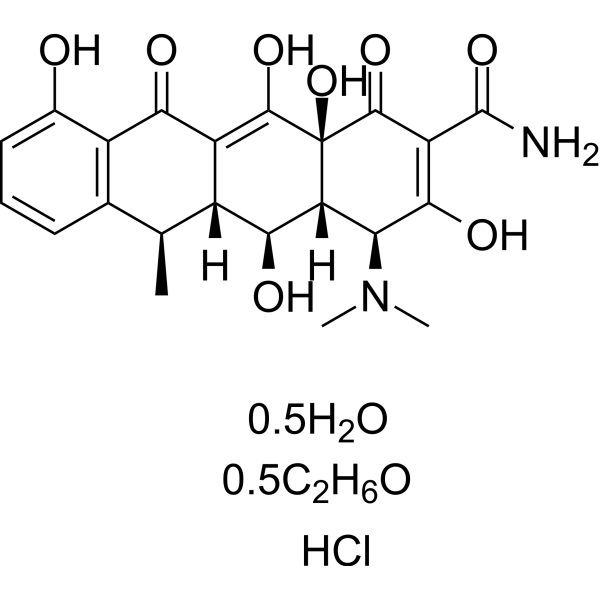
Doxycycline hyclateMMP Inhibitor -
HY-15484
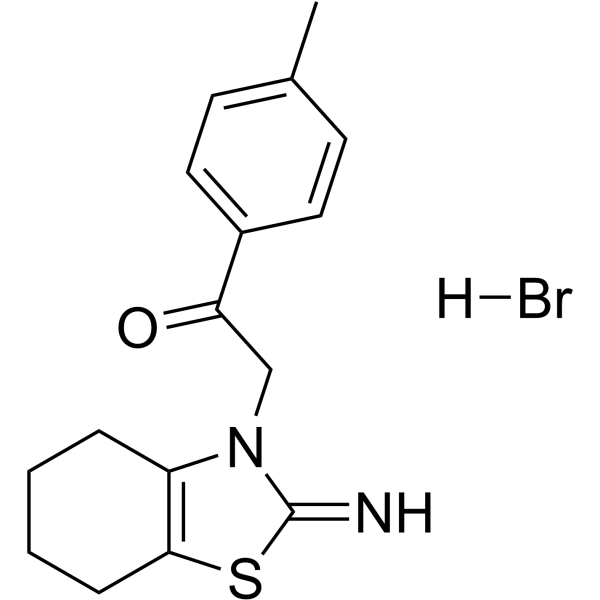
Pifithrin-α hydrobromidep53 Inhibitor -
HY-15870
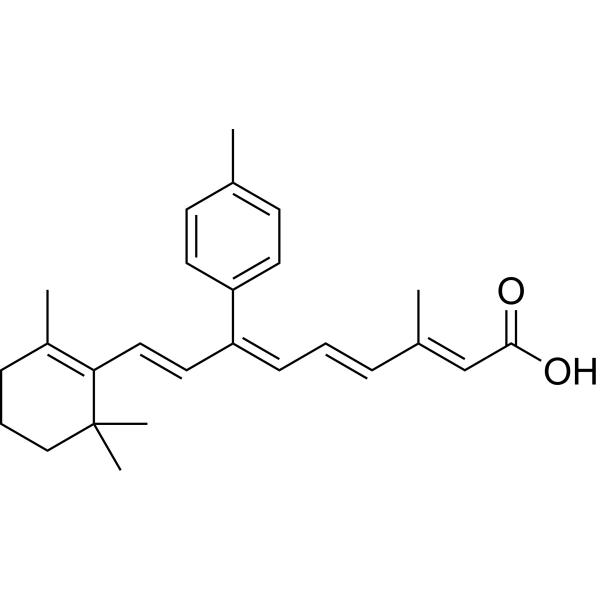
SR 11302AP-1 Inhibitor -
HY-120501
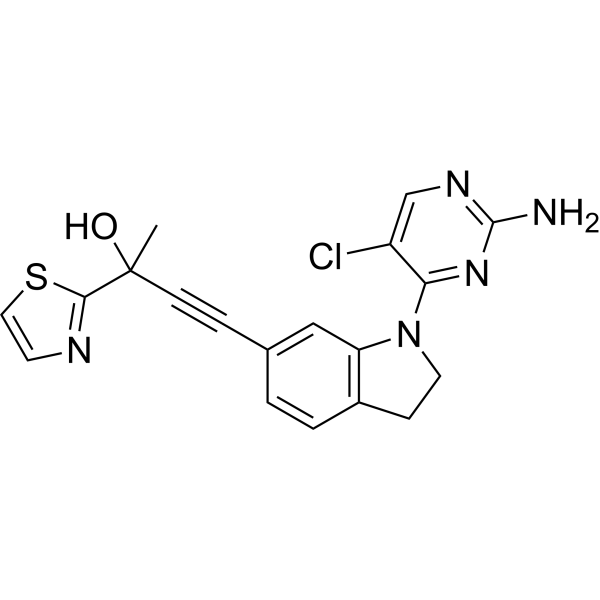
B022NIK Inhibitor -
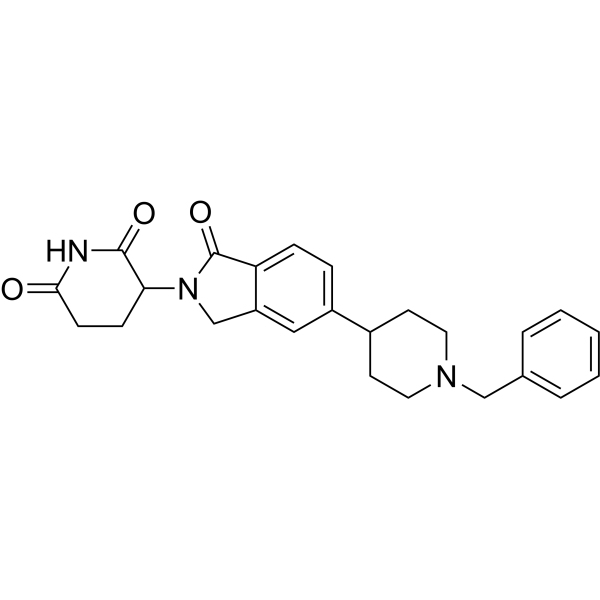
HY-144998
NVP-DKY709IKZF2 degrader -
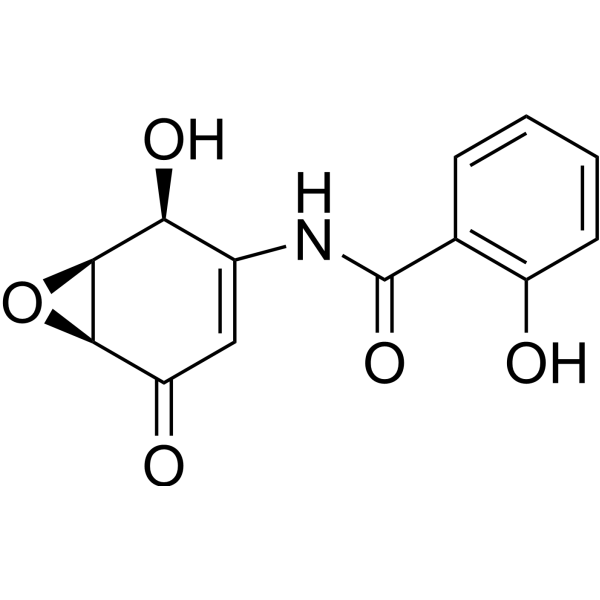
HY-14645
(-)-DHMEQNF-κB Inhibitor -

HY-171579
RS47RelB Inhibitor
Publications Citing Use of MedChemExpress (MCE) SN52
More Customer Validation & Images

-
Cell Proliferation/Viability Assay

-
Cell Imaging/Staining

-
In Vivo Efficacy Study

-
Cell Migration/Invasion Assay

-
Flow Cytometry


Biological Activity
Description
IC50 & Target
IC50: NF-κB2[1]
In Vitro
SN52 (40 μg/ml; 30 mins before DMXAA) inhibits DMXAA-induced nuclear translocation of RelB in BMDCs[1].SN52 does not change the activation of canonical NF-κB signaling. The nuclear translocation of RelB is increased in DCs isolated from irradiated tumors, and SN52 abolishes this activation in activated DC cells[1].SN52 (40 μg/mL; 30 mins before co-cultured with irradiated or non-irradiated MC38 cells) inhibits the non-canonical NF-κB and increases Ifn-b expression in BMDCs stimulated with irradiated tumor cells[1].
MedChemExpress (MCE) has not independently confirmed the accuracy of these methods. They are for reference only.
In Vivo
MedChemExpress (MCE) has not independently confirmed the accuracy of these methods. They are for reference only.
-
Animal Model:Tumor mice model[1]
-
Dosage:40 μg
-
Administration:Intrathecal injection; 40 μg; day-1, day 1 and day 3 of 20Gy radiation of radiation
-
Result:Reduced tumor burden than IR group alone. Induced non-canonical NF-κB inhibition and potentiates the anti-tumor effect of IR.


Chemical Information
-
CAS No. 1071173-56-2
-
Appearance Solid
-
Molecular Weight 2749.43
-
Formula C128H230N38O28
-
Color White to off-white
-
Sequence
Ala-Ala-Val-Ala-Leu-Leu-Pro-Ala-Val-Leu-Leu-Ala-Leu-Leu-Ala-Pro-Val-Gln-Arg-Lys-Arg-Arg-Lys-Ala-Leu-Pro
-
Sequence Shortening
AAVALLPAVLLALLAPVQRKRRKALP
-
Shipping
Room temperature in continental US; may vary elsewhere.
-
Storage
Sealed storage, away from moisture and light
Powder -80°C 2 years -20°C 1 year * In solvent : -80°C, 6 months; -20°C, 1 month (sealed storage, away from moisture and light)


Publications (5)
-
Journal Impact Factor
-
Most Recent
-
Cell Death Differ
RIPK3 sequentially recruits MLKL and RIPK1 to induce PANoptosis and chemokine production. [Abstract]2026 Apr 4. PMID: 41935203 -
Mol Biomed
The m6A reader IGF2BP2 promotes hepatocellular carcinoma progression via enhancing RELB stability. [Abstract]2026 May 7;7(1):62. PMID: 42096134
SN52 purchased from MedChemExpress. Usage Cited in: Mol Biomed. 2026 May 7;7(1):62. [Abstract]
The effect of SN52 (40 μg/ml, 48 h) in HCC cells with overexpression IGF2BP2 and knockdown IGF2BP2.
SN52 purchased from MedChemExpress. Usage Cited in: Mol Biomed. 2026 May 7;7(1):62. [Abstract]
The effect of SN52 on the nuclear translocation of the RELB:p52 dimer in HepG2 cells.
SN52 purchased from MedChemExpress. Usage Cited in: Mol Biomed. 2026 May 7;7(1):62. [Abstract]
The schematic of therapeutic role of SN52 (40 μg/mouse, ip) combined with IGF2BP2 inhibition was evaluated with subcutaneous xenograft implantation model. Images of subcutaneous tumor.
-
Cell Signal
TET1 mediated m5C modification of RelB aggravates cerebral ischemia/reperfusion-induced neuroinflammation through regulating microglia polarization. [Abstract]2024 Aug:120:111210. PMID: 38705503 -
Cancer Med
RELB Overexpression Induced by DNA Hypomethylation Contributes to Perioperative Immunotherapy Resistance in Resectable Esophageal Squamous Cell Carcinoma by Modulating the mregDC-Treg Axis. [Abstract]2026 May;15(5):e71863. PMID: 42130013
SN52 purchased from MedChemExpress. Usage Cited in: Cancer Med. 2026 May;15(5):e71863. [Abstract]
Wound healing assays demonstrated that siRELB and SN52 significantly reduced the migration of ESCC cells compared with that of control cells.
SN52 purchased from MedChemExpress. Usage Cited in: Cancer Med. 2026 May;15(5):e71863. [Abstract]
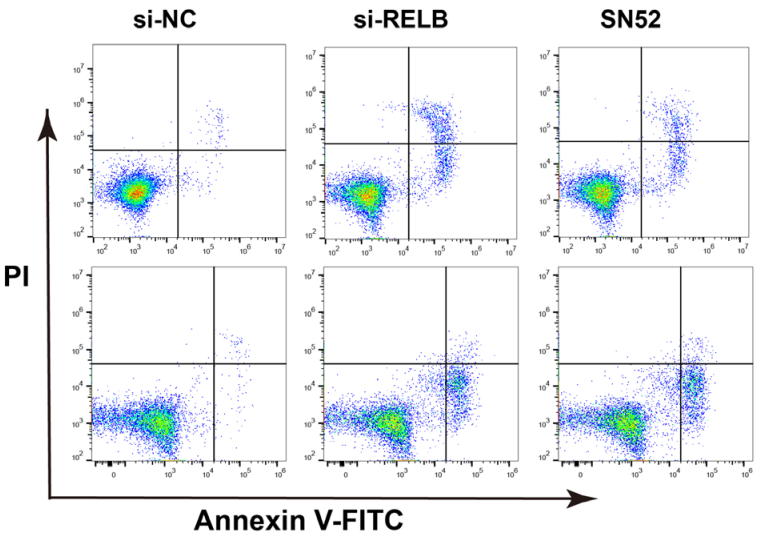
Flow cytometric analysis revealed that siRELB and SN52 (40 μg/mL, 40 min) induced apoptosis in ESCC cells.

SN52 purchased from MedChemExpress. Usage Cited in: Cancer Med. 2026 May;15(5):e71863. [Abstract]
Colony formation assays indicated that siRELB and SN52 (40 μg/mL, 40 min) suppressed ESCC cell proliferation.

SN52 purchased from MedChemExpress. Usage Cited in: Cancer Med. 2026 May;15(5):e71863. [Abstract]
Western blot analysis confirmed that siRELB and SN52 (40 μg/mL, 40 min) decreased Bcl-2 expression and increased E‐cadherin and Bax expression.
-


Solvent & Solubility
In Vitro:
H2O : 25 mg/mL (9.09 mM; Need ultrasonic)
Please refer to the solubility information to select the appropriate solvent. Once prepared, please aliquot and store the solution to prevent product inactivation from repeated freeze-thaw cycles.
Storage method and period of stock solution: -80°C, 6 months; -20°C, 1 month (sealed storage, away from moisture and light). When stored at -80°C, please use it within 6 months. When stored at -20°C, please use it within 1 month.
* Note: If you choose water as the stock solution, please dilute it to the working solution, then filter and sterilize it with a 0.22 μm filter before use.
Please refer to the solubility information to select the appropriate solvent. Once prepared, please aliquot and store the solution to prevent product inactivation from repeated freeze-thaw cycles.
Storage method and period of stock solution: -80°C, 6 months; -20°C, 1 month (sealed storage, away from moisture and light). When stored at -80°C, please use it within 6 months. When stored at -20°C, please use it within 1 month.
* Note: If you choose water as the stock solution, please dilute it to the working solution, then filter and sterilize it with a 0.22 μm filter before use.
Concentration (start) × Volume (start) = Concentration (final) × Volume (final)
In Vivo:
For the following dissolution methods, please prepare the working solution directly:
It is recommended to prepare fresh solutions and use them promptly within a short period of time.
The percentages shown for the solvents indicate their volumetric ratio in the final prepared solution. If precipitation or phase separation occurs during preparation, heat and/or sonication can be used to aid dissolution.
Add each solvent one by one: PBS
Solubility: 50 mg/mL (18.19 mM); Clear solution; Need ultrasonic


Purity & Documentation
-
Data Sheet (281 KB)
-
SDS (252 KB)
- English - EN (252 KB)
- Français - FR (252 KB)
- Deutsch - DE (252 KB)
- Norwegian - NO (252 KB)
- Español - ES (252 KB)
- Swedish - SV (252 KB)
- Italian - IT (252 KB)
- Korean - KR (252 KB)
- Portuguese - PT (252 KB)
-
Handling Instructions (2659 KB)
References
[1]. Yong Xu, et al. SN52, a novel nuclear factor-kappaB inhibitor, blocks nuclear import of RelB:p52 dimer and sensitizes prostate cancer cells to ionizing radiation. Mol Cancer Ther [Content Brief]
[2]. Yuzhu Hou, et al. Non-canonical NF-κB Antagonizes STING Sensor-Mediated DNA Sensing in Radiotherapy. Immunity. 2018 Sep 18;49(3):490-503.e4 [Content Brief]


Complete Stock Solution Preparation Table
Please refer to the solubility information to select the appropriate solvent. Once prepared, please aliquot and store the solution to prevent product inactivation from repeated freeze-thaw cycles.
Storage method and period of stock solution: -80°C, 6 months; -20°C, 1 month (sealed storage, away from moisture and light). When stored at -80°C, please use it within 6 months. When stored at -20°C, please use it within 1 month.
| Optional Solvent | Concentration Solvent Mass | 1 mg | 5 mg | 10 mg | 25 mg |
|---|---|---|---|---|---|
| H2O | 1 mM | 0.3637 mL | 1.8186 mL | 3.6371 mL | 9.0928 mL |
| 5 mM | 0.0727 mL | 0.3637 mL | 0.7274 mL | 1.8186 mL |
* Note: If you choose water as the stock solution, please dilute it to the working solution, then filter and sterilize it with a 0.22 μm filter before use.


SN52 Related Classifications
HY-P3229 Related Classifications
 Powered by Bioz