



Sitaxsentan
Based on 2 publication(s) in Google Scholar
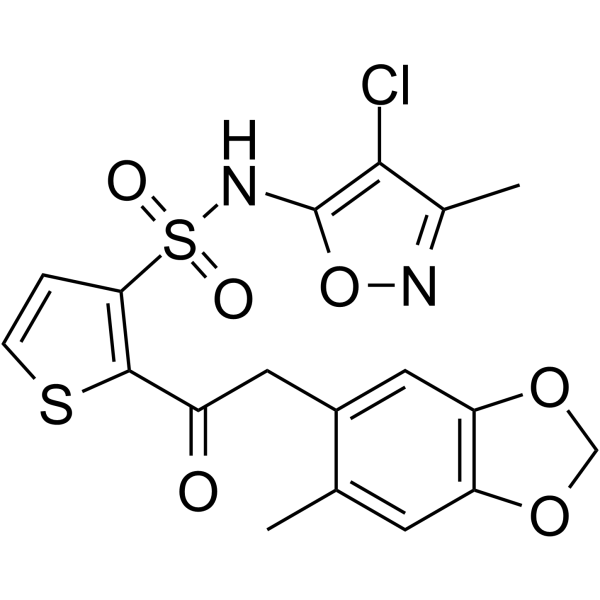
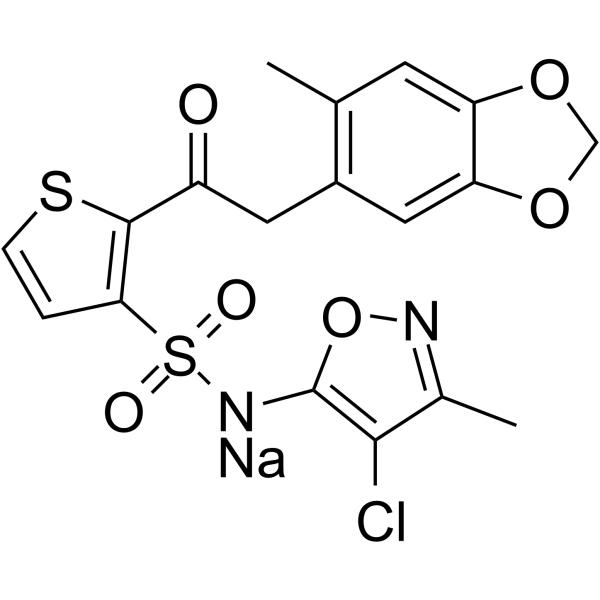
Sitaxsentan (IPI 1040 sodium; TBC11251 sodium) is a potent, selective and orally active endothelin A receptor (ETA) antagonist with an IC50 of 1.4 nM and a Ki of 0.43 nM. Sitaxsentan exhibits an IC50 for the ETB receptor of as high as 9800 nM. Sitaxsentan is metabolized by CYP2C9 and CYP3A4, normalizes shunt-induced endothelial abnormalities, restores BMPR signaling, and suppresses pulmonary vascular remodeling and hemodynamic deterioration. Sitaxsentan can be applied in the research of pulmonary arterial hypertension and portopulmonary hypertension.
Nur für Forschungszwecke. Wir verkaufen nicht an Patienten.
- Reinheit : 98.96%
- CAS. Nr.: 184036-34-8
- Formel: C18H15ClN2O6S2
- Molecular Weight:454.90
-
Speicherung:Powder -20°C, 3 years , 4°C, 2 years ; In solvent -80°C, 6 months , -20°C, 1 month

To place orders, for customer services and technical support, please contact: MedChemExpress USA
Tel: 609-228-6898 E-mail: [email protected] [email protected]


-
 Biologische Aktivität
-
Chemical Information
-
Lösungsmittel & Löslichkeit
- Protokoll
- Reinheit & Dokumentation
- Verweise
-
 Help & FAQs


-
HY-15403
AtrasentanEndothelin Receptor Antagonist -
HY-15403A
Atrasentan hydrochlorideETA Receptor Antagonist -
HY-A0013
BosentanET-1 Inhibtior -
HY-10088
ZibotentanETA Receptor Antagonist -
HY-15894A
BQ-788ETB Receptor Antagonist -
HY-15895
AprocitentanEndothelin Receptor Antagonist -
HY-15195
AvosentanETA Receptor Antagonist -
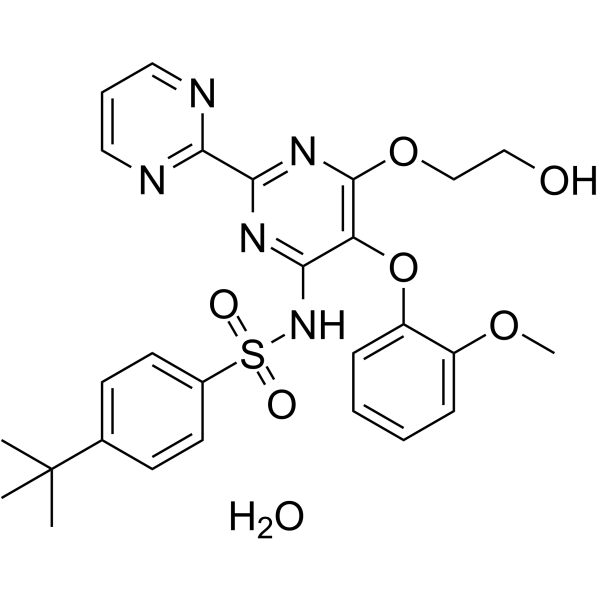
HY-A0013A
Bosentan hydrateET1 Receptor Antagonist -
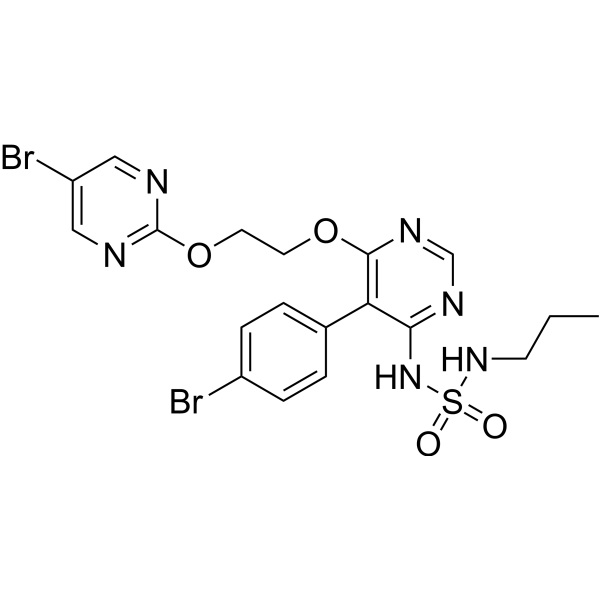
HY-14184
MacitentanETA/ETB Antagonist -
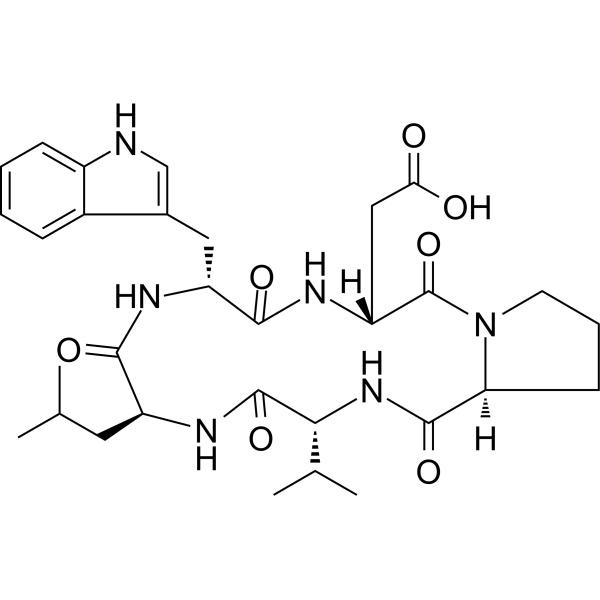
HY-12378
BQ-123ETA Receptor Antagonist -
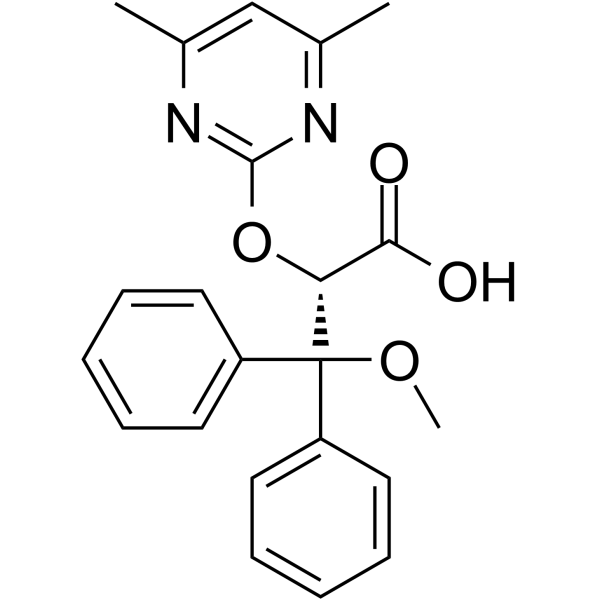
HY-13209
Ambrisentan -
HY-11103
Sitaxsentan sodiumEndothelin A Receptor Antagonist
Publications Citing Use of MedChemExpress (MCE) Sitaxsentan
More

Biologische Aktivität
Beschreibung
IC50 & Target
[4]|
ETA 1.4 nM (IC50) |
ETA 0.43 nM (Ki) |
ETB 9800 nM (IC50) |
In Vitro
Sitaxsentan (100 μM, 10 min) significantly inhibits taurocholate cotransporter (NTCP) and organic anion transporter (OATP) transportation in sandwich-cultured human hepatocytes[3].
Sitaxsentan (10 min) has a high efficiency of liver cell uptake and almost no bile excretion[3].
Sitaxsentan has moderate hepatobiliary transporters bile salt export pump (BSEP) inhibition (IC50 = 25 μM) in sandwich-cultured human hepatocytes[5].
MedChemExpress (MCE) has not independently confirmed the accuracy of these methods. They are for reference only.
In Vivo
Sitaxsentan (5 mg/kg, i.v., single dose) completely blocks the activation of ETA receptors in the acute hypoxia model of rats[2].
Sitaxsentan (15-30 mg/kg, p.o., once daily for 2-4 weeks) significantly improves PAH and vascular remodeling caused by chronic hypoxia, but has limited effect on the already formed right ventricular hypertrophy in rat chronic hypoxia model[2].
Sitaxsentan (10-50 mg/kg, p.o., once daily for 3 weeks) dose-dependently improves Monocrotaline(HY-N0750)-induced pulmonary hypertension in rats[2].
MedChemExpress (MCE) has not independently confirmed the accuracy of these methods. They are for reference only.
-
Animal Model:Shunt-induced PAH model established in piglets (18 days old, 5.3 kg)[1]
-
Dosage:1.5 mg/kg or 1.5 mg/kg combined with 0.75 mg/kg Sildenafil
-
Administration:Oral administration (p.o.) with food, three times a day for 3 months
-
Result:Combined treatment completely restored the normal state.
Partially inhibited the thickening of blood vessels with single-drug and the combined therapy almost completely prevented it.
Partially restored the expression of BMPR-1A and BMPR-2.
Maintained normal right ventricle-aorta coupling.
-
Animal Model:Acute hypoxia induced PHA model established in male Sprague-Dawley rats[2]
-
Dosage:5 mg/kg
-
Administration:Intravenous injection (i.v.), 10 minutes before or 50 minutes after the onset of hypoxia
-
Result:Completely blocked the increase in pressure in prevention group.
Rapidly reversed the elevated MPAP after administration of the drug (reaching normal levels within approximately 30 minutes) in treatment group.
-
Animal Model:Chronic hypoxia induced PHA model established in male Sprague-Dawley rats[2]
-
Dosage:15 mg/kg in prevention group and 15 mg/kg and 30 mg/kg in treatment group
-
Administration:Oral administration (p.o.) with water, once daily, 48 hours before hypoxia and lasting for 2 weeks or after 2 weeks of hypoxia and lasted for 4 weeks
-
Result:Decreased The MPAP in the prevention group by 35%, and in the treatment group decreased by 38%.
Reduced the ratio of RV/(LV + S) to some extent.
Improved pulmonary vascular remodeling in both groups.
-
Animal Model:Monocrotaline induced PHA model established in male Sprague-Dawley rats[2]
-
Dosage:10 and 50 mg/kg
-
Administration:Oral administration (p.o.) with water, once daily for 3 weeks
-
Result:Improved hemodynamic conditions.
Almost completely prevented pulmonary vascular remodeling at high dose (50mg/kg).
Clinical Trial
| NCT Number | Sponsor | Condition | Start Date |
Phase

|
|---|---|---|---|---|
| NCT01329991 | 2011-05 | PHASE1 |


Chemical Information
-
CAS. Nr. 184036-34-8
-
Appearance Solid
-
Molecular Weight 454.90
-
Formel C18H15ClN2O6S2
-
Color Light yellow to yellow
-
SMILES
O=S(C1=C(C(CC2=CC3=C(C=C2C)OCO3)=O)SC=C1)(NC4=C(C(C)=NO4)Cl)=O
-
Synonyms
IPI 1040; TBC-11251
-
Versand
Room temperature in continental US; may vary elsewhere.
-
Speicherung
Powder -20°C 3 years 4°C 2 years In solvent -80°C 6 months -20°C 1 month


Publications (2)
-
Journal Impact Factor
-
Most Recent
-
J Adv Res
Conjugated bile acids facilitate cholangiocyte senescence to promote cholestatic liver diseases via STING signaling. [Abstract]2026 Mar 12:S2090-1232(26)00239-0. PMID: 41831676 -
Biotechnol Bioeng
An integrated biomimetic array chip for establishment of collagen-based 3D primary human hepatocyte model for prediction of clinical drug-induced liver injury. [Abstract]2021 Dec;118(12):4687-4698. PMID: 34478150


Lösungsmittel & Löslichkeit
In Vitro:
DMSO : 100 mg/mL (219.83 mM; Need ultrasonic; Hygroscopic DMSO has a significant impact on the solubility of product, please use newly opened DMSO)
Please refer to the solubility information to select the appropriate solvent. Once prepared, please aliquot and store the solution to prevent product inactivation from repeated freeze-thaw cycles.
Storage method and period of stock solution: -80°C, 6 months; -20°C, 1 month. When stored at -80°C, please use it within 6 months. When stored at -20°C, please use it within 1 month.
Please refer to the solubility information to select the appropriate solvent. Once prepared, please aliquot and store the solution to prevent product inactivation from repeated freeze-thaw cycles.
Storage method and period of stock solution: -80°C, 6 months; -20°C, 1 month. When stored at -80°C, please use it within 6 months. When stored at -20°C, please use it within 1 month.
Konzentration (Stammlösung) × Volumen (Stammlösung) = Konzentration (Ziellösung) × Volumen (Ziellösung)
In Vivo:
Select the appropriate dissolution method based on your experimental animal and administration route.
- For the following dissolution methods, please ensure to first prepare a clear stock solution using an In Vitro approach and then sequentially add co-solvents:
- To ensure reliable experimental results, the clarified stock solution can be appropriately stored based on storage conditions. As for the working solution for In Vivo experiments, it is recommended to prepare freshly and use it on the same day.
- The percentages shown for the solvents indicate their volumetric ratio in the final prepared solution. If precipitation or phase separation occurs during preparation, heat and/or sonication can be used to aid dissolution.
Add each solvent one by one: 10% DMSO 40% PEG300 5% Tween-80 45% Saline
Solubility: ≥ 2.5 mg/mL (5.50 mM); Clear solution
This protocol yields a clear solution of ≥ 2.5 mg/mL (saturation unknown).
Taking 1 mL working solution as an example, add 100 μL DMSO stock solution (25.0 mg/mL) to 400 μL PEG300, and mix evenly; then add 50 μL Tween-80 and mix evenly; then add 450 μL Saline to adjust the volume to 1 mL.
Preparation of Saline: Dissolve 0.9 g sodium chloride in ddH₂O and dilute to 100 mL to obtain a clear Saline solution.
In Vivo Dissolution Calculator
Please enter the basic information of animal experiments:
-
-
-
-
Recommended: Prepare an additional quantity of animals to account for potential losses during experiments.
Please enter your animal formula composition:
-
%DMSO +
Recommended: Keep the proportion of DMSO in working solution below 2% if your animal is weak.
-
%+
-
+%Tween-80 + +
-
%Saline +
The co-solvents required include: DMSO, . All of co-solvents are available by MedChemExpress (MCE). , Tween 80. All of co-solvents are available by MedChemExpress (MCE).
Working solution concentration: 0.22 mg/mL
Method for preparing stock solution: mg drug dissolved in μL DMSO. Stock solution concentration: mg/mL.
1. Take μL DMSO stock solution;
2. Add μL .
μL , mix evenly;
3. Then add μL Tween 80, mix evenly;
4. Then add μL
Please ensure that the stock solution in the first step is dissolved to a clear state, and add co-solvents in sequence. You can use ultrasonic heating (ultrasonic cleaner, recommended frequency 20-40 kHz), vortexing, etc. to assist dissolution.


Reinheit & Dokumentation
-
Data Sheet (290 KB)
-
SDS (254 KB)
- English - EN (254 KB)
- Français - FR (254 KB)
- Deutsch - DE (254 KB)
- Norwegian - NO (254 KB)
- Español - ES (254 KB)
- Swedish - SV (254 KB)
- Italian - IT (254 KB)
- Korean - KR (254 KB)
- Portuguese - PT (254 KB)
-
Handling Instructions (2659 KB)
Verweise
[1]. Rondelet B, et al. Sildenafil added to sitaxsentan in overcirculation-induced pulmonary arterial hypertension. Am J Physiol Heart Circ Physiol. 2010 Oct;299(4):H1118-23. Epub 2010 Aug 6. [Content Brief]
[2]. Tilton RG, et al. Attenuation of pulmonary vascular hypertension and cardiac hypertrophy with sitaxsentan sodium, an orally active ET(A) receptor antagonist. Pulm Pharmacol Ther. 2000;13(2):87-97. [Content Brief]
[3]. Hartman JC, et al. Evaluation of the endothelin receptor antagonists ambrisentan, darusentan, bosentan, and sitaxsentan as substrates and inhibitors of hepatobiliary transporters in sandwich-cultured human hepatocytes. Can J Physiol Pharmacol. 2010 Jun;88 [Content Brief]
[4]. Wu C, et al. Discovery of TBC11251, a potent, long acting, orally active endothelin receptor-A selective antagonist. J Med Chem. 1997 May 23;40(11):1690-7. [Content Brief]
[5]. Lepist EI, et al. Evaluation of the endothelin receptor antagonists ambrisentan, bosentan, macitentan, and sitaxsentan as hepatobiliary transporter inhibitors and substrates in sandwich-cultured human hepatocytes. PLoS One. 2014 Jan 30;9(1):e87548. [Content Brief]


Complete Stock Solution Preparation Table
Please refer to the solubility information to select the appropriate solvent. Once prepared, please aliquot and store the solution to prevent product inactivation from repeated freeze-thaw cycles.
Storage method and period of stock solution: -80°C, 6 months; -20°C, 1 month. When stored at -80°C, please use it within 6 months. When stored at -20°C, please use it within 1 month.
| Optional Solvent | Concentration Solvent Mass | 1 mg | 5 mg | 10 mg | 25 mg |
|---|---|---|---|---|---|
| DMSO | 1 mM | 2.1983 mL | 10.9914 mL | 21.9829 mL | 54.9571 mL |
| 5 mM | 0.4397 mL | 2.1983 mL | 4.3966 mL | 10.9914 mL | |
| 10 mM | 0.2198 mL | 1.0991 mL | 2.1983 mL | 5.4957 mL | |
| 15 mM | 0.1466 mL | 0.7328 mL | 1.4655 mL | 3.6638 mL | |
| 20 mM | 0.1099 mL | 0.5496 mL | 1.0991 mL | 2.7479 mL | |
| 25 mM | 0.0879 mL | 0.4397 mL | 0.8793 mL | 2.1983 mL | |
| 30 mM | 0.0733 mL | 0.3664 mL | 0.7328 mL | 1.8319 mL | |
| 40 mM | 0.0550 mL | 0.2748 mL | 0.5496 mL | 1.3739 mL | |
| 50 mM | 0.0440 mL | 0.2198 mL | 0.4397 mL | 1.0991 mL | |
| 60 mM | 0.0366 mL | 0.1832 mL | 0.3664 mL | 0.9160 mL | |
| 80 mM | 0.0275 mL | 0.1374 mL | 0.2748 mL | 0.6870 mL | |
| 100 mM | 0.0220 mL | 0.1099 mL | 0.2198 mL | 0.5496 mL |


Sitaxsentan Related Classifications
HY-76520 Related Classifications
 Powered by Bioz
Keywords
- Sitaxsentan
- 184036-34-8
- IPI 1040
- TBC-11251
- IPI1040
- IPI-1040
- TBC11251
- TBC 11251
- TBC-11251
- Endothelin Receptor
- TGF-β Receptor
- portopulmonary hypertension
- bone morphogenetic protein receptor-1A
- pulmonary arterial hypertension
- BMPR-2
- CYP3A4
- CYP2C9
- endothelin A receptor
- endothelin B receptors
- endothelin-1
- hepatocytes
- Inhibitor
- inhibitor
- inhibit