



Alvespimycin hydrochloride
Based on 16 publication(s) in Google Scholar
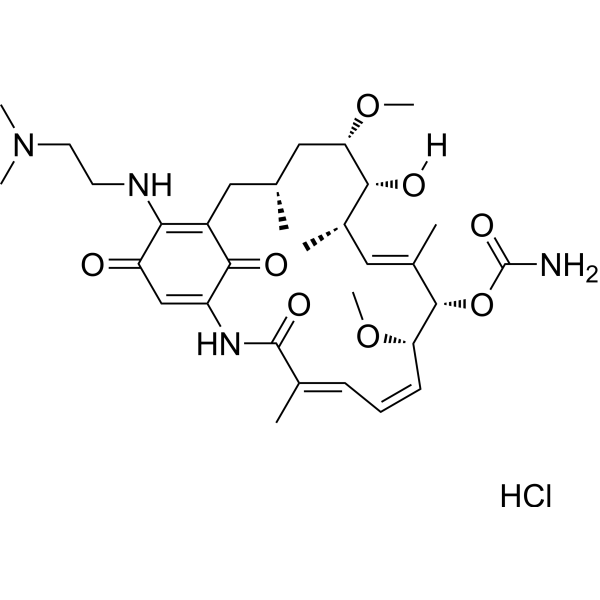
Alvespimycin hydrochloride (17-DMAG hydrochloride; KOS-1022; BMS 826476) is a potent inhibitor of Hsp90, binding to Hsp90 with EC50 of 62±29 nM.
For research use only. We do not sell to patients.
- Purity : 98.80%
- CAS No.: 467214-21-7
- Formula: C32H49ClN4O8
- Molecular Weight:653.21
-
Storage:
4°C, sealed storage, away from moisture
* In solvent : -80°C, 2 years; -20°C, 1 year (sealed storage, away from moisture)

To place orders, for customer services and technical support, please contact: MedChemExpress USA
Tel: 609-228-6898 E-mail: [email protected] [email protected]


-
 Biological Activity
-
Chemical Information
-
Solvent & Solubility
- Purity & Documentation
- References
-
 Help & FAQs


-
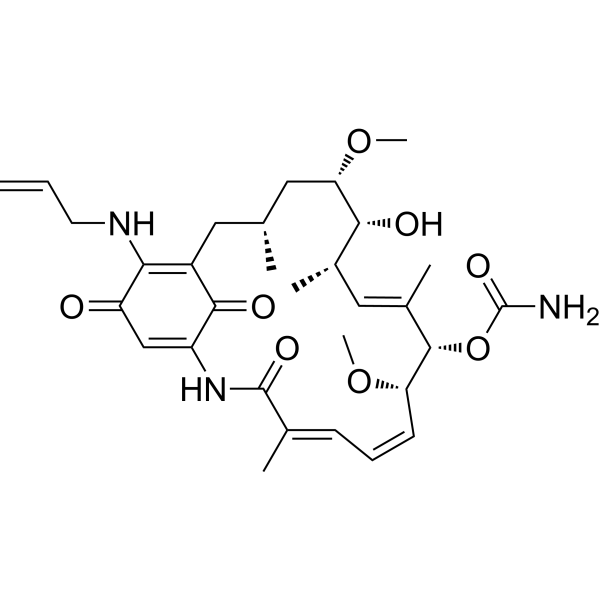
HY-10211
TanespimycinHSP90 Inhibitor -
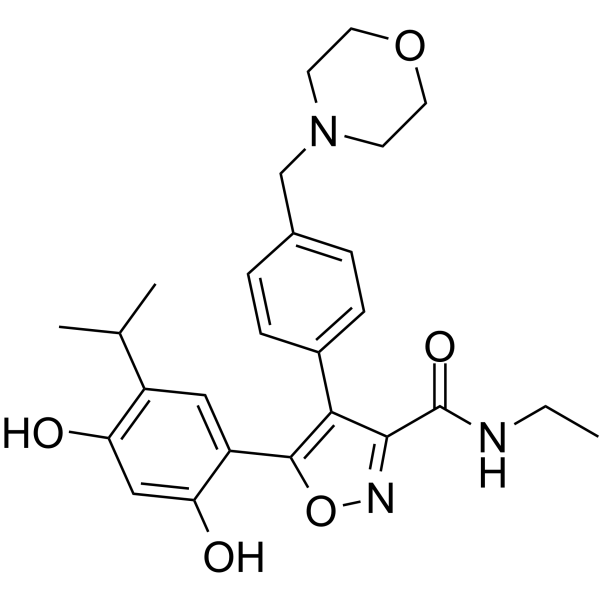
HY-10215
LuminespibHSP90 Inhibitor -
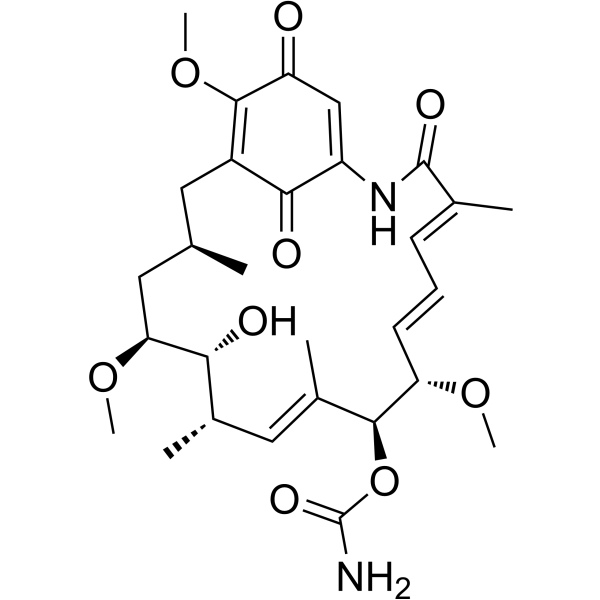
HY-15230
GeldanamycinHsp90 Inhibitor -
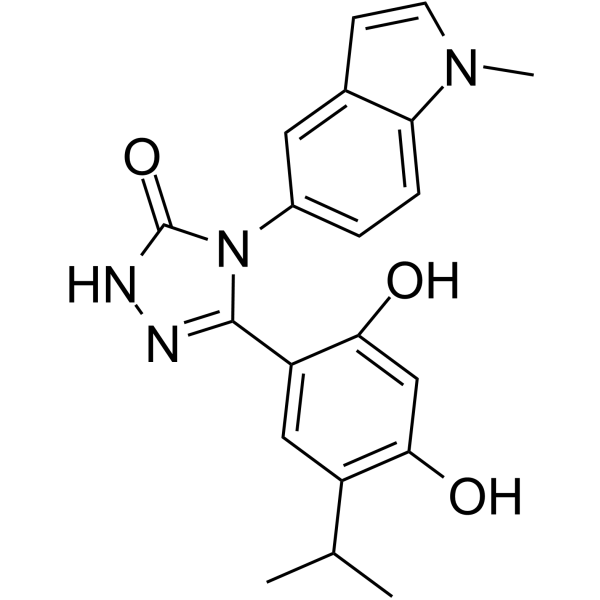
HY-15205
GanetespibHSP90 Inhibitor -
HY-10941
VER-155008Hsp70 Inhibitor -
HY-10212
BIIB021HSP90 Inhibitor -
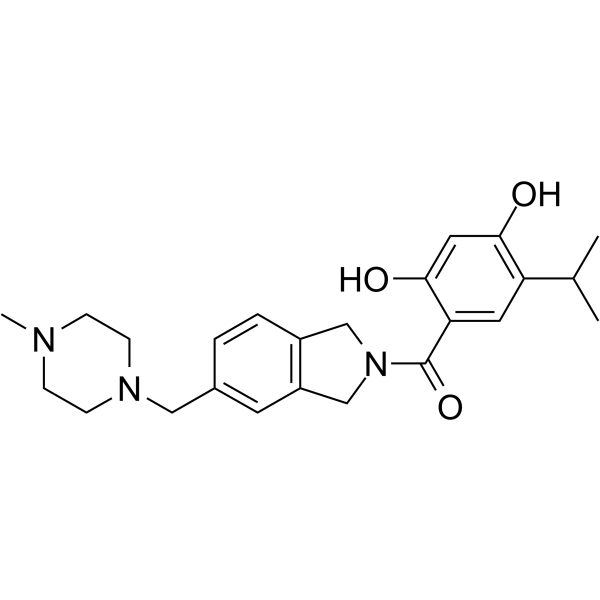
HY-14463
OnalespibHsp90 Inhibitor -
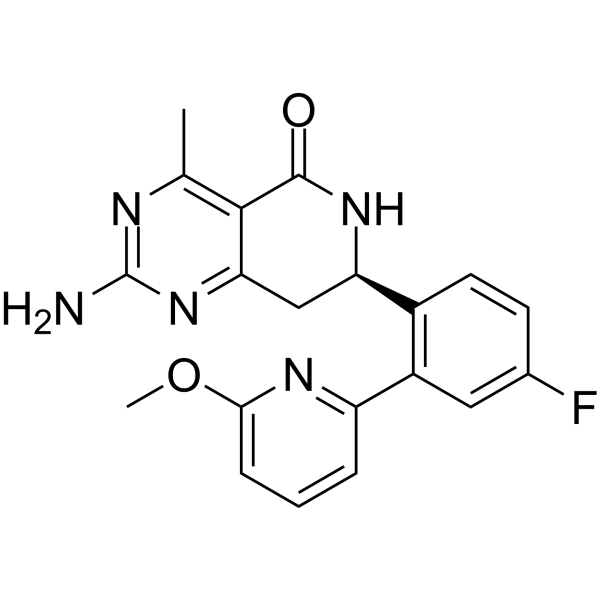
HY-15190
NVP-HSP990Apoptosis Inducer -
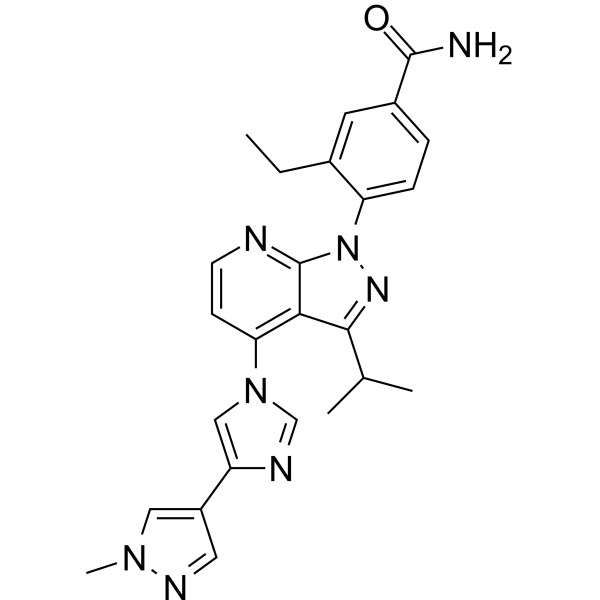
HY-15785
PimitespibHSP90α/HSP90β Inhibitor -
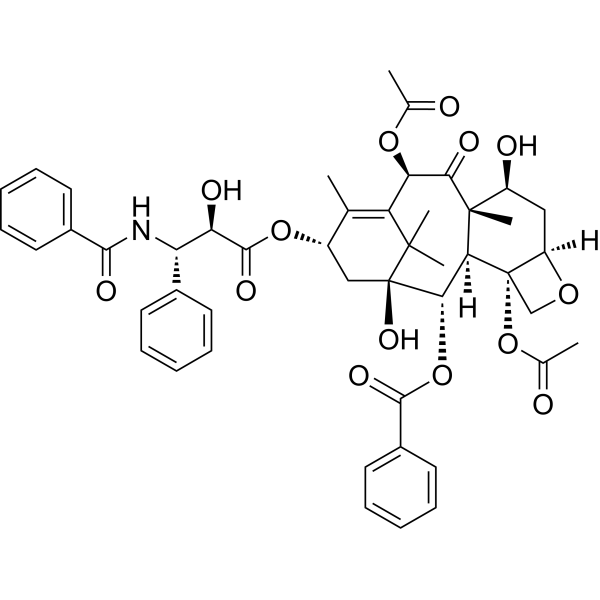
HY-B0015
PaclitaxelAntitumor Agent -
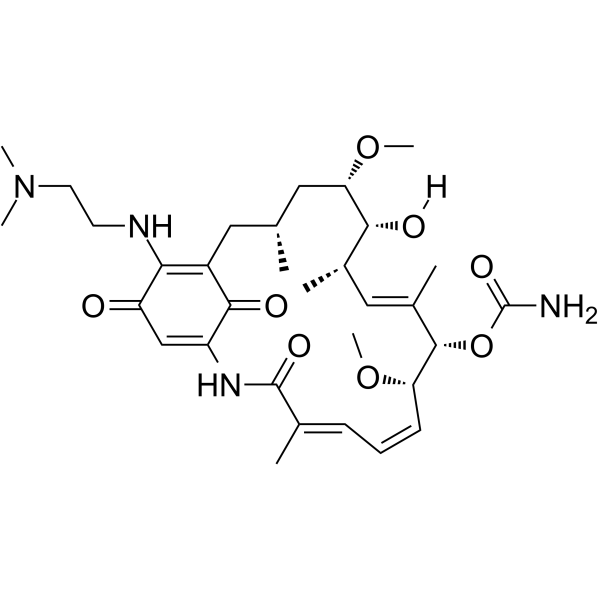
HY-10389
AlvespimycinHsp90 Inhibitor -
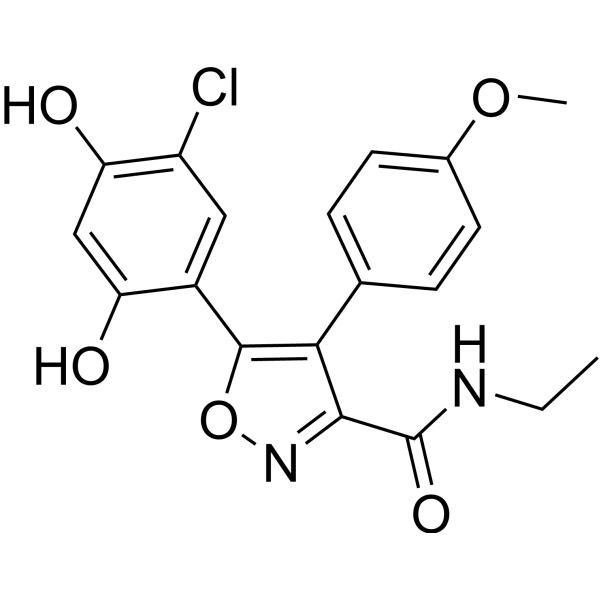
HY-15984
VER-50589Apoptosis Inducer
Publications Citing Use of MedChemExpress (MCE) Alvespimycin hydrochloride
More- Nat Commun. 2021 Jul 22;12(1):4457. [Abstract]
- Theranostics. 2020 Jul 9;10(18):8415-8429. [Abstract]
- Adv Sci (Weinh). 2025 Jul 29:e01977. [Abstract]
- Cell Death Dis. 2022 Jan 21;13(1):73. [Abstract]
- Pharmacol Res. 2020 Jan:151:104512. [Abstract]
- NPJ Precis Oncol. 2023 May 18;7(1):44. [Abstract]
- Br J Pharmacol. 2021 Nov;178(22):4485-4500. [Abstract]
- Drug Deliv Transl Res. 2025 Oct 29. [Abstract]
- ACS Biomater Sci Eng. 2021 Nov 8;7(11):5154-5164. [Abstract]
- Front Pharmacol. 2022 Jan 14:12:724192. [Abstract]
- Sci Rep. 2021 May 26;11(1):11057. [Abstract]
- Biochim Biophys Acta Mol Cell Res. 2024 Apr;1871(4):119703. [Abstract]
- Exp Ther Med. 2022 Apr;23(4):273. [Abstract]
- Authorea. April 10, 2021.
- bioRxiv. 2021 Jan 27.
- Friedrich-Alexander University Erlangen-Nuremberg. 2016 Sep 14.
 Customer Validation & Images

-
WB
-
WB


Biological Activity
Description
IC50 & Target
[1]|
HSP90 62 nM (EC50) |
GRP94 65 nM (EC50) |
In Vitro
Alvespimycin hydrochloride (17-DMAG hydrochloride; KOS-1022; BMS 826476) inhibits the growth of the human cancer cell lines SKBR3 and SKOV3, which overexpress Hsp90 client protein Her2, and causes down-regulation of Her2 as well as induction of Hsp70 consistent with Hsp90 inhibition, for Her2 degradation with EC50 of 8±4 nM and 46±24 nM in SKBR3 and SKOV3 cells, respectively; for Hsp70 induction with EC50 of 4±2 nM and 14±7 nM in SKBR3 and SKOV3 cells, respectively[1]. Compared with the vehicle control, 17-DMAG exerts dose-dependent apoptosis (P<0.001 averaged across 24- and 48-hour time points) at concentrations of 50nM to 500nM, which represent pharmacologically attainable doses. Similar to many other agents, 17-DMAG also demonstrates time-dependent apoptosis (P <0.001, averaged across all doses) in chronic lymphocytic leukemia (CLL) cells with extended exposure from 24 to 48 hours. In addition, 17-DMAG is much more potent after 24 and 48 hours of treatment than 17-AAG[2].
MedChemExpress (MCE) has not independently confirmed the accuracy of these methods. They are for reference only. .
In Vivo
MedChemExpress (MCE) has not independently confirmed the accuracy of these methods. They are for reference only.
Clinical Trial
| NCT Number | Sponsor | Condition | Start Date |
Phase

|
|---|---|---|---|---|
| NCT01329991 | Plexxikon| | 2011-05 | PHASE1 |


Chemical Information
-
CAS No. 467214-21-7
-
Appearance Solid
-
Molecular Weight 653.21
-
Formula C32H49ClN4O8
-
Color Purple to purplish red
-
SMILES
C/C1=C\C=C/[C@@H]([C@H](/C(C)=C/[C@@H]([C@H]([C@H](C[C@@H](CC(C(C(NC1=O)=CC2=O)=O)=C2NCCN(C)C)C)OC)O[H])C)OC(N)=O)OC.Cl
-
Synonyms
17-DMAG hydrochloride; KOS-1022 hydrochloride; BMS 826476
-
Shipping
Room temperature in continental US; may vary elsewhere.
-
Storage
4°C, sealed storage, away from moisture
* In solvent : -80°C, 2 years; -20°C, 1 year (sealed storage, away from moisture)


Publications (16)
-
Journal Impact Factor
-
Most Recent
-
Nat Commun
2021 Jul 22;12(1):4457. PMID: 34294701 -
Theranostics
Hsp90 inhibitor HSP990 in very low dose upregulates EAAT2 and exerts potent antiepileptic activity. [Abstract]2020 Jul 9;10(18):8415-8429. PMID: 32724478
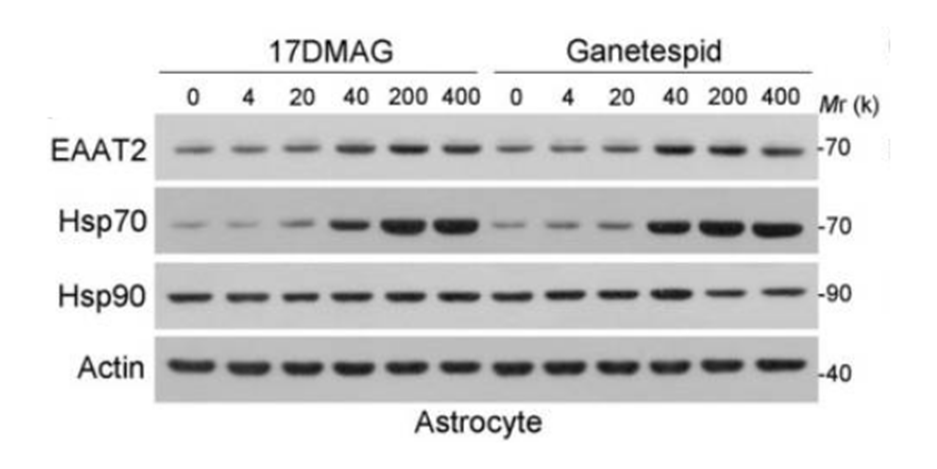
Alvespimycin hydrochloride purchased from MedChemExpress. Usage Cited in: Theranostics. 2020 Jul 9;10(18):8415-8429. [Abstract]
Western blot analysis of three proteins of interest in astrocytes treated with the Alvespimycin (17DMAG) for 24 h. Alvespimycin treatment increases EAAT2 and Hsp70 levels in a dose-dependent manner.
-
Adv Sci (Weinh)
2025 Jul 29:e01977. PMID: 40729735 -
Cell Death Dis
RNA binding protein NKAP protects glioblastoma cells from ferroptosis by promoting SLC7A11 mRNA splicing in an m6A-dependent manner. [Abstract]2022 Jan 21;13(1):73. PMID: 35064112 -
Pharmacol Res
Destabilization of ROR1 enhances activity of Ibrutinib against chronic lymphocytic leukemia in vivo. [Abstract]2020 Jan:151:104512. PMID: 31726100 -
NPJ Precis Oncol
2023 May 18;7(1):44. PMID: 37202469 -
Br J Pharmacol
Inhibition of heat shock protein (HSP) 90 reverses signal transducer and activator of transcription (STAT) 3-mediated muscle wasting in cancer cachexia mice. [Abstract]2021 Nov;178(22):4485-4500. PMID: 34265073 -
Drug Deliv Transl Res
Leveraging quantum chemical properties in transfer learning for predicting blood-brain barrier permeability of drugs. [Abstract]2025 Oct 29. PMID: 41160380 -
ACS Biomater Sci Eng
2021 Nov 8;7(11):5154-5164. PMID: 34636537 -
Front Pharmacol
Targeting HSP90 Inhibits Proliferation and Induces Apoptosis Through AKT1/ERK Pathway in Lung Cancer. [Abstract]2022 Jan 14:12:724192. PMID: 35095481 -
Sci Rep
Functional characterization of a loss-of-function mutant I324M of arginine vasopressin receptor 2 in X-linked nephrogenic diabetes insipidus. [Abstract]2021 May 26;11(1):11057. PMID: 34040143 -
Biochim Biophys Acta Mol Cell Res
Microbial imidazole propionate affects glomerular filtration rate in patients with diabetic nephropathy through association with HSP90α. [Abstract]2024 Apr;1871(4):119703. PMID: 38453032 -
Exp Ther Med
2022 Apr;23(4):273. PMID: 35251339 -
-
-
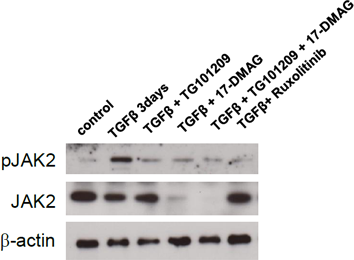
Alvespimycin hydrochloride purchased from MedChemExpress. Usage Cited in: Friedrich-Alexander University Erlangen-Nuremberg. 2016 Sep 14.
pJAK2 and JAK2 expression upon TGFβ stimulation and JAK inhibitors incubation. pJAK2 and JAK2 expression in healthy human fibroblasts after stimulation with TGFβ for 3 days and incubation with TG101209, 17-DMAG or Ruxolitinib.


Solvent & Solubility
In Vitro:
DMSO : ≥ 50 mg/mL (76.55 mM; Hygroscopic DMSO has a significant impact on the solubility of product, please use newly opened DMSO)
H2O : 4.76 mg/mL (7.29 mM; ultrasonic and warming and heat to 60°C)
* "≥" means soluble, but saturation unknown.
Please refer to the solubility information to select the appropriate solvent. Once prepared, please aliquot and store the solution to prevent product inactivation from repeated freeze-thaw cycles.
Storage method and period of stock solution: -80°C, 2 years; -20°C, 1 year (sealed storage, away from moisture). When stored at -80°C, please use it within 2 years. When stored at -20°C, please use it within 1 year.
* Note: If you choose water as the stock solution, please dilute it to the working solution, then filter and sterilize it with a 0.22 μm filter before use.
Please refer to the solubility information to select the appropriate solvent. Once prepared, please aliquot and store the solution to prevent product inactivation from repeated freeze-thaw cycles.
Storage method and period of stock solution: -80°C, 2 years; -20°C, 1 year (sealed storage, away from moisture). When stored at -80°C, please use it within 2 years. When stored at -20°C, please use it within 1 year.
* Note: If you choose water as the stock solution, please dilute it to the working solution, then filter and sterilize it with a 0.22 μm filter before use.
Concentration (start) × Volume (start) = Concentration (final) × Volume (final)
In Vivo:
Select the appropriate dissolution method based on your experimental animal and administration route.
- For the following dissolution methods, please ensure to first prepare a clear stock solution using an In Vitro approach and then sequentially add co-solvents:
- To ensure reliable experimental results, the clarified stock solution can be appropriately stored based on storage conditions. As for the working solution for In Vivo experiments, it is recommended to prepare freshly and use it on the same day.
- The percentages shown for the solvents indicate their volumetric ratio in the final prepared solution. If precipitation or phase separation occurs during preparation, heat and/or sonication can be used to aid dissolution.
Add each solvent one by one: 10% DMSO 40% PEG300 5% Tween-80 45% Saline
Solubility: ≥ 2.5 mg/mL (3.83 mM); Clear solution
This protocol yields a clear solution of ≥ 2.5 mg/mL (saturation unknown).
Taking 1 mL working solution as an example, add 100 μL DMSO stock solution (25.0 mg/mL) to 400 μL PEG300, and mix evenly; then add 50 μL Tween-80 and mix evenly; then add 450 μL Saline to adjust the volume to 1 mL.
Preparation of Saline: Dissolve 0.9 g sodium chloride in ddH₂O and dilute to 100 mL to obtain a clear Saline solution.
Add each solvent one by one: 10% DMSO 90% (20% SBE-β-CD in Saline)
Solubility: ≥ 2.5 mg/mL (3.83 mM); Clear solution
This protocol yields a clear solution of ≥ 2.5 mg/mL (saturation unknown).
Taking 1 mL working solution as an example, add 100 μL DMSO stock solution (25.0 mg/mL) to 900 μL 20% SBE-β-CD in Saline, and mix evenly.
Preparation of 20% SBE-β-CD in Saline (4°C, storage for one week): 2 g SBE-β-CD powder is dissolved in 10 mL Saline, completely dissolve until clear.
In Vivo Dissolution Calculator
Please enter the basic information of animal experiments:
-
-
-
-
Recommended: Prepare an additional quantity of animals to account for potential losses during experiments.
Please enter your animal formula composition:
-
%DMSO +
Recommended: Keep the proportion of DMSO in working solution below 2% if your animal is weak.
-
%+
-
+%Tween-80 + +
-
%Saline +
The co-solvents required include: DMSO, . All of co-solvents are available by MedChemExpress (MCE). , Tween 80. All of co-solvents are available by MedChemExpress (MCE).
Working solution concentration: 0.22 mg/mL
Method for preparing stock solution: mg drug dissolved in μL DMSO. Stock solution concentration: mg/mL. * In solvent : -80°C, 2 years; -20°C, 1 year (sealed storage, away from moisture)
1. Take μL DMSO stock solution;
2. Add μL .
μL , mix evenly;
3. Then add μL Tween 80, mix evenly;
4. Then add μL
Please ensure that the stock solution in the first step is dissolved to a clear state, and add co-solvents in sequence. You can use ultrasonic heating (ultrasonic cleaner, recommended frequency 20-40 kHz), vortexing, etc. to assist dissolution.


Purity & Documentation
-
Data Sheet (283 KB)
-
SDS (393 KB)
- English - EN (393 KB)
- Français - FR (393 KB)
- Deutsch - DE (393 KB)
- Norwegian - NO (393 KB)
- Español - ES (393 KB)
- Swedish - SV (393 KB)
- Italian - IT (393 KB)
- Korean - KR (393 KB)
- Portuguese - PT (393 KB)
-
Handling Instructions (2659 KB)
References
[1]. Ge J, et al. Design, synthesis, and biological evaluation of hydroquinone derivatives of 17-amino-17-demethoxygeldanamycin as potent, water-soluble inhibitors of Hsp90. J Med Chem. 2006 Jul 27;49(15):4606-15. [Content Brief]
[2]. Hertlein E, et al. 17-DMAG targets the nuclear factor-kappaB family of proteins to induce apoptosis in chronic lymphocytic leukemia: clinical implications of HSP90 inhibition. Blood. 2010 Jul 8;116(1):45-53. [Content Brief]
[3]. Henke A, et al. Reduced Contractility and Motility of Prostatic Cancer-Associated Fibroblasts after Inhibition of Heat Shock Protein 90. Cancers (Basel). 2016 Aug 24;8(9). pii: E77. [Content Brief]


Complete Stock Solution Preparation Table
Please refer to the solubility information to select the appropriate solvent. Once prepared, please aliquot and store the solution to prevent product inactivation from repeated freeze-thaw cycles.
Storage method and period of stock solution: -80°C, 2 years; -20°C, 1 year (sealed storage, away from moisture). When stored at -80°C, please use it within 2 years. When stored at -20°C, please use it within 1 year.
| Optional Solvent | Concentration Solvent Mass | 1 mg | 5 mg | 10 mg | 25 mg |
|---|---|---|---|---|---|
| H2O / DMSO | 1 mM | 1.5309 mL | 7.6545 mL | 15.3090 mL | 38.2725 mL |
| 5 mM | 0.3062 mL | 1.5309 mL | 3.0618 mL | 7.6545 mL | |
| DMSO | 10 mM | 0.1531 mL | 0.7655 mL | 1.5309 mL | 3.8273 mL |
| 15 mM | 0.1021 mL | 0.5103 mL | 1.0206 mL | 2.5515 mL | |
| 20 mM | 0.0765 mL | 0.3827 mL | 0.7655 mL | 1.9136 mL | |
| 25 mM | 0.0612 mL | 0.3062 mL | 0.6124 mL | 1.5309 mL | |
| 30 mM | 0.0510 mL | 0.2552 mL | 0.5103 mL | 1.2758 mL | |
| 40 mM | 0.0383 mL | 0.1914 mL | 0.3827 mL | 0.9568 mL | |
| 50 mM | 0.0306 mL | 0.1531 mL | 0.3062 mL | 0.7655 mL | |
| 60 mM | 0.0255 mL | 0.1276 mL | 0.2552 mL | 0.6379 mL |
* Note: If you choose water as the stock solution, please dilute it to the working solution, then filter and sterilize it with a 0.22 μm filter before use.


Alvespimycin hydrochloride Related Classifications
HY-12024 Related Classifications
 Powered by Bioz