283 Results for "

Angiotensin_II

" in MedChemExpress (MCE) Product Catalog:
Products (283)

283 Results for "Angiotensin_II" in MCE Product Catalog:

248
248 Publications Verification
Art. -Nr.: HY-13948
CAS. Nr.: 4474-91-3
Reinheit:  99.98%
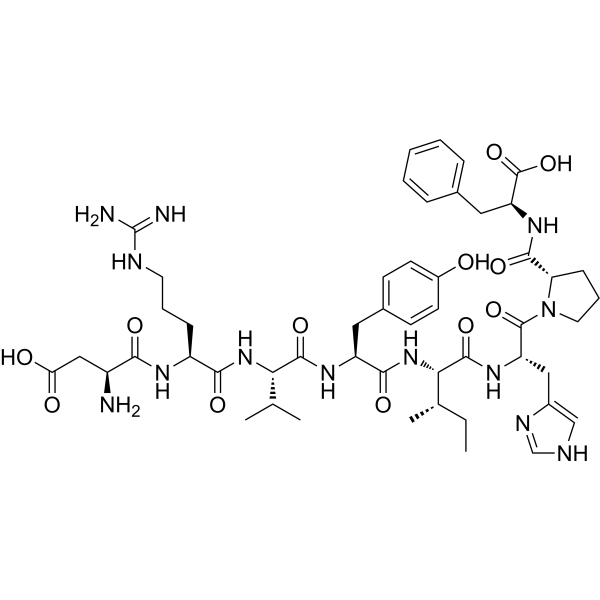
Synonyms: Angiotensin II; Ang II; DRVYIHPF
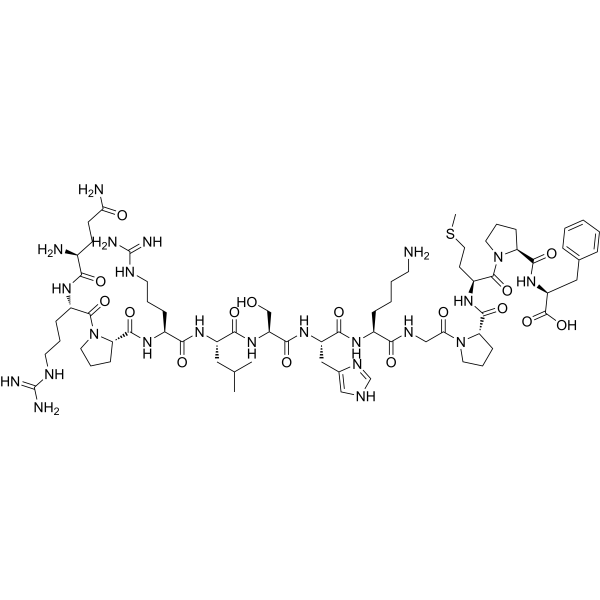
Angiotensin II (Angiotensin II) is a vasoconstrictor and a major bioactive peptide of the renin/angiotensin system. Angiotensin II human plays a central role in regulating human blood pressure, which is mainly mediated by interactions between Angiotensin II and the G-protein-coupled receptors (GPCRs) Angiotensin II type 1 receptor (AT1R) and Angiotensin II type 2 receptor (AT2R). Angiotensin II human stimulates sympathetic nervous stimulation, increases aldosterone biosynthesis and renal actions. Angiotensin II human induces growth of vascular smooth muscle cells, increases collagen type I and III synthesis in fibroblasts, leading to thickening of the vascular wall and myocardium, and fibrosis. Angiotensin II human also induces apoptosis. Angiotensin II induces capillary formation from endothelial cells via the LOX-1 dependent redox-sensitive pathway .
loading...
    loading...
248
248 Publications Verification
Art. -Nr.: HY-13948A
CAS. Nr.: 68521-88-0
Reinheit:  99.62%
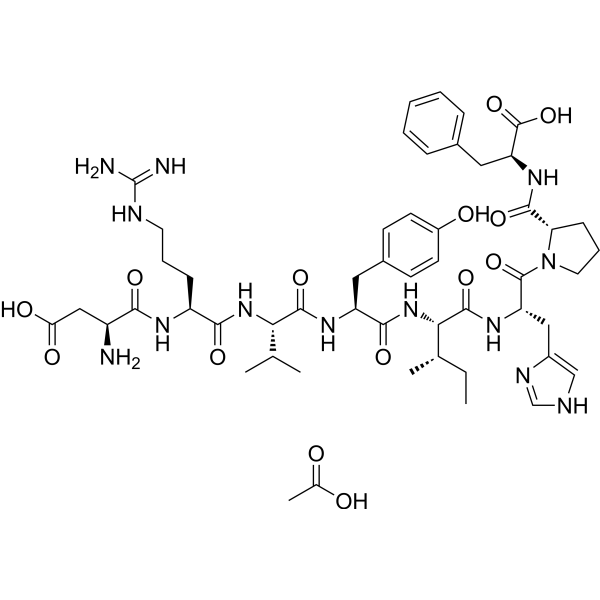
Synonyms: Angiotensin II acetate; Ang II acetate; DRVYIHPF acetate
Angiotensin II human (Angiotensin II) acetate is a vasoconstrictor and a major bioactive peptide of the renin/angiotensin system. Angiotensin II human acetate plays a central role in regulating human blood pressure, which is mainly mediated by interactions between Angiotensin II and the G-protein-coupled receptors (GPCRs) Angiotensin II type 1 receptor (AT1R) and Angiotensin II type 2 receptor (AT2R). Angiotensin II human acetate stimulates sympathetic nervous stimulation, increases aldosterone biosynthesis and renal actions. Angiotensin II human acetate induces growth of vascular smooth muscle cells, increases collagen type I and III synthesis in fibroblasts, leading to thickening of the vascular wall and myocardium, and fibrosis. Angiotensin II human acetate also induces apoptosis. Angiotensin II human acetate induces capillary formation from endothelial cells via the LOX-1 dependent redox-sensitive pathway .
loading...
    loading...
248
248 Publications Verification
Art. -Nr.: HY-13948B
CAS. Nr.: 2761969-44-0
Reinheit:  98.84%
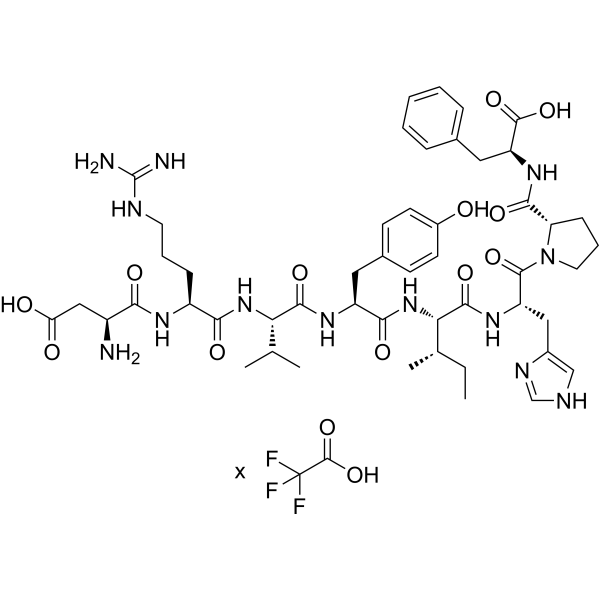
Synonyms: Angiotensin II TFA; Ang II TFA; DRVYIHPF TFA
Angiotensin II human (Angiotensin II) TFA is a vasoconstrictor and a major bioactive peptide of the renin/angiotensin system. Angiotensin II human TFA plays a central role in regulating human blood pressure, which is mainly mediated by interactions between Angiotensin II and the G-protein-coupled receptors (GPCRs) Angiotensin II type 1 receptor (AT1R) and Angiotensin II type 2 receptor (AT2R). Angiotensin II human TFA stimulates sympathetic nervous stimulation, increases aldosterone biosynthesis and renal actions. Angiotensin II human TFA induces growth of vascular smooth muscle cells, increases collagen type I and III synthesis in fibroblasts, leading to thickening of the vascular wall and myocardium, and fibrosis. Angiotensin II human TFA also induces apoptosis. Angiotensin II human TFA induces capillary formation from endothelial cells via the LOX-1 dependent redox-sensitive pathway .
loading...
    loading...
60
60 Cited Publications
Art. -Nr.: HY-17512
CAS. Nr.: 114798-26-4
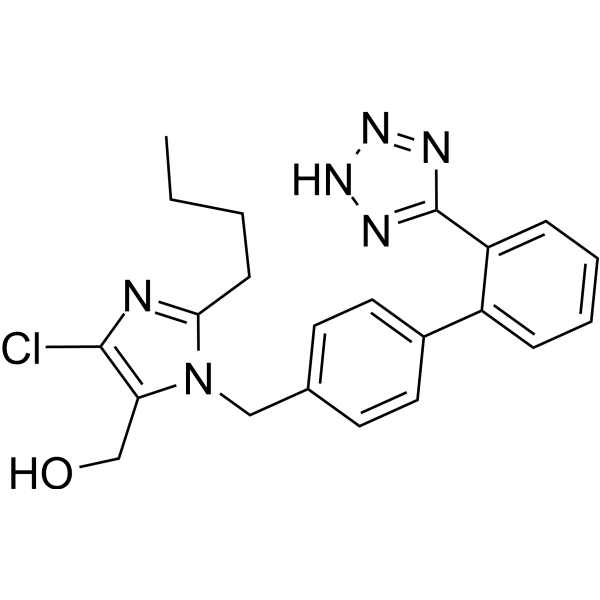
Synonyms: DuP-753
Losartan is an angiotensin II receptor antagonist, competing with the binding of angiotensin II to AT1 receptors with IC50 of 20 nM.
loading...
    loading...
60
60 Cited Publications
Art. -Nr.: HY-17512A
CAS. Nr.: 124750-99-8
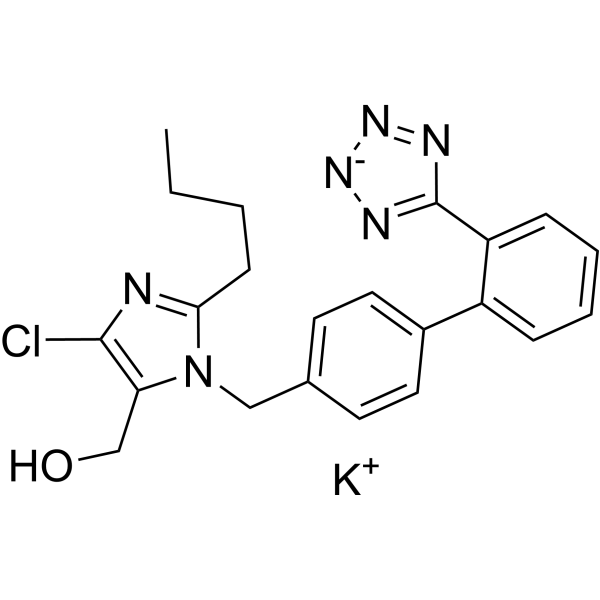
Synonyms: DuP-753 potassium
Losartan potassium (DuP-753 potassium) is an angiotensin II receptor type 1 (AT1) antagonist, competing with the binding of angiotensin II to AT1 with an IC50 of 20 nM.
loading...
    loading...
24
24 Cited Publications
Art. -Nr.: HY-18204
CAS. Nr.: 137862-53-4
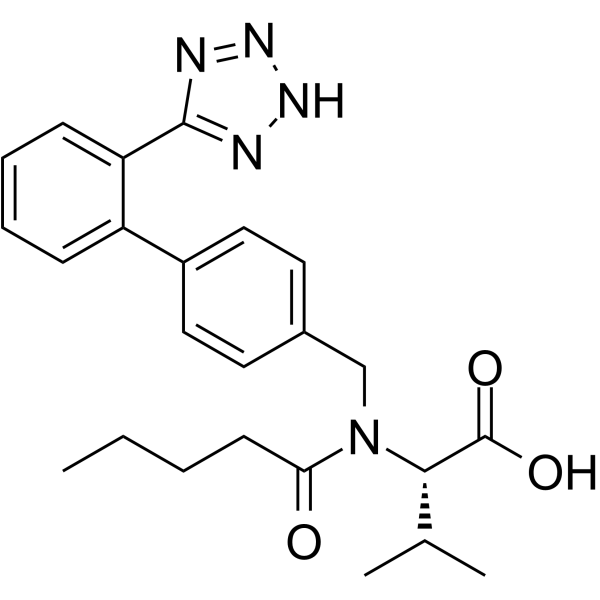
Synonyms: CGP 48933
Target:  

Angiotensin Receptor

Forschungsgebiete:  

Cardiovascular Disease Endocrinology

Valsartan (CGP 48933) is an angiotensin II receptor antagonist and has the potential for high blood pressure and heart failure research .
loading...
    loading...
17
17 Cited Publications
Art. -Nr.: HY-119706
CAS. Nr.: 356568-70-2
Reinheit:  98.93%
Target:  

Apoptosis Arrestin

Forschungsgebiete:  

Others

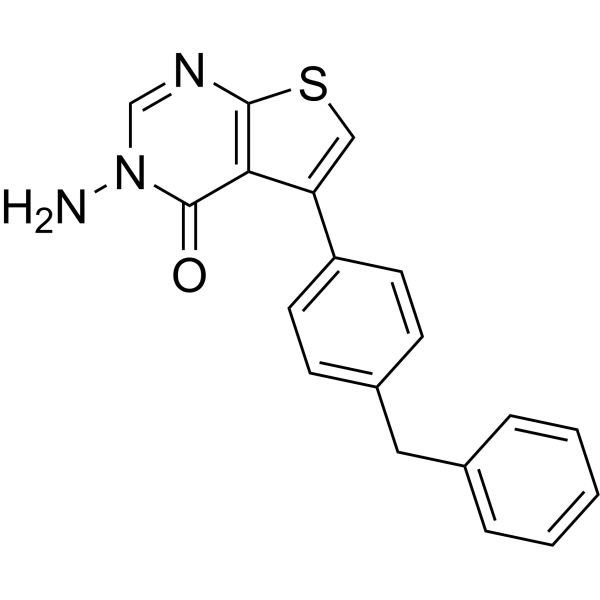
Barbadin is a novel and selective β-arrestin/β2-adaptin interaction inhibitor, has IC50 values of 19.1 μM for β-arrestin1 and 15.6 μM for β-arrestin2. Barbadin blocks agonist-promoted endocytosis of the prototypical β2-adrenergic, V2-vasopressin and angiotensin-II type-1 receptors. Barbadin can induce apoptosis .
loading...
    loading...
17
17 Cited Publications
Art. -Nr.: HY-13955
CAS. Nr.: 144701-48-4
Reinheit:  99.79%
Synonyms: BIBR 277
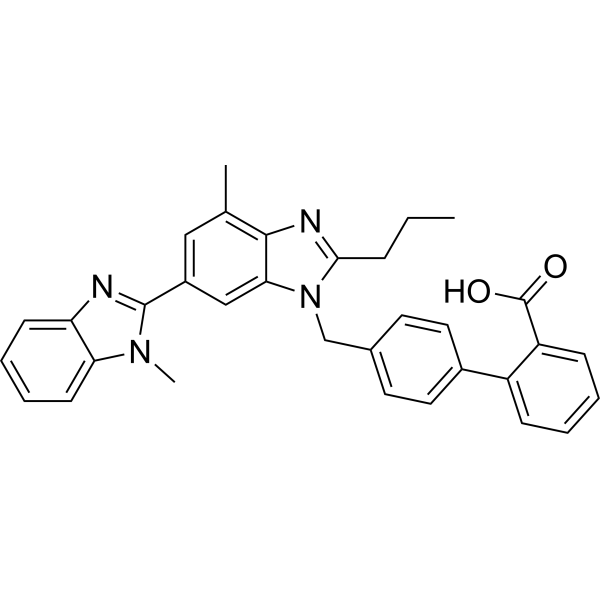
Telmisartan is a potent, long lasting antagonist of angiotensin II type 1 receptor (AT1), selectively inhibiting the binding of 125I-AngII to AT1 receptors with IC50 of 9.2 nM.
loading...
    loading...
17
17 Cited Publications
Art. -Nr.: HY-15477
CAS. Nr.: 132836-42-1
Reinheit:  99.92%
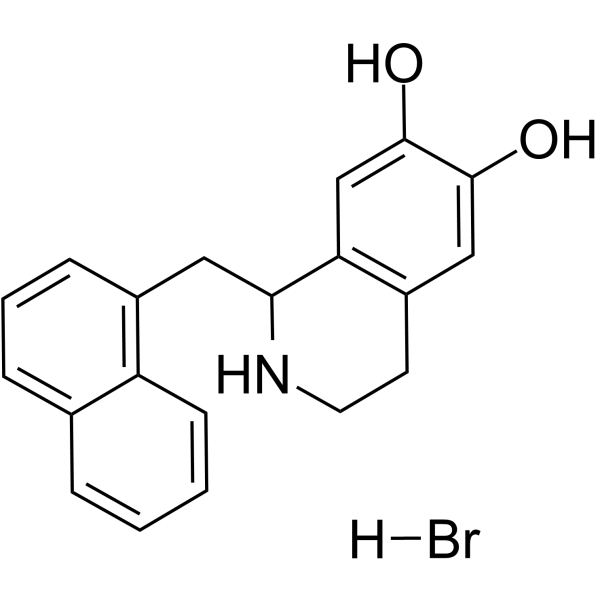
YS-49 is a PI3K/Akt (a downstream target of RhoA) activator, to reduce RhoA/PTEN activation in the 3-methylcholanthrene-treated cells. YS-49 inhibits angiotensin II (Ang II)-stimulated proliferation of VSMCs via induction of heme oxygenase (HO)-1. YS-49 is also an isoquinoline compound alkaloid, has a strong positive inotropic action through activation of cardiac β-adrenoceptors .
loading...
    loading...
17
17 Cited Publications
Art. -Nr.: HY-15477A
CAS. Nr.: 3028631-24-2
Reinheit:  99.71%
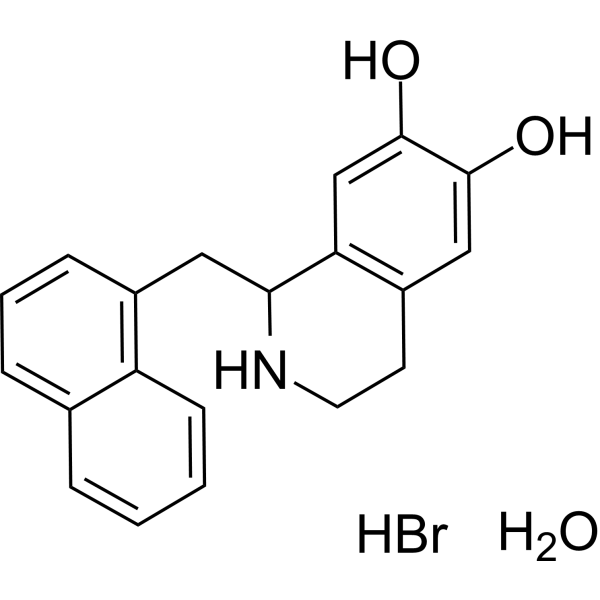
YS-49 (monohydrate) is a PI3K/Akt (a downstream target of RhoA) activator, to reduce RhoA/PTEN activation in the 3-methylcholanthrene-treated cells. YS-49 inhibits angiotensin II (Ang II)-stimulated proliferation of VSMCs via induction of heme oxygenase (HO)-1. YS-49 is also an isoquinoline compound alkaloid, has a strong positive inotropic action through activation of cardiac β-adrenoceptors .
loading...
    loading...
13
13 Cited Publications
Art. -Nr.: HY-B0331
CAS. Nr.: 75847-73-3
Synonyms: MK-421
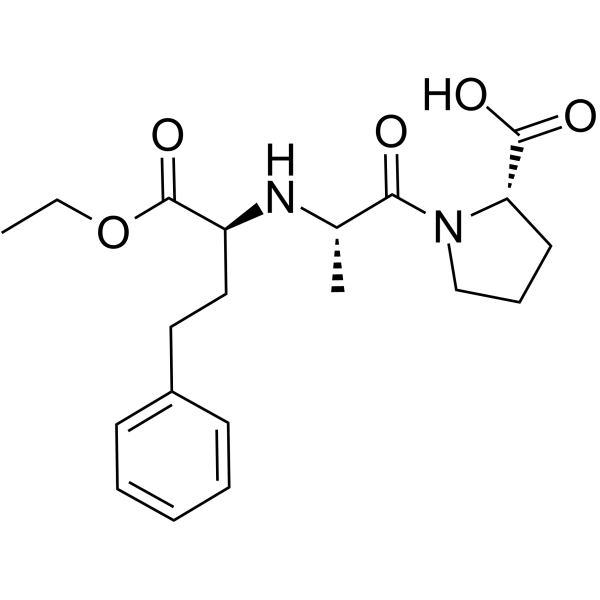
Enalapril (MK-421) is an orally active angiotensin-converting enzyme inhibitor. Enalapril blocks the conversion of angiotensin I to angiotensin II, regulates the renin-angiotensin system, reduces preload and afterload, and decreases plasma angiotensin II levels. Enalapril inhibits apoptosis, reduces nitric oxide metabolite levels, stabilizes endothelial cells, enhances endothelial antioxidant defense, scavenges reactive oxygen species (ROS), and alleviates neuronal damage. Enalapril attenuates glutathione depletion, protein/lipid oxidation, tissue damage, and type III collagen immunolabeling in organs of diabetic rats. Enalapril reduces systolic blood pressure and urinary albumin excretion, and delays the progression of diabetic cardiac/renal injury. Enalapril is used in research related to asymptomatic left ventricular dysfunction, congestive heart failure, Alzheimer's disease, diabetes mellitus, acute myocardial infarction, atrial fibrillation, hypertension, cerebral ischemia, chronic heart failure, and single-ventricle physiology .
loading...
    loading...
13
13 Cited Publications
Art. -Nr.: HY-B0331A
CAS. Nr.: 76095-16-4
Synonyms: MK-421 maleate
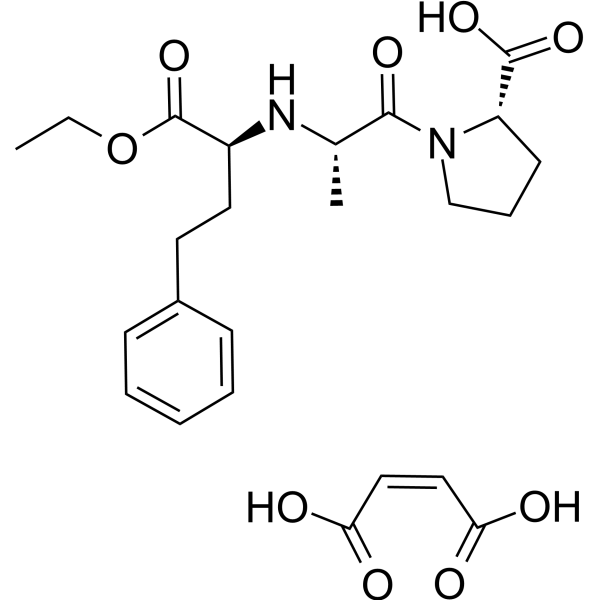
Enalapril maleate (MK-421 maleate) is an orally active angiotensin-converting enzyme inhibitor. Enalapril maleate blocks the conversion of angiotensin I to angiotensin II, regulates the renin-angiotensin system, reduces preload and afterload, and decreases plasma angiotensin II levels. Enalapril maleate inhibits apoptosis, reduces nitric oxide metabolite levels, stabilizes endothelial cells, enhances endothelial antioxidant defense, scavenges reactive oxygen species (ROS), and alleviates neuronal damage. Enalapril maleate attenuates glutathione depletion, protein/lipid oxidation, tissue damage, and type III collagen immunolabeling in organs of diabetic rats. Enalapril maleate reduces systolic blood pressure and urinary albumin excretion, and delays the progression of diabetic cardiac/renal injury. Enalapril maleate is used in research related to asymptomatic left ventricular dysfunction, congestive heart failure, Alzheimer's disease, diabetes mellitus, acute myocardial infarction, atrial fibrillation, hypertension, cerebral ischemia, chronic heart failure, and single-ventricle physiology .
loading...
    loading...
12
12 Cited Publications
Art. -Nr.: HY-17004
CAS. Nr.: 144689-24-7
Synonyms: RNH-6270
Target:  

Angiotensin Receptor

Forschungsgebiete:  

Cardiovascular Disease

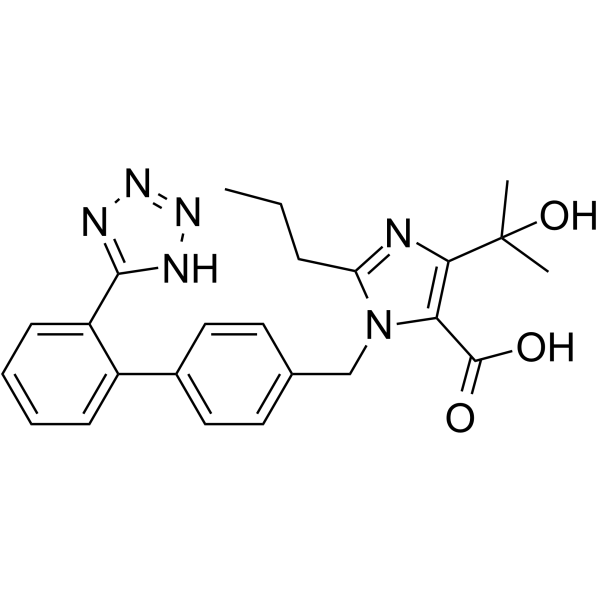
Olmesartan (RNH-6270) is an angiotensin II receptor (AT1R) antagonist used to treat high blood pressure .
loading...
    loading...
11
11 Cited Publications
Art. -Nr.: HY-10259A
CAS. Nr.: 136676-91-0
Reinheit:  99.34%
Target:  

Angiotensin Receptor

Forschungsgebiete:  

Cardiovascular Disease Endocrinology

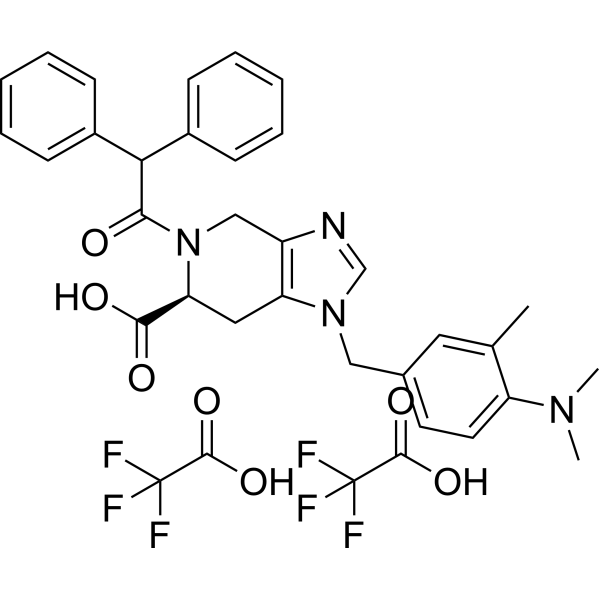
PD 123319 (ditrifluoroacetate) is a potent, selective AT2 angiotensin II receptor antagonist with IC50 of 34 nM.
loading...
    loading...
11
11 Cited Publications
Art. -Nr.: HY-D0845
CAS. Nr.: 57564-91-7
Synonyms: GSNO; RVC-588; S-Nitroso-L-glutathione
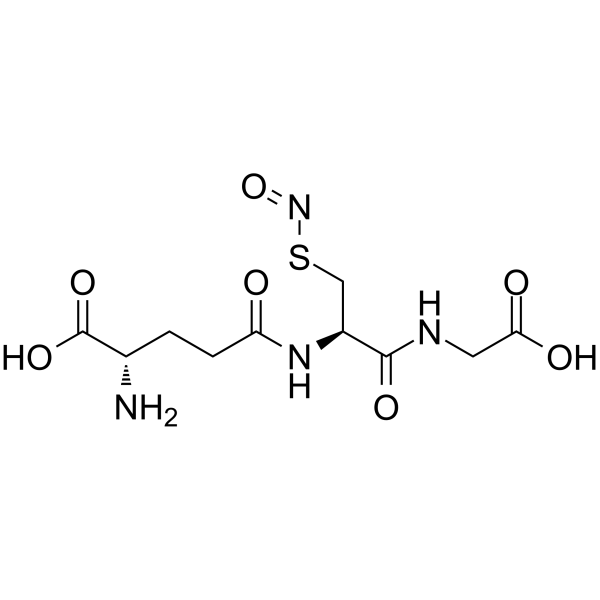
Nitrosoglutathione (GSNO), a exogenous NO donor and a substrate for rat alcohol dehydrogenase class III isoenzyme, inhibits cerebrovascular angiotensin II-dependent and -independent AT1 receptor responses .
loading...
    loading...
10
10 Cited Publications
Art. -Nr.: HY-P1944A
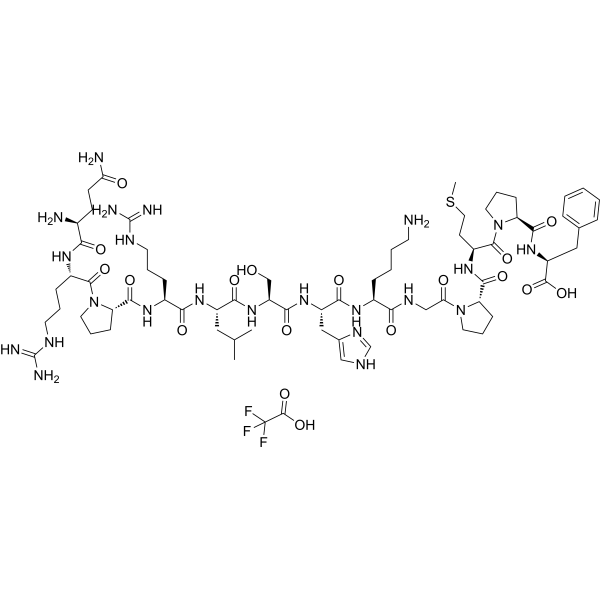
Apelin-13 TFA is an endogenous ligand for the G-protein coupled receptor angiotensin II protein J (APJ), activating this G protein-coupled receptor with an EC 50 value of 0.37 nM. Apelin-13 TFA has vasodilatory and antihypertensive effects. Apelin-13 TFA also can be used for researching type 2 diabetes and metabolic syndrome .
loading...
    loading...
10
10 Cited Publications
Art. -Nr.: HY-P1944
CAS. Nr.: 217082-58-1
Apelin-13 is an endogenous ligand for the G-protein coupled receptor angiotensin II protein J (APJ), activating this G protein-coupled receptor with an EC 50 value of 0.37 nM. Apelin-13 is widely distributed in the central and peripheral nervous systems. Apelin-13 has vasodilatory and antihypertensive effects. Apelin-13 also can be used for researching type 2 diabetes and metabolic syndrome .
loading...
    loading...
9
9 Cited Publications
Art. -Nr.: HY-B0195
CAS. Nr.: 53902-12-8
Synonyms: MK-341; SB 252218
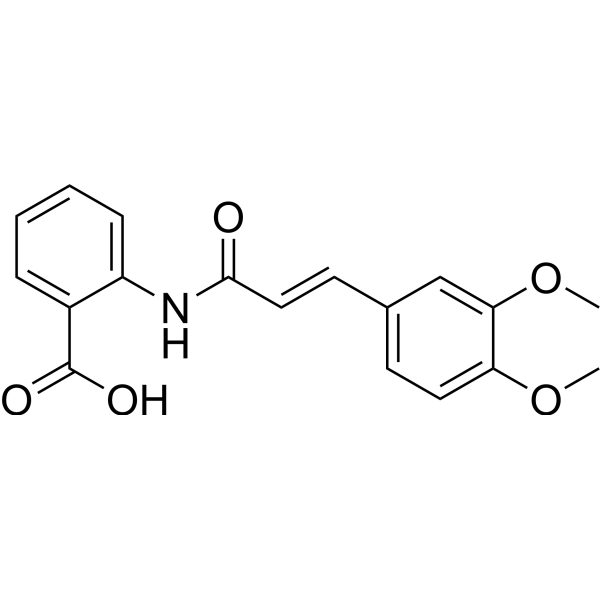
Tranilast (MK-341) acts as an anti-atopic agent. Tranilast suppresses production of prostaglandin D2 (PGD2, IC50= 0.1 mM). Tranilast sodium exhibits anti-inflammatory and immunomodulatory effects . Tranilast sodium antagonizes angiotensin II and inhibits its biological effects in vascular smooth muscle cells .
loading...
    loading...
9
9 Cited Publications
Art. -Nr.: HY-B0195A
CAS. Nr.: 104931-56-8
Synonyms: MK-341 sodium; SB 252218 sodium
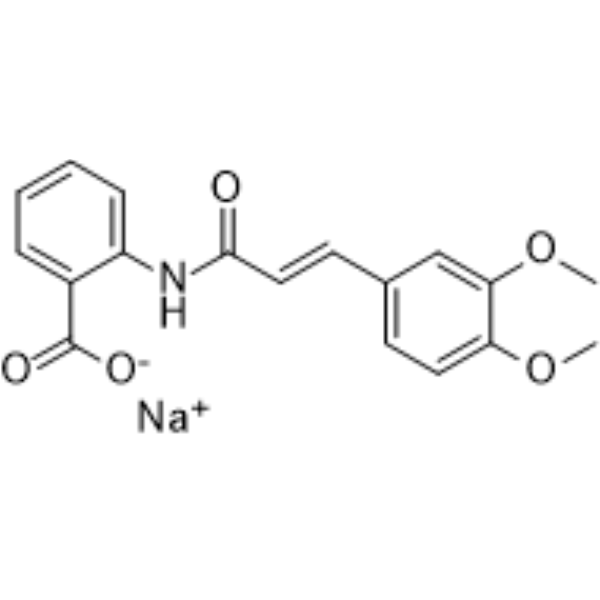
Tranilast sodium (MK-341 sodium) acts as an anti-atopic agent. Tranilast suppresses production of prostaglandin D2 (PGD2, IC50= 0.1 mM). Tranilast sodium exhibits anti-inflammatory and immunomodulatory effects . Tranilast sodium antagonizes angiotensin II and inhibits its biological effects in vascular smooth muscle cells .
loading...
    loading...
7
7 Cited Publications
Art. -Nr.: HY-B0205
CAS. Nr.: 139481-59-7
Synonyms: CV 11974
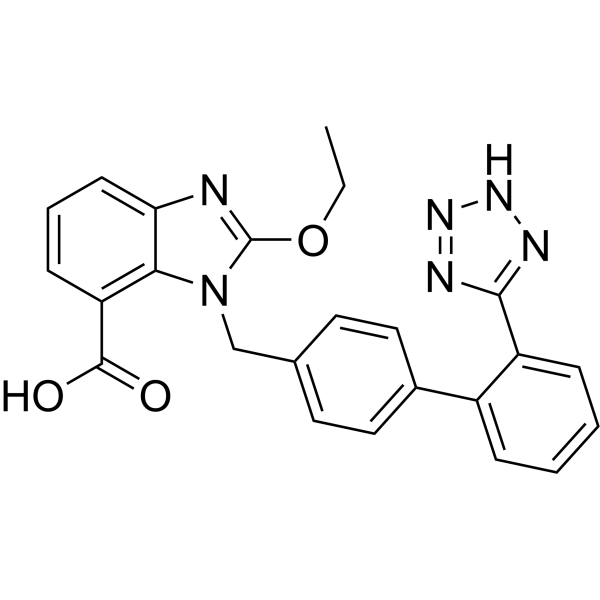
Candesartan (CV 11974) is an orally active angiotensin II AT1-Receptor blocker and PPAR-γ agonist. Candesartan has potent and long-lasting antihypertensive effects. Candesartan can be used for the research of hypertension, chronic heart failure (CHF) and Traumatic brain injury (TBI) .
loading...
    loading...

