



Bergaptol

Based on 1 Customer Validation
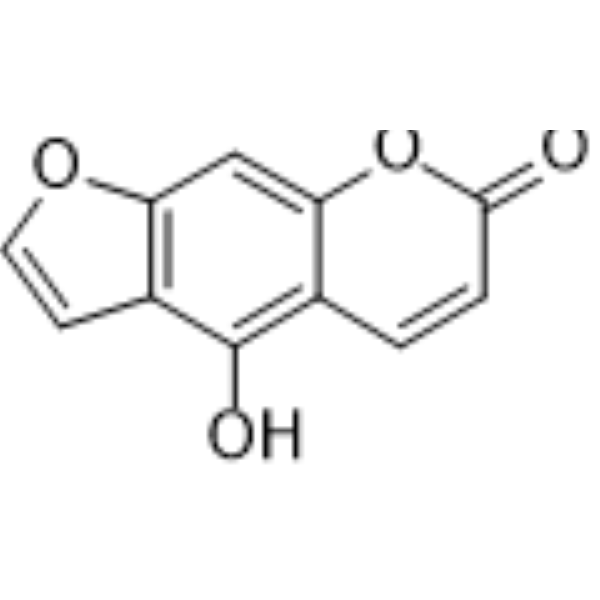
Bergaptol is an inhibitor of debenzylation of the CYP3A4 enzyme with an IC50 of 24.92 μM. Recent studies have shown that it has anti-proliferative and anti-cancer properties.
For research use only. We do not sell to patients.
- Purity : 99.30%
- CAS No.: 486-60-2
- Formula: C11H6O4
- Molecular Weight:202.16
-
Storage:Powder -20°C, 3 years , 4°C, 2 years ; In solvent -80°C, 2 years , -20°C, 1 year

To place orders, for customer services and technical support, please contact: MedChemExpress USA
Tel: 609-228-6898 E-mail: [email protected] [email protected]


-
 Biological Activity
-
Chemical Information
-
Solvent & Solubility
- Protocols
- Purity & Documentation
- References
-
 Help & FAQs


-
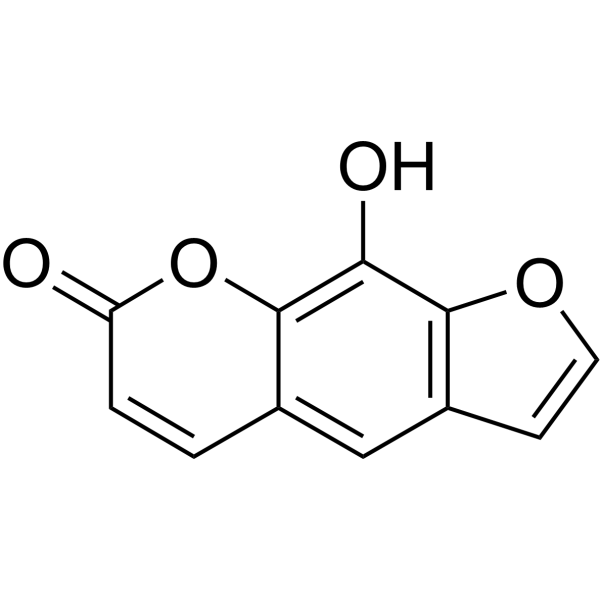
HY-30152
XanthotoxolAnti-Inflammatory Agent -
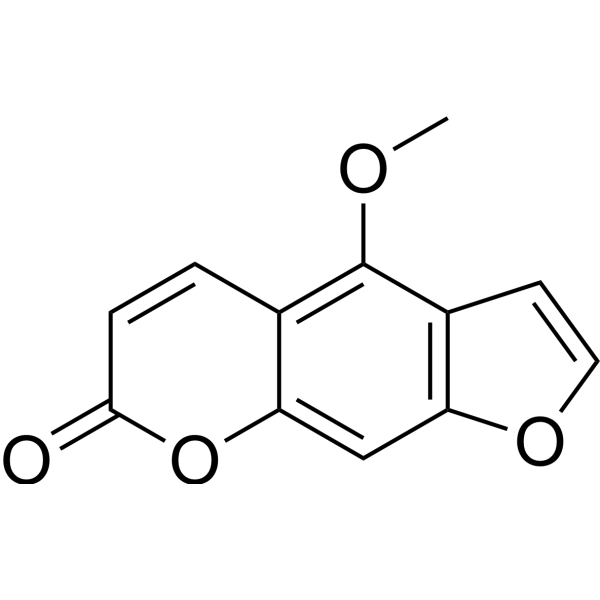
HY-N0370
BergaptenCytochrome P450 Inhibitor -
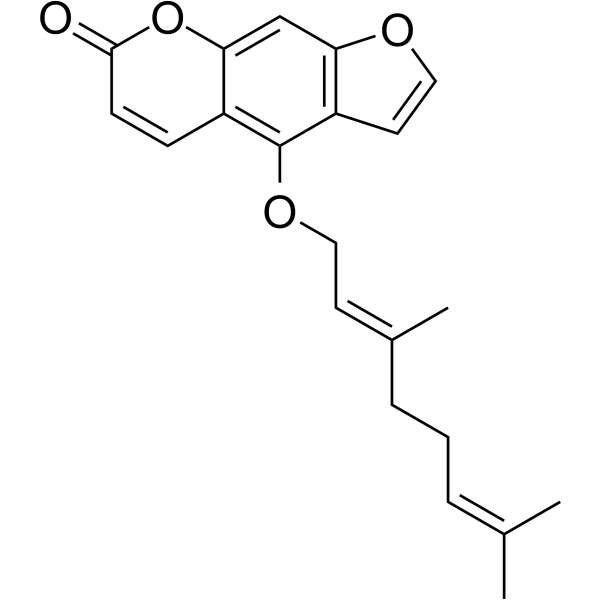
HY-N2194
BergamottinCytochrome P450 Inhibitor -
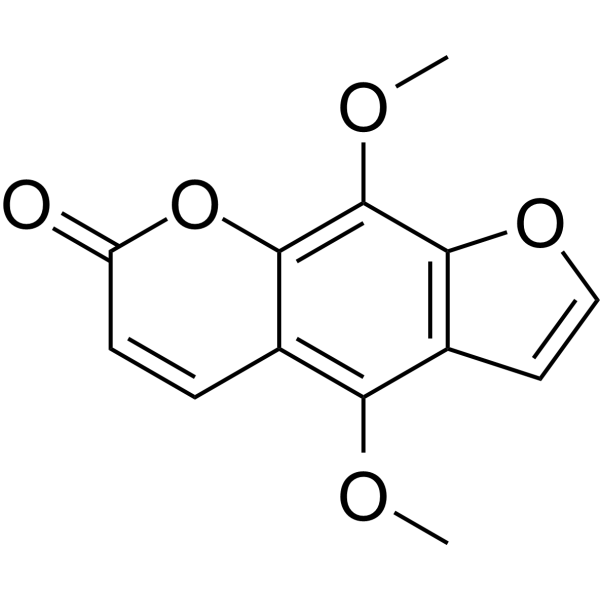
HY-N0769
IsopimpinellinParasite Inhibitor -

HY-76316R
Bergaptol (Standard)Cytochrome P450 Inhibitor -
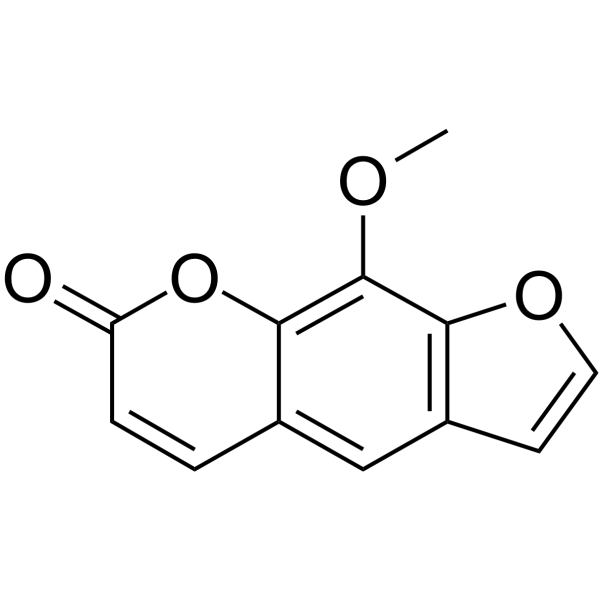
HY-30151
MethoxsalenCytochrome P450 Inhibitor -
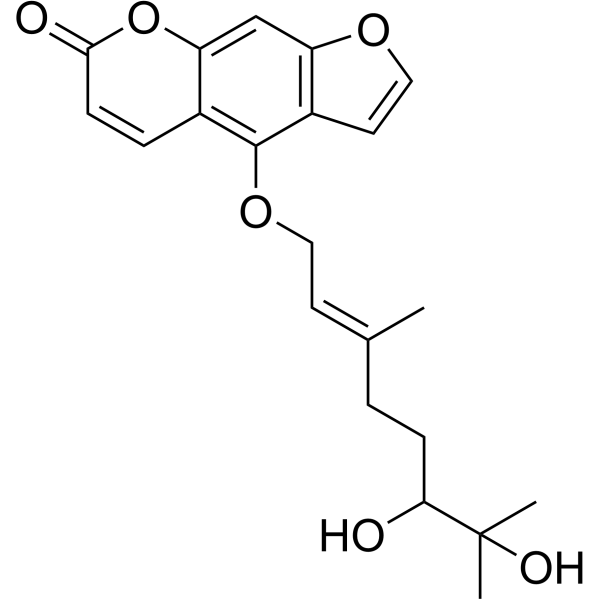
HY-N8354
6',7'-DihydroxybergamottinCYP3A4 Inhibitor -
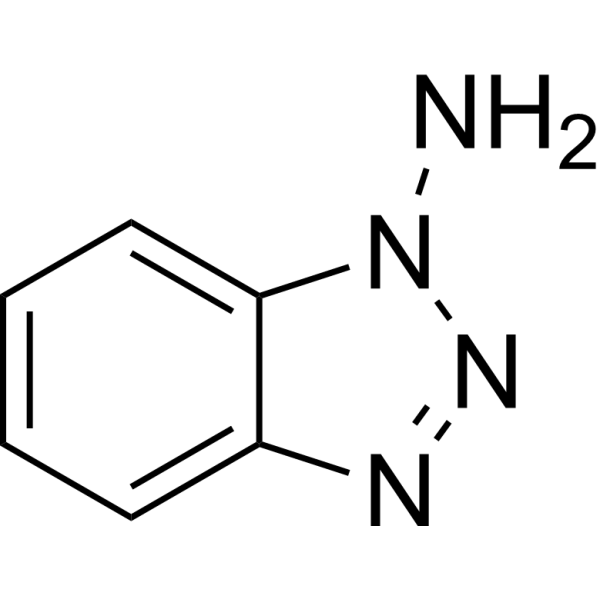
HY-103389
1-AminobenzotriazoleCytochrome P450 Inhibitor -
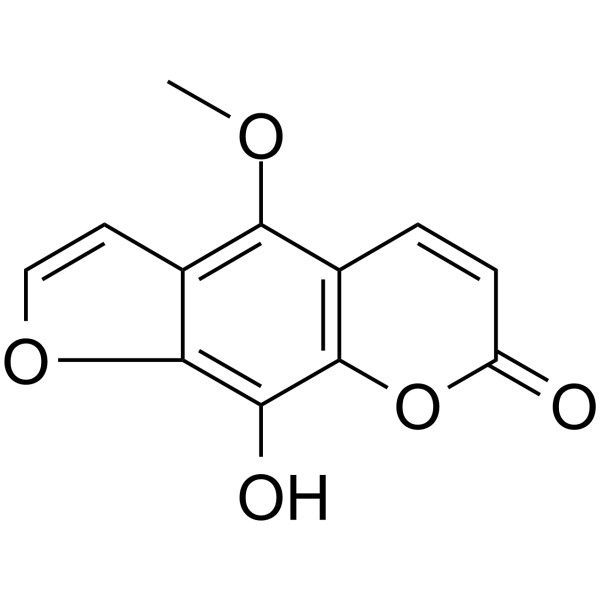
HY-N6010
8-HydroxybergaptenAnti-Wrinkle Agent -
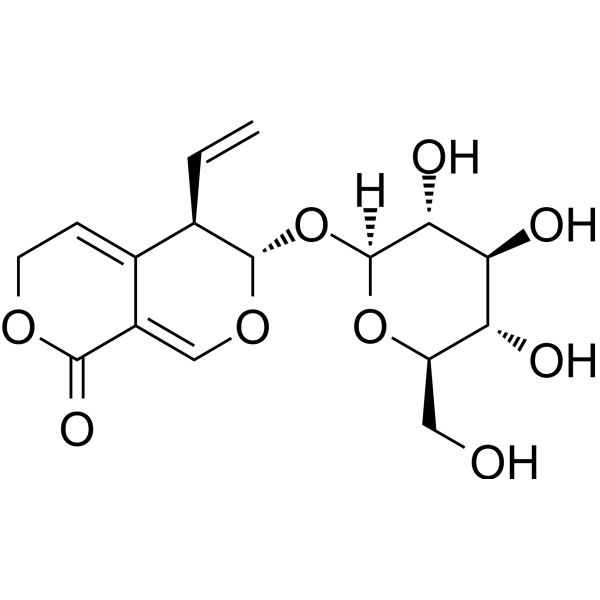
HY-N0494
GentiopicrosideCytochrome P450 Inhibitor -
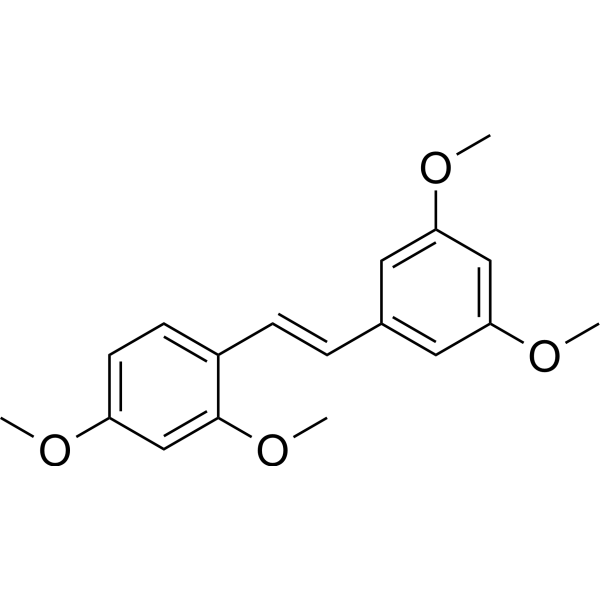
HY-19340
TMSCYP1B1 Inhibitor -
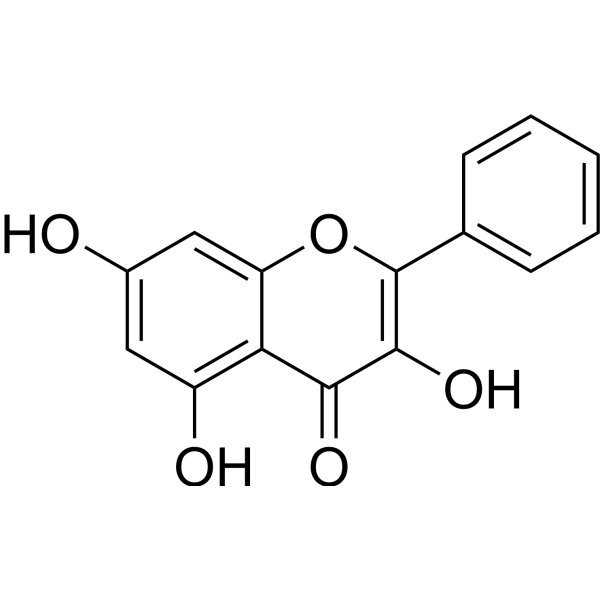
HY-N0382
GalanginCytochrome P450 Inhibitor


Biological Activity
Description
IC50 & Target
|
CYP3 |
Cellular Effect
|
Cell Line

|
Type | Value | Description | References |
|---|---|---|---|---|
| 3T3-L1 | IC50 |
>500 μM
Compound: 9
|
Anticorpulence activity against mouse 3T3L1 cells assessed as inhibition of lipid droplet accumulation
Anticorpulence activity against mouse 3T3L1 cells assessed as inhibition of lipid droplet accumulation
|
[PMID: 19054677] |
| HT-29 | IC50 |
>500 μM
Compound: 9
|
Anticancer activity against human HT-29 cells after 72 hrs by MTT assay
Anticancer activity against human HT-29 cells after 72 hrs by MTT assay
|
[PMID: 19054677] |
In Vitro
Bergaptol (0-800 ppm) shows free radical scavenging activity, tested by ABTS and DPPH methods[1].
Bergaptol (50 μg/mL, 24 h) inhibits LPS-induced production of NO, IL-6, and TNF-α in RAW264.7 cells[3].
Bergaptol (50 μg/mL, 24 h) inhibits LPS-induced MAPK phosphorylation and nuclear factor-kappa B (NF-κB) activation in RAW264.7 cells[3].
MedChemExpress (MCE) has not independently confirmed the accuracy of these methods. They are for reference only.
-
Cell Line:LPS-induced RAW264.7 cells
-
Concentration:50 μg/mL
-
Incubation Time:24 h
-
Result:Inhibited JNK phosphorylation and NF-κB activation.
Inhibited NF-κB P65 translocation from the cytosol to nucleus.
In Vivo
MedChemExpress (MCE) has not independently confirmed the accuracy of these methods. They are for reference only.
-
Animal Model:LPS (40 μg/kg, i.c.v.)-treated mice[4]
-
Dosage:10-40 mg/kg
-
Administration:i.p., once a day for two week
-
Result:Reduced LPS-induced fixation and cleavage of neuronal nuclei in the CA1 region of the hippocampus (H&E staining).
Increasead the dendritic spine density of mice.
Inhibited LPS-induced neuroinflammation.


Chemical Information
-
CAS No. 486-60-2
-
Appearance Solid
-
Molecular Weight 202.16
-
Formula C11H6O4
-
Color Light yellow to yellow
-
SMILES
O=C1C=CC(C(O1)=C2)=C(O)C3=C2OC=C3
-
Synonyms
5-Hydroxypsoralen; 4-Hydroxybergapten
-
Structure Classification
-
Initial Source
-
Shipping
Room temperature in continental US; may vary elsewhere.
-
Storage
Powder -20°C 3 years 4°C 2 years In solvent -80°C 2 years -20°C 1 year


Solvent & Solubility
In Vitro:
DMSO : ≥ 50 mg/mL (247.33 mM; Hygroscopic DMSO has a significant impact on the solubility of product, please use newly opened DMSO)
H2O : < 0.1 mg/mL (insoluble)
* "≥" means soluble, but saturation unknown.
Please refer to the solubility information to select the appropriate solvent. Once prepared, please aliquot and store the solution to prevent product inactivation from repeated freeze-thaw cycles.
Storage method and period of stock solution: -80°C, 2 years; -20°C, 1 year. When stored at -80°C, please use it within 2 years. When stored at -20°C, please use it within 1 year.
Please refer to the solubility information to select the appropriate solvent. Once prepared, please aliquot and store the solution to prevent product inactivation from repeated freeze-thaw cycles.
Storage method and period of stock solution: -80°C, 2 years; -20°C, 1 year. When stored at -80°C, please use it within 2 years. When stored at -20°C, please use it within 1 year.
Concentration (start) × Volume (start) = Concentration (final) × Volume (final)
In Vivo:
Select the appropriate dissolution method based on your experimental animal and administration route.
- For the following dissolution methods, please ensure to first prepare a clear stock solution using an In Vitro approach and then sequentially add co-solvents:
- To ensure reliable experimental results, the clarified stock solution can be appropriately stored based on storage conditions. As for the working solution for In Vivo experiments, it is recommended to prepare freshly and use it on the same day.
- The percentages shown for the solvents indicate their volumetric ratio in the final prepared solution. If precipitation or phase separation occurs during preparation, heat and/or sonication can be used to aid dissolution.
Add each solvent one by one: 10% DMSO 40% PEG300 5% Tween-80 45% Saline
Solubility: 2.5 mg/mL (12.37 mM); Suspended solution; Need ultrasonic
This protocol yields a suspended solution of 2.5 mg/mL. Suspended solution can be used for oral and intraperitoneal injection.
Taking 1 mL working solution as an example, add 100 μL DMSO stock solution (25.0 mg/mL) to 400 μL PEG300, and mix evenly; then add 50 μL Tween-80 and mix evenly; then add 450 μL Saline to adjust the volume to 1 mL.
Preparation of Saline: Dissolve 0.9 g sodium chloride in ddH₂O and dilute to 100 mL to obtain a clear Saline solution.
In Vivo Dissolution Calculator
Please enter the basic information of animal experiments:
-
-
-
-
Recommended: Prepare an additional quantity of animals to account for potential losses during experiments.
Please enter your animal formula composition:
-
%DMSO +
Recommended: Keep the proportion of DMSO in working solution below 2% if your animal is weak.
-
%+
-
+%Tween-80 + +
-
%Saline +
The co-solvents required include: DMSO, . All of co-solvents are available by MedChemExpress (MCE). , Tween 80. All of co-solvents are available by MedChemExpress (MCE).
Working solution concentration: 0.22 mg/mL
Method for preparing stock solution: mg drug dissolved in μL DMSO. Stock solution concentration: mg/mL.
1. Take μL DMSO stock solution;
2. Add μL .
μL , mix evenly;
3. Then add μL Tween 80, mix evenly;
4. Then add μL
Please ensure that the stock solution in the first step is dissolved to a clear state, and add co-solvents in sequence. You can use ultrasonic heating (ultrasonic cleaner, recommended frequency 20-40 kHz), vortexing, etc. to assist dissolution.


Purity & Documentation
-
Data Sheet (279 KB)
-
SDS (396 KB)
- English - EN (396 KB)
- Français - FR (396 KB)
- Deutsch - DE (396 KB)
- Norwegian - NO (396 KB)
- Español - ES (396 KB)
- Swedish - SV (396 KB)
- Italian - IT (396 KB)
- Korean - KR (396 KB)
- Portuguese - PT (396 KB)
-
Handling Instructions (2659 KB)
References
[1]. Basavaraj Girennavar et al. Radical scavenging and cytochrome P450 3A4 inhibitory activity of bergaptol and geranylcoumarin from grapefruit. Bioorganic & Medicinal Chemistry.June 2007, Pages 3684-3691 [Content Brief]
[2]. Yucheng Zhao et al. Cloning, Functional Characterization, and Catalytic Mechanism of a Bergaptol O-Methyltransferase from Peucedanum praeruptorum Dunn. Front Plant Sci, 2016, 7: 722. [Content Brief]
[3]. Shen CY, et al. Bergaptol from blossoms of Citrus aurantium L. var. amara Engl inhibits LPS-induced inflammatory responses and ox-LDL-induced lipid deposition. Food Funct. 2020 Jun 24;11(6):4915-4926. [Content Brief]
[4]. Wu J, et al. Bergaptol Alleviates LPS-Induced Neuroinflammation, Neurological Damage and Cognitive Impairment via Regulating the JAK2/STAT3/p65 Pathway. J Inflamm Res. 2022 Nov 9;15:6199-6211. [Content Brief]


Complete Stock Solution Preparation Table
Please refer to the solubility information to select the appropriate solvent. Once prepared, please aliquot and store the solution to prevent product inactivation from repeated freeze-thaw cycles.
Storage method and period of stock solution: -80°C, 2 years; -20°C, 1 year. When stored at -80°C, please use it within 2 years. When stored at -20°C, please use it within 1 year.
| Optional Solvent | Concentration Solvent Mass | 1 mg | 5 mg | 10 mg | 25 mg |
|---|---|---|---|---|---|
| DMSO | 1 mM | 4.9466 mL | 24.7329 mL | 49.4658 mL | 123.6644 mL |
| 5 mM | 0.9893 mL | 4.9466 mL | 9.8932 mL | 24.7329 mL | |
| 10 mM | 0.4947 mL | 2.4733 mL | 4.9466 mL | 12.3664 mL | |
| 15 mM | 0.3298 mL | 1.6489 mL | 3.2977 mL | 8.2443 mL | |
| 20 mM | 0.2473 mL | 1.2366 mL | 2.4733 mL | 6.1832 mL | |
| 25 mM | 0.1979 mL | 0.9893 mL | 1.9786 mL | 4.9466 mL | |
| 30 mM | 0.1649 mL | 0.8244 mL | 1.6489 mL | 4.1221 mL | |
| 40 mM | 0.1237 mL | 0.6183 mL | 1.2366 mL | 3.0916 mL | |
| 50 mM | 0.0989 mL | 0.4947 mL | 0.9893 mL | 2.4733 mL | |
| 60 mM | 0.0824 mL | 0.4122 mL | 0.8244 mL | 2.0611 mL | |
| 80 mM | 0.0618 mL | 0.3092 mL | 0.6183 mL | 1.5458 mL | |
| 100 mM | 0.0495 mL | 0.2473 mL | 0.4947 mL | 1.2366 mL |


Bergaptol Related Classifications
HY-76316 Related Classifications
 Powered by Bioz