



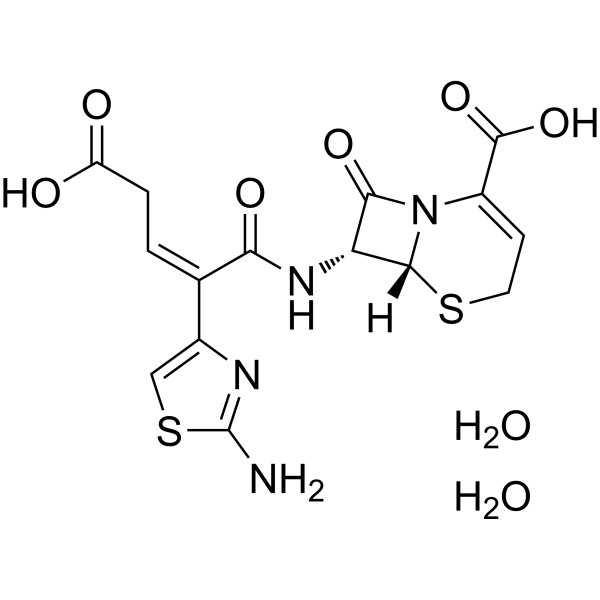
Ceftibuten dihydrate
Based on 2 publication(s) in Google Scholar
Ceftibuten (Sch-39720) dihydrate, an antibiotic, is an orally active cephalosporin, possesses potent activity in vitro against a wide range of gram-negative and certain gram-positive pathogens.
Nos produits utilisent uniquement pour la recherche. Nous ne vendons pas aux patients.
- Pureté : 99.18%
- CAS No.: 118081-34-8
- Formule: C15H18N4O8S2
- Masse moléculaire:446.46
-
Stockage:Powder -20°C, 3 years , 4°C, 2 years ; In solvent -80°C, 2 years , -20°C, 1 year

To place orders, for customer services and technical support, please contact: MedChemExpress USA
Tel: 609-228-6898 E-mail: [email protected] [email protected]


-
 Activité biologique
-
Chemical Information
-
Solvant et solubilité
- Protocole
- Pureté et documentation
- Références
-
 Help & FAQs


-
HY-B1381
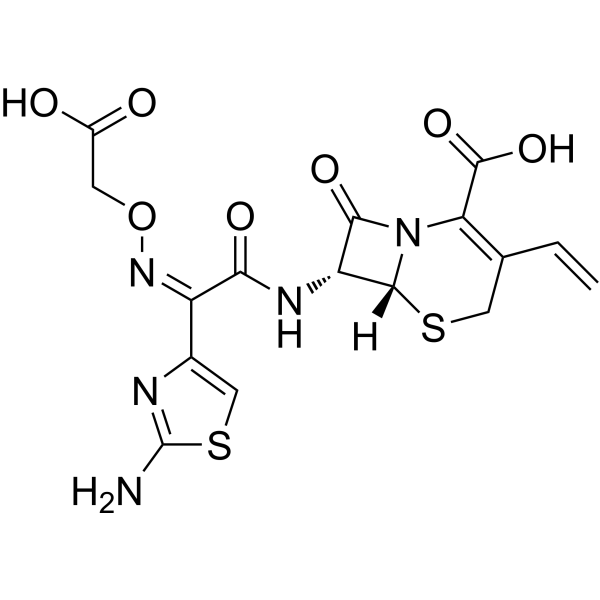
CefiximeBacterial Inhibitor -
HY-B0136
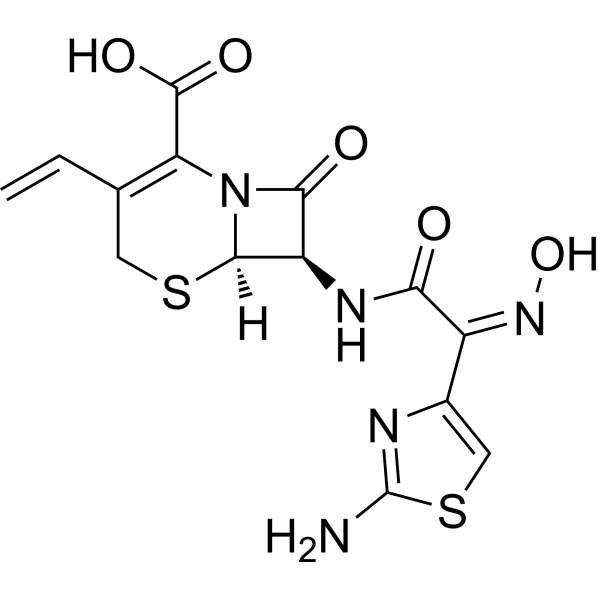
CefdinirBacterial Inhibitor -
HY-17452A
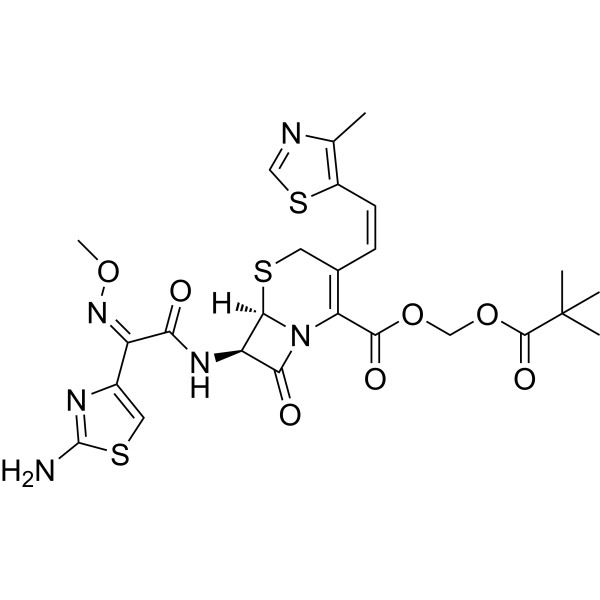
Cefditoren PivoxilAntibacterial Agent -
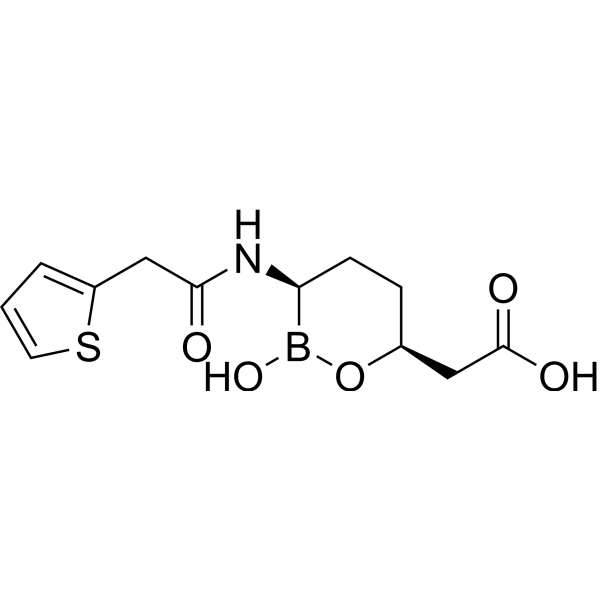
HY-19930
Vaborbactamβ-lactamase Inhibitor -
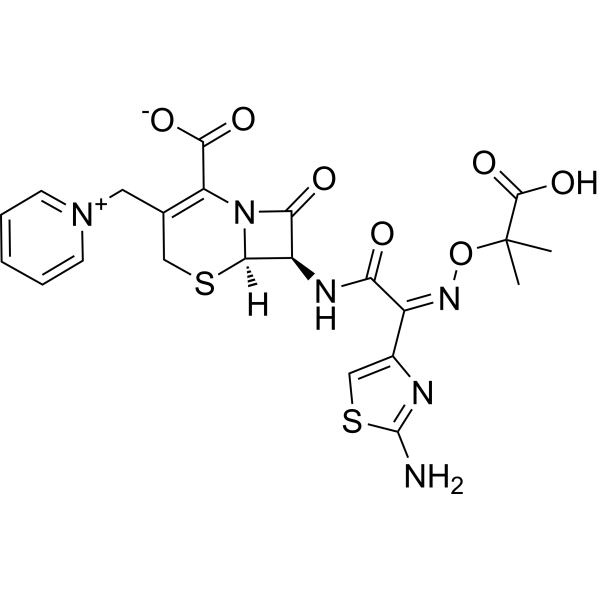
HY-B0593
CeftazidimeAntibiotic -
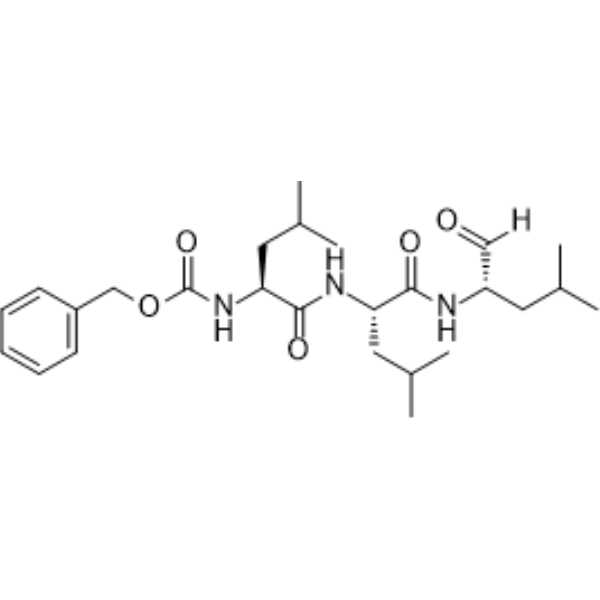
HY-13259
MG-132Proteasome Inhibitor -
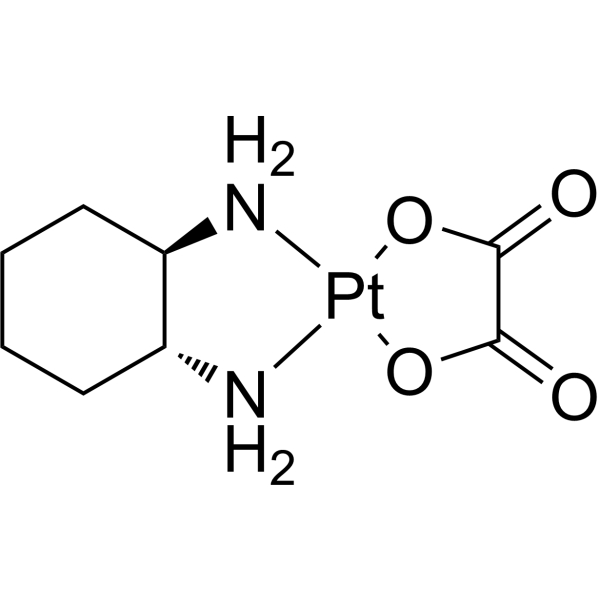
HY-17371
OxaliplatinDNA Synthesis Inhibitor -
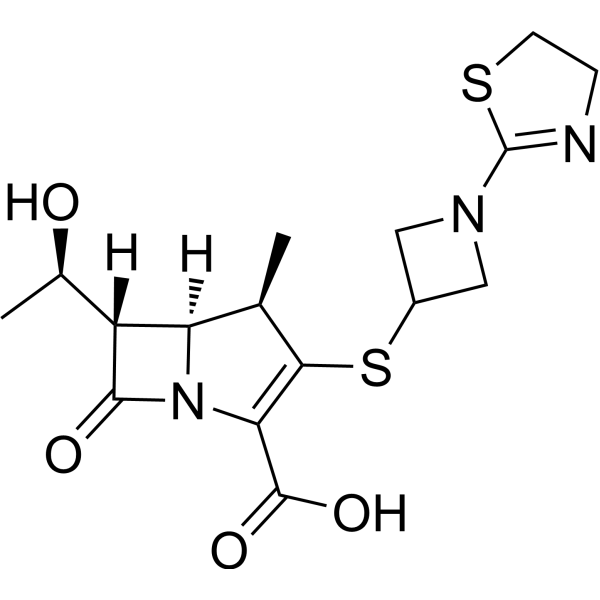
HY-A0076
TebipenemAntibacterial Agent -
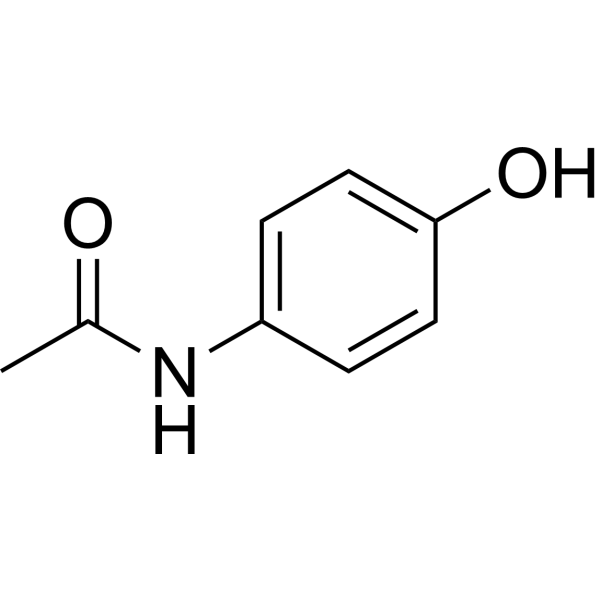
HY-66005
AcetaminophenCOX-2 Inhibitor -
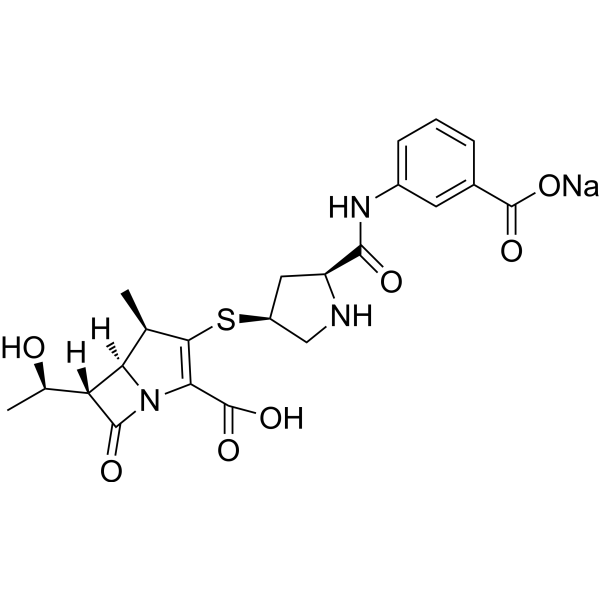
HY-13625
Ertapenem sodiumAntibiotic -
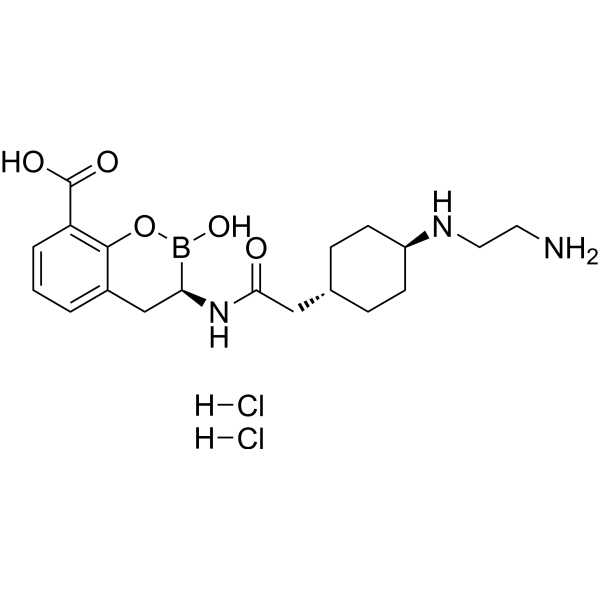
HY-109124A
Taniborbactam hydrochlorideβ-lactamase Inhibitor -
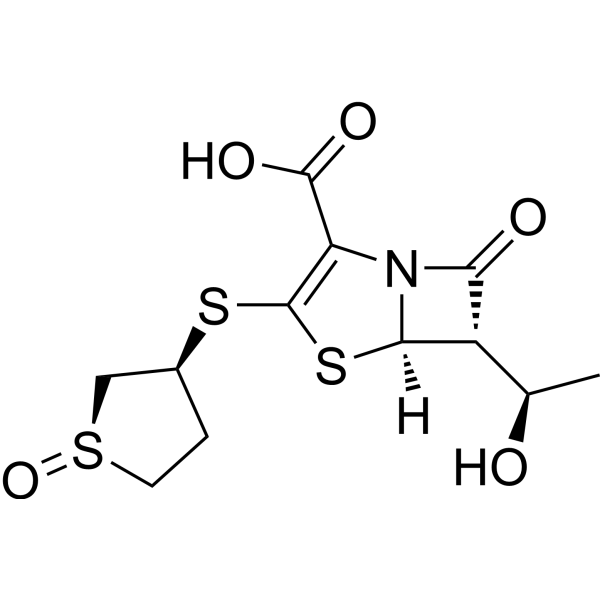
HY-105284
SulopenemPenem Antibiotic
Publications Citing Use of MedChemExpress (MCE) Ceftibuten dihydrate
MoreVoir tous les produits spécifiques à Isoform Beta-lactamase
MoreVoir tous les produits spécifiques à Isoform Antibiotic
More

Activité biologique
Description
IC50 & Target
|
β-lactam |
In Vitro
Ceftibuten (Sch-39720) is highly active against Haemophilus influenza, Escherichia coli, Klebsiella sp., and Proteus sp. and moderately active against Serratia sp. and Streptococcus pyogenes. Ceftibuten is relatively inactive against enterococci and staphylococci and is only weakly active against Pseudomonas aeruginosa and obligate anaerobes. It is also stable in the presence of most β-lactamase-producing organisms except βBacteroides fragilis. Ceftibuten is very active against strains of the family Enterobacteriaceae (mean MIC for 90% of strains=0.25 μg/ml) but less active against Campylobacterjejuni (mean MIC for 90% of strains=16.0 μg/ml)[1].
MedChemExpress (MCE) has not independently confirmed the accuracy of these methods. They are for reference only. Further protocols information, click here.
In Vivo
MedChemExpress (MCE) has not independently confirmed the accuracy of these methods. They are for reference only.


Chemical Information
-
CAS No. 118081-34-8
-
Appearance Solid
-
Masse moléculaire 446.46
-
Formule C15H18N4O8S2
-
Color Off-white to light yellow
-
SMILES
O=C(C(N12)=CCS[C@]2([H])[C@H](NC(/C(C3=CSC(N)=N3)=C\CC(O)=O)=O)C1=O)O.O.O
-
Synonyms
Sch-39720 dihydrate
-
Livraison
Room temperature in continental US; may vary elsewhere.
-
Stockage
Powder -20°C 3 years 4°C 2 years In solvent -80°C 2 years -20°C 1 year


Publications (2)
-
Journal Impact Factor
-
Most Recent
-
SLAS Discov
2020 Sep;25(8):895-905. PMID: 32567455 -


Solvant et solubilité
In Vitro:
DMSO : 50 mg/mL (111.99 mM; Need ultrasonic; Hygroscopic DMSO has a significant impact on the solubility of product, please use newly opened DMSO)
Please refer to the solubility information to select the appropriate solvent. Once prepared, please aliquot and store the solution to prevent product inactivation from repeated freeze-thaw cycles.
Storage method and period of stock solution: -80°C, 2 years; -20°C, 1 year. When stored at -80°C, please use it within 2 years. When stored at -20°C, please use it within 1 year.
Please refer to the solubility information to select the appropriate solvent. Once prepared, please aliquot and store the solution to prevent product inactivation from repeated freeze-thaw cycles.
Storage method and period of stock solution: -80°C, 2 years; -20°C, 1 year. When stored at -80°C, please use it within 2 years. When stored at -20°C, please use it within 1 year.
Concentration (start) × Volume (start) = Concentration (final) × Volume (final)
In Vivo:
Select the appropriate dissolution method based on your experimental animal and administration route.
- For the following dissolution methods, please ensure to first prepare a clear stock solution using an In Vitro approach and then sequentially add co-solvents:
- To ensure reliable experimental results, the clarified stock solution can be appropriately stored based on storage conditions. As for the working solution for In Vivo experiments, it is recommended to prepare freshly and use it on the same day.
- The percentages shown for the solvents indicate their volumetric ratio in the final prepared solution. If precipitation or phase separation occurs during preparation, heat and/or sonication can be used to aid dissolution.
Add each solvent one by one: 10% DMSO 40% PEG300 5% Tween-80 45% Saline
Solubility: ≥ 2.5 mg/mL (5.60 mM); Clear solution
This protocol yields a clear solution of ≥ 2.5 mg/mL (saturation unknown).
Taking 1 mL working solution as an example, add 100 μL DMSO stock solution (25.0 mg/mL) to 400 μL PEG300, and mix evenly; then add 50 μL Tween-80 and mix evenly; then add 450 μL Saline to adjust the volume to 1 mL.
Preparation of Saline: Dissolve 0.9 g sodium chloride in ddH₂O and dilute to 100 mL to obtain a clear Saline solution.
Add each solvent one by one: 10% DMSO 90% (20% SBE-β-CD in Saline)
Solubility: ≥ 2.5 mg/mL (5.60 mM); Clear solution
This protocol yields a clear solution of ≥ 2.5 mg/mL (saturation unknown).
Taking 1 mL working solution as an example, add 100 μL DMSO stock solution (25.0 mg/mL) to 900 μL 20% SBE-β-CD in Saline, and mix evenly.
Preparation of 20% SBE-β-CD in Saline (4°C, storage for one week): 2 g SBE-β-CD powder is dissolved in 10 mL Saline, completely dissolve until clear.
For the following dissolution methods, please prepare the working solution directly:
It is recommended to prepare fresh solutions and use them promptly within a short period of time.
The percentages shown for the solvents indicate their volumetric ratio in the final prepared solution. If precipitation or phase separation occurs during preparation, heat and/or sonication can be used to aid dissolution.
Add each solvent one by one: PBS
Solubility: 2.26 mg/mL (5.06 mM); Clear solution; Need ultrasonic
In Vivo Dissolution Calculator
Please enter the basic information of animal experiments:
-
-
-
-
Recommended: Prepare an additional quantity of animals to account for potential losses during experiments.
Please enter your animal formula composition:
-
%DMSO +
Recommended: Keep the proportion of DMSO in working solution below 2% if your animal is weak.
-
%+
-
+%Tween-80 + +
-
%Saline +
The co-solvents required include: DMSO, . All of co-solvents are available by MedChemExpress (MCE). , Tween 80. All of co-solvents are available by MedChemExpress (MCE).
Working solution concentration: 0.22 mg/mL
Method for preparing stock solution: mg drug dissolved in μL DMSO. Stock solution concentration: mg/mL.
1. Take μL DMSO stock solution;
2. Add μL .
μL , mix evenly;
3. Then add μL Tween 80, mix evenly;
4. Then add μL
Please ensure that the stock solution in the first step is dissolved to a clear state, and add co-solvents in sequence. You can use ultrasonic heating (ultrasonic cleaner, recommended frequency 20-40 kHz), vortexing, etc. to assist dissolution.

Protocole
-
Gram Staining of Tissue Sections
Gram staining of tissue sections is a histochemical technique used to differentiate Gram-positive and Gram-negative bacteria within histological specimens based on differences in bacterial cell wall structure and dye retention, adapted from classical bacteriological Gram staining into tissue-compatible “histological Gram stain” variants. In tissue applications, modifications of the Brown-Hopps and Brown-Brenn methods are commonly used to improve differentiation of microorganisms embedded within host connective tissue and to reduce overstaining or loss of Gram-negative signal, which are known limitations of earlier approaches. The principle relies on crystal violet-iodine complex retention in Gram-positive organisms and subsequent decolorization and counterstaining steps that allow contrast visualization of Gram-negative organisms against tissue background.


Pureté et documentation
-
Fiche technique (280 KB)
-
SDS (393 KB)
- English - EN (393 KB)
- Français - FR (393 KB)
- Deutsch - DE (393 KB)
- Norwegian - NO (393 KB)
- Español - ES (393 KB)
- Swedish - SV (393 KB)
- Italian - IT (393 KB)
- Korean - KR (393 KB)
- Portuguese - PT (393 KB)
-
Instruction de manipulation (2659 KB)
Références
[1]. Kearns GL, et al. Single-dose pharmacokinetics of ceftibuten (SCH 39720) in infants and children. Antimicrob Agents Chemother. 1991;35(10):2078-2084. [Content Brief]
[2]. Shawar R, et al. Comparative in vitro activity of ceftibuten (Sch 39720) against bacterial enteropathogens. Antimicrob Agents Chemother. 1989;33(5):781-784. [Content Brief]
[3]. Tamai I, et al. Functional expression of intestinal dipeptide/beta-lactam antibiotic transporter in Xenopus laevis oocytes. Biochem Pharmacol. 1994;48(5):881-888. [Content Brief]


Complete Stock Solution Preparation Table
Please refer to the solubility information to select the appropriate solvent. Once prepared, please aliquot and store the solution to prevent product inactivation from repeated freeze-thaw cycles.
Storage method and period of stock solution: -80°C, 2 years; -20°C, 1 year. When stored at -80°C, please use it within 2 years. When stored at -20°C, please use it within 1 year.
| Optional Solvent | Concentration Solvent Mass | 1 mg | 5 mg | 10 mg | 25 mg |
|---|---|---|---|---|---|
| DMSO | 1 mM | 2.2398 mL | 11.1992 mL | 22.3984 mL | 55.9961 mL |
| 5 mM | 0.4480 mL | 2.2398 mL | 4.4797 mL | 11.1992 mL | |
| 10 mM | 0.2240 mL | 1.1199 mL | 2.2398 mL | 5.5996 mL | |
| 15 mM | 0.1493 mL | 0.7466 mL | 1.4932 mL | 3.7331 mL | |
| 20 mM | 0.1120 mL | 0.5600 mL | 1.1199 mL | 2.7998 mL | |
| 25 mM | 0.0896 mL | 0.4480 mL | 0.8959 mL | 2.2398 mL | |
| 30 mM | 0.0747 mL | 0.3733 mL | 0.7466 mL | 1.8665 mL | |
| 40 mM | 0.0560 mL | 0.2800 mL | 0.5600 mL | 1.3999 mL | |
| 50 mM | 0.0448 mL | 0.2240 mL | 0.4480 mL | 1.1199 mL | |
| 60 mM | 0.0373 mL | 0.1867 mL | 0.3733 mL | 0.9333 mL | |
| 80 mM | 0.0280 mL | 0.1400 mL | 0.2800 mL | 0.7000 mL | |
| 100 mM | 0.0224 mL | 0.1120 mL | 0.2240 mL | 0.5600 mL |


Ceftibuten dihydrate Related Classifications
HY-B0698A Related Classifications
 Powered by Bioz