



Cisapride
Based on 2 publication(s) in Google Scholar
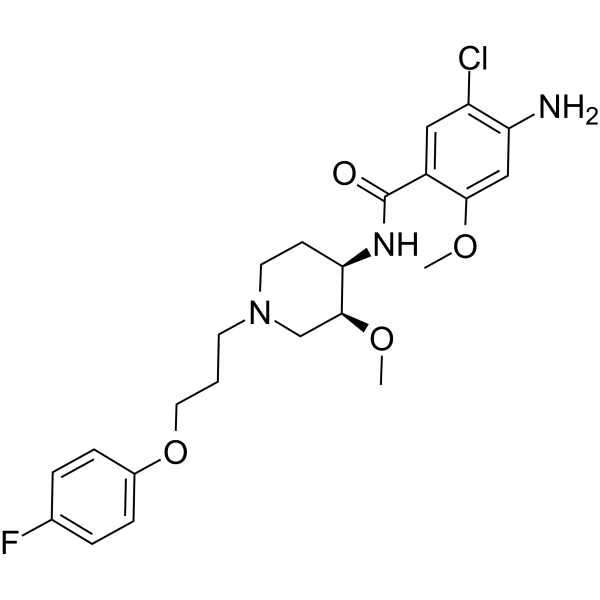
Cisapride (R 51619) is an orally active, selective 5-HT4 receptor agonist with an EC50 of 140 nM. Cisapride also acts as an hERG potassium channel blocker with an IC50 of 9.4 nM. Cisapride exerts gastrointestinal prokinetic effects by activating 5-HT4 receptors, but it also blocks the hERG potassium channel responsible for the repolarization phase of cardiac action potentials, delaying repolarization and thus prolonging the action potential duration. Cisapride can be used in research related to gastrointestinal dysfunction, gastroesophageal reflux disease, functional dyspepsia, chronic gastritis, gastroparesis, ulcerative colitis and necrotizing enterocolitis.
Nur für Forschungszwecke. Wir verkaufen nicht an Patienten.
- Reinheit : 99.87%
- CAS. Nr.: 81098-60-4
- Formel: C23H29ClFN3O4
- Molecular Weight:465.95
-
Speicherung:Powder -20°C, 3 years , 4°C, 2 years ; In solvent -80°C, 2 years , -20°C, 1 year

To place orders, for customer services and technical support, please contact: MedChemExpress USA
Tel: 609-228-6898 E-mail: [email protected] [email protected]


-
 Biologische Aktivität
-
Chemical Information
-
Lösungsmittel & Löslichkeit
- Protokoll
- Reinheit & Dokumentation
- Verweise
-
 Help & FAQs


-
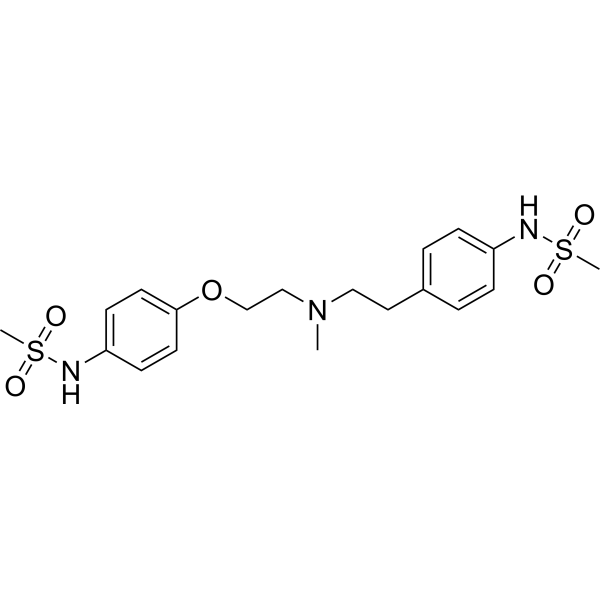
HY-B0232
DofetilideIKr Blocker -
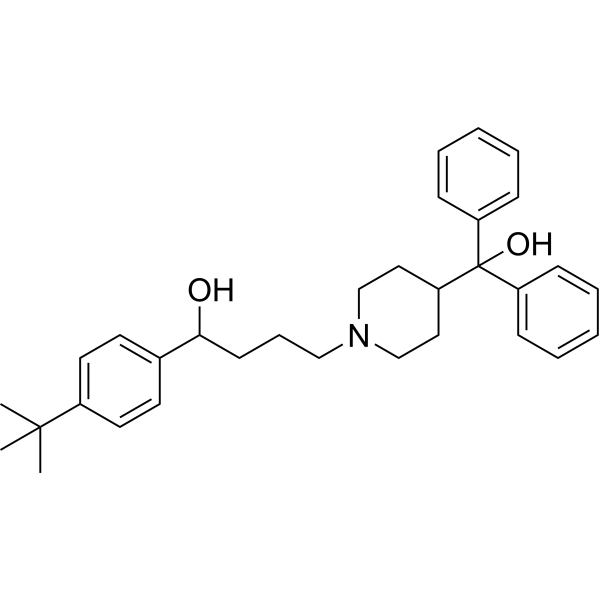
HY-B1193
TerfenadineCaspase Activator -
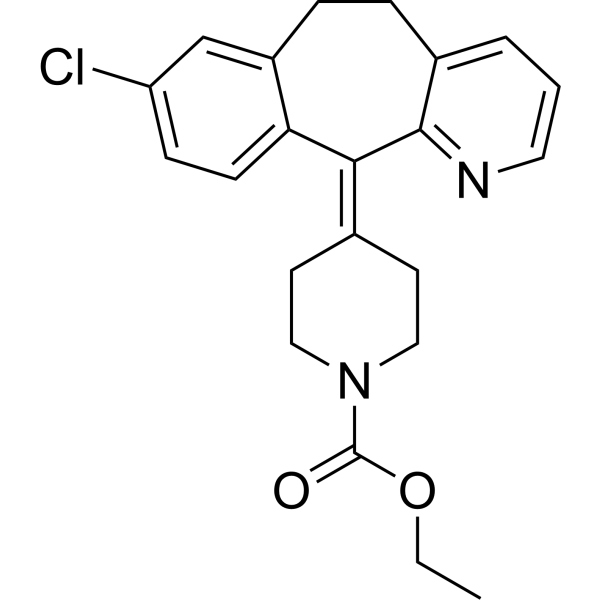
HY-17043
LoratadineInfluenza Virus Inhibitor -
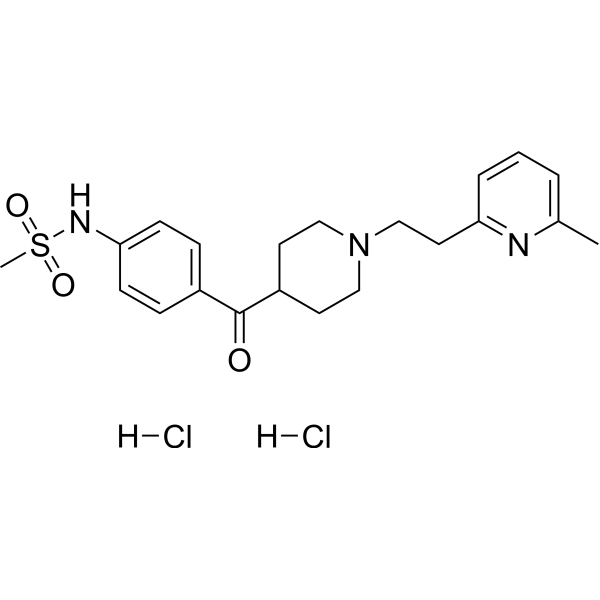
HY-15551
E-4031hERG Channels Blocker -
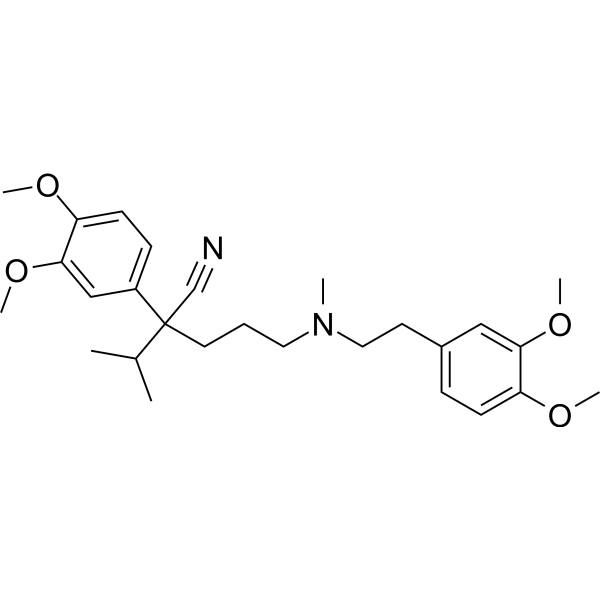
HY-14275
VerapamilCalcium Channel Blocker -
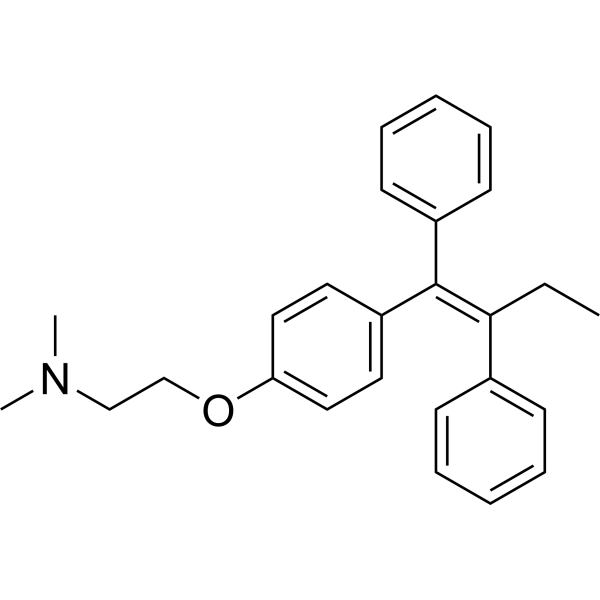
HY-13757A
TamoxifenEstrogen Receptor Modulator -
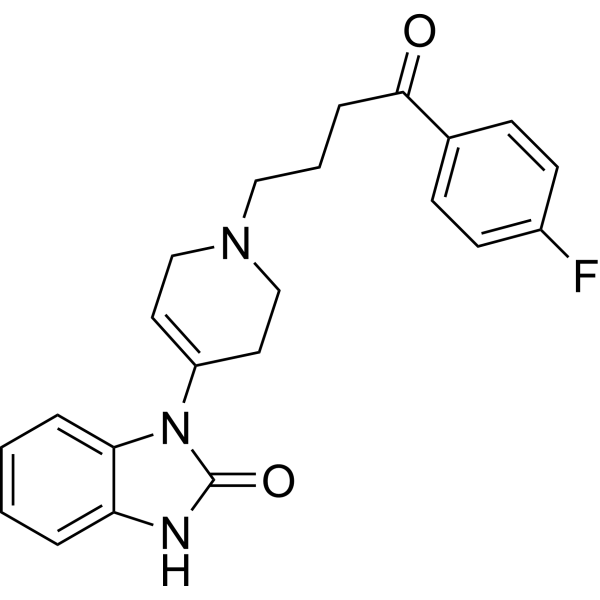
HY-B1240
DroperidolDopamine Receptor Antagonist -
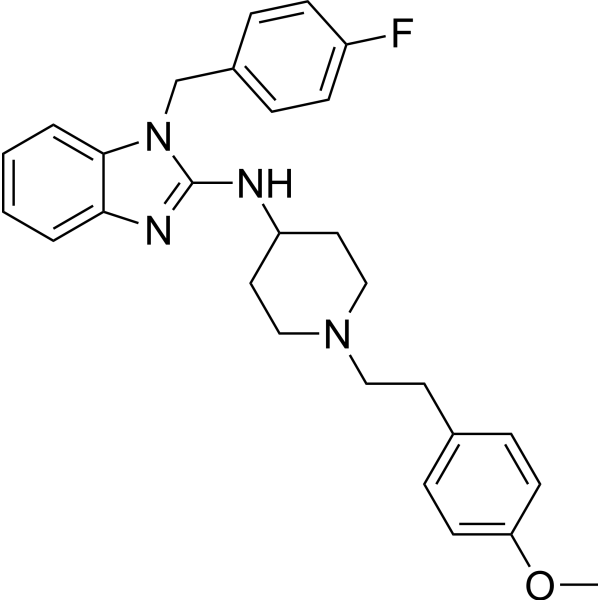
HY-12532
AstemizoleH1 Receptor Antagonist -
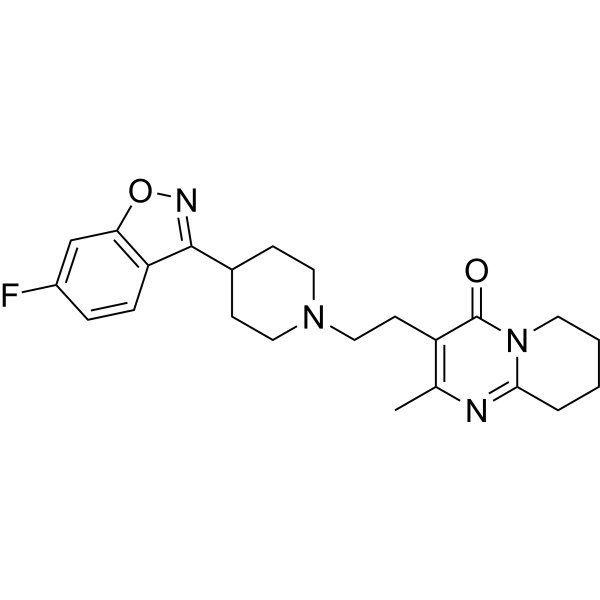
HY-11018
Risperidone5-HT2 Receptor Blocker -
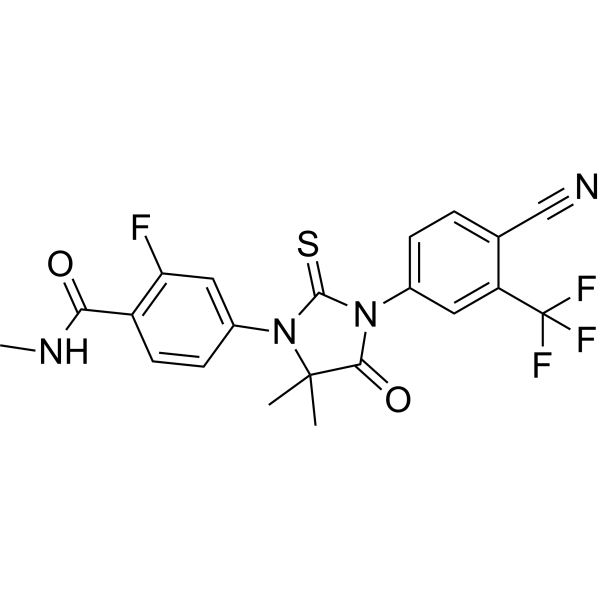
HY-70002
EnzalutamideAndrogen Receptor Antagonist -
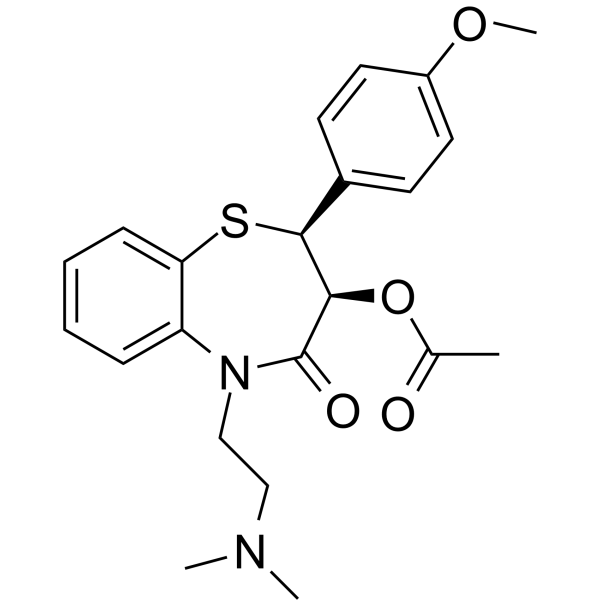
HY-B0632
DiltiazemL-type Calcium Chanel Inhibitor -
HY-B0002B
Ondansetron5-HT Receptor Antagonist
Publications Citing Use of MedChemExpress (MCE) Cisapride
MoreAlle 5-HT Receptor Isoform-spezifische Produkte anzeigen
More

Biologische Aktivität
Beschreibung
IC50 & Target
|
5-HT4 Receptor 140 nM (EC50) |
In Vitro
Cisapride (R 51619) (0.3-30 μM; 500 ms) monohydrate inhibits Kv4.3 potassium channels stably expressed in Chinese hamster ovary cells in a concentration-dependent manner, with an IC50 of 9.8 μM, and accelerates current decay[3].
Cisapride (10 min) monohydrate potently inhibits hERG potassium currents in HEK293 cells stably expressing hERG channels, with an IC50 of 9.4 nM[5].
MedChemExpress (MCE) has not independently confirmed the accuracy of these methods. They are for reference only. Further protocols information, click here.
In Vivo
Cisapride monohydrate improves intestinal motor function, significantly reduces TNF-α expression in the intestinal mucosa, and alleviates the severity of necrotizing enterocolitis in a mouse model of necrotizing enterocolitis[1].
Cisapride (2-4 mg/kg; once daily; i.p. or p.o.; consecutive dosing for 6 days) monohydrate does not alter the severity of colonic injury in TNBS-induced colitis in male Wistar rats[4].
MedChemExpress (MCE) has not independently confirmed the accuracy of these methods. They are for reference only.
-
Animal Model:Wistar rats (male, 200 g, TNBS-induced ulcerative colitis)[5]
-
Dosage:2 mg/kg; 4 mg/kg
-
Administration:i.p., once daily for 6 days; p.o., once daily for 6 days
-
Result:Did not significantly affect the body weight loss and diarrheal status of the rats.
Did not significantly aggravate colonic inflammatory damage macroscopically or microscopically.
Did not significantly alter myeloperoxidase (MPO) activity or proinflammatory cytokine (TNF-α, IL-1β, IL-6) levels in the inflamed colons.
Clinical Trial
| NCT Number | Sponsor | Condition | Start Date |
Phase

|
|---|---|---|---|---|
| NCT01329991 | Plexxikon| | 2011-05 | PHASE1 |


Chemical Information
-
CAS. Nr. 81098-60-4
-
Appearance Solid
-
Molecular Weight 465.95
-
Formel C23H29ClFN3O4
-
Color White to off-white
-
SMILES
ClC1=C(N)C=C(OC)C(C(N[C@H]2[C@@H](OC)CN(CCCOC3=CC=C(F)C=C3)CC2)=O)=C1
-
Synonyms
R 51619; (±)-Cisaprid
-
Versand
Room temperature in continental US; may vary elsewhere.
-
Speicherung
Powder -20°C 3 years 4°C 2 years In solvent -80°C 2 years -20°C 1 year


Publications (2)
-
Journal Impact Factor
-
Most Recent
-
ACS Omega
Computational Approaches to Identify Molecules Binding to Mycobacterium tuberculosis KasA. [Abstract]2020 Nov 15;5(46):29935-29942. PMID: 33251429 -


Lösungsmittel & Löslichkeit
In Vitro:
DMSO : 100 mg/mL (214.62 mM; Need ultrasonic; Hygroscopic DMSO has a significant impact on the solubility of product, please use newly opened DMSO)
H2O : < 0.1 mg/mL (insoluble)
Please refer to the solubility information to select the appropriate solvent. Once prepared, please aliquot and store the solution to prevent product inactivation from repeated freeze-thaw cycles.
Storage method and period of stock solution: -80°C, 2 years; -20°C, 1 year. When stored at -80°C, please use it within 2 years. When stored at -20°C, please use it within 1 year.
Please refer to the solubility information to select the appropriate solvent. Once prepared, please aliquot and store the solution to prevent product inactivation from repeated freeze-thaw cycles.
Storage method and period of stock solution: -80°C, 2 years; -20°C, 1 year. When stored at -80°C, please use it within 2 years. When stored at -20°C, please use it within 1 year.
Konzentration (Stammlösung) × Volumen (Stammlösung) = Konzentration (Ziellösung) × Volumen (Ziellösung)
In Vivo:
Select the appropriate dissolution method based on your experimental animal and administration route.
- For the following dissolution methods, please ensure to first prepare a clear stock solution using an In Vitro approach and then sequentially add co-solvents:
- To ensure reliable experimental results, the clarified stock solution can be appropriately stored based on storage conditions. As for the working solution for In Vivo experiments, it is recommended to prepare freshly and use it on the same day.
- The percentages shown for the solvents indicate their volumetric ratio in the final prepared solution. If precipitation or phase separation occurs during preparation, heat and/or sonication can be used to aid dissolution.
Add each solvent one by one: 10% DMSO 40% PEG300 5% Tween-80 45% Saline
Solubility: ≥ 2.5 mg/mL (5.37 mM); Clear solution
This protocol yields a clear solution of ≥ 2.5 mg/mL (saturation unknown).
Taking 1 mL working solution as an example, add 100 μL DMSO stock solution (25.0 mg/mL) to 400 μL PEG300, and mix evenly; then add 50 μL Tween-80 and mix evenly; then add 450 μL Saline to adjust the volume to 1 mL.
Preparation of Saline: Dissolve 0.9 g sodium chloride in ddH₂O and dilute to 100 mL to obtain a clear Saline solution.
In Vivo Dissolution Calculator
Please enter the basic information of animal experiments:
-
-
-
-
Recommended: Prepare an additional quantity of animals to account for potential losses during experiments.
Please enter your animal formula composition:
-
%DMSO +
Recommended: Keep the proportion of DMSO in working solution below 2% if your animal is weak.
-
%+
-
+%Tween-80 + +
-
%Saline +
The co-solvents required include: DMSO, . All of co-solvents are available by MedChemExpress (MCE). , Tween 80. All of co-solvents are available by MedChemExpress (MCE).
Working solution concentration: 0.22 mg/mL
Method for preparing stock solution: mg drug dissolved in μL DMSO. Stock solution concentration: mg/mL.
1. Take μL DMSO stock solution;
2. Add μL .
μL , mix evenly;
3. Then add μL Tween 80, mix evenly;
4. Then add μL
Please ensure that the stock solution in the first step is dissolved to a clear state, and add co-solvents in sequence. You can use ultrasonic heating (ultrasonic cleaner, recommended frequency 20-40 kHz), vortexing, etc. to assist dissolution.

Protokoll
-
Cardiac voltage-sensitive optical mapping
Cardiac voltage-sensitive optical mapping records changes in transmembrane potential from cardiac tissue by staining the preparation with a voltage-sensitive dye and imaging fluorescence changes during electrical activation; the resulting optical action potentials can be used to map activation time, action potential duration, conduction velocity, wavefront propagation, and arrhythmia dynamics. The optical signal represents a relative fluorescence change from a tissue volume rather than a single-cell intracellular recording, so spatial resolution, sampling rate, voltage resolution, optical magnification, light penetration, and motion control must be considered together when interpreting optical action potentials.
-
Neuronal voltage-sensitive dye imaging
Neuronal voltage-sensitive dye imaging detects membrane-potential-dependent optical changes from dyes associated with neuronal membranes, enabling optical recording of electrical activity from single neurons, dendrites, axons, spines, or neuronal populations in brain slices and cultured neurons. VSD signals are typically reported as fractional fluorescence or absorbance changes over baseline, such as ΔF/F or ΔI/I, and published protocols use high-speed cameras or photodiode arrays because neuronal voltage signals occur on millisecond time scales. Fast VSD imaging can be applied at two common scales: bulk staining of brain slices to measure circuit-level spatiotemporal activity, and single-cell loading or biolistic delivery to record membrane-potential transients from individual neuronal compartments. Optical signals should be interpreted as membrane-potential-related readouts, and validation by simultaneous electrophysiology or pharmacological controls is recommended when the experimen
-
Acute brain-slice whole-cell patch-clamp recording
Acute brain-slice whole-cell patch-clamp recording measures membrane voltage or ionic current from visually targeted cells in living brain slices; after giga-seal formation, the membrane under the pipette is ruptured to provide low-resistance electrical access to the cell interior, enabling current-clamp analysis of excitability and voltage-clamp analysis of synaptic or membrane currents. Acute slices preserve local tissue architecture better than dissociated preparations and allow visually guided recording from defined brain regions or fluorescently labeled cells; however, whole-cell access also permits exchange between pipette solution and cytoplasm, so intracellular dialysis must be considered when interpreting signaling-dependent phenomena.
-
DSS-Induced Colitis
Dextran sulfate sodium (DSS)-induced colitis is generated by administering DSS in mouse drinking water, producing epithelial injury, barrier disruption, weight loss, diarrhea, fecal blood, colon shortening, histologic mucosal damage, and inflammatory mediator changes; the model is mainly used to study acute or chronic intestinal inflammation resembling selected features of ulcerative colitis. DSS injury is interpreted through clinical and tissue readouts rather than a single molecular endpoint: daily body weight, stool consistency, and bleeding are combined into a disease activity index, while colon length, histology, cytokines, myeloperoxidase activity, intestinal permeability, and tight-junction markers provide complementary measures of inflammation and barrier damage.
-
TNBS-Induced Colitis
TNBS-induced colitis is produced by intrarectal delivery of 2,4,6-trinitrobenzene sulfonic acid in ethanol, where ethanol disrupts the mucosal barrier and TNBS haptenates colonic proteins, generating immune-mediated colonic inflammation with weight loss, diarrhea, ulceration, transmural injury, inflammatory-cell infiltration, and cytokine responses. The model is used as an experimental intestinal inflammation model with Crohn’s disease–like features, especially when Th1-type responses, IL-12–dependent inflammation, chronic relapsing inflammation, or fibrosis-related endpoints are studied.


Reinheit & Dokumentation
-
Data Sheet (292 KB)
-
SDS (393 KB)
- English - EN (393 KB)
- Français - FR (393 KB)
- Deutsch - DE (393 KB)
- Norwegian - NO (393 KB)
- Español - ES (393 KB)
- Swedish - SV (393 KB)
- Italian - IT (393 KB)
- Korean - KR (393 KB)
- Portuguese - PT (393 KB)
-
Handling Instructions (2659 KB)
Verweise
[3]. Sung KW, et al. Effect of mosapride on Kv4.3 potassium channels expressed in CHO cells. Naunyn-Schmiedeberg's archives of pharmacology. 2013 Oct;386(10):905-16. [Content Brief]
[5]. Toga T, et al. The 5-HT(4) agonists cisapride, mosapride, and CJ-033466, a Novel potent compound, exhibit different human ether-a-go-go-related gene (hERG)-blocking activities. J Pharmacol Sci. 2007 Oct;105(2):207-10. [Content Brief]


Complete Stock Solution Preparation Table
Please refer to the solubility information to select the appropriate solvent. Once prepared, please aliquot and store the solution to prevent product inactivation from repeated freeze-thaw cycles.
Storage method and period of stock solution: -80°C, 2 years; -20°C, 1 year. When stored at -80°C, please use it within 2 years. When stored at -20°C, please use it within 1 year.
| Optional Solvent | Concentration Solvent Mass | 1 mg | 5 mg | 10 mg | 25 mg |
|---|---|---|---|---|---|
| DMSO | 1 mM | 2.1462 mL | 10.7308 mL | 21.4615 mL | 53.6538 mL |
| 5 mM | 0.4292 mL | 2.1462 mL | 4.2923 mL | 10.7308 mL | |
| 10 mM | 0.2146 mL | 1.0731 mL | 2.1462 mL | 5.3654 mL | |
| 15 mM | 0.1431 mL | 0.7154 mL | 1.4308 mL | 3.5769 mL | |
| 20 mM | 0.1073 mL | 0.5365 mL | 1.0731 mL | 2.6827 mL | |
| 25 mM | 0.0858 mL | 0.4292 mL | 0.8585 mL | 2.1462 mL | |
| 30 mM | 0.0715 mL | 0.3577 mL | 0.7154 mL | 1.7885 mL | |
| 40 mM | 0.0537 mL | 0.2683 mL | 0.5365 mL | 1.3413 mL | |
| 50 mM | 0.0429 mL | 0.2146 mL | 0.4292 mL | 1.0731 mL | |
| 60 mM | 0.0358 mL | 0.1788 mL | 0.3577 mL | 0.8942 mL | |
| 80 mM | 0.0268 mL | 0.1341 mL | 0.2683 mL | 0.6707 mL | |
| 100 mM | 0.0215 mL | 0.1073 mL | 0.2146 mL | 0.5365 mL |


Cisapride Related Classifications
HY-14149 Related Classifications
 Powered by Bioz
Keywords
- Cisapride
- 81098-60-4
- R 51619
- (±)-Cisaprid
- R51619
- R-51619
- 5-HT Receptor
- Potassium Channel
- 5-HT4 receptors
- Kv4.3 potassium channels
- hERG channel
- necrotizing enterocolitis
- Chinese hamster ovary cells
- TNBS-induced colitis
- cardiac arrhythmia
- atrial arrhythmias
- HEK293 cells
- gastrointestinal motility
- Inhibitor
- inhibitor
- inhibit