



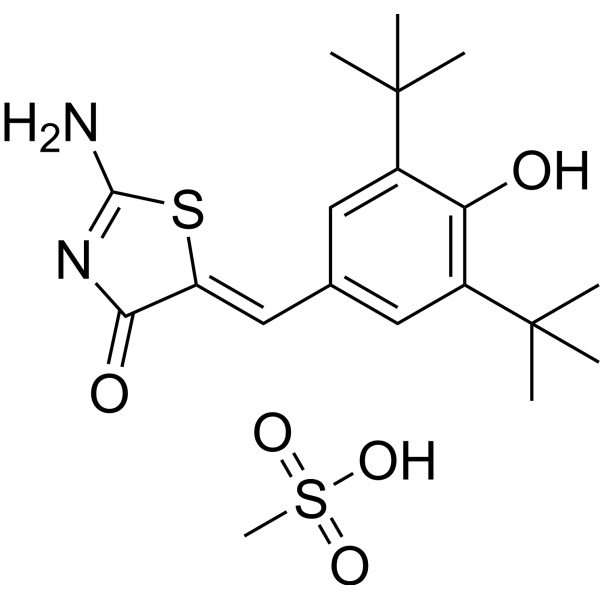
Darbufelone mesylate

Based on 1 Customer Validation
Darbufelone mesylate (CI-1004 mesylate) is a dual inhibitor of cellular PGF2α and LTB4 production. Darbufelone potently inhibits PGHS-2 (IC50 = 0.19 μM) but is much less potent with PGHS-1 (IC50= 20 μM).
연구목적의 판매만을 진행합니다. 환자를 대상으로 한 판매는 하지 않습니다.
- Purity : 99.65%
- CAS No.: 139340-56-0
- 화학식: C19H28N2O5S2
- 분자량:428.57
-
보관:
4°C, sealed storage, away from moisture and light
* In solvent : -80°C, 6 months; -20°C, 1 month (sealed storage, away from moisture and light)

To place orders, for customer services and technical support, please contact: MedChemExpress USA
Tel: 609-228-6898 E-mail: [email protected] [email protected]


-
 Biological Activity
-
Chemical Information
-
용액&용해도
- 순도&문서
- References
-
 Help & FAQs


-
HY-17492
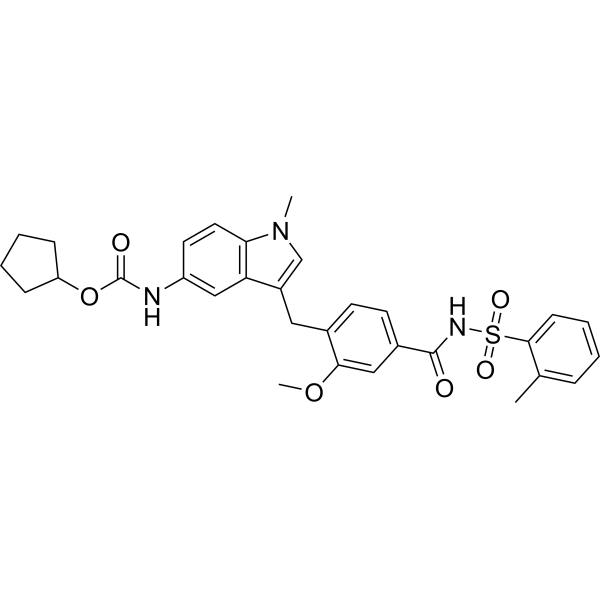
ZafirlukastLeukotriene Receptor Antagonist -
HY-19989
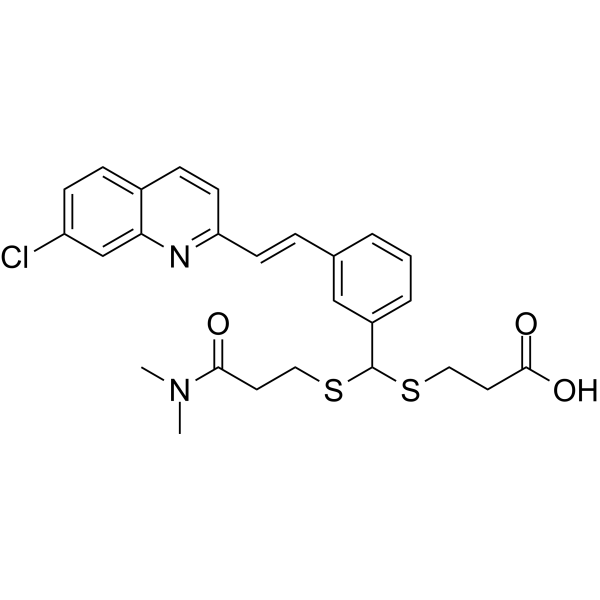
MK-571ABCC1/MRP4 Inhibitor -

HY-101438AR
Darbufelone mesylate (Standard)PGF2α/LTB5 Inhibitor -
HY-19193
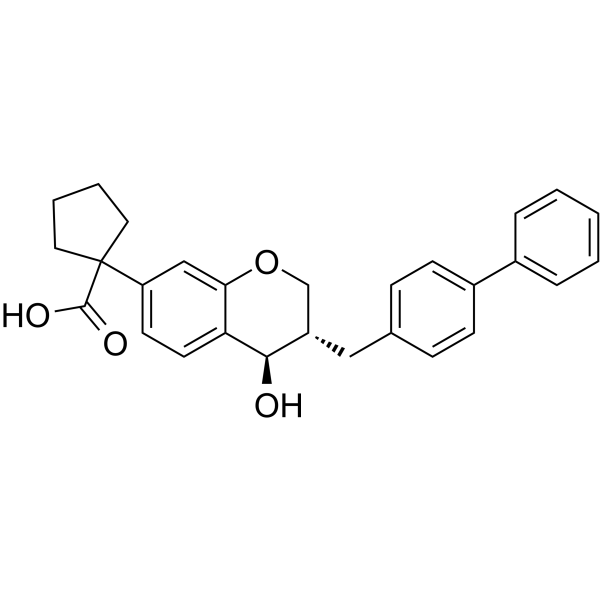
CP-105696LTB4 Receptor Antagonist -
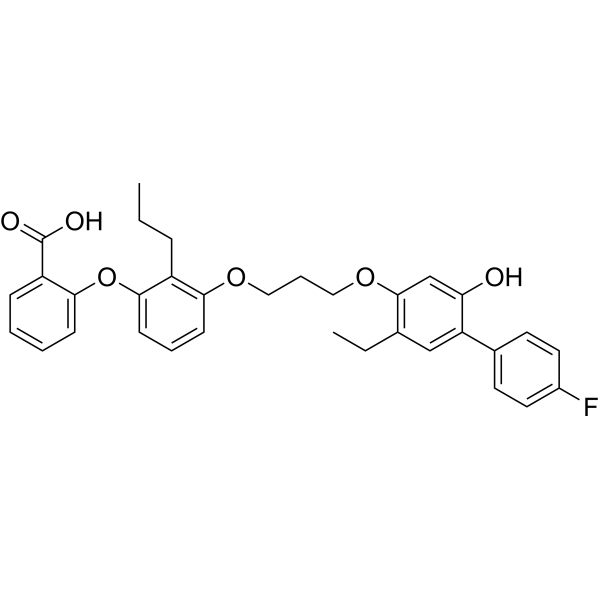
HY-13628
EtalocibLTB4 Receptor Antagonist -
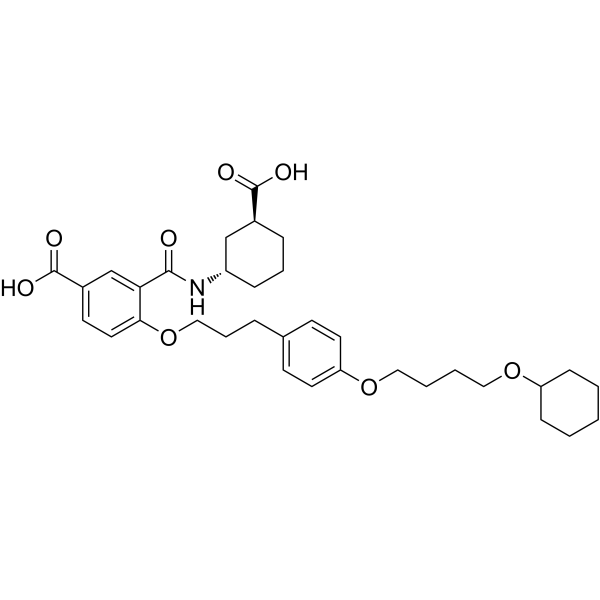
HY-112248A
HAMI 3379CysLT2 Receptor Antagonist -
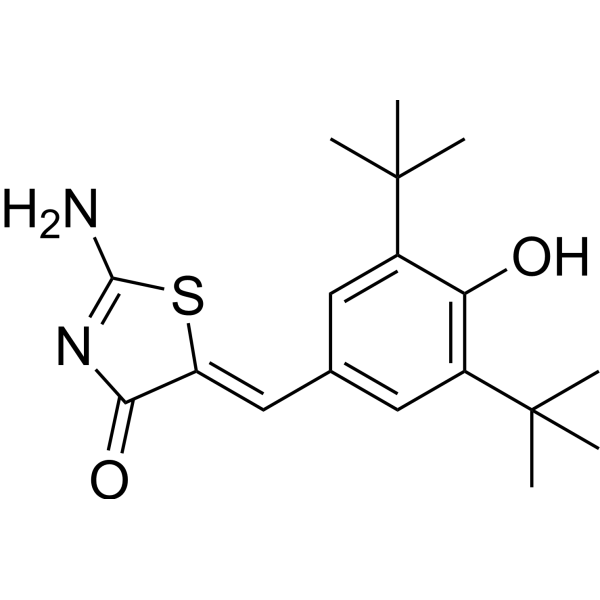
HY-101438
DarbufelonePGF2α/LTB4 Inhibitor -
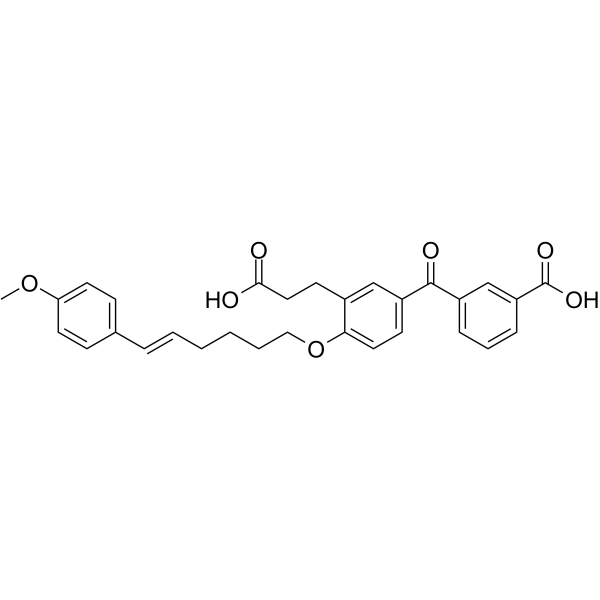
HY-112737
LY223982Leukotriene B4R Inhbitor -
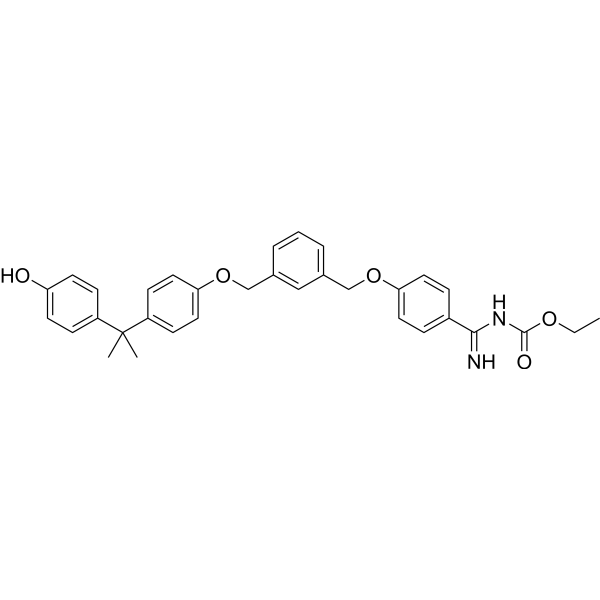
HY-19304
AmelubantLeukotriene Receptor Antagonist -
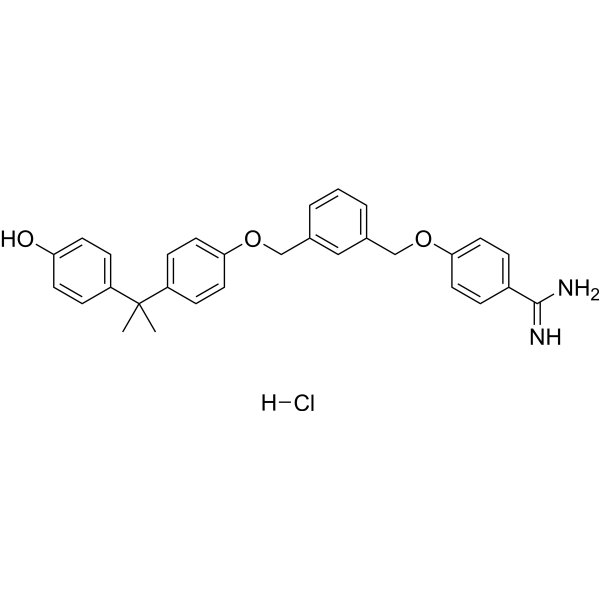
HY-114641A
BIIL-260 hydrochlorideLeukotriene Receptor Antagonist -

HY-17492R
Zafirlukast (Standard)Leukotriene Receptor Antagonist -
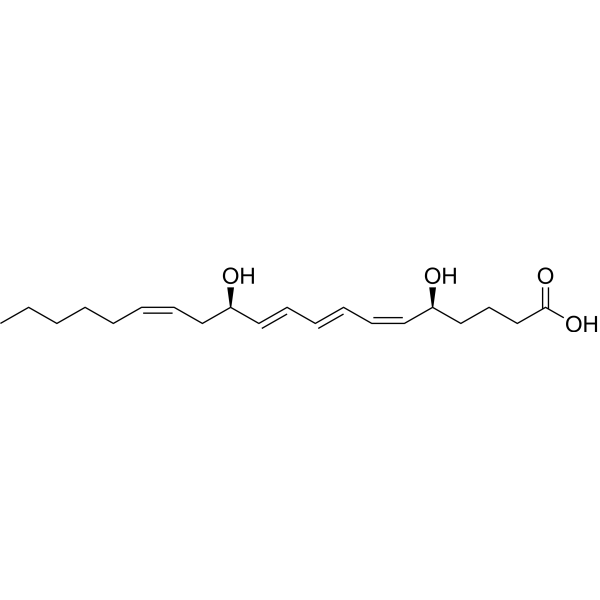
HY-107608
Leukotriene B4PROTAC linker
All Leukotriene Receptor Isoforms
More

Biological Activity
제품 설명
IC50 & Target
[1]|
PGF2α |
LTB4 |
PGHS-2 0.19 μM (IC50) |
PGHS-1 20 μM (IC50) |
Cellular Effect
|
Cell Line

|
Type | Value | Description | References |
|---|---|---|---|---|
| RBL-1 | IC50 |
0.39 μM
Compound: 6f
|
Inhibition of prostaglandin G/H synthase in intact rat basophilic leukemia cells stimulated with the calcium ionophore A-23187
Inhibition of prostaglandin G/H synthase in intact rat basophilic leukemia cells stimulated with the calcium ionophore A-23187
|
[PMID: 8295221] |
| RBL-1 | IC50 |
0.77 μM
Compound: 6f
|
Inhibition of 5-lipoxygenase in intact rat basophilic leukemia cells stimulated with the calcium ionophore A-23187
Inhibition of 5-lipoxygenase in intact rat basophilic leukemia cells stimulated with the calcium ionophore A-23187
|
[PMID: 8295221] |
In Vitro
Darbufelone is a noncompetitive inhibitor of PGHS-2 (Ki=10±5 μM). Darbufelone quenches the fluorescence of PGHS-2 at 325 nm (lambda(ex)=280 nm) with Kd=0.98±0.03 μM[1].To test the putative anti-proliferative effect of Darbufelone, A549, H520 and H460 cell lines are used, which are established from three distinct pathological subtypes of NSCLC (adenocarcinoma, squamous and large cell lung cancer respectively). Increasing concentrations of Darbufelone, ranging from 5 to 60 μM, are tested for 72 h. The cell growth inhibition of these three cell lines gradually increases with higher drug concentration. The IC50 of A549 and H520 are 20±3.6 and 21±1.8 μM, respectively, while the H460 has much lower IC50 (15±2.7 μM) [2].
MedChemExpress (MCE) has not independently confirmed the accuracy of these methods. They are for reference only.
In Vivo
MedChemExpress (MCE) has not independently confirmed the accuracy of these methods. They are for reference only.


Chemical Information
-
CAS No. 139340-56-0
-
Appearance Solid
-
분자량 428.57
-
화학식 C19H28N2O5S2
-
Color White to light yellow
-
SMILES
O=C1N=C(N)S/C1=C\C2=CC(C(C)(C)C)=C(O)C(C(C)(C)C)=C2.CS(=O)(O)=O
-
Synonyms
CI-1004 mesylate
-
선적
Room temperature in continental US; may vary elsewhere.
-
보관
4°C, sealed storage, away from moisture and light
* In solvent : -80°C, 6 months; -20°C, 1 month (sealed storage, away from moisture and light)


용액&용해도
In Vitro:
DMSO : 110 mg/mL (256.67 mM; Need ultrasonic; Hygroscopic DMSO has a significant impact on the solubility of product, please use newly opened DMSO)
H2O : < 0.1 mg/mL (insoluble)
Please refer to the solubility information to select the appropriate solvent. Once prepared, please aliquot and store the solution to prevent product inactivation from repeated freeze-thaw cycles.
Storage method and period of stock solution: -80°C, 6 months; -20°C, 1 month (sealed storage, away from moisture and light). When stored at -80°C, please use it within 6 months. When stored at -20°C, please use it within 1 month.
Please refer to the solubility information to select the appropriate solvent. Once prepared, please aliquot and store the solution to prevent product inactivation from repeated freeze-thaw cycles.
Storage method and period of stock solution: -80°C, 6 months; -20°C, 1 month (sealed storage, away from moisture and light). When stored at -80°C, please use it within 6 months. When stored at -20°C, please use it within 1 month.
Concentration (start) × Volume (start) = Concentration (final) × Volume (final)
In Vivo:
Select the appropriate dissolution method based on your experimental animal and administration route.
- For the following dissolution methods, please ensure to first prepare a clear stock solution using an In Vitro approach and then sequentially add co-solvents:
- To ensure reliable experimental results, the clarified stock solution can be appropriately stored based on storage conditions. As for the working solution for In Vivo experiments, it is recommended to prepare freshly and use it on the same day.
- The percentages shown for the solvents indicate their volumetric ratio in the final prepared solution. If precipitation or phase separation occurs during preparation, heat and/or sonication can be used to aid dissolution.
Add each solvent one by one: 10% DMSO 40% PEG300 5% Tween-80 45% Saline
Solubility: 5.5 mg/mL (12.83 mM); Suspended solution; Need ultrasonic
This protocol yields a suspended solution of 5.5 mg/mL. Suspended solution can be used for oral and intraperitoneal injection.
Taking 1 mL working solution as an example, add 100 μL DMSO stock solution (55.0 mg/mL) to 400 μL PEG300, and mix evenly; then add 50 μL Tween-80 and mix evenly; then add 450 μL Saline to adjust the volume to 1 mL.
Preparation of Saline: Dissolve 0.9 g sodium chloride in ddH₂O and dilute to 100 mL to obtain a clear Saline solution.
In Vivo Dissolution Calculator
Please enter the basic information of animal experiments:
-
-
-
-
Recommended: Prepare an additional quantity of animals to account for potential losses during experiments.
Please enter your animal formula composition:
-
%DMSO +
Recommended: Keep the proportion of DMSO in working solution below 2% if your animal is weak.
-
%+
-
+%Tween-80 + +
-
%Saline +
The co-solvents required include: DMSO, . All of co-solvents are available by MedChemExpress (MCE). , Tween 80. All of co-solvents are available by MedChemExpress (MCE).
Working solution concentration: 0.22 mg/mL
Method for preparing stock solution: mg drug dissolved in μL DMSO. Stock solution concentration: mg/mL. * In solvent : -80°C, 6 months; -20°C, 1 month (sealed storage, away from moisture and light)
1. Take μL DMSO stock solution;
2. Add μL .
μL , mix evenly;
3. Then add μL Tween 80, mix evenly;
4. Then add μL
Please ensure that the stock solution in the first step is dissolved to a clear state, and add co-solvents in sequence. You can use ultrasonic heating (ultrasonic cleaner, recommended frequency 20-40 kHz), vortexing, etc. to assist dissolution.


순도&문서
-
Data Sheet (286 KB)
-
SDS (252 KB)
- English - EN (252 KB)
- Français - FR (252 KB)
- Deutsch - DE (252 KB)
- Norwegian - NO (252 KB)
- Español - ES (252 KB)
- Swedish - SV (252 KB)
- Italian - IT (252 KB)
- Korean - KR (252 KB)
- Portuguese - PT (252 KB)
-
Handling Instructions (2659 KB)
References
[1]. Johnson AR, et al. Slow-binding inhibition of human prostaglandin endoperoxide synthase-2 with darbufelone, an isoform-selective antiinflammatory di-tert-butyl phenol. Biochemistry. 2001 Jun 26;40(25):7736-45. [Content Brief]
[2]. Ye X, et al. Darbufelone, a novel anti-inflammatory drug, induces growth inhibition of lung cancer cells both in vitro and in vivo. Cancer Chemother Pharmacol. 2010 Jul;66(2):277-85. [Content Brief]


Complete Stock Solution Preparation Table
Please refer to the solubility information to select the appropriate solvent. Once prepared, please aliquot and store the solution to prevent product inactivation from repeated freeze-thaw cycles.
Storage method and period of stock solution: -80°C, 6 months; -20°C, 1 month (sealed storage, away from moisture and light). When stored at -80°C, please use it within 6 months. When stored at -20°C, please use it within 1 month.
| Optional Solvent | Concentration Solvent Mass | 1 mg | 5 mg | 10 mg | 25 mg |
|---|---|---|---|---|---|
| DMSO | 1 mM | 2.3333 mL | 11.6667 mL | 23.3334 mL | 58.3335 mL |
| 5 mM | 0.4667 mL | 2.3333 mL | 4.6667 mL | 11.6667 mL | |
| 10 mM | 0.2333 mL | 1.1667 mL | 2.3333 mL | 5.8334 mL | |
| 15 mM | 0.1556 mL | 0.7778 mL | 1.5556 mL | 3.8889 mL | |
| 20 mM | 0.1167 mL | 0.5833 mL | 1.1667 mL | 2.9167 mL | |
| 25 mM | 0.0933 mL | 0.4667 mL | 0.9333 mL | 2.3333 mL | |
| 30 mM | 0.0778 mL | 0.3889 mL | 0.7778 mL | 1.9445 mL | |
| 40 mM | 0.0583 mL | 0.2917 mL | 0.5833 mL | 1.4583 mL | |
| 50 mM | 0.0467 mL | 0.2333 mL | 0.4667 mL | 1.1667 mL | |
| 60 mM | 0.0389 mL | 0.1944 mL | 0.3889 mL | 0.9722 mL | |
| 80 mM | 0.0292 mL | 0.1458 mL | 0.2917 mL | 0.7292 mL | |
| 100 mM | 0.0233 mL | 0.1167 mL | 0.2333 mL | 0.5833 mL |


Darbufelone mesylate Related Classifications
HY-101438A Related Classifications
 Powered by Bioz