



Genistine
Based on 11 publication(s) in Google Scholar
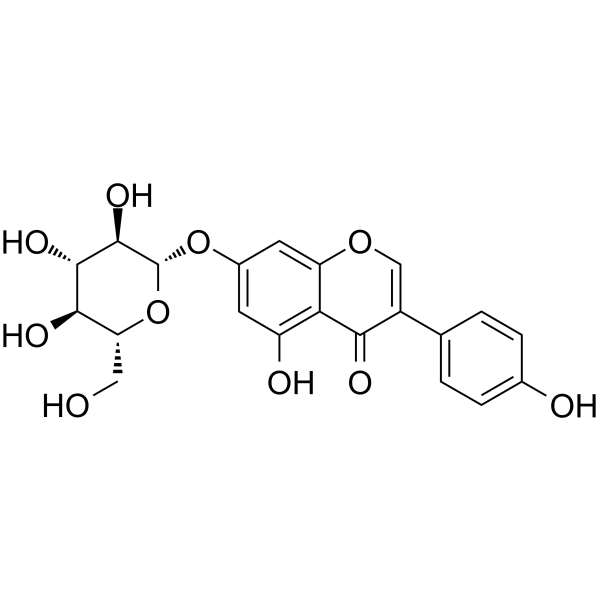
Genistin (Genistine), an isoflavone belonging to the phytoestrogen family, is a potent anti-adipogenic and anti-lipogenic agent. Genistin attenuates cellular growth and promotes apoptotic cell death breast cancer cells through modulation of ERalpha signaling pathway.
商品は「研究用試薬」です。人や動物の医療用・臨床診断用・食品用の製品ではありません。
研究用途以外に使用した場合、当社は一切の責任を負いかねます。
- 純度 : 98.40%
- CAS 番号: 529-59-9
- 分子式: C21H20O10
- 分子量:432.38
-
保管条件:Powder -20°C, 3 years , 4°C, 2 years ; In solvent -80°C, 2 years , -20°C, 1 year

To place orders, for customer services and technical support, please contact: MedChemExpress USA
Tel: 609-228-6898 E-mail: [email protected] [email protected]


-
 生物活性
生物活性
-
化学情報
-
溶剤 & 溶解度
- プロトコル
- 純度とドキュメンテーション
- 参考文献
-
 Help & FAQs


-
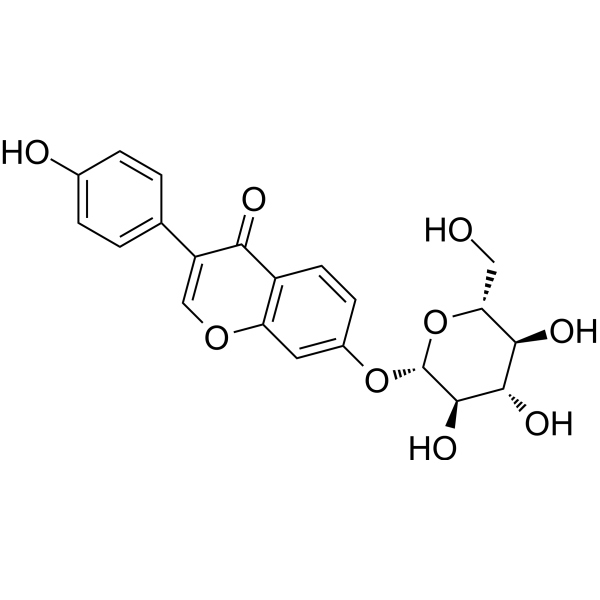
HY-N0018
DaidzinReverse Transcriptase Inhibitor -
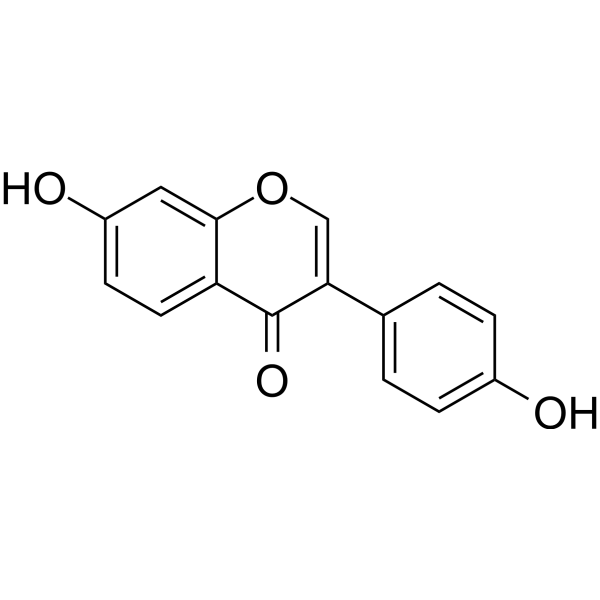
HY-N0019
DaidzeinEndogenous Metabolite -
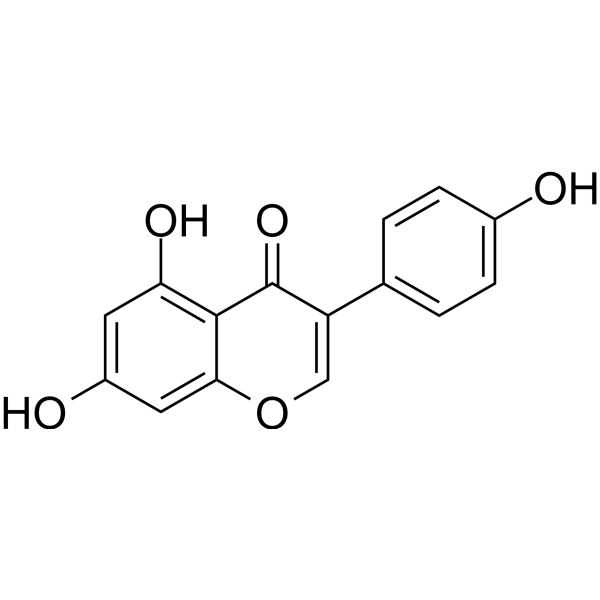
HY-14596
GenisteinAutophagy Inducer -
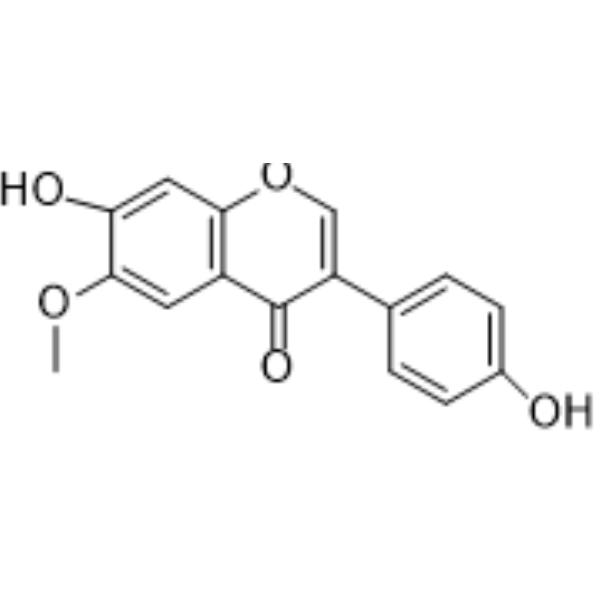
HY-N0016
GlyciteinApoptosis Inducer -
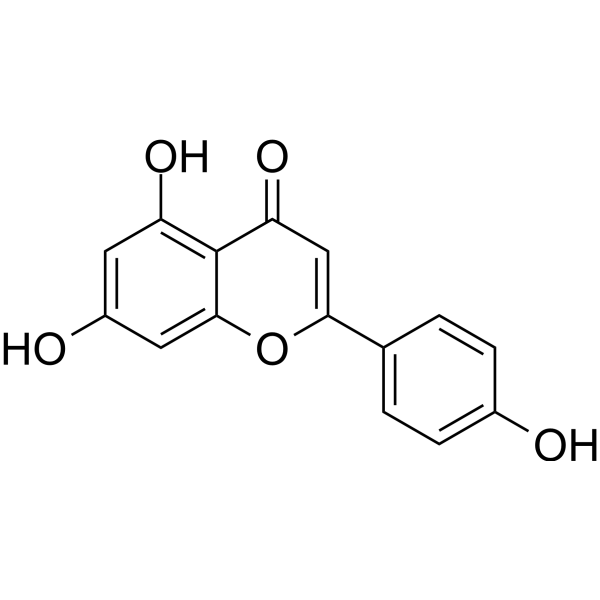
HY-N1201
ApigeninCytochrome P450 Inhibitor -
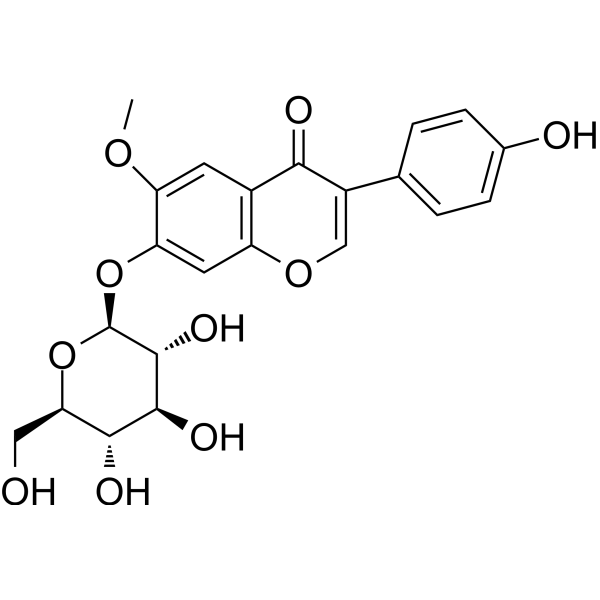
HY-N0012
GlycitinSoy Isoflavone -
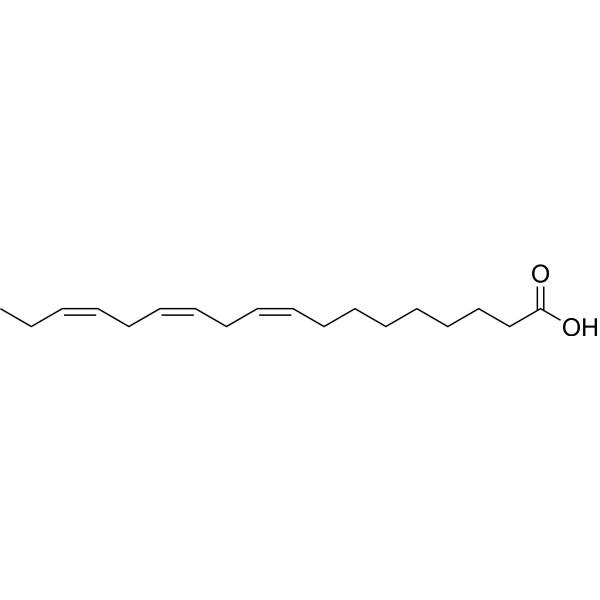
HY-N0728
α-Linolenic acidEssential Fatty Acid -
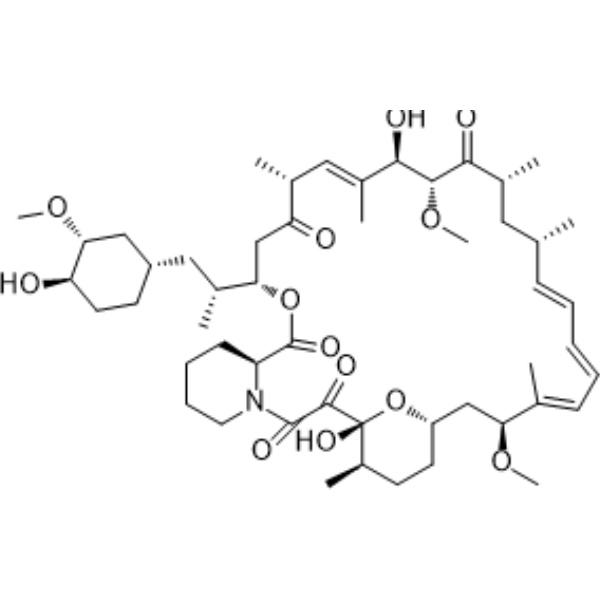
HY-10219
RapamycinmTOR Inhibitor -
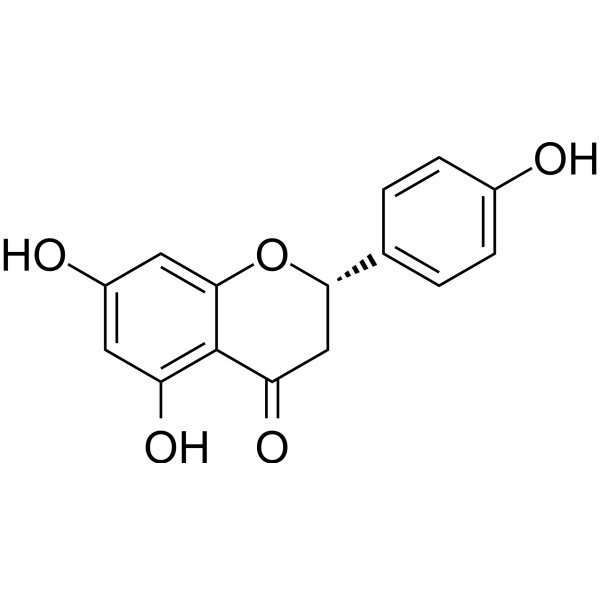
HY-N0100
NaringeninFlavonoid -

HY-N0595R
Genistin (Standard)Anti-Adipogenic/Anti-Lipogenic Agent -
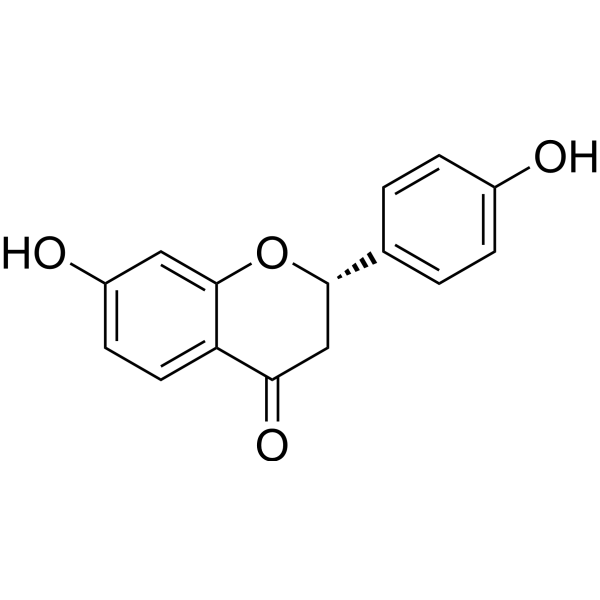
HY-N0377
LiquiritigeninEstrogen Receptor/ERR Agonist -
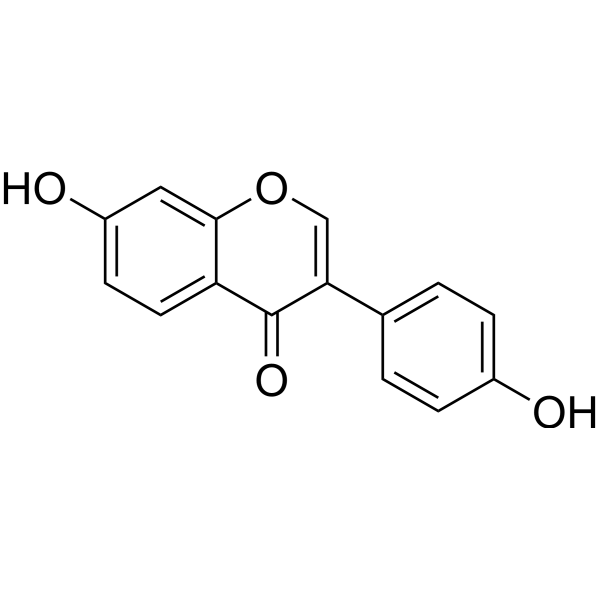
HY-N0019R
Daidzein (Standard)
MedChemExpress(MCE)の使用を引用している文献 Genistin
More- Food Chem. 2026 Jul 30:518:149561. [Abstract]
- Food Chem. 2025 Dec 30:497:146992. [Abstract]
- Food Chem. 2025 Oct 15:489:144992. [Abstract]
- Lebensm Wiss Technol. 2025 Sep 8;233:118474.
- Ind Crops Prod. 2025 Dec 11;239:122458.
- Front Cell Dev Biol. 2021 Jun 11:9:684393. [Abstract]
- Sci Rep. 2025 Oct 22;15(1):36973. [Abstract]
- Neurochem Res. 2025 Dec 8;51(1):10. [Abstract]
- J Med Virol. 2023 Jan;95(1):e28266. [Abstract]
- Genomics. 2021 Jul;113(4):2702-2716. [Abstract]
- Vet Microbiol. 2026 Jul 10:320:111134.
 Customer Validation & Images

-
In Vivo Efficacy Study

-
Flow Cytometry

-
Bio/Physico-chemical Assay

-
RT-PCR
-
WB


生物活性
製品説明
Cellular Effect
|
Cell Line

|
Type | Value | Description | References |
|---|---|---|---|---|
| A-431 | IC50 |
>100 μg/mL
Compound: 7
|
Inhibition of EGFR in human A431 cells
Inhibition of EGFR in human A431 cells
|
[PMID: 1479375] |
| RAW264.7 | IC50 |
>1 μM
Compound: 14
|
Inhibition of LPS-induced nitric oxide production in mouse RAW264.7 cells pretreated for 1 hr followed by LPS-stimulation and measured after 24 hrs by Griess assay
Inhibition of LPS-induced nitric oxide production in mouse RAW264.7 cells pretreated for 1 hr followed by LPS-stimulation and measured after 24 hrs by Griess assay
|
[PMID: 29932657] |
体外実験
Genistin causes negative regulation of ERα. Genistin also effectively down-modulates ER nuclear translocation as well DNA binding activity in breast cancer cells. Moreover, GS effectively induced apoptosis and suppressed levels of oncogenic markers in MCF-7 cells[3].
MedChemExpress (MCE) has not independently confirmed the accuracy of these methods. They are for reference only.


化学情報
-
CAS 番号 529-59-9
-
性状 Solid
-
分子量 432.38
-
分子式 C21H20O10
-
Color White to off-white
-
SMILES
O=C(C(C1=CC=C(O)C=C1)=COC2=CC(O[C@@H]([C@@H]([C@@H](O)[C@@H]3O)O)O[C@@H]3CO)=C4)C2=C4O
-
別名
ゲニスチン; Genistin; Genistoside; Genistein 7-O-β-D-glucopyranoside
-
Structure Classification
-
Initial Source
-
輸送条件
Room temperature in continental US; may vary elsewhere.
-
保管条件
Powder -20°C 3 years 4°C 2 years In solvent -80°C 2 years -20°C 1 year


Publications (11)
-
Journal Impact Factor
-
Most Recent
-
Food Chem
Distribution profiles of 12 isoflavone monomers in Chinese soybeans from saline-alkali and ordinary soils and subsequent supercritical CO₂ extraction optimization. [Abstract]2026 Jul 30:518:149561. PMID: 42114489 -
Food Chem
Effects of sun drying combined with baking processes on the flavor quality of Chongqing Tuocha raw tea. [Abstract]2025 Dec 30:497:146992. PMID: 41285060 -
Food Chem
Flavonoid-mediated metabolic underpinning quality variation in red bud-sport pear mutants. [Abstract]2025 Oct 15:489:144992. PMID: 40466530 -
-
-
Front Cell Dev Biol
Licarin-B Exhibits Activity Against the Toxoplasma gondii RH Strain by Damaging Mitochondria and Activating Autophagy. [Abstract]2021 Jun 11:9:684393. PMID: 34179016 -
Sci Rep
Genistein enhances anti-PD-1 efficacy in melanoma by suppressing regulatory T cell differentiation and activity. [Abstract]2025 Oct 22;15(1):36973. PMID: 41125717
Genistin purchased from MedChemExpress. Usage Cited in: Sci Rep. 2025 Oct 22;15(1):36973. [Abstract]
Genistein and anti-PD-1 combination therapy effectively inhibited tumor growth in mice. Following the implantation of B16-F10 tumors, mice were treated with genistein (160 mg/kg) and anti-PD-1 antibodies (3 mg/kg). Timeline for tumor inoculation and drug administration. Tumor volumes at indicated time points (n = 5).
Genistin purchased from MedChemExpress. Usage Cited in: Sci Rep. 2025 Oct 22;15(1):36973. [Abstract]
Genistein treatment significantly increased CD8+ T cell infiltration while reducing Treg populations.
Genistin purchased from MedChemExpress. Usage Cited in: Sci Rep. 2025 Oct 22;15(1):36973. [Abstract]
The genistein/anti-PD-1 co-treatment group showed amplified cytokine modulation.
Genistin purchased from MedChemExpress. Usage Cited in: Sci Rep. 2025 Oct 22;15(1):36973. [Abstract]
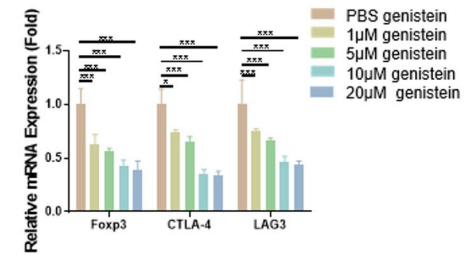
RT-qPCR analysis of Treg functional markers (Foxp3, CTLA-4, and LAG-3) after 24-h treatment with genistein at concentrations of 0-20 µM.
Genistin purchased from MedChemExpress. Usage Cited in: Sci Rep. 2025 Oct 22;15(1):36973. [Abstract]
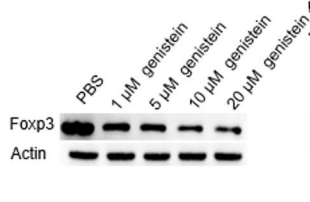
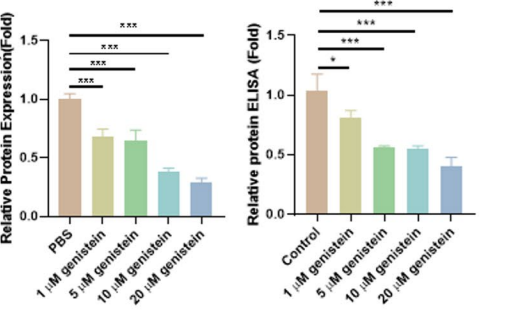
Western blot detection of Foxp3 protein expression following 24-h exposure to genistein (0-20 µM).
Genistin purchased from MedChemExpress. Usage Cited in: Sci Rep. 2025 Oct 22;15(1):36973. [Abstract]
ELISA quantification of IL-10 in Treg culture supernatants after 24-hour genistein treatment (0–20 µM).
Genistin purchased from MedChemExpress. Usage Cited in: Sci Rep. 2025 Oct 22;15(1):36973. [Abstract]
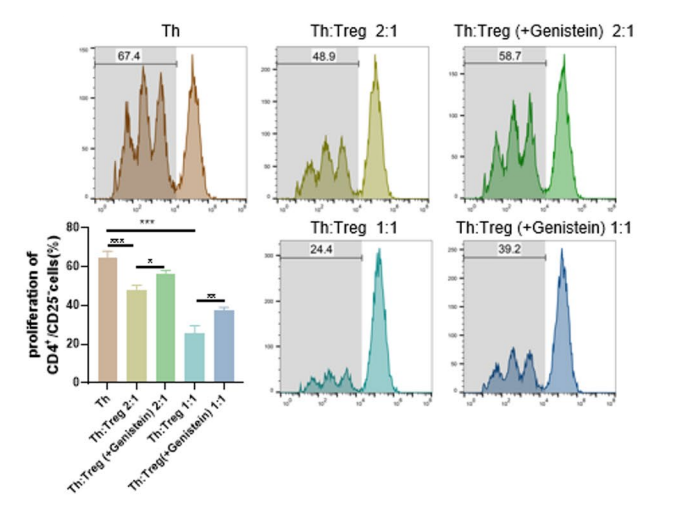
Genistein (10 μM, 48 h) pre-treatment attenuated Treg-mediated suppression of Th cell proliferation.
-
Neurochem Res
Genistein Exerts Neuroprotective Effects in an Ouabain-Induced Model of Bipolar Disorder: Behavioral and Molecular Insights. [Abstract]2025 Dec 8;51(1):10. PMID: 41354896 -
J Med Virol
2023 Jan;95(1):e28266. PMID: 36319186 -
Genomics
Transcriptomics and metabolomics reveal the induction of flavonoid biosynthesis pathway in the interaction of Stylosanthes-Colletotrichum gloeosporioides. [Abstract]2021 Jul;113(4):2702-2716. PMID: 34111523 -


溶剤 & 溶解度
体外:
DMSO : ≥ 100 mg/mL (231.28 mM; Hygroscopic DMSO has a significant impact on the solubility of product, please use newly opened DMSO)
* "≥" means soluble, but saturation unknown.
Please refer to the solubility information to select the appropriate solvent. Once prepared, please aliquot and store the solution to prevent product inactivation from repeated freeze-thaw cycles.
Storage method and period of stock solution: -80°C, 2 years; -20°C, 1 year. When stored at -80°C, please use it within 2 years. When stored at -20°C, please use it within 1 year.
Please refer to the solubility information to select the appropriate solvent. Once prepared, please aliquot and store the solution to prevent product inactivation from repeated freeze-thaw cycles.
Storage method and period of stock solution: -80°C, 2 years; -20°C, 1 year. When stored at -80°C, please use it within 2 years. When stored at -20°C, please use it within 1 year.
濃度 (開始) × 体積 (開始) = 濃度 (終了) × 体積 (終了)
体内:
Select the appropriate dissolution method based on your experimental animal and administration route.
- For the following dissolution methods, please ensure to first prepare a clear stock solution using an In Vitro approach and then sequentially add co-solvents:
- To ensure reliable experimental results, the clarified stock solution can be appropriately stored based on storage conditions. As for the working solution for In Vivo experiments, it is recommended to prepare freshly and use it on the same day.
- The percentages shown for the solvents indicate their volumetric ratio in the final prepared solution. If precipitation or phase separation occurs during preparation, heat and/or sonication can be used to aid dissolution.
Add each solvent one by one: 10% DMSO 40% PEG300 5% Tween-80 45% Saline
Solubility: ≥ 2.5 mg/mL (5.78 mM); Clear solution
This protocol yields a clear solution of ≥ 2.5 mg/mL (saturation unknown).
Taking 1 mL working solution as an example, add 100 μL DMSO stock solution (25.0 mg/mL) to 400 μL PEG300, and mix evenly; then add 50 μL Tween-80 and mix evenly; then add 450 μL Saline to adjust the volume to 1 mL.
Preparation of Saline: Dissolve 0.9 g sodium chloride in ddH₂O and dilute to 100 mL to obtain a clear Saline solution.
Add each solvent one by one: 10% DMSO 90% (20% SBE-β-CD in Saline)
Solubility: ≥ 2.5 mg/mL (5.78 mM); Clear solution
This protocol yields a clear solution of ≥ 2.5 mg/mL (saturation unknown).
Taking 1 mL working solution as an example, add 100 μL DMSO stock solution (25.0 mg/mL) to 900 μL 20% SBE-β-CD in Saline, and mix evenly.
Preparation of 20% SBE-β-CD in Saline (4°C, storage for one week): 2 g SBE-β-CD powder is dissolved in 10 mL Saline, completely dissolve until clear.
In Vivo Dissolution Calculator
Please enter the basic information of animal experiments:
-
-
-
-
Recommended: Prepare an additional quantity of animals to account for potential losses during experiments.
Please enter your animal formula composition:
-
%DMSO +
Recommended: Keep the proportion of DMSO in working solution below 2% if your animal is weak.
-
%+
-
+%Tween-80 + +
-
%Saline +
The co-solvents required include: DMSO, . All of co-solvents are available by MedChemExpress (MCE). , Tween 80. All of co-solvents are available by MedChemExpress (MCE).
Working solution concentration: 0.22 mg/mL
Method for preparing stock solution: mg drug dissolved in μL DMSO. Stock solution concentration: mg/mL.
1. Take μL DMSO stock solution;
2. Add μL .
μL , mix evenly;
3. Then add μL Tween 80, mix evenly;
4. Then add μL
Please ensure that the stock solution in the first step is dissolved to a clear state, and add co-solvents in sequence. You can use ultrasonic heating (ultrasonic cleaner, recommended frequency 20-40 kHz), vortexing, etc. to assist dissolution.


純度とドキュメンテーション
-
データシート (277 KB)
-
SDS (393 KB)
- English - EN (393 KB)
- Français - FR (393 KB)
- Deutsch - DE (393 KB)
- Norwegian - NO (393 KB)
- Español - ES (393 KB)
- Swedish - SV (393 KB)
- Italian - IT (393 KB)
- Korean - KR (393 KB)
- Portuguese - PT (393 KB)
-
取扱説明書 (2659 KB)
参考文献
[1]. Choi YR, et al. Genistin: A Novel Potent Anti-Adipogenic and Anti-Lipogenic Agent. Molecules. 2020;25(9):2042. Published 2020 Apr 27. [Content Brief]
[2]. Liang Y, et al. A Comprehensive Screening and Identification of Genistin Metabolites in Rats Based on Multiple Metabolite Templates Combined with UHPLC-HRMS Analysis. Molecules. 2018;23(8):1862. Published 2018 Jul 26. [Content Brief]
[3]. Hwang ST, et al. Genistin attenuates cellular growth and promotes apoptotic cell death breast cancer cells through modulation of ERalpha signaling pathway [published online ahead of print, 2020 Oct 16]. Life Sci. 2020;263:118594. [Content Brief]


Complete Stock Solution Preparation Table
Please refer to the solubility information to select the appropriate solvent. Once prepared, please aliquot and store the solution to prevent product inactivation from repeated freeze-thaw cycles.
Storage method and period of stock solution: -80°C, 2 years; -20°C, 1 year. When stored at -80°C, please use it within 2 years. When stored at -20°C, please use it within 1 year.
| Optional Solvent | Concentration Solvent Mass | 1 mg | 5 mg | 10 mg | 25 mg |
|---|---|---|---|---|---|
| DMSO | 1 mM | 2.3128 mL | 11.5639 mL | 23.1278 mL | 57.8195 mL |
| 5 mM | 0.4626 mL | 2.3128 mL | 4.6256 mL | 11.5639 mL | |
| 10 mM | 0.2313 mL | 1.1564 mL | 2.3128 mL | 5.7820 mL | |
| 15 mM | 0.1542 mL | 0.7709 mL | 1.5419 mL | 3.8546 mL | |
| 20 mM | 0.1156 mL | 0.5782 mL | 1.1564 mL | 2.8910 mL | |
| 25 mM | 0.0925 mL | 0.4626 mL | 0.9251 mL | 2.3128 mL | |
| 30 mM | 0.0771 mL | 0.3855 mL | 0.7709 mL | 1.9273 mL | |
| 40 mM | 0.0578 mL | 0.2891 mL | 0.5782 mL | 1.4455 mL | |
| 50 mM | 0.0463 mL | 0.2313 mL | 0.4626 mL | 1.1564 mL | |
| 60 mM | 0.0385 mL | 0.1927 mL | 0.3855 mL | 0.9637 mL | |
| 80 mM | 0.0289 mL | 0.1445 mL | 0.2891 mL | 0.7227 mL | |
| 100 mM | 0.0231 mL | 0.1156 mL | 0.2313 mL | 0.5782 mL |


Genistin 関連分類
HY-N0595 関連分類
 Powered by Bioz