



Genistin (Standard)
Based on 1 publication(s) in Google Scholar
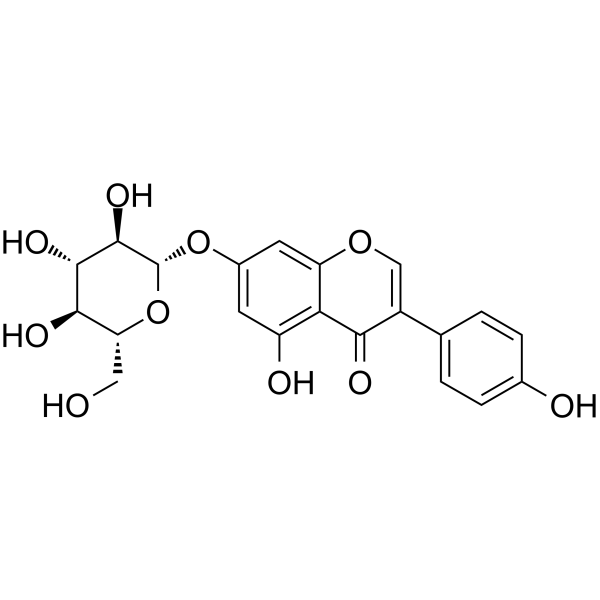
Genistin (Standard) is the analytical standard of Genistin. This product is intended for research and analytical applications. Genistin (Genistine), an isoflavone belonging to the phytoestrogen family, is a potent anti-adipogenic and anti-lipogenic agent. Genistin attenuates cellular growth and promotes apoptotic cell death breast cancer cells through modulation of ERalpha signaling pathway.
Nos produits utilisent uniquement pour la recherche. Nous ne vendons pas aux patients.
- Pureté : 95%
- CAS No.: 529-59-9
- Formule: C₂₁H₂₀O₁₀
- Masse moléculaire:432.38
-
Stockage:
Please store the product under the recommended conditions in the Certificate of Analysis.


To place orders, for customer services and technical support, please contact: MedChemExpress USA
Tel: 609-228-6898 E-mail: [email protected] [email protected]


-
 Product Information
-
Chemical Information
- Pureté et documentation
-
 Help & FAQs


-
HY-N0595
GenistinAnti-Adipogenic/Anti-Lipogenic Agent -
HY-N0016
GlyciteinApoptosis Inducer -
HY-14589
ChrysinEstrogen Receptor/ERR Inhibitor -
HY-N0162
LuteolinNrf2 Inhibitor -
HY-N1201
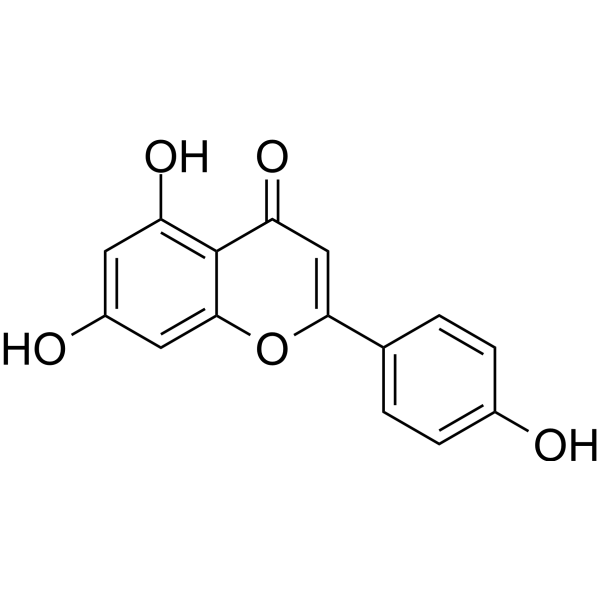
ApigeninCytochrome P450 Inhibitor -
HY-N0019
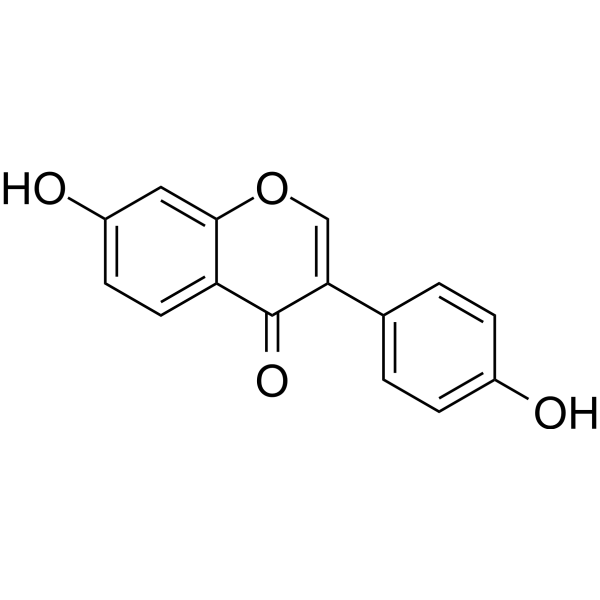
DaidzeinEndogenous Metabolite -
HY-14596
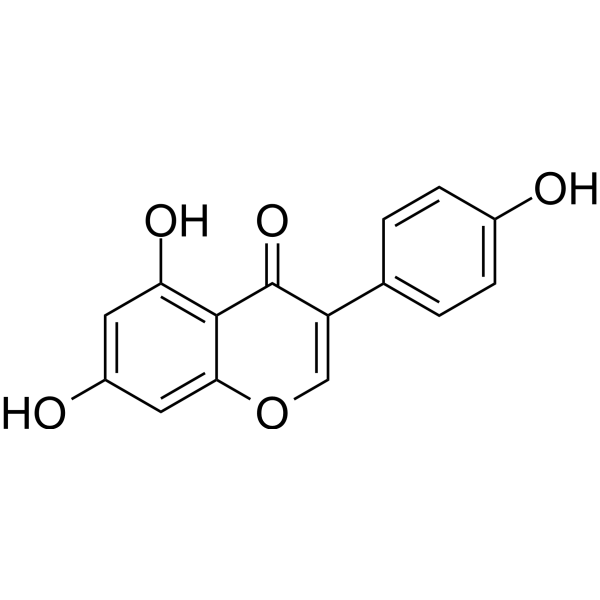
GenisteinAutophagy Inducer -
HY-15097
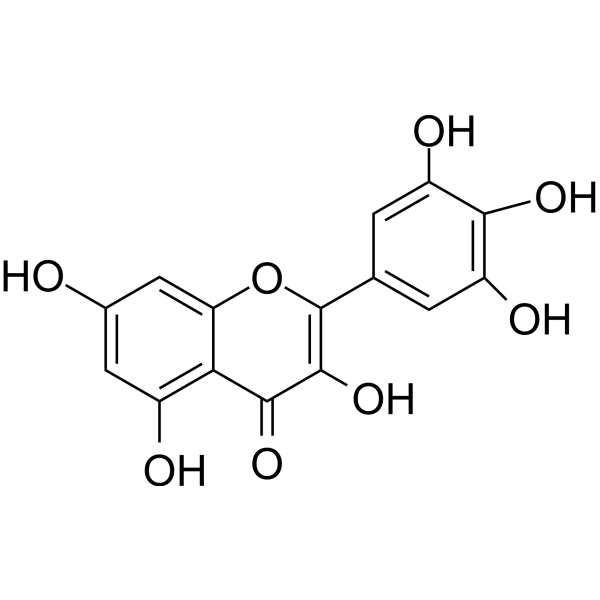
MyricetinAutophagy Inducer -
HY-14590
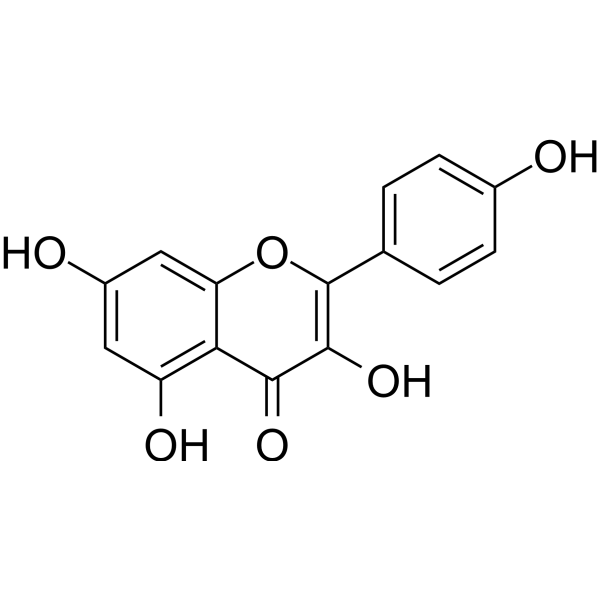
KaempferolEstrogen Receptor α Inhibitor -

HY-14589R
Chrysin (Standard)Estrogen Receptor/ERR Inhibitor -
HY-N0019R
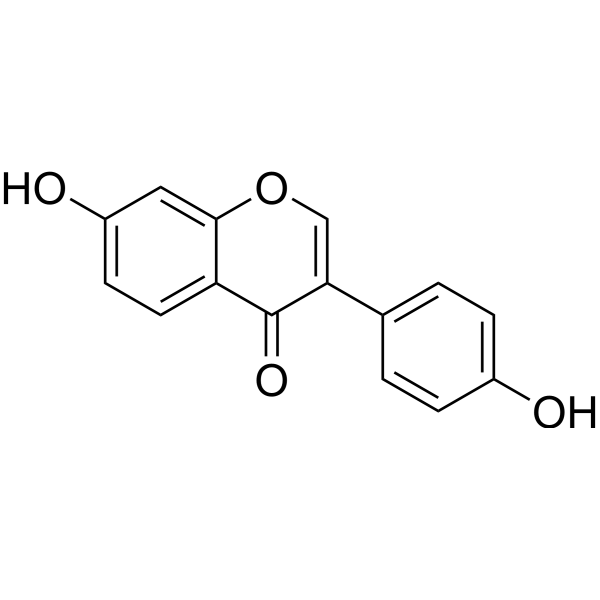
Daidzein (Standard) -
HY-N0376
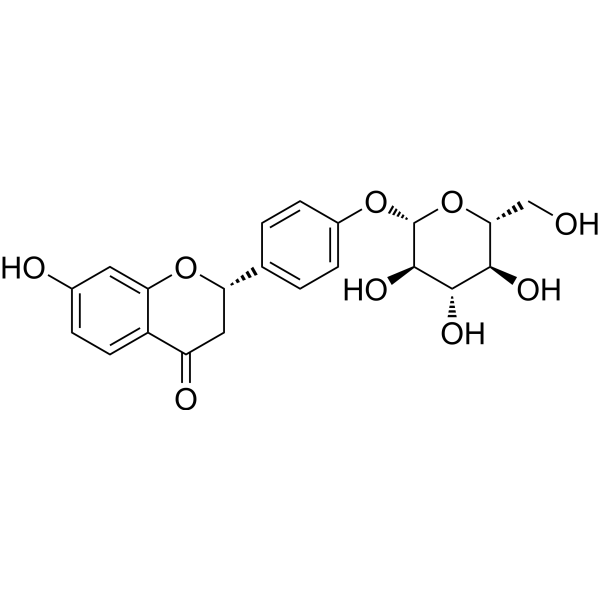
LiquiritinAKR1C1 Inhibitor
Publications Citing Use of MedChemExpress (MCE) Genistin (Standard)
More

Product Information
Information
Application
The compound is the grade of analytical standard, which is the reference standard supplied assay. It is commonly used in qualitative, quantitative and methodological research experiments in HPLC, GC and MS.


Chemical Information
-
CAS No. 529-59-9
-
Masse moléculaire 432.38
-
Formule C₂₁H₂₀O₁₀
-
SMILES
O=C(C(C1=CC=C(O)C=C1)=COC2=CC(O[C@@H]([C@@H]([C@@H](O)[C@@H]3O)O)O[C@@H]3CO)=C4)C2=C4O
-
Synonyms
Genistine (Standard); Genistoside (Standard); Genistein 7-O-β-D-glucopyranoside (Standard)
-
Structure Classification
-
Initial Source
-
Livraison
Room temperature in continental US; may vary elsewhere.
-
Stockage
Please store the product under the recommended conditions in the Certificate of Analysis.


Publications (1)
-
Journal Impact Factor
-
Most Recent


Pureté et documentation
Références
[1]. Choi YR, et al. Genistin: A Novel Potent Anti-Adipogenic and Anti-Lipogenic Agent. Molecules. 2020;25(9):2042. Published 2020 Apr 27. [Content Brief]
[2]. Liang Y, et al. A Comprehensive Screening and Identification of Genistin Metabolites in Rats Based on Multiple Metabolite Templates Combined with UHPLC-HRMS Analysis. Molecules. 2018;23(8):1862. Published 2018 Jul 26. [Content Brief]
[3]. Hwang ST, et al. Genistin attenuates cellular growth and promotes apoptotic cell death breast cancer cells through modulation of ERalpha signaling pathway [published online ahead of print, 2020 Oct 16]. Life Sci. 2020;263:118594. [Content Brief]

Calculators
Concentration (start) × Volume (start) = Concentration (final) × Volume (final)


Genistin (Standard) Related Classifications
HY-N0595R Related Classifications
 Powered by Bioz