



-
Paracryphiaceae Extract (3)

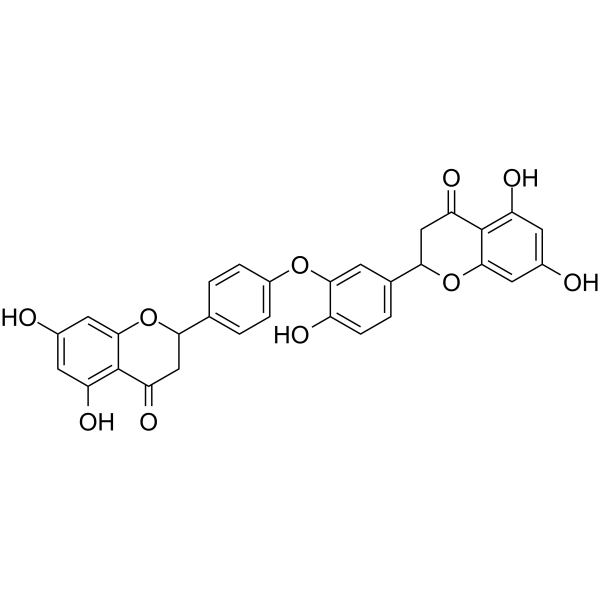
- Formule: C30H22O10
- Masse moléculaire: 542.49
2,3,2'',3''-Tetrahydroochnaflavone is a biflavonoid, which can be isolated from the leaves of Quintinia acutifolia. 2,3,2'',3''-Tetrahydroochnaflavone shows some cytotoxicity against P388 murine lymphocytic leukemia cells, with an IC50 of 8.2 µg/mL.
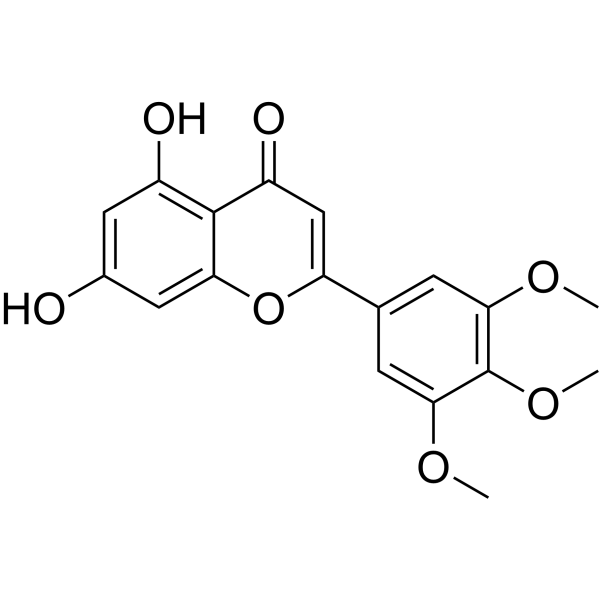
- Formule: C18H16O7
- Masse moléculaire: 344.32
Tricetin 3',4',5'-trimethyl ether (5,7-Dihydroxy-3',4',5'-trimethoxyflavone) is a flavone glucoside, that can be isolated the flowers of Chrysanthemum sinensea. Tricetin 3',4',5'-trimethyl ether displays xanthine oxidase competitive-type inhibitory activity, with an IC50 of 0.51 μM and a Ki of 0.37 μM.

- Formule: C30H20O10
- Masse moléculaire: 540.47
2′′,3′′-Dihydroochnaflavone is a flavonoid/flavanone-type ether-linked biflavonoid anti-leukemic compound. 2′′,3′′-Dihydroochnaflavone exhibits significant cytotoxicity against P388 murine lymphocytic leukemia cells (IC50 = 3.1 μg/mL). It can be naturally extracted from the dried leaves of Quintinia acutifolia and has also been previously isolated and identified from Ochna interrima and Luxemburgia nobilis (both Ochnaceae plants). 2′′,3′′-Dihydroochnaflavone can be used in research related to anti-tumor (especially leukemia) applications.



