



Cholinesterase (ChE)
Cholinesterase (ChE) is a family of enzymes present in the central nervous system, particularly in nervous tissue, muscle and red cells, which catalyze the hydrolysis of the neurotransmitter acetylcholine into choline and acetic acid, a reaction necessary to allow a cholinergic neuron to return to its resting state after activation. It is one of many important enzymes needed for the proper functioning of the nervous systems of humans.
There are two types: acetylcholinesterase (AChE, acetylcholine hydrolase) and butyrylcholinesterase (BChE, acylcholine acylhydrolase), also known as nonspecific cholinesterase or pseudocholinesterase. AChE is primarily found in the blood on red blood cell membranes, in neuromuscular junctions, and in neural synapses, while BChE is produced in the liver and found primarily in plasma. The difference between the two types of cholinesterase is their relative preferences for substrates: AChE hydrolyzes acetylcholine faster while BChE hydrolyzes butyrylcholine faster.
Cholinesterase (ChE) Isoform Specific Products
All Product Categories
-
Cholinesterase (ChE) Inhibitors
(913)
View all products
-
Cholinesterase (ChE) Agonists
(5)
View all products
-
Cholinesterase (ChE) Antagonists
(10)
View all products
-
Cholinesterase (ChE) Activators
(32)
View all products
-
Cholinesterase (ChE) Modulators
(10)
View all products
-
Cholinesterase (ChE) Chemical
(1)
View all products
-
Cholinesterase (ChE) Inducer
(1)
View all products
-
Cholinesterase (ChE) Controls
(6)
View all products
-
Cholinesterase (ChE) Substrates
(2)
View all products
-
Cholinesterase (ChE) Related Products (1062)
Related Products (1062)

-
Antibodies (2)
-
Cholinesterase (ChE) Isoform Comparison
-
Scutellarein 4'-methyl ether 7-O-glucuronide
 0 ImagesCat. No.: HY-N17775CAS No.: 64924-06-7Synonyms: ClerodendrosideScutellarein 4'-methyl ether 7-O-glucuronide (Clerodendroside) is a flavonoid inhibitor of acetylcholinesterase (AChE) (IC50=1 mg/mL). Scutellarein 4'-methyl ether 7-O-glucuronide can be isolated from Plectranthus barbatus. It also possesses antioxidant activity and can be used in research on neurological diseases such as Alzheimer's disease.

-
BChE/HDAC6-IN-1
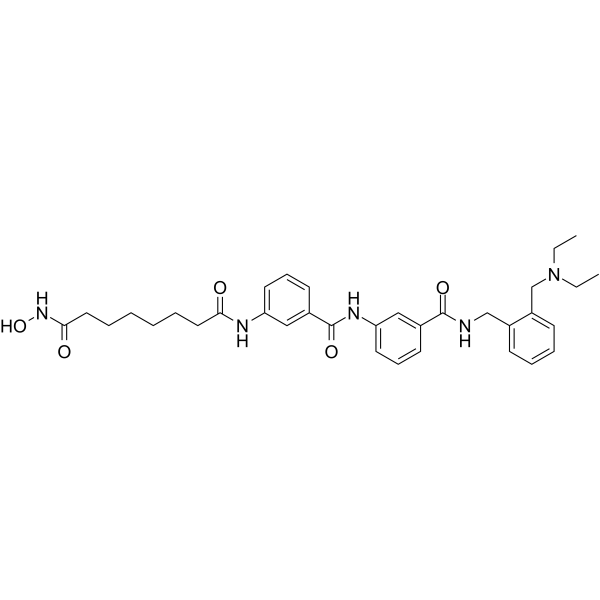 0 ImagesCat. No.: HY-149417CAS No.: 2925457-27-6BChE/HDAC6-IN-1 is a potent and selective dual BChE/HDAC6 inhibitor with IC50 values of 4 and 8.9 nM, respectively. BChE/HDAC6-IN-1 ameliorates the cognitive impairment in an Aβ1–42-induced mouse model and has the potental for AD research.
-
Neuroprotective agent 15
 0 ImagesCat. No.: HY-178943CAS No.: 2476614-40-9Neuroprotective agent 15 (Compound 3e) is a neuroprotective agent. Neuroprotective agent 15 is a selective butyrylcholinesterase (BChE) inhibitor, with IC50 values of 2.6 and 114.3 μM for BChE and AChE respectively. Neuroprotective agent 15 has cannabinoid CB2 receptor (CB2 receptor) agonistic activity. Neuroprotective agent 15 can reduce cell death, LDH release and Caspase-3/7 activity, and inhibit apoptosis. Neuroprotective agent 15 can reduce the formation of superoxide free radicals, maintain cell morphology, and significantly lower oxidative stress levels. Neuroprotective agent 15 can be used in the research of neurodegenerative diseases, such as Alzheimer's disease and Parkinson's disease.
-
MAO-B-IN-56
 0 ImagesCat. No.: HY-182786MAO-B-IN-56 is a multi-target-directed ligand with AChE, BChE, MAO-B, and BACE1 inhibitory activity, with IC50 values of 0.35 μM, 3.22 μM, 0.14 μM, and 3.85 μM respectively, and shows selectivity for AChE over BChE and MAO-B over MAO-A.MAO-B-IN-56 reduces amyloid-beta production, reduces paw edema, improves spatial memory, and enhances Alzheimer's disease hallmarks and associated histopathological alterations.MAO-B-IN-56 can be used for the research of alzheimer's disease.
-
Protopine hydrochloride
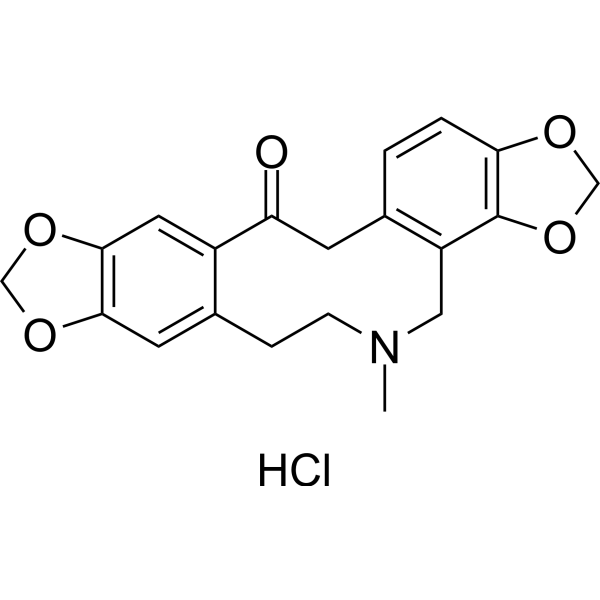 0 ImagesProtopine hydrochloride, an isoquinoline alkaloid, is a specific reversible and competitive inhibitor of acetylcholinesterase. Protopine hydrochloride exhibits anti-inflammation, anti-microbial, anti-angiogenic and anti-tumour activity.
-
Stemoninine
 0 ImagesCat. No.: HY-134006CAS No.: 69772-72-1Stemoninine is a lycoris alkaloid that can be used as an antitussive. Stemoninine has significant inhibitory activity against human acetylcholinesterase (AChE) (IC50=5.52 μM).
-
NLRP3-IN-33
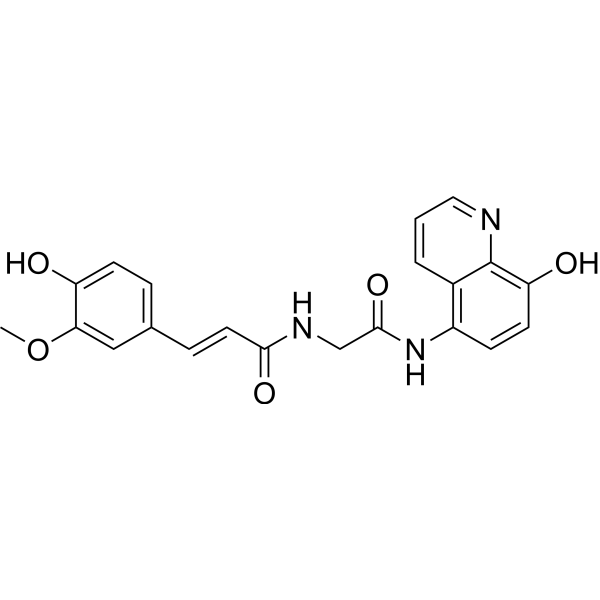 0 ImagesCat. No.: HY-162402NLRP3-IN-33 (Compound 12o) is a blood-brain barrier permeable inhibitor of AChE and BChE, with IC50 values of 1.02 μM and 7.03 μM against hAChE and hBChE respectively. NLRP3-IN-33 possesses antioxidant, anti-inflammatory, and metal chelating activities, making it a potential candidate for research in Alzheimer's disease (AD).
-
AChE/BuChE-IN-5
 0 ImagesCat. No.: HY-163537AChE/BuChE-IN-5 (compound 5a) is a dual target inhibitor. AChE/BuChE-IN-5 has excellent nanomolar inhibitory activity on acetylcholinesterase (AChE) (IC50=46.9 nM) and butyryl cholinesterase (BuChE) (IC50=3.5 nM). AChE/BuChE-IN-5 can be used for Alzheimer's Disease research.
-
hAChE-IN-7
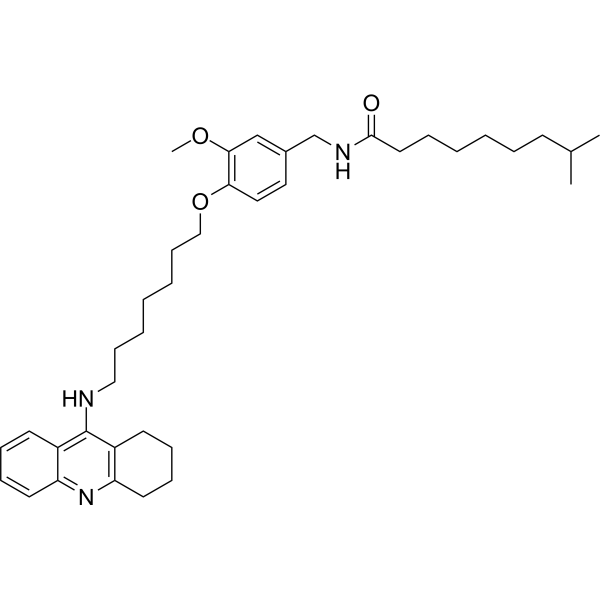 0 ImagesCat. No.: HY-157527CAS No.: 2978613-03-3hAChE-IN-7 (compound 5s) is a mixed inhibitor affecting both the catalytic active site (CAS) and peripheral anionic site (PAS) of hAChE. hAChE-IN-7 displays the balanced inhibitory effect on hAChE (IC50=69.8 nM) and hBuChE (IC50=68.0 nM), and exhibits inhibitory activity against β-secretase-1 (BACE-1) (IC50=3.6 μM). hAChE-IN-7 has the potential for Alzheimer's disease (AD) research.
-
Protriptyline-d3
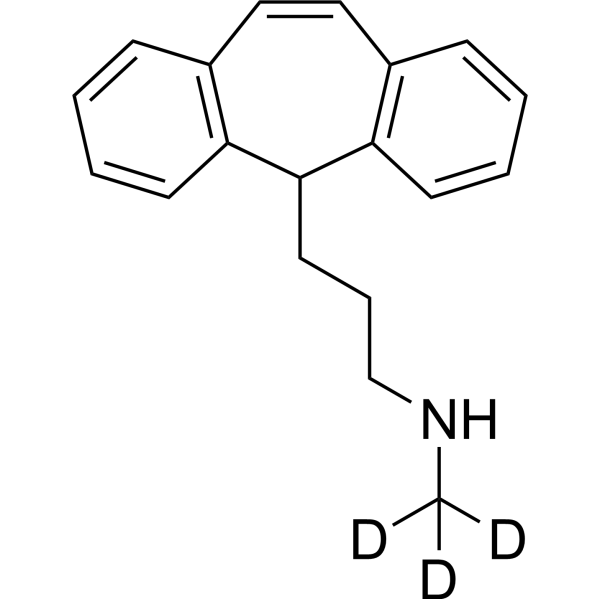 0 ImagesCat. No.: HY-B0949ASCAS No.: 136765-50-9
-
Hexafluorenium dibromide
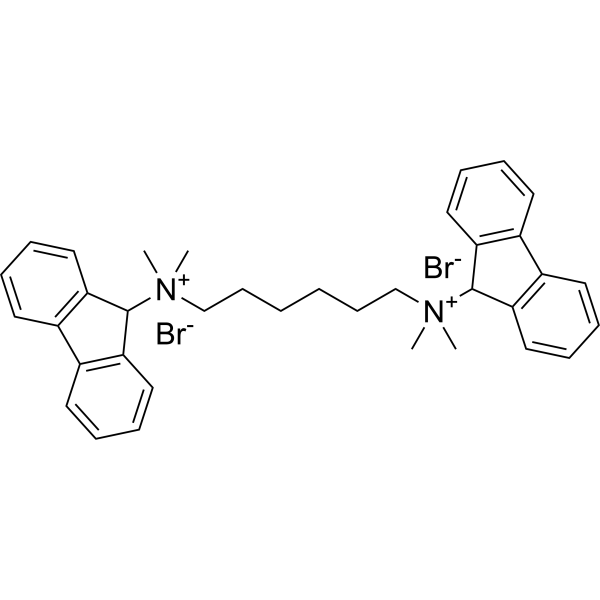 0 ImagesHexafluorenium dibromide (Mylaxen) is a potent cholinesterase (ChE) inhibitor with pI50 value of 6.96 and Ki value of 2.4 nM for human plasma cholinesterase (ChE).
-
Octahydroaminoacridine
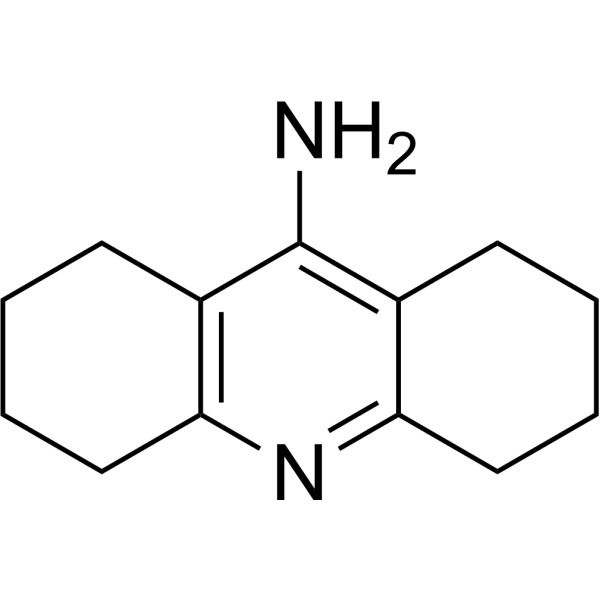 0 ImagesCat. No.: HY-135006ACAS No.: 13415-07-1Synonyms: Anivecrine
-
Difemerine hydrochloride
 0 ImagesCat. No.: HY-131634CAS No.: 70280-88-5Difemerine hydrochloride is an antimuscarinic agent. Difemerine hydrochloride can be used for the research of neurological disease .
-
Multitarget AD-IN-4
 0 ImagesCat. No.: HY-180891Multitarget AD-IN-4 (compound IIIj) is a multitarget-directed ligand (MTDL), with the ability to simultaneously inhibit ChE enzymes (EeAChE IC50 = 0.157 μM, eqBuChE IC50 = 0.147 μM, hAChE IC50 = 1.551 μM, hBuChE IC50 = 2.152 μM), exhibit antioxidant activity, provide neuroprotection, and inhibit calcium channels (Ca2+ channel blockade: IC50 = 30.59 μM). Multitarget AD-IN-4 reverses Scopolamine (HY-N0296)-induced amnesia in a mouse model. Multitarget AD-IN-4 can be used for Alzheimer’s disease (AD) research.
-
(E)-2-Nitrocinnamic acid
 0 ImagesCat. No.: HY-W053641CAS No.: 1013-96-3(E)-2-Nitrocinnamic acid (Compound 1k) is an Acetylcholinesterase inhibitor. (E)-2-Nitrocinnamic acid is applicable to research related to Alzheimer's disease.
-
Dual AChE-MAO B-IN-1
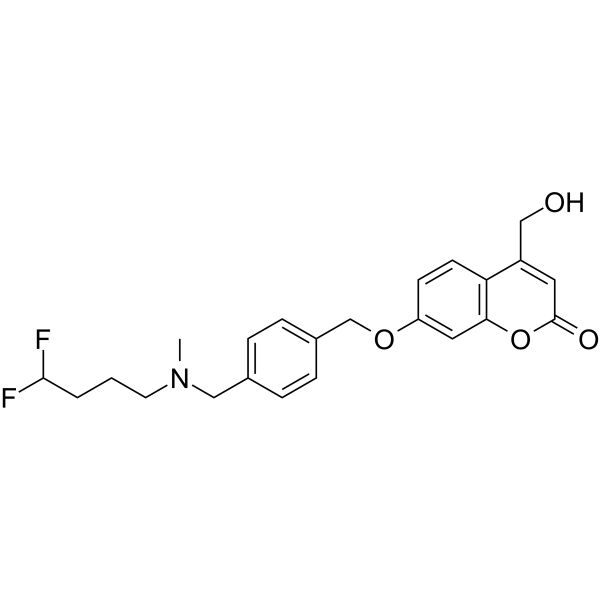 0 ImagesCat. No.: HY-145695CAS No.: 3037140-66-9Dual AChE-MAO B-IN-1 (compound 15) is an orally bioavailable CNS-permeant potent inhibitor of both human AChE (IC50=550 nM) and MAO B (IC50=8.2 nM). Dual AChE-MAO B-IN-1 behaves as a safe and metabolically stable neuroprotective agent, devoid of cytochrome liability.
-
AChE/BChE-IN-29
 0 ImagesCat. No.: HY-175658AChE/BChE-IN-29 is an AChE/BChE inhibitor. AChE/BChE-IN-29 exhibits balanced dual cholinesterase inhibitory activity with IC50 values of 2.1 μM for Electrophorus electricus AChE (eeAChE) and 6.3 μM for equine serum butyrylcholinesterase (eqBChE). AChE/BChE-IN-29 effectively inhibits amyloid-β (Aβ42) aggregation and tau protein aggregation in E. coli cell models. AChE/BChE-IN-29 can be used for the study of Alzheimer’s disease (AD).
-
hiCE inhibitor-1
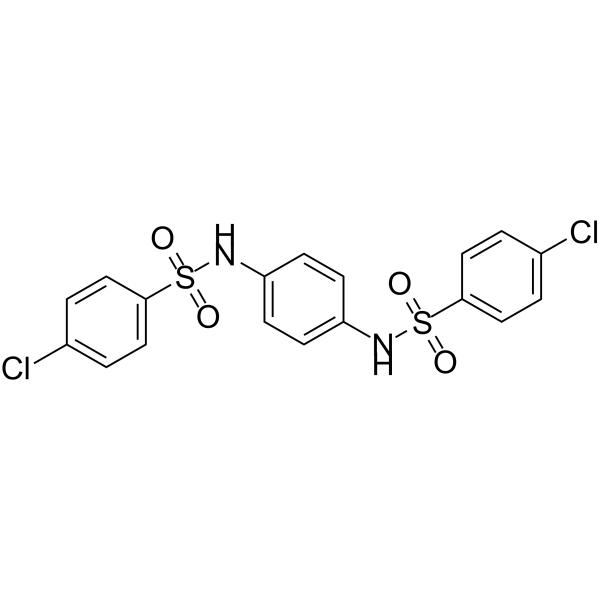 0 ImageshiCE inhibitor-1, a sulfonamide derivative, is a selective human intestinal enzyme (hiCE) inhibitor with a Ki value of 53.3 nM. hiCE inhibitor-1 can be used to improve Irinotecan (HY-16562)-induced diarrhoea.




