



Btk
Bruton tyrosine kinase
Bruton tyrosine kinase (Btk) is a member of the Tec family kinases with a well-characterized role in B-cell antigen receptor (BCR)-signaling and B-cell activation.
Btk plays a crucial role in B cell development and activation through the BCR signaling pathway and represents a new target for diseases characterized by inappropriate B cell activity. Btk is a kinase expressed exclusively in B cells and myeloid cells and has a well characterized, vital role in B cells highlighted by the human primary immune deficiency disease, X-linked agammaglobulinemia (XLA), which results from mutation in the Btk gene. Btk plays an essential role in the BCR signaling pathway. Antigen binding to the BCR results in B cell receptor oligomerization, Syk and Lyn kinase activation, followed by Btk kinase activation. Once activated, Btk forms a signaling complex with proteins such as BLNK, Lyn, and Syk and phosphorylates phospholipase C (PLC)γ2. This leads to downstream release of intracellular Ca2+ stores and propagation of the BCR signaling pathway through extracellular signal-regulated kinase and NF-κB signaling, ultimately resulting in transcriptional changes to foster B cell survival, proliferation, and/or differentiation.
All Product Categories
-
Btk Related Products (270)
Related Products (270)

-
Recombinant Proteins (19)
-
Antibodies (3)
-
DPPY
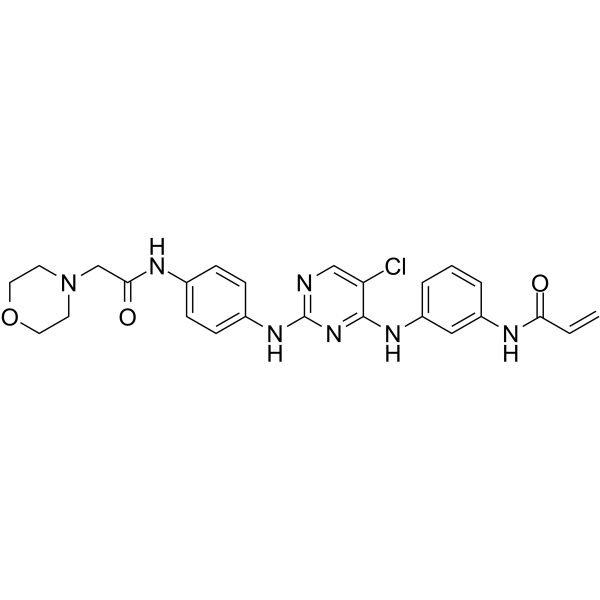 0 ImagesCat. No.: HY-147741CAS No.: 2095883-62-6
-
(R,R)-Bexobrutideg
 0 ImagesSynonyms: (R,R)-NX-5948; (R,R)-BTK-IN-24(R,R)-Bexobrutideg is the (R,R)-enantiomer of Bexobrutideg (HY-153321). Bexobrutideg (NX-5948) is an orally active PROTAC that induces specific BTK protein degradation via a cereblon E3 ligase (CRBN) complex without degrading other cereblon neo substrates. Bexobrutideg mediates potent anti-inflammatory activity through BTK degradation, thereby inhibiting B cell activation. Bexobrutideg exhibits potent tumor growth inhibition in TMD8 xenograft models containing wild-type BTK or BTKi resistance mutations. Bexobrutideg is effective in a mouse model of collagen-induced arthritis (CIA). Bexobrutideg can cross the blood-brain barrier. NX-5948 consists of a target protein ligand, a linker, and a VHL E3 ubiquitin ligase (Red: BTK ligand (HY-170324); Blue: CRBN ligand (HY-171893); Black: linker).
-
BTK-IN-8
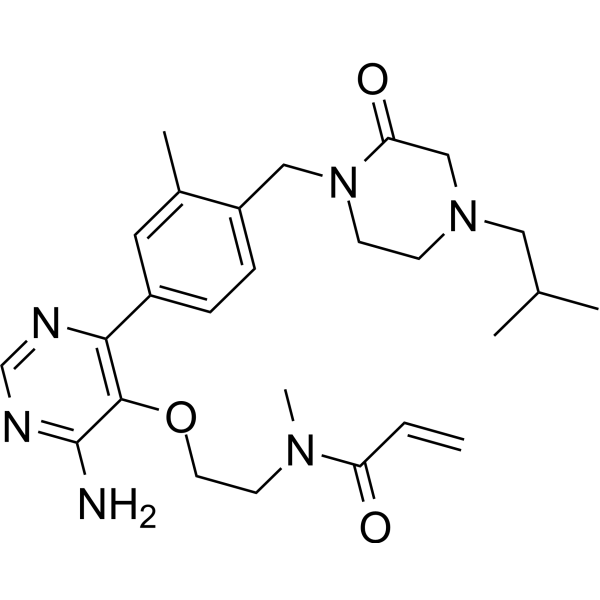 0 ImagesCat. No.: HY-145884CAS No.: 2824922-28-1
-
BTK-IN-9
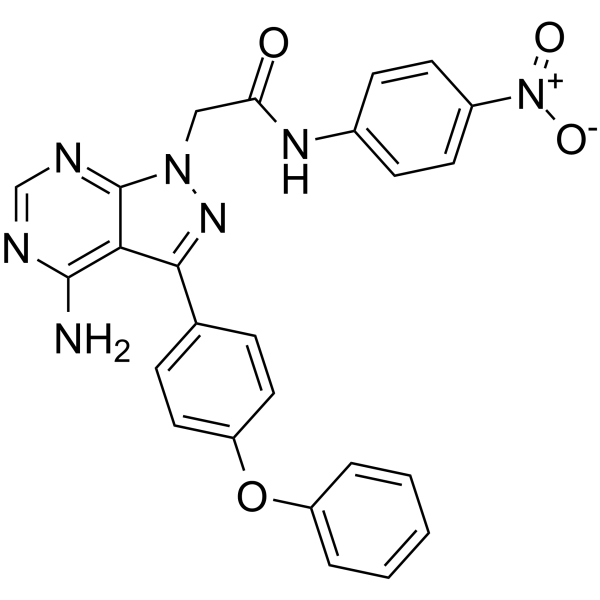 0 ImagesCat. No.: HY-115944CAS No.: 2361192-21-2BTK-IN-9 is a reversible BTK inhibitors with potent antiproliferative activity in mantle cell lymphoma. BTK-IN-9 specifically disturbs mitochondrial membrane potential and increases reactive oxygen species level in Z138 cells. BTK-IN-9 also induces cell apoptosis in Z138 cells.
-
BTK-IN-44
 0 ImagesCat. No.: HY-176172BTK-IN-44 (Compound 10) is a potent noncovalent inhibitor of Bruton’s tyrosine kinase (BTK) with an IC50 value of 24.7 nM. BTK-IN-44 interferes with signaling pathways of B cell malignancies, showing antitumor effects in lymphoma cells. BTK-IN-44 is promising for research of B cell malignancies (such as lymphoma).

-
PLS-123
 0 ImagesCat. No.: HY-120406CAS No.: 1431727-04-6LPS-123 is a covalently irreversible BTK inhibitor with an IC50 of < 5 nM. LPS-123 simultaneously inhibits the catalytic activity of BTK at Tyr551 and its self-activation at Tyr223. LPS-123 inhibits phosphorylation of the AKT/mTOR and MAPK signaling pathways, activation of PLCγ2, ERK1/2, p38, AKT, and mTOR, and blocks the production of CCL3 and CCL4 chemokines. LPS-123 exhibits significant anti-proliferative activity against various B-cell lymphoma cell lines and effectively induces apoptosis via a caspase-dependent pathway. LPS-123 also demonstrates significant antitumor activity in the OCI-Ly7 xenograft model. LPS-123 can be used for lymphoma research.
-
RN983
 0 ImagesCat. No.: HY-117628CAS No.: 1423129-83-2
-
BTK-IN-49
 0 ImagesCat. No.: HY-182943BTK-IN-49 is a selective, orally active and brain-penetrant BTK inhibitor with an IC50 of 0.14 nM. BTK-IN-49 binds to BTK and blocks B-cell receptor and Fcγ receptor signaling. BTK-IN-49 inhibits the proliferation of CNS-compartmentalized B-cells and FcγR-induced microglial proliferation in a BTK-dependent manner. BTK-IN-49 can be used for the study of multiple sclerosis.
-
SRX3305
 0 ImagesCat. No.: HY-182671CAS No.: 2409965-28-0SRX3305 is an BTK/PI3K/BRD4 inhibitor with IC50s of 6.5 nM, 15 nM, and 4 nM toward BTK, PI3Kɑ and PI3Kδ, respectively. SRX3305 attenuates chronic lymphocytic leukemia (CLL) and mantle cell lymphoma (MCL) cell proliferation and promotes apoptosis in a dose-dependent fashion. SRX3305 yields potent anti-tumor effects but spares healthy bystander cells. SRX3305 inhibits the activation-induced proliferation of primary CLL cells in vitro and effectively blocks microenvironment-mediated survival signals. SRX3305 blocks CLL cell migration toward CXCL-12 and CXCL-13. SRX3305 maintains its anti-tumor effects in Ibrutinib (HY-10997)-resistant CLL cells. SRX3305 can be used for research in CLL, diffuse large B-cell lymphoma (DLBCL) and MCL.
-
BTK-IN-36
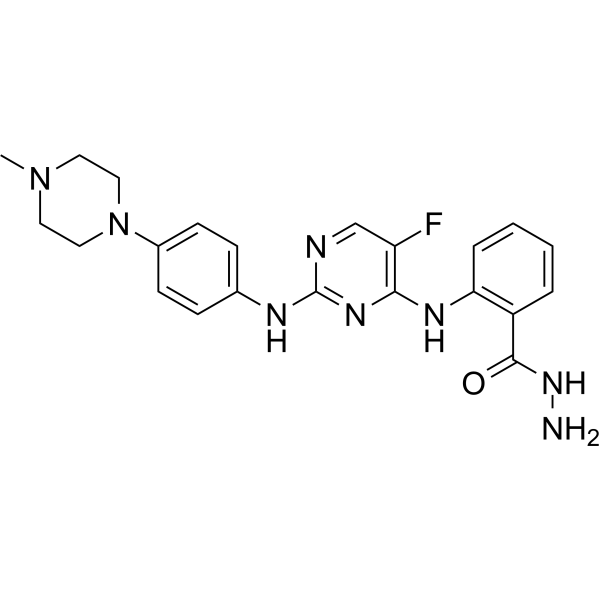
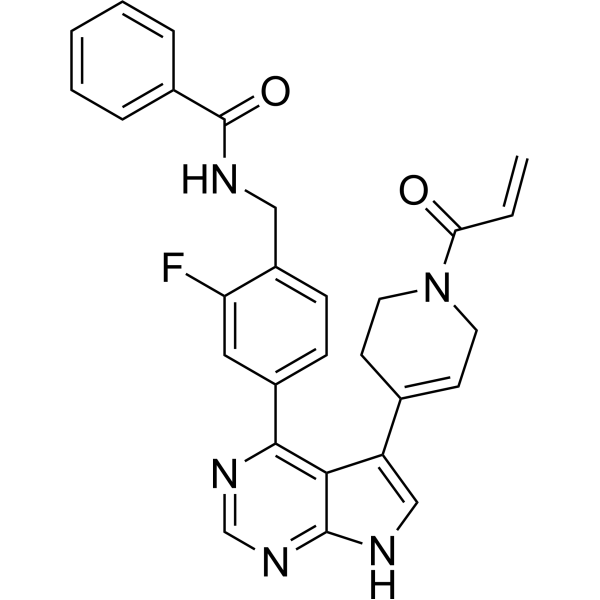
 0 ImagesCat. No.: HY-158064CAS No.: 2502301-31-5BTK-IN-36 (S-016) is a BTK inhibitor, with IC50 of 0.5 nM. BTK-IN-36 can be used in cancer-related research.
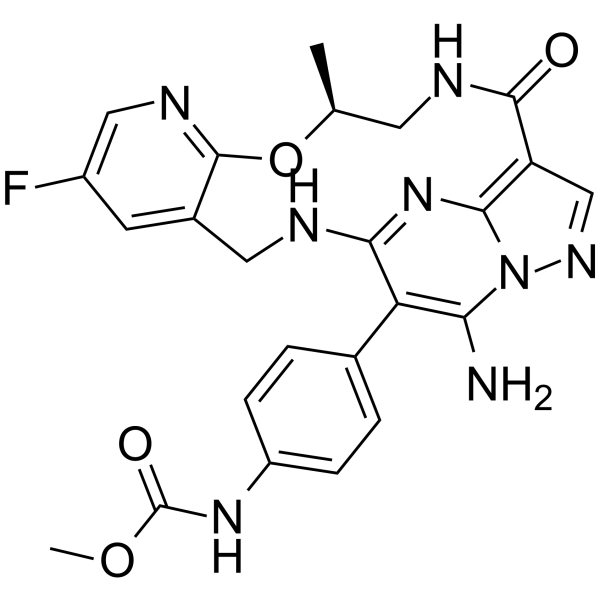


-
VA5
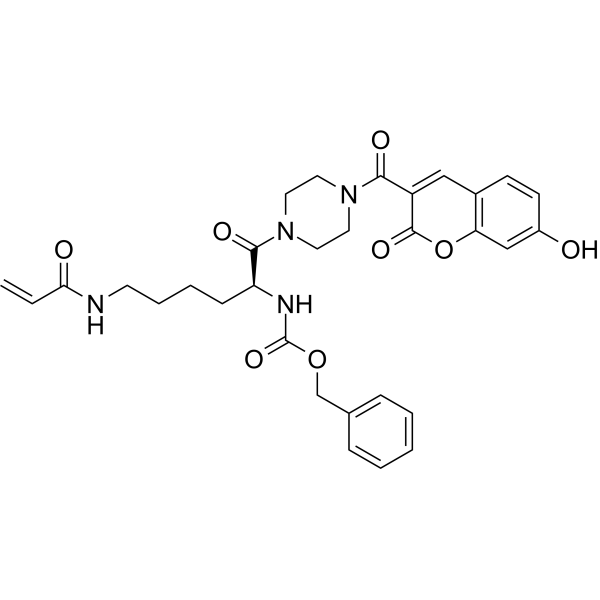 0 ImagesCat. No.: HY-123117CAS No.: 2088001-24-3

-
BTK-IN-38
 0 ImagesCat. No.: HY-169307CAS No.: 2758410-51-2BTK-IN-38 (Example 125) is a potent BTK inhibitor. BTK-IN-38 inhibits DOHH2 and BT474 cells proliferation with IC50s of 114 and 340 nM, respectively.
-
TQ-3959
 0 ImagesCat. No.: HY-175541CAS No.: 2926610-43-5TQ-3959 is an orally active BTK PROTAC degrader, with a DC50 of 14.6 nM. TQ-3959 exerts antiproliferative activity against both wild-type BTK and C481S mutant BTK cell lines. TQ-3959 exhibits tumor growth inhibition in female NOD-SCID mice bearing TMD-8 xenografts. TQ-3959 can be used in the research on B-cell malignancies such as lymphoma.




