



G-quadruplex
G-Quadruplex nucleic acids or G-quadruplexes (G4s) are four-stranded DNA or RNA secondary structures that are formed in guanine-rich sequences. They are widely distributed in functional regions of the human genome, such as telomeres, ribosomal DNA (rDNA), transcription start sites, promoter regions and untranslated regions of mRNA, suggesting that G-quadruplex structures may play a pivotal role in the control of a variety of cellular processes. In addition, G4s are enriched and conserved in the regulatory regions of microbes, including bacteria, fungi, and viruses.
The irregular formation of G4s on some genes might cause neurodegenerative diseases and cancers. Therefore, G4s in the genome are the therapeutic targets of these diseases. Small molecules, from naturally occurring to synthetic, are exploited to specifically target G-quadruplexes and have proven to be a new class of anticancer agents.
All Product Categories
-
G-quadruplex Inhibitors
(4)
View all products
-
G-quadruplex Activators
(6)
View all products
-
G-quadruplex Modulators
(3)
View all products
-
G-quadruplex Chemical
(1)
View all products
-
G-quadruplex Inducers
(4)
View all products
-
G-quadruplex Control
(1)
View all products
-
G-quadruplex Ligands
(14)
View all products
-
G-quadruplex Related Products (60)
Related Products (60)

-
Pyridostatin hydrochloride
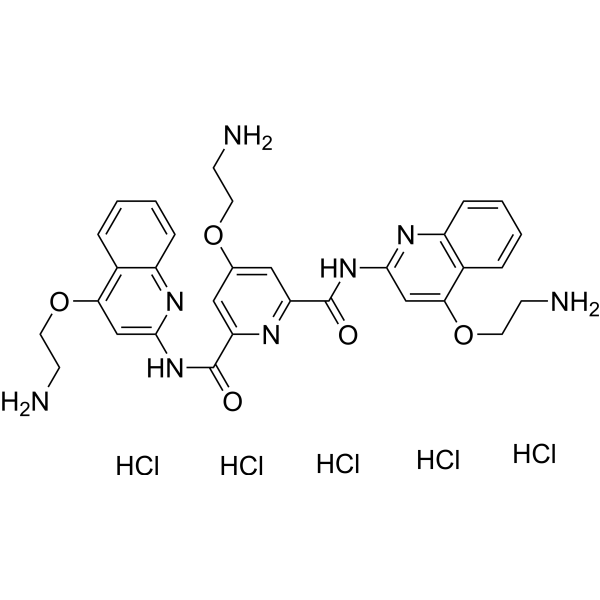 0 ImagesSynonyms: RR82 hydrochloridePyridostatin (RR82) hydrochloride is a G-quadruplex DNA stabilizing agent (Kd=490 nM) and can target DNA and RNA G4s in cells. Pyridostatin hydrochloride promotes growth arrest in human cancer cells by inducing replication- and transcription-dependent DNA damage. Pyridostatin hydrochloride targets the proto-oncogene Src. Pyridostatin hydrochloride reduced SRC protein levels and SRC-dependent cellular motility in human breast cancer cells.
-
TMPyP4 tosylate
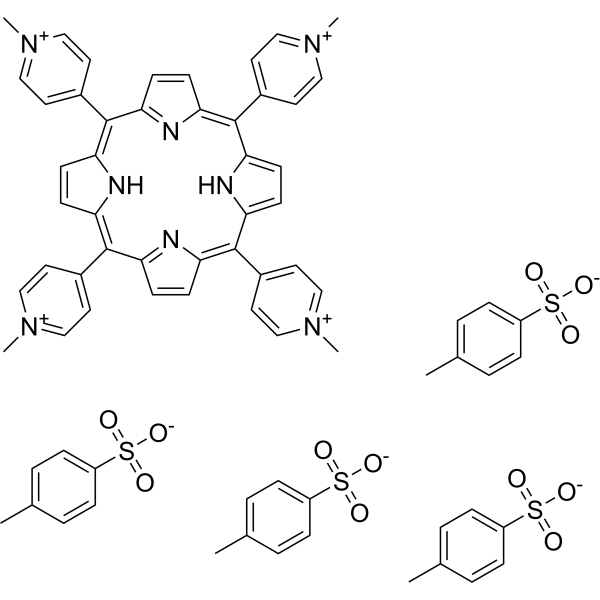 0 ImagesSynonyms: TMP 1363TMPyP4 tosylate (TMP 1363) is a quadruplex-specific ligand. TMPyP4 tosylate inhibits the interaction between G-quadruplexes and IGF-1. TMPyP4 tosylate is a telomerase inhibitor and inhibits cancer cells proliferation. TMPyP4 tosylate is also a stabilizer of nucleic acid secondary structure and an acetylcholinesterase inhibitor. Besides, TMPyP4 tosylate has antiviral activity against SARS-CoV-2.
-
Phen-DC3 Trifluoromethanesulfonate
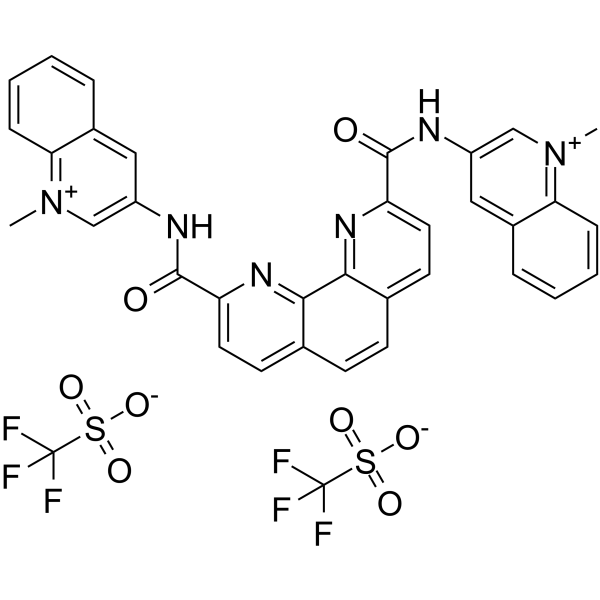 0 ImagesSynonyms: Phen-DC3 TriflatePhen-DC3 Trifluoromethanesulfonate is a bisquinolinium G-quadruplex (G4) ligand. Phen-DC3 Trifluoromethanesulfonate selectively binds to and stabilizes the hybrid quadruplex-duplex hybrid (QDH) derived from the PIM1 promoter. Phen-DC3 Trifluoromethanesulfonate also binds to the c-myc promoter Pu24T G4 via extensive π-stacking, and induces polymerase stalling at α-synuclein DNA and RNA G4 sequences. Phen-DC3 Trifluoromethanesulfonate downregulates LPS (HY-D1056)-induced TNFRSF21, RIPK3 and p-MLKL in VECs, and ameliorates CLP-induced pulmonary vascular leakage in septic rats. Phen-DC3 Trifluoromethanesulfonate can be used in studies related to neurodegenerative diseases and sepsis-associated vascular injury.
-
Carboxy pyridostatin trifluoroacetate salt
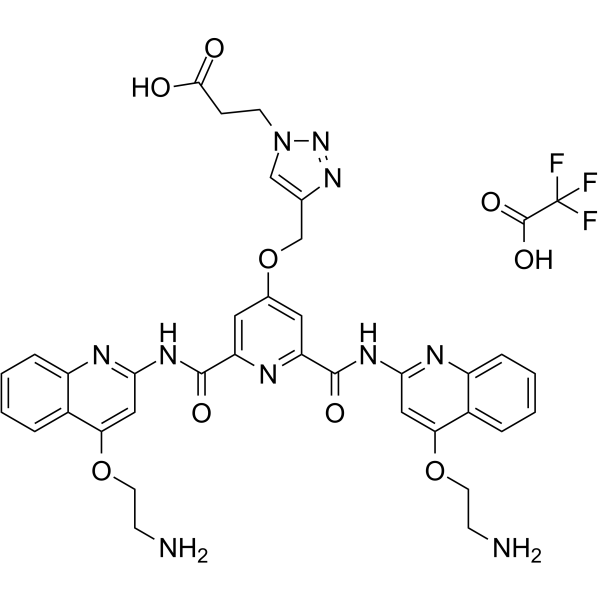 0 ImagesCarboxy pyridostatin trifluoroacetate salt is a G-quadruplex ligand. Carboxy pyridostatin trifluoroacetate salt has a highly molecular specificity to RNA on DNA G4s and reduces ATF-5 protein. Carboxy pyridostatin trifluoroacetate salt reduces cell proliferation and hinders stress granule (SG) formation.
-
N-Methylmesoporphyrin IX
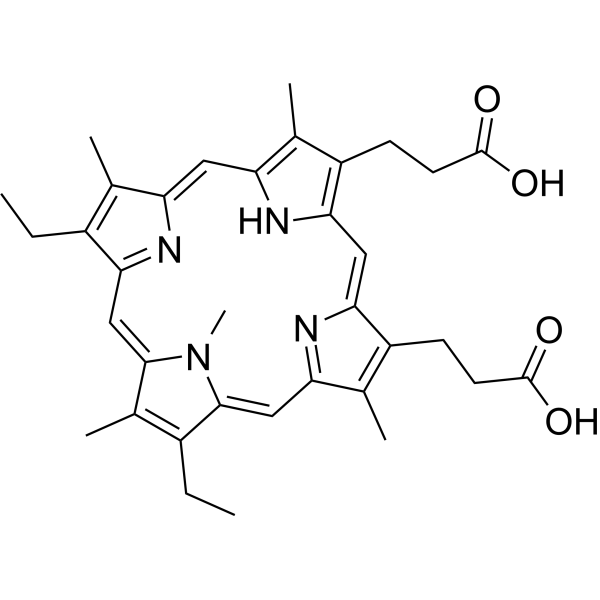 0 ImagesN-Methylmesoporphyrin IX (NMM), a widely used G-quadruplex DNA specific fluorescent binder, is an efficient probe for monitoring Aβ fibrillation. N-Methylmesoporphyrin IX is an in situ inhibitor and an ex situ monitor for Aβ amyloidogenesis both in vitro and in cells. N-Methylmesoporphyrin IX is sensitive to G-quadruplexes DNA but has no response to duplexes, triplexes and single-stranded forms DNA. N-Methylmesoporphyrin IX is nonfluorescent alone or in monomeric Aβ environments, but emits strong fluorescence through stacking with the Aβ assemblies.
-
Anticancer agent 309
 0 ImagesCat. No.: HY-182055Anticancer agent 309 (Compound HZ-1) is an anticancer agent and G-quadruplex binder, with Kd values of 2.46 μM and 1.61 μM for c-Myc G4 and KRAS G4, respectively. Anticancer agent 309 promotes the formation of intranuclear G4. Anticancer agent 309 shows higher selectivity for parallel G4 than for non-parallel G4. Anticancer agent 309 inhibits the NRF2 signaling pathway and reduces the expression of XCT and GPX4. Anticancer agent 309 induces Ferroptosis, Apoptosis and immunogenic cell death in cells. Anticancer agent 309 exerts antitumor efficacy against breast cancer. Anticancer agent 309 is applicable for the research of breast cancer.
-
G-quadruplex ligand 6
 0 ImagesCat. No.: HY-183984G-quadruplex ligand 6 is a G-quadruplex ligand targeting the c-MYC promoter with anti-tumor activity. G-quadruplex ligand 6 forms a non-covalent complex with Pu22, a G-quadruplex model of the c-MYC promoter, with a microscopic dissociation constant Kd of 0.202 μM. G-quadruplex ligand 6 selectively inhibits tumor cell proliferation, blocks the binding of transcription factors by stabilizing the G-quadruplex in the c-MYC promoter, and thereby regulates the expression of proto-oncogenes. G-quadruplex ligand 6 can be used in the research of pancreatic cancer, non-small cell lung cancer, colorectal cancer, and triple-negative breast cancer.
-
PhpC
 0 ImagesCat. No.: HY-164421Purity: 98.90%PhpC is a G-quadruplex (G4)-DNA/RNA disruptor. PhpC disrupts DNA and RNA G4 structures and promotes G4 helicase activity. PhpC effectively enhancing the activity of Taq polymerase. PhpC modulates G-quadruplexs (G4s) both in vitro and in cells.
-
Braco-19
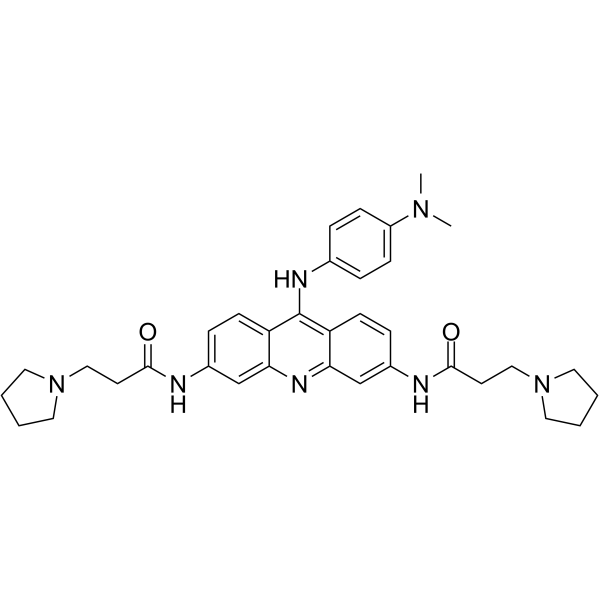 0 ImagesBraco-19 is a potent telomerase/telomere inhibitor, preventing the capping and catalytic action of telomerase. Braco-19 acts as G-quadruplex (GQ) binding ligand, stabilizing G-quadruplexes formation at the 3V telomeric DNA overhang and produce rapid senescence or selective cell death. Braco-19 is also a HAdV virus replication inhibitor.
-
SOP1812
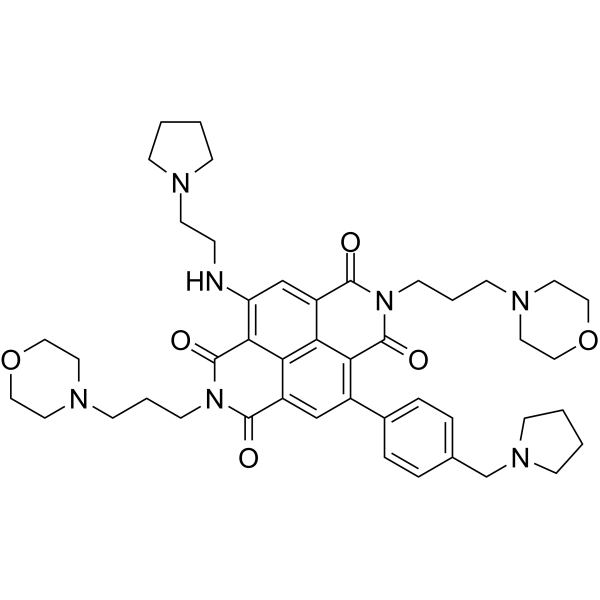 0 ImagesSynonyms: QN-302SOP1812 (QN-302) is a naphthalene diimide (ND) derivative with anti-tumor activity. SOP1812 binds to quadruplex arrangements (G4s), and down-regulates several cancer gene pathways. SOP1812 shows great affinity to hTERT G4 and HuTel21 G4 with KD values of 4.9 and 28.4 nM, respectively. SOP1812 can be used for the research of cancer.
-
Pyridostatin TFA
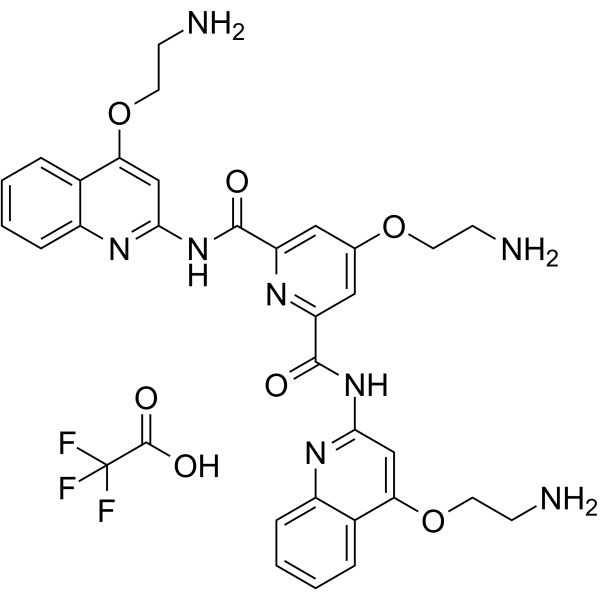 0 ImagesSynonyms: RR82 TFAPyridostatin (RR82) TFA is a G-quadruplex (G4) inducer/stabilizer with a Kd of 490 nM. Pyridostatin TFA also acts as an inhibitor of Zika virus (ZIKV) NS2B-NS3 protease, with an IC50 of 11.0 μM. Pyridostatin TFA interacts with G-quadruplex structures, regulates the expression of SRC and SUB1, and induces replication- and transcription-dependent DNA damage, growth arrest, and genomic instability. Pyridostatin TFA exhibits antiproliferative and antiviral activities. Pyridostatin TFA can be used in studies related to breast cancer, cervical cancer, and Zika virus infection.
-
360A iodide
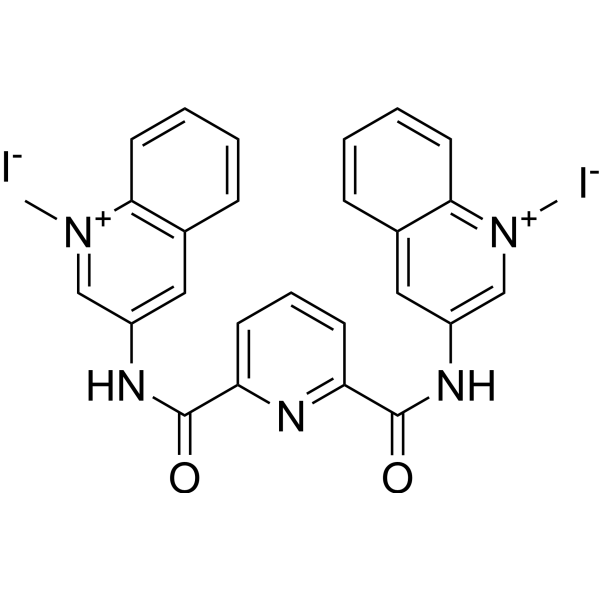 0 ImagesSynonyms: 360 A iodide360A iodide is a selective stabilizer of G-quadruplex, and also inhibits telomerase activity with an IC50 of 300 nM for telomerase in TRAP-G4 assay.
-
Nemorubicin
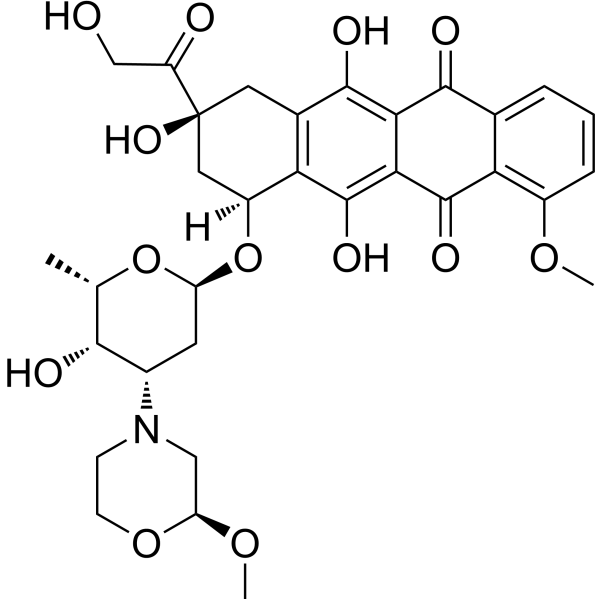 0 ImagesCat. No.: HY-15794CAS No.: 108852-90-0Synonyms: Methoxymorpholinyl doxorubicin; FCE 23762; PNU 152243Nemorubicin (Methoxymorpholinyl doxorubicin) is a Doxorubicin derivative with potent antitumor activity. Nemorubicin is highly cytotoxic to a variety of tumor cell lines presenting a multidrug-resistant phenotype. Nemorubicin not only intercalate into the duplex DNA, but also result in significant ligands for G-quadruplex DNA segments, stabilizing their structure. Nemorubicin requirs an intact nucleotide excision repair (NER) system to exert its activity.
-
2-Di-1-ASP
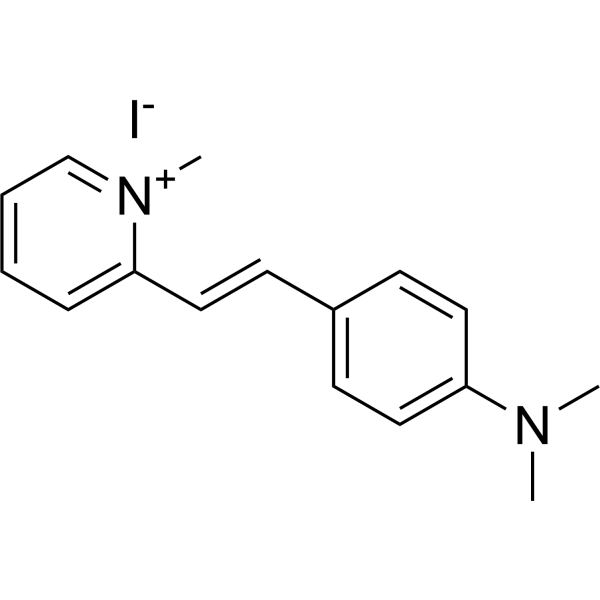 0 Images2-Di-1-ASP (DASPI; Compound 18a) is a mono-stryryl dye, and widely used as mitochondrial stain and groove-binding fluorescent probes for double-stranded DNA. 2-Di-1-ASP is selective for G-quadruplex (G4) and double-stranded DNA.
-
BMVC
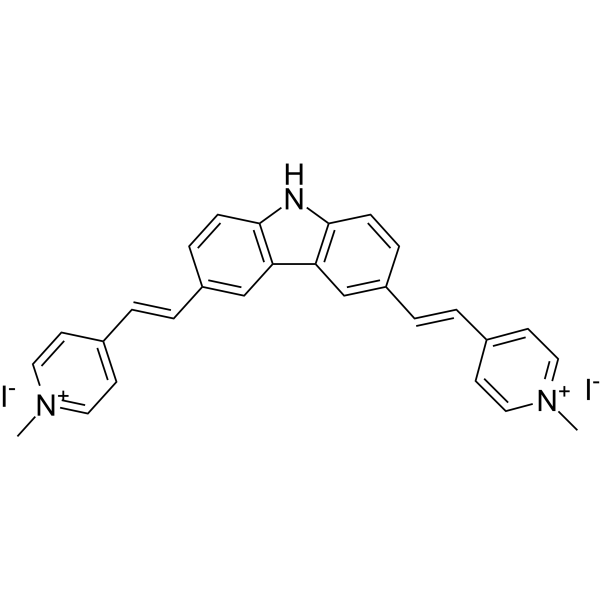 0 ImagesBMVC is a potent G-quadruplex (G4) stabilizer and a selective telomerase inhibitor with an IC50 of ~0.2 μM. BMVC inhibits Taq DNA polymerase with an IC50 of ~2.5 μM. BMVC increases the melting temperature of G4 structure of telomere and accelerates telomere length shortening. Anticancer activities.
-
Pyridostatin trihydrochloride
 0 ImagesSynonyms: RR82 trihydrochloridePyridostatin (RR82) trihydrochloride is a G-quadruplex (G4) inducer/stabilizer with a Kd of 490 nM. Pyridostatin trihydrochloride also acts as an inhibitor of Zika virus (ZIKV) NS2B-NS3 protease, with an IC50 of 11.0 μM. Pyridostatin trihydrochloride interacts with G-quadruplex structures, regulates the expression of SRC and SUB1, and induces replication- and transcription-dependent DNA damage, growth arrest, and genomic instability. Pyridostatin trihydrochloride exhibits antiproliferative and antiviral activities. Pyridostatin trihydrochloride can be used in studies related to breast cancer, cervical cancer, and Zika virus infection.
-
N-Methylmesoporphyrin IX (solution)
 0 ImagesCat. No.: HY-DY1075CAS No.: 142234-85-3N-Methylmesoporphyrin IX (NMM) (solution) , a widely used G-quadruplex DNA specific fluorescent binder, is an efficient probe for monitoring Aβ fibrillation. N-Methylmesoporphyrin IX is an in situ inhibitor and an ex situ monitor for Aβ amyloidogenesis both in vitro and in cells. N-Methylmesoporphyrin IX is sensitive to G-quadruplexes DNA but has no response to duplexes, triplexes and single-stranded forms DNA. N-Methylmesoporphyrin IX is nonfluorescent alone or in monomeric Aβ environments, but emits strong fluorescence through stacking with the Aβ assemblies.
Solvent and concentration: DMSO: 2 mM
-
Carboxypyridostatin
 0 ImagesCarboxypyridostatin is a G-quadruplex ligand. Carboxypyridostatin has a highly molecular specificity to RNA on DNA G4s and reduces ATF-5 protein. Carboxypyridostatin reduces cell proliferation and hinders stress granule (SG) formation.
-
Pyridostatin
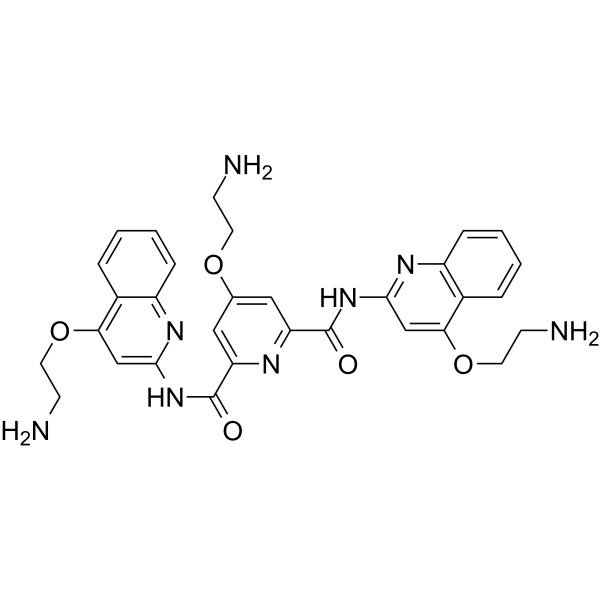 0 ImagesCat. No.: HY-15176CAS No.: 1085412-37-8Synonyms: RR82Pyridostatin (RR82) is a G-quadruplex DNA stabilizing agent (Kd=490 nM) and can target DNA and RNA G4s in cells. Pyridostatin promotes growth arrest in human cancer cells by inducing replication- and transcription-dependent DNA damage. Pyridostatin targets the proto-oncogene Src. Pyridostatin reduced SRC protein levels and SRC-dependent cellular motility in human breast cancer cells.
-
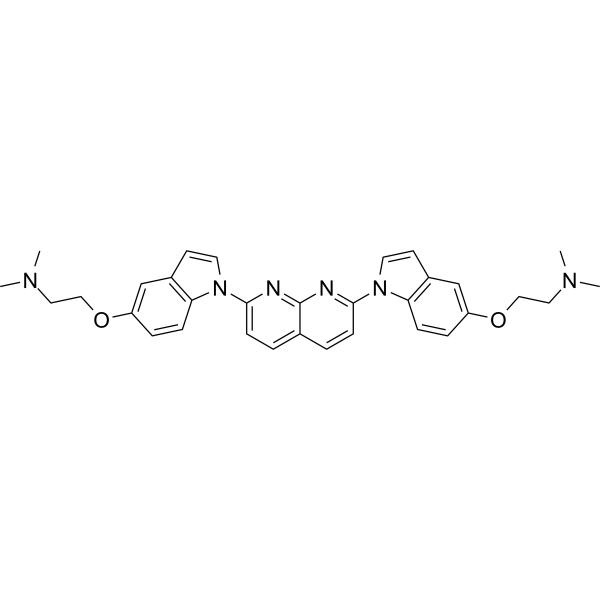
L5-DA
 0 ImagesL5-DA is a G-quadruplex (G4) ligand and selectively stabilized for G4s over ds26. L5-DA exhibits significant cytotoxicity against HeLa cells (IC50=4.3 μM). L5-DA stabilizes G4s in HeLa cells, induces apoptosis, and cell cycle arrest.



