



Orphan GPCR
Rrphan G protein-coupled receptor
Orphan GPCRs (orphan G protein-coupled receptors) are receptors lacking endogenous ligands. GPCRs are th largest family of transmembrane receptors and have over the past decades developed into highly successful drug targets. However, many GPCRs are still orphans and the function is enigmatic. Orphan GPCRs account for ∼30% of the ∼400 non-olfactory human GPCRs. In terms of orphan GPCR ligands, initial efforts focused on identifying novel neuropeptides since orphan GPCR expression was located primarily in the brain. G protein coupling of unliganded orphan GPCRs—GPR22, GPR137b, GPR88, GPR156, GPR158, GPR179, GPRC5D and GPRC6A—with pathophysiological association were accurately detected using luciferase reporter assays[1][2].
参考文献:
- [1]. Wang T, et, al. Orphan GPCR GPRC5C Facilitates Angiotensin II-Induced Smooth Muscle Contraction . Circ Res. 2024 May 10;134(10):1259-1275. [Content Brief]
- [2]. Jobe A, et, al. Orphan G protein-coupled receptors: the ongoing search for a home. Front Pharmacol. 2024 Feb 29:15:1349097. [Content Brief]
All Product Categories
-
Orphan GPCR 関連製品 (27)
関連製品 (27)

- 1
- 2
-
AAA
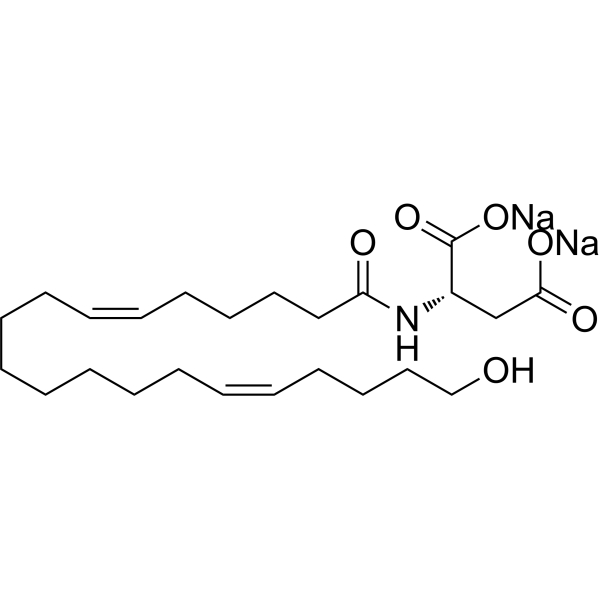 0 Images製品番号: HY-160187純度: 99.52%AAA is an orally active 20-HETE receptor antagonist. AAA exerts antihypertensive and organoprotective effects. AAA blocks 20-HETE prohypertensive actions, suppresses intrarenal and circulating angiotensin II levels, and interferes with renin-angiotensin system interactions. AAA attenuates development of, and reverses established, ANG II (HY-13948)-dependent malignant hypertension. AAA reduces albuminuria, glomerulosclerosis, and cardiac hypertrophy linked to malignant hypertension. AAA can be used for the research of malignant hypertension.
-
YL-365
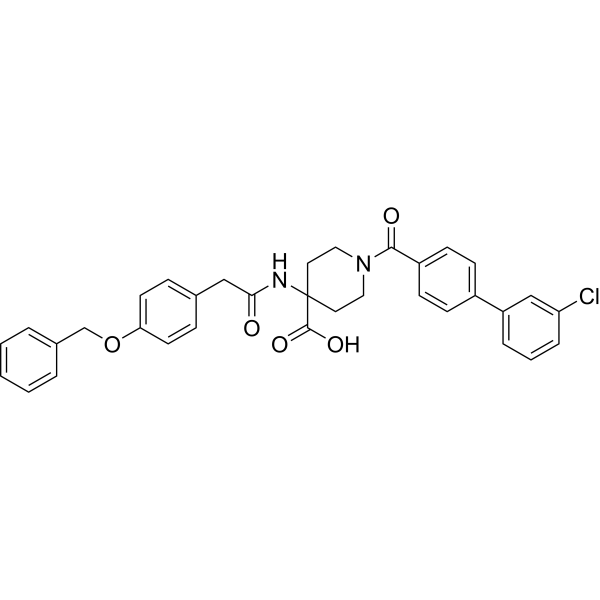 0 ImagesYL-365 is a potent and selective GPR34 antagonist with an IC50 of 17 nM. YL-365 binds to a portion of the orthosteric binding pocket of GPR34 and induces allosteric changes that stabilize the receptor in an inactive conformation. YL-365 down-regulates expression of the proinflammatory gene iNOS in M1 microglia and suppresses proinflammatory responses. YL-365 reduces mechanical allodynia in a dose-dependent manner in a mouse model of neuropathic pain. YL-365 can be used for the research of neuropathic pain.
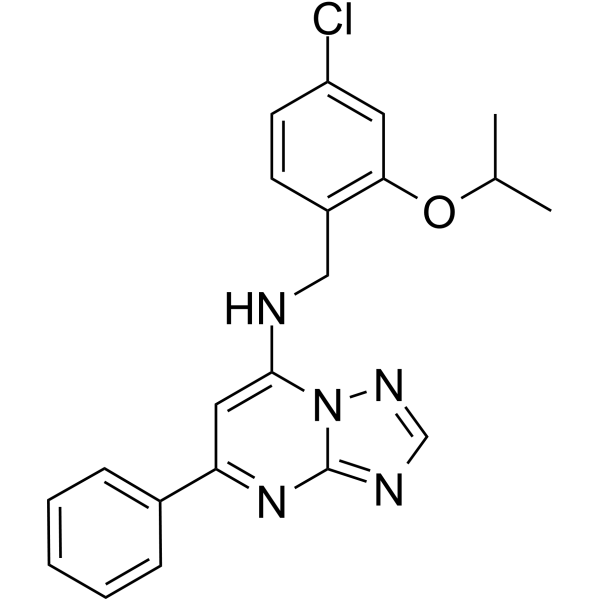
-
Tryptophan-cholic acid
 0 Images別名: Trp-CATryptophan-cholic acid (Trp-CA) is a microbial amino acid-conjugated bile acid that acts as an endogenous ligand and agonist (EC50=9.6 μM) for the orphan G protein-coupled receptor (GPCR) MRGPRE (Mas-related G protein-coupled receptor family member E). Tryptophan-cholic acid is orally effective but has poor oral absorption and does not cross the blood-brain barrier. Tryptophan-cholic acid promotes the secretion of glucagon-like peptide GLP-1, thereby improving glucose tolerance in diabetic mice. Tryptophan-cholic acid improves glucose tolerance, promotes insulin secretion, and alleviates high-fat diet-induced hepatic steatosis without causing pruritus side effects. Tryptophan-cholic acid is primarily used in research on type 2 diabetes (T2D).
-
GPR3 agonist-2
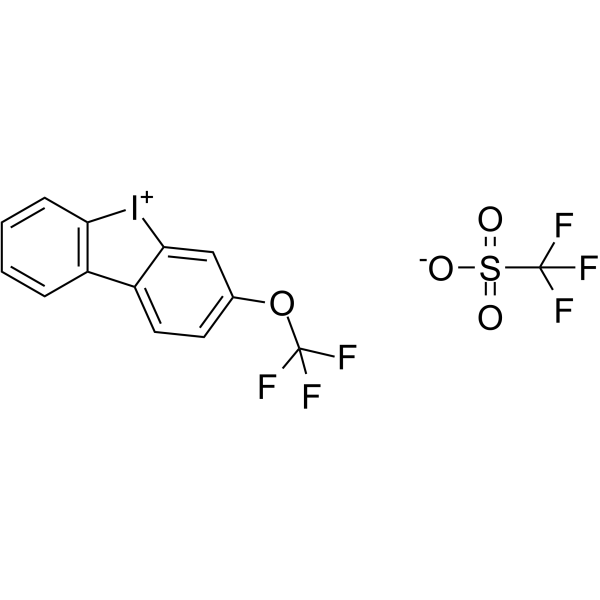 0 ImagesGPR3 agonist-2(compound 32) is a potent full agonist of G protein-coupled receptor 3, with the IC50of 260 nM.
-
Imidazol-1-yl-acetic acid
(Imidazol-1-yl-acetic acid)
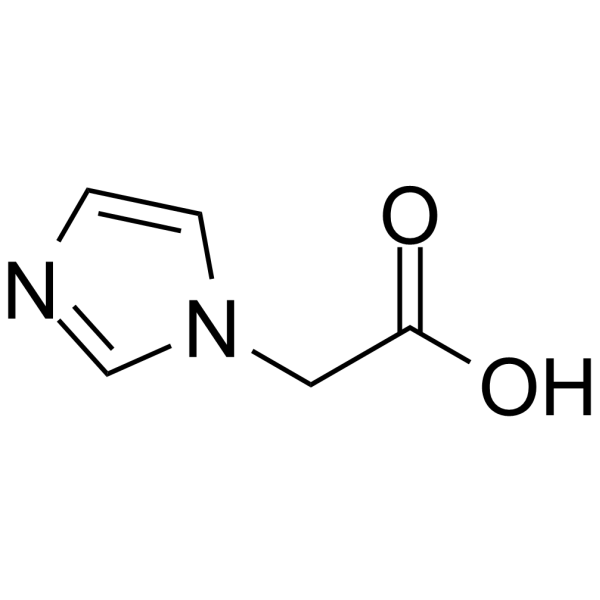 0 Images別名: 1-イミダゾール酢酸; 2-(1-イミダゾリル)酢酸Imidazol-1-yl-acetic acid is a BRS-3 agonist that mediates anorectic effects through activation of orphan G protein-coupled receptors (Orphan GPCR) in peripheral tissues; it also serves as a green, water-soluble, recyclable bifunctional organocatalyst for transformations such as Biginelli multicomponent reactions and epoxide ring opening. Imidazol-1-yl-acetic acid is used in the study of obesity.
-
2-(Phenylethynyl)-ATP ammonium
 0 Images製品番号: HY-107752ACAS 番号: 851191-73-62-(Phenylethynyl)-ATP ammonium is a selective and potent GPR17 agonist with an EC50 of 35 pM. 2-(Phenylethynyl)-ATP ammonium also shows weak activation of P2Y Receptor. 2-(Phenylethynyl)-ATP ammonium can be used for the research of neurological disease.
-
GPR3 inverse agonist-1
 0 Images製品番号: HY-183657GPR3 inverse agonist-1 is a GPR3 inverse agonist with low micromolar potency in conformational analysis. GPR3 inverse agonist-1 inhibits GPR3-dependent Gs activity in HEK293A cells with an EC50 of 250 nM, and exhibits an EC50 of 2 μM in cAMP assays. GPR3 inverse agonist-1 induces concentration-dependent changes in BRET signals in GPR3 conformational biosensors (EC50 = 5 μM), reduces basal Gs activity downstream of GPR3, and competes for binding sites with the GPR3 agonist DPI (HY-100965). GPR3 inverse agonist-1 can be used in research related to Alzheimer's disease.
-
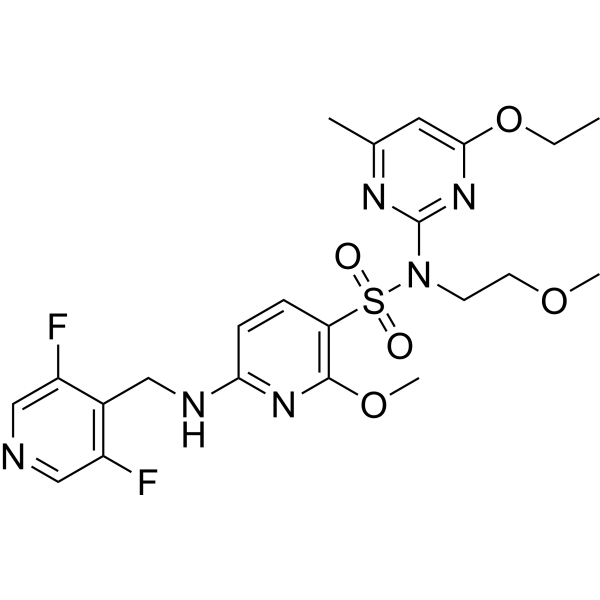
GPR34 receptor antagonist 3
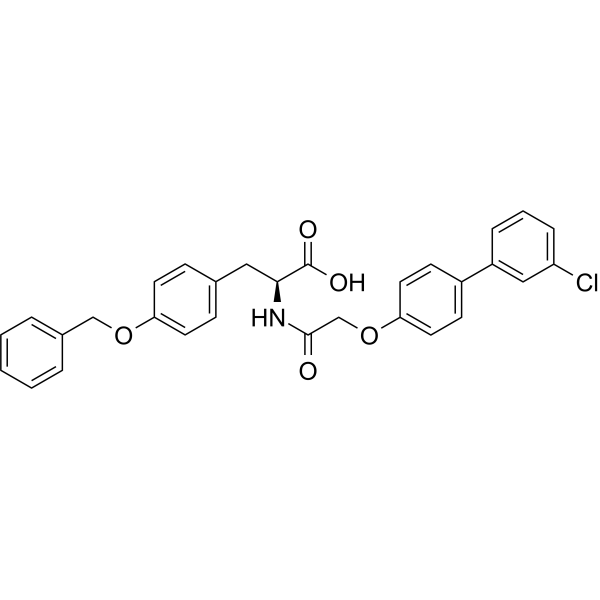 0 ImagesGPR34 receptor antagonist 3 (Compound 5e) is a class of GRP34 antagonists, IC50 is 0.680 μM. GPR34 receptor antagonist 3 inhibited ERK1/2 phosphorylation induced by lysophosphatidylserine in a dose-dependent way without obvious cytotoxicity. GPR34 receptor antagonist 3 shows antisensory activity in mouse neuropathic pain model .
-
PT-91
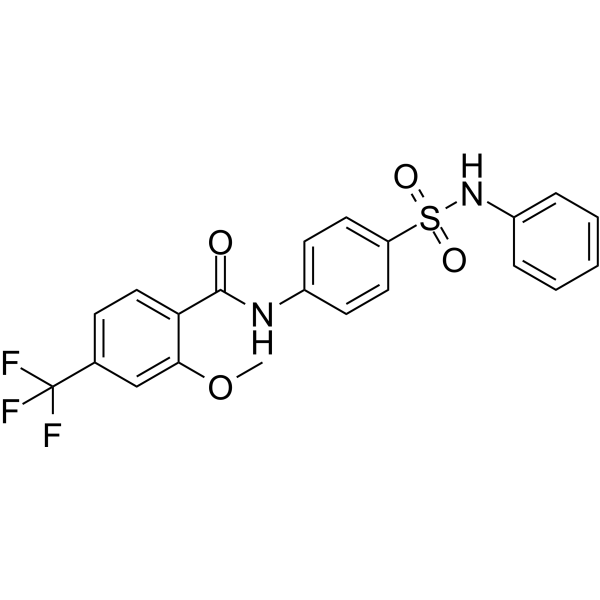 0 ImagesPT-91 is an agonist of GPR27. PT-91 exhibits high metabolic stability and brain exposure in mice.
-
CID 1375606
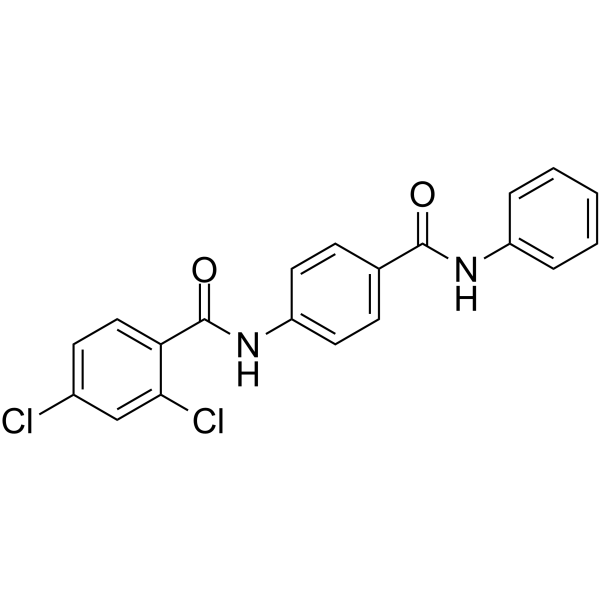 0 ImagesCID 1375606 is a surrogate agonist of orphan G protein-coupled receptor GPR27.
-
Gue1654
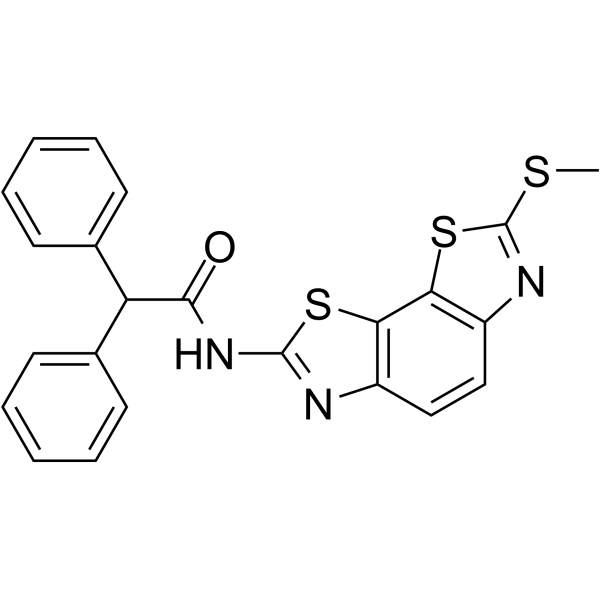 0 ImagesGue1654 is a modulator of OXE-R. Gue1654 inhibits Gβγ but not Gα signaling triggered upon activation of Gα(i)-βγ by the chemoattractant receptor OXE-R. Gue1654 does not interfere nonspecifically with signaling directly at or downstream of Gβγ.
-
Vemzatatug
 0 Images製品番号: HY-P991726CAS 番号: 3035714-52-1Vemzatatug is a humanized IgG1κ monoclonal antibody inhibitor targeting GPRC5D. Vemzatatug has an antitumor activity. Vemzatatug can be used for cancers like multiple myeloma (MM) research.
-
SAR-446523
 0 Images製品番号: HY-P991587純度: 99.76%SAR-446523 is a humanized IgG1 monoclonal antibody inhibitor targeting GPRC5D. SAR-446523 significantly induces antibody-dependent cell-mediated cytotoxicity (ADCC). SAR-446523 has potent antitumor activity with improvement of mouse survival in NK humanized NOG huIL15 transgenic mice model bearing MM cells. SAR-446523 can be used for multiple myeloma (MM) research.
-
Anti-Mouse F4/80 Antibody (Cl:A3-1)
 0 Images製品番号: HY-P991805Anti-Mouse F4/80 Antibody (Cl:A3-1) reacts with the mouse F4/80. The F4/80 receptor is generally considered a murine pan-macrophage marker. Recommend Isotype Controls: Rat IgG2b kappa, Isotype Control (HY-P990682).
-
Succinate calcium
 0 Images製品番号: HY-W693142CAS 番号: 140-99-8Succinate calcium is a key intermediate product of the citric acid cycle (tricarboxylic acid cycle). Succinate calcium can act as a specific ligand for the G protein-coupled receptor GPR91. Succinate calcium can increase the amplitude of calcium transient in cardiac muscle cells and accelerate the decay rate of calcium transient. Succinate calcium can induce myocardial apoptosis.
-
GPR61 Inverse agonist 3
 0 Images製品番号: HY-182271GPR61 Inverse agonist 3 is a selective and brain-penetrant GPR61 inverse agonist with human IC50 of 4.0 nM, mouse IC50 of 8.8 nM, human Ki of 0.34 nM, mouse Ki of 1.1 nM. GPR61 Inverse agonist 3 disrupts GPR61-Gαs protein interactions to abolish GPR61 constitutive activity. GPR61 Inverse agonist 3 moderately inhibits GABAA chloride channel and PDE3A1 with IC50 values of 4.6 and 8.9 μM. GPR61 Inverse agonist 3 shows no functional effect on food intake in adult mice co-administered with a pan-CYP inhibitor. GPR61 Inverse agonist 3 can be used for the research of cachexia/sarcopenia.
-
Phoenixin-14 TFA
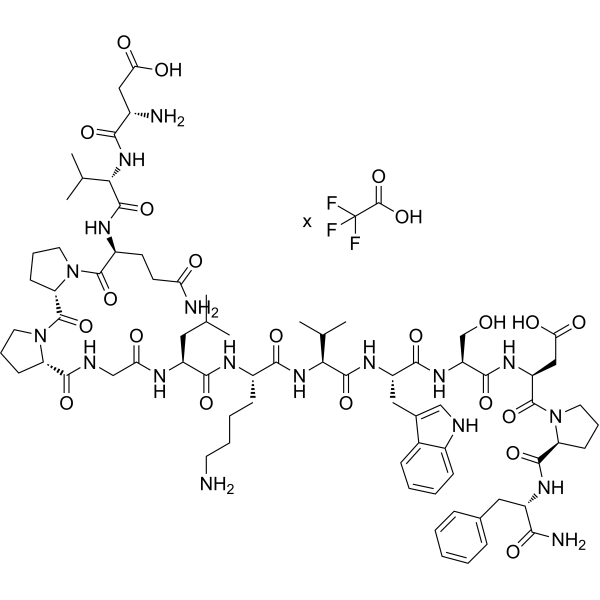 0 Images製品番号: HY-P5762A別名: PNX-14 TFAPhoenixin-14 (PNX-14) TFA is an endogenous neuropeptide with multiple biological activities, and serves as the endogenous ligand of GPR173. Phoenixin-14 TFA reduces ROS production by inhibiting the HMGB1/TLR4/MyD88/NF-κB signaling axis, thereby exerting antioxidant and mitochondrial protective effects. Phoenixin-14 TFA inhibits FOXO3 phosphorylation by upregulating SIRT3 expression, suppresses apoptosis, and improves myocardial systolic/diastolic function. Phoenixin-14 TFA resists ferroptosis by activating the ATF4/SLC7A11/GPX4 axis; it activates ERK1/2 phosphorylation via GPR173. Phoenixin-14 TFA can be used in researches on neuroprotection, diabetes, cardiomyopathy, reproductive protection and so on.
-
GPR3 inverse agonist-1 TFA
 0 Images製品番号: HY-183657AGPR3 inverse agonist-1 TFA is a GPR3 inverse agonist with low micromolar potency in conformational analysis. GPR3 inverse agonist-1 TFA inhibits GPR3-dependent Gs activity in HEK293A cells with an EC50 of 250 nM, and exhibits an EC50 of 2 μM in cAMP assays. GPR3 inverse agonist-1 TFA induces concentration-dependent BRET signal changes in GPR3 conformational biosensors (EC50 = 5 μM), reduces basal Gs activity downstream of GPR3, competes for binding sites with the GPR3 agonist DPI (HY-100965). GPR3 inverse agonist-1 TFA can be used in research related to Alzheimer's disease.
- 1
- 2



