



Orphan GPCR Antagonist
-
AAA
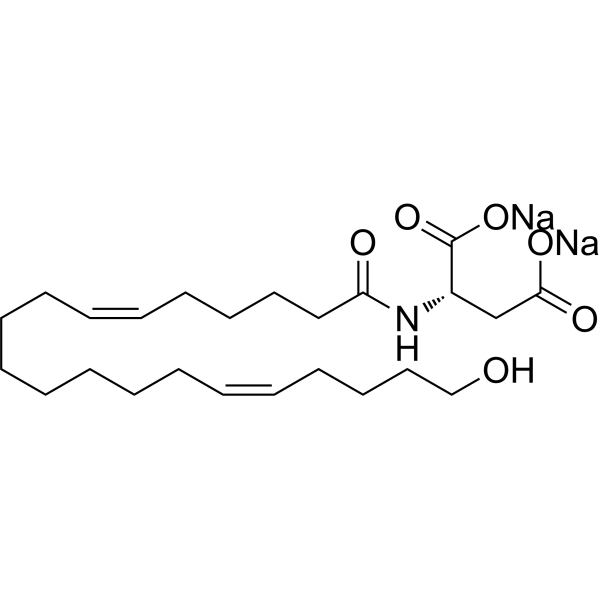 0 ImagesCat. No.: HY-160187Purity: 99.52%
AAA is an orally active 20-HETE receptor antagonist. AAA exerts antihypertensive and organoprotective effects. AAA blocks 20-HETE prohypertensive actions, suppresses intrarenal and circulating angiotensin II levels, and interferes with renin-angiotensin system interactions. AAA attenuates development of, and reverses established, ANG II (HY-13948)-dependent malignant hypertension. AAA reduces albuminuria, glomerulosclerosis, and cardiac hypertrophy linked to malignant hypertension. AAA can be used for the research of malignant hypertension.
-
YL-365
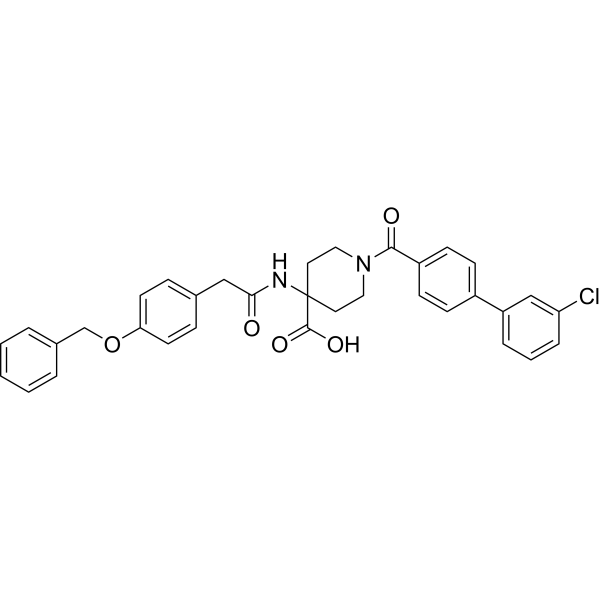 0 Images
YL-365 is a potent and selective GPR34 antagonist with an IC50 of 17 nM. YL-365 binds to a portion of the orthosteric binding pocket of GPR34 and induces allosteric changes that stabilize the receptor in an inactive conformation. YL-365 down-regulates expression of the proinflammatory gene iNOS in M1 microglia and suppresses proinflammatory responses. YL-365 reduces mechanical allodynia in a dose-dependent manner in a mouse model of neuropathic pain. YL-365 can be used for the research of neuropathic pain.
-
GPR34 receptor antagonist 3
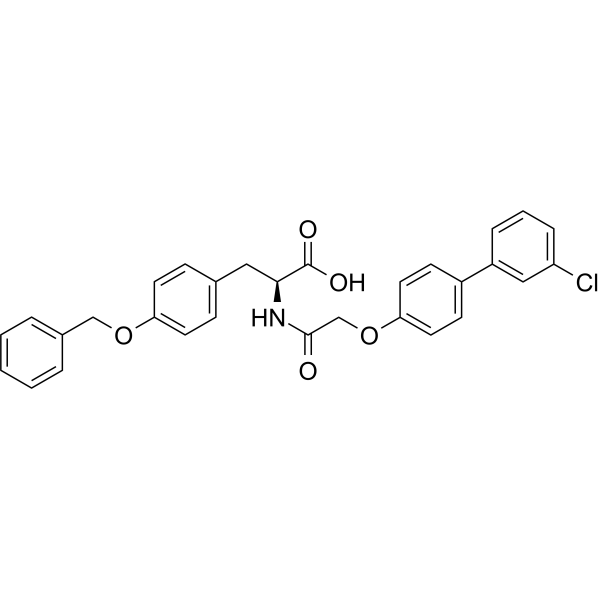 0 Images
GPR34 receptor antagonist 3 (Compound 5e) is a class of GRP34 antagonists, IC50 is 0.680 μM. GPR34 receptor antagonist 3 inhibited ERK1/2 phosphorylation induced by lysophosphatidylserine in a dose-dependent way without obvious cytotoxicity. GPR34 receptor antagonist 3 shows antisensory activity in mouse neuropathic pain model .
-
GPR61 Inverse agonist 2
 0 ImagesCat. No.: HY-182270
GPR61 Inverse agonist 2 is a selective GPR61 inverse agonist with human IC50 of 6.2 nM and mouse IC50 of 20 nM, human Ki of 0.21 nM, and mouse Ki of 0.72 nM. GPR61 Inverse agonist 2 binds to an induced intracellular allosteric pocket of GPR61, disrupts receptor-Gαs interactions, and abolishes GPR61 constitutive activity. GPR61 Inverse agonist 2 does not alter food intake or body weight in healthy mice. GPR61 Inverse agonist 2 can be used for the research of cachexia/sarcopenia.



