



Ras
Ras is the name given to a family of related proteins which is ubiquitously expressed in all cell lineages and organs. All Ras protein family members belong to a class of protein called small GTPase, and are involved in transmitting signals within cells. Ras is the prototypical member of the Ras superfamily of proteins, which are all related in 3D structure and regulate diverse cell behaviours. When Ras is 'switched on' by incoming signals, it subsequently switches on other proteins, which ultimately turn on genes involved in cell growth, differentiation and survival. As a result, mutations in ras genes can lead to the production of permanently activated Ras proteins. This can cause unintended and overactive signalling inside the cell, even in the absence of incoming signals. Because these signals result in cell growth and division, overactive Ras signaling can ultimately lead to cancer. The 3 Ras genes in humans (HRAS,KRAS, and NRAS) are the most common oncogenes in human cancer; Ras inhibitors are being studied as a treatment for cancer, and other diseases with Ras overexpression.
Ras Isoform Specific Products
All Product Categories
-
Ras Related Products (719)
Related Products (719)

-
Antibodies (36)
-
Ras Isoform Comparison
-
NSC 373981
 0 ImagesCat. No.: HY-182706CAS No.: 95455-02-0NSC 373981 is a CARD11 G4 stabilizer. NSC 373981 stabilizes the CARD11 G4 structure and inhibits CARD11 transcription in cells. NSC 373981 also inhibits BCL2 and MYC. NSC 373981 suppresses the transcription of KRAS and TERT. NSC 373981 exhibits anticancer activity against diffuse large B-cell lymphoma.
-
8-Br-cAMP-AM
 0 ImagesCat. No.: HY-134263CAS No.: 190522-24-88-Br-cAMP-AM is a cyclic adenosine monophosphate (cAMP) analog that activates two major signal transduction pathways in the heart by mimicking the effects of cAMP: protein kinase A (PKA) and guanosine nucleotide exchange factor (Epac), which is directly activated by cAMP. 8-Br-cAMP-AM can be used to study cardiac ischemia and reperfusion injury.
-
COTI-219
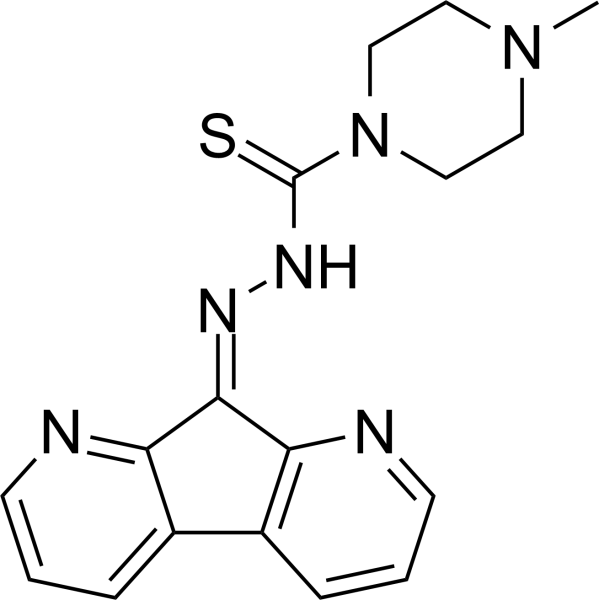 0 ImagesCat. No.: HY-143359CAS No.: 1039455-85-0COTI-219 is an orally active inhibitor of KRAS. COTI-219 has antitumor activity.
-
KRAS G12C inhibitor 48
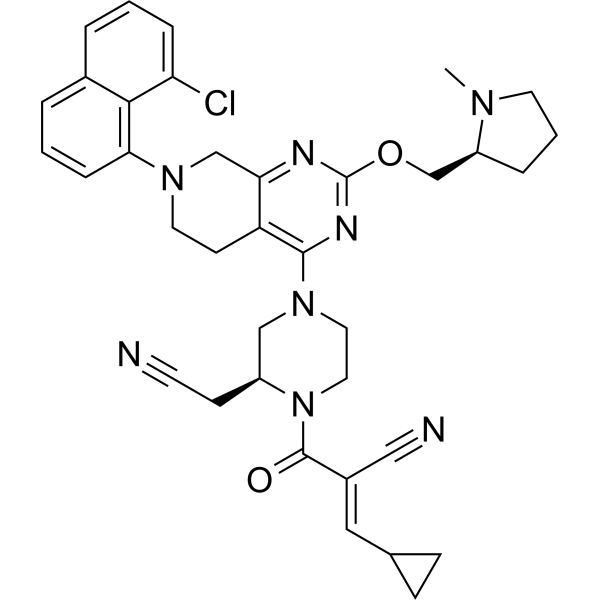 0 ImagesCat. No.: HY-146061CAS No.: 3033236-94-8KRAS G12C inhibitor 48 (compound 6e) is a potent KRAS G12C inhibitor with an IC50 of 639.91 nM. KRAS G12C inhibitor 48 (0-50 µM) shows anti-proliferative activity with IC50s of 0.796, 6.33, 16.14 µM for H358, H23, A549 cells, respectively.

-
NY0123
 0 ImagesCat. No.: HY-123795CAS No.: 1801911-70-5NY0123 is a EPAC1 inhibitor. NY0123 significantly inhibits the expression of EPAC1, phosphorylated AKT, phosphorylated ERK1/2 and phosphorylated VEGFR2. NY0123 inhibits angiogenesis and tumor growth of triple-negative breast cancer. NY0123 is applicable to relevant research on triple-negative breast cancer.
-
PHI-501
 0 ImagesCat. No.: HY-153858CAS No.: 2470433-36-2PHI-501 is a dual inhibitor targeting RAF/DDR. PHI-501 exhibits significant anti-proliferative effects in melanoma cell lines and significantly inhibits the colony formation of drug-resistant cells. PHI-501 strongly inhibits ERK and AKT phosphorylation. PHI-501 downregulates the gene sets in drug-resistant cells of TNFA-NFKB, IL6-JAK-STAT3, and KRAS signaling pathways as well as the epithelial-mesenchymal transition (EMT) signaling pathways. PHI-501 demonstrates significant anti-tumor effects in the SK-MEL3DR xenograft model. PHI-501 can be used for research on the problem of drug resistance in melanoma.
-
KRAS G12C inhibitor 59
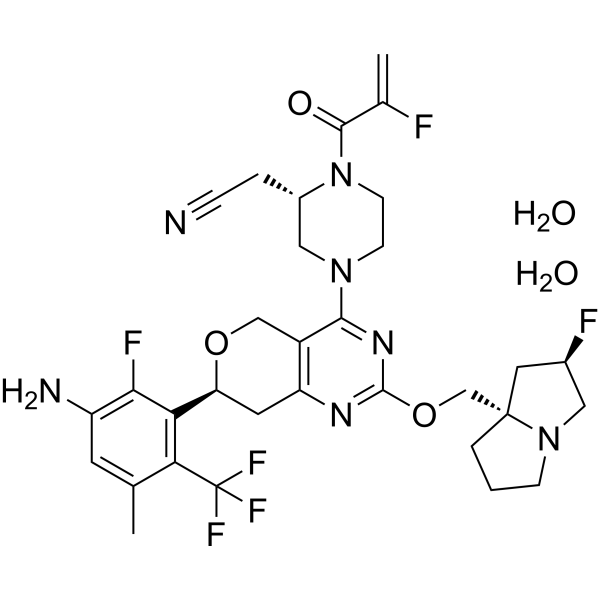 0 ImagesCat. No.: HY-153899CAS No.: 2914919-88-1KRAS G12C inhibitor 59 is a KRAS G12C inhibitor with anticancer effects (WO2023036282A1, compound II).
-
KRAS G12C inhibitor 23
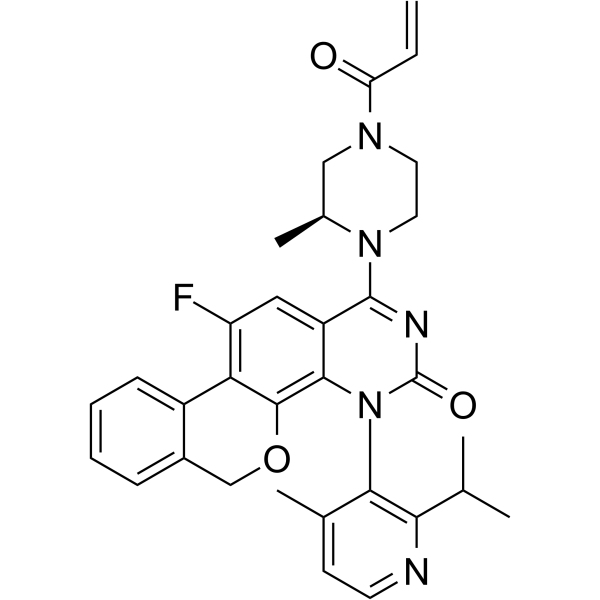 0 ImagesCat. No.: HY-145020CAS No.: 2735721-00-1KRAS G12C inhibitor 23 is a KRAS G12C inhibitor. KRAS G12C inhibitor 23 inhibits H358 cells with an IC50 of 491 nM (WO2021218939A1, compound 1).

-
KRAS G12C inhibitor 25
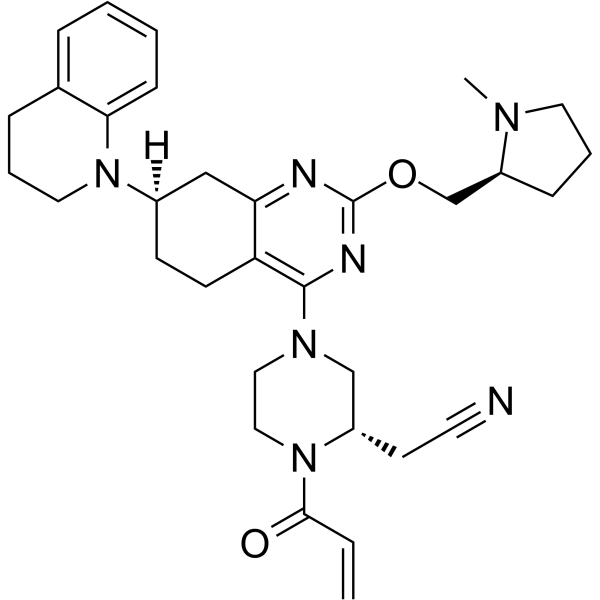 0 ImagesCat. No.: HY-145022CAS No.: 2734060-73-0KRAS G12C inhibitor 25 is a KRAS G12C inhibitor. KRAS G12C inhibitor 25 inhibits SOSl-assisted GDP/GTP exchanging activity of KRAS-G12C mutant (IC50=0.48 nM). From WO2021216770A1 compound 3.
-
KRAS G12D inhibitor 15
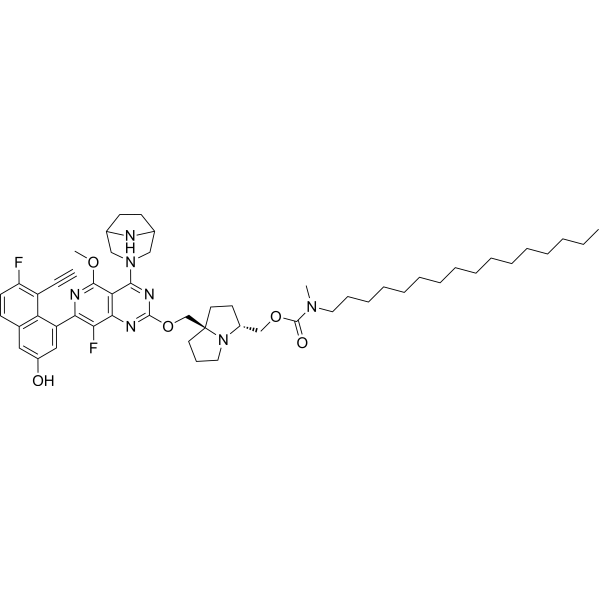 0 ImagesCat. No.: HY-147595CAS No.: 2763155-39-9KRAS G12D inhibitor 15 is a potent inhibitor of KRAS G12D. KRAS G12D inhibitor 15 has the potential for the research of various diseases or disorders, such as cancer or cancer metastasis (extracted from patent WO2022042630A1, compound 243). KRAS G12D inhibitor 15 is a click chemistry reagent, it contains an Alkyne group and can undergo copper-catalyzed azide-alkyne cycloaddition (CuAAc) with molecules containing Azide groups.
-
pan-KRAS-IN-17
 0 ImagesCat. No.: HY-170785CAS No.: 3026014-12-7pan-KRAS-IN-17 (Example 34) is an inhibitor of pan KRAS.
-
KRAS G12D inhibitor 11
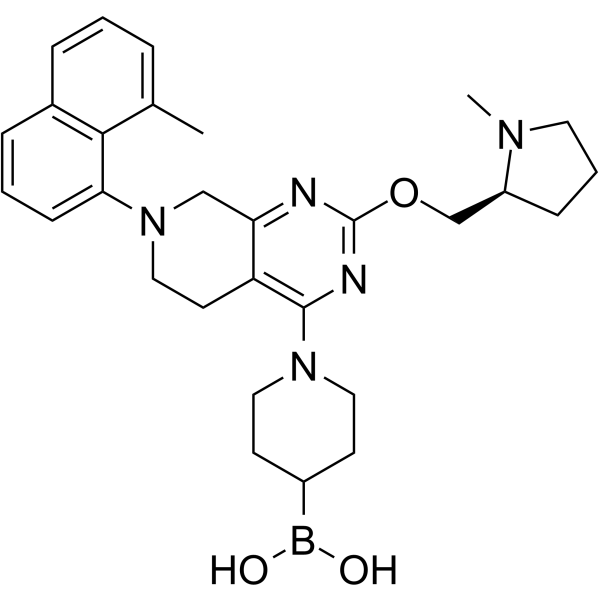 0 ImagesCat. No.: HY-143604CAS No.: 2648551-72-6KRAS G12D inhibitor 11 is a potent inhibitor of KRAS G12D. The Ras family of proteins is an important intracellular signaling molecule that plays an important role in growth and development. KRAS G12D inhibitor 11 has the potential for the research of KRAS G12D-mediated cancer (extracted from patent WO2021108683A1, compound 52).
-
Pan-RAS-IN-8
 0 ImagesCat. No.: HY-177762CAS No.: 3103594-37-9Pan-RAS-IN-8 (Page 152, third row, third from left to right) is a pan-RAS inhibitor. Pan-RAS-IN-8 blocks the binding of RAS to downstream effector molecules by forming a ternary complex, thereby inhibiting the activation of the MAPK and PI3K-AKT signaling pathways. Pan-RAS-IN-8 can be used for the research of cancer, inflammatory diseases and autoimmune diseases.
-
ST1072
 0 ImagesCat. No.: HY-133488CAS No.: 1402703-50-7ST1072 is an inhibitor of CerS4 and CerS6. ST1072 preferentially inhibits CerS6 over CerS4, and reduces the production of C16 ceramide. ST1072 impairs TCR-mediated N-RAS activation, ERK signaling pathway, and the colocalization of CD3/PKCθ. ST1072 decreases the production of IFN-γ as well as the migration of donor cells to target organs. ST1072 regulates immune cell populations and the expression of co-stimulatory molecules. ST1072 can be used in research related to colon cancer, cervical cancer, graft-versus-host disease, and hematologic malignancies.
-
HH0043
 0 ImagesCat. No.: HY-161714CAS No.: 2922069-42-7HH0043 (Compound 10f) is an orally active and potent SOS1 inhibitor, with IC50 value of 5.8 nM. HH0043 can be used for the research of cancer.
-
ISIS 2503
 0 ImagesCat. No.: HY-153488CAS No.: 149957-14-2ISIS-2503 is a 20-mer antisense oligonucleotide that inhibits Ha-Ras expression
-
pan-KRAS-IN-3
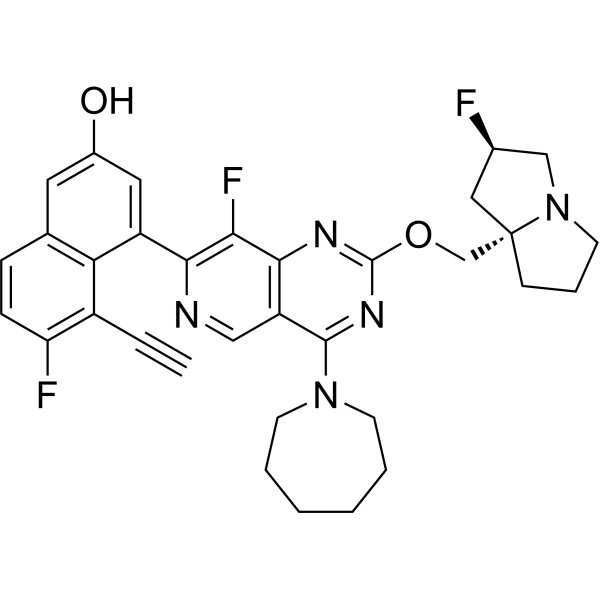 0 ImagesCat. No.: HY-156555CAS No.: 2875116-29-1pan-KRAS-IN-3 (Example 84) is a pan-KRAS inhibitor. pan-KRAS-IN-3 can be used for research of cancers. pan-KRAS-IN-3 is a click chemistry reagent, it contains an Alkyne group and can undergo copper-catalyzed azide-alkyne cycloaddition (CuAAc) with molecules containing Azide groups.
-
KRAS G12D-IN-37
 0 ImagesCat. No.: HY-183355KRAS G12D-IN-37 is a KRASG12D inhibitor. KRAS G12D-IN-37 shows antiproliferative activity against KRASG12D mutant tumor cells and minimal cytotoxicity toward normal cells. KRAS G12D-IN-37 binds stably to KRASG12D via hydrogen bond interactions with residues His 95, Arg 68, and Asp 12, and inhibits downstream ERK/AKT signaling pathways. KRAS G12D-IN-37 elevates ROS levels, induces apoptosis, disrupts mitochondrial membrane potential. KRAS G12D-IN-37 downregulates the level of anti-apoptotic protein Bcl-2, and upregulates the levels of pro-apoptotic proteins Bax and caspase 3. KRAS G12D-IN-37 can be used for the research of cancer, such as gastric adenocarcinoma and colorectal cancer.




