



Ras
Ras is the name given to a family of related proteins which is ubiquitously expressed in all cell lineages and organs. All Ras protein family members belong to a class of protein called small GTPase, and are involved in transmitting signals within cells. Ras is the prototypical member of the Ras superfamily of proteins, which are all related in 3D structure and regulate diverse cell behaviours. When Ras is 'switched on' by incoming signals, it subsequently switches on other proteins, which ultimately turn on genes involved in cell growth, differentiation and survival. As a result, mutations in ras genes can lead to the production of permanently activated Ras proteins. This can cause unintended and overactive signalling inside the cell, even in the absence of incoming signals. Because these signals result in cell growth and division, overactive Ras signaling can ultimately lead to cancer. The 3 Ras genes in humans (HRAS,KRAS, and NRAS) are the most common oncogenes in human cancer; Ras inhibitors are being studied as a treatment for cancer, and other diseases with Ras overexpression.
Ras Isoform Specific Products
All Product Categories
-
Ras Related Products (753)
Related Products (753)

-
Antibodies (36)
-
Ras Isoform Comparison
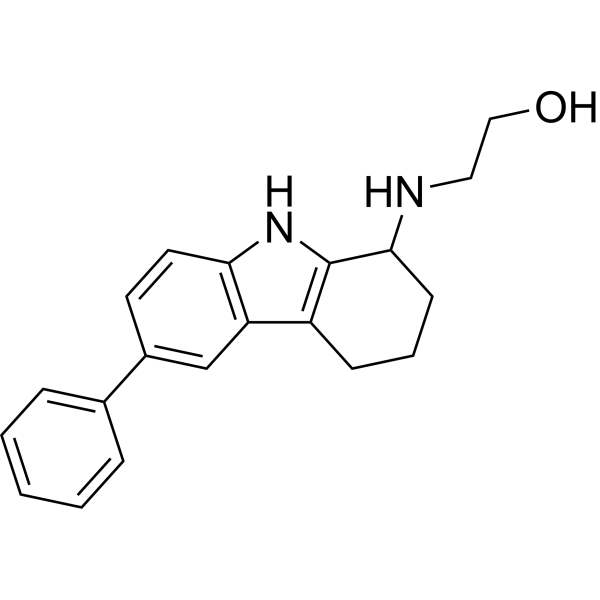
-
BI-3406
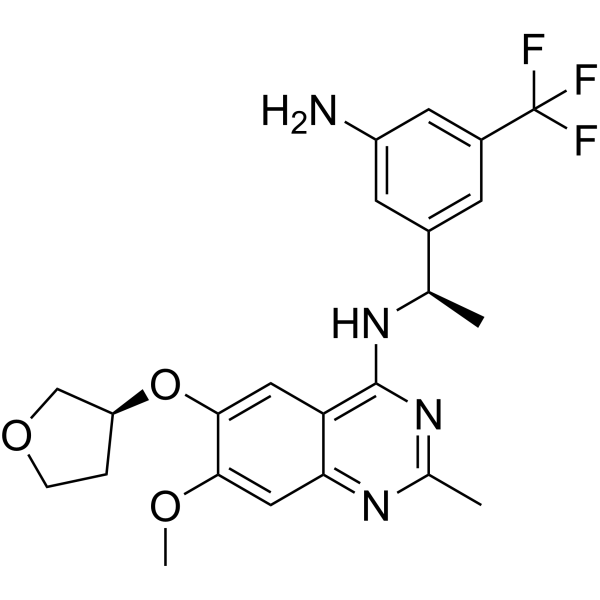 0 ImagesBI-3406 (compound I-6) is an orally active, highly potent and selective inhibitor of the interaction between KRAS and Son of Sevenless 1 (SOS1) with an IC50 of 6 nM. BI-3406 potently reduces the formation of GTP-loaded KRAS, and inhibits MAPK pathway signaling. BI-3406 has anticancer activity.
-
AMG410
 0 ImagesAMG410 is a non-covalent and selective pan-KRAS inhibitor with IC50 values of 1-4 nM for KRAS G12D, KRAS G12V, and KRAS G13D. AMG410 shows greater than 100-fold selectivity against both HRAS and NRAS. AMG410 is a dual GTP(on)- and GDP(off)-state inhibitor (Kd(GDP-state) of 1 nM; Kd(GTP-state) of 22 nM). AMG410 blocks KRAS signaling in a cycling state-independent manner and also blocks proliferation in wildtype KRAS-amplified tumor cells. AMG410 can be used for the study of colorectal, pancreatic, and lung cancers.
-
Setidegrasib
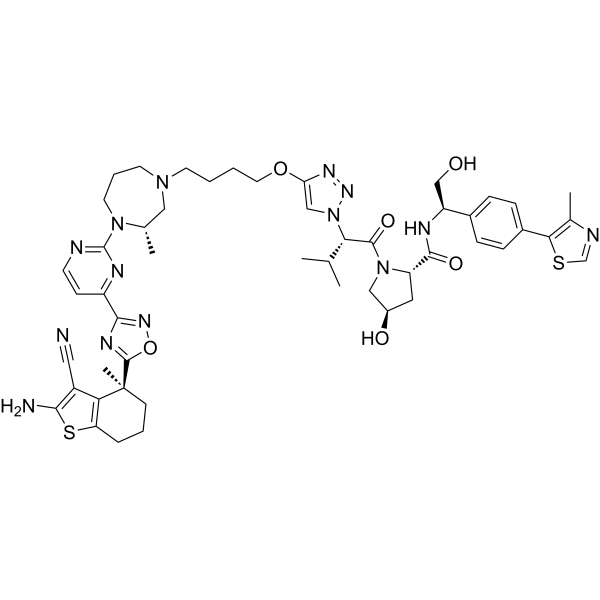
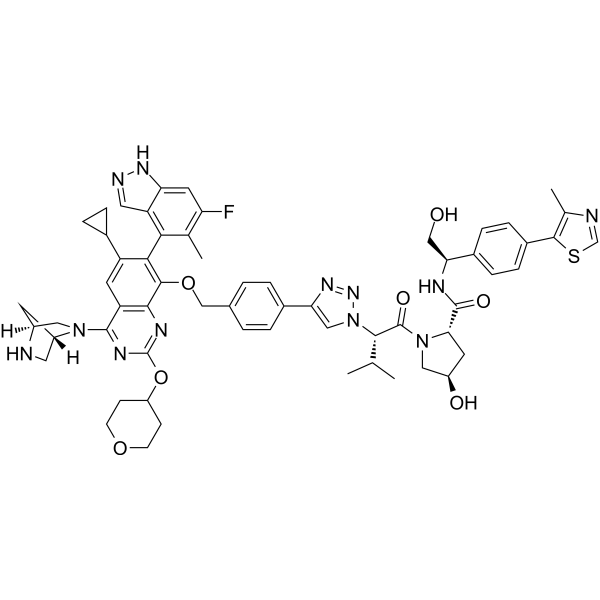 0 ImagesSynonyms: ASP-3082; KRAS G12D inhibitor 17Setidegrasib (ASP-3082) is a PROTAC KRAS degrader (DC50: 37 nM). Setidegrasib induces the degradation of G12D-mutation KRAS protein. Setidegrasib suppresses p-ERK, p-AKT, p-S6 levels in AsPC-1 cells. Setidegrasib exhibits anti-tumor activity in various cancer xenograft models in mice. Setidegrasib can be used in studies involving KRAS(G12D)-mutated solid tumors, such as non-small cell lung cancer.
-
RMC-5127
 0 ImagesRMC-5127 is a small molecule inhibitor that binds to GTP-targeted KRASG12V, with oral bioavailability and blood-brain barrier permeability. RMC-5127 inhibits the activities of the RAS and MAPK pathways, suppresses the proliferation of KRASG12V-mutant cancer cells and induces their apoptosis. RMC-5127 can be used for the research of KRASG12V-mutant non-small cell lung cancer, pancreatic ductal adenocarcinoma, colorectal cancer and intracranial KRASG12V tumors.
-
HRS-4642
 0 ImagesHRS-4642 is a high affinity, selective, long-acting, and non-covalent KRASG12D inhibitor with a Kd value of 0.083 nM. HRS-4642 inhibits the binding of KRASG12D to SOS1 or RAF1, thereby blocking the downstream MEK-ERK signaling pathway. HRS-4642 promotes Apoptosis. HRS-4642 alone or combined with Carfilzomib (HY-10455) effectively shapes the tumor microenvironment. HRS-4642 has an anti-cancer effect on pancreatic and colorectal cancers carrying the KRASG12D mutation.
-
DCC-3116
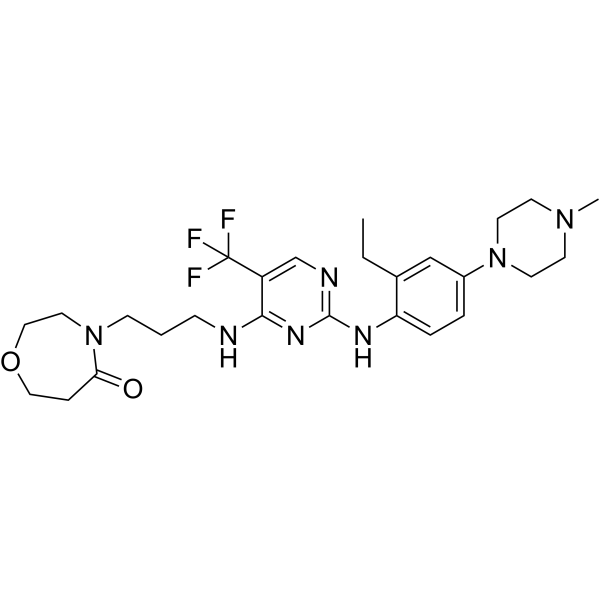 0 ImagesDCC-3116 is an orally active ULK1/2 inhibitor. DCC-3116 can inhibit autophagy in lung cancer cells by inhibiting KRASG12C signaling, thereby inhibiting the proliferation of lung cancer cells and exerting anti-cancer effects.
-
BI-2852
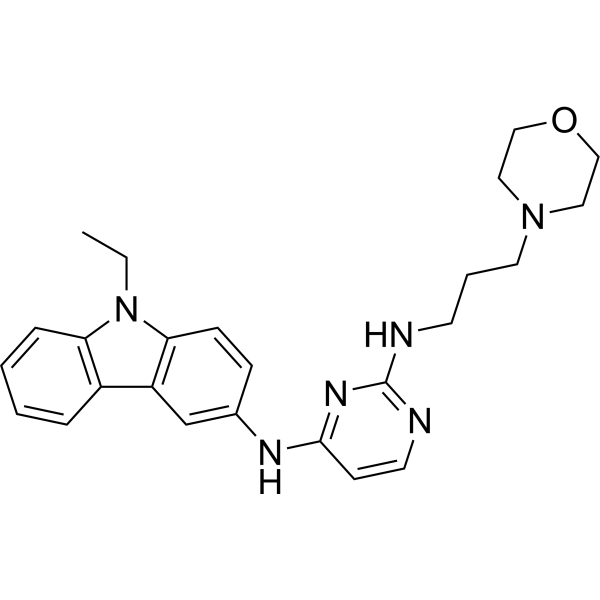
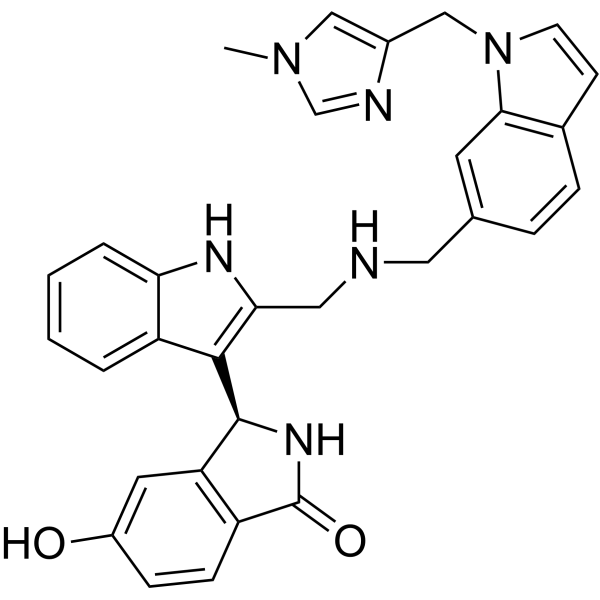 0 ImagesBI-2852 is a KRAS inhibitor for the switch I/II pocket (SI/II-pocket) by structure-based agent design with nanomolar affinity. BI-2852 is mechanistically distinct from covalent KRASG12C inhibitor (binds to switch II pocket) and binds ten-fold more strongly to active KRASG12D versus KRASwt (740 nM vs 7.5 μM). BI-2852 blocks GEF, GAP, and effector interactions with KRAS, leading to inhibition of downstream signaling and an antiproliferative effect in KRAS mutant cells.
-
Nexinhib20
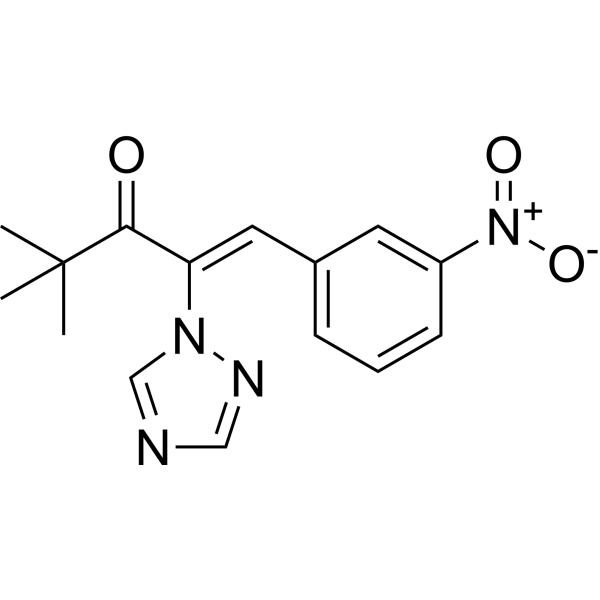 0 ImagesNexinhib20 is an inhibitor that targets the interactions of Rab27a-JFC1 (IC50: 2.6 μM) and Rac-1-GTP. Nexinhib20 can inhibit neutrophil exocytosis, adhesion, and β2 integrin activation, and has anti-inflammatory activity. Nexinhib20 can be used in the research of diseases such as systemic inflammation and myocardial ischemia-reperfusion injury.
-
ML-098
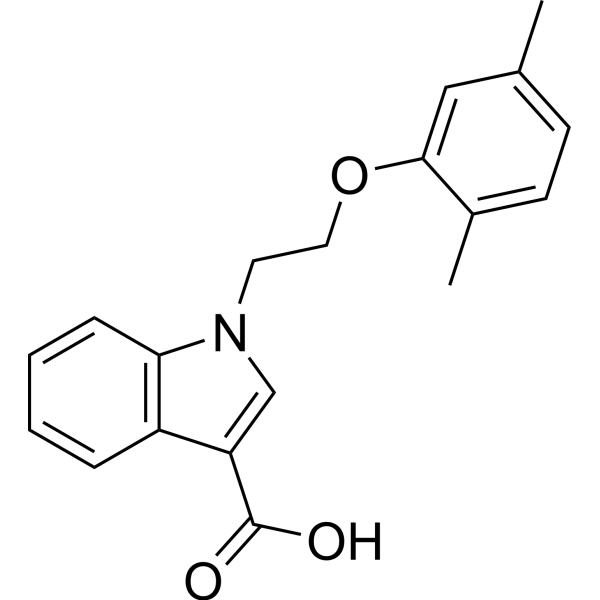 0 ImagesSynonyms: CID-7345532ML-098 (CID-7345532) is an activator of the GTP-binding protein Rab7 with an EC50 of 77.6 nM.
-
Rhosin
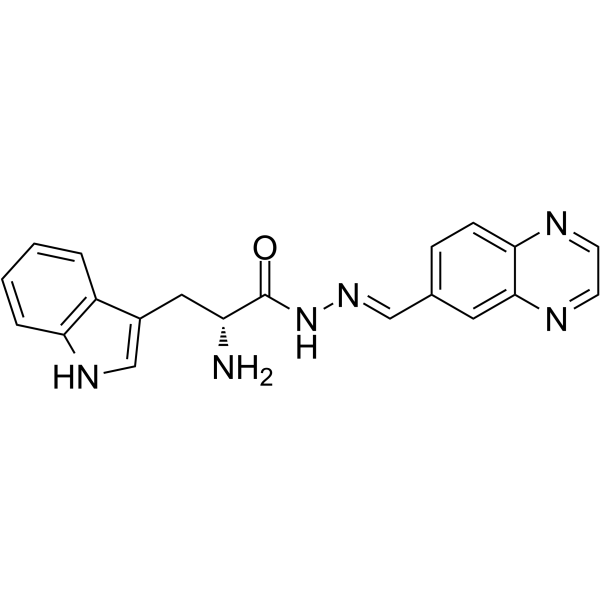 0 ImagesRhosin is a potent, specific RhoA subfamily Rho GTPases inhibitor, which specifically binds to RhoA to inhibit RhoA-GEF interaction with a Kd of ~ 0.4 uM, and does not interact with Cdc42 or Rac1, nor the GEF, LARG. Rhosin induces cell apoptosis. Rhosin promotes stress resiliency through enhancing D1-MSN plasticity and reducing hyperexcitability.
-
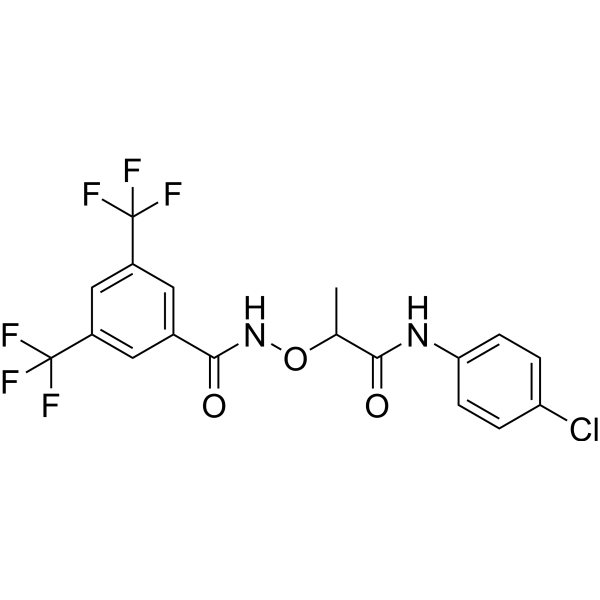
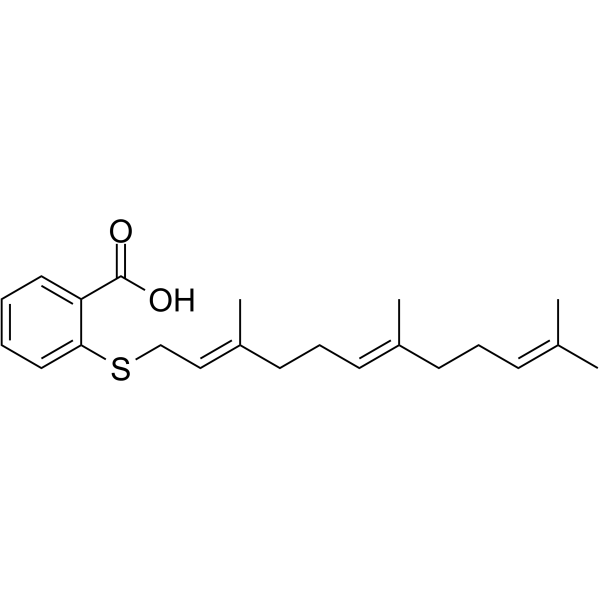
Geranylgeranyl pyrophosphate triammonium
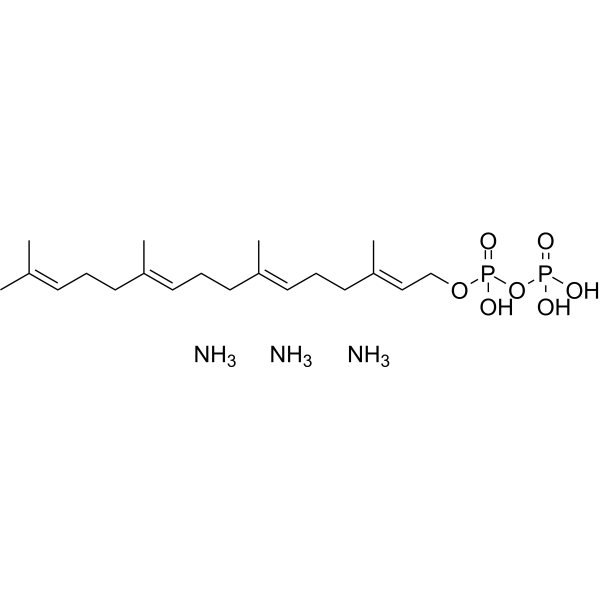 0 ImagesCat. No.: HY-126370ACAS No.: 313263-08-0Geranylgeranyl pyrophosphate triammonium is a type of isoprenoid metabolic intermediate, mainly synthesized through the mevalonate pathway. Geranylgeranyl pyrophosphate triammonium is a key precursor in various biological synthesis processes, especially as a necessary substrate for post-translational modification of proteins - geranylgeranyl phosphorylation. Geranylgeranyl pyrophosphate triammonium regulates various cellular processes and disease progression through protein geranylgeranyl phosphorylation, such as activating the YAP signaling pathway, promoting cell proliferation and inhibiting apoptosis; promoting IL-2 production and STAT5 phosphorylation; and influencing metabolic homeostasis and cancer, etc.
-
Ibetazol
 0 ImagesCat. No.: HY-170316Purity: 99.8%Ibetazol is a Importin β1 (KPNB1) inhibitor and nucleocytoplasmic transport disruptor. Ibetazol binds covalently to Cys585 of Importin β1, blocks both Importin β1-mediated direct transport and Importin α-dependent nuclear import processes, without affecting transport mediated by other nucleocytoplasmic transport proteins. Ibetazol induces cytoplasmic accumulation of Importin α1, and inhibits nuclear import of substrates carrying nuclear localization signals (NLS), including the NLS-cMyc reporter gene, RelA/p65 and SREBP1. Ibetazol triggers spindle malformation and chromosome misalignment by disrupting the mitotic function of Importin β1. Ibetazol inhibits the proliferation of cells expressing wild-type Importin β1. Ibetazol has a high activity-cytotoxicity window, lacks intrinsic fluorescence, and acts rapidly on nucleocytoplasmic transport processes. Ibetazol serves as a tool compound for investigating nuclear import processes specifically mediated by Importin β1.
-
MBQ-167
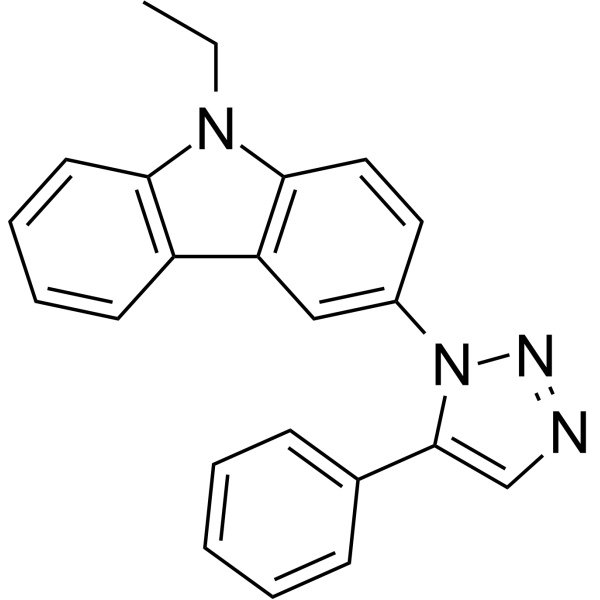 0 ImagesMBQ-167 is a dual Rac/Cdc42 inhibitor, with IC50s of 103 nM for Rac 1/2/3 and 78 nM for Cdc42 in MDA-MB-231 cells, respectively.
-
BBO-8520
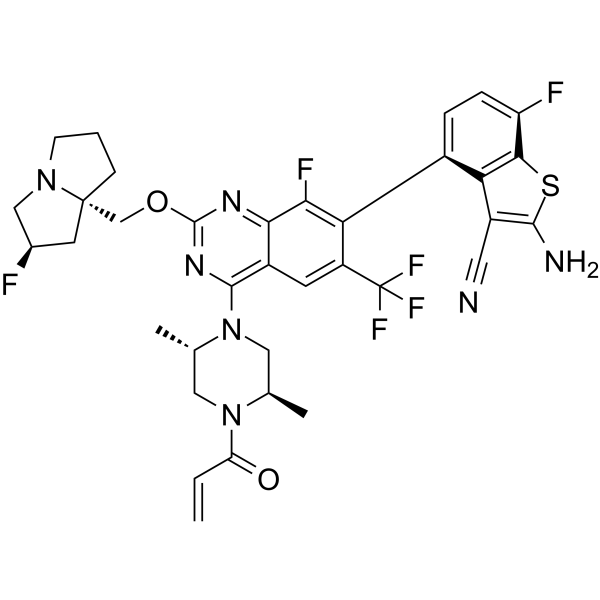 0 ImagesBBO-8520 is a direct small molecule covalent inhibitor targeting KRAS G12C with high oral availability. BBO-8520 has the characteristics of KRAS G12C (OFF) inhibitor and the function of blocking KRASG12C (ON) signal. BBO-8520 inhibits cell proliferation by inhibiting KRAS G12C (ON) by binding GTP protein. BBO-8520 can block RAS-RAF1 interaction and return KRAS G12C to the inactive (OFF) state. BBO-8520 can be used for the research of cancer.




