



Cyclophilin A
Cyclophilin A (CyPA), encoded by PPIA, is a highly abundant cytosolic immunophilin that exhibits peptidyl-prolyl cis-trans isomerase (PPIase) activity and regulates protein folding, trafficking, and conformational transitions of client proteins[1][2][3]. Mechanistically, CyPA catalyzes proline isomerization, thereby functioning as a molecular chaperone that controls protein activation, degradation, and signaling processes across multiple cellular pathways[2][4]. In addition to its intracellular functions, CyPA can be secreted in response to inflammatory stimuli and subsequently participates in extracellular signaling events associated with vascular inflammation, immune responses, and tissue remodeling[3][5][6]. Disease studies have linked CyPA to cardiovascular disorders, kidney diseases, viral infection, cancer-associated signaling, and inflammatory pathologies, highlighting its broad relevance as a stress-responsive regulatory factor[3][5][7]. In viral experimental models, CyPA directly interacts with HIV-1 capsid proteins and promotes key steps of viral replication, making the PPIA pathway a valuable system for mechanistic studies of host-virus interactions[8][9]. Compared with related cyclophilin isoforms that exhibit specialized subcellular localization, including endoplasmic reticulum-associated Cyclophilin B and mitochondrial Cyclophilin D, CyPA is predominantly cytosolic and represents the major cellular target of cyclosporin A[1][10]. For experimental applications, cyclosporin A and related cyclophilin inhibitors suppress PPIase activity and remain widely used tools for investigating CyPA-dependent signaling, protein folding, and disease mechanisms[4][11].
References:
- [1]. Wang P, et al. The cyclophilins. Genome Biol. 2005;6(7):226. [Content Brief]
- [2]. Dunyak BM, et al. Peptidyl-Proline Isomerases (PPIases): Targets for Natural Products and Natural Product-Inspired Compounds. J Med Chem. 2016 Nov 10;59(21):9622-9644. [Content Brief]
- [3]. Nigro P, et al. Cyclophilin A: a key player for human disease. Cell Death Dis. 2013 Oct 31;4(10):e888. [Content Brief]
- [4]. Takahashi N, et al. Peptidyl-prolyl cis-trans isomerase is the cyclosporin A-binding protein cyclophilin. Nature. 1989 Feb 2;337(6206):473-5. [Content Brief]
- [5]. Peter EK, et al. A Hybrid Hamiltonian for the Accelerated Sampling along Experimental Restraints. Int J Mol Sci. 2019 Jan 16;20(2):370. [Content Brief]
- [6]. Xue C, et al. Extracellular and Intracellular Cyclophilin A, Native and Post-Translationally Modified, Show Diverse and Specific Pathological Roles in Diseases. Arterioscler Thromb Vasc Biol. 2018 May;38(5):986-993. [Content Brief]
- [7]. Zhao X, et al. Inhibitors of Cyclophilin A: Current and Anticipated Pharmaceutical Agents for Inflammatory Diseases and Cancers. Molecules. 2024 Mar 11;29(6):1235. [Content Brief]
- [8]. An P, et al. Regulatory polymorphisms in the cyclophilin A gene, PPIA, accelerate progression to AIDS. PLoS Pathog. 2007 Jun;3(6):e88. [Content Brief]
- [9]. Cyclophilin A gene information from NCBI.
- [10]. Wikipedia.
- [11]. Stauffer WT, et al. Cyclophilin inhibition as a strategy for the treatment of human disease. Front Pharmacol. 2024 Jul 8;15:1417945. [Content Brief]
All Product Categories
-
Cyclophilin A Related Products (13)
Related Products (13)

- 1
-
TMN355
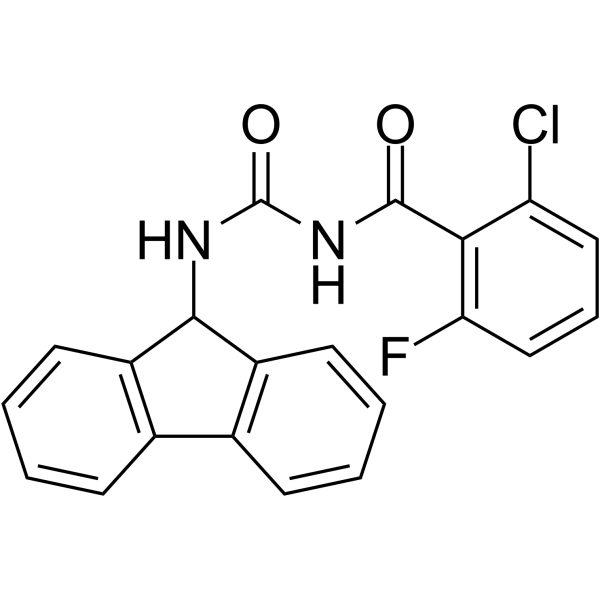 0 ImagesTMN355 is a potent chemical cyclophilin A inhibitor and reduces foam cell formation and cytokine secretion. TMN355 is used for atherosclerosis.
-
Rencofilstat
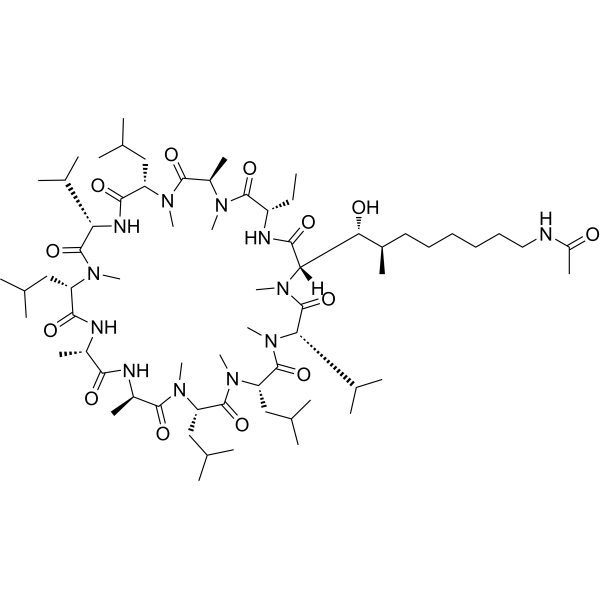 0 ImagesCat. No.: HY-135644CAS No.: 1383420-08-3Synonyms: CRV431Rencofilstat (CRV431) is an orally active pan-cyclophilin inhibitor with IC50 values of 2.5 nM, 3.1 nM, 2.8 nM, 7.3 nM for Cyp A, CypB, Cyp D and Cyp G, respectively. Rencofilstat reduces fibrosis and tumor growth in models of chronic liver disease. Rencofilstat can be used for the study of nonalcoholic steatohepatitis (NASH), hepatocellular carcinoma and viral hepatitis-induced liver disease.
-
Cyclophilin inhibitor 1
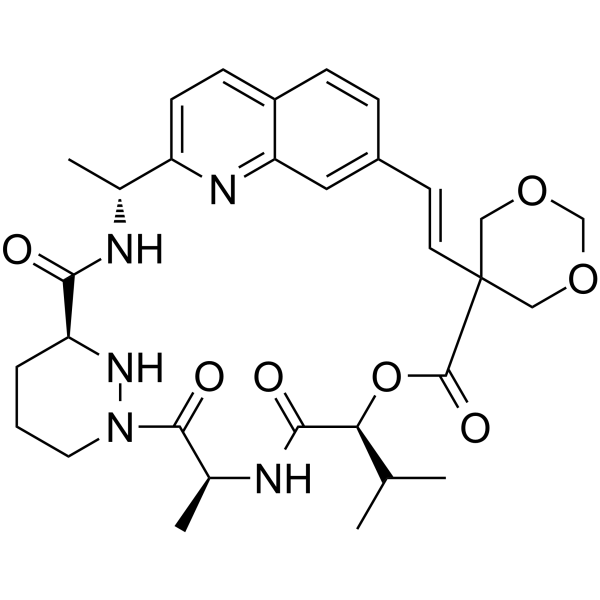 0 ImagesCyclophilin inhibitor 1 is a potent and orally bioavailable cyclophilin A inhibitor, with a Kd of 5 nM, shows effective anti-HCV activity, with an EC50 of 98 nM for HCV 2a.
-
RJS308
 0 ImagesCat. No.: HY-173011Purity: 98.73%RJS308 is a selective Cyclophilin A (CypA) PROTAC degrader. RJS308 induces ubiquitin-dependent CypA degradation by recruiting the VHL E3 ligase complex, and forms a ternary complex with CypA and VHL/elongin C/elongin B. RJS308 exhibits anti-HIV-1 and anti-HCV activities. RJS308 can be used in studies related to viral infections.
-
HL001
 0 ImagesHL001 is an orally active small molecule inhibitor of Cyclophilin A (CypA) and a receptor antagonist of Lysophosphatidic acid 1 (LPA1). HL001 induces cell cycle arrest and apoptosis of tumor cells by p53. HL001 stabilizes p53 by down-regulating G3BP1, inducing reactive oxygen species and DNA damage. HL001 disrupts the interaction between MDM2 and p53-72R in a CypA dependent manner. HL001 has antitumor activity. HL001 can also be used to study pulmonary fibrosis.
-
PROTAC CG167
 0 ImagesCat. No.: HY-173009PROTAC CG167 is a selective bifunctional PROTAC degrader targeting CypA, with a DC50 of 123 nM. PROTAC CG167 drives ubiquitin-dependent and ubiquitin-like modification-dependent proteasomal degradation of CypA by recruiting the VHL E3 ligase complex. PROTAC CG167 exhibits anti-HIV‑1 and anti-HCV replication activities, and selectively reduces CypA levels in various cells. PROTAC CG167 can be used in studies related to viral infections.

-
CypD-IN-4
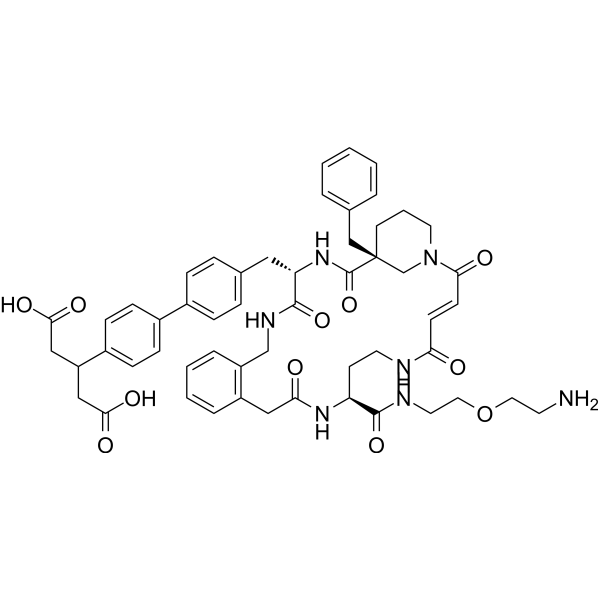 0 ImagesCat. No.: HY-151488CAS No.: 3023438-19-6CypD-IN-4 is a potent and subtype-selective cyclophilin D (CypD) inhibitor. CypD-IN-4 has CypD affinity with an IC50 value of 0.057 μM. CypD-IN-4 can be used for the research of several diseases including oxidative stress, neurodegenerative disorders, liver diseases, aging, autophagy and diabetes.
-
CypD-IN-3
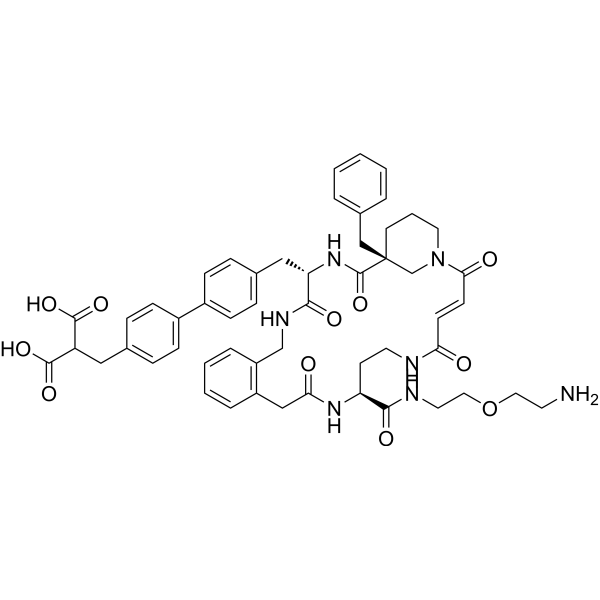 0 ImagesCat. No.: HY-151487CAS No.: 2651994-75-9CypD-IN-3 is a potent and subtype-selective cyclophilin D (CypD) inhibitor. CypD-IN-3 has CypD affinity with an IC50 value of 0.01 μM. CypD-IN-3 can be used for the research of several diseases including oxidative stress, neurodegenerative disorders, liver diseases, aging, autophagy and diabetes.
-
CypE-IN-1
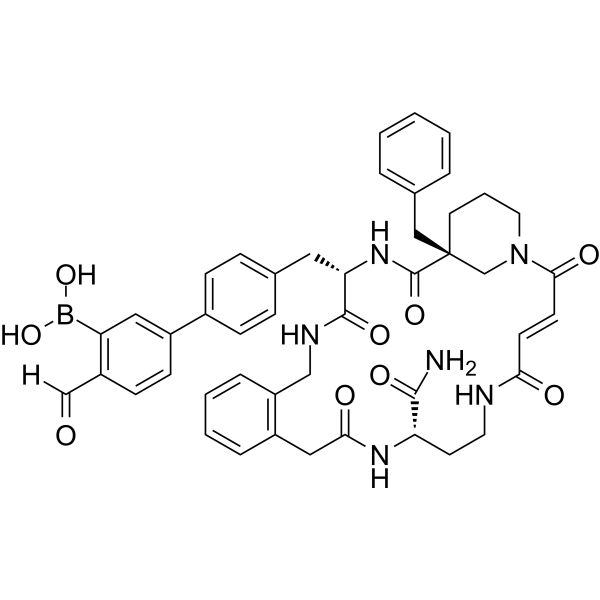 0 ImagesCat. No.: HY-151489CAS No.: 3023438-33-4CypE-IN-1 is a potent and subtype-selective cyclophilin E (CypE) inhibitor. CypE-IN-1 has CypE affinity with IC50 and Ki values of 0.013 μM and 0.072 μM, respectively. CypE-IN-1 can be used for the research of several diseases including oxidative stress, neurodegenerative disorders, liver diseases, aging, autophagy and diabetes.
-
Cyclophilin inhibitor 3
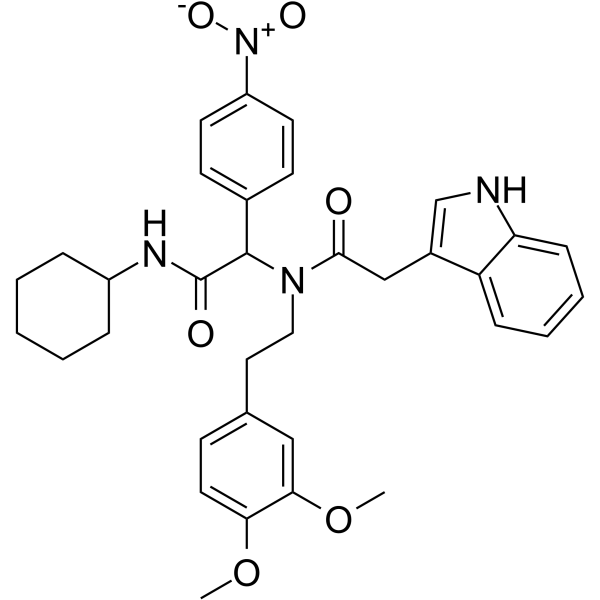 0 ImagesCat. No.: HY-146648CAS No.: 1676100-30-3Cyclophilin inhibitor 3 (compound 7c) is a potent cyclophilin A (CypA) inhibitor with an potent anti-HCV activity (EC50 of 4.2 μM).
-
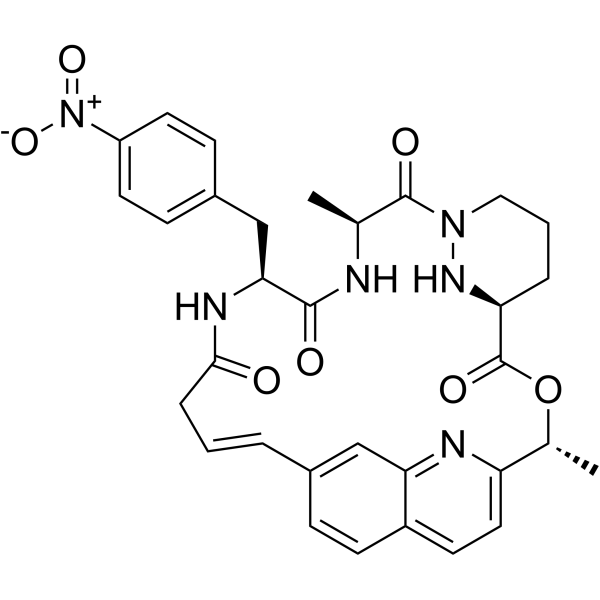
NIM258
 0 ImagesCat. No.: HY-128924CAS No.: 1589093-01-5NIM258 is a potent nonimmunosuppressive cyclophilin inhibitor (cyclophilin A Kd = 1.2 nM) with anti-HCV activity (EC50 = 40 nM). NIM258 can be used for HCV infection research.
- 1



