



c-Fms
CSF-1 receptor; colony stimulating factor 1 receptor; CSF-1R; CSF1R
c-FMS (CSF1R, CSF-1R) is a receptor protein-tyrosine kinase of the platelet-derived growth factor receptor (PDGFR) family. c-FMS is the cell surface receptor for IL-34 and CSF1. c-FMS has important roles in haematopoiesis, regulation of proliferation, cell survival and maturation of microglia and monocytes, as well as in controlling the overall immune response.
c-FMS is specifically expressed in osteoclasts and myelomonocytic-lineage cells, such as monocytes and macrophages, and the activation of c-FMS signaling promotes the proliferation or differentiation of these cells. It also promotes the production of inflammatory mediators, such as tumor necrosis factor-alpha (TNF-α) and interleukin 6 (IL6).
All Product Categories
-
c-Fms Related Products (147)
Related Products (147)

-
Recombinant Proteins (24)
-
Antibodies (8)
-
CSF1R-IN-13
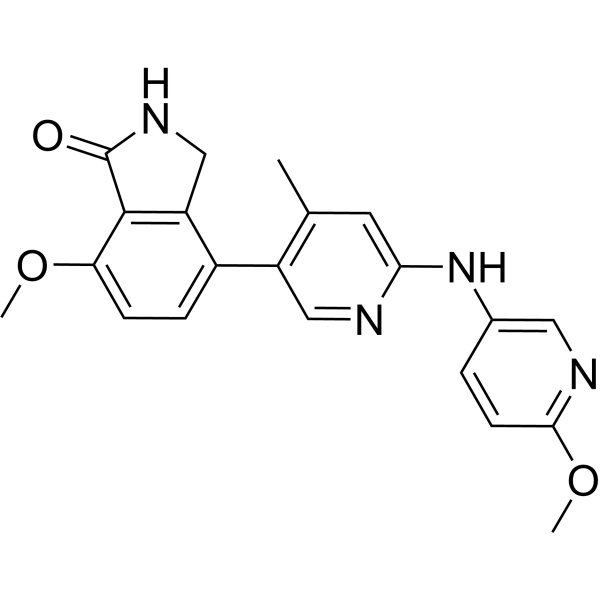 0 ImagesCat. No.: HY-147616CAS No.: 2361556-61-6CSF1R-IN-13 is a potent inhibitor of CSF1R. Colony stimulating factor 1 (CSF-1, also known as macrophage colony stimulating factor, M-CSF) is an important growth factor that controls bone marrow progenitor cells, monocytes, macrophages, and giants. CSF1R-IN-13 has the potential for the research of cancer diseases (extracted from patent WO2019134661A1, compound 32).
-
CSF1R-IN-18
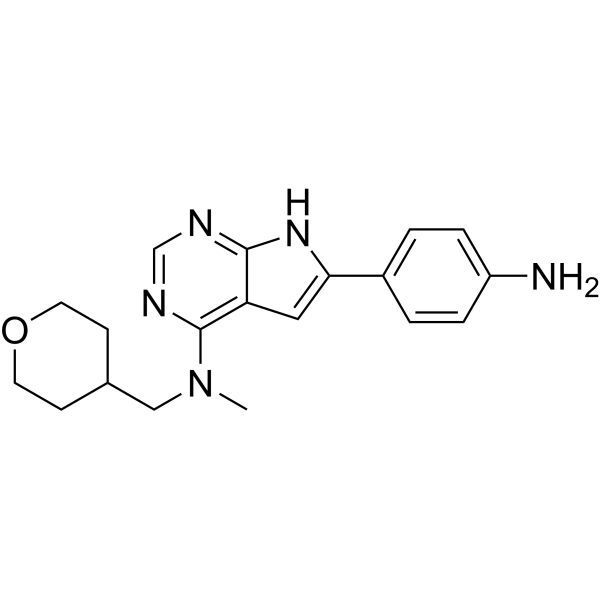 0 ImagesCat. No.: HY-161084CAS No.: 3034869-67-2CSF1R-IN-18 (Compdound 16t), para-aniline derivative, is a colony-stimulating factor 1 receptor (CSF1R) inhibitor. CSF1R-IN-18 can be used for the research of cancers, CNS-diseases and bone diseases.
-
PLX647 dihydrochloride
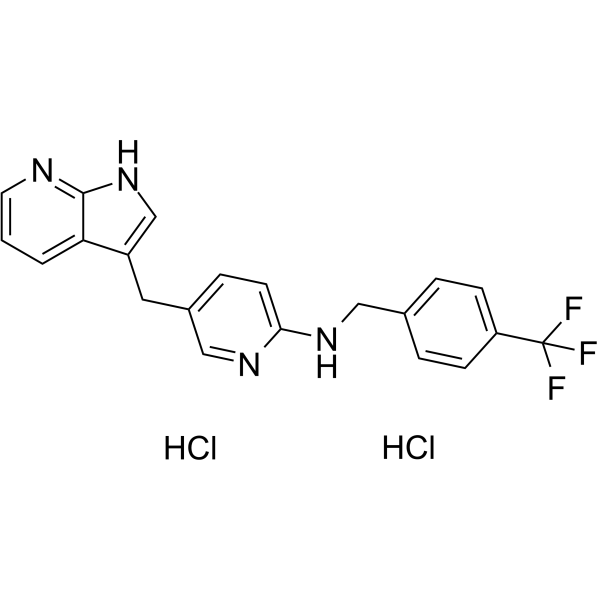 0 ImagesCat. No.: HY-13838ACAS No.: 1779796-38-1PLX647 dihydrochloride is an orally active, highly specific dual FMS and KIT kinase inhibitor, with IC50s of 28 and 16 nM, reapectively. PLX647 dihydrochloride shows selectivity for FMS and KIT over a panel of 400 kinases at a concentration of 1 μM except FLT3 and KDR (IC50s=91 and 130 nM, respectively).
-
CSF1R-IN-10
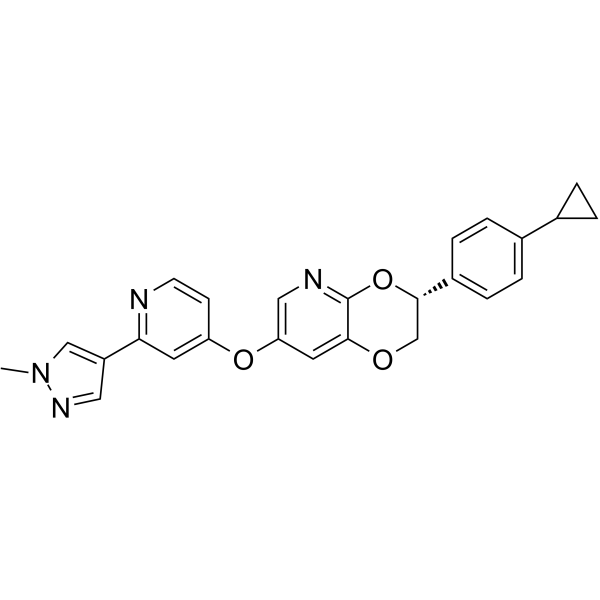 0 ImagesCat. No.: HY-147611CAS No.: 2765301-88-8CSF1R-IN-10 (Compound 48) is a CSF-1R inhibitor with an IC50 of 0.005 μM.
-
Edicotinib hydrochloride
 0 ImagesCat. No.: HY-109086ACAS No.: 1559069-92-9Synonyms: JNJ-40346527 hydrochloride; JNJ-527 hydrochlorideEdicotinib hydrochloride is a potent, selective, brain penetrant and orally active?colony-stimulating factor-1 receptor (CSF-1R)?inhibitor with an IC50 of 3.2 nM. Edicotinib hydrochloride exhibits less inhibitory effects on KIT and FLT3 with IC50 values of 20 nM and 190 nM, respectively. Edicotinib hydrochloride limits microglial expansion and attenuates microglial proliferation and neurodegeneration?in mice. Edicotinib hydrochloride has the potential for Alzheimer’s disease and rheumatoid arthritis research.
-
RET-IN-19
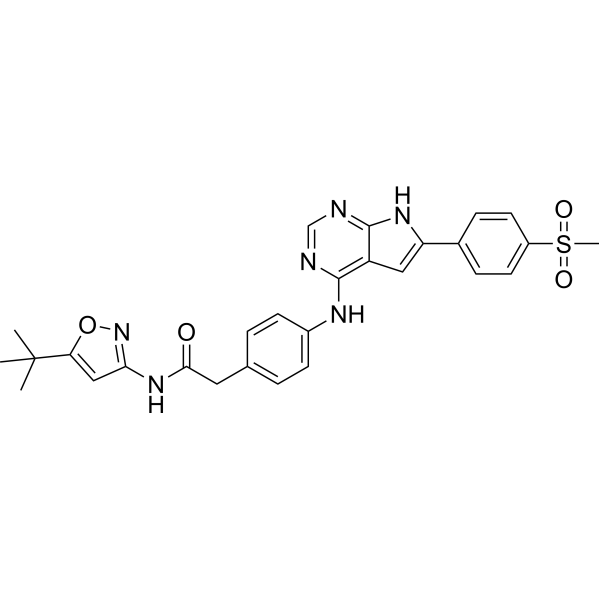 0 ImagesCat. No.: HY-151377CAS No.: 2484919-71-1RET-IN-19 (compound 59) is a potent RET inhibitor, with IC50 values of 6.8 and 13.51 nM against RET-wt and RET V804M, respectively. RET-IN-19 shows anticancer activity. RET-IN-19 can be used for non-small cell lung cancer (NSCLC) research.
-
c-Fms-IN-9
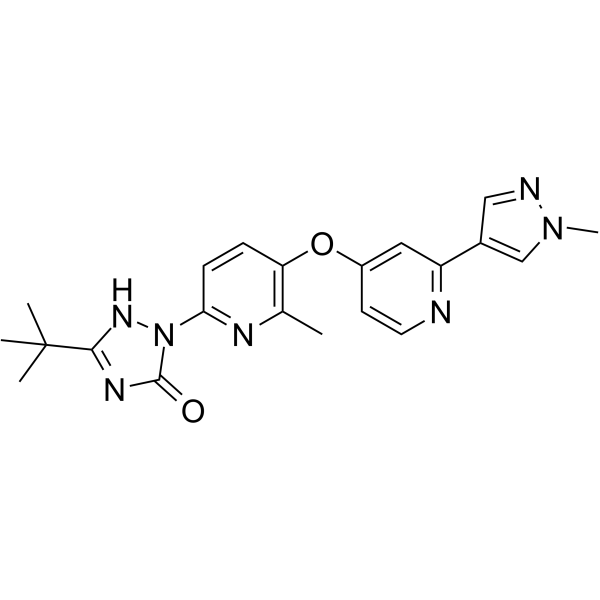 0 ImagesCat. No.: HY-128680CAS No.: 1628574-50-4
-
CSF1R-IN-21
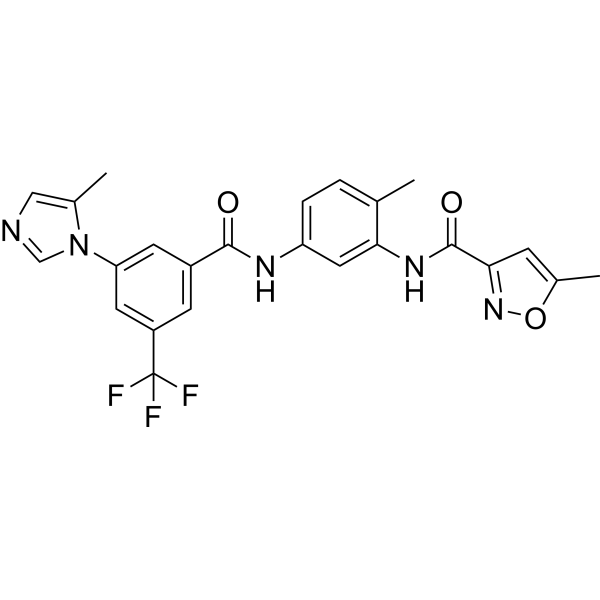 0 ImagesCat. No.: HY-157996CAS No.: 2935479-62-0CSF1R-IN-21 (compound 7e) is a CSF-1R Inhibitor with an IC50 value of 31 nM. CSF1R-IN-21 inhibits CSF-1R auto-phosphorylation and can be used for the research of neurodegenerative diseases .
-
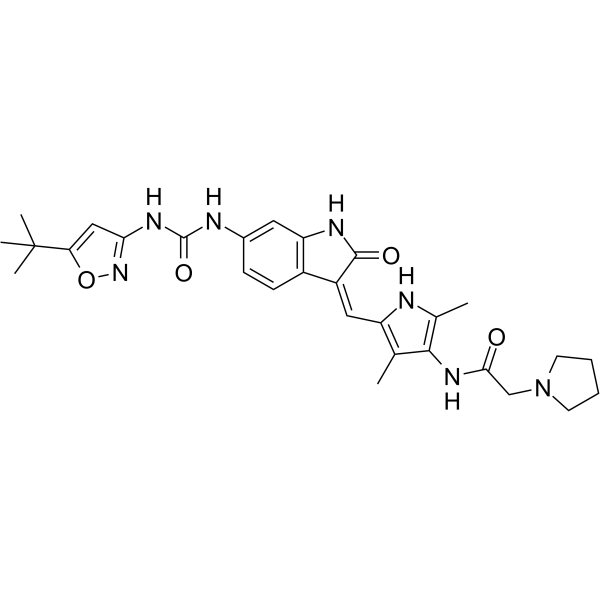
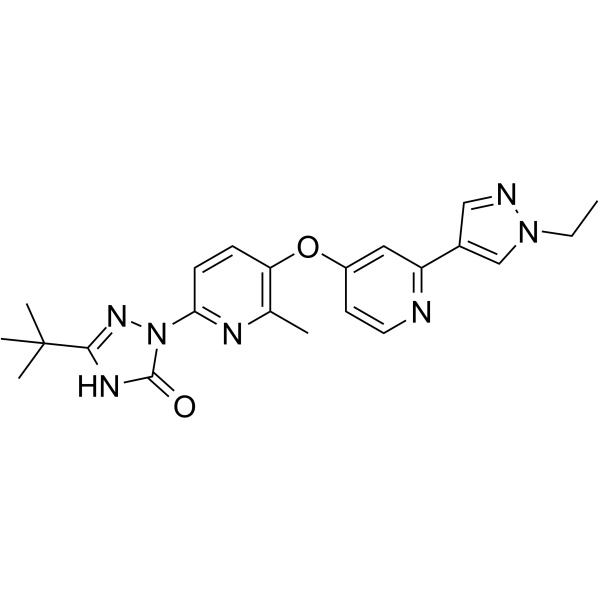
c-Fms-IN-15
 0 ImagesCat. No.: HY-161706CAS No.: 3047930-25-3c-Fms-IN-15 (compound 8g) is a potent inhibitor of FMS kinase, with the IC50 of 563 nM.
-
CSF1R-IN-27
 0 ImagesCat. No.: HY-183569CAS No.: 3034296-91-5CSF1R-IN-27 is a CSF1R inhibitor with oral effectiveness, kinome-wide selective profile, low cellular cytotoxicity, and CSF1R IC50 values of 19 nM, 88 nM, 173 nM, 797 nM, 1448 nM, and >3000 nM. CSF1R-IN-27 suppresses M-CSF-induced phosphorylation of CSF1R, AKT, and ERK in macrophages, and inhibits hepatic p-CSF1R/p-AKT/p-ERK signaling. CSF1R-IN-27 reduces serum transaminase levels, improves hepatic histopathology, alleviates inflammatory cell infiltration, and decreases circulating TNF-α and IL-6 levels. CSF1R-IN-27 can be used for the research of acute liver injury.
-
CSF1R-IN-6
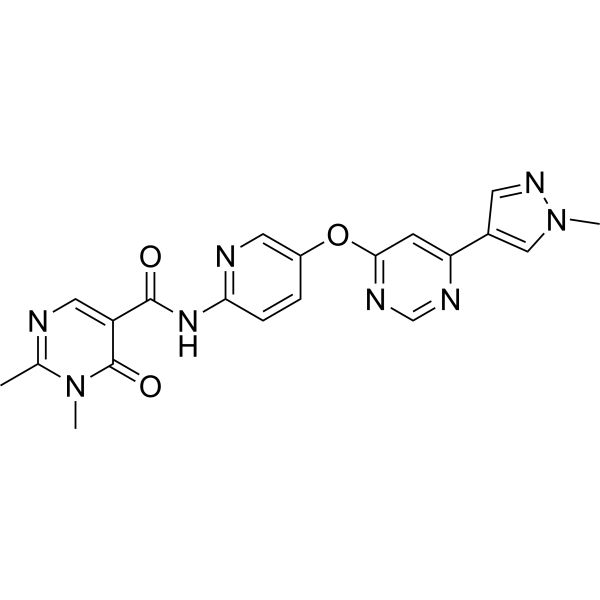 0 ImagesCat. No.: HY-144042CAS No.: 2716184-87-9CSF1R-IN-6 is a potent inhibitor of CSF1R. CSF-1R is expressed in macrophages, and the survival and differentiation of macrophages depends on the CSF-1/CSF-1R signaling pathway. CSF1R-IN-6 affects the exchange of inflammatory factors between TAMs and glioma cells. CSF1R-IN-6 has the potential for the research of cancer disease (extracted from patent WO2021197276A1, compound 5).
-
CSF1R-IN-20
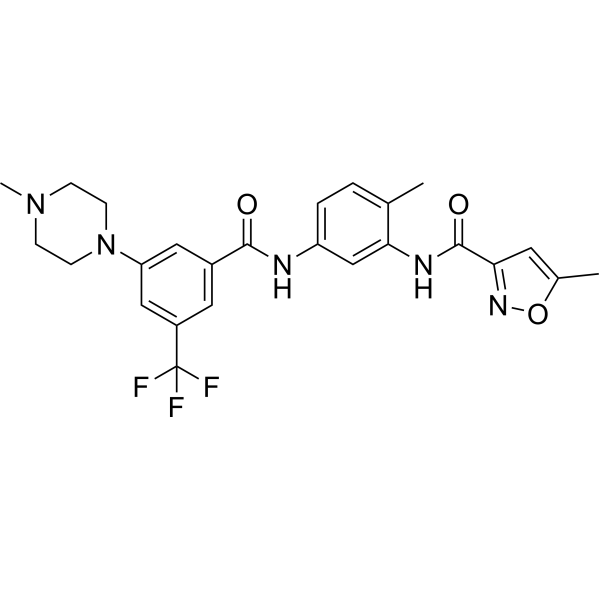 0 ImagesCat. No.: HY-162309CAS No.: 2935479-57-3CSF1R-IN-20 (compound 7a) is a CSF-1R Inhibitor with an IC50 value of 467 nM. CSF1R-IN-20 inhibits CSF-1R auto-phosphorylation.
-
CSF1R-IN-15
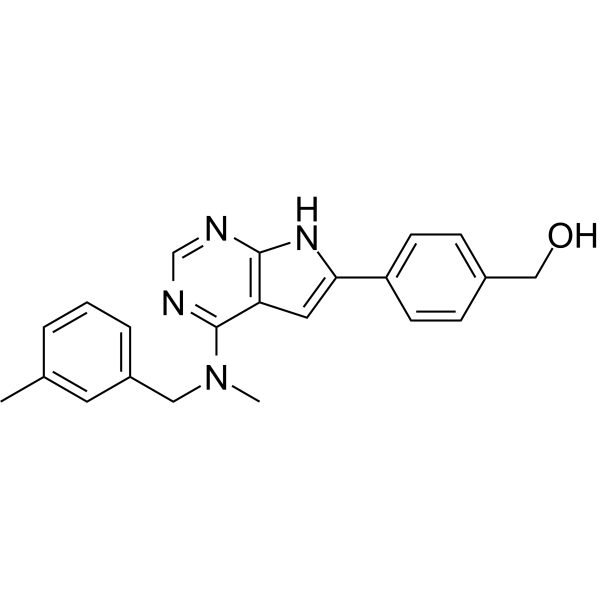 0 ImagesCat. No.: HY-155001CAS No.: 2925744-43-8CSF1R-IN-15 (compound 23) is an inhibitor targeting CSF1R. The colony-stimulating factor-1 receptor (CSF1R) is a tyrosine kinase embedded in the cell membrane of macrophages. The receptor is activated by colony-stimulating factor-1 (CSF-1) and interleukin-34, and signaling via CSF1R is crucial for the differentiation, proliferation, and survival of macrophages.
-
c-Fms-IN-7
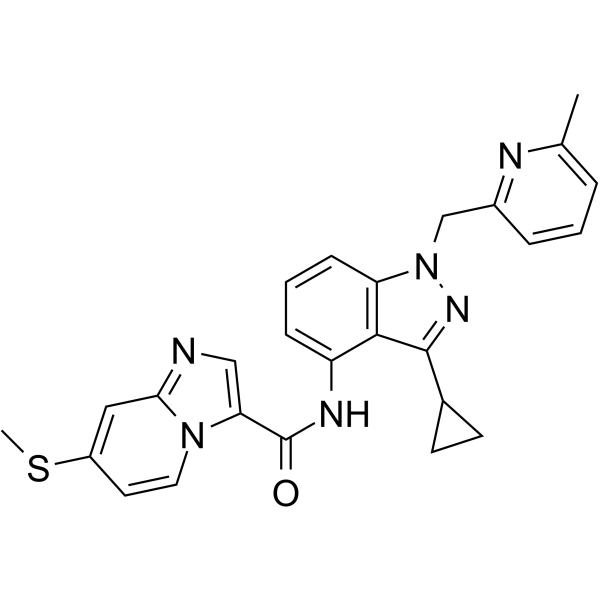 0 ImagesCat. No.: HY-111948CAS No.: 1313408-89-7c-Fms-IN-7 is a cFMS inhibitor extracted from patent WO2011079076A1, example159, has an IC50 of 18.5 nM.
-
c-Fms-IN-14
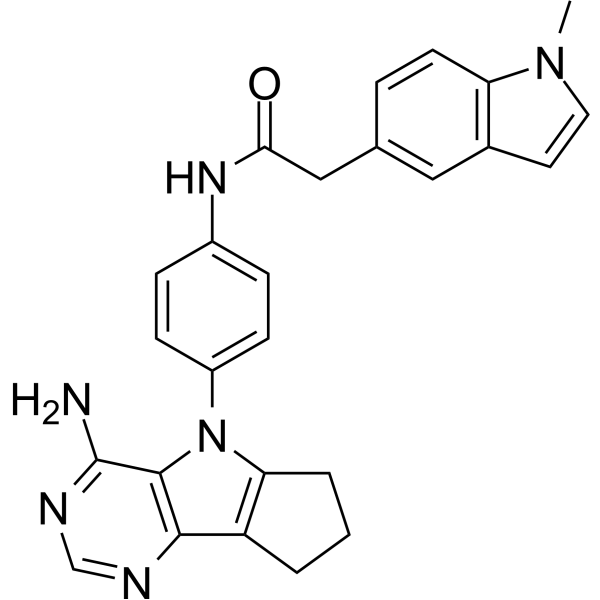 0 ImagesCat. No.: HY-156556CAS No.: 1898210-99-5
-
Anti-CSF2/GM-CSF Antibody
 0 ImagesCat. No.: HY-P990381The Anti-CSF2/GM-CSF Antibody is a CHO-expressed human antibody that targets CSF2/GM-CSF. The Anti-CSF2/GM-CSF Antibody has a huIgG1-type heavy chain and a huλ-type light chain, with a predicted molecular weight (MW) of 145.02 kDa. The isotype control for the Anti-CSF2/GM-CSF Antibody can refer to Human IgG1 kappa, Isotype Control (HY-P99001).
-
NPA101.3
 0 ImagesCat. No.: HY-183931CAS No.: 1839155-15-5NPA101.3 is an orally active RET receptor tyrosine kinase and VEGFR2 inhibitor (RET IC50 = 0.001 μM, RETV804M IC50 = 0.008 μM, VEGFR2 IC50 = 0.003 μM). NPA101.3 inhibits purified TRKA (IC50 = 32 nM) and CSF1R (IC50 = 46 nM). NPA101.3 completely suppresses tumor formation in RET/C634Y-transformed cells and also attenuates tumor formation in HRAS/G12V-transformed cells. NPA101.3 can be used in the research of RET-driven cancers.
-
Antifibrotic agent 1
 0 ImagesCat. No.: HY-176194Antifibrotic agent 1 is an orally active anti-idiopathic pulmonary fibrosis (IPF) agent. Antifibrotic agent 1 effectively attenuates IPF-related processes, including TGF-β induced EMT and FMT processes, as well as pro-fibrotic M2 polarization. Antifibrotic agent 1 selectively inhibits CSF-1R, PDGFR-α and Src family kinases (SFKs), while sparing VEGFRs, FGFRs and Abl to minimize off-target toxicity. Antifibrotic agent 1 has potent anti-fibrotic activity in Bleomycin (BLM) (HY-108345)-induced pulmonary fibrosis mice model.




