



c-Met/HGFR
c-Met (hepatocyte growth factor receptor, HGFR) is a protein possesses tyrosine kinase activity. The primary single chain precursor protein is post-translationally cleaved to produce the alpha and beta subunits, which are disulfide linked to form the mature receptor. c-Met is a membrane receptor that is essential for embryonic development and wound healing. Hepatocyte growth factor (HGF) is the only known ligand of the c-Met receptor. c-Met is normally expressed by cells of epithelial origin, while expression of HGF is restricted to cells of mesenchymalorigin. Upon HGF stimulation, c-Met induces several biological responses that collectively give rise to a program known as invasive growth.
All Product Categories
-
c-Met/HGFR Inhibitors
(236)
View all products
-
c-Met/HGFR Agonist
(1)
View all products
-
c-Met/HGFR Activators
(3)
View all products
-
c-Met/HGFR Modulators
(2)
View all products
-
c-Met/HGFR Degraders
(11)
View all products
-
c-Met/HGFR Ligands
(4)
View all products
-
c-Met/HGFR Proteins
(48)
View all products
-
c-Met/HGFR Related Products (280)
Related Products (280)

-
Recombinant Proteins (48)
-
Antibodies (7)

-
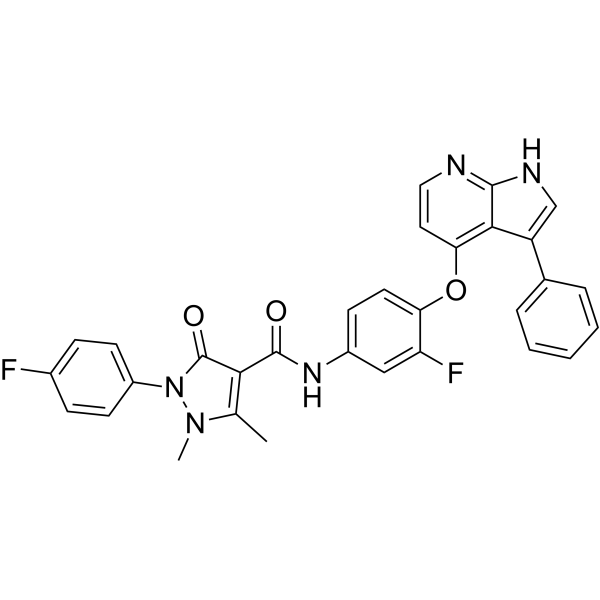
BMS-794833
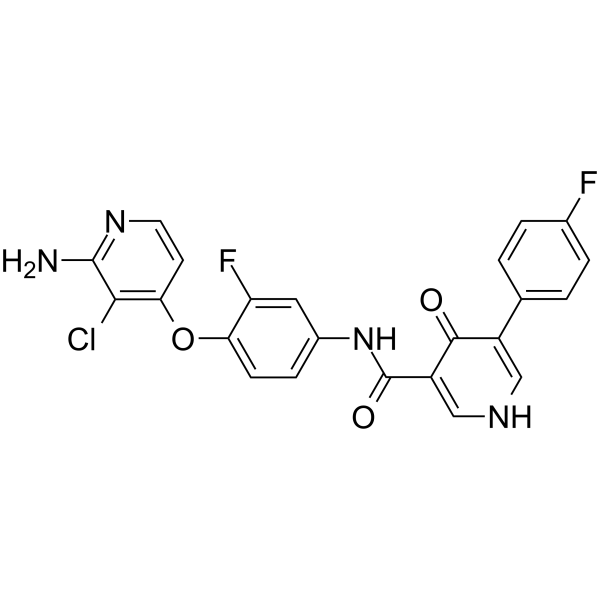 0 ImagesBMS-794833 is a VEGFR2 and Met inhibitor extracted from patent WO2009094417, compound example 1; has IC50s of 15 and 1.7 nM, respectively.
-
MAPK-IN-2
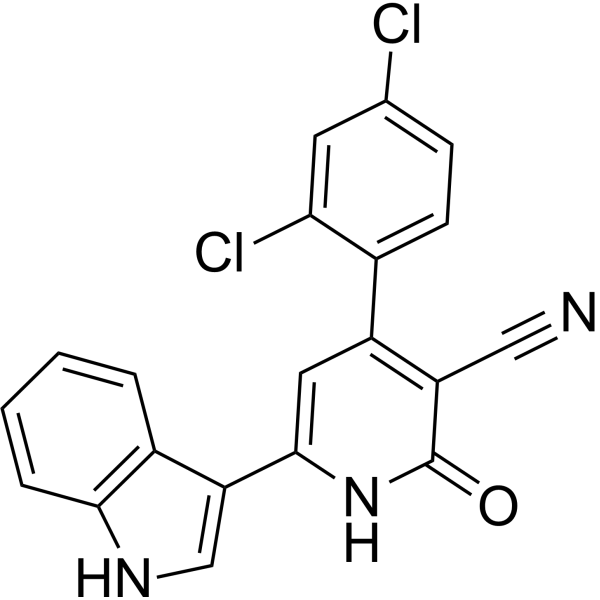 0 ImagesMAPK-IN-2 (compound 3h) is a potent MAPK inhibitor with antineoplastic activity. MAPK-IN-2 inhibits cancer cell proliferation among serval cancer cell lines, and suppresses MAPK pathway with potant efficacy (EGFRWT IC50=281 nM, c-MET IC50=205 nM, B-RAFWT IC50=112 nM, and CDK4/6 IC50=95 and 184 nM, respectively). MAPK-IN-2 even shows a remarkable potency against mutated EGFR and B-RAF (EGFRT790M IC50=69 nM and B-RAFV600E IC50=83 nM).
-
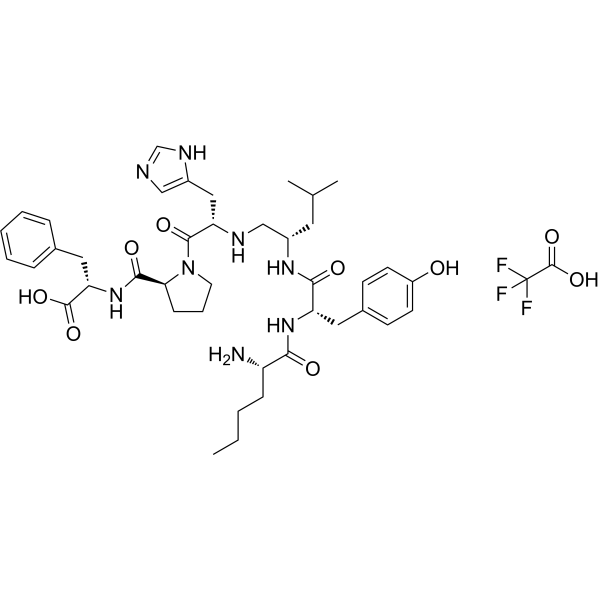
SRI 31215 TFA
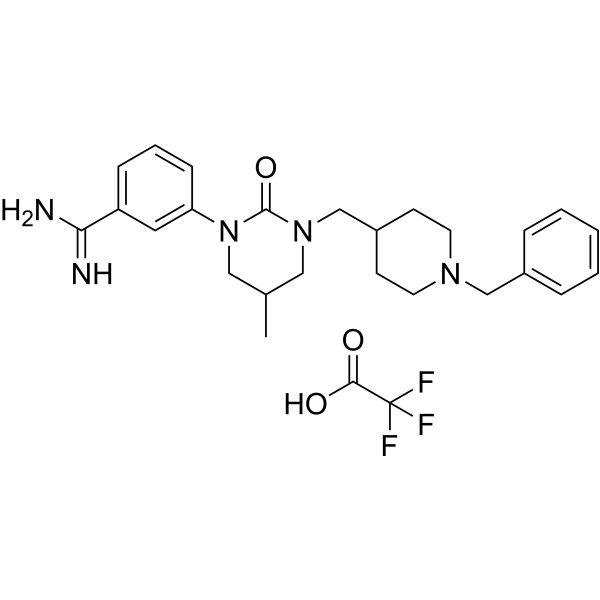 0 ImagesSRI 31215 (TFA) is a Matriptase/Hepsin/hepatocyte growth factor activator (HGFA) triplex inhibitor and mimics the activity of HAI-1/2 (endogenous inhibitors of HGF activation). SRI 31215 has potent inhibitory activity against matriptase, hepsin and HGFA with IC50 values of 0.69 μM, 0.65 μM and 0.30 μM, respectively. SRI 31215 can be used for the research of cancer.
-
Caveolin-1 (82-101) amide (human, mouse, rat)
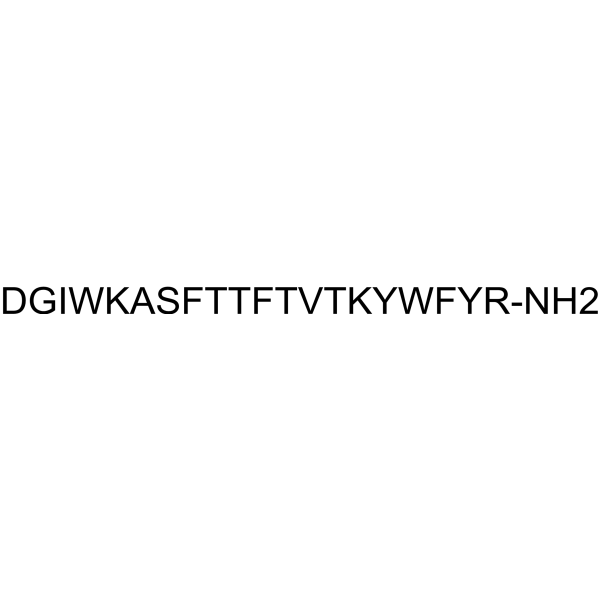 0 ImagesSynonyms: Caveolin-1 scaffolding domain peptideCaveolin-1 (82-101) amide (human, mouse, rat) (Caveolin-1 scaffolding domain peptide) is a peptide that reverses aging-associated deleterious changes in multiple organs. Caveolin-1 (82-101) amide (human, mouse, rat) inhibits tyrosine kinases.
-
PF-04217903
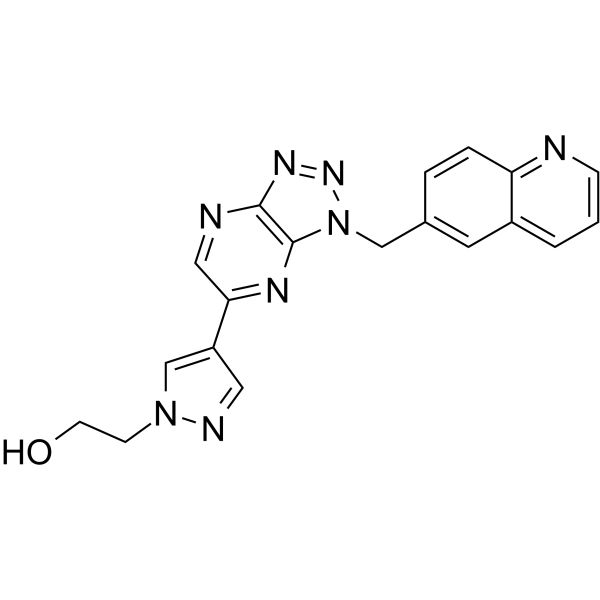 0 ImagesPF-04217903 is an orally active, highly selective ATP-competitive c-Met kinase inhibitor with a Ki value of 4.8 nM and a Kd value of 4.5 nM. PF-04217903 blocks c-Met and HGF signaling pathways, inhibits MET phosphorylation, and blocks downstream MAPK, PI3K/AKT and PLCγ1 pathways. PF-04217903 suppresses tumor proliferation, survival, migration, invasion, angiogenesis and metastasis, induces apoptosis, and enhances efferocytosis, Annexin A1 expression and resolution of inflammation. PF-04217903 retains activity against several c-Met mutants (M1131T, V1220I, H1094R). PF-04217903 increases the incidence of subarachnoid hemorrhage and reduces survival rate without altering aneurysm formation, and also prevents lymph node metastasis induced by VEGF inhibition. PF-04217903 is applicable to research related to tumors (pancreas, stomach, lung, brain, colon, breast, kidney, melanoma, etc.), intracranial aneurysms and inflammatory diseases (gouty arthritis, neutrophilic pleuritis).
-
MY10
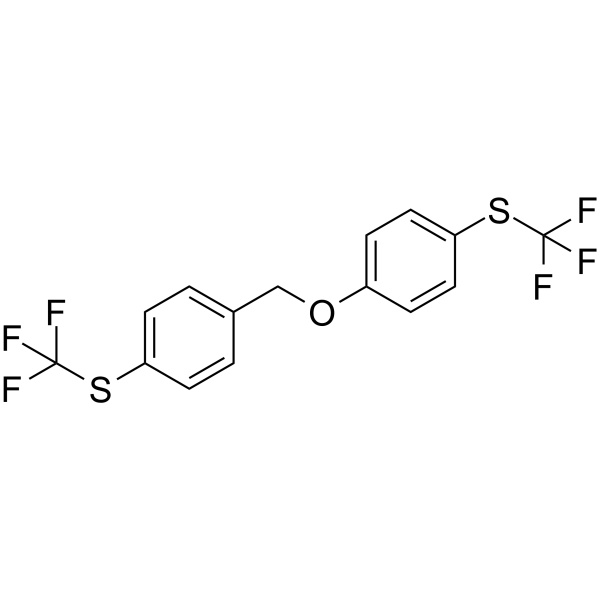 0 ImagesMY10 is a potent and orally active receptor protein tyrosine phosphatase (RPTPβ/ζ) inhibitor. MY10 reduces NF-κB p65 expression. MY10 activates tyrosine phosphorylation of c-Met. MY10 prevents the alcohol-induced downregulation of Ptprz1 and Alk expression. MY10 attenuates binge-like ethanol consumption and ethanol reward. MY10 can be used in the study of neurological and vascular diseases.
-
PRO-6E
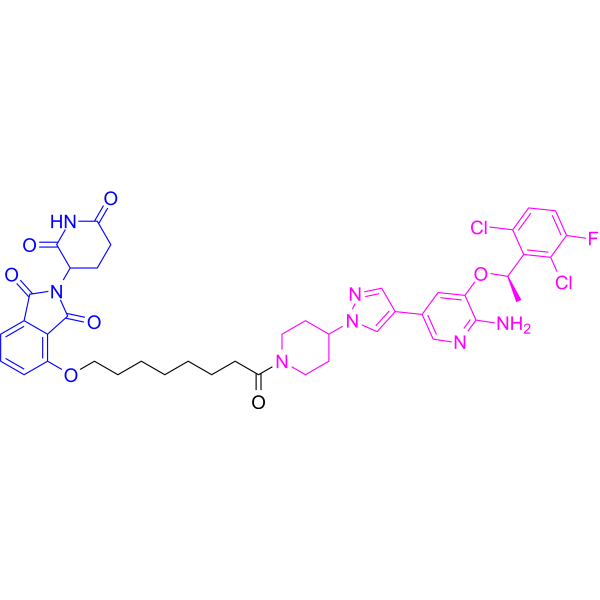 0 ImagesPRO-6E is an oral active PROTAC based on Cereblon ligand, and induces the degradation of MET with maximum degradation of 81.9% at 1 μM in MKN-45 cells. PRO-6E inhibits tumor growth in vivo and in vitro. PRO-6E induces cell apoptosis and induces cell arrest (Sturcture Note:(Blue: Cereblon ligand (HY-103596), Black: linker;Pink: ALK/c-Met inhibitor Crizotinib (HY-50878)).
-
(E/Z)-Afatinib
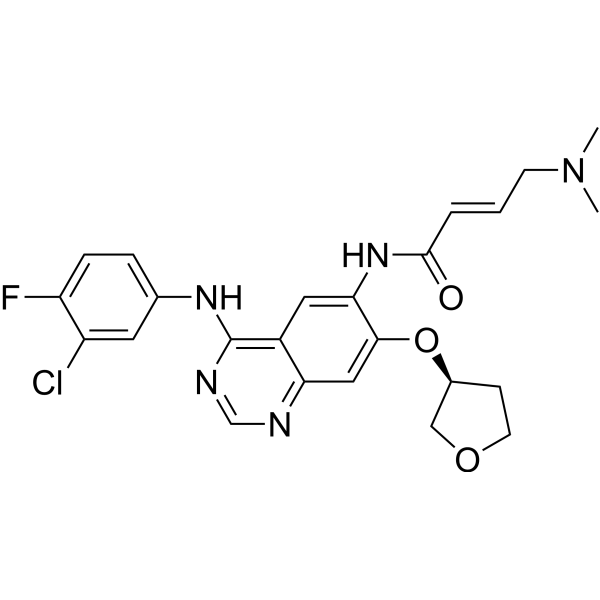 0 ImagesSynonyms: (E/Z)-BIBW 2992(E/Z)-Afatinib ((E/Z)-BIBW 2992) is the mixture of (E)-Afatinib and (Z)-Afatinib. Afatinib (HY-10261) is an irreversible inhibitor of EGFR, by irreversibly binding to their ATP binding site to block activation of EGFR, HER2, HER4, and EGFRvIII. Afatinib used in co-administration with Temozolomide (HY-17364), potently targeting to EGFRvIII-cMet signaling in glioblastoma cells.

-
Glesatinib hydrochloride
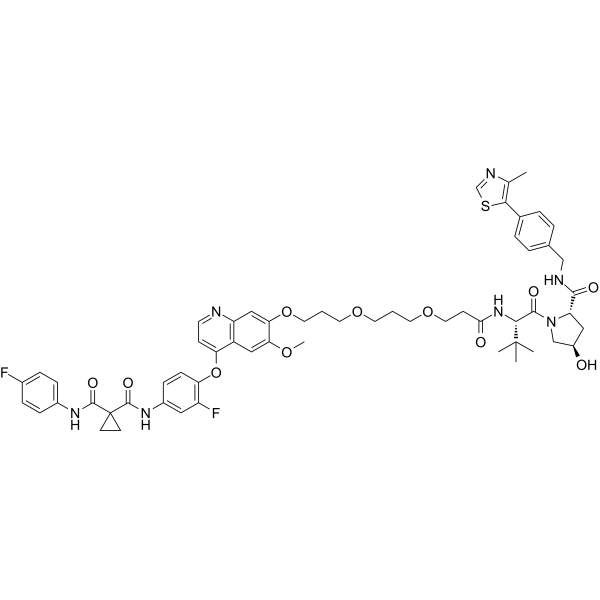
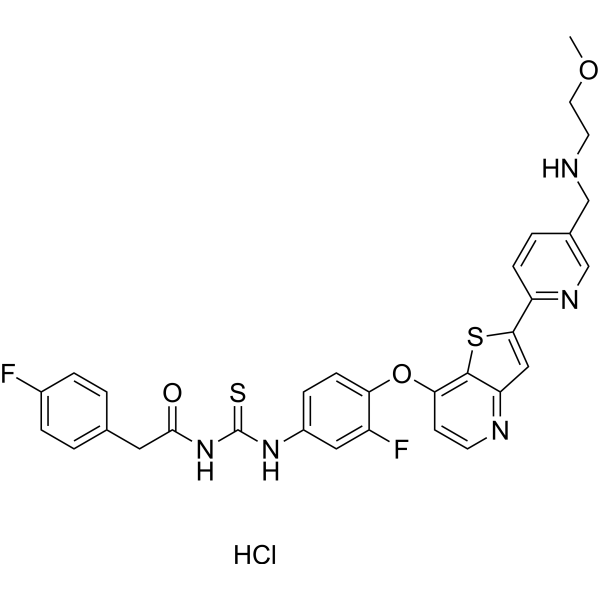 0 ImagesSynonyms: MGCD265 hydrochlorideGlesatinib hydrochloride (MGCD265 hydrochloride) is an orally active, potent MET/SMO dual inhibitor. Glesatinib hydrochloride, a tyrosine kinase inhibitor, antagonizes P-glycoprotein (P-gp) mediated multidrug resistance (MDR) in non-small cell lung cancer (NSCLC).
-
Canlitinib
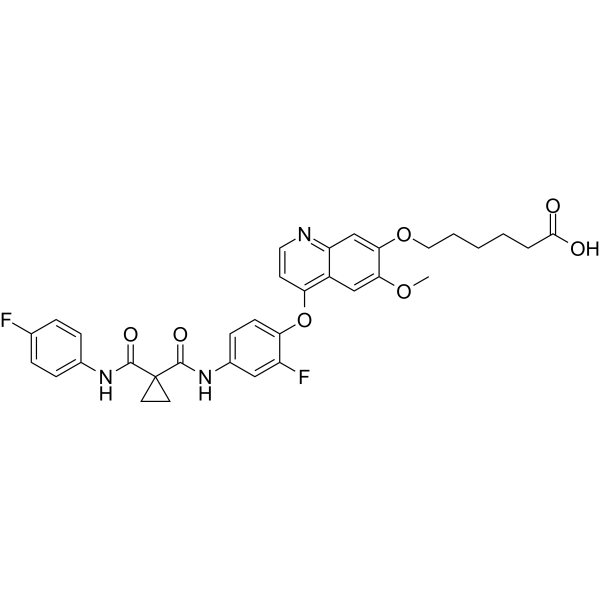 0 ImagesCat. No.: HY-156603CAS No.: 2222730-78-9Canlitinib is a tyrosine kinase inhibitor, extracted from patent WO2018072614 (IV-2). Canlitinib has the potential for cancer study.
-
Tyrosine kinase inhibitor
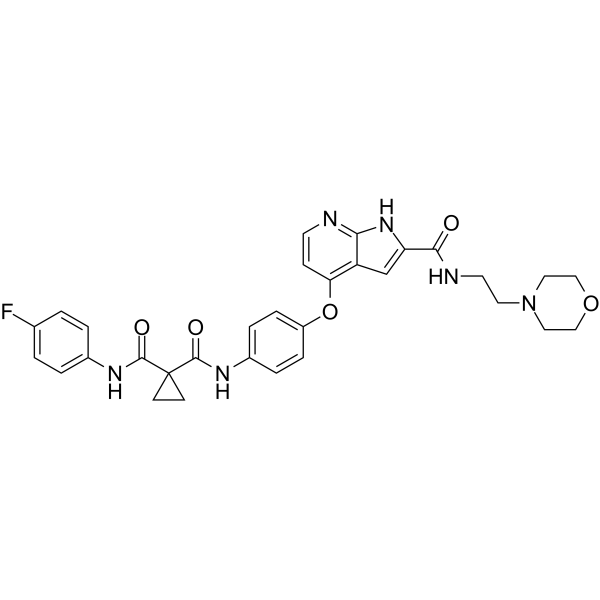 0 ImagesTyrosine kinase inhibitor is a potent tyrosine kinase inhibitor.
-
Davutamig
 0 ImagesSynonyms: REGN-5093Davutamig (REGN-5093) is a human IgG4-kappa, anti-MET bispecific antibody. Davutamig binds 2 distinct epitopes of MET, blocking ligand binding and inducing MET internalization and degradation. Davutamig is applicable to the research of advanced non-small cell lung cancer with MET gene abnormalities.




