



c-Met/HGFR
c-Met (hepatocyte growth factor receptor, HGFR) is a protein possesses tyrosine kinase activity. The primary single chain precursor protein is post-translationally cleaved to produce the alpha and beta subunits, which are disulfide linked to form the mature receptor. c-Met is a membrane receptor that is essential for embryonic development and wound healing. Hepatocyte growth factor (HGF) is the only known ligand of the c-Met receptor. c-Met is normally expressed by cells of epithelial origin, while expression of HGF is restricted to cells of mesenchymalorigin. Upon HGF stimulation, c-Met induces several biological responses that collectively give rise to a program known as invasive growth.
All Product Categories
-
c-Met/HGFR Inhibitors
(236)
View all products
-
c-Met/HGFR Agonist
(1)
View all products
-
c-Met/HGFR Activators
(3)
View all products
-
c-Met/HGFR Modulators
(2)
View all products
-
c-Met/HGFR Degraders
(11)
View all products
-
c-Met/HGFR Ligands
(4)
View all products
-
c-Met/HGFR Proteins
(48)
View all products
-
c-Met/HGFR Related Products (280)
Related Products (280)

-
Recombinant Proteins (48)
-
Antibodies (7)
-
ARGX-111
 0 ImagesCat. No.: HY-P991660Purity: 99.25%ARGX-111 is an anti-MET antibody. ARGX-111 blocks HGF-dependent and -independent signaling, downregulating MET expression on the tumor cell surface. ARGX-111 depletes MET-expressing circulating tumor cells through enhanced antibody-dependent cell-mediated cytotoxicity (ADCC), thereby inhibiting tumor metastasis. ARGX-111 depletes circulating tumor cells and inhibits bone and lung metastasis in an orthotopic mouse model of metastatic breast cancer. ARGX-111 is promising for research in breast cancer and other cancers.
-
Anti-MST1R Antibody (MOR07692)
 0 ImagesCat. No.: HY-P991185Purity: 99.44%
-
REGN5093-M114
 0 ImagesCat. No.: HY-171191Purity: 98.32%REGN5093-M114 is a bispecific antibody-drug conjugate (ADC) that targets two epitopes of the MET receptor tyrosine kinase inhibits the proliferation of NSCLC cells, exhibits antitumor efficacy in mouse models. REGN5093-M114 is composed of the human monoclonal anti-MET antibody Davutamig (HY-P990073) and the tubulin-inhibiting linker-payload (HY-148528).
-
Afatinib oxalate
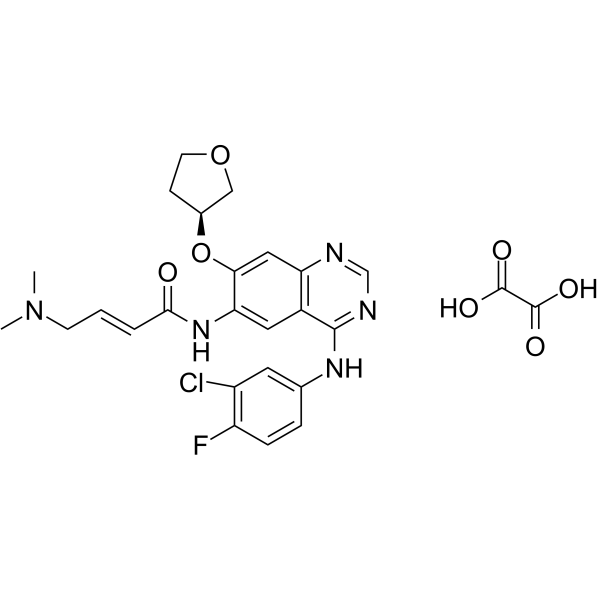 0 ImagesCat. No.: HY-10261DCAS No.: 1398312-64-5Synonyms: BIBW 2992 oxalateAfatinib (BIBW 2992) oxalate is an orally active, potent and irreversible dual specificity inhibitor of ErbB family (EGFR and HER2), with IC50 values of 0.5 nM, 0.4 nM, 10 nM and 14 nM for EGFRwt, EGFRL858R, EGFRL858R/T790M and HER2, respectively. Afatinib oxalate can be used for the research of esophageal squamous cell carcinoma (ESCC), non-small cell lung cancer (NSCLC) and gastric cancer.
-
Cabozantinib hydrochloride
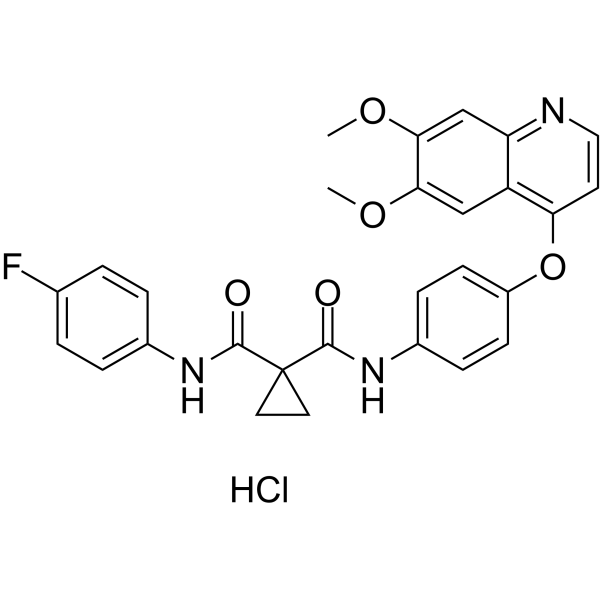 0 ImagesCat. No.: HY-13016ACAS No.: 1817759-42-4Synonyms: XL184 hydrochloride; BMS-907351 hydrochlorideCabozantinib hydrochloride is a potent and orally active inhibitor of VEGFR2 and MET, with IC50 values of 0.035 and 1.3 nM, respectively. Cabozantinib hydrochloride displays strong inhibition of KIT, RET, AXL, TIE2, and FLT3 (IC50=4.6, 5.2, 7, 14.3, and 11.3 nM, respectively). Cabozantinib hydrochloride shows antiangiogenic activity. Cabozantinib hydrochloride disrupts tumor vasculature and promotes tumor and endothelial cell apoptosis.
-
c-Met-IN-2
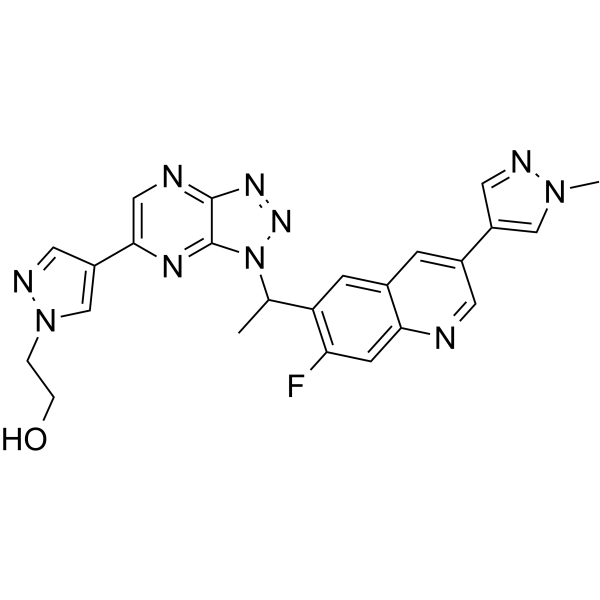 0 ImagesCat. No.: HY-101773CAS No.: 1635406-73-3c-Met-IN-2 is a potent, selective and orally available c-Met inhibitor, with an IC50 of 0.6 nM, with antitumor activity.
-
Crizotinib acetate
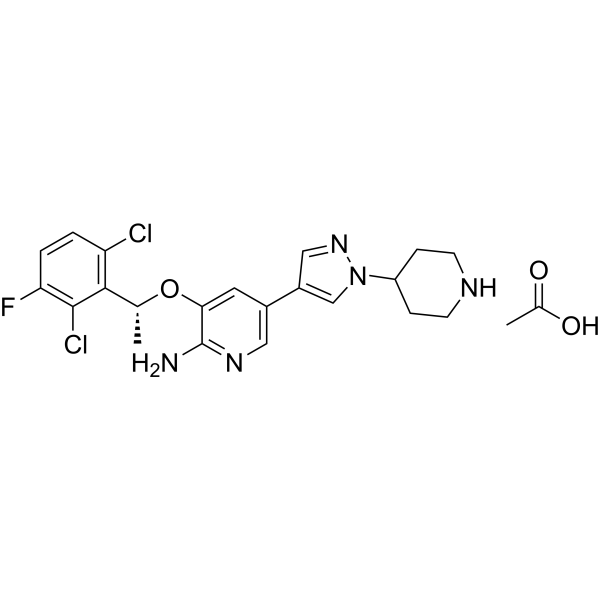 0 ImagesCat. No.: HY-50878BCAS No.: 877399-53-6Synonyms: PF-02341066 acetateCrizotinib (PF-02341066) acetate is an orally bioavailable, ATP-competitive ALK and c-Met inhibitor with IC50s of 20 and 8 nM, respectively. Crizotinib acetate inhibits tyrosine phosphorylation of NPM-ALK and tyrosine phosphorylation of c-Met with IC50s of 24 and 11 nM in cell-based assays, respectively. Crizotinib acetate is also a ROS1 inhibitor. Crizotinib acetate has effective tumor growth inhibition.
-
S49076 hydrochloride
 0 ImagesCat. No.: HY-12965ACAS No.: 1265966-31-1S49076 hydrochloride is a novel, potent inhibitor of MET, AXL/MER, and FGFR1/2/3 with IC50 values below 20 nM.
-
Amuvatinib hydrochloride
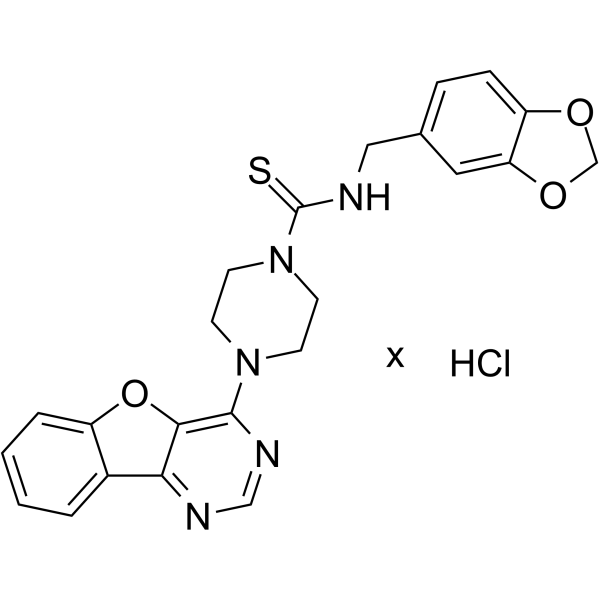 0 ImagesCat. No.: HY-10206ACAS No.: 1055986-67-8Synonyms: MP470 hydrochloride; HPK 56 hydrochlorideAmuvatinib hydrochloride (MP470 hydrochloride) is an orally bioavailable multi-targeted tyrosine kinase inhibitor with potent activity against mutant c-Kit, PDGFRα, Flt3, c-Met and c-Ret. Amuvatinib hydrochloride (MP470 hydrochloride) is also a DNA repair suppressor through suppression of DNA repair protein RAD51, thereby disrupting DNA damage repair. Antineoplastic activity.
-
PF-04217903 phenolsulfonate
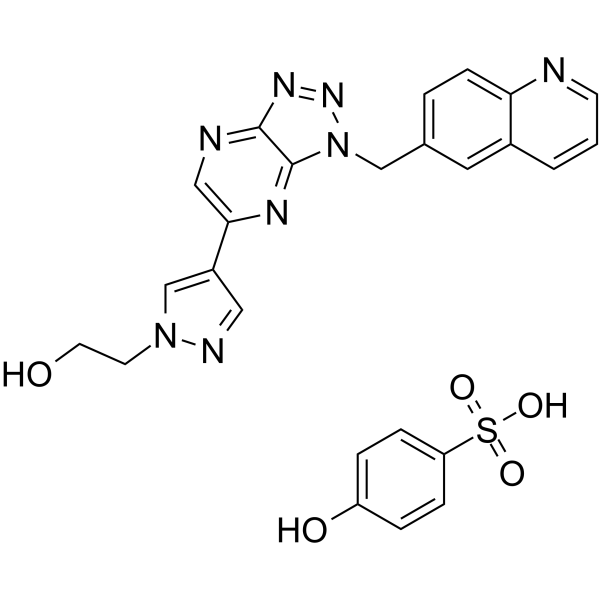 0 ImagesCat. No.: HY-12017BCAS No.: 1159490-85-3PF-04217903 phenolsulfonate is an orally active, highly selective ATP-competitive c-Met kinase inhibitor with a Ki value of 4.8 nM and a Kd value of 4.5 nM. PF-04217903 phenolsulfonate blocks c-Met and HGF signaling pathways, inhibits MET phosphorylation, and blocks downstream MAPK, PI3K/AKT and PLCγ1 pathways. PF-04217903 phenolsulfonate suppresses tumor proliferation, survival, migration, invasion, angiogenesis and metastasis, induces apoptosis, and enhances efferocytosis, Annexin A1 expression and resolution of inflammation. PF-04217903 phenolsulfonate retains activity against several c-Met mutants (M1131T, V1220I, H1094R). PF-04217903 phenolsulfonate increases the incidence of subarachnoid hemorrhage and reduces survival rate without altering aneurysm formation, and also prevents lymph node metastasis induced by VEGF inhibition. PF-04217903 phenolsulfonate is applicable to research related to tumors (pancreas, stomach, lung, brain, colon, breast, kidney, melanoma, etc.), intracranial aneurysms and inflammatory diseases (gouty arthritis, neutrophilic pleuritis).
-
Boditrectinib
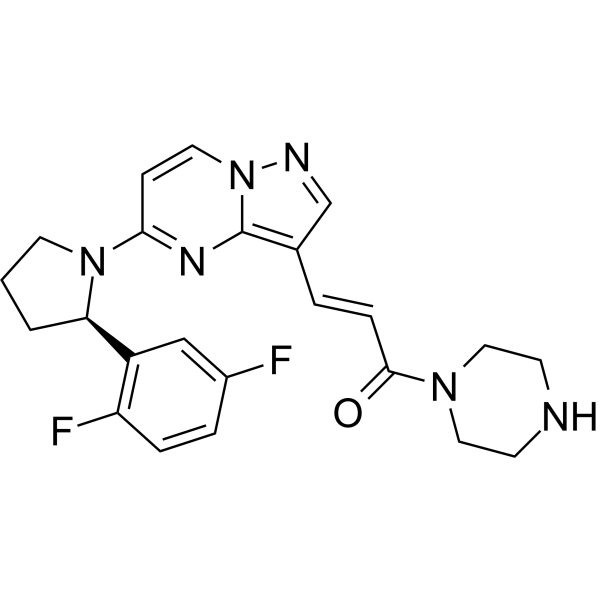 0 ImagesCat. No.: HY-152849CAS No.: 1940165-80-9Synonyms: HL5101Boditrectinib is a potent tyrosine kinase inhibitor. Boditrectinib serves as an antineoplastic agent. Boditrectinib is useful in the research of cancer, inflammation, neurodegenerative diseases and certain infectious diseases.
-
Boditrectinib oxalate
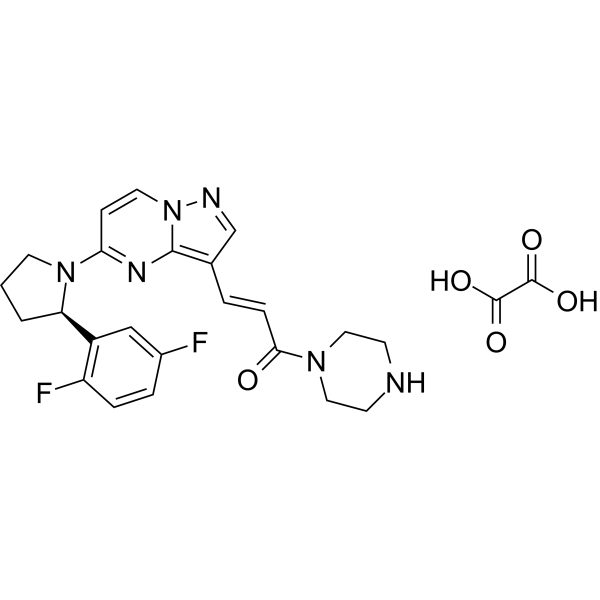 0 ImagesCat. No.: HY-152849ACAS No.: 2773577-41-4Synonyms: HL5101 oxalateBoditrectinib oxalate is a potent tyrosine kinase inhibitor. Boditrectinib oxalate serves as an antineoplastic agent. Boditrectinib oxalate is useful in the research of cancer, inflammation, neurodegenerative diseases and certain infectious diseases.
-
Resencatinib
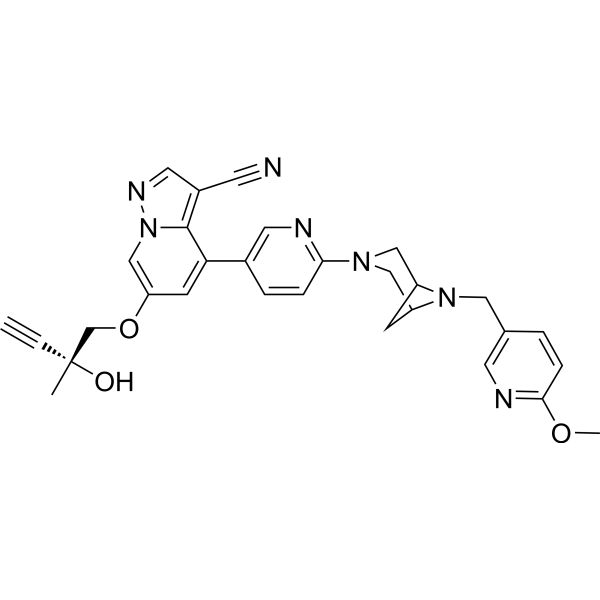 0 ImagesCat. No.: HY-148793CAS No.: 2546117-79-5Resencatinib is a potent tyrosine kinase inhibitor with antineoplastic activity. Resencatinib is a click chemistry reagent, it contains an Alkyne group and can undergo copper-catalyzed azide-alkyne cycloaddition (CuAAc) with molecules containing Azide groups.
-
Tepotinib hydrochloride
 0 ImagesCat. No.: HY-14721ACAS No.: 1103508-80-0Synonyms: EMD-1214063 hydrochlorideTepotinib (EMD-1214063) hydrochloride is an orally active and highly selective, reversible, ATP-competitive c-Met inhibitor with an IC50 of 3 nM, >200-fold selective for c-Met than IRAK4, TrkA, Axl, IRAK1, and Mer. Tepotinib hydrochloride inhibits c-Met phosphorylation and induces autophagy. Tepotinib hydrochloride has antitumor effects.
-
c-Met-IN-24
 0 ImagesCat. No.: HY-162803c-Met-IN-24 (compound 3g) is a dual-target inhibitor of STAT-3 (=4.7 μM) and c-MET (=12.67 μM) with anticancer activity. c-Met-IN-24 arrests the G2/M cell cycle and induces apoptosis in SNB-75 cells. c-Met-IN-24 can be used in the study of central nervous system cancers.
-
c-Met-IN-16
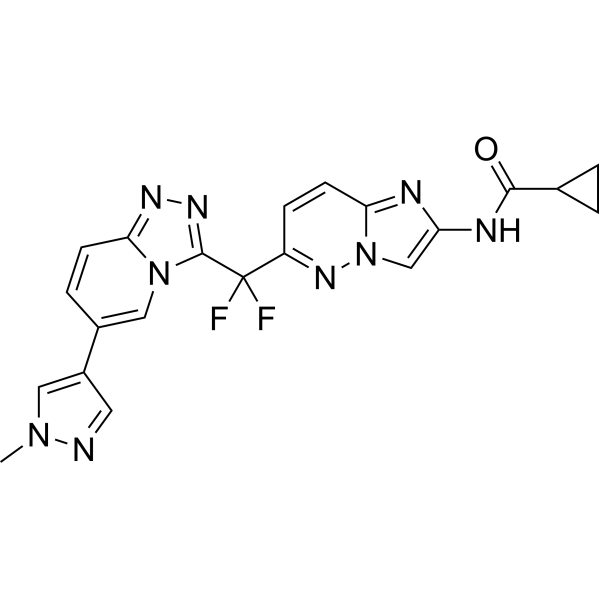 0 ImagesCat. No.: HY-120908CAS No.: 1208248-23-0c-Met-IN-16 is a c-Met inhibitor that can be used for cancer research.
-
Anticancer agent 276
 0 ImagesCat. No.: HY-175171Anticancer agent 276 (Compound 5) is a multi-target anticancer agent. Anticancer agent 276 has a potent anticancer activity against human tumor cells with IC50s of 6.90 and 4.48 μM for HEPG2 and MCF7 cells, respectively. Anticancer agent 276 shows strong and stable interactions across multiple targets, including Topoisomerase II, VEGFR2, c-Met, EGFR and ERα.
-
Crizotinib-amide-PEG2-NH2
 0 ImagesCat. No.: HY-176950CAS No.: 3048497-52-2Crizotinib-amide-PEG2-NH2 is a MET ligand (HY-50878) linker conjugate. Crizotinib-amide-PEG2-NH2 can be used for synthesis of MET degrader OZD-MET 01 (HY-177893).
-
c-Met-IN-15
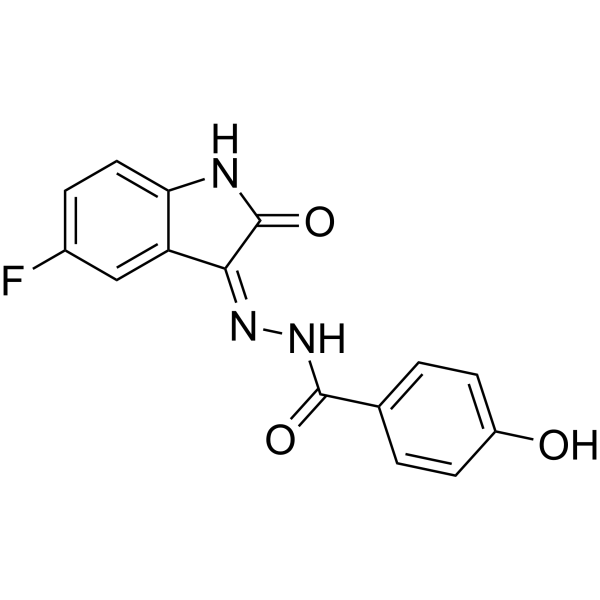 0 Imagesc-Met-IN-15 (compound S3) is a c-Met kinase inhibitor. c-Met-IN-15 inhibits c-Met kinase activity of 21.1% at the concentration of 10 μM.
-
KRC-108
 0 ImagesCat. No.: HY-123237CAS No.: 1146944-35-5KRC-108, an aminopyridine, is an orally active multiple kinase inhibitor with IC50s of 80 nM, 23 nM, 3 nM, 70 nM, 30 nM, 39 nM for c-Met, c-Met M1250T, c-Met Y1230D, Ron, Flt3 and TrkA, respectively. KRC-108 induces cell cycle arrest, apoptotic cell death, and autophagy. KRC-108 exhibits anti-tumor activity in vivo in HT29 colorectal cancer, NCI-H441 lung cancer xenograft models in athymic BALB/c nu/nu mice.




