



c-Met/HGFR
c-Met (hepatocyte growth factor receptor, HGFR) is a protein possesses tyrosine kinase activity. The primary single chain precursor protein is post-translationally cleaved to produce the alpha and beta subunits, which are disulfide linked to form the mature receptor. c-Met is a membrane receptor that is essential for embryonic development and wound healing. Hepatocyte growth factor (HGF) is the only known ligand of the c-Met receptor. c-Met is normally expressed by cells of epithelial origin, while expression of HGF is restricted to cells of mesenchymalorigin. Upon HGF stimulation, c-Met induces several biological responses that collectively give rise to a program known as invasive growth.
All Product Categories
-
c-Met/HGFR Inhibitors
(236)
View all products
-
c-Met/HGFR Agonist
(1)
View all products
-
c-Met/HGFR Activators
(4)
View all products
-
c-Met/HGFR Modulators
(2)
View all products
-
c-Met/HGFR Degraders
(11)
View all products
-
c-Met/HGFR Ligands
(4)
View all products
-
c-Met/HGFR Proteins
(48)
View all products
-
c-Met/HGFR Related Products (281)
Related Products (281)

-
Recombinant Proteins (48)
-
Antibodies (7)
-
Tepotinib (Standard)
 0 ImagesSynonyms: EMD-1214063 (Standard)Tepotinib (Standard) is the analytical standard of Tepotinib. This product is intended for research and analytical applications. Tepotinib (EMD-1214063) is an orally active and highly selective, reversible, ATP-competitive c-Met inhibitor with an IC50 of 3 nM, >200-fold selective for c-Met than IRAK4, TrkA, Axl, IRAK1, and Mer. Tepotinib inhibits c-Met phosphorylation. Tepotinib has antitumor effects.
-
Roquefortine C
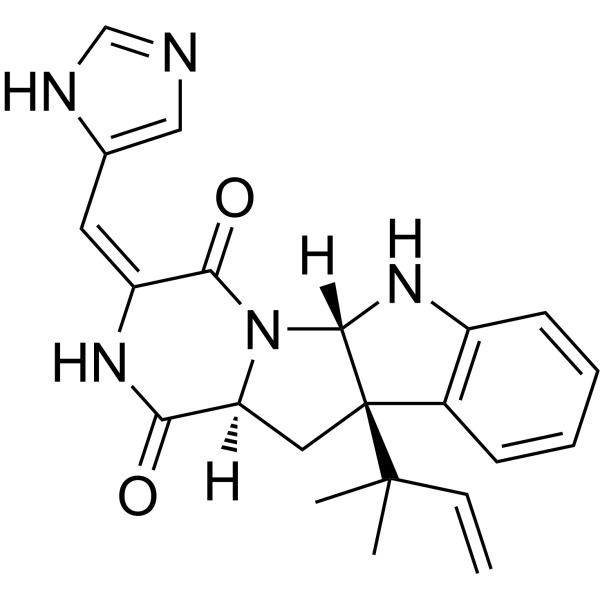 0 ImagesRoquefortine C is a mycotoxin that can be isolated from Penicillium species. Roquefortine C is an agonist of P-gp and an inhibitor of P450 3A and P450 1A. Roquefortine C can inhibit Gram-positive bacteria and also has certain neurotoxicity. Additionally, Roquefortine C can exert antitumor activity.
-
SFN68
 0 ImagesCat. No.: HY-P991589Purity: 99.87%Synonyms: NOV-1105
-
JNJ-38877605-d1
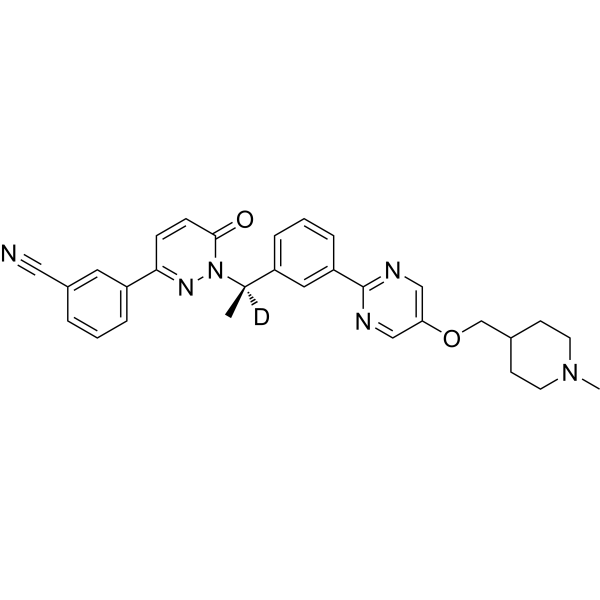
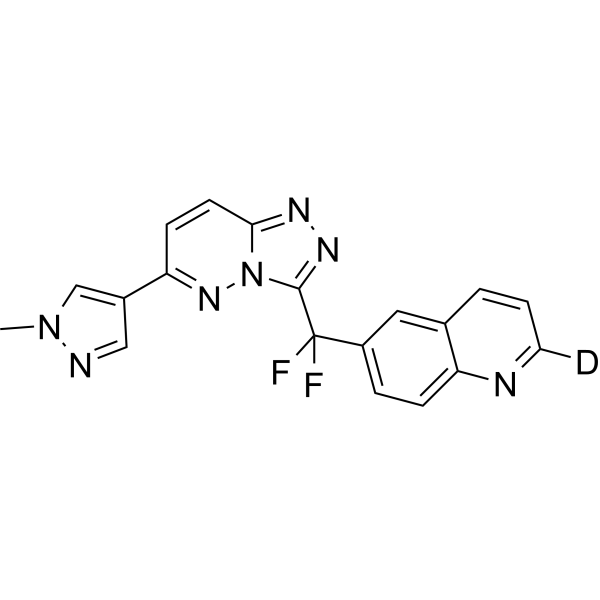 0 ImagesCat. No.: HY-50683SCAS No.: 1936472-36-4JNJ-38877605-d1 (compound DO-2) is a highly selective MNNG HOS transforming (MET) inhibitor. JNJ-38877605-d1 is thought to diminish the formation of the Aldehyde Oxidase 1 inactive metabolite M3.
-
Glesatinib
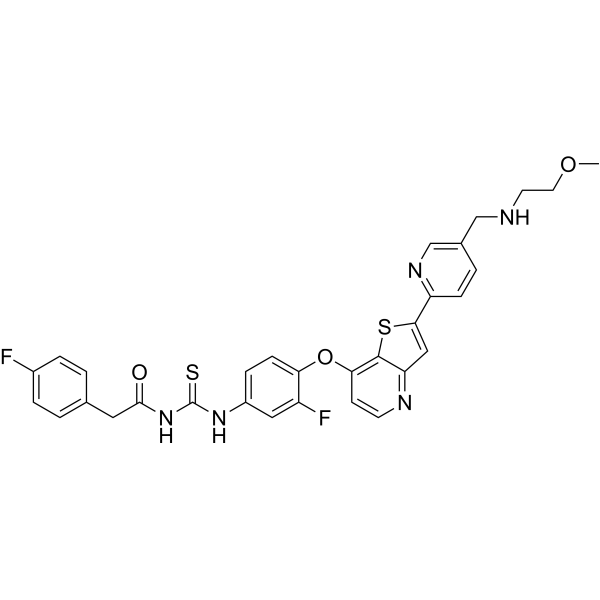 0 ImagesCat. No.: HY-19642CAS No.: 936694-12-1Synonyms: MGCD265Glesatinib (MGCD265) is an orally active, potent MET/SMO dual inhibitor. Glesatinib, a tyrosine kinase inhibitor, antagonizes P-glycoprotein (P-gp) mediated multidrug resistance (MDR) in non-small cell lung cancer (NSCLC).
-
JNJ-38877618
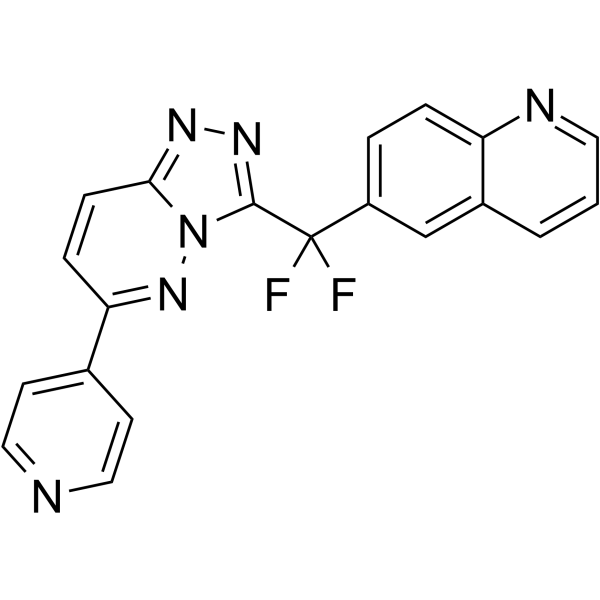 0 ImagesJNJ-38877618 is a potent, highly selective, orally bioavailable Met kinase inhibitor with IC50s of 2 and 3 nM for wild type and mutant Met, respectively.
-
BAY-474
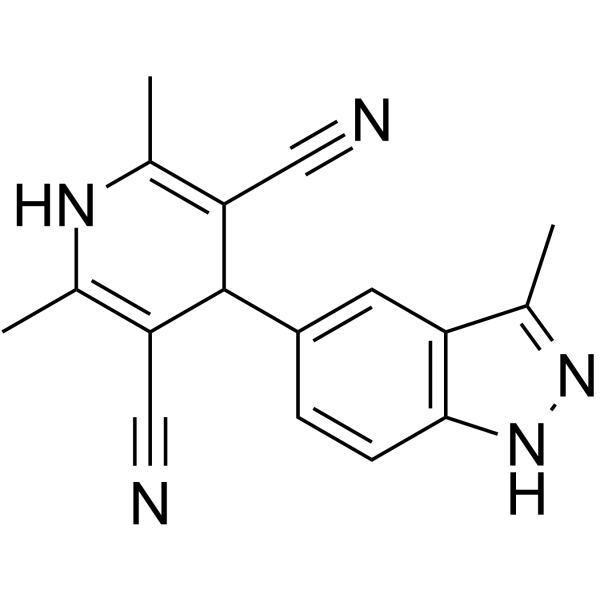 0 ImagesBAY-474 is a tyrosine-protein kinase c-Met inhibitor. BAY-474 acts as an epigenetics probe.
-
MK-8033 hydrochloride
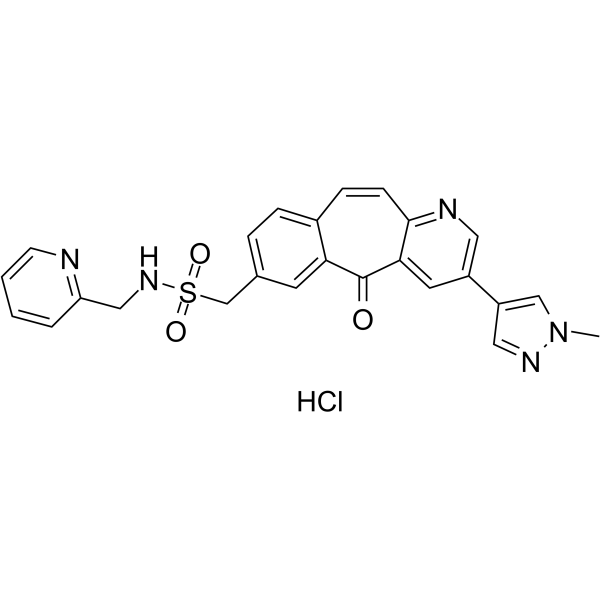 0 ImagesMK-8033 hydrochloride is an orally active ATP competitive c-Met/Ron dual inhibitor (IC50s: 1 nM (c-Met),7 nM (Ron)), with preferential binding to the activated kinase conformation. MK-8033 hydrochloride can be used in the research of cancers, such as breast and bladder cancers, non-small cell lung cancers (NSCLCs).

-
MET kinase-IN-2
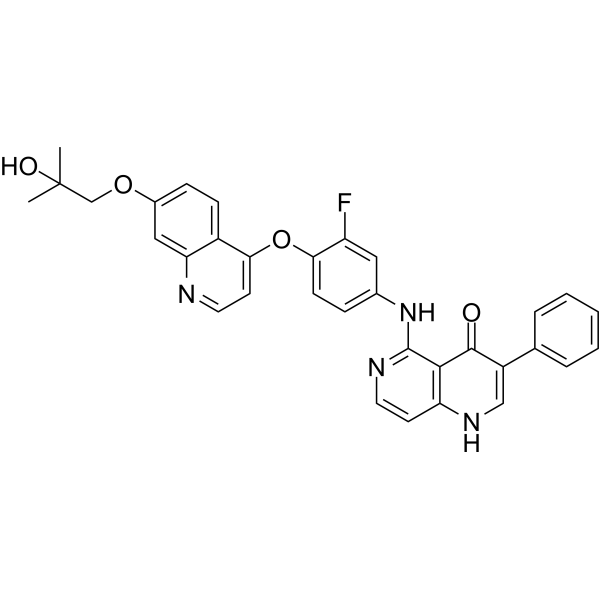 0 ImagesMET kinase-IN-2 is a potent, selective, orally bioavailable MET kinase inhibitor with an IC50 of 7.4 nM. MET kinase-IN-2 has antitumor activity.
-
Vabametkib
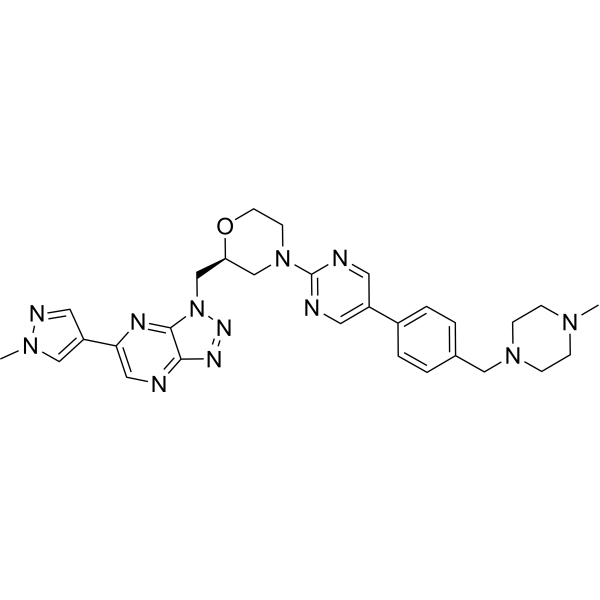 0 ImagesCat. No.: HY-148803CAS No.: 1571903-56-4Vabametkib is a MET TKI inhibitor. Vabametkib can be used in research on non-small cell lung cancer (NSCLC).
-
(rel)-Tivantinib
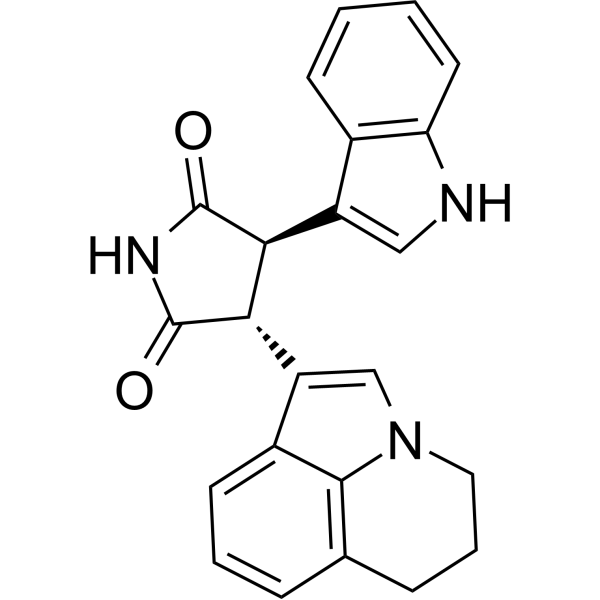 0 ImagesCat. No.: HY-77493CAS No.: 905853-99-8Synonyms: (rel)-ARQ 197; (rel)-(3R,4R)-ARQ 198(rel)-Tivantinib is a potent and highly selective inhibitor of the receptor tyrosine kinase c-MET. (rel)-Tivantinib has two novel targets, GSK3α and GSK3β, which play an important role in the cellular mechanism of non-small cell lung cancer (NSCLC).
-
AG01
 0 ImagesCat. No.: HY-P991664AG01 is a monoclonal antibody against progranulin (GP88). AG01 inhibits triple-negative breast cancer (TNBC) cell proliferation and migration, reduces the expression of phosphorylated protein kinases p-Src, p-AKT, and p-ERK, and reduces the expression of oncogenic proteins such as Axl, c-MET, HIF-1α, and VEGF. AG01 inhibits tumor growth and Ki67 expression in a TNBC xenograft mouse model. AG01 can be used in the research of TNBC and other cancers.

-
SU 5616
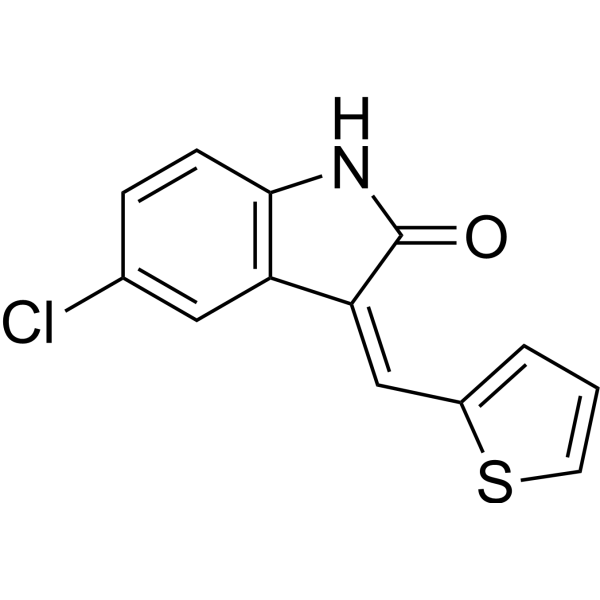 0 ImagesSU 5616 is an indolinone compound that modulates tyrosine kinase signaling pathways to control aberrant cell proliferation.
-
Decanoic acid-13C
 0 ImagesDecanoic acid-13C is the 13C-labeled Decanoic acid (HY-W015309). Decanoic acid is a key component of the medium-chain triglyceride (MCT) found in coconut oil. Decanoic acid is a brain-penetrant and non-competitive inhibitor of AMPA receptor showing antiseizure activity in rats. Decanoic acid reduces tyrosinase activity and inhibits melanosome maturation. Decanoic acid suppresses the phosphorylation of c-Met and induced apoptosis in hepatocellular carcinoma (HCC) cells by inhibiting the expression of various oncogenic proteins, which is promising for research in the field of mTORC1 signaling, HCC and epilepsy.
-
SYN1143
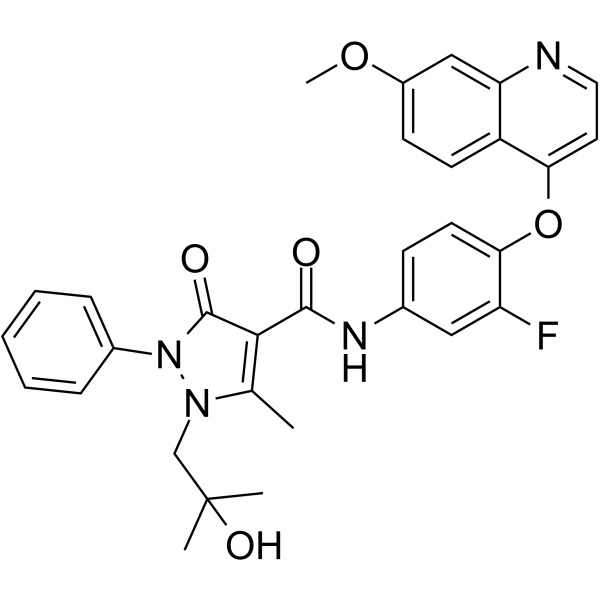 0 ImagesSYN1143 is a potent, selective and orally active dual inhibitor of c-Met/RON, with IC50s of 4 and 9 nM, respectively. SYN1143 has weak inhibitory activity on Lck, Tie2, Src, and BTK with IC50s ranging from 160 to 710 nM. SYN1143 can be used for the research of cancers that RON and c-Met are activated.
-
Meleagrin
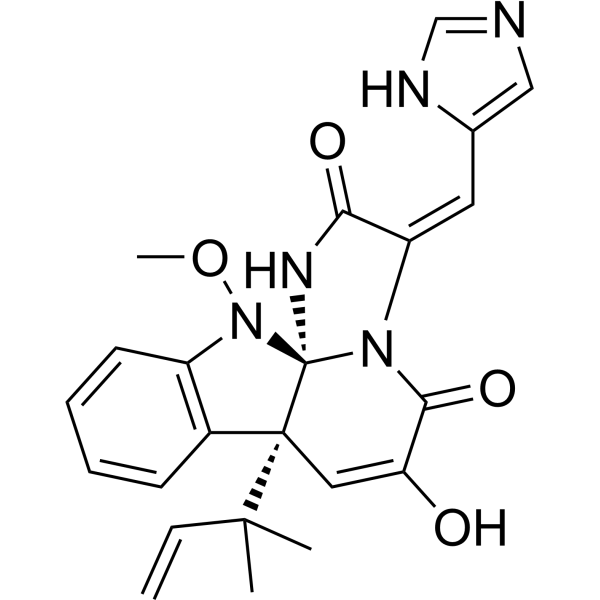 0 ImagesMeleagrin is a roquefortine C-derived alkaloid produced by fungi of the genus Penicillium and has antimicrobial and anti-proliferative activities. Meleagrin is a class of FabI inhibitor. Meleagrin is a lead c-Met inhibitory entity useful for the control of c-Met-dependent metastatic and invasive breast malignancies.
-
1D228
 0 ImagesCat. No.: HY-157148CAS No.: 2925447-16-91D228 is a c-Met/TRK inhibitor with antitumor activity. 1D228 inhibits cyclin D1 to induce G0/G1 arrest and inhibit cancer cell proliferation and migration. 1D228 can be used in the study of gastric, liver and vascular tumors.
-
Decanoic acid (Standard)
 0 ImagesDecanoic acid (Standard) is the analytical standard of Decanoic acid. This product is intended for research and analytical applications. Decanoic acid is a key component of the medium-chain triglyceride (MCT) found in coconut oil. Decanoic acid is a brain-penetrant and non-competitive inhibitor of AMPA receptor showing antiseizure activity in rats. Decanoic acid reduces tyrosinase activity and inhibits melanosome maturation. Decanoic acid suppresses the phosphorylation of c-Met and induced apoptosis in hepatocellular carcinoma (HCC) cells by inhibiting the expression of various oncogenic proteins, which is promising for research in the field of mTORC1 signaling, HCC and epilepsy.




