



GLUT
Glucose transporter
GLUTs (Glucose transporters ) are proteins comprising 12 membrane-spanning regions. GLUTs transport glucose across the plasma membrane by means of a facilitated diffusion mechanism.
GLUT1 (SLC2A1), a uniporter protein, facilitates the transport of glucose across the plasma membranes of mammalian cells. GLUT2 (SLC2A2) is a transmembrane carrier protein that enables protein facilitated glucose movement across cell membranes. GLUT3 (SLC2A3), mainly present in the brain, has high affinity for glucose. GLUT3 facilitates the transport of glucose across the plasma membranes of mammalian cells. GLUT4 (SLC2A4) is found in the heart, skeletal muscle, adipose tissue, and brain. GLUT4 is an insulin-responsive glucose transporter.
GLUT Isoform Specific Products
All Product Categories
-
GLUT Related Products (124)
Related Products (124)

-
Antibodies (15)
-
GLUT Isoform Comparison
-
Rapaglutin E
 0 ImagesCat. No.: HY-176051Synonyms: RgERapaglutin E (RgE) is a glucose transporter (GLUT) inhibitor. Rapaglutin E exhibits dose-dependent inhibition of [3H]-2DG uptake in A549, Jurkat T, PANC10.05, and RBC, with IC50 values 8.9 nM, 3.1 nM, 35.5 nM, 74.2 nM. Rapaglutin E inhibits cell proliferation in A549, PANC10.05, HeLa, Jurkat T, and HEK293T cells.

-
Avicularin (Standard)
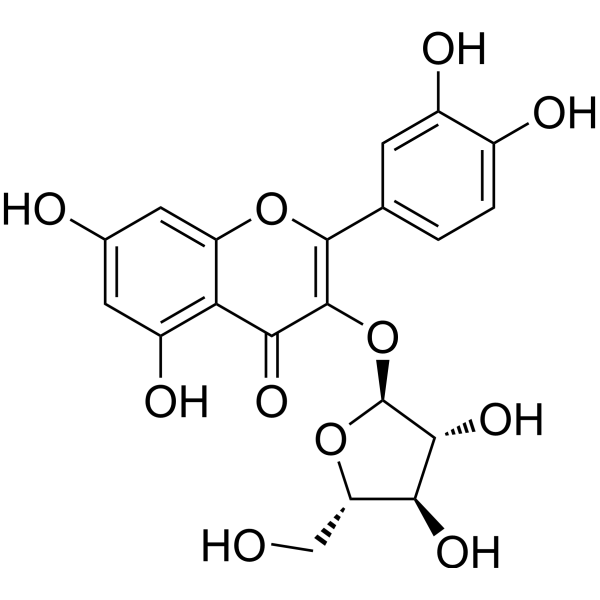 0 ImagesAvicularin (Standard) is the analytical standard of Avicularin. This product is intended for research and analytical applications. Avicularin is an orally active flavonoid. Avicularin inhibits NF-κB (p65), COX-2 and PPAR-γ activities. Avicularin has anti-inflammatory, anti-infectious anti-allergic, anti-oxidant, hepatoprotective, and anti-tumor activities.
-
Chiisanogenin
 0 ImagesCat. No.: HY-N20708CAS No.: 89353-99-1Chiisanogenin is an orally active triterpenoid. Chiisanogenin reduces postprandial blood glucose by promoting GLUT4 translocation and glucose uptake via activation of the IRS-1/PI3K/Akt signaling pathway. Chiisanogenin binds to MLKL and inhibits its phosphorylation and oligomerization, maintains lysosomal integrity, restores autophagic flux, and suppresses NLRP3 inflammasome activation and pyroptosis. Chiisanogenin inhibits xanthine oxidase activity and regulates oxidative stress and ion pump activity. Chiisanogenin binds to or inhibits PKA, H+/K+-ATPase and β-glucuronidase. Chiisanogenin possesses multiple pharmacological activities, including broad-spectrum antibacterial activity, anticancer, anti-inflammatory, antirheumatic, renoprotective, cardioprotective and antiarrhythmic effects. Chiisanogenin can be used in research related to type 2 diabetes, rheumatoid arthritis, myocardial injury, hepatocellular carcinoma and ventricular arrhythmia.
-
Xanthine oxidase-IN-21
 0 ImagesCat. No.: HY-180271Xanthine oxidase-IN-21, a Genipin (HY-17389) derivative, is an orally active mixed competitive xanthine oxidase (XOD) inhibitor with an IC50 of 0.68 μM. Xanthine oxidase-IN-21 reduces renal fibrosis by decreasing α-SMA expression and suppresses pro-inflammatory cytokines IL-1β, IL-6, and TNF-α through NF-κB pathway regulation. Xanthine oxidase-IN-21 also inhibits URAT1 and GLUT9 expression, promoting uric acid excretion and lowering serum uric acid levels. Xanthine oxidase-IN-21 shows significantly hepatorenal protection activity. Xanthine oxidase-IN-21 can be used for the research of hyperuricemia.
-
Physagulide Y
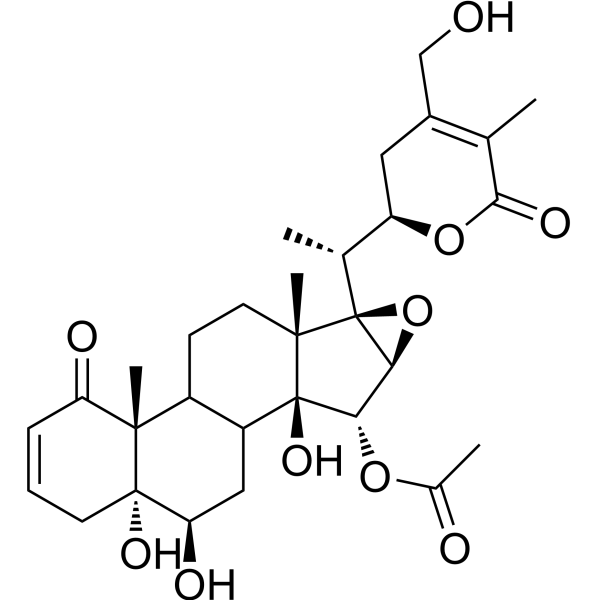 0 ImagesCat. No.: HY-163139Physagulide Y (2), a withanolide with anticancer activity, is a GLUT1 inhibitor.
-
Brevifolincarboxylic acid (Standard)
 0 ImagesCat. No.: HY-N4095RCAS No.: 18490-95-4Brevifolincarboxylic acid (Standard) is the analytical standard of Brevifolincarboxylic acid (HY-N4095). This product is intended for research and analytical applications. Brevifolincarboxylic acid is a phenolic compound. Brevifolincarboxylic acid can be isolated from Duchesnea chrysantha. Brevifolincarboxylic acid inhibits α-glucosidase with an IC50 value of 323.46 μM. Brevifolincarboxylic acid has an inhibitory effect on the aryl hydrocarbon receptor (AhR). Brevifolincarbacid scavenges ROS. Brevifolincarbacid restores the glucose uptake activity of myotubes. Brevifolincarboxylic acid has antitumor activity against lung and gastric cancer. Brevifolincarbacid can be used in the study of diabetes and inflammatory diseases.
-
BAY-876 (Standard)
 0 ImagesCat. No.: HY-100017RCAS No.: 1799753-84-6BAY-876 (Standard) is the analytical standard of BAY-876 (HY-100017). This product is intended for research and analytical applications. BAY-876, a chemical probe, is an orally active and selective glucose transporter 1 (GLUT1) inhibitor with an IC50 of 2 nM. BAY-876 is >130-fold more selective for GLUT1 than GLUT2, GLUT3, and GLUT4. BAY-876 is also a potent blocker of glycolytic metabolism and ovarian cancer growth. In addition, BAY-876 can induce the formation of disulfide bonds in actin cytoskeletal proteins, leading to the occurrence of cellular disulfidptosis.
-
SBI-477 analog
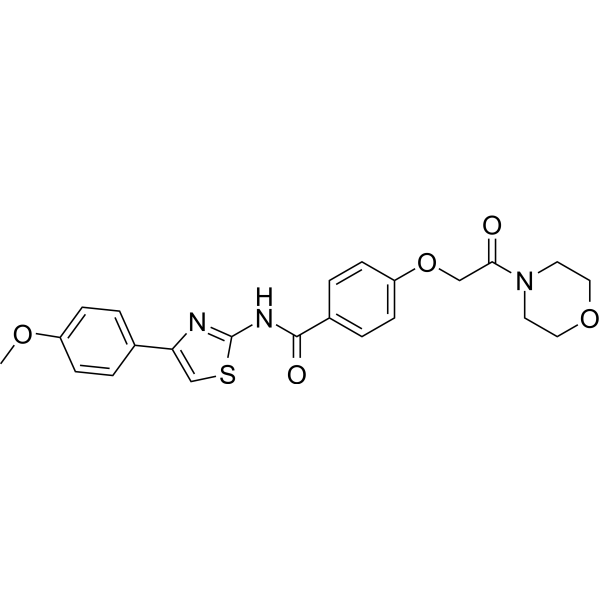 0 ImagesCat. No.: HY-124417CAS No.: 2073059-56-8SBI-477 (compound 41) analog inhibits intracellular lipid accumulation, increase celluar glucose uptake.
-
Rubusoside (Standard)
 0 ImagesRubusoside (Standard) is the analytical standard of Rubusoside. This product is intended for research and analytical applications. Rubusoside is a diterpene glycoside that is also a sweetener and solubilizer with anti-angiogenic, anti-cancer, anti-obesity, anti-allergic and anti-asthmatic effects. Rubusoside attenuates airway hyperresponsiveness and reduces inflammatory cells in bronchoalveolar lavage fluid (BALF), reducing OVA (HY-W250978)-induced airway inflammation. Rubusoside also prevents palmitic acid-induced lipotoxicity in pancreatic INS-1 cells, reduces the transport of human glucose transporters GLUT-1 and fructose GLUT-5, and inhibits NF-κB and α-amylase (α-amylase).
-
GLUT4 activator 3
 0 ImagesCat. No.: HY-174145CAS No.: 3088771-32-5GLUT4 activator 3 (Compound 13a) is an antidiabetic agent targeting GLUT4 translocation in skeletal muscle. GLUT4 activator 3 can promote the translocation of glucose transporter 4 (GLUT4) in skeletal muscle cells. GLUT4 activator 3 reduces blood glucose in STZ-induced diabetic rats.
-
SLC2A1 modulator-1
 0 ImagesCat. No.: HY-180874CAS No.: 393845-92-6SLC2A1 modulator-1 is a SLC2A1 modulator.
-
BAY-588
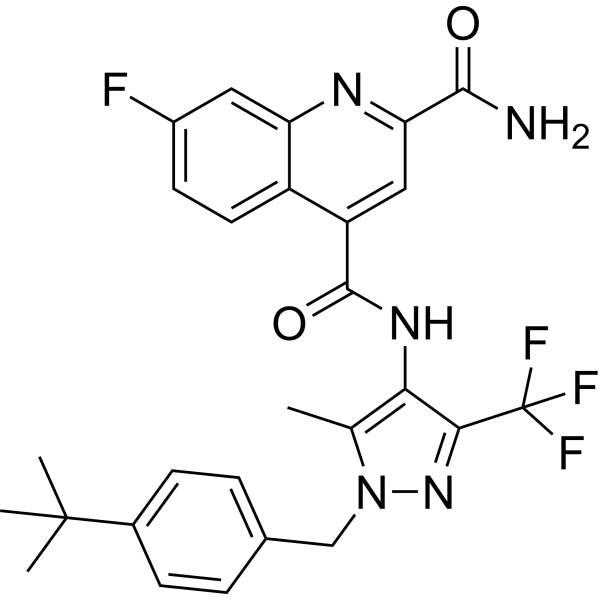 0 ImagesCat. No.: HY-121086CAS No.: 1799759-24-2BAY-588 is a selective inhibitor of GLUT1 with an IC50 value of 1.18μM.
-
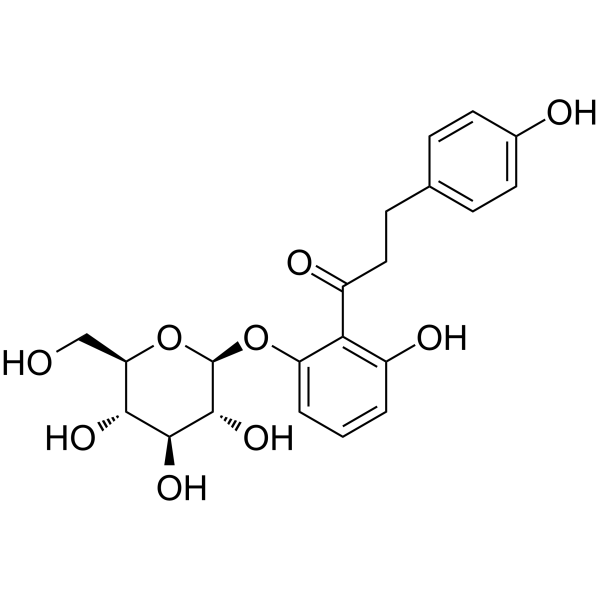
Phlorizin (Standard)
 0 ImagesPhlorizin (Floridzin) (Standard) is the analytical standard of Phlorizin. This product is intended for research and analytical applications. Phlorizin is an orally active non-selective sodium-glucose cotransporter (SGLT) inhibitor, with an IC50 of 0.04 μM and a Ki of 39 nM against hSGLT2, and an IC50 of 0.17 μM and a Ki of 0.31 μM against hSGLT1. Phlorizin promotes GLUT4 translocation, inhibits gluconeogenesis and promotes glycogen synthesis by activating the PI3K/Akt/mTOR pathway. Phlorizin reduces DNA damage and apoptosis (apoptosis) by inhibiting the NF-κB inflammatory pathway. Phlorizin induces apoptosis via activating the Caspase pathway by antagonizing the JAK/STAT3 and PCK pathways. Phlorizin also exhibits antibacterial, anti-inflammatory and neuroprotective activities.
-
(Rac)-Glutipyran
 0 ImagesCat. No.: HY-167857CAS No.: 350993-69-0
-
4,6-O-Ethylidene-α-D-glucose (Standard)
 0 ImagesCat. No.: HY-N7433RCAS No.: 13224-99-2Synonyms: Ethylidene-glucose (Standard)4,6-O-ethylidene-α-D-glucose (Ethylidene-glucose), a glucose derivative, is a competitive exofacial binding-site inhibitor on glucose transporter 1 (GLUT1) with a Ki of 12 mM for wild-type 2-deoxy-D-glucose transport.
-
Fluorodeoxyglucopyranose
 0 ImagesCat. No.: HY-184962CAS No.: 2415493-70-6Fluorodeoxyglucopyranose is a GLUT1 transporter substrate with facilitated bidirectional plasma membrane transport dependent on substrate gradients and independent of membrane potential. Fluorodeoxyglucopyranose undergoes conjugation to neuropharmaceutical agents and cancer imaging components. Fluorodeoxyglucopyranose can be used for the research of cancer.
-
Sennidin A (Standard)
 0 ImagesSennidin A (Standard) is the analytical standard of Sennidin A. This product is intended for research and analytical applications. Sennidin A, isolated from the leaves of Cassia angustifolia, inhibits HCV NS3 helicase, with an IC50 of 0.8 μM. Sennidin A induces phosphorylation of Akt and glucose transporter 4 (GLUT4) translocation. Sennidin A stimulates the glucose incorporation.
-
Antidiabetic agent 7
 0 ImagesCat. No.: HY-170943Antidiabetic agent 7 (Compound 5m) is hyperglycemic inhibitor. Antidiabetic agent 7 exhibits promising potency to stimulate GLUT4 translocation in skeletal muscle cells via activating AMPK-dependent pathway. Antidiabetic agent 7 reduces blood glucose levels. Antidiabetic agent 7 shows favorable pharmacokinetic properties. Antidiabetic agent 7 is potential to be used for anti-hyperglycemic research.




