



GLUT
Glucose transporter
GLUTs (Glucose transporters ) are proteins comprising 12 membrane-spanning regions. GLUTs transport glucose across the plasma membrane by means of a facilitated diffusion mechanism.
GLUT1 (SLC2A1), a uniporter protein, facilitates the transport of glucose across the plasma membranes of mammalian cells. GLUT2 (SLC2A2) is a transmembrane carrier protein that enables protein facilitated glucose movement across cell membranes. GLUT3 (SLC2A3), mainly present in the brain, has high affinity for glucose. GLUT3 facilitates the transport of glucose across the plasma membranes of mammalian cells. GLUT4 (SLC2A4) is found in the heart, skeletal muscle, adipose tissue, and brain. GLUT4 is an insulin-responsive glucose transporter.
Alle GLUT Isoform-spezifische Produkte anzeigen
All Product Categories
-
GLUT Verwandte Produkte (124)
Verwandte Produkte (124)

-
Antibodies (15)
-
GLUT Isoform Comparison
-
URAT1/GLUT9-IN-2
 0 ImagesArt. -Nr.: HY-183543CAS. Nr.: 3051509-32-8URAT1/GLUT9-IN-2 is a selective, orally active URAT1/GLUT9 inhibitor, with an IC50 of 2.81 μM against URAT1 and an IC50 of 12.53 μM against GLUT9. URAT1/GLUT9-IN-2 reduces serum uric acid levels and protects renal function. URAT1/GLUT9-IN-2 can be used in research related to hyperuricemia and hyperuricemic nephropathy.
-
3-Fluoro-evodiamine glucose
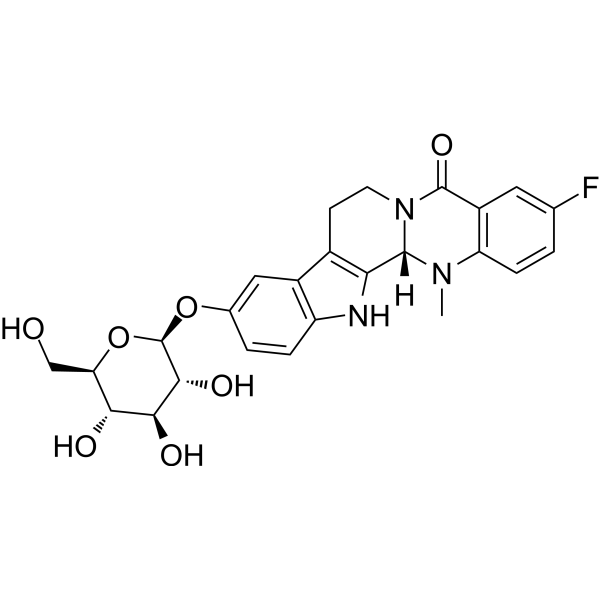 0 ImagesArt. -Nr.: HY-161501Reinheit: 99.95%3-Fluoro-evodiamine glucose (Compound 8) is an evodiamine-glucose conjugate. 3-Fluoro-evodiamine glucose activates the expression of glucose transporter 1 (GLUT1), and inhibits topoisomerase I/II. 3-Fluoro-evodiamine glucose induces apoptosis and arrests the cell cycle at G2/M phase. 3-Fluoro-evodiamine glucose exhibits antitumor efficacy in vivo and in vitro, without significant toxicity.
-
Rhoifolin (Standard)
 0 ImagesRhoifolin (Standard) is the analytical standard of Rhoifolin. This product is intended for research and analytical applications. Rhoifolin is a flavone glycoside can be isolated from Rhus succedanea. Rhoifolin has anti-diabetic effect acting through enhanced adiponectin secretion, tyrosine phosphorylation of insulin receptor-β and glucose transporter 4 (GLUT 4) translocation. Rhoifolin has an anti-inflammatory action via multi-level regulation of inflammatory mediators. Rhoifolin ameliorates titanium particle-stimulated osteolysis and attenuates osteoclastogenesis via RANKL-induced NF-κB and MAPK pathways. Rhoifolin also has cytotoxic activity against different cancer cell lines.
-
AS1938909
 0 ImagesArt. -Nr.: HY-18284CAS. Nr.: 1243155-40-9
-
Antitumor agent-102
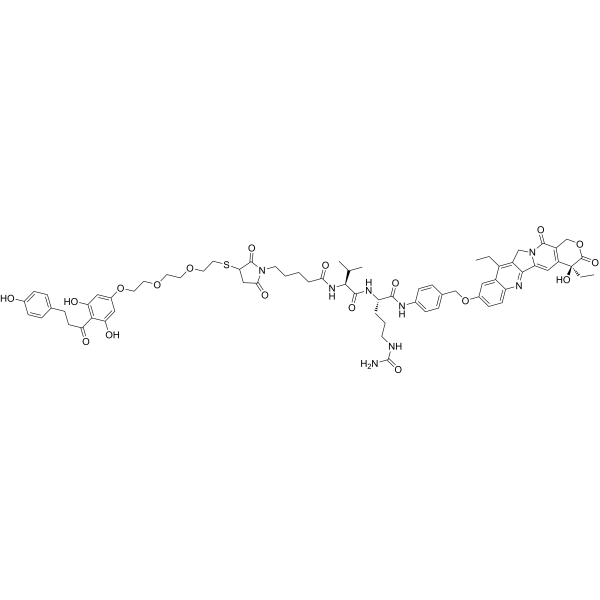 0 ImagesArt. -Nr.: HY-155034CAS. Nr.: 2956876-32-5Antitumor agent-102 (compound 10) is a conjugate of Topoisomerase I inhibitor SN38 and glucose transporter inhibitor, targeting to colorectal cancer. Antitumor agent-102 induces higher concentrations of free SN38 in tumor tissues than Irinotecan (HY-16562).
-
WZB117-PPG
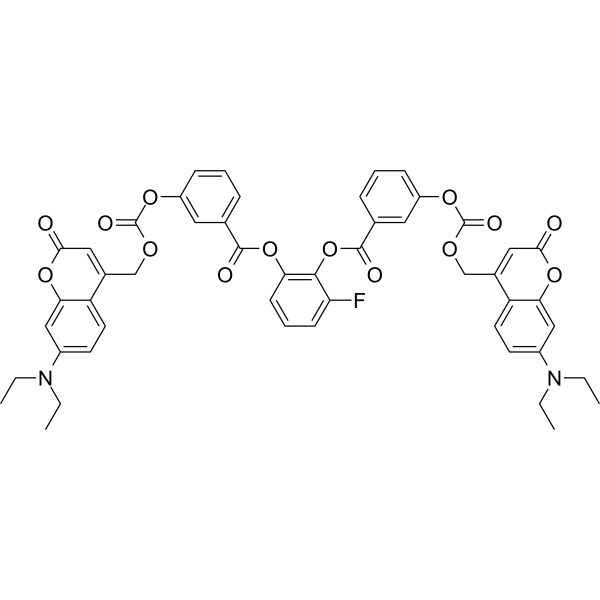 0 ImagesArt. -Nr.: HY-162132WZB117-PPG is a glucose transporter 1 (GLUT1) inhibitor with anticancer activity. WZB117-PPG has remarkable photolysis efficiency and cytotoxicity to cancer cells under visible light irradiation.
-
Allyl methyl sulfide (Standard)
 0 ImagesArt. -Nr.: HY-128447RCAS. Nr.: 10152-76-8Allyl methyl sulfide (Standard) is the analytical standard of Allyl methyl sulfide (HY-128447). This product is intended for research and analytical applications. Allyl methyl sulfide is an orally active organic sulfide. Allyl methyl sulfide is one of the main active ingredients in garlic volatile metabolites. Allyl methyl sulfide can be extracted from garlic. Allyl methyl sulfide enhances SOD activity, inhibits NF-κB signaling pathway, and upregulates pancreatic GLUT2 expression. Allyl methyl sulfide has significant antioxidant, anti-inflammatory and hypoglycemic activities. Allyl methyl sulfide can be used in the research of diabetes and its complications.
-
hURAT1 inhibitor 1
 0 ImagesArt. -Nr.: HY-162829hURAT1 inhibitor 1 (compound 27b) is an isomarine-based, orally active dual hURAT1/GLUT9 inhibitor with IC50s of 0.16 μM and 4.47 μM, respectively, and has anti-hyperuricemia effects. hURAT1 inhibitor 1 showed significant uric acid-lowering activity in a hyperuricemia mouse model (10 mg/kg dose). hURAT1 inhibitor 1 had no significant in vitro cytotoxicity or in vivo hepatotoxicity and showed good PK characteristics.
-
URAT1 inhibitor 4
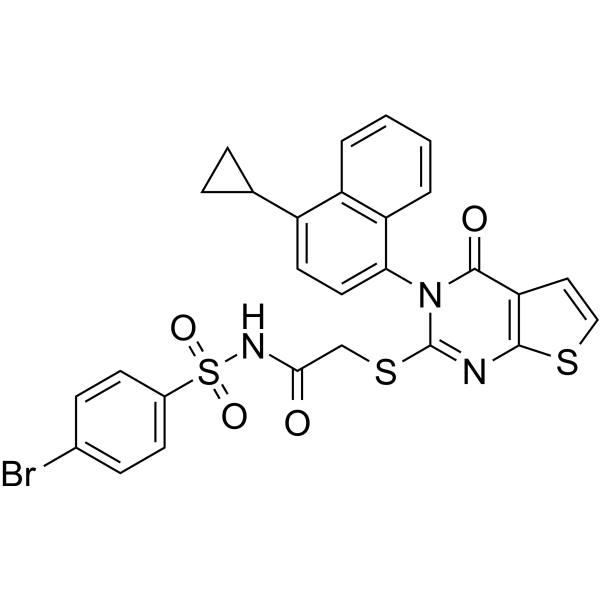 0 ImagesArt. -Nr.: HY-152033CAS. Nr.: 2700292-02-8URAT1 inhibitor 4, a Lesinurad derivative, is a potent and orally active URAT1 inhibitor with an IC50 of 7.56 μM. URAT1 inhibitor 4 has higher in vivo urate-lowering efficacy than Lesinurad (HY-15258).
-
3-Deoxy-3-fluoro-D-fructose
 0 ImagesArt. -Nr.: HY-176834CAS. Nr.: 110925-86-53-Deoxy-3-fluoro-D-fructose (Compound 12) is a derivative of 2,5-Anhydro-D-mannitol. 3-Deoxy-3-fluoro-D-fructose is a selective probe of Hexose transporter 5 (GLUT5). 3-Deoxy-3-fluoro-D-fructose inhibits the transport of D-fructose labeled with 14C by GLUT5 with IC50s of 1.16 and 2.37 µM in EMT-6 and MCF-7 cells. 3-Deoxy-3-fluoro-D-fructose can be used for positron emission tomography (PET) imaging of cancers.
-
CDr17
 0 ImagesArt. -Nr.: HY-D3410CAS. Nr.: 2991899-29-5CDr17 is a GLUT1 substrate and selective fluorescent dye staining M1 microphages. CDr17 utilizes the Gating-Oriented Live-cell Distinction (GOLD) mechanism to enter M1 macrophages (Ex/Em = 646/662 nm).
-
PeS-9
 0 ImagesArt. -Nr.: HY-174377
PeS-9 is an Androgen Receptor (AR) degrader that induces androgen receptor degradation PeS-9 induces mitochondrial and ER stress by promoting cytotoxic ROS production, leading to the release of mitochondrial cytochrome C and AIF. PeS-9 subsequently activates caspases-9 and -3, causing DNA fragmentation and apoptotic cell death. PeS-9 has anticancer activity against prostate cancer and exerts in vivo antitumor and antimetastatic activity with minor side effects. PeS-9 can be used for the study of targeting monotherapy against GLUT-1-overexpressing tumors.
-
PTP1B-IN-34
 0 ImagesArt. -Nr.: HY-181700PTP1B-IN-34 is an orally active, selective, non-competitive PTP1B inhibitor, with an IC50 value of 0.64 μM and a Ki value of 1.15 μM against human PTP1B. PTP1B-IN-34 reduces blood glucose levels in diabetic mice. PTP1B-IN-34 can be used in research related to type 2 diabetes.
-
BR103354
 0 ImagesArt. -Nr.: HY-182250CAS. Nr.: 2505339-87-5BR103354 is an orally active, selective fibroblast activation protein (FAP) inhibitor with an IC50 value of 14 nM against hFAP. BR103354 restores the levels of phosphorylated ERK and Glut1 that are reduced by co-treatment with hFGF21 and FAP, decreases non-fasting blood glucose concentrations, improves glucose tolerance, and reduces hepatic triglyceride content. BR103354 ameliorates hepatic steatosis and hepatic fibrosis. BR103354 can be used in the research of type 2 diabetes and non-alcoholic steatohepatitis.
-
NIR‐fluorescent glucose
 0 ImagesArt. -Nr.: HY-D3199CAS. Nr.: 2364376-61-2NIR-fluorescent glucose is a functional glucose-based fluorescent imaging agent. Conjugated with the nitrobenzoselenadiazole-based SCOTfluor (compound 9), NIR-fluorescent glucose acts as a substrate for GLUT4 and GLUT2 transporters. NIR-fluorescent glucose enables the visualization of glucose uptake in live cells and in vivo.
-
DS-1150b
 0 ImagesArt. -Nr.: HY-173503CAS. Nr.: 1598439-44-1DS-1150b is an orally active GLUT4 activator. DS-1150b has the activity of activating GLUT4 transport and can promote the translocation of GLUT4 to the cell membrane in skeletal muscle cells. DS-1150b has shown hypoglycemic effects in the Zucker obese rat model and can be used in the study of type 2 diabetes mellitus (T2DM).
-
Hydrangeic acid
 0 ImagesHydrangeic acid is an orally effective stilbene-type glycolipid metabolism regulator that lowers blood glucose and lipids. It can be isolated from processed leaves of Hydrangea macrophylla var. thunbergii. Hydrangeic acid is associated with glycolipid metabolism and insulin sensitivity regulation. Hydrangeic acid does not directly activate PPARγ or PPARα, but instead upregulates the mRNA expression of adiponectin, PPARγ2, GLUT4, and fatty acid-binding protein aP2, and downregulates TNF-α mRNA expression, promoting adipogenesis, glucose uptake, and GLUT4 translocation in 3T3-L1 cells. Simultaneously, Hydrangeic acid inhibits inflammatory factor-induced NO production, exerting activity in improving insulin resistance. Hydrangeic acid can be used in research related to type 2 diabetes and does not cause liver weight gain as a side effect.
-
VB1-050
 0 ImagesArt. -Nr.: HY-P990674
-
GTP-γ-S
 0 ImagesArt. -Nr.: HY-137677CAS. Nr.: 37589-80-3Synonyms: Guanosine 5'-[γ-thio]triphosphateGTPγS (Guanosine 5'-[γ-thio]triphosphate) is a G-protein activator that protects proteins from proteolytic degradation, stimulates GLUT4 translocation in a tyrosine kinase-dependent manner, stimulate phospholipases and induce actin polymerization. GTPγS to couple with G- protein α, to study its effect on kinase activity. GTPγS acts as a component of lysis buffer.
-
NV-5440
 0 ImagesArt. -Nr.: HY-138976CAS. Nr.: 2226614-88-4NV-5440 (Compound I-120) is an mTORC1 inhibitor and glucose transporter inhibitor. NV-5440 targets GLUT-1, -2, -3, and -4, and shows no activity against GLUT-5. NV-5440 inhibits glucose uptake.




