



GLUT
Glucose transporter
GLUTs (Glucose transporters ) are proteins comprising 12 membrane-spanning regions. GLUTs transport glucose across the plasma membrane by means of a facilitated diffusion mechanism.
GLUT1 (SLC2A1), a uniporter protein, facilitates the transport of glucose across the plasma membranes of mammalian cells. GLUT2 (SLC2A2) is a transmembrane carrier protein that enables protein facilitated glucose movement across cell membranes. GLUT3 (SLC2A3), mainly present in the brain, has high affinity for glucose. GLUT3 facilitates the transport of glucose across the plasma membranes of mammalian cells. GLUT4 (SLC2A4) is found in the heart, skeletal muscle, adipose tissue, and brain. GLUT4 is an insulin-responsive glucose transporter.
GLUT Isoform Specific Products
All Product Categories
-
GLUT Related Products (127)
Related Products (127)

-
Antibodies (15)
-
GLUT Isoform Comparison
-
HK2-IN-3
 0 ImagesCat. No.: HY-180805CAS No.: 2679261-30-2HK2-IN-3 is a selective HK2 inhibitor with a human IC50 of 0.0564 μM (56.4 nM). HK2-IN-3 induces mitophagy in oral squamous cell carcinoma cells. HK2-IN-3 exerts anti-cancer activity in oral squamous cell carcinoma cells. HK2-IN-3 can be used for the research of oral squamous cell carcinoma.
-
Glutoborin
 0 ImagesCat. No.: HY-187165Glutoborin is an orally active GLUT1-specific proteasome inhibitor with a Kd value of 119 nM for GLUT1. Glutoborin binds to GLUT1, inhibits proteasome activity, restricts IκBα degradation, blocks NF-κB activation, and inhibits GLUT1-mediated glucose transport to elevate blood glucose levels. Glutoborin inhibits pro-inflammatory gene expression, B cell activation, autoantibody production and macrophage function, disrupts the interaction between macrophages and B cells, and alleviates systemic inflammation, neuroinflammation and blood-brain barrier damage. Glutoborin can be used in research related to cerebral malaria.
-
SLC26A3-IN-3
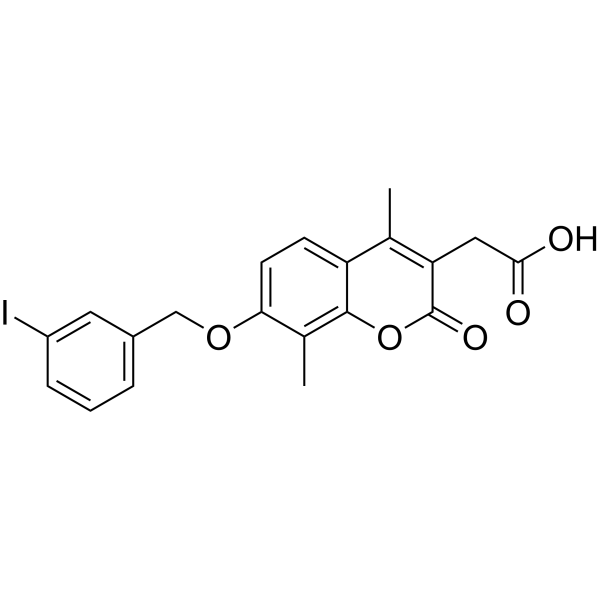 0 ImagesCat. No.: HY-128361CAS No.: 2369983-43-5SLC26A3-IN-3 (compound 4az) is a SLC26A3 inhibitor (IC50: 40 nM). SLC26A3-IN-3 can be used for research of constipation, cystic fibrosis.
-
URAT1/GLUT9-IN-1
 0 ImagesCat. No.: HY-158056CAS No.: 2883011-18-3URAT1/GLUT9-IN-1 (compound 29) can inhibit both uric acid transporter 1 (URAT1) (IC50=2.01 μM) and glucose transporter 9 (GLUT9) (IC50=18.21 μM). URAT1/GLUT9-IN-1 exhibits favorable pharmacokinetic properties and oral bioavailability. URAT1/GLUT9-IN-1 can be uesd for gout and hyperuricemia research.
-
GLUT1/EGFR-IN-1
 0 ImagesGLUT1/EGFR-IN-1 (compound H) is a potent inhibitor of GLUT1 and EGFR. GLUT1/EGFR-IN-1 can simultaneously act on the EGFR tyrosine kinase ATP-binding site and inhibit GLUT1-mediated energy metabolism, resulting in reductions in ATP, MMP, intra-cellular lactic acid, and EGFR nuclear transfer. GLUT1/EGFR-IN-1 can be used for nasopharyngeal carcinoma (NPC) and triple-negative breast cancer (TNBC) research.
-
Antidiabetic agent 9
 0 ImagesCat. No.: HY-184703Antidiabetic agent 9 is an orally active antidiabetic agent. Antidiabetic agent 9 promotes the translocation of GLUT4 to the cell surface, activates the AMPK signaling pathway, and has no effect on the PI-3-K/AKT signaling pathway. Antidiabetic agent 9 reduces blood glucose levels in Streptozotocin (HY-13753)-induced diabetic rats. Antidiabetic agent 9 can be used in the research of diabetes.
-
Xanthine oxidase-IN-23
 0 ImagesCat. No.: HY-182000CAS No.: 3055112-52-9Xanthine oxidase-IN-23 (Compound BPF) is an orally active, reversible, mixed-type Xanthine oxidase inhibitor with an IC50 of 3.33 μM. Xanthine oxidase-IN-23 directly binds to XOD in a reversible mixed-type manner to inhibit its catalytic activity. Xanthine oxidase-IN-23 upregulates ABCG2 and downregulates GLUT9 to promote renal urate excretion. Xanthine oxidase-IN-23 reduces serum urate levels and improves renal function in hyperuricemic mice. Xanthine oxidase-IN-23 can be used in the research of hyperuricemia.
-
GLUT1-IN-3
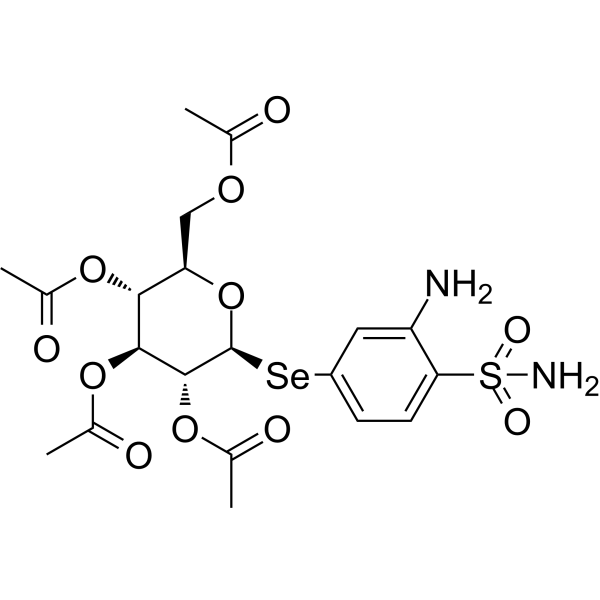 0 ImagesCat. No.: HY-155093CAS No.: 3033124-61-4GLUT1-IN-3 (Compd 4b), an investigational compound associated with type 1 glucose transporter deficiency syndrome, potently suppresses seizures.
-
SLC26A3-IN-1
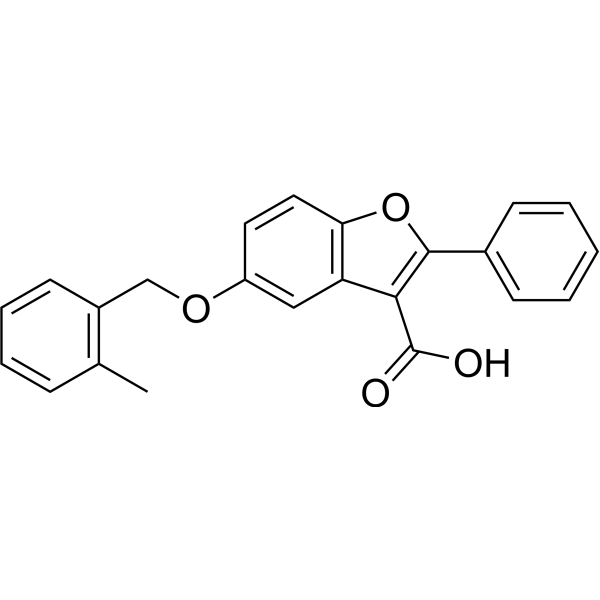 0 ImagesCat. No.: HY-149802CAS No.: 307552-53-0SLC26A3-IN-1 is an inhibitor of anion exchanger protein SLC26A3 (IC50=340 nM). SLC26A3 belongs to solute carrier (SLC) proteins, and the SLC26 family. SLC26 family has broad anion specificity for chloride, bicarbonate, sulfate and oxalate. SLC26A3 down-regulates in adenoma, DRA, involves in in intestinal absorption of chloride and oxalate. The loss of SLC26A3 function mutations is associated with chloride-losing diarrhea.

-
Triptolide-6-succinate-β-D-glucose
 0 ImagesCat. No.: HY-177903CAS No.: 2003231-25-0Triptolide-6-succinate-β-D-glucose (Compound 2) is a glucose-conjugated derivative of Triptolide (HY-32735). Triptolide-6-succinate-β-D-glucose is a tumor-selective prodrug targeting glucose transporters ( GLUT). Triptolide-6-succinate-β-D-glucose can induce the degradation of the RPB subunit of RNA polymerase II. Triptolide-6-succinate-β-D-glucose inhibits the proliferation of HEK293T cells with an IC50 value of 268 nM. Triptolide-6-succinate-β-D-glucose can be used for the research of cancer, such as prostatic cancer.
-
HIF-1α stabilizer-1
 0 ImagesCat. No.: HY-189274CAS No.: 3128930-57-1HIF-1α stabilizer-1 is a HIF-1α stabilizer and iron chelator. HIF-1α stabilizer-1 induces HIF-dependent transcription and upregulates VEGFA and GLUT1 expression without directly binding to PHD1-3. HIF-1α stabilizer-1 inhibits hyperglycemia-induced ROS accumulation. HIF-1α stabilizer-1 promotes cell migration. HIF-1α stabilizer-1 accelerates wound closure and improves tissue remodeling by enhancing neovascularization and collagen deposition. HIF-1α stabilizer-1 lacks antibacterial activity against P. aeruginosa. HIF-1α stabilizer-1 can be used for research on diabetic wounds.
-
Hypoglycemic agent 4
 0 ImagesCat. No.: HY-180784Hypoglycemic agent 4 (Compound 5b) is a tetrahydroacridine derivative with orally active hypoglycemic activity. Hypoglycemic agent 4 has a good binding affinity for the key diabetic targets: DPP-IV, SGLT1, and GLUT2. Hypoglycemic agent 4 can inhibit glucose diffusion. Hypoglycemic agent 4 can reduce fasting blood sugar in Streptozotocin (HY-13753)-induced diabetic rats and its effect is comparable to Gliclazide (HY-B0753). Hypoglycemic agent 4 can be used for research of type 2 diabetes.
-
GLUT1-IN-1
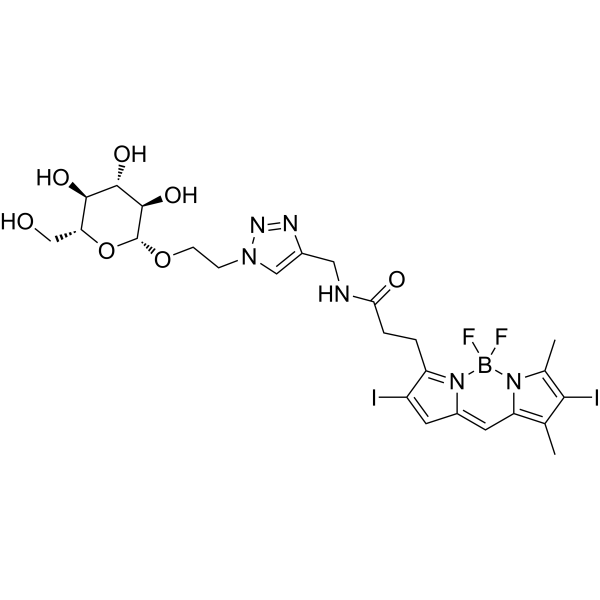 0 ImagesCat. No.: HY-151486GLUT1-IN-1 is a glucose transporter 1 (GLUT1) inhibitor and has a GLUT1-specific inactivation ability. GLUT1-IN-1 exhibits concentration-dependent cytotoxicity for HeLa, A549 and HepG2 cells with IC50 values of 5.49 μM, 11.14 μM, and 8.73 μM, respectively. GLUT1-IN-1 can be used for the research of photodynamic therapy (PDT) and severals cancer.
-
URAT1/GLUT9-IN-3
 0 ImagesCat. No.: HY-183658URAT1/GLUT9-IN-3 is an orally active URAT1/GLUT9 dual inhibitor with IC50 values of 4.01 and 1.60 μM. URAT1/GLUT9-IN-3 inhibits URAT1-mediated uric acid uptake and GLUT9-mediated uric acid transport, reducing renal urate reabsorption. URAT1/GLUT9-IN-3 reduces serum uric acid levels in hyperuricemic mice. URAT1/GLUT9-IN-3 can be used for the researches of gout and hyperuricemia.
-
CM002
 0 ImagesCat. No.: HY-184895CM002 is a circadian clock activator. CM002 inhibits the lineage commitment and terminal differentiation of preadipocytes by activating the circadian clock, thereby blocking the adipogenesis process driven by Wnt signaling-mediated transcriptional induction. CM002 attenuates lipid storage in a clock-dependent manner via inhibition of the lipogenic program in mature adipocytes. CM002 enhances circadian clock output across various adipose depots in both lean and obese mice through BMAL1/CLOCK-dependent metabolic reprogramming, inhibits adipocyte development and hypertrophy, and improves insulin sensitivity. CM002 can be used in research on obesity and type 2 diabetes.

-
NLRP3/URAT1-IN-1
 0 ImagesCat. No.: HY-175645CAS No.: 2994637-53-3NLRP3/URAT1-IN-1 is an orally active double inhibitor of NLRP3 and URAT1 (IC50 = 3.81 μM). NLRP3/URAT1-IN-1 inhibits IL-1β release in LPS (HY-D1056) and ATP-stimulated mouse bone marrow-derived macrophages (BMDMs), with an IC50 of 2.61 μM. NLRP3/URAT1-IN-1 reduces serum uric acid (SUA) and alleviates liver/kidney damage in mice with acute hyperuricemia (HUA). NLRP3/URAT1-IN-1can be used for the study of gout and hyperuricemia.

-
Glutathione Disulfide-13C4,15N2
 0 ImagesCat. No.: HY-167857SGlutathione Disulfide-13C4,15N2 is the 13C- and 15N-labeled (Rac)-Glutipyran (HY-167857). (Rac)-Glutipyran is a broad-spectrum GLUT inhibitor that targets both GLUT1 and GLUT3. (Rac)-Glutipyran inhibits glucose uptake and suppresses the growth of multiple cancer cells, significantly inhibiting PANC-1 cell growth (IC50=1.8 μM) and glucose uptake (IC50=0.13 μM).




