



Artemether
Based on 3 publication(s) in Google Scholar
Artemether is an anti-malarial compound that targets drug-resistant strains of falciparum malaria.
For research use only. We do not sell to patients.
- Purity : 98.38%
- CAS No.: 71963-77-4
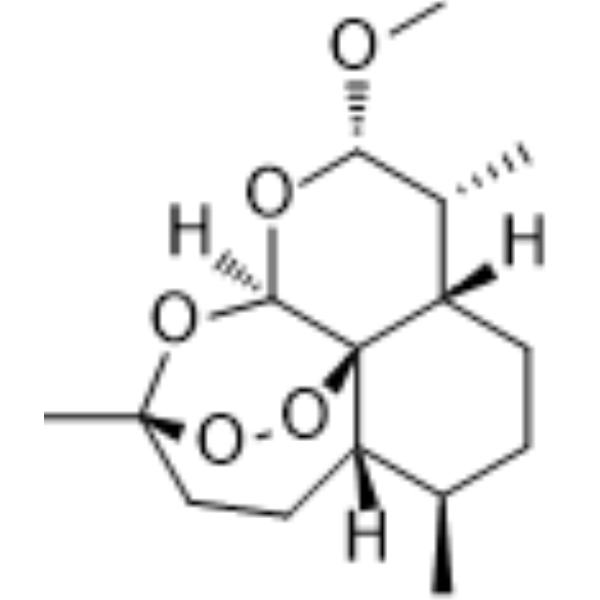
- Formula: C16H26O5
- Molecular Weight:298.37
-
Storage:Powder -20°C, 3 years , 4°C, 2 years ; In solvent -80°C, 2 years , -20°C, 1 year

To place orders, for customer services and technical support, please contact: MedChemExpress USA
Tel: 609-228-6898 E-mail: [email protected] [email protected]


-
 Biological Activity
-
Chemical Information
-
Solvent & Solubility
- Purity & Documentation
- References
-
 Help & FAQs


-
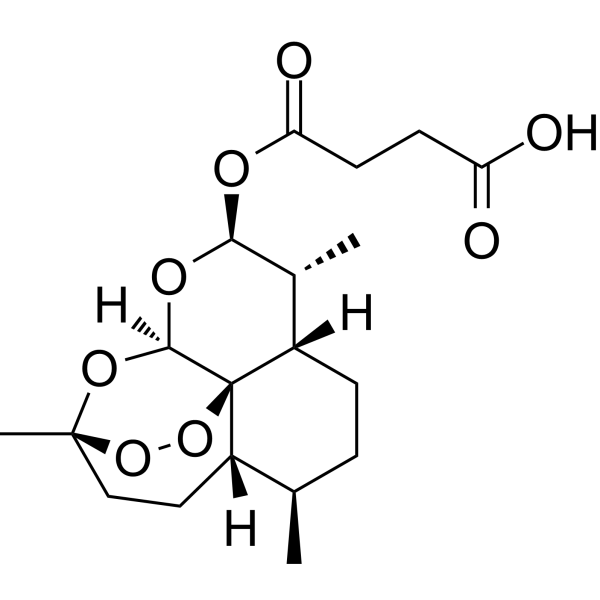
HY-N0193
ArtesunateVirus Protease Inhibitor -
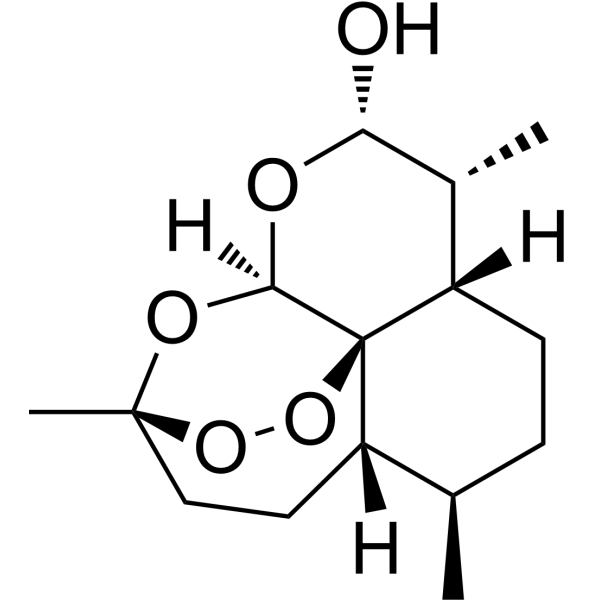
HY-N0176
DihydroartemisininAntimalarial Agent -
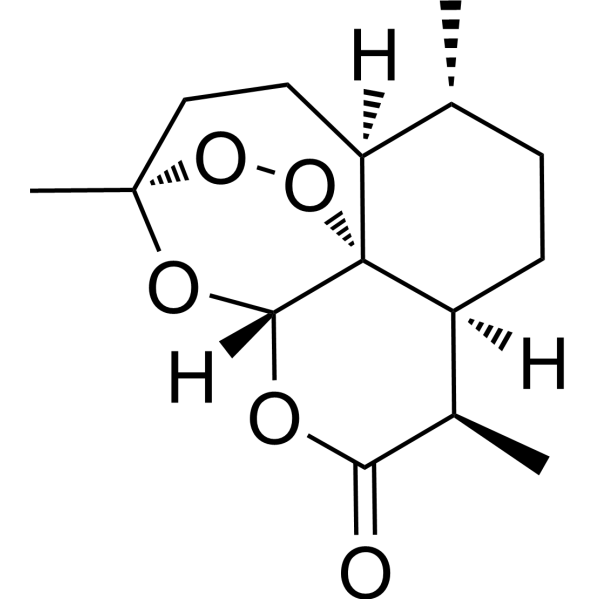
HY-B0094
ArtemisininParasite Inhibitor -
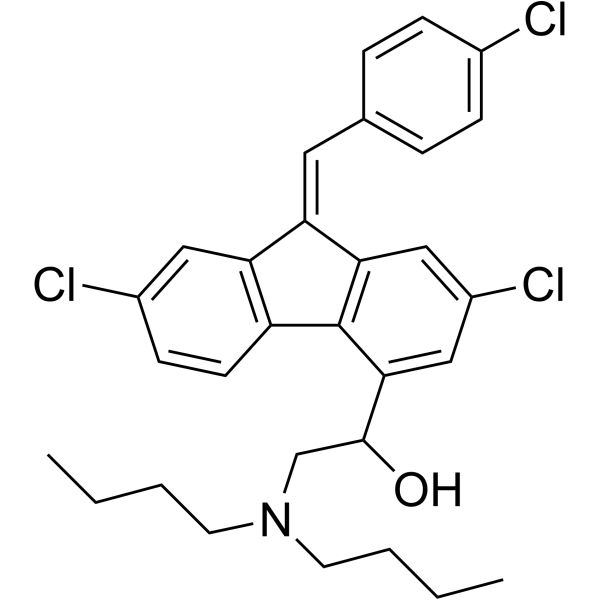
HY-B0803
LumefantrineParasite Inhibitor -
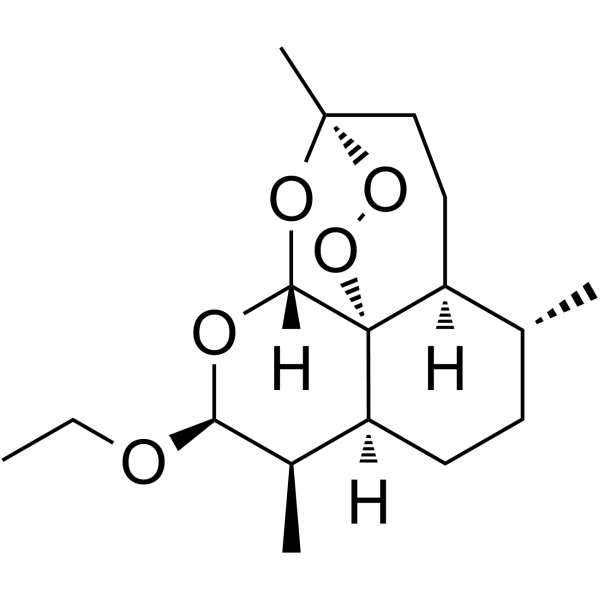
HY-B0770
ArtemotilParasite Inhibitor -
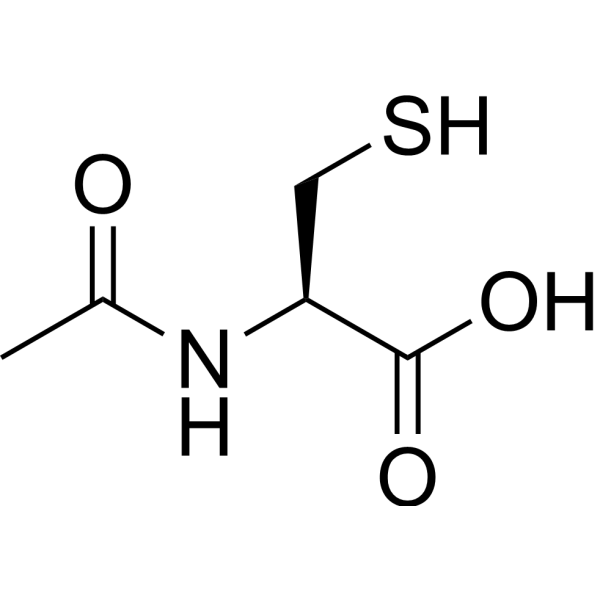
HY-B0215
AcetylcysteineMucolytic Agent -
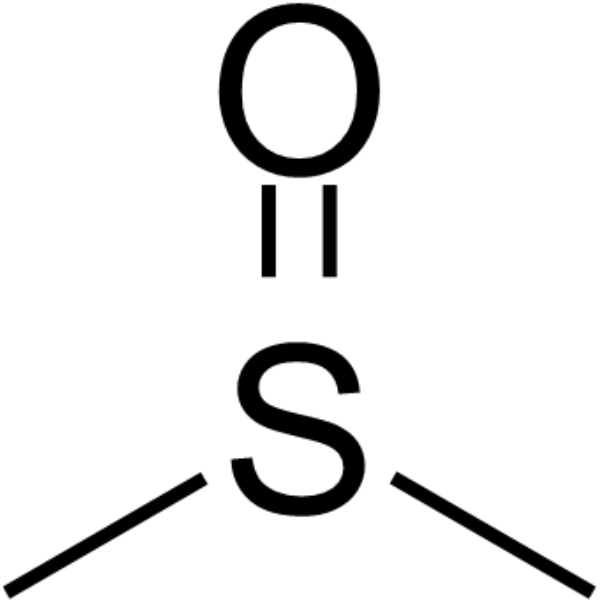
HY-Y0320
Dimethyl sulfoxide, meets analytical specification of Ch.P.Aprotic Solvent -

HY-N0402R
Artemether (Standard)Parasite Inhibitor -
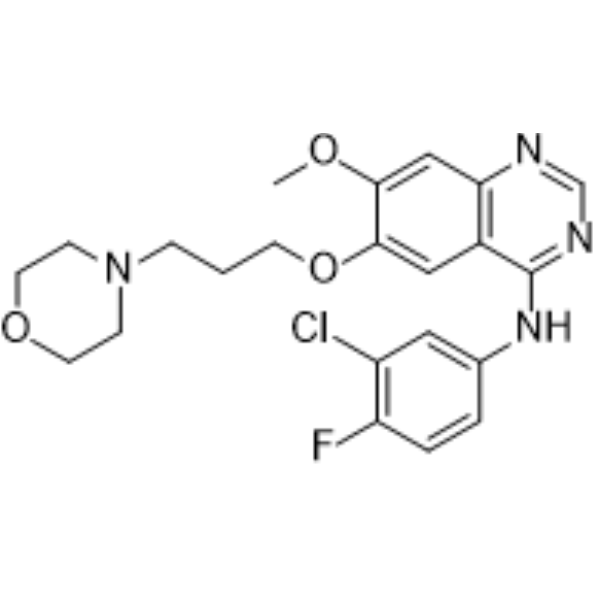
HY-50895
GefitinibEGFR Inhibitor -

HY-Y1891
Tween 80 -
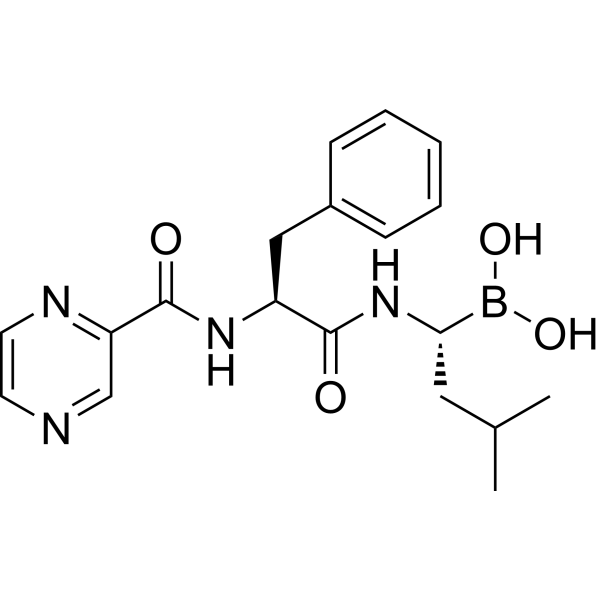
HY-10227
BortezomibProteasome Inhibitor -
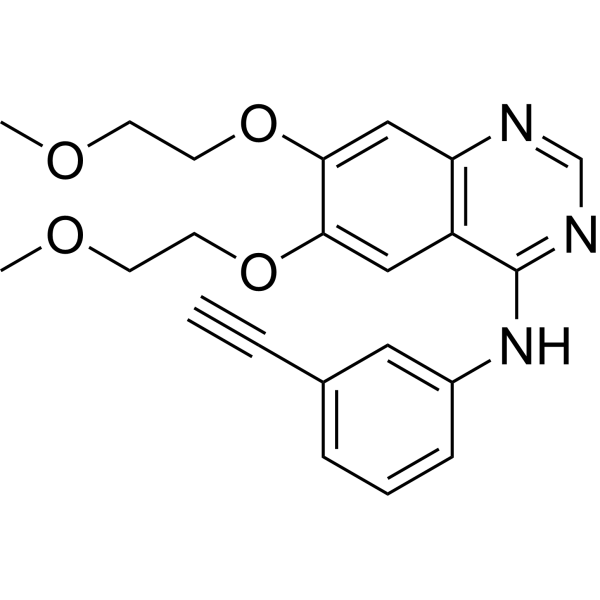
HY-50896
ErlotinibEGFR Tyrosine Kinase Inhibitor
Publications Citing Use of MedChemExpress (MCE) Artemether
More Customer Validation & Images

-
Others
-
In Vivo Efficacy Study
-
IF
All Parasite Isoforms
More

Biological Activity
Description
IC50 & Target
|
Plasmodium |
Cellular Effect
|
Cell Line

|
Type | Value | Description | References |
|---|---|---|---|---|
| A549 | IC50 |
8.54 μM
Compound: 1d
|
Anticancer activity against human A549 cells by sulforhodamine B assay
Anticancer activity against human A549 cells by sulforhodamine B assay
|
[PMID: 19819696] |
| CHO | IC50 |
>100 μM
Compound: ARM
|
Cytotoxicity against CHO cells assessed as reduction in cell viability measured after 48 hrs by MTT assay
Cytotoxicity against CHO cells assessed as reduction in cell viability measured after 48 hrs by MTT assay
|
[PMID: 27448920] |
| CHO | IC50 |
>100 μM
Compound: ARM
|
Cytotoxicity against CHO cells assessed as reduction in cell viability by MTT assay
Cytotoxicity against CHO cells assessed as reduction in cell viability by MTT assay
|
[PMID: 32987134] |
| Ehrlich | IC50 |
14.3 μM
Compound: 3
|
Cytotoxicity against mouse EAC after 3 days by MTT assay
Cytotoxicity against mouse EAC after 3 days by MTT assay
|
[PMID: 8350087] |
| HCT-116 | IC50 |
8.6 μM
Compound: ATM
|
Antiproliferative activity against human HCT-116 cells assessed as inhibition of cell growth by Cell-titer Glo luminescent assay
Antiproliferative activity against human HCT-116 cells assessed as inhibition of cell growth by Cell-titer Glo luminescent assay
|
[PMID: 38287228] |
| HCT-15 | IC50 |
9.66 μM
Compound: 1d
|
Anticancer activity against human HCT15 cells by sulforhodamine B assay
Anticancer activity against human HCT15 cells by sulforhodamine B assay
|
[PMID: 19819696] |
| HepG2 | IC50 |
<1 μM
Compound: Artemether
|
Antimalarial activity against sporozoite stage of Plasmodium yoelii assessed as invasion of human HepG2 cells expressing CD81 incubated for 2 hrs prior to inoculation measured after 1 hr by immunofluorescence assay in presence of penicillin/streptomycin
Antimalarial activity against sporozoite stage of Plasmodium yoelii assessed as invasion of human HepG2 cells expressing CD81 incubated for 2 hrs prior to inoculation measured after 1 hr by immunofluorescence assay in presence of penicillin/streptomycin
|
[PMID: 23927658] |
| HFF | IC50 |
0.31 μM
Compound: Artemether
|
Antiparasitic activity against Toxoplasma gondii 2F infected in HFF cells assessed as beta galactosidase activity after 5 days
Antiparasitic activity against Toxoplasma gondii 2F infected in HFF cells assessed as beta galactosidase activity after 5 days
|
[PMID: 20373807] |
| PBMC | IC50 |
>100000 nM
Compound: 3
|
Cytotoxicity against PHA-stimulated human PBMC cells after 48 hrs by Alamar Blue assay
Cytotoxicity against PHA-stimulated human PBMC cells after 48 hrs by Alamar Blue assay
|
[PMID: 23673218] |
| SK-MEL-2 | IC50 |
7.24 μM
Compound: 1d
|
Anticancer activity against human SK-MEL-2 cells by sulforhodamine B assay
Anticancer activity against human SK-MEL-2 cells by sulforhodamine B assay
|
[PMID: 19819696] |
| SK-OV-3 | IC50 |
8.03 μM
Compound: 1d
|
Anticancer activity against human SKOV3 cells by sulforhodamine B assay
Anticancer activity against human SKOV3 cells by sulforhodamine B assay
|
[PMID: 19819696] |
| T-cell | IC50 |
3.82 x 10⁻⁶ M
Compound: Artemether
|
In vitro concentration of compound required to inhibit ConA-induced T cell proliferation to 50% in BALB/c mice
In vitro concentration of compound required to inhibit ConA-induced T cell proliferation to 50% in BALB/c mice
|
[PMID: 15999998] |
| XF498 | IC50 |
9.1 μM
Compound: 1d
|
Anticancer activity against human XF498 cells by sulforhodamine B assay
Anticancer activity against human XF498 cells by sulforhodamine B assay
|
[PMID: 19819696] |
In Vitro
Artemether (0-200 μg/mL, 24-72 h) inhibits rat C6 glioma cell growth in a dose- and time-dependent manner[2].
Artemether (0-10 μM, 72 h) inhibits RANKL-induced osteoclast (osteoclast precursor cells (BMMs)) formation and related gene expression (TRAP, NFATc1, V-ATPase-d2, CTSK, DC-STAMP, MMP-9)[2].
Artemether (48 or 96 h) inhibits ConA- or alloantigen-induced BALB/c splenocyte proliferation (IC50: 6.3 and 3.5 μM)[4].
Artemether (0-50 μM, 16-36 h) inhibits production of the IL-2 and IFN-γ in BALB/c splenocyte[4].
Artemether (0-50 μM, 72 h) inhibits ConA-induced splenocyte, CD4+T- and CD8+ T-cell divisions, and inhibits cell cycle progression through G1/S transition[4].
MedChemExpress (MCE) has not independently confirmed the accuracy of these methods. They are for reference only. .
-
Cell Line:RAW264.7 cells (treated with 100 ng/mL RANKL)
-
Concentration:10 μM
-
Incubation Time:6 h
-
Result:Inhibited the activation of MAPK subfamilies, including ERK, JNK, and p38.
-
Cell Line:ConA-stimulated T lymphocytes
-
Concentration:1, 10 and 50 μM
-
Incubation Time:72 h
-
Result:Arrested 47, 56 and 91% (at 1, 10 and 50 μM) of the cells at G0/G1 phases, respectively.
In Vivo
Artemether (10 mg/kg, i.p., 8 days) protects mice against LPS-induced osteolytic bone loss[3].
Artemether (50 and 100 mg/kg, p.o.) inhibits T-cell-mediated immune responses (ear swelling) in DNFB-induced DTH model in BALB/c mice[4].
MedChemExpress (MCE) has not independently confirmed the accuracy of these methods. They are for reference only.
-
Animal Model:LPS (5 mg/kg) treated mice[3]
-
Dosage:10 mg/kg
-
Administration:i.p., 8 days
-
Result:Prevented LPS induced osteolytic bone loss and the reduction in bone volume.
Increased bone volume/total volume (BV/TV), decreased osteoclast surface/bone surface (Oc.S/BS) and number of TRAP-positive cells.
Clinical Trial
| NCT Number | Sponsor | Condition | Start Date |
Phase
|
|---|---|---|---|---|
| NCT01329991 | Plexxikon| | 2011-05 | PHASE1 |


Chemical Information
-
CAS No. 71963-77-4
-
Appearance Solid
-
Molecular Weight 298.37
-
Formula C16H26O5
-
Color White to off-white
-
SMILES
C[C@H]1[C@@H](OC)O[C@@]2([H])[C@]34[C@@]([C@H](C)CC[C@]41[H])([H])CC[C@@](O2)(C)OO3
-
Synonyms
Dihydroqinghaosu methyl ether; Dihydroartemisinin methyl ether; SM224
-
Structure Classification
-
Shipping
Room temperature in continental US; may vary elsewhere.
-
Storage
Powder -20°C 3 years 4°C 2 years In solvent -80°C 2 years -20°C 1 year


Publications (3)
-
Journal Impact Factor
-
Most Recent
-
Cell Mol Life Sci
2025 Nov 25;82(1):419. PMID: 41288707
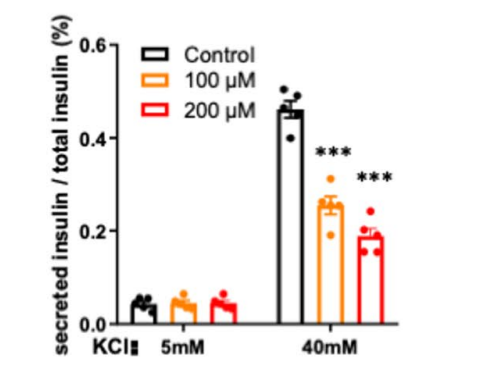
Artemether purchased from MedChemExpress. Usage Cited in: Cell Mol Life Sci. 2025 Nov 25;82(1):419. [Abstract]
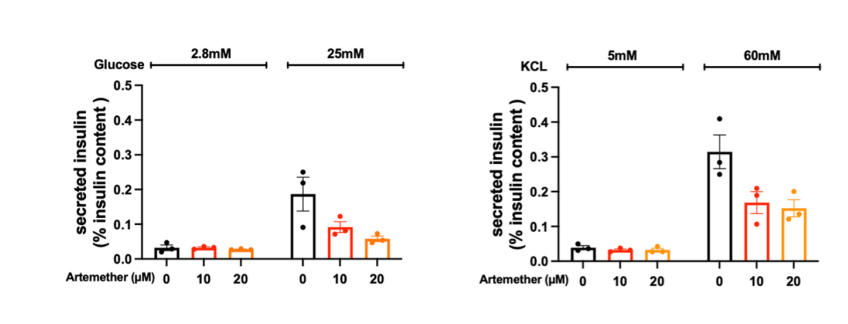
KCl-induced insulin secretion of islets using 0,100 and 200 µM Artemether.
Artemether purchased from MedChemExpress. Usage Cited in: Cell Mol Life Sci. 2025 Nov 25;82(1):419. [Abstract]
Long-term Artemether (20 mg/kg/d) treatment decreased glucose-induced and KCl-induced insulin secretion by islets.
Artemether purchased from MedChemExpress. Usage Cited in: Cell Mol Life Sci. 2025 Nov 25;82(1):419. [Abstract]
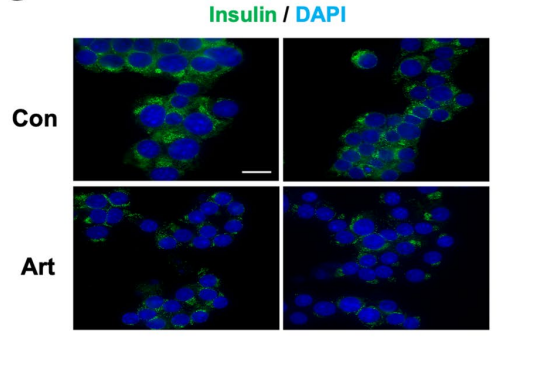
Immunohistochemical staining of insulin after artemether treatment (Con: DMSO, Art: artemether). Green means insulin expression and blue means DAPI.
-
J Nutr Biochem
Artemisinin and its derivatives modulate glucose homeostasis and gut microbiota remodeling in a nutritional context. [Abstract]2024 Sep:131:109687. PMID: 38866191 -


Solvent & Solubility
In Vitro:
DMSO : 100 mg/mL (335.15 mM; Need ultrasonic; Hygroscopic DMSO has a significant impact on the solubility of product, please use newly opened DMSO)
H2O : < 0.1 mg/mL (insoluble)
Please refer to the solubility information to select the appropriate solvent. Once prepared, please aliquot and store the solution to prevent product inactivation from repeated freeze-thaw cycles.
Storage method and period of stock solution: -80°C, 2 years; -20°C, 1 year. When stored at -80°C, please use it within 2 years. When stored at -20°C, please use it within 1 year.
Please refer to the solubility information to select the appropriate solvent. Once prepared, please aliquot and store the solution to prevent product inactivation from repeated freeze-thaw cycles.
Storage method and period of stock solution: -80°C, 2 years; -20°C, 1 year. When stored at -80°C, please use it within 2 years. When stored at -20°C, please use it within 1 year.
Concentration (start) × Volume (start) = Concentration (final) × Volume (final)
In Vivo:
Select the appropriate dissolution method based on your experimental animal and administration route.
- For the following dissolution methods, please ensure to first prepare a clear stock solution using an In Vitro approach and then sequentially add co-solvents:
- To ensure reliable experimental results, the clarified stock solution can be appropriately stored based on storage conditions. As for the working solution for In Vivo experiments, it is recommended to prepare freshly and use it on the same day.
- The percentages shown for the solvents indicate their volumetric ratio in the final prepared solution. If precipitation or phase separation occurs during preparation, heat and/or sonication can be used to aid dissolution.
Add each solvent one by one: 10% DMSO 40% PEG300 5% Tween-80 45% Saline
Solubility: ≥ 2.5 mg/mL (8.38 mM); Clear solution
This protocol yields a clear solution of ≥ 2.5 mg/mL (saturation unknown).
Taking 1 mL working solution as an example, add 100 μL DMSO stock solution (25.0 mg/mL) to 400 μL PEG300, and mix evenly; then add 50 μL Tween-80 and mix evenly; then add 450 μL Saline to adjust the volume to 1 mL.
Preparation of Saline: Dissolve 0.9 g sodium chloride in ddH₂O and dilute to 100 mL to obtain a clear Saline solution.
Add each solvent one by one: 10% DMSO 90% (20% SBE-β-CD in Saline)
Solubility: ≥ 2.5 mg/mL (8.38 mM); Clear solution
This protocol yields a clear solution of ≥ 2.5 mg/mL (saturation unknown).
Taking 1 mL working solution as an example, add 100 μL DMSO stock solution (25.0 mg/mL) to 900 μL 20% SBE-β-CD in Saline, and mix evenly.
Preparation of 20% SBE-β-CD in Saline (4°C, storage for one week): 2 g SBE-β-CD powder is dissolved in 10 mL Saline, completely dissolve until clear.
For the following dissolution methods, please prepare the working solution directly:
It is recommended to prepare fresh solutions and use them promptly within a short period of time.
The percentages shown for the solvents indicate their volumetric ratio in the final prepared solution. If precipitation or phase separation occurs during preparation, heat and/or sonication can be used to aid dissolution.
Add each solvent one by one: 15% Cremophor EL 85% Saline
Solubility: 6.02 mg/mL (20.18 mM); Clear solution; Need ultrasonic
In Vivo Dissolution Calculator
Please enter the basic information of animal experiments:
-
-
-
-
Recommended: Prepare an additional quantity of animals to account for potential losses during experiments.
Please enter your animal formula composition:
-
%DMSO +
Recommended: Keep the proportion of DMSO in working solution below 2% if your animal is weak.
-
%+
-
+%Tween-80 + +
-
%Saline +
The co-solvents required include: DMSO, . All of co-solvents are available by MedChemExpress (MCE). , Tween 80. All of co-solvents are available by MedChemExpress (MCE).
Working solution concentration: 0.22 mg/mL
Method for preparing stock solution: mg drug dissolved in μL DMSO. Stock solution concentration: mg/mL.
1. Take μL DMSO stock solution;
2. Add μL .
μL , mix evenly;
3. Then add μL Tween 80, mix evenly;
4. Then add μL
Please ensure that the stock solution in the first step is dissolved to a clear state, and add co-solvents in sequence. You can use ultrasonic heating (ultrasonic cleaner, recommended frequency 20-40 kHz), vortexing, etc. to assist dissolution.


Purity & Documentation
-
Data Sheet (285 KB)
-
SDS (392 KB)
- English - EN (392 KB)
- Français - FR (392 KB)
- Deutsch - DE (392 KB)
- Norwegian - NO (392 KB)
- Español - ES (392 KB)
- Swedish - SV (392 KB)
- Italian - IT (392 KB)
- Korean - KR (392 KB)
- Portuguese - PT (392 KB)
-
Handling Instructions (2659 KB)
References
[1]. Xiao, S., et al., Recent investigations of artemether, a novel agent for the prevention of schistosomiasis japonica, mansoni and haematobia. Acta Trop, 2002. 82(2): p. 175-81. [Content Brief]
[2]. Wu, Z.P., et al., Inhibitive effect of artemether on tumor growth and angiogenesis in the rat C6 orthotopic brain gliomas model. Integr Cancer Ther, 2009. 8(1): p. 88-92. [Content Brief]
[3]. Wu H, et al. Artemether attenuates LPS-induced inflammatory bone loss by inhibiting osteoclastogenesis and bone resorption via suppression of MAPK signaling pathway. Cell Death Dis. 2018 May 1;9(5):498. [Content Brief]
[4]. Wang JX, et al. Investigation of the immunosuppressive activity of artemether on T-cell activation and proliferation. Br J Pharmacol. 2007 Mar;150(5):652-61. [Content Brief]


Complete Stock Solution Preparation Table
Please refer to the solubility information to select the appropriate solvent. Once prepared, please aliquot and store the solution to prevent product inactivation from repeated freeze-thaw cycles.
Storage method and period of stock solution: -80°C, 2 years; -20°C, 1 year. When stored at -80°C, please use it within 2 years. When stored at -20°C, please use it within 1 year.
| Optional Solvent | Concentration Solvent Mass | 1 mg | 5 mg | 10 mg | 25 mg |
|---|---|---|---|---|---|
| DMSO | 1 mM | 3.3515 mL | 16.7577 mL | 33.5154 mL | 83.7886 mL |
| 5 mM | 0.6703 mL | 3.3515 mL | 6.7031 mL | 16.7577 mL | |
| 10 mM | 0.3352 mL | 1.6758 mL | 3.3515 mL | 8.3789 mL | |
| 15 mM | 0.2234 mL | 1.1172 mL | 2.2344 mL | 5.5859 mL | |
| 20 mM | 0.1676 mL | 0.8379 mL | 1.6758 mL | 4.1894 mL | |
| 25 mM | 0.1341 mL | 0.6703 mL | 1.3406 mL | 3.3515 mL | |
| 30 mM | 0.1117 mL | 0.5586 mL | 1.1172 mL | 2.7930 mL | |
| 40 mM | 0.0838 mL | 0.4189 mL | 0.8379 mL | 2.0947 mL | |
| 50 mM | 0.0670 mL | 0.3352 mL | 0.6703 mL | 1.6758 mL | |
| 60 mM | 0.0559 mL | 0.2793 mL | 0.5586 mL | 1.3965 mL | |
| 80 mM | 0.0419 mL | 0.2095 mL | 0.4189 mL | 1.0474 mL | |
| 100 mM | 0.0335 mL | 0.1676 mL | 0.3352 mL | 0.8379 mL |


Artemether Related Classifications
HY-N0402 Related Classifications
 Powered by Bioz