



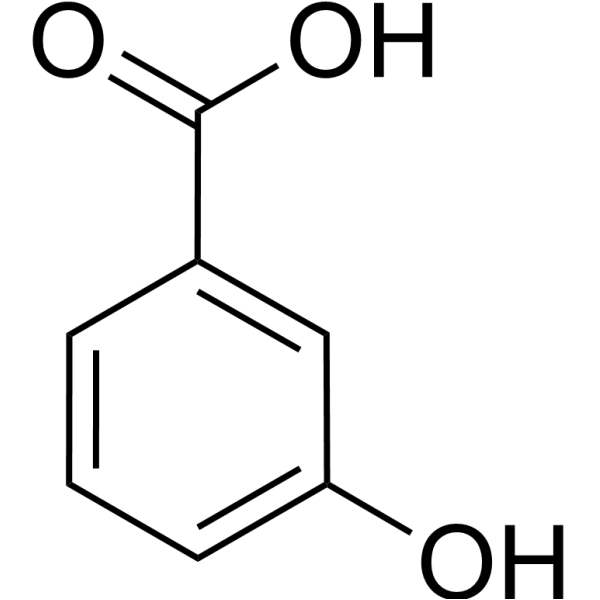
3-Hydroxybenzoic acid

Based on 1 Customer Validation
3-Hydroxybenzoic acid is an orally active endogenous metabolite. 3-Hydroxybenzoic acid is an agonist for GPR81 and GPR109A. 3-Hydroxybenzoic acid acts as stress response desensitizers. 3-Hydroxybenzoic acid can be used for anti-inflammatory and analgesic study.
Nur für Forschungszwecke. Wir verkaufen nicht an Patienten.
- Reinheit: 99.95%
- CAS. Nr.: 99-06-9
- Formel: C7H6O3
- Molecular Weight:138.12
-
Speicherung:Powder -20°C, 3 years , 4°C, 2 years ; In solvent -80°C, 2 years , -20°C, 1 year

To place orders, for customer services and technical support, please contact: MedChemExpress USA
Tel: 609-228-6898 E-mail: [email protected] [email protected]


-
 Biologische Aktivität
-
Chemical Information
-
Lösungsmittel & Löslichkeit
- Reinheit & Dokumentation
- Verweise
-
 Help & FAQs


-
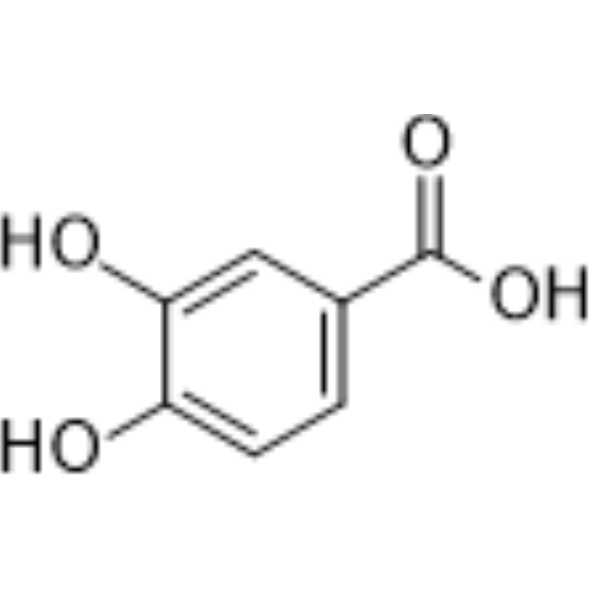
HY-N0294
Protocatechuic acid
-
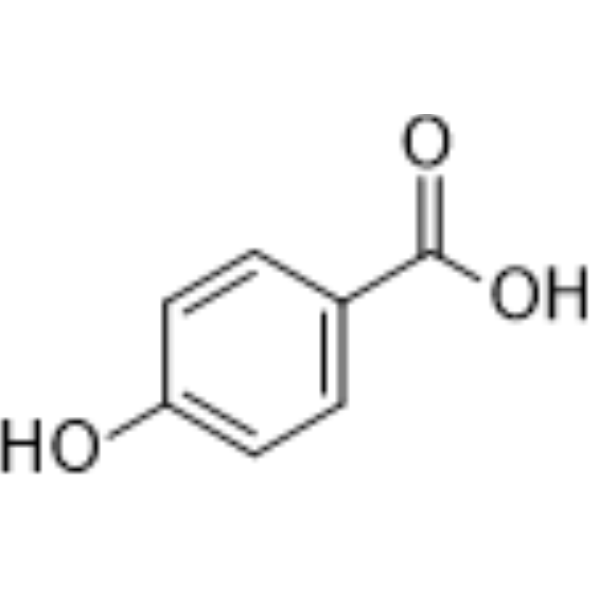
HY-Y0264
4-Hydroxybenzoic acid
-
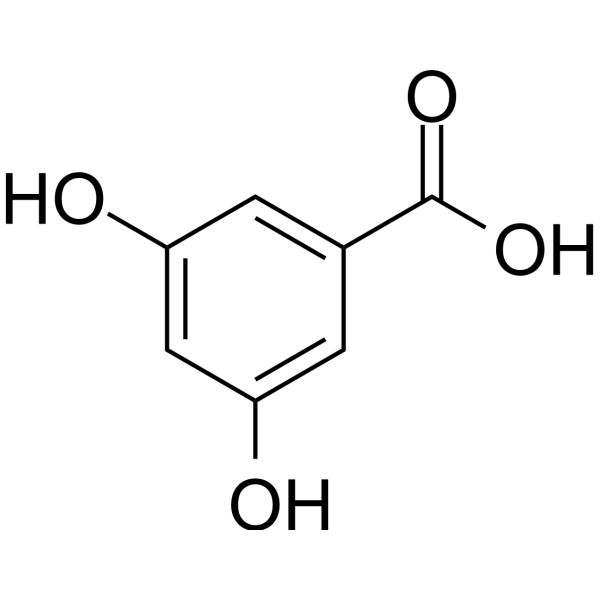
HY-W015560
3,5-Dihydroxybenzoic acid
-
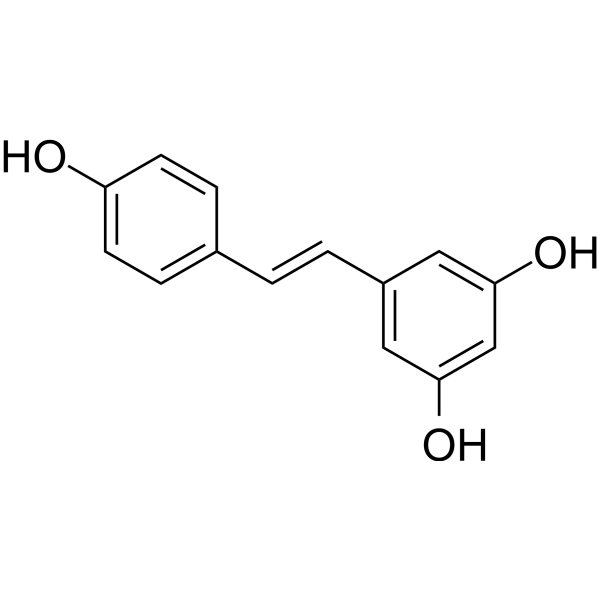
HY-16561
Resveratrol
-
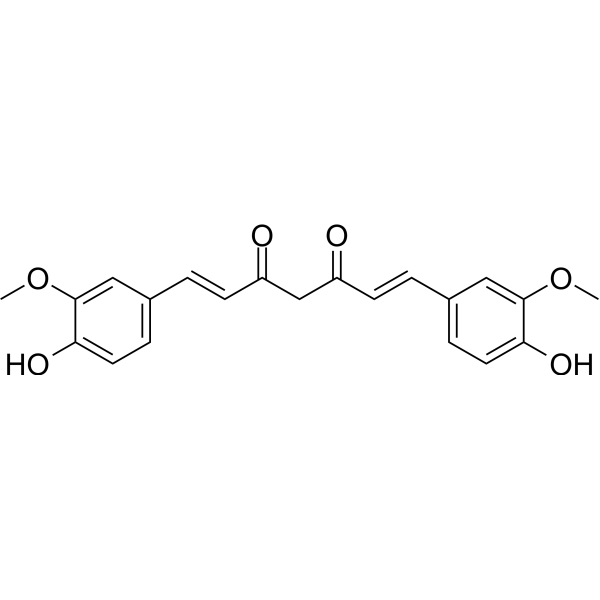
HY-N0005
Curcumin
-
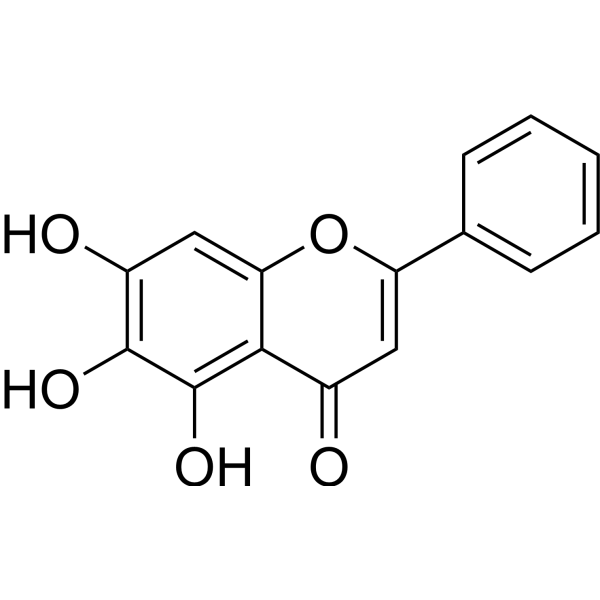
HY-N0196
Baicalein
-
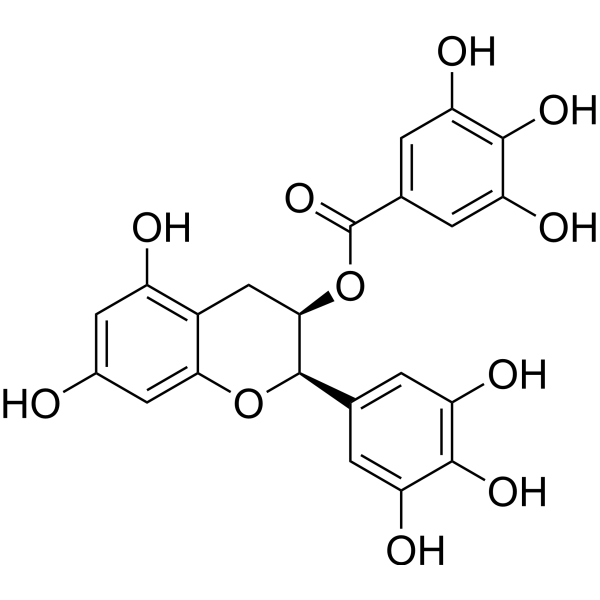
HY-13653
(-)-Epigallocatechin Gallate
-
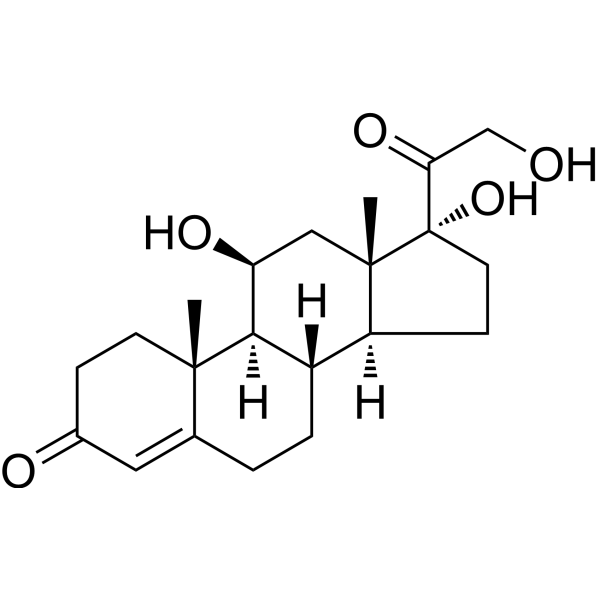
HY-N0583
Hydrocortisone
-
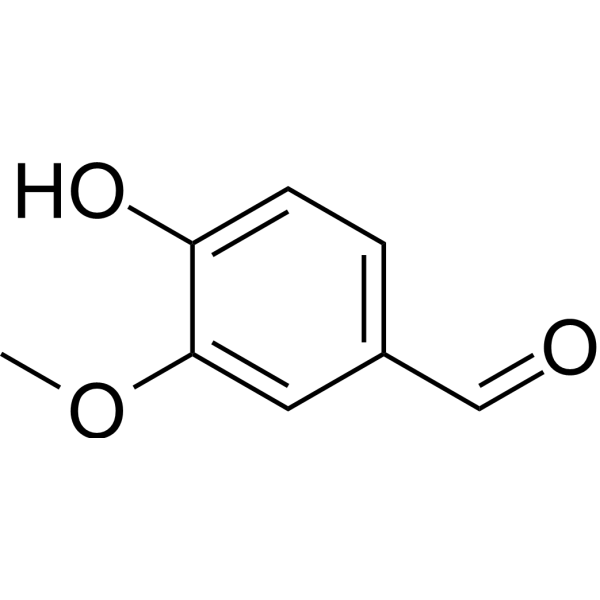
HY-N0098
Vanillin
-
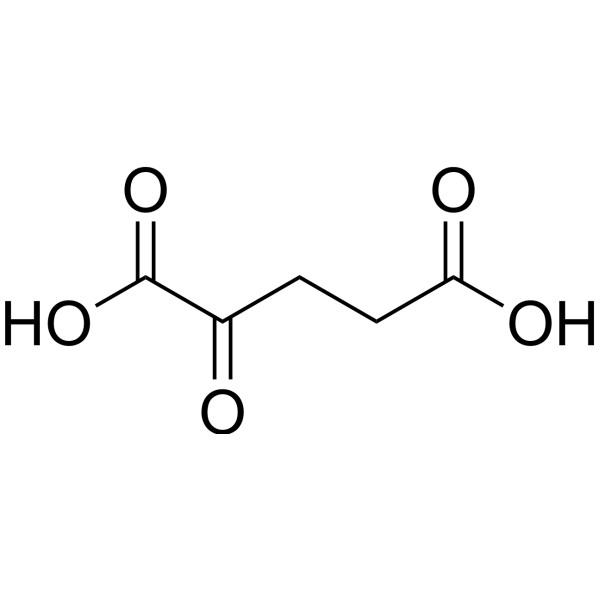
HY-W013636
2-Ketoglutaric acid
-

HY-W004049R
3-Hydroxybenzoic acid (Standard)
-
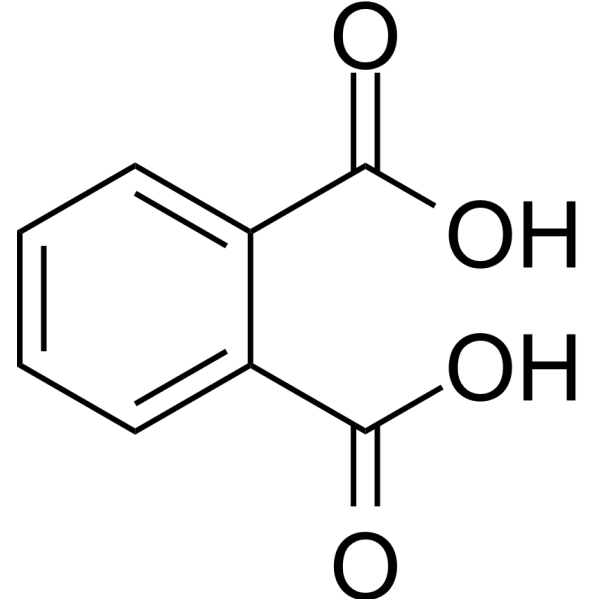
HY-I0508
Phthalic acid
Alle Endogenous Metabolite Isoform-spezifische Produkte anzeigen
More

Biologische Aktivität
|
Microbial Metabolite |
Human Endogenous Metabolite |
|
Cell Line

|
Type | Value | Description | References |
|---|---|---|---|---|
| CHO | IC50 |
>100 μM
Compound: b
|
Inhibition of human recombinant PTP1B expressed in CHO cells assessed as p-nitorphenol production after 2 mins by microplate reader
Inhibition of human recombinant PTP1B expressed in CHO cells assessed as p-nitorphenol production after 2 mins by microplate reader
|
[PMID: 21745700] |
| COS-7 | EC50 |
184 μM
Compound: 1
|
Agonist activity at human recombinant GPR81 transfected in african green monkey COS-7 cells after 20 mins by [35S]GTPgammaS binding assay
Agonist activity at human recombinant GPR81 transfected in african green monkey COS-7 cells after 20 mins by [35S]GTPgammaS binding assay
|
[PMID: 24900524] |
| COS-7 | EC50 |
215 μM
Compound: 1
|
Agonist activity at human recombinant GPR109a transfected in african green monkey COS-7 cells after 20 mins by [35S]GTPgammaS binding assay
Agonist activity at human recombinant GPR109a transfected in african green monkey COS-7 cells after 20 mins by [35S]GTPgammaS binding assay
|
[PMID: 24900524] |
3-Hydroxybenzoic acid (0.01-105 μM) acts as an agonist for Hydroxycarboxylic acid receptor 1 (HCA1) (GPR81) and HCA2 (GPR109A)[1].
3-Hydroxybenzoic acid (0.1-105 μM) inhibits cAMP accumulation in SK-N-MC cells which stably expressing human HCA1[1].
3-Hydroxybenzoic acid (100-1000 μM, 2 h) inhibits free fatty acid and glycerol release in mature adipocytes isolated from mouse subcutaneous and epididymal fat[1].
MedChemExpress (MCE) has not independently confirmed the accuracy of these methods. They are for reference only.
3-Hydroxybenzoic acid (20 mg/kg; p.o; 9 times in 12 days) possesses anti-inflammatory and analgesic activities in wistar rats[3].
MedChemExpress (MCE) has not independently confirmed the accuracy of these methods. They are for reference only.
-
Animal Model:Adult male Wistar rats (150 g)[2]
-
Dosage:20 mg/kg
-
Administration:Oral gavage (p.o.); 7 times in 12 days
-
Result:Could counteract mild unpredictable stress triggered body weight losses and slight elevation of basal rectal temperatures in rats.
Decreased stress induced hyperthermia.
Significantly lower mean plasma glucose and cortisol and higher insulin levels were observed.
-
Animal Model:Male Swiss mice (20 g) with occasional foot shock stress[2]
-
Dosage:3, 10, 30, 100, 300 mg/kg
-
Administration:Oral gavage (p.o.); 7 times in 12 days
-
Result:Remained constant up to the 10th day of the experiment, but after 30 mg/kg or more daily doses mean body weights of the treated groups increased dose dependently on the last observational days.
Intermittent foot-shock induced elevations of core temperatures were antagonized significantly.
Decreased stress induced hyperthermia.
Had statistically significant effects on immobility period in tail suspension test on male mice.
Statistically significant prolongation of pentobarbitone induced sleep duration was observed after 30 mg/kg and higher daily doses.


Chemical Information
-
CAS. Nr. 99-06-9
-
Appearance Solid
-
Molecular Weight 138.12
-
Formel C7H6O3
-
Color White to off-white
-
SMILES
OC(C1=CC(O)=CC=C1)=O
-
Structure Classification
-
Initial Source
-
Versand
Room temperature in continental US; may vary elsewhere.
-
Speicherung
Powder -20°C 3 years 4°C 2 years In solvent -80°C 2 years -20°C 1 year


Lösungsmittel & Löslichkeit
DMSO : 100 mg/mL (724.01 mM; Need ultrasonic; Hygroscopic DMSO has a significant impact on the solubility of product, please use newly opened DMSO)
Please refer to the solubility information to select the appropriate solvent. Once prepared, please aliquot and store the solution to prevent product inactivation from repeated freeze-thaw cycles.
Storage method and period of stock solution: -80°C, 2 years; -20°C, 1 year. When stored at -80°C, please use it within 2 years. When stored at -20°C, please use it within 1 year.
Please refer to the solubility information to select the appropriate solvent. Once prepared, please aliquot and store the solution to prevent product inactivation from repeated freeze-thaw cycles.
Storage method and period of stock solution: -80°C, 2 years; -20°C, 1 year. When stored at -80°C, please use it within 2 years. When stored at -20°C, please use it within 1 year.
Konzentration (Stammlösung) × Volumen (Stammlösung) = Konzentration (Ziellösung) × Volumen (Ziellösung)
Select the appropriate dissolution method based on your experimental animal and administration route.
- For the following dissolution methods, please ensure to first prepare a clear stock solution using an In Vitro approach and then sequentially add co-solvents:
- To ensure reliable experimental results, the clarified stock solution can be appropriately stored based on storage conditions. As for the working solution for In Vivo experiments, it is recommended to prepare freshly and use it on the same day.
- The percentages shown for the solvents indicate their volumetric ratio in the final prepared solution. If precipitation or phase separation occurs during preparation, heat and/or sonication can be used to aid dissolution.
Add each solvent one by one: 10% DMSO 40% PEG300 5% Tween-80 45% Saline
Solubility: ≥ 2.5 mg/mL (18.10 mM); Clear solution
This protocol yields a clear solution of ≥ 2.5 mg/mL (saturation unknown).
Taking 1 mL working solution as an example, add 100 μL DMSO stock solution (25.0 mg/mL) to 400 μL PEG300, and mix evenly; then add 50 μL Tween-80 and mix evenly; then add 450 μL Saline to adjust the volume to 1 mL.
Preparation of Saline: Dissolve 0.9 g sodium chloride in ddH₂O and dilute to 100 mL to obtain a clear Saline solution.
Add each solvent one by one: 10% DMSO 90% (20% SBE-β-CD in Saline)
Solubility: 2.5 mg/mL (18.10 mM); Suspended solution; Need ultrasonic
This protocol yields a suspended solution of 2.5 mg/mL. Suspended solution can be used for oral and intraperitoneal injection.
Taking 1 mL working solution as an example, add 100 μL DMSO stock solution (25.0 mg/mL) to 900 μL 20% SBE-β-CD in Saline, and mix evenly.
Preparation of 20% SBE-β-CD in Saline (4°C, storage for one week): 2 g SBE-β-CD powder is dissolved in 10 mL Saline, completely dissolve until clear.
Please enter the basic information of animal experiments:
-
-
-
-
Recommended: Prepare an additional quantity of animals to account for potential losses during experiments.
Please enter your animal formula composition:
-
%DMSO +
Recommended: Keep the proportion of DMSO in working solution below 2% if your animal is weak.
-
%+
-
+%Tween-80 + +
-
%Saline +
The co-solvents required include: DMSO, . All of co-solvents are available by MedChemExpress (MCE). , Tween 80. All of co-solvents are available by MedChemExpress (MCE).
Working solution concentration: 0.22 mg/mL
Method for preparing stock solution: mg drug dissolved in μL DMSO. Stock solution concentration: mg/mL.
1. Take μL DMSO stock solution;
2. Add μL .
μL , mix evenly;
3. Then add μL Tween 80, mix evenly;
4. Then add μL
Please ensure that the stock solution in the first step is dissolved to a clear state, and add co-solvents in sequence. You can use ultrasonic heating (ultrasonic cleaner, recommended frequency 20-40 kHz), vortexing, etc. to assist dissolution.


Reinheit & Dokumentation
-
Data Sheet (281 KB)
-
SDS (393 KB)
- English - EN (393 KB)
- Français - FR (393 KB)
- Deutsch - DE (393 KB)
- Norwegian - NO (393 KB)
- Español - ES (393 KB)
- Swedish - SV (393 KB)
- Italian - IT (393 KB)
- Korean - KR (393 KB)
- Portuguese - PT (393 KB)
-
Handling Instructions (2659 KB)
Verweise
[1]. Liu C, et al. 3,5-Dihydroxybenzoic acid, a specific agonist for hydroxycarboxylic acid 1, inhibits lipolysis in adipocytes. J Pharmacol Exp Ther. 2012 Jun;341(3):794-801. [Content Brief]
[3]. Khan SA, Chatterjee SS, Kumar V. Low dose aspirin like analgesic and anti-inflammatory activities of mono-hydroxybenzoic acids in stressed rodents. Life Sci. 2016 Mar 1;148:53-62. [Content Brief]


Complete Stock Solution Preparation Table
Please refer to the solubility information to select the appropriate solvent. Once prepared, please aliquot and store the solution to prevent product inactivation from repeated freeze-thaw cycles.
Storage method and period of stock solution: -80°C, 2 years; -20°C, 1 year. When stored at -80°C, please use it within 2 years. When stored at -20°C, please use it within 1 year.
| Optional Solvent | Concentration Solvent Mass | 1 mg | 5 mg | 10 mg | 25 mg |
|---|---|---|---|---|---|
| DMSO | 1 mM | 7.2401 mL | 36.2004 mL | 72.4008 mL | 181.0020 mL |
| 5 mM | 1.4480 mL | 7.2401 mL | 14.4802 mL | 36.2004 mL | |
| 10 mM | 0.7240 mL | 3.6200 mL | 7.2401 mL | 18.1002 mL | |
| 15 mM | 0.4827 mL | 2.4134 mL | 4.8267 mL | 12.0668 mL | |
| 20 mM | 0.3620 mL | 1.8100 mL | 3.6200 mL | 9.0501 mL | |
| 25 mM | 0.2896 mL | 1.4480 mL | 2.8960 mL | 7.2401 mL | |
| 30 mM | 0.2413 mL | 1.2067 mL | 2.4134 mL | 6.0334 mL | |
| 40 mM | 0.1810 mL | 0.9050 mL | 1.8100 mL | 4.5251 mL | |
| 50 mM | 0.1448 mL | 0.7240 mL | 1.4480 mL | 3.6200 mL | |
| 60 mM | 0.1207 mL | 0.6033 mL | 1.2067 mL | 3.0167 mL | |
| 80 mM | 0.0905 mL | 0.4525 mL | 0.9050 mL | 2.2625 mL | |
| 100 mM | 0.0724 mL | 0.3620 mL | 0.7240 mL | 1.8100 mL |


3-Hydroxybenzoic acid Related Classifications
HY-W004049 Related Classifications
 Powered by Bioz