



HCAR1
Hydroxycarboxylic acid receptor 1 (HCAR1), also known as GPR81, is a G-protein-coupled receptor activated primarily by L-lactate, mediating metabolic sensing and neuroprotective signaling in the central nervous system[1][2][3]. Mechanistically, HCAR1 modulates Gα_i/o and Gα_s pathways without recruiting β-arrestins, linking lactate levels to downstream regulation of cAMP and gene expression in astrocytes and neurons[4][5]. In experimental models, HCAR1 activation promotes axonal development and protects unmyelinated axons and myelin under hypoglycemic conditions, highlighting its role in neural energy homeostasis[6]. Functionally, HCAR1 contributes to epileptic seizure modulation by controlling neuronal excitability, as HCAR1-deficient mice exhibit increased seizure severity and lowered thresholds[7]. In oncology, HCAR1 enhances chemoresistance and survival in cervical cancer cells through up-regulation of ABCB1 transporter and DNA repair proteins, indicating its impact on tumor metabolism and therapy resistance[8][9]. Compared with other hydroxycarboxylic acid receptor isoforms, HCAR1 exhibits a compact ligand-binding pocket stabilized by unique disulfide bonds, conferring selective recognition for lactate versus structurally related metabolites[5]. For experimental applications, selective agonists such as CHBA and AZ7136 and allosteric modulators have been developed, allowing precise probing of HCAR1-mediated pathways in metabolic, neurological, and cancer models[5][4]. These pharmacological tools support both mechanistic studies and the design of interventions targeting metabolic signaling and neuroprotection.
References:
- [1]. Rabezanahary H, et al. Live virus neutralizing antibodies against pre and post Omicron strains in food and retail workers in Québec, Canada. Heliyon. 2024 May 21;10(10):e31026. [Content Brief]
- [2]. Kennedy L, et al. Lactate Receptor HCAR1 Affects Axonal Development and Contributes to Lactate's Protection of Axons and Myelin in Experimental Neonatal Hypoglycemia. eNeuro. 2025 May 30;12(5):ENEURO.0563-24.2025. [Content Brief]
- [3]. Testai L, et al. Hydroxyl carboxylic acid receptor-2 (HCAR2) as a potential target in neurometabolic diseases. Pharmacol Ther. 2025 Oct;274:108909. [Content Brief]
- [4]. Wagner W, et al. Stimulation of lactate receptor (HCAR1) affects cellular DNA repair capacity. DNA Repair (Amst). 2017 Apr;52:49-58. [Content Brief]
- [5]. Gao M, et al. Structural insights into the activation mechanism of the human metabolite receptor HCAR1. Sci Signal. 2026 Jan 6;19(919):eadw1483. [Content Brief]
- [6]. Alessandri M, et al. The lactate receptor HCAR1: A key modulator of epileptic seizure activity. iScience. 2024 Apr 6;27(5):109679. [Content Brief]
- [7]. Lind S, et al. Profiling of HCAR1 signalling reveals Gαi/o and Gαs activation without β-arrestin recruitment and the discovery of an allosteric agonist. Br J Pharmacol. 2026 May;183(10):2219-2235. [Content Brief]
- [8]. Colucci ACM, et al. History and Function of the Lactate Receptor GPR81/HCAR1 in the Brain: A Putative Therapeutic Target for the Treatment of Cerebral Ischemia. Neuroscience. 2023 Aug 21;526:144-163. [Content Brief]
- [9]. Wellbourne-Wood J, et al. Evaluation of Hydroxycarboxylic Acid Receptor 1 (HCAR1) as a Building Block for Genetically Encoded Extracellular Lactate Biosensors. Biosensors (Basel). 2022 Feb 25;12(3):143. [Content Brief]
All Product Categories
-
HCAR1 Related Products (7)
Related Products (7)

-
Lactic acid sodium (60% w/w in water)
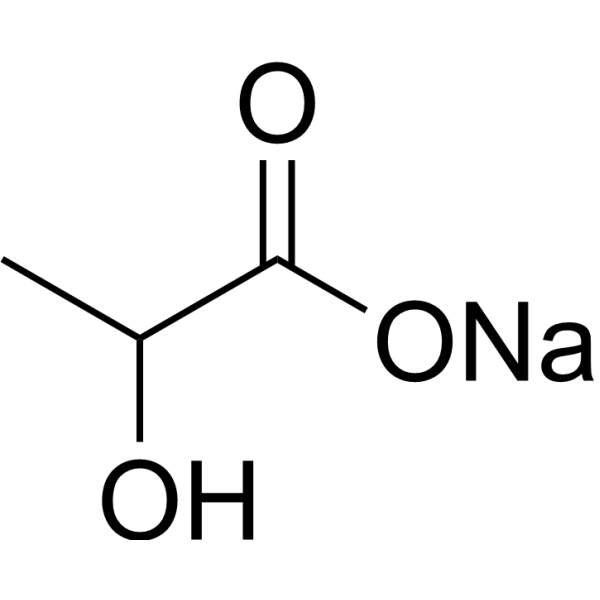 0 ImagesLactic acid (DL-Lactic acid) sodium (60% w/w in water) is a hydroxycarboxylic acid receptor 1 (HCAR1) activator and an epigenetic modulator inducing lysine residues lactylation. Lactic acid sodium (60% w/w in water) is a glycolysis end-product, bridging the gap between glycolysis and oxidative phosphorylation. Lactic acid sodium (60% w/w in water) is an oncometabolite and has immune protective role of lactate in anti-tumor immunity. Lactic acid sodium (60% w/w in water) also has antimicrobial activity, which can be used as a food preservative.
This product has a content (w/w) of 60%, and 1 mL of the system contains 798 mg of Lactic acid sodium, i.e., a concentration of 798 mg/mL (i.e., 7.12 M).
-
Lactic acid
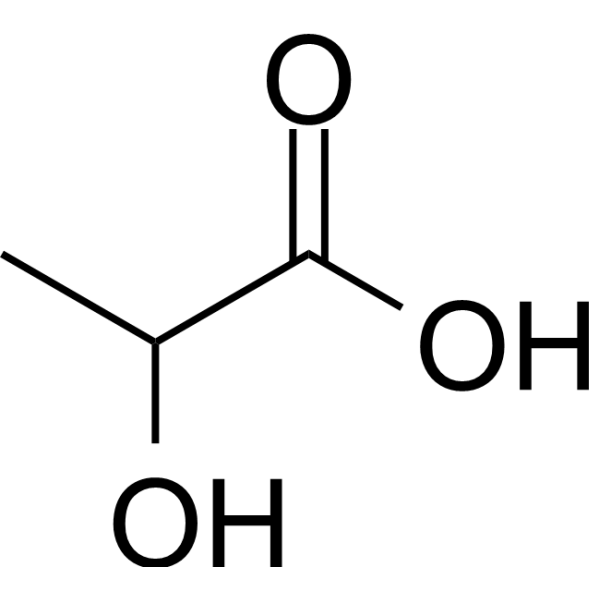 0 ImagesLactic acid (DL-Lactic acid) is a hydroxycarboxylic acid receptor 1 (HCAR1) activator and an epigenetic modulator inducing lysine residues lactylation. Lactic acid is a glycolysis end-product, bridging the gap between glycolysis and oxidative phosphorylation. Lactic acid is an oncometabolite and has immune protective role of lactate in anti-tumor immunity. Lactic acid also has antimicrobial activity, which can be used as a food preservative.
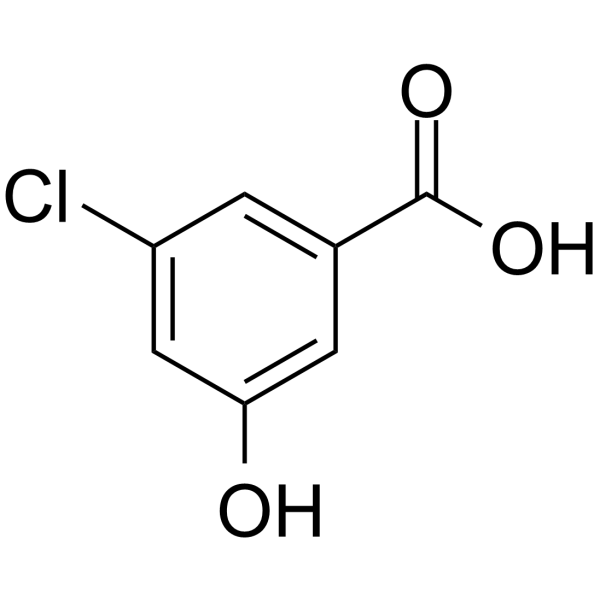
-
3-Hydroxybenzoic acid
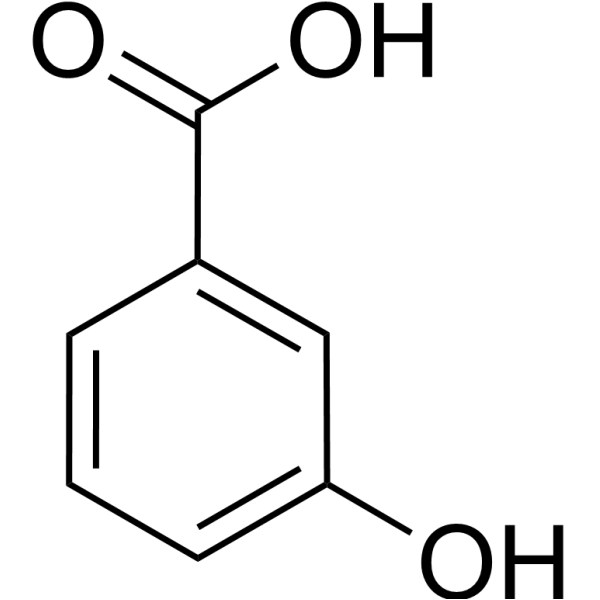 0 Images3-Hydroxybenzoic acid is an orally active endogenous metabolite. 3-Hydroxybenzoic acid is an agonist for GPR81 and GPR109A. 3-Hydroxybenzoic acid acts as stress response desensitizers. 3-Hydroxybenzoic acid can be used for anti-inflammatory and analgesic study.
-
3,5-Dihydroxybenzoic acid
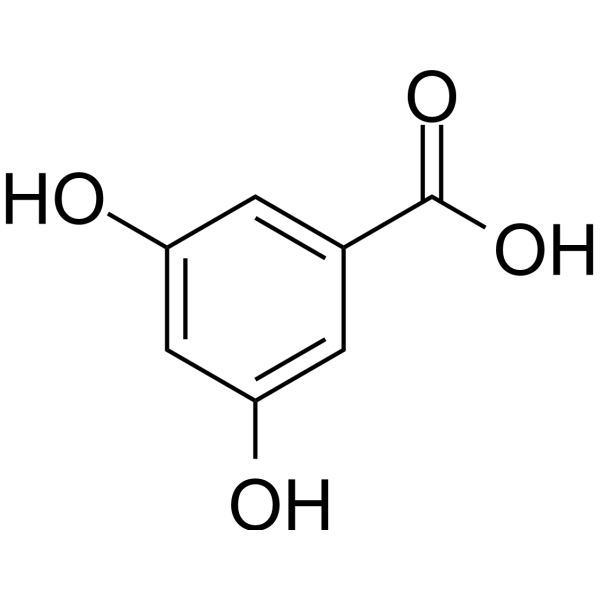 0 Images3,5-Dihydroxybenzoic acid a potential biomarker for the consumption of many food products, including beer, nuts, peanut, and pulses. 3,5-Dihydroxybenzoic acid is the agonist for hydroxycarboxylic acid receptor 1 (HCA1, also known as GPR81) that inhibits lipolysis in adipocytes. 3,5-Dihydroxybenzoic acid is the competitive inhibitor for tyrosine phenol-lyase (TPL), exhibits an affinity of Ki=25.7 μM. 3,5-Dihydroxybenzoic acid is orally active.
-
Lactic acid calcium
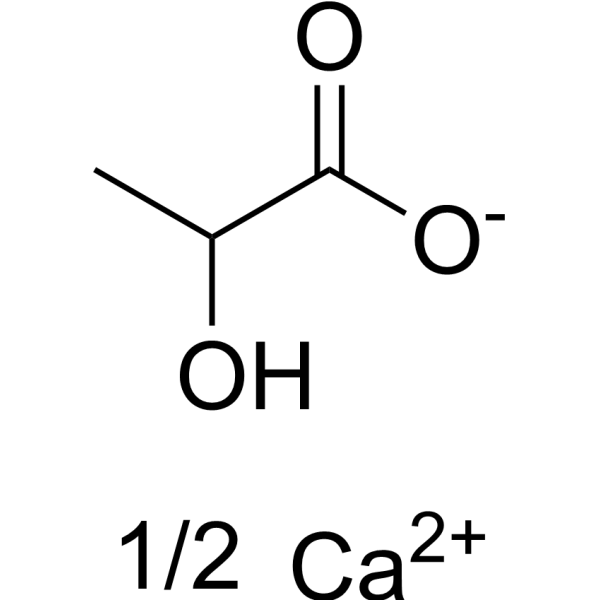 0 ImagesLactic acid (DL-Lactic acid) calcium is a hydroxycarboxylic acid receptor 1 (HCAR1) activator and an epigenetic modulator inducing lysine residues lactylation. Lactic acid calcium is a glycolysis end-product, bridging the gap between glycolysis and oxidative phosphorylation. Lactic acid calcium is an oncometabolite and has immune protective role of lactate in anti-tumor immunity. Lactic acid calcium also has antimicrobial activity, which can be used as a food preservative.
-
GPR81 agonist 2
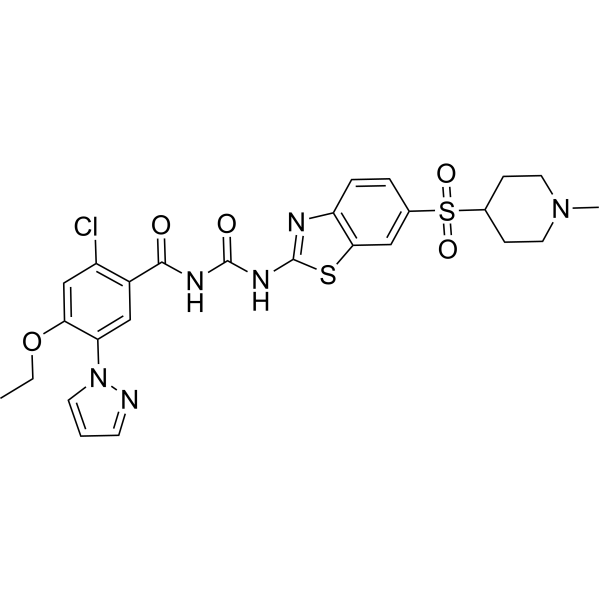 0 ImagesCat. No.: HY-148563CAS No.: 1143024-28-5GPR81 agonist 2 is a GPR81 agonist with an EC50 of 0.023 μM for the human receptor. GPR81 agonist 2 activates the lactate-sensing receptor GPR81, inhibits forskolin-stimulated cAMP production and GTP binding of Gi protein. GPR81 agonist 2 can be used for research on type 2 diabetes.



