



AT13148
Based on 2 publication(s) in Google Scholar
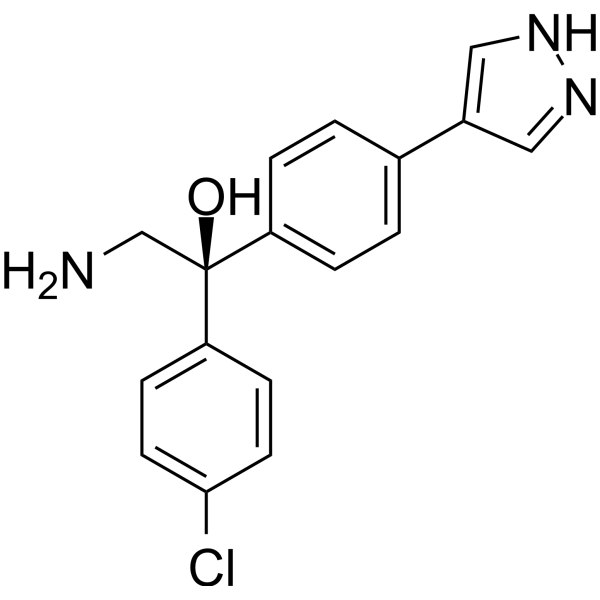
AT13148 is an orally active and ATP-competitive, multi-AGC kinase inhibitor with IC50s of 38 nM/402 nM/50 nM, 8 nM, 3 nM, and 6 nM/4 nM for Akt1/2/3, p70S6K, PKA, and ROCKI/II, respectively.
For research use only. We do not sell to patients.
- Purity : 99.20%
- CAS No.: 1056901-62-2
- Formula: C17H16ClN3O
- Molecular Weight:313.78
-
Storage:Powder -20°C, 3 years , 4°C, 2 years ; In solvent -80°C, 2 years , -20°C, 1 year

To place orders, for customer services and technical support, please contact: MedChemExpress USA
Tel: 609-228-6898 E-mail: [email protected] [email protected]


-
 Biological Activity
-
Chemical Information
-
Solvent & Solubility
- Purity & Documentation
- References
-
 Help & FAQs


-
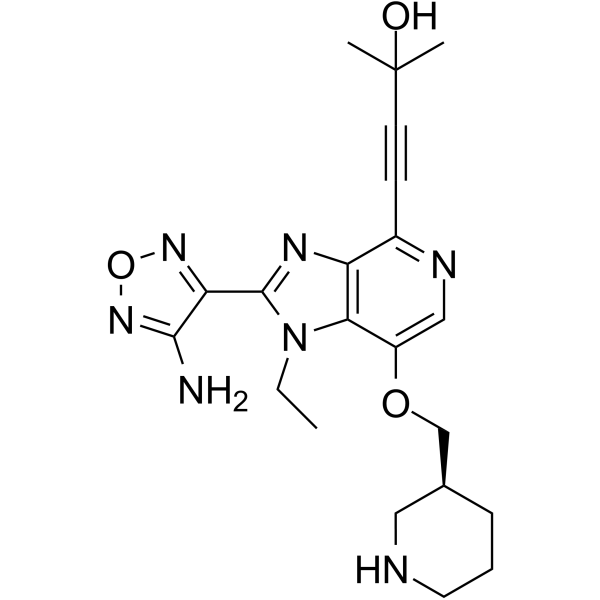
HY-10249
GSK-690693Akt Inhibitor -
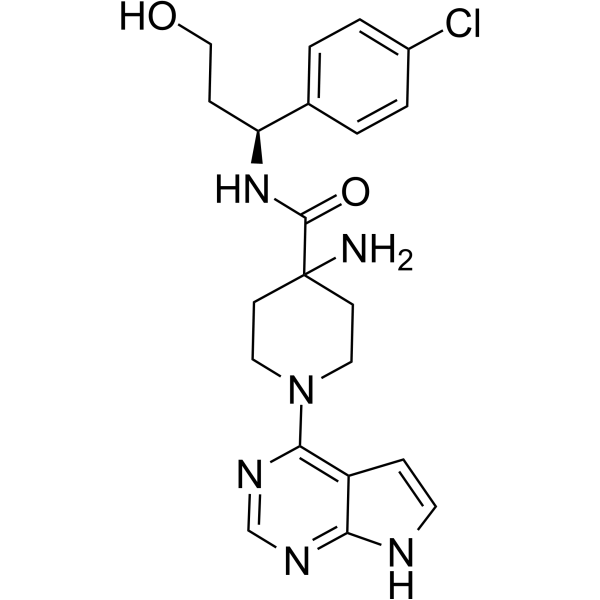
HY-15431
CapivasertibAkt Inhibitor -
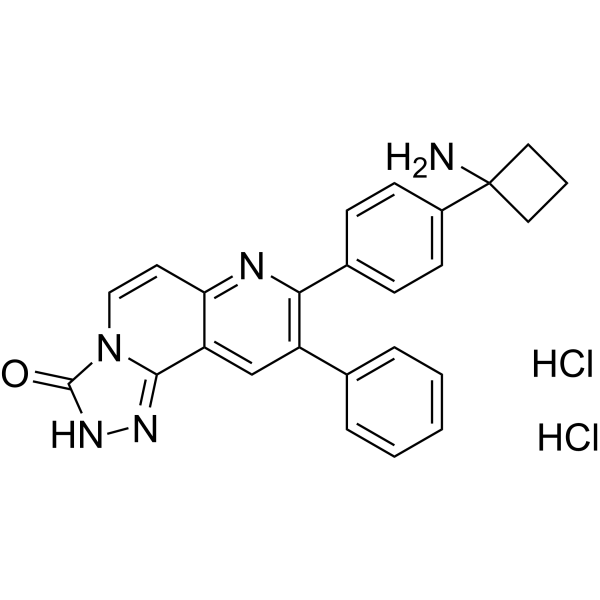
HY-10358
MK-2206 dihydrochlorideAllosteric Akt Inhibitor -
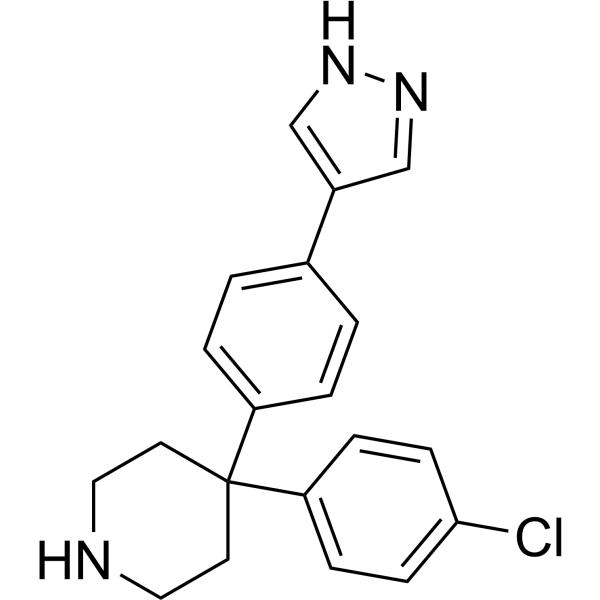
HY-12059
AT7867 -
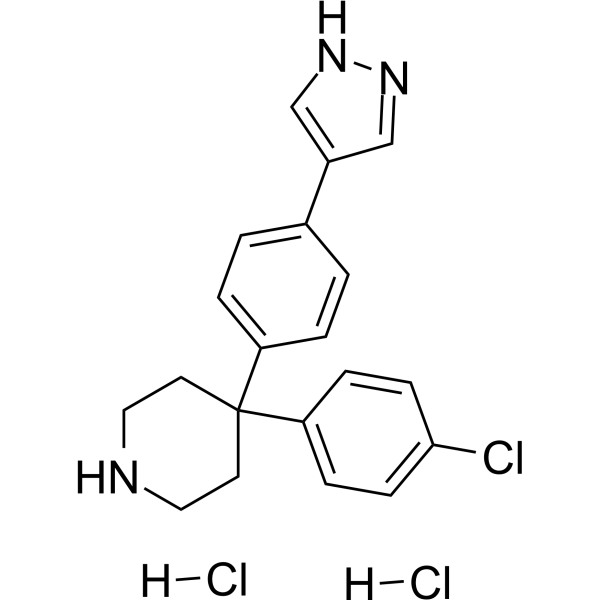
HY-12059A
AT7867 dihydrochloride -
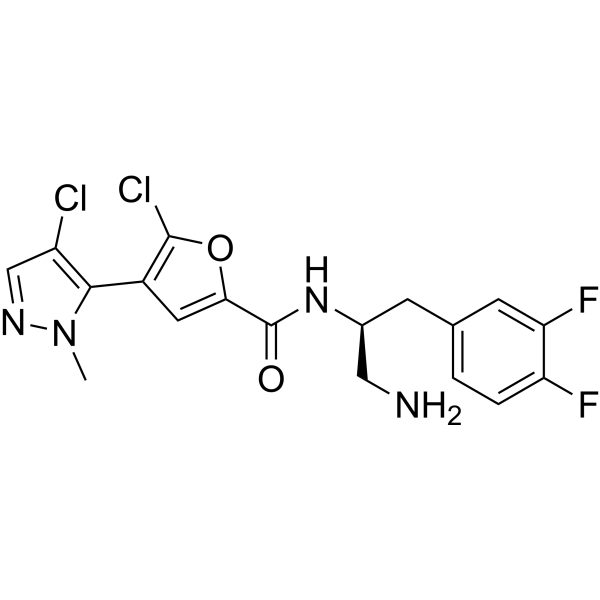
HY-15965
UprosertibAkt Inhibitor -
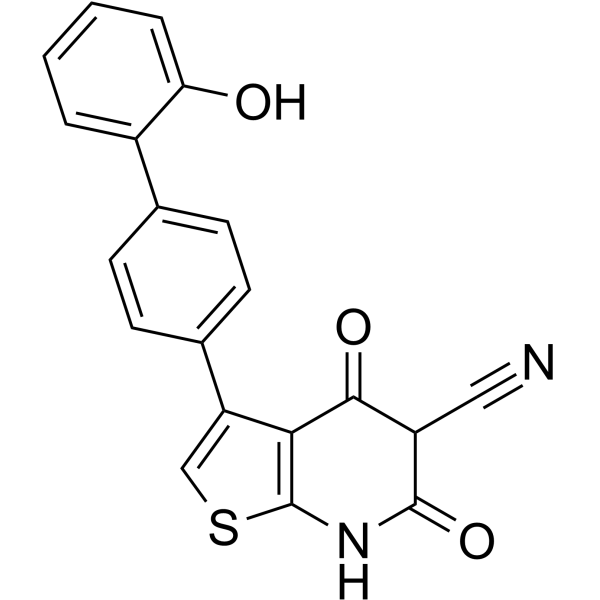
HY-50662
A-769662AMPK Activator -
HY-15727A
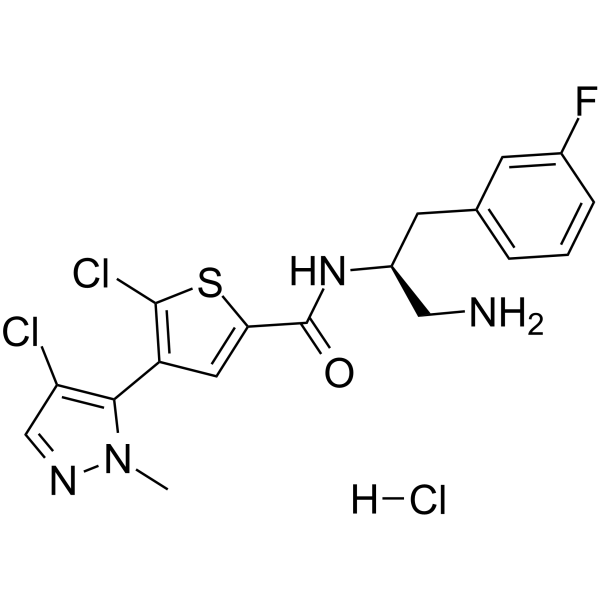
Afuresertib hydrochlorideAkt Inhibitor -
HY-B0006
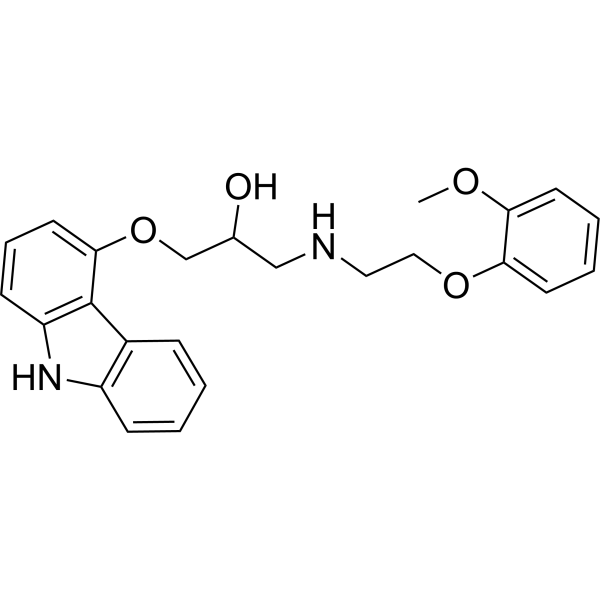
Carvedilolβ/α-1 Blocker -
HY-13223
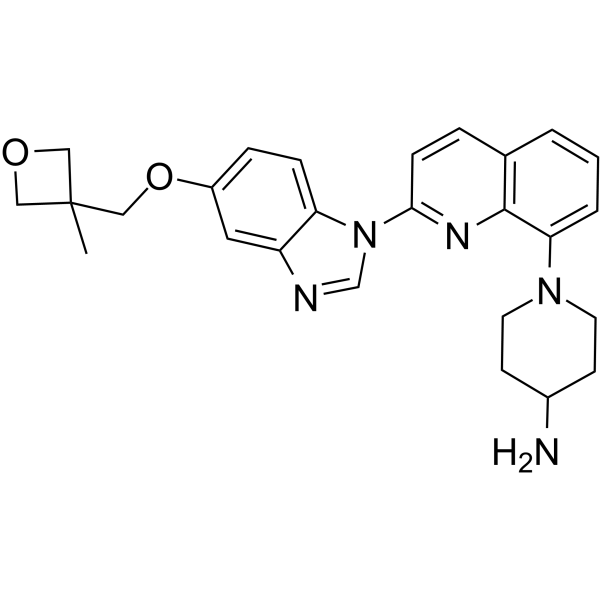
CrenolanibFLT3 Inhibitor -
HY-10320
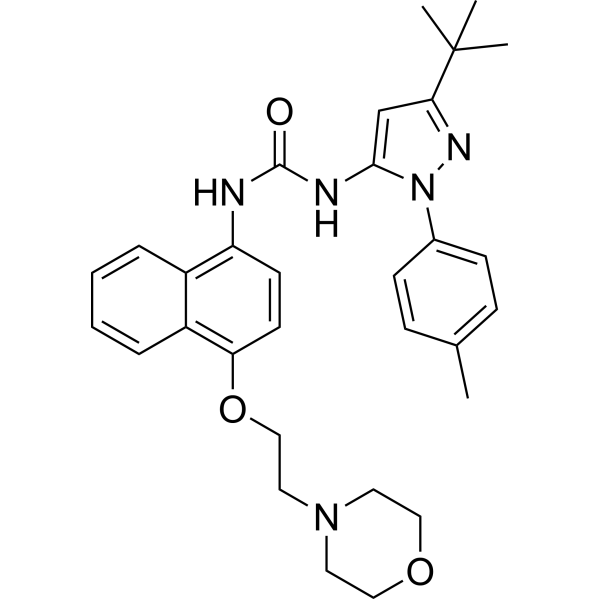
Doramapimodp38 MAPK Inhibitor -
HY-12292
IM-12GSK-3β Inhibitor
Publications Citing Use of MedChemExpress (MCE) AT13148
More

Biological Activity
Description
IC50 & Target
[1]|
Akt1 38 nM (IC50) |
p70S6K 8 nM (IC50) |
Akt3 50 nM (IC50) |
Akt2 402 nM (IC50) |
PKA 3 nM (IC50) |
ROCKII 4 nM (IC50) |
ROCKI 6 nM (IC50) |
SGK3 63 nM (IC50) |
RSK1 85 nM (IC50) |
CHK2 860 nM (IC50) |
Aurora B 1840 nM (IC50) |
In Vitro
AT13148 inhibits a panel of kinases at 10 μM, and the IC50 values for p70S6K, PKA, ROCKI, and ROCKII are all less than 10 nM and those for AKT1, 2, and 3 are 38, 402, and 50 nM, respectively. For the related AGC kinases RSK1 and SGK3, the IC50 values are 85 and 63 nM, respectively. In contrast, IC50 values for the non-AGC kinases CHK2 and Aurora B are both greater than 800 nM. AT13148 potently inhibits proliferation with GI50 values of 1.5 to 3.8 μM across a selected panel of cancer cell lines[1]. AT13148 treatment in gastric cancer cells dramatically suppresses activation of multiple AGC kinases, including Akt (at p-Thr-308), p70S6 kinase (p70S6K), glycogen synthase kinase 3β (GSK-3β) and p90 ribosomal S6 kinase (RSK)[2].
MedChemExpress (MCE) has not independently confirmed the accuracy of these methods. They are for reference only.
In Vivo
MedChemExpress (MCE) has not independently confirmed the accuracy of these methods. They are for reference only.
Clinical Trial
| NCT Number | Sponsor | Condition | Start Date |
Phase

|
|---|---|---|---|---|
| NCT01329991 | 2011-05 | PHASE1 |


Chemical Information
-
CAS No. 1056901-62-2
-
Appearance Solid
-
Molecular Weight 313.78
-
Formula C17H16ClN3O
-
Color White to off-white
-
SMILES
ClC1=CC=C([C@](C2=CC=C(C3=CNN=C3)C=C2)(O)CN)C=C1
-
Shipping
Room temperature in continental US; may vary elsewhere.
-
Storage
Powder -20°C 3 years 4°C 2 years In solvent -80°C 2 years -20°C 1 year


Publications (2)
-
Journal Impact Factor
-
Most Recent
-
Curr Res Transl Med
Belumosudil with ROCK-2 inhibition: chemical and therapeutic development to FDA approval for the treatment of chronic graft-versus-host disease. [Abstract]2022 Jul;70(3):103343. PMID: 35339032 -
Methods Mol Biol
2018:1711:351-398. PMID: 29344898


Solvent & Solubility
In Vitro:
DMSO : 50 mg/mL (159.35 mM; Need ultrasonic; Hygroscopic DMSO has a significant impact on the solubility of product, please use newly opened DMSO)
Please refer to the solubility information to select the appropriate solvent. Once prepared, please aliquot and store the solution to prevent product inactivation from repeated freeze-thaw cycles.
Storage method and period of stock solution: -80°C, 2 years; -20°C, 1 year. When stored at -80°C, please use it within 2 years. When stored at -20°C, please use it within 1 year.
Please refer to the solubility information to select the appropriate solvent. Once prepared, please aliquot and store the solution to prevent product inactivation from repeated freeze-thaw cycles.
Storage method and period of stock solution: -80°C, 2 years; -20°C, 1 year. When stored at -80°C, please use it within 2 years. When stored at -20°C, please use it within 1 year.
Concentration (start) × Volume (start) = Concentration (final) × Volume (final)
In Vivo:
Select the appropriate dissolution method based on your experimental animal and administration route.
- For the following dissolution methods, please ensure to first prepare a clear stock solution using an In Vitro approach and then sequentially add co-solvents:
- To ensure reliable experimental results, the clarified stock solution can be appropriately stored based on storage conditions. As for the working solution for In Vivo experiments, it is recommended to prepare freshly and use it on the same day.
- The percentages shown for the solvents indicate their volumetric ratio in the final prepared solution. If precipitation or phase separation occurs during preparation, heat and/or sonication can be used to aid dissolution.
Add each solvent one by one: 10% DMSO 40% PEG300 5% Tween-80 45% Saline
Solubility: ≥ 2.5 mg/mL (7.97 mM); Clear solution
This protocol yields a clear solution of ≥ 2.5 mg/mL (saturation unknown).
Taking 1 mL working solution as an example, add 100 μL DMSO stock solution (25.0 mg/mL) to 400 μL PEG300, and mix evenly; then add 50 μL Tween-80 and mix evenly; then add 450 μL Saline to adjust the volume to 1 mL.
Preparation of Saline: Dissolve 0.9 g sodium chloride in ddH₂O and dilute to 100 mL to obtain a clear Saline solution.
Add each solvent one by one: 10% DMSO 90% (20% SBE-β-CD in Saline)
Solubility: ≥ 2.5 mg/mL (7.97 mM); Clear solution
This protocol yields a clear solution of ≥ 2.5 mg/mL (saturation unknown).
Taking 1 mL working solution as an example, add 100 μL DMSO stock solution (25.0 mg/mL) to 900 μL 20% SBE-β-CD in Saline, and mix evenly.
Preparation of 20% SBE-β-CD in Saline (4°C, storage for one week): 2 g SBE-β-CD powder is dissolved in 10 mL Saline, completely dissolve until clear.
In Vivo Dissolution Calculator
Please enter the basic information of animal experiments:
-
-
-
-
Recommended: Prepare an additional quantity of animals to account for potential losses during experiments.
Please enter your animal formula composition:
-
%DMSO +
Recommended: Keep the proportion of DMSO in working solution below 2% if your animal is weak.
-
%+
-
+%Tween-80 + +
-
%Saline +
The co-solvents required include: DMSO, . All of co-solvents are available by MedChemExpress (MCE). , Tween 80. All of co-solvents are available by MedChemExpress (MCE).
Working solution concentration: 0.22 mg/mL
Method for preparing stock solution: mg drug dissolved in μL DMSO. Stock solution concentration: mg/mL.
1. Take μL DMSO stock solution;
2. Add μL .
μL , mix evenly;
3. Then add μL Tween 80, mix evenly;
4. Then add μL
Please ensure that the stock solution in the first step is dissolved to a clear state, and add co-solvents in sequence. You can use ultrasonic heating (ultrasonic cleaner, recommended frequency 20-40 kHz), vortexing, etc. to assist dissolution.


Purity & Documentation
-
Data Sheet (282 KB)
-
SDS (393 KB)
- English - EN (393 KB)
- Français - FR (393 KB)
- Deutsch - DE (393 KB)
- Norwegian - NO (393 KB)
- Español - ES (393 KB)
- Swedish - SV (393 KB)
- Italian - IT (393 KB)
- Korean - KR (393 KB)
- Portuguese - PT (393 KB)
-
Handling Instructions (2659 KB)
References
[1]. Yap TA, et al. AT13148 is a novel, oral multi-AGC kinase inhibitor with potent pharmacodynamic and antitumor activity. Clin Cancer Res. 2012 Jul 15;18(14):3912-23. [Content Brief]
[2]. Xi Y, et al. AT13148, a first-in-class multi-AGC kinase inhibitor, potently inhibits gastric cancer cells both in vitro and in vivo. Biochem Biophys Res Commun. 2016 Sep 9;478(1):330-6 [Content Brief]


Complete Stock Solution Preparation Table
Please refer to the solubility information to select the appropriate solvent. Once prepared, please aliquot and store the solution to prevent product inactivation from repeated freeze-thaw cycles.
Storage method and period of stock solution: -80°C, 2 years; -20°C, 1 year. When stored at -80°C, please use it within 2 years. When stored at -20°C, please use it within 1 year.
| Optional Solvent | Concentration Solvent Mass | 1 mg | 5 mg | 10 mg | 25 mg |
|---|---|---|---|---|---|
| DMSO | 1 mM | 3.1869 mL | 15.9347 mL | 31.8695 mL | 79.6737 mL |
| 5 mM | 0.6374 mL | 3.1869 mL | 6.3739 mL | 15.9347 mL | |
| 10 mM | 0.3187 mL | 1.5935 mL | 3.1869 mL | 7.9674 mL | |
| 15 mM | 0.2125 mL | 1.0623 mL | 2.1246 mL | 5.3116 mL | |
| 20 mM | 0.1593 mL | 0.7967 mL | 1.5935 mL | 3.9837 mL | |
| 25 mM | 0.1275 mL | 0.6374 mL | 1.2748 mL | 3.1869 mL | |
| 30 mM | 0.1062 mL | 0.5312 mL | 1.0623 mL | 2.6558 mL | |
| 40 mM | 0.0797 mL | 0.3984 mL | 0.7967 mL | 1.9918 mL | |
| 50 mM | 0.0637 mL | 0.3187 mL | 0.6374 mL | 1.5935 mL | |
| 60 mM | 0.0531 mL | 0.2656 mL | 0.5312 mL | 1.3279 mL | |
| 80 mM | 0.0398 mL | 0.1992 mL | 0.3984 mL | 0.9959 mL | |
| 100 mM | 0.0319 mL | 0.1593 mL | 0.3187 mL | 0.7967 mL |


AT13148 Related Classifications
HY-16071 Related Classifications
 Powered by Bioz