



Crohn's Disease
-
Crohn's Disease (25)

- 1
- 2
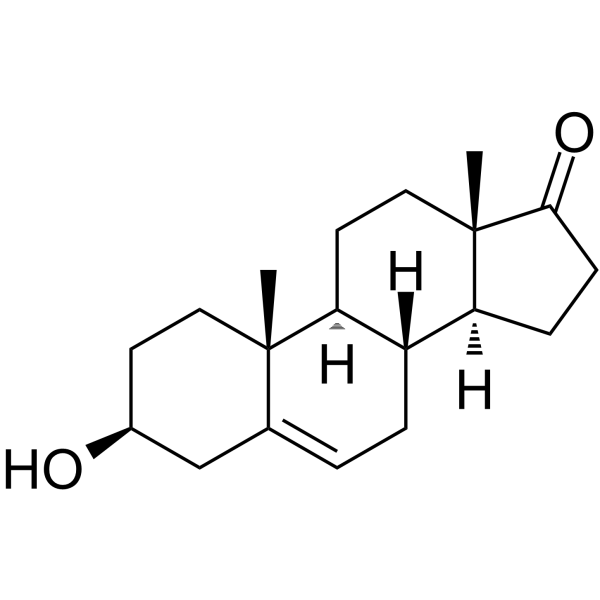
- Formule: C19H28O2
- Masse moléculaire: 288.42
DHEA (Prasterone) is one of the most abundant steroid hormones. DHEA (Prasterone) mediates its action via multiple signaling pathways involving specific membrane receptors and via transformation into androgen and estrogen derivatives (e.g., androgens, estrogens, 7α and 7β DHEA, and 7α and 7β epiandrosterone derivatives) acting through their specific receptors.

- Masse moléculaire: 143.96 kDa
Tulisokibart (PRA023) is a humanized IgG1-κ monoclonal antibody. Tulisokibart targets to TNFSF15/TL1A. Tulisokibart can be used to study a variety of inflammatory/fibrotic diseases, such as Crohn's Disease (CD) and ulcerative colitis.
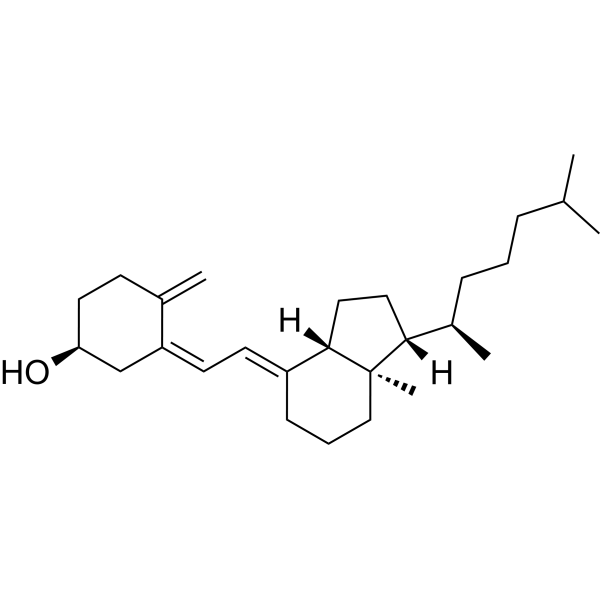
- Formule: C27H44O
- Masse moléculaire: 384.64
Vitamin D3 (Cholecalciferol; Colecalciferol) is a naturally occuring form of vitamin D. Vitamin D3 induces cell differentiation and prevents proliferation of cancer cells.

- Masse moléculaire: 143.64 kDa
Duvakitug (TEV-48574) is a humanized IgG1-λ2 monoclonal antibody targeting to TNFSF15/TL1A. Duvakitug' main expression system is CHOK1SV cells endogenously expressing glutamine synthetase (GS). Duvakitug can be used in the study of Crohn's Disease (CD).

- Masse moléculaire: 145.63 kDa

- Formule: C22H22F2N6O2
- Masse moléculaire: 440.45
HW201877 enantiomer is the enantiomer of HW201877 (HY-174990) and is 15-hydroxyprostaglandin dehydrogenase (15-PGDH) inhibitor with an IC50 of 12.2 nM. HW201877 enantiomer can be used for the research of inflammatory bowel disease, idiopathic pulmonary fibrosis, ulcerative colitis, and Crohn's disease.

- Formule: C16H14D3ClN6O4S
- Masse moléculaire: 427.88
Nomelcitinib is a TYK2 inhibitor that modulates the IL23 signaling pathway. Nomelcitinib is used for research on multiple sclerosis, rheumatoid arthritis, inflammatory bowel disease, systemic lupus erythematosus, psoriasis, psoriatic arthritis, Crohn's disease, Sjögren's syndrome, and scleroderma.

- Formule: C26H33N5O4S
- Masse moléculaire: 511.64
CSLP43 is a selective RIPK2 and XIAP inhibitor with an IC50 of 19.9 nM against human RIPK2. CSLP43 binds to the ATP-binding pocket of RIPK2 and disrupts the interaction between RIPK2 and the BIR2 domain of XIAP or cIAP1. CSLP43 inhibits RIPK2 ubiquitination, NOD1-dependent inflammatory signaling pathways, NOD2-dependent inflammatory signaling pathways, as well as NF-κB activation associated with NOD agonists. CSLP43 is selective for the NOD1/NOD2 signaling pathway and does not inhibit the kinase activity of RIPK1 or RIPK3. CSLP43 is applicable to research related to Crohn's disease, Blau syndrome, early-onset sarcoidosis and early-onset inflammatory bowel disease.

- Masse moléculaire: 144.8 kDa
Guselkumab is a recombinant human IgG1 monoclonal antibody against the IL-23p19 subunit. Guselkumab binds to human and cynomolgus monkey IL-23 with Kd values of 3.3 and 1.9 pmol/L, respectively. Guselkumab inhibits production of cytokines lying downstream of the IL-23 signaling pathway and can be used for psoriatic arthritis research.

- Masse moléculaire: 144.06 kDa
Brodalumab (AMG 827) is a human anti-interleukin-17-receptor IgG2 monoclonal antibody that can be used for the research of moderate-to-severe plaque psoriasis and rheumatoid arthritis.

- Masse moléculaire: 146.22 kDa
Natalizumab (Anti-CD49d) (AN100226; BG00002) Solution is a humanized monoclonal IgG4 antibody inhibitor that selectively targets α4 integrin (CD49d), blocking the interaction of integrins such as α4β1 (VLA-4) with vascular cell adhesion molecule VCAM-1, intercellular adhesion molecule ICAM-1, and fibronectin by competitively binding to the α4 subunit. Natalizumab solution inhibits the adhesion, retention, and transendothelial migration of immune cells (such as CD4+ T cells), reducing the infiltration of inflammatory cells into the central nervous system or lesion sites, thereby exerting anti-inflammatory and immunomodulatory activity. Natalizumab (Anti-CD49d) solution is used in the study of relapsing-remitting multiple sclerosis (RRMS) and is also applied in the research of autoimmune or inflammation-related diseases such as Crohn's disease, B-cell lymphoma, and non-infectious uveitis. Natalizumab (Anti-CD49d) can also prevent lymphocytes from entering the central nervous system, thus preventing acute demyelinating relapses.
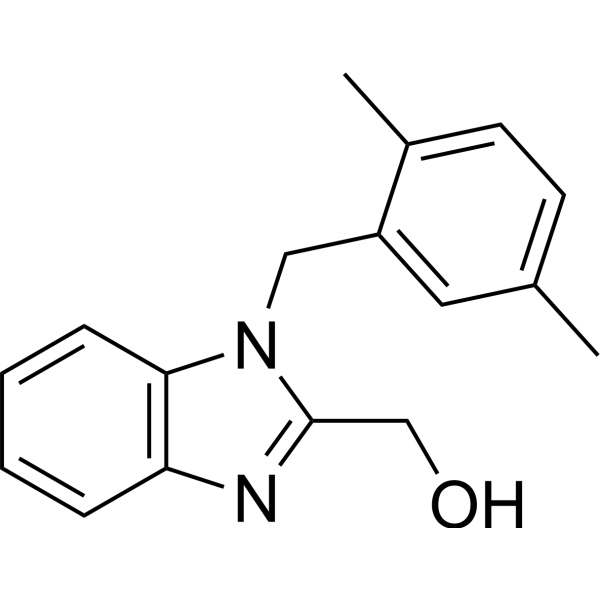
- Formule: C17H18N2O
- Masse moléculaire: 266.34
UCB-6876 is a TNFα inhibitor. UCB-6876 specifically binds to the asymmetric crystalline form of TNF-α trimer with a KD of 22 μM. UCB-6876 is applicable to research related to autoimmune diseases (rheumatoid arthritis and Crohn's disease).
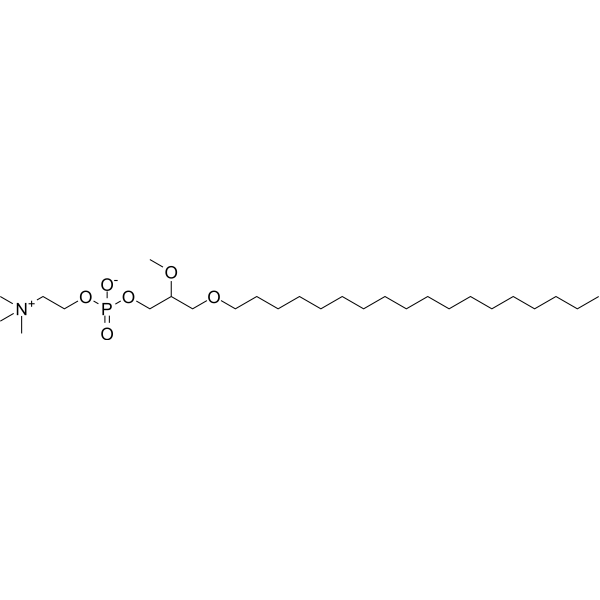
- Formule: C27H58NO6P
- Masse moléculaire: 523.73
Edelfosine (ET-18-OCH3) is an orally active lipid raft modulator and apoptosis inducer that alters membrane fluidity and preferentially inserts into tumor cell membranes. Edelfosine recruits death receptor ligands (FasL/CD95L, TRAIL) and Bid to lipid rafts to form death-inducing signaling complexes, thereby initiating mitochondria-dependent apoptosis and inducing cytochrome c release. Edelfosine also exerts anti-inflammatory effects, promotes L-Selectin shedding, and causes no gastrointestinal or organ toxicity. In addition, Edelfosine inhibits nucleic acid and protein synthesis in Leishmania donovani and exhibits antiproliferative activity. Edelfosine can be used in research on multiple myeloma, inflammatory bowel diseases (such as ulcerative colitis and Crohn's disease), and visceral leishmaniasis.

- Formule: C15H28Cl2N4O8
- Masse moléculaire: 463.31
TriDAP dihydrochloride (L-Ala-γ-D-Glu-meso-diaminopimelic acid dihydrochloride) is a NOD1 agonist with a Kd value of 34.5 μM. TriDAP dihydrochloride enhances the binding of NOD1-RICK, promotes RICK phosphorylation, and activates the NF-κB, TAK1, MEK/ERK, p38 and interferon response pathways. TriDAP dihydrochloride downregulates Runx2 via increasing ubiquitination and reduces trabecular bone parameters. TriDAP dihydrochloride decreases IκBα levels and increases p65 levels. TriDAP dihydrochloride induces the secretion of proinflammatory mediators IL-8 and prostaglandins, triggers tissue inflammation and innate immune activation, and inhibits SARS-CoV-2 replication in lung epithelial cells. TriDAP dihydrochloride increases the RANKL/OPG ratio in mice, reduces bone mass and enhances osteoclast activity, and inhibits new bone formation by decreasing the mineralization deposition rate in mice. TriDAP dihydrochloride can be used in research related to pulpitis, chronic ulcerative colitis, Crohn's disease and SARS-CoV-2 infection.

- Formule: C27H21F2N5O
- Masse moléculaire: 469.49
Ontunisertib (AGMB-129) is an orally active and selective gastrointestinal-restricted ALK5 (TGFβR1) inhibitor. Ontunisertib blocks signalling of the pro-fibrotic TGFβ pathway. Ontunisertib can be used for the research of fibrostenotic Crohn’s disease.

- Masse moléculaire: 144.72 kDa
Quetmolimab (E6011) is a humanized anti-Fractalkine (CX3CL1) monoclonal antibody. Quetmolimab binds to membrane-bound and soluble Fractalkine, neutralizes Fractalkine-induced migration of CX3CR1-expressing cells, mediates target-bound complex elimination from serum. Quetmolimab suppresses free soluble Fractalkine levels in cynomolgus monkeys, with target engagement linked to increased serum total Fractalkine concentration. Quetmolimab can be used for the research of Crohn’s disease, rheumatoid arthritis, and primary biliary cholangitis.
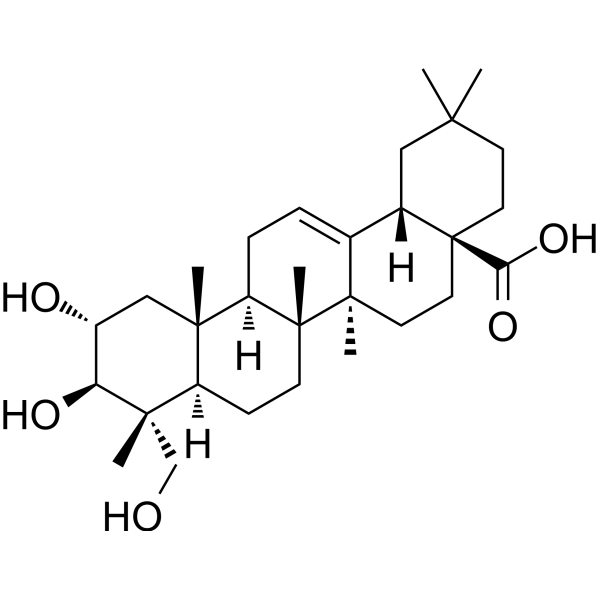
- Formule: C30H48O5
- Masse moléculaire: 488.70
Arjunolic acid is an orally active, multifunctional bioactive compound. Arjunolic acid exhibits free radical scavenging activity, as well as fungal and bacterial activities. Arjunolic acid induces apoptosis (Apoptosis) in various cancer cells. Arjunolic acid protects hepatocytes against induced oxidative stress and apoptosis by reducing reactive oxygen species and inhibiting NF-κB activation. Arjunolic acid regulates pancreatic dysfunction in type 2 diabetic rats by blocking the activation of the TLR-4/MyD88 and canonical Wnt pathways. Arjunolic acid inhibits neuroinflammation and ameliorates depressive behaviors via the SIRT1/AMPK/Notch1 signaling pathway in microglia. Arjunolic acid improves Crohn's disease-like colitis by restoring gut microbiota composition and inhibiting TLR4 signaling. Arjunolic acid suppresses osteosarcoma progression by inhibiting Wnt3a-mediated M2 polarization of macrophages. Arjunolic acid ameliorates diabetic retinopathy via the autophagy pathway regulated by AMPK/mTOR/HO-1. Arjunolic acid is applicable to research related to type 2 diabetes, organ toxicity, depression, Crohn's disease, osteosarcoma, diabetic retinopathy, and testicular dysfunction.

- Formule: C29H49N9O13S
- Masse moléculaire: 763.82
LNSMGQD is a cyclic peptide fragment derived from desmoglein 1 (amino acids 81-86), which mimics trans-interactions and acts as part of the tandem peptide binding interface of desmoglein 2. LNSMGQD not only binds to desmoglein 1 and 3, but also effectively inhibits their homophilic trans-interactions, while reducing the probability of homophilic or heterophilic binding between desmoglein 2 and Dsc2, N-cadherin and E-cadherin. LNSMGQD is applicable to the research on disease mechanisms such as Crohn's disease and pemphigus vulgaris.
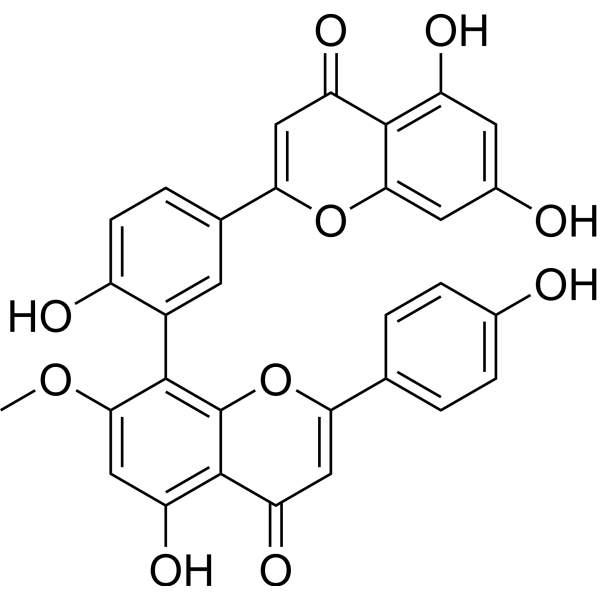
- Formule: C31H20O10
- Masse moléculaire: 552.48
Sotetsuflavone is a flavonoid that can be isolated from Cycas revolute. Sotetsuflavone inhibits phosphorylation of PI3K, Akt, mTOR, JNK, and p38 MAPK; modulates expression of Cyclin D1, CDK4, Bcl-2, Bax, cleaved caspases 3/9, MMP-9, TGF-β, STAT3, and β-catenin. Sotetsuflavone induces G0/G1 cell cycle arrest, apoptosis, autophagy, and intracellular ROS elevation, inhibits cancer cell proliferation. Sotetsuflavone inhibits tumor growth in mouse tumor xenograft models. Sotetsuflavone can be used for the research of non-small cell lung cancer and Crohn’s disease.
- 1
- 2



