



Carboxy-PTIO potassium
Based on 7 publication(s) in Google Scholar
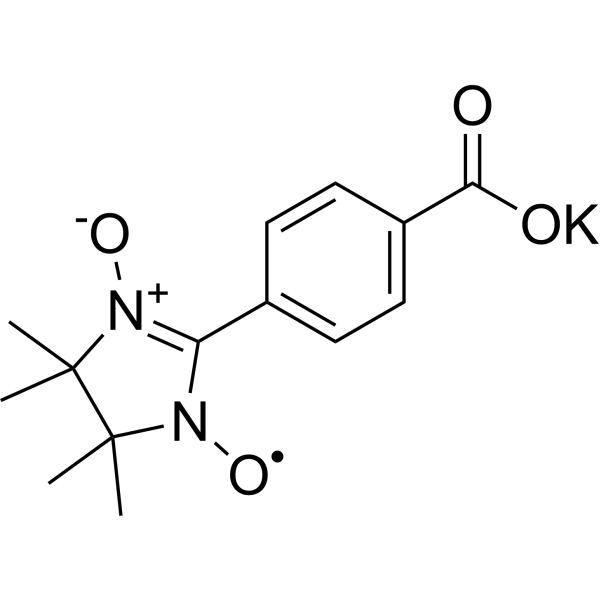
Carboxy-PTIO potassium is a potent nitric oxide (NO) scavenger that can make a quick reaction with NO to produce NO2. Carboxy-PTIO potassium can prevent hypotension and endotoxic shock through the direct scavenging action against NO in lipopolysaccharide-stimulated rat model.
For research use only. We do not sell to patients.
- Purity : 99.02%
- CAS No.: 148819-94-7
- Formula: C14H16KN2O4
- Molecular Weight:315.39
-
Storage:
-20°C, sealed storage, away from moisture
* In solvent : -80°C, 6 months; -20°C, 1 month (sealed storage, away from moisture)

To place orders, for customer services and technical support, please contact: MedChemExpress USA
Tel: 609-228-6898 E-mail: [email protected] [email protected]


-
 Biological Activity
-
Chemical Information
-
Solvent & Solubility
- Protocols
- Purity & Documentation
- References
-
 Help & FAQs


-
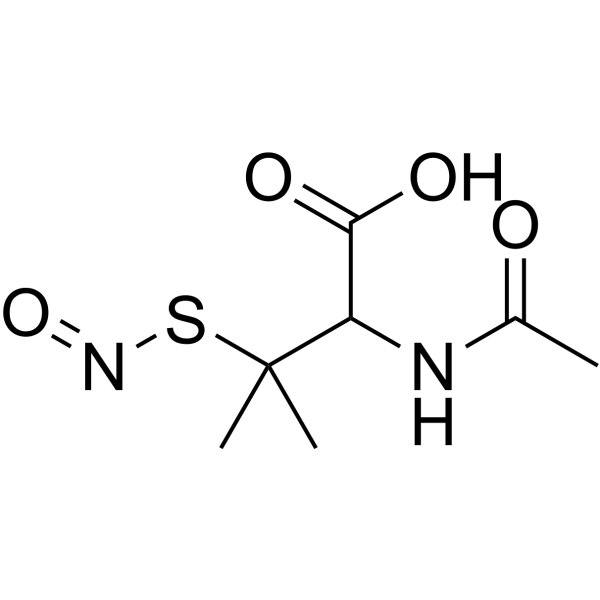
HY-121526
S-Nitroso-N-acetyl-DL-penicillamineNitric oxide donor -
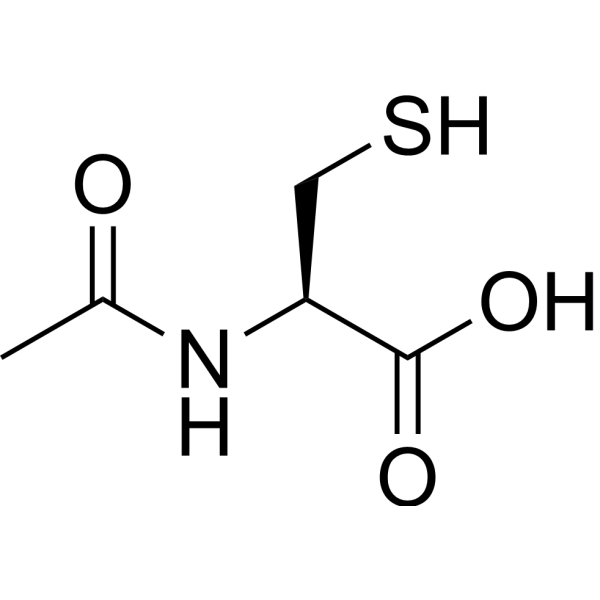
HY-B0215
AcetylcysteineMucolytic Agent -
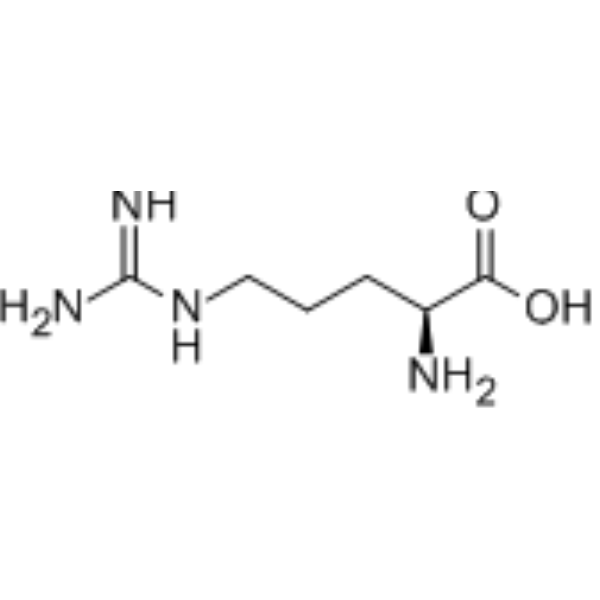
HY-N0455
L-ArginineeNOS Substrate -
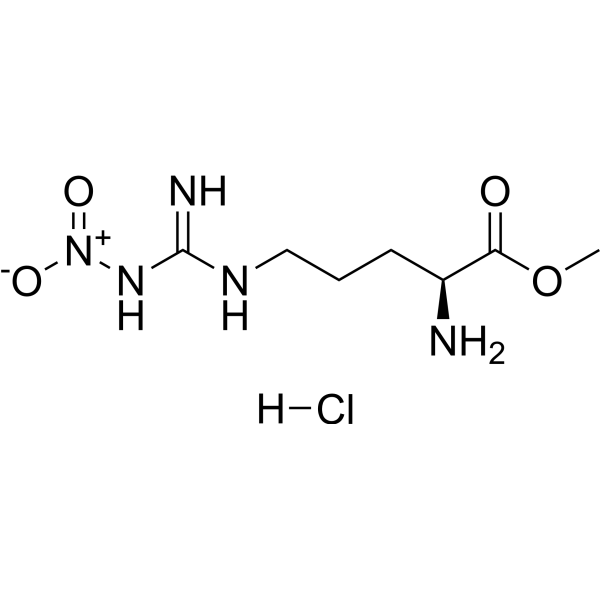
HY-18729A
L-NAME hydrochlorideNO Synthase Inhibitor -
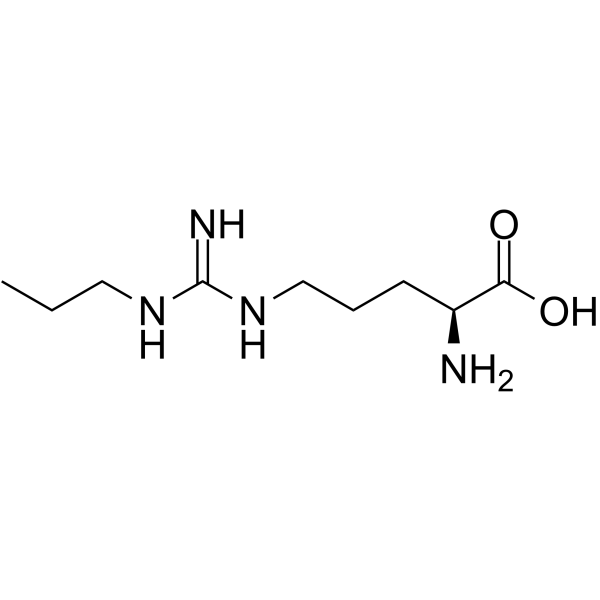
HY-102062
Nω-Propyl-L-argininenNOS Inhibitor -
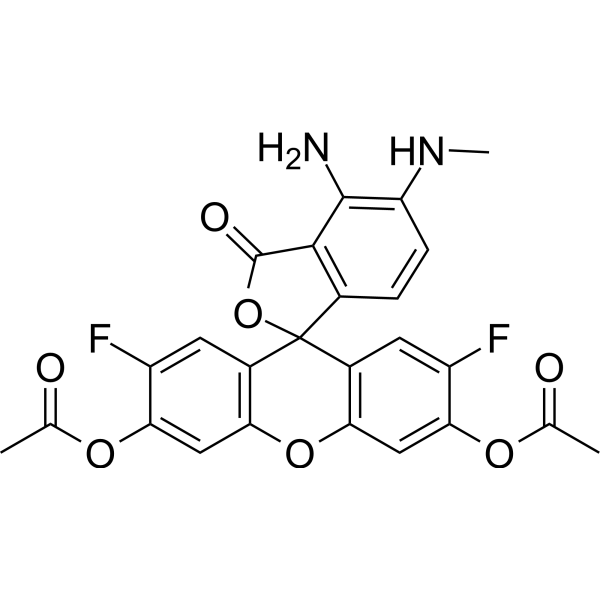
HY-D0717
DAF-FM DANO Fluorescent Dye -
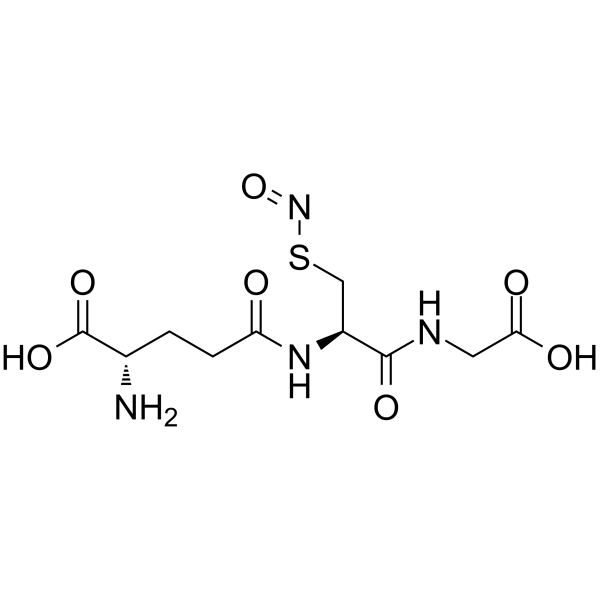
HY-D0845
NitrosoglutathioneNO Donor -
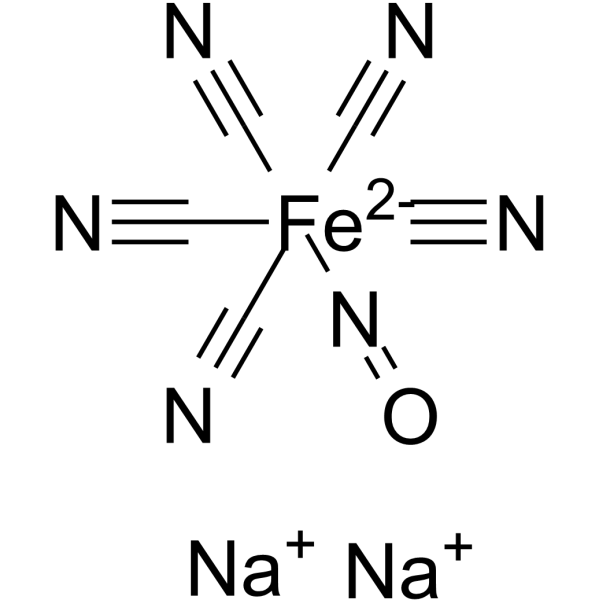
HY-B0564
Sodium nitroprussideVasodilator -
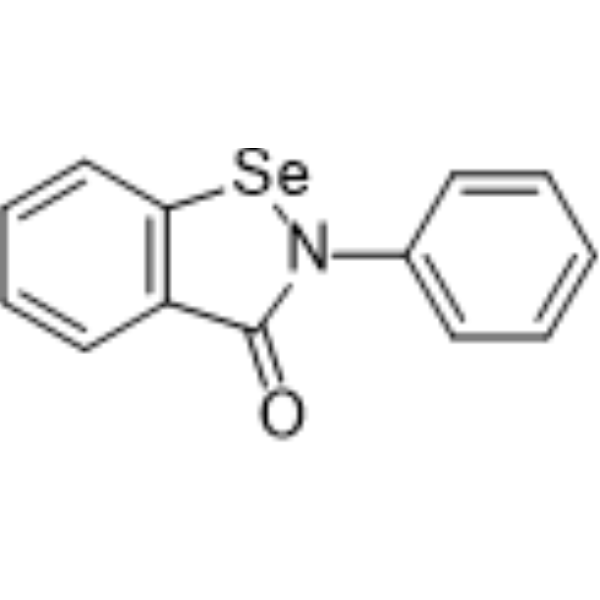
HY-13750
EbselenVDCC Inhibitor -
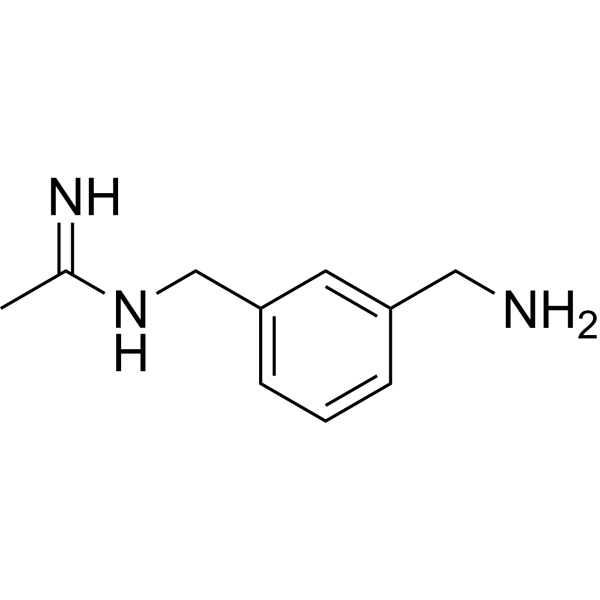
HY-18730
1400WiNOS Inhibitor -
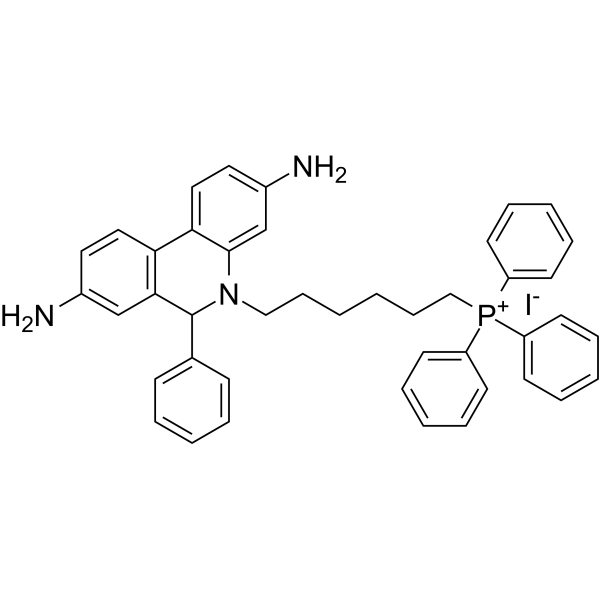
HY-D1055
MitoSOX RedMitochondrial ROS Indicator -
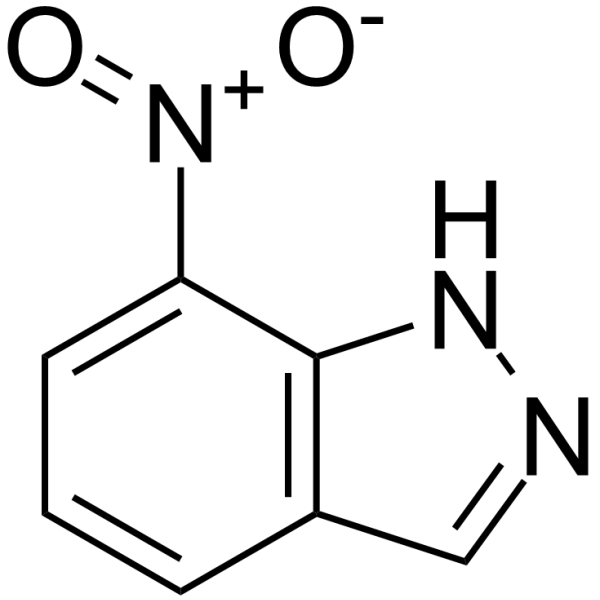
HY-69019
7-NitroindazoleNOS Inhibitor
Publications Citing Use of MedChemExpress (MCE) Carboxy-PTIO potassium
More- Neurosci Bull. 2025 Jun 28. [Abstract]
- Antioxid Redox Signal. 2023 Apr;38(10-12):747-767. [Abstract]
- Int Immunopharmacol. 2026 Feb 1:170:116055. [Abstract]
- iScience. 2023 Jul 10;26(8):107353. [Abstract]
- Toxicol Appl Pharmacol. 2024 May 20:487:116976. [Abstract]
- Int J Radiat Biol. 2025;101(4):341-350. [Abstract]
- Pharmacological Research-Modern Chinese Medicine. 2024 Mar, 10, 100365.


Biological Activity
Description
In Vitro
Carboxy-PTIO potassium (200 μM; 1 h prior to physalin A; 24 hours) significantly suppresses the stimulation of NO expression induced by Physalin A (HY-N9942) treatment, but no change is observed in Carboxy-PTIO treatment alone[1].Carboxy-PTIO potassium (200 μM; 1 h prior to physalin A; 24 hours) reduces Physalin A-induced cleavage of procaspase-3 and PARP, down-regulated ICAD expression,diminishing DNA fragmentation in nuclei[1].Carboxy-PTIO potassium (200 μM; 1 h prior to Physalin A; 24 hours) shows no effect on iNOS expression. However, decreased-mTOR and p-mTOR levels induced by Physalin A is reversed by Carboxy-PTIO with concomitant suppression of LC3 I to LC3 II conversions in A375-S2 cells [1].
MedChemExpress (MCE) has not independently confirmed the accuracy of these methods. They are for reference only. Further protocols information, click here.
-
Cell Line:A375-S2 cells
-
Concentration:200 μM
-
Incubation Time:1 h prior to physalin A; 24 hours
-
Result:Diminished physalin A-induced procaspase-3 and PARP cleavage.
In Vivo
MedChemExpress (MCE) has not independently confirmed the accuracy of these methods. They are for reference only.
-
Animal Model:SD rats[3]
-
Dosage:0.056-1.70 mg/kg/min
-
Administration:Intravenous injection; 0.056-1.70 mg/kg/min; infused for 1 hr beginning 90 min after the LPS injection 90 min
-
Result:Exhibited a potent therapeutic value in endotoxin shock through the direct scavenging action against NO.


Chemical Information
-
CAS No. 148819-94-7
-
Appearance Solid
-
Molecular Weight 315.39
-
Formula C14H16KN2O4
-
Color Dark blue to black
-
SMILES
[O]N1C(C)(C)C(C)(C)[N+]([O-])=C1C2=CC=C(C(O[K])=O)C=C2
-
Shipping
Room temperature in continental US; may vary elsewhere.
-
Storage
-20°C, sealed storage, away from moisture
* In solvent : -80°C, 6 months; -20°C, 1 month (sealed storage, away from moisture)


Publications (7)
-
Journal Impact Factor
-
Most Recent
-
Neurosci Bull
2025 Jun 28. PMID: 40580390 -
Antioxid Redox Signal
Radiation-induced bystander effect on the genome of bone marrow mesenchymal stem cells in lung cancer. [Abstract]2023 Apr;38(10-12):747-767. PMID: 36242096 -
Int Immunopharmacol
Targeting periodontal inflammatory microenvironment to ameliorate periodontitis: A nitrogen ions implantation technique. [Abstract]2026 Feb 1:170:116055. PMID: 41448003 -
iScience
2023 Jul 10;26(8):107353. PMID: 37529099 -
Toxicol Appl Pharmacol
RGS2 attenuates alveolar macrophage damage by inhibiting the Gq/11-Ca2+ pathway during cowshed PM2.5 exposure, and aberrant RGS2 expression is associated with TLR2/4 activation. [Abstract]2024 May 20:487:116976. PMID: 38777097 -
Int J Radiat Biol
Evaluation of the influence of radiation-induced cohort effect in cell populations receiving different doses. [Abstract]2025;101(4):341-350. PMID: 39899278 -


Solvent & Solubility
In Vitro:
H2O : 50 mg/mL (158.53 mM; Need ultrasonic)
Please refer to the solubility information to select the appropriate solvent. Once prepared, please aliquot and store the solution to prevent product inactivation from repeated freeze-thaw cycles.
Storage method and period of stock solution: -80°C, 6 months; -20°C, 1 month (sealed storage, away from moisture). When stored at -80°C, please use it within 6 months. When stored at -20°C, please use it within 1 month.
* Note: If you choose water as the stock solution, please dilute it to the working solution, then filter and sterilize it with a 0.22 μm filter before use.
Please refer to the solubility information to select the appropriate solvent. Once prepared, please aliquot and store the solution to prevent product inactivation from repeated freeze-thaw cycles.
Storage method and period of stock solution: -80°C, 6 months; -20°C, 1 month (sealed storage, away from moisture). When stored at -80°C, please use it within 6 months. When stored at -20°C, please use it within 1 month.
* Note: If you choose water as the stock solution, please dilute it to the working solution, then filter and sterilize it with a 0.22 μm filter before use.
Concentration (start) × Volume (start) = Concentration (final) × Volume (final)
In Vivo:
For the following dissolution methods, please prepare the working solution directly:
It is recommended to prepare fresh solutions and use them promptly within a short period of time.
The percentages shown for the solvents indicate their volumetric ratio in the final prepared solution. If precipitation or phase separation occurs during preparation, heat and/or sonication can be used to aid dissolution.
Add each solvent one by one: PBS
Solubility: 50 mg/mL (158.53 mM); Clear solution; Need ultrasonic

Protocols
-
How to Select a Suitable Non-Mouse Animal Model
Selecting a suitable non-mouse animal model is a structured decision based on the research question, required anatomy or physiology, disease mechanism, endpoint feasibility, translational relevance, and ethical justification. Non-mouse models are preferred when mice cannot reproduce key human-relevant features, such as organ size, surgical anatomy, cardiovascular physiology, neuroanatomy, immune features, pharmacology, toxicology, or long-term clinical procedures. Candidate species may include rats, rabbits, guinea pigs, ferrets, zebrafish, pigs, sheep, goats, dogs, cats, horses, and non-human primates, but each species must be justified by its specific scientific advantage rather than convenience or tradition. Unresolved questions include how to quantify translational superiority across species, how to balance increased biological relevance against higher ethical burden, and when human-derived systems or new approach methodologies should replace animal use.
-
How to Choose the Right Model Animal
Choosing the right model animal is a validity-driven decision in which the species, strain, sex, age, genetic background, disease-induction method, outcome measures, and welfare burden must match the scientific question rather than laboratory tradition or convenience. A model should be selected by judging face validity, construct validity, and predictive validity: whether it resembles the human phenotype, whether it reproduces relevant mechanisms, and whether results are likely to predict human biology or treatment response. Animal studies often fail to translate because of species differences, weak disease resemblance, poor experimental design, inadequate reporting, publication bias, and underuse of randomization, blinding, and sample-size justification. Unresolved questions include how to rank competing models objectively, how much human-disease complexity must be reproduced for a given objective, and when non-animal systems such as organoids, ex vivo tissue, or computational models


Purity & Documentation
-
Data Sheet (278 KB)
-
SDS (252 KB)
- English - EN (252 KB)
- Français - FR (252 KB)
- Deutsch - DE (252 KB)
- Norwegian - NO (252 KB)
- Español - ES (252 KB)
- Swedish - SV (252 KB)
- Italian - IT (252 KB)
- Korean - KR (252 KB)
- Portuguese - PT (252 KB)
-
Handling Instructions (2659 KB)
References
[1]. Hao He, et al.Nitric oxide induces apoptosis and autophagy; autophagy down-regulates NO synthesis in physalin A-treated A375-S2 human melanoma cells.Food Chem Toxicol. 2014 Sep;71:128-35. [Content Brief]
[2]. T Akaike, et al. Antagonistic action of imidazolineoxyl N-oxides against endothelium-derived relaxing factor/.NO through a radical reaction. Biochemistry. 1993 Jan 26;32(3):827-32. [Content Brief]
[3]. M Yoshid, et al. Therapeutic effects of imidazolineoxyl N-oxide against endotoxin shock through its direct nitric oxide-scavenging activity. Biochem Biophys Res Commun. 1994 Jul 29;202(2):923-30. [Content Brief]


Complete Stock Solution Preparation Table
Please refer to the solubility information to select the appropriate solvent. Once prepared, please aliquot and store the solution to prevent product inactivation from repeated freeze-thaw cycles.
Storage method and period of stock solution: -80°C, 6 months; -20°C, 1 month (sealed storage, away from moisture). When stored at -80°C, please use it within 6 months. When stored at -20°C, please use it within 1 month.
| Optional Solvent | Concentration Solvent Mass | 1 mg | 5 mg | 10 mg | 25 mg |
|---|---|---|---|---|---|
| H2O | 1 mM | 3.1707 mL | 15.8534 mL | 31.7068 mL | 79.2669 mL |
| 5 mM | 0.6341 mL | 3.1707 mL | 6.3414 mL | 15.8534 mL | |
| 10 mM | 0.3171 mL | 1.5853 mL | 3.1707 mL | 7.9267 mL | |
| 15 mM | 0.2114 mL | 1.0569 mL | 2.1138 mL | 5.2845 mL | |
| 20 mM | 0.1585 mL | 0.7927 mL | 1.5853 mL | 3.9633 mL | |
| 25 mM | 0.1268 mL | 0.6341 mL | 1.2683 mL | 3.1707 mL | |
| 30 mM | 0.1057 mL | 0.5284 mL | 1.0569 mL | 2.6422 mL | |
| 40 mM | 0.0793 mL | 0.3963 mL | 0.7927 mL | 1.9817 mL | |
| 50 mM | 0.0634 mL | 0.3171 mL | 0.6341 mL | 1.5853 mL | |
| 60 mM | 0.0528 mL | 0.2642 mL | 0.5284 mL | 1.3211 mL | |
| 80 mM | 0.0396 mL | 0.1982 mL | 0.3963 mL | 0.9908 mL | |
| 100 mM | 0.0317 mL | 0.1585 mL | 0.3171 mL | 0.7927 mL |
* Note: If you choose water as the stock solution, please dilute it to the working solution, then filter and sterilize it with a 0.22 μm filter before use.


Carboxy-PTIO potassium Related Classifications
HY-18734A Related Classifications
 Powered by Bioz