



69906-85-0

69906-85-0
Chemical Structure
Cyanopindolol
- CAS 番号: 69906-85-0
- Formula:C16H21N3O2
- Molecular Weight:287.36
InChIKey: QXIUMMLTJVHILT-UHFFFAOYSA-N
SMILES: CC(C)(NCC(O)COC1=CC=CC2=C1C=C(C#N)N2)C
Biological Activity: Cyanopindolol is an β3-adrenoceptor antagonist. Cyanopindolol is a potent and selective antagonist at the presynaptic serotonin autoreceptor in the rat brain cortex. Cyanopindolol has binding affinity for 5-HT1A and 5-HT1B receptor (Ki: 2.1 and 3 nM respectively)[1][2][3].
| 製品番号 | 製品名 | 純度 | 製品説明 | Pricing | |||||||||||||||||||
|---|---|---|---|---|---|---|---|---|---|---|---|---|---|---|---|---|---|---|---|---|---|---|---|
|
|
Cyanopindolol | 99.24% | Cyanopindolol is an β3-adrenoceptor antagonist. Cyanopindolol is a potent and selective antagonist at the presynaptic serotonin autoreceptor in the rat brain cortex. Cyanopindolol has binding affinity for 5-HT1A and 5-HT1B receptor (Ki: 2.1 and 3 nM respectively). | ||||||||||||||||||||
|
loading...
/
|
|||||||||||||||||||||||
Structural Analogs
-
Similarity Score 0.71
 HY-101393CGP 12177
-
Similarity Score 0.71
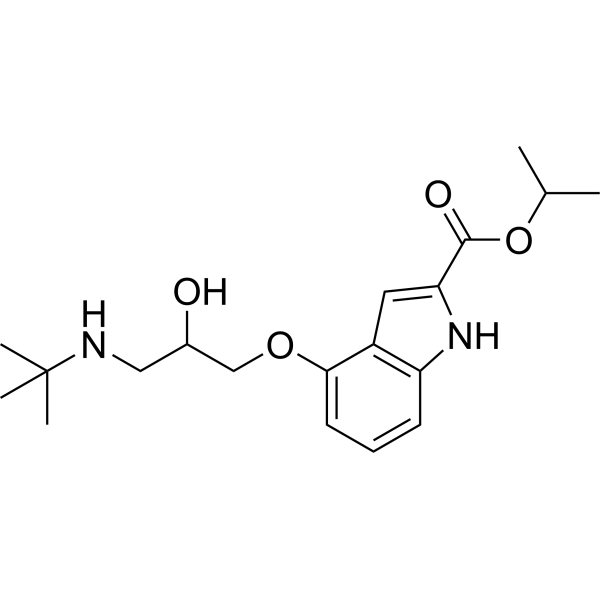 HY-103199Carpindolol
-
Similarity Score 0.71
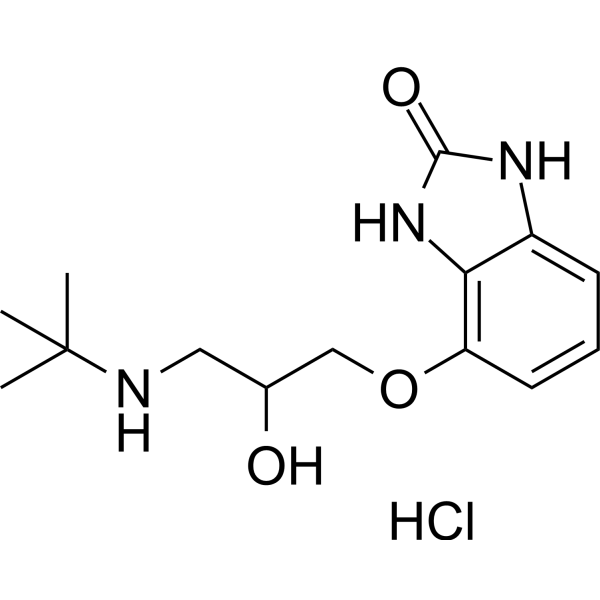 HY-101393ACGP 12177 hydrochloride
-
Similarity Score 0.70
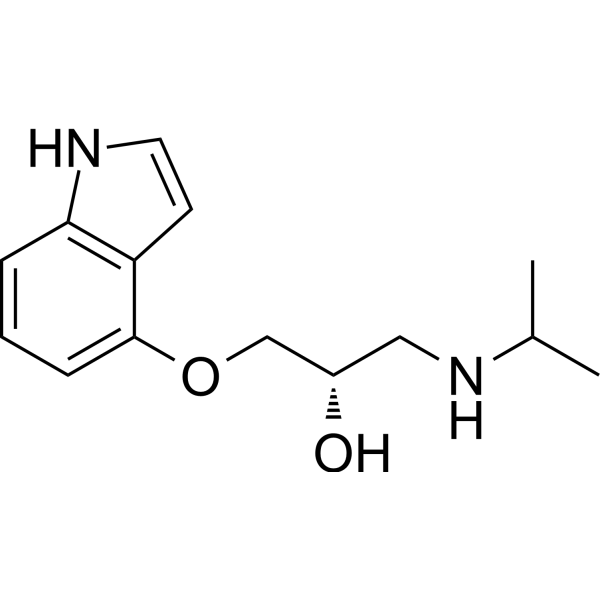 HY-100606Espindolol
-
Similarity Score 0.70
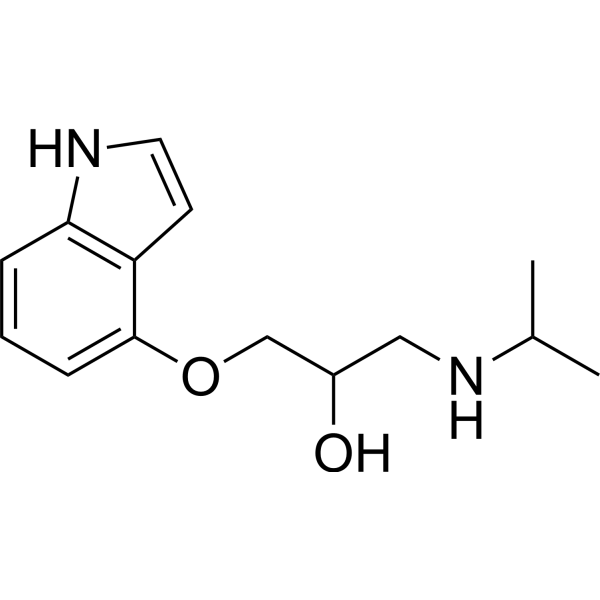 HY-B0982RPindolol (Standard)
-
Similarity Score 0.70
 HY-132441S(rac)-Mepindolol-d7
-
Similarity Score 0.69
 HY-116957Bunitrolol hydrochloride
-
Similarity Score 0.68
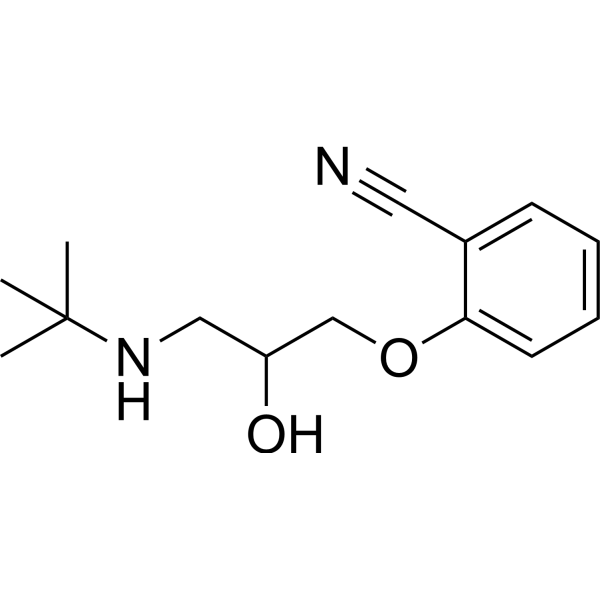 HY-121045Bunitrolol
-
Similarity Score 0.67
 HY-W517264Carazolol hydrochloride
-

Explore the MedChemAI to find more analogs


References
- [1]. Hoey A, et al. Atypical responses of rat ileum to pindolol, cyanopindolol and iodocyanopindolol. Br J Pharmacol. 1996 Feb;117(4):712-6. [Content Brief]
- [2]. Schlicker E, et al. Cyanopindolol is a highly potent and selective antagonist at the presynaptic serotonin autoreceptor in the rat brain cortex. Naunyn Schmiedebergs Arch Pharmacol. 1985 Dec;331(4):398-401. [Content Brief]
- [3]. Langlois M, et al. Structural analysis by the comparative molecular field analysis method of the affinity of beta-adrenoreceptor blocking agents for 5-HT1A and 5-HT1B receptors. Eur J Pharmacol. 1993 Jan 4;244(1):77-87. [Content Brief]



